Paris Games Week is upon us, and publishers are taking this opportunity to get games into the hands of holiday shoppers—especially since 307,000 visitors attended the expo last year.
As with Gamescom 2016, large publishers like Sony and Microsoft have abandoned the press conference in favor of hands-on fan events with the hope of enticing influencers. Fans are encouraged to interact with the developers themselves, a privilege usually reserved for journalists at events like E3.
Bethesda, for example, is hosting a book signing by Sébastien Mitton, artistic director for Dishonored 2and Microsoft is hosting a Gears of War 4 cosplay competition. YouTube Gaming also has a large presence at the show, hosting interviews and talks with gaming influencers in a casual, lounge-like setting.
ESports is a major focus at Paris Games Week with the Electronic Sports World Cup. The global competition features the best players across Just Dance 17, CS: GO, Clash Royale and FIFA 17.
Sony is hosting 40 playable PS4 and PSVR games over 300 terminals and in a theater at the PlayStation booth. This is great news for those who missed out on the sold-out PSVR launch, as they can try the units for themselves and demo games like Batman: Arkham VR and Rise of the Tomb Raider.
Sony’s booth features a number of games available now like Destiny: Rise of Iron, NBA 2K17 and Uncharted 4: A Thief’s End, as well as upcoming titles like Horizon Zero Dawn, Call of Duty: Infinite Warfare and Resident Evil 7 biohazard.
Microsoft, fresh off the heels of its Xbox One S launch, is celebrating 15 years of the gaming brand. The major publisher arrived with a more modest showing of just 15 games over 100 stations—the main attraction being its on its AAA titles in Gears of War 4,FIFA 17, Battlefield 1and Forza Horizon 3.
Fans can also get their hands on upcoming games like Dead Rising 4 and Halo Wars 2 ahead of the February launch. At the ID @ Xbox booth, fans are encouraged to try eight indie titles like Cuphead and Raiders of the Broken Planet to help promote Microsoft’s developer partnerships.
September hardware sales across all platforms dropped 10 percent over the same month last year, so a bit of hype might have been just what the doctor (Mario) ordered.
Surprisingly, though, Nintendo is sitting out Paris Games Week this year despite the recent announcement of its new console. With the Switch releasing in the spring rather than before the holidays like PSVR and Xbox One S, Nintendo doesn’t seem too concerned.
“Nintendo has a quite appropriate reputation of doing its own thing,” Nintendo president Reggie Fils-Aimé told [a]listdaily, “so whatever Microsoft and Sony decide to do, that’s for them to manage.”
Here are some of the top personnel moves in marketing over the last week.
SPYR Launches ESports Division
Holding company SPYR Inc., which specializes in mobile game development and publishing and the restaurant industry, is jumping into eSports by hiring Mike Turner as VP of strategic partnerships. In his role, Turner will focus on developing strategic partnerships in Asian markets while launching a new eSports division. Turner is a gaming industry veteran, having held leadership roles at World of Tanks publisher, Wargaming, Big Collision Games and FASA Studios at Microsoft.
Mike has held leadership roles for companies such as Wargaming America, Inc. (the developer and publisher of World of Tanks),
CastAR Expands Executive Team With Three Hires
Mixed Reality entertainment company CastAR announced that it has hired Peter Dille as CMO, Mel Heydari as head of talent, and Arnie Sen as VP of engineering. The team will help bring the platform to market in 2017.
Peter Dille has over 20 years of experience in leading marketing strategies for entertainment companies. His most recent role was as CMO for the mobile advising company, Tapjoy. Other positions include being senior vice president at Sony Computer Entertainment, where he helped launch the original PlayStation and PlayStation 3. Dille was also once the senior vice president of worldwide marketing at THQ.
MSG Networks Names New Marketing VP
Specializing in sports entertainment, MSG Networks has named Kevin Marotta as senior VP of marketing and content strategy. The network also announced that Melissa Karten has been promoted to VP of Marketing for the organization.
FOX Sports Names SVP Of Brand Marketing
Whit Haskel has been promoted to senior vice president of brand marketing at FOX Sports. In his new role, he assumes joint oversight of FOX Deportes’ marketing and promotional activity with a focus on the strategic alignment of properties airing on FOX Deportes and FOX Sports’ English-language channels. Furthermore, Haskel is in charge of leading the market relationship between FOX Sports and the Mexican National Federation.
Comcast Spotlight Names SVP Of Marketing
Maria Weaver has been named Comcast Spotlight’s SVP of marketing, and is responsible for developing a strategic evolution of Spotlight’s brand, reputation and product marketing. Additionally, Weaver will be responsible for creating and managing the marketing strategy for Comcast Spotlight’s multiple advertising solutions. Weaver’s most recent position was at Interactive One as SVP head of sales and marketing. She most recently worked for Interactive One, the digital division of Radio One Inc, as the SVP head of sales and marketing.
Jenzabar Hires New VP Of Marketing And Communications
Boston based Jenzabar, which provides software strategies for higher education, announced that it has hired Eileen Smith its new Vice President of marketing and communications. In her new role, Smith will oversee Jenzabar’s global marketing organization and will be responsible for continuing to build the brand and creating consumer demand.
Marketo Names New CEO
Marketing software company Marketo has hired Steve Lucas as its new CEO. He takes over for company founder Phil Fernandez, who will be stepping down on November 1. Lucas’ most recent role before joining Marketo was as president of enterprise platform and analytics at SAP.
GoldieBlox Hires New CMO
The award-winning children’s multimedia company, GoldieBlox, has hired Kenny Davis as chief marketing officer. Prior to joining GoldieBlox, Davis was the senior director for global marketing at Hasbro. Additionally, the company has also hired Jenna Boyd as its chief content officer and Jennifer Rahardjanoto as creative director.
Globalscape Appoints Vice President of Marketing
Globalscape, which specializes in the secure exchange of business information, has appointed Gary S. Mullen as vice president of marketing. According to a press release, Mullen “will oversee and lead marketing strategy, messaging development and demand generation initiatives. In addition, Mullen will oversee communications, content, channel and event marketing to drive brand awareness and increase the overall impact marketing results have on the sales organization.”
Mullen brings over 20 years of experience in technology with focus on building global, customer-focused marketing teams. He has held previous leadership positions at Kaspersky Lab, Vijilan Security, IBM, Cybertrust and GE and others.
B12 Hires SVP Of Growth And Marketing
B12 is an early stage human-assisted AI company that is “leading the movement toward the intersection of how humans and machines work together.” The company announced that it has hired Ethan Dobson as senior vice president of growth and marketing. In this role, will be responsible for overall revenue growth, marketing, and ensuring that B12 is a dominant player in what will be a $70B industry by 2020.
Viacom Promotes Chris McCarthy
Media giant Viacom has named Chris McCarthy to the role of president of MTV, VH1 and Logo. His new role gains him leadership of MTV, where he will manage creative and business operations, which adds to his responsibilities VH1 and Logo, which he has been in charge of since June. Under his leadership, VH1 managed to deliver its biggest YOY ratings growth in 15 years.
Geoff Keighley, founder of The Game Awards, host and veteran game journalist, joined us for [a]list Live to reveal the journey, challenges and brand partnerships that go into making his show the massive success that it has become.
After working for over 20 years as a video game journalist, a TV host and contributor for the SpikeTV Video Game Awards, Keighley still felt that something was missing. “What I found is that there was really never that show that could be the Oscars for this industry,” he explained.
There are so shortages on award shows these days, but what sets Keighley’s apart is the format. “I’d done television work for over a decade and three or four years ago, I began to see this shift for millennial audiences to consume all their video content on digital platforms,” said Keighley. “When I was thinking about creating something like TheGame Awards, one path was to go back to television but I said, ‘maybe there’s something new or interesting to do here to with creating an all-digital show.'”
The decision to broadcast The Game Awards digitally has paid off by reaching its target audience right where they live—over 600 million gaming screens worldwide. “It just felt natural,” Keighley said. “If you’re trying to reach gamers, and celebrating gaming awards, why would you force them to go to Cable?”
The awards show is a mix of honoring game titles over the past year, but Keighley also felt it was important to look to the future with exclusive announcements, trailers and even musical acts. “We try and do a lot more than awards on the show.” The 2016 Game Awards will feature virtual reality, transporting viewers to strategic locations around the event.
When it comes to branding, the show’s non-linear format offers a sense of liberation for how to integrate sponsored content. Although brands can purchase traditional, 30-second spots during the broadcast, Keighley has experienced a sense of excitement from potential partners who want to get involved “Almost everyone has said, ‘we want to work with you to figure out what we can do in this space that’s going to resonate and be authentic with this audience.'”
The NBA season tipped off on the hardwood floor this week, as did a host of campaigns off the court for brands pushing their hoops marketing messages for the 2016-2017 season.
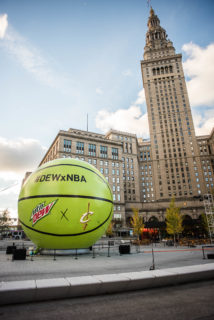
In the days leading up to Tuesday’s tip off, Mountain Dew introduced 40-foot-tall glowing basketballs in Los Angeles, Miami and Cleveland, markets that have played in 15 NBA Finals this millennium, winning a total of nine.
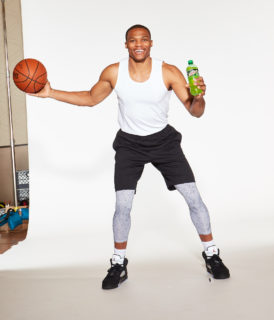
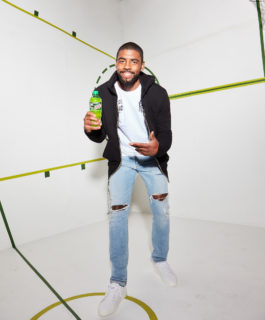
The soft drink brand also renewed its national partnerships with Oklahoma City Thunder guard Russell Westbrook and segued Cleveland Cavaliers guard Kyrie Irving from Pepsi to Mountain Dew. The perennial all-stars headline Dew’s 19-player marketing roster that will help deliver the brand’s message in a variety of ways this season.
“Dew gets me as both a player and an individual and I’m proud of our collaborations over the past year and a half,” said Westbrook. “I love that I can do me, while still doing the Dew.”
“I am excited to be a part of the Dew lineup,” said Irving, a star of Pepsi’s “Uncle Drew” campaign. “Mountain Dew is a brand that celebrates being an individual and I continue to work to be the best version of me on and off the court. I can’t wait for what’s coming up next.”
Mountain Dew’s roster of NBA stars for the season rounds out with Justin Anderson, Giannis Antetokuonmpo, Bradley Beal, Patrick Beverley, Devin Booker, Mike Conley, Danny Green, Elfrid Payton, Rodney Hood, Reggie Jackson, CJ McCollum, Emmanuel Mudiay, Bobby Portis, Julius Randle, Isaiah Thomas, Myles Turner and Justise Winslow.
Richie Cruz, who handles NBA marketing for Mountain Dew, joined [a]listdaily to discuss how Dew will be dribbling for a fast break in hoops marketing this season.
What is Mountain Dew’s national and local marketing strategy for the upcoming 2016-2017 season to get fans closer to the NBA lifestyle?
The NBA is a community of tastemakers and creators who blaze trails their own way—influencing everything from style and music to art and tech. This season, Dew is getting in on the action by bringing fans closer to the game beyond the game, and we have 19 NBA players who can bring that to life in unexpected ways. Everything we do is about embracing creativity, fun and originality.
What are the 40-foot-tall glowing basketballs designed to accomplish from an experiential marketing standpoint? What did the experience accomplish?
The basketball installations were designed to ignite fan excitement and engagement leading up to NBA tip off. Fans had the opportunity to show their fandom and snap a photo of the massive basketball, witness surprise appearances and have a shot at scoring tip off tickets. We took the experience to both coasts and culminated at the home of the defending NBA champion Cleveland Cavaliers, where excitement was at an all-time high.
Why did Mountain Dew specifically choose the Los Angeles, Miami and Cleveland markets?
We wanted to highlight cities where NBA fandom is part of the culture and embrace the diversity of the fan celebration in each coast, culminating in Cleveland where the world was watching Tuesday during opening night.
Dew is humorously aligning style, music, art and technology to the company. What are some of the in-store and event activations slated for this season? How about on the TV, digital and social media side? How will the 19-man Dew lineup be involved?
Storytelling that brings fans closer to the culture and lifestyle of the game in unexpected ways will drive our campaign. It will include all traditional content formats in addition to exploration of new content formats that we haven’t yet executed as a brand. As leaders in NBA lifestyle, the Dew NBA lineup will be involved in all aspects of the campaign helping to inspire fans, and to show a more fun and personal side that we as fans don’t always get to see.
Mountain Dew used VR earlier this year at the 2016 NBA All-Star Game through the “Court Vision” installation. With the NBA now streaming weekly games in VR, how important is the immersive technology to Dew, and what kind of VR activations can we expect from the soft drink brand moving forward?
It’s very important to us as a brand to monitor and immerse ourselves in the latest in sports, technology, entertainment and lifestyle. A key focus within those categories is pushing the boundaries of alternate realities including VR applications as well as other interactive and social media experiences yet to be widely exposed to consumers. We do not have VR activations to announce at this time, but it is an important format which Dew will continue to be active in.
Last week Sony and ESL partnered to deliver a new NBA 2K eSports event. You guys launched the Mountain Dew League earlier this summer. Is Dew’s involvement in NBA 2K right around the corner, and a logical next step? How critical is it for the brand to acquire an eSports audience?
As the gamer’s drink of choice, Dew and gaming go hand-in-hand and our history with the gaming world dates back to 2003. We are an active partner of NBA 2K, including being the first partner of their ‘Road to the Finals’ tournament this past summer, and now our Dew NBA 3X tournaments are integrated into 2K to keep fans engaged throughout the year. On the eSports front, we are currently focused on our recently launched Mountain Dew League, and are always exploring ways to bring gaming fans new, exhilarating experiences.
How will you measure the success of your NBA marketing campaigns for this season once the championship confetti has fallen in June?
Consumer engagement, brand health and partnership fit. But perhaps more importantly, was it memorable?
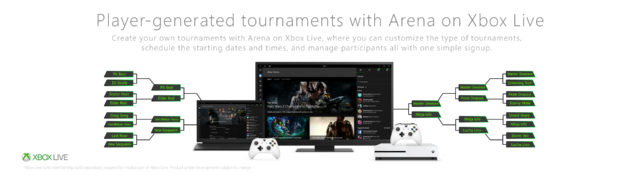
In its Windows 10 event this morning, Microsoft took a page out of the Twitch playbook by introducing Beam system integration for the Xbox One and Windows 10 as part of its forthcoming, Windows 10 Creators Update. The company aims to prove its claim that Xbox Live is the fastest most reliable multiplayer network by supporting 4K graphics on AAA titles like Forza Horizon 3 and Gears of War 4, particularly when it comes to livestreams. The company promises interactive broadcasting where viewers can interact in real time “right alongside them.”
“Gaming has exploded in popularity as both spectator entertainment and as a sport,” Microsoft said in a statement. Livestream gaming has become a major source of brand awareness and loyalty thanks to influencers—a major reason publishers like Microsoft are moving away from press exclusives and into fan-centric events.
The Creators Update will also beef up mixed reality with the Microsoft HoloLens. HP, Lenovo, Dell, Acer and ASUS will ship the first VR headsets capable of mixed reality in 2017. These accessories will contain built-in sensors to enable users to explore virtual worlds and mixed reality without the need for markers. 3D and mixed reality are also a major focus of the update, allowing 3D capturing, modeling and printing capabilities together with a partnership with a new Remix3D community, a place where Minecraft players can share their 3D creations.
Windows is “getting creative” with its target demographic—appealing to professionals within the design, music, architecture and gaming industries as well as pretty much anyone who uses a computer for work or play. Apple has traditionally dominated the creative market, but Microsoft has revealed a brand-new, high-end line of hardware that aims to change that forever. From the announcement of the Surface Studio—a hybrid desktop PC and digital canvas—to the new Surface Book laptop with twice the GPU power of its predecessor, Windows is stepping up its game to make creation accessible and interactive . . . for gamers and beyond.
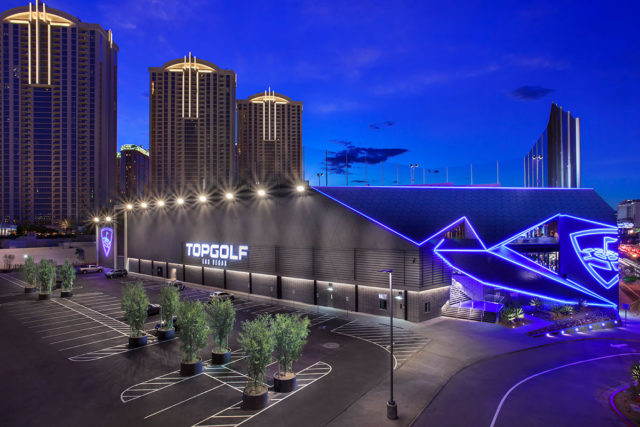
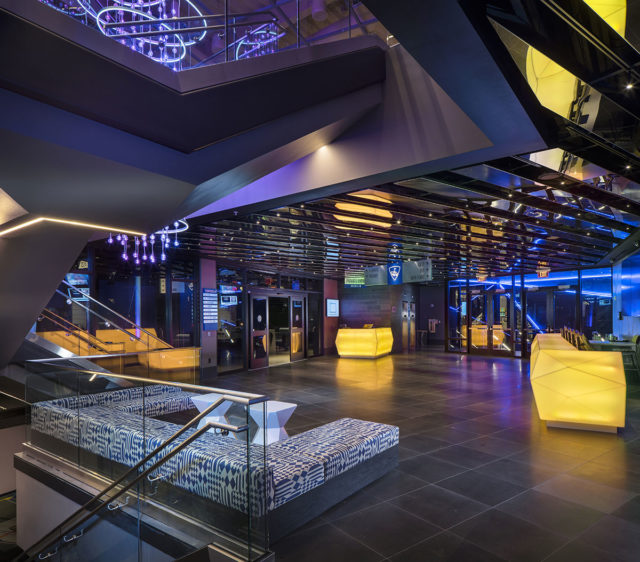
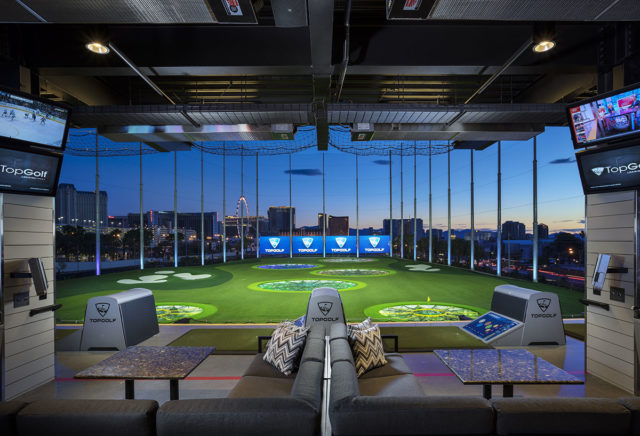
Bright lights, brassy beats, billowing bars and the bare pleasure of launching a ball into the night—Topgolf is not your grandfather’s driving range.
In a handful of years, Topgolf has turned the glorified game’s grandeur on its head and reimagined sports, and in essence, flipped the traditional driving range model to create a new high-tech entertainment category for millennials.
And it’s just getting started for the rapidly expanding, natively social brand. In September, the chain secured $275 million in funding to facilitate its aggressive expansion plans throughout the US. Topgolf plans to build 7 to 10 locations a year with its sights set on 50 US locations by 2017.
Their roots are originated in Watford, England, the location where they first started serving a digital golf audience in 2000. They quickly expanded stateside shortly afterward and have since grown to 29 venues and serve 13 million guests annually.
With golf courses around the country accelerating toward a decline, those numbers are even more impressive considering the amount of golfers in the US has dropped 20 percent, from 30 million to 24 million since 2005, according to the National Golf Foundation.
With its nightclub-like vibe, Topgolf is far from being a ghost town. It’s the closest thing to unearthing the next Happy Gilmore.
Susan Walmesley, vice president and sales and marketing for Topgolf, joined [a]listdaily to discuss the fast-growing company’s aggressive strategy in building a unique integrated entertainment and sports experience.
How do you describe a Topgolf experience for someone who has never had one?
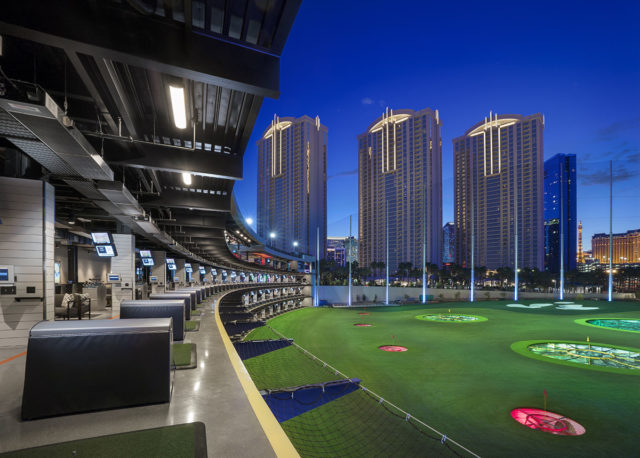
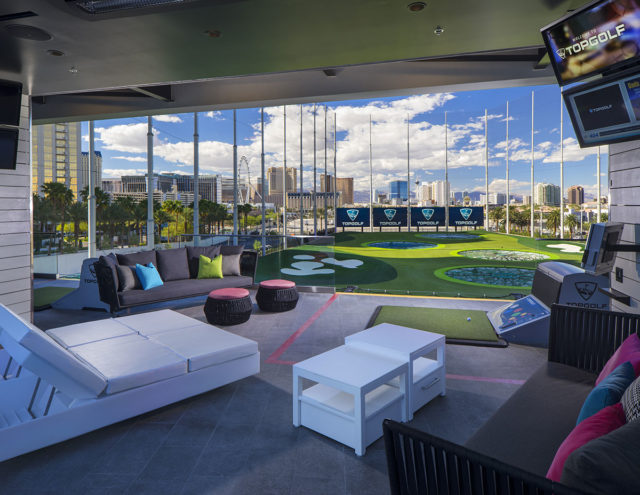
The games can be played by anyone—any age or skill level. Players use real golf clubs and hit microchipped golf balls, aiming for giant targets on a 215-yard outfield. In the classic Topgolf game, the farther the target and the closer to the center of the target you hit, the more points you score. Your yardage and score is instantly relayed to a TV screen in your hitting bay. The hitting bays are covered and climate-controlled for year-round comfort. While you play, you can enjoy music and delicious food and drinks brought to your bay. Each venue offers other entertainment options, such as pool tables, shuffleboard and Xbox Kinect. The venues also offer golf instruction, leagues, tournaments, kids-only events, theme parties and more. There’s something for everyone.
How does Topgolf intersect with the traditional sport’s elements?
Topgolf is a great entry point for traditional golf. People who might not otherwise pick up a club jump right into playing at Topgolf because the environment is fun, casual and non-intimidating. We offer golf instruction for all ages to help promote that transition to green grass.
Who is the demographic you are trying to reach?
Topgolf appeals to all ages, but the majority of our guests are ages 18-to-34. Female visits have increased by 13 percent in the past three years, and we are excited to see that fan base grow for us. Approximately 32 percent of Topgolf players are women.
How are you leveraging a purely social approach to further build on your brand? How do you judge the success?
Topgolf is an inherently social and shareable experience because of the interaction the environment fosters. In fact, the average group size is four people. With our private-events business, we bring together diverse groups of people who bond over the playful competition. The majority of our visitors are non-golfers, and they are eager to share photos and videos of their swings on social media. We make sure that we engage with our guests online and remind them to interact with us on social media through in-venue advertising, our social wall that populates near real-time content, step-and-repeat photo backgrounds, Snapchat geofilters, and more. Topgolf’s popularity was largely built on word of mouth and social media. We judge our success on social based on quality and quantity of engagement activities with likes, comments, shares, retweets, follower growth, referrals to Topgolf.com and several other KPIs.
What is Topgolf’s approach to social? Are there any platforms you’d like to test further?
Up until this year, we had a decentralized marketing model in which each venue had its own social media accounts. This year, we faced maintaining more than 150 accounts and decided that it would be best to post from only one main corporate account on Twitter and Instagram. The venues will maintain their Facebook accounts so they can still share local content and guests can ‘check in’ locally. Our new approach will help us track and respond to guest service issues as well as share higher-quality content. We are excited to explore Snapchat further in the near future. We’ve experimented with geofilters and have had huge success with them, so the next step is creating our own Snapchat account to share the Topgolf experience.
What is your approach and strategy in telling the Topgolf story? What works? What hasn’t?
Topgolf has gained significant brand awareness through earned media. Our story has evolved so much over the years—we started off focusing on being a really cool driving range then evolved to become a sports entertainment venue. Our relationships and partnerships within the golf industry have evolved over time as the industry grew to embrace Topgolf for how it could help grow the game. This year, we are thinking beyond the venues to foster Topgolf as a lifestyle brand that fans can tap into in-venue or online. In terms of PR, we find it’s critical for reporters, tastemakers and influencers to experience Topgolf firsthand so they can help tell the story from their unique perspective. It’s hard to explain Topgolf to someone who has never heard of it—visuals are necessary to tell our story and convey all that we offer.
Topgolf recently secured $275 million in additional capital to execute an expansion plan across the US. Where will we be seeing new Topgolf locations?
We are opening in Jacksonville this month and Edison, New Jersey in December. Next year, we will be opening in Charlotte, Orlando, Nashville, near Indianapolis, near Philadelphia and in Fort Worth. In 2017, we will also open our first location in Australia.
Which of your current markets have been performing the best? And why?
Our Centennial venue near Denver is a top performer. The Denver culture embraces outdoor recreation activities, and Topgolf is a place where you can play outside year-round. Our Tampa venue is another high-performing location. Its food and beverage sales have broken company records; there aren’t as many casual dining restaurants in the vicinity as some of our other venues. Our Scottsdale location usually leads the pack in terms of our private events business because its tourism industry is so strong. And of course, Las Vegas is our flagship venue that opened this year and is performing extremely well. It features swimming pools, a concert venue, a Callaway fitting studio, a retail shop and many amenities that aren’t available at our other venues.
Is there a non-location-specific experience you’re looking to offer? Or is it only for fans within a region?
We are actively working on creating a Topgolf experience that can be enjoyed in markets where we don’t yet have a location. There will be more details to come on that soon. Our fans can also play Topgolf 24/7 on the WGT Golf app. The game is incredibly realistic and has gotten rave reviews.
Where do you see Topgolf in five years?
I see Topgolf moving beyond being a great brand to becoming a noble brand. We are focusing more than ever on giving back to charity and helping grow the game of golf. In five years, I also believe Topgolf will be a household name regardless of location. Topgolf has always been a digital-first company, and I’m excited to see how we will innovate and personalize the guest experience as technology advances.
“Okay, Google. Please ask Alexa to ask Cortana to tell Siri to look up funny cat videos.”
While a few consumers are totally going to try that, the age of artificial intelligence means tremendous potential for marketing applications (although you might want to invest in cat videos, too). AI has already leaped from the pages of science fiction and into our homes—and although the technology is still new, brands are feeling the pressure to adapt.
Research by The Economist Intelligence Unit (EIU) in April found that 37 percent of global marketing executives believe big data and AI were among the technologies they expected to have the biggest impact on marketing companies by 2020.
EMarketer’s latest report, Artificial Intelligence for Marketers: The Future Is Already Here, explores industry predictions for the future of AI, but also how the technology is being used today. A November 2015 survey of IT executives in North America by 451 Research found that 30.4 percent of respondents used or planned to use machine learning techniques for campaign and sales program optimization and 26.8 percent for pricing optimization. These tasks were closely followed by cross-channel analytics (26.2 percent), ad targeting and selection (25.6 percent) and market and customer segmentation (24.4 percent).
With all the metrics-gathering programs out there, sometimes it’s hard to measure return on investment or plan where to budget the most effectively. Each social media platform, for example, has its own metrics analysis and brands must turn to a source that can compile this unstructured data.
AI systems excel at parsing and crunching massive volumes of data from disparate sources, and can take information from a variety of inputs, find relationships, connect dots and make predictions in ways that are not humanly possible. “Marketers are using these capabilities to enhance customer intelligence, marketing research and forecasting accuracy,” notes eMarketer.
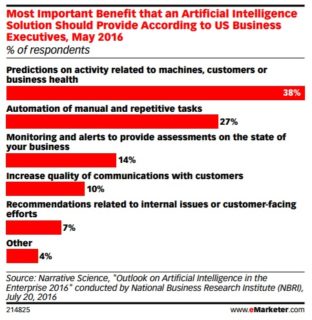
A May study conducted by the National Business Research Institute (NBRI) for Narrative Science found that 38 percent of US business executives considered this type of data crunching and predictive activity to be the most important solution provided by AI.
IBM’s natural language processing service, Watson, analyzes unstructured data to help marketers make better use of the data they collect. “We’re at the very beginning of the possibilities with augmented intelligence and cognitive computing for marketing and advertising,” Nish Parekh, IBM’s program director of Watson client services, said in eMarketer’s report. “In the near future, we hope to see more brands across industries and throughout the world adopting cognitive systems, engaging with their customers to create personalization based on their location through mobile phones or wearable devices.”
The evolution of bots on smart devices is also expected to open up a market for new advertising opportunities, especially in the area of paid voice search. According to a September forecast from Juniper Research, more than $12 billion annually will be invested in this format by 2021, up a whopping 3,000 percent from the company’s estimate of 2016 paid voice search.
From messenger bots to super computers, AI is here and it’s learning, so marketers should, too.
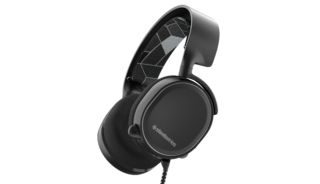
From creating the first glass mouse pad to becoming the massive eSports presence it is today, SteelSeries’ history is fueled by gaming and innovation. The Danish company, responsible for the first mechanical gaming keyboard and the first MMO gaming mouse, shocked the gaming world with a complete headset redesign—the Arctis.
SteelSeries eSports teams won over $11.5 million in prize money in 2015 (the most in history) using the company’s flagship model Siberia headphones, mice and other peripherals. So why mess with a winning design?
Brian Fallon, category manager of audio for SteelSeries and creator of the Arctis told [a]listdaily why the company felt it was time for an upgrade.
“Siberia (V2 headphones) came out about nine years ago and gaming has changed a lot in that time,” Fallon explained, “[and] who gamers are is more diverse than ever. We felt it was time to take a step back and think about who our customers are and if our current products fit what they want.”
The New Look Of SteelSeries
SteelSeries’ Arctis headphones were redesigned from the inside-out, from aesthetics to materials and (of course) audio. A stark change from its Siberia line, the Arctis is low profile and minimalistic, aside from optional illumination available on the 5 and 7 models. “We wanted to keep it really slim and small; there’s no reason to have a bulky headset,” Fallon pointed out. “There’s no acoustic reason or performance reason a headset needs to be really big, it’s just a choice that’s been made by designers over time. We felt like having a slimmer design to the headset [would be] more appealing across a wide variety of people.”
“We don’t think gamers necessarily want the direction that headsets have gone lately—the big, bulky, wide, plasticy designs,” Fallon added. “[We] think gamers want something that’s a little more attractive. Headsets are the one [gaming peripheral] you actually wear on your body.”
This bold redesign marks a new era for the brand, Fallon stated, and not just for headphones. “The design of Arctis is certainly going to influence SteelSeries design going forward. We see this as being the future of our style.”
Sports Industry Inspiration
With video games entering the pro sports arena, it’s no wonder that Fallon and his team of designers turned to the athletics industry for ideas. “We actually looked at the athletic apparel industry and the kind of work they’ve been doing on different materials that are breathable, moisture-wicking and had cooling properties—that’s how we developed the air wave cushions that we have on all the Arctis headsets,” Fallon explained. “It’s a material that we sourced from a company that makes fabrics for athletics apparel.” In addition to being soft and breathable, the Arctis air wave cushions are removable and even machine washable.
The Arctis features a suspension design that eliminates pressure points and naturally adjusts to the shape of the user’s head. While Fallon and his team wanted to keep the Siberia’s suspension aspect, they took this opportunity to improve. “With the Arctis suspension we challenged our designers to think about it in a different way to see if there was some influence we could pull from outside of gaming or audio, even to come up with an even more comfortable solution to a suspension headband,” said Fallon. “The idea of taking an elastic fabric just like on a ski goggle band (something else you wear on your head for long periods of time) and then working that into the suspension—we ended up really loving that idea. It was a way to have the headset better conform to people’s heads and still be self-adjusting very easily.”
Made For ESports
In recent years, SteelSeries has consulted professional gamers to help design its products, and this was especially important when designing the Arctis, particularly when it comes to the company’s eSports presence.
“We actually have a CS:GO team that practices right here in our Chicago office so that’s really nice for me as product manager,” Fallon laughed. “All I have to do is walk downstairs and I have easy access to a pro team. We talked with them even before we started the process to ask them [what’s important to them, what’s been missing from other products, what they can do better, etc.]. Early on, we were able to get them prototypes and have them start testing, try things out and give us feedback—let us know what’s working and what’s not.”
A major change to the Arctis that Fallon is particularly proud of is the bi-directional microphone. Turns out the pros liked it, too. “A lot of that feedback was great validation to us. [While using the Arctis prototype] for the first time they didn’t have audio bleeding from each other into each other’s microphones. They could all be separate and have a really clear line of communication which is critical in those games.”
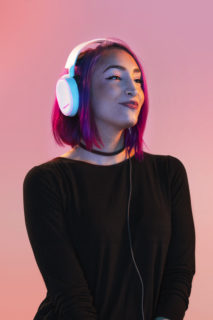
Twitch influencer, TheMavShow models her Siberia Arctis 7 headphones
Dota 2 champion team, Evil Geniuses wore prototypes to practice with and were instantly hooked, Fallon said. “They didn’t want to give them back.”
Influencer Marketing
SteelSeries currently partners with around 100 “stream team” members who act as influencers for the company’s line of peripherals. Influencer Deadpooly Plays was so excited about the Arctis that he naturally stepped into the role of spokesperson—even visiting the company’s Chicago office and filming a series of educational interviews.
“He is by far one of our most enthusiastic and excited about Arctis, and literally pitches the product to almost everyone he knows,” said SteelSeries global PR director, Tori Pugliese. “For our team, he’s been a really excellent benefit to our SteelSeries stream team. That roster is growing pretty steadily. We’ve got a number of folks who not only use the SteelSeries products that are Twitch streamers, but also help represent the brand to their own community to educate why our products outlast and outperform others.”
SteelSeries revealed that it has partnered with The Chive, as well as a few partners from the sports industry and more to be announced soon. Much like the redesign of its headphones, SteelSeries is diversifying its audience. “Gaming is a passion that we all share, but it’s not the only attribute that defines us,” Pugliese concluded. “We’ve taken that very heavily into account when designing the Arctis.”
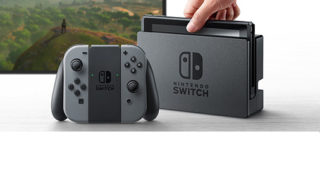
Nintendo continued its hot streak last week when it officially announced the Nintendo Switch (formerly NX) to the world. The device, which is a gaming tablet with a dedicated docking station, brings together the big screen experience of console systems and the portability and convenience of a mobile device. The announcement was given through a three-and-a-half-minute trailer showing the Switch’s capabilities and a short press release that revealed how 48 developers, including Electronic Arts, Ubisoft and Activision, have signed on to develop for the device. Nintendo is still seeing a lot of love, as the trailer has had over 17 million views since then, which is a testament to its longstanding brand.
Although the excitement of a new console announcement may help fans overlook how there are plenty of unanswered questions ranging from battery life, to game support, to graphical fidelity and pricing, Nintendo shouldn’t wait too long before answering them. Especially given how both the Nintendo Wii U and handheld 3DS consoles have been in decline in recent years, mainly due to the meteoric rise of smartphones and other mobile gaming devices.
https://www.youtube.com/watch?v=f5uik5fgIaI
The Wii U, for instance, has a similar-looking portable screen on the Wii U Gamepad, except that it’s used to stream games from the main console. This concept didn’t catch on, and the Wii U is still mainly regarded a niche gaming device, despite being the wildly popular Wii console’s successor, having relatively strong developer support at launch, and releasing a year before the Xbox One and PlayStation 4 came out. Major game releases such as Mario Kart 8 and Super Smash Bros., along with original exclusives such as Splatoon and Bayonetta 2 helped lift sales, but were ultimately too little too late.
Time will tell if The Legend of Zelda: Breath of the Wild, possibly one of the last games for the Wii U console, will be an effective farewell, or if fans will purchase it for Switch instead. However, there is a possibility that Nintendo will be generous with its final Wii U/debut Switch game by offering cross-platform purchasing—where a person who buys the game, even the physical version, will also own the digital version, downloadable for either console.
In order to prevent history from repeating itself, Nintendo needs to go beyond relying on its stable of iconic characters and show that it’s still relevant to today’s gamers. Given how 3DS and Pokémon game sales skyrocketed after the phenomenal success of Pokémon GO for mobile devices, it’s becoming increasingly clear that Nintendo has figured out how to treat mobile gaming as more of an introduction or supplement to the console experience.
Nintendo has already shown its embrace of mobile by announcing SuperMario Run at Apple’s annual iPhone event in September. Gamers that download the endless runner when it releases in December will get a taste of the Mario experience, which may lead to picking up the console version for deeper gameplay. Although there are plenty of both free-to-play and premium mobile games that help promote main franchise games, few have seen the kind of success that followed the release of Pokémon GO, which will no doubt impact sales of PokémonSun and Moon when they release for the 3DS next month.
But relying on the popularity of mobile games may become problematic in the long-term. Nintendo’s biggest challenge, as the March launch of the Switch draws closer, is to convince consumers to pick up a Nintendo console instead of or in addition to the multitude of existing tablets—some of which feature amazing graphics (for a mobile device) and can connect to televisions. That’s in addition to releasing after powerful mid-cycle consoles such as the Xbox One S and PlayStation 4 Pro have been around for a while. Not to mention how Microsoft’s Project Scorpio, which will be the most powerful gaming console in existence, is expected to launch next fall. The company’s traditional reliance on classic characters and support from its diehard fan base is a strong start, but (as the Wii U demonstrates) it isn’t a complete plan for success.
By creating a console/tablet hybrid, Nintendo will also have all the marketing challenges for both platforms in one system. The Switch will need to continue emphasizing its unique experience, with a focus on communal gaming using detachable Joy-Con controllers that can be shared between two players. Nintendo will have to reveal what games are launching with the console, along with what’s coming soon after. There are numerous factors that must be considered between now and the Switch’s release, and Nintendo needs to work toward addressing them in the coming months in order rise up again.
It’s another big week for video game releases, and these publishers have been hard at work laying the groundwork for a successful launch. From bringing life-sized mechs to expos to leaving giant statues at train stations, these two games have fans ready to play.
Titanfall 2
After a stunning reveal trailer at E3, Respawn Entertainment’s Titanfall 2 has been on a mission for success through a new singleplayer campaign mode and by building on its existing multiplayer action. Published by Electronic Arts (EA), Titanfall 2 has been making the expo circuit with strong presences at E3, Gamescom and PAX, offering hands-on demos for fans. Those who attended the GameStop Expo this year were also treated to a life-sized titan. While press coverage is still a necessity, it’s becoming increasingly important for publishers to get these big releases into the hands of those who buy them, especially influencers. This consumer-first attitude has resulted in a number of publishers holding fan events rather than big press conferences at major industry expos. Time to find out if it worked!
With two major releases so close together, EA took the opportunity to tie in promotions for both Battlefield 1, which released last week, and Titanfall 2, releasing on Tuesday. Those who play Battlefield 1, for example, can unlock a special Red Baron skin for their Titan.
PC gamers in the market for a new laptop are being enticed to play the game, thanks to a partnership with MSI. Those who purchase select MSI laptops through November 30 can choose to receive either Battlefield 1 or Titanfall 2 for free. The game is also one of the first to support PlayStation 4 Pro 4K resolution on disc.
If gaming makes you hungry, you’re in luck—EA has partnered with Mountain Dew and Doritos to offer double XP, access to Titan skins, a special 1-on-1 competition mode called Coliseum, and more. Likewise, those who eat at Buffalo Wild Wings restaurants between October 28 and the end of November 2016 will receive access to Coliseum mode in Titanfall 2 multiplayer mode and a Titan insignia.
World of Final Fantasy
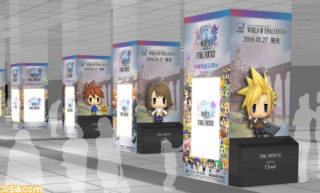
Square Enix took over Tokyo’s Shibuya Station for a week in October, giving fans an opportunity to interact with giant figures of characters, Butz, Cloud, Vivi, Yuna and Lightning. The figures shouted lines from the game in front of large promotional posters for the game. Although fans can’t take the giant versions home, miniature figurines from the game will be available through Static Arts in March 2017.
A free demo of World of Final Fantasy was made available on PlayStation 4 and Vita and fans were invited to vote on mirage (monster) stacks that would appear in-game through the official Twitter account.
The game was made available to play at New York Comic Con and with the Final Fantasy Fan Festival taking place two weeks before the game’s launch, the timing was right to get gamers excited about the franchise. Those who pre-order the Special Collector’s Edition were entered to win a PS4, signed posters and more. In addition, the team has been hard at work with livestreams and mirage reveals on Twitter leading up the game’s release on Tuesday.
Although we live in a digital age, live events and activations are still a major draw for fans and brand loyalty. From photo ops to helping shape the game, itself, these publishers are ready for a successful launch.