Robert Bowling Explains How GamePump Makes Old IPs New Again

For six years, Robert Bowling was the face of Call of Duty developer Infinity Ward, serving as a creative strategist at the studio. Since then, Bowling has been involved in everything from game development to eSports (he’s a co-owner of the team Denial), most recently serving as an advisor for Team NRG. The entrepreneur has also launched GamePump, a new retro-focused gaming service.

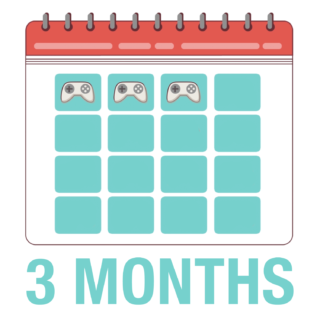
The service will officially launch in January on Steam, offering gamers a “blind” subscription model that guarantees users one new classic game on the first Friday of every month for $20 per year, $15 for three months or $5 for one month. All subscriptions are non-recurring. Last year, when he was vice president and head of publishing at Humble Bundle, he launched Humble Monthly, which was also a blind subscription service but focused on newer indie games. Bowling said that the issue was that gamers likely already owned some of those games. With GamePump, every game will be making its Steam debut through this service.
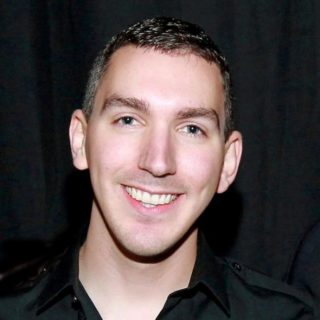
Robert Bowling, Gamepump founder
Robert Bowling, GamePump founder

“GamePump came from my own personal interest in games that I wanted to play but weren’t readily available,” Bowling told [a]listdaily. “I did some research and found that 90 percent of the time with these games, it was a legal issue where it ended in bankruptcy or someone owned the rights and didn’t realize it. Once I realized that, there were enough of these games that we could publish on Steam.

GamePump currently has 20 games in the pipeline as well as a few spiritual successors or modern remakes redone by a current developer in the works. “The main console we’re pulling games from is the 1983 MSX,” Bowling said. “We found Nintendo doesn’t allow you to emulate any hardware because they’re doing it themselves. But if Japanese publishers released the same NES game on non-Nintendo systems like MSX, we could acquire the MSX version. It’s the same game, but we need to localize them. The nice thing is that many MSX versions will have an extra level or different ending that the American audience never got to enjoy.”

Bowling said he’s also looking at the Sega CD catalog and some retro PC games that are not currently available to add to GamePump in the future. “A lot of deals are being closed, but the goal is to make this as diverse an experience as possible,” Bowling said. “We want to have a mix of genres so it’s always different.” The original plan was to launch this holiday, but Bowling said it has taken an unexpected amount of time to revive some of the older classics.

Bowling is marketing GamePump across social channels, which includes his 2.2 million followers. He also plans on some traditional advertising on social media. “We’re working with Twitch and YouTubers on an influencer campaign,” Bowling said. “This is an organic growth opportunity. The hope is, once it starts dropping, people will start talking about it. Releasing one game a month gives people time to talk about it.”

GamePump is a small operation with just a few people in Los Angeles. Bowling explained that half of his company does legal work untangling games from multiple acquisitions or bankruptcy while the other half is game development.

While Steam is the focus at launch, Bowling is open to publishing these games across other platforms outside of subscriptions. “We want to tread carefully and focus on building this business,” he said. “Steam is the easiest path and makes the most sense.”
gamepump-3monthsEach game deal is on a case-by-case basis due to the nature of the legal contracts. Sometimes GamePump acquires an entire catalog of games, and in those cases, they can release them on as many platforms as possible. “In rarer cases, it’s a larger publisher like a Konami or a Microprose, where they’re not going to sell the catalog but they will license it to bring to Steam because they’re not going to do it themselves and we split revenue with that publisher,” Bowling said. “If Steam goes well, it’s not farfetched to do releases on other platforms. We’re trying to own as much as we can, but sometimes it’s worthwhile to get IP you don’t own.”

It was Bowling’s role as president and creative director at the game studio Robotoki that ultimately led to this new venture. “It was a hard reality check, going from a AAA developer where you have unlimited resources, to a Nexon publishing deal,” Bowling said. “We had 55 developers in LA and a massive game that was costing over $10 million and was an original IP. We chose the riskiest thing you could do. We ended up canceling it when we parted ways with Nexon to do it as a premium title instead of free-to-play because our burn rate wasn’t the same and we couldn’t ship it with our own money.”

Bowling said that experience taught him a lot about the industry and he saw an opportunity to assist other developers. “Making games is hard technically and from a business standpoint,” Bowling said. “That’s when I got into the investment side of the business, and that led to coming up with Humble Monthly, which were alternative revenue services for developers. I liked the publishing and project financing side of the business. I’m still doing other investment fund stuff, as well as some development.”
Fake News, Top-Selling Games And Other Must-Read Marketing Stats

It may be too late to stuff your face with turkey, but we’re here with a heaping helping of marketing stats to chow down on. This week, we take a look at how consumers view and recognize ads, what’s important to affluent millennials, and what’s shakin’ and bakin’ in the video games world.

Trust Me, I’m An Ad

Over the years, there has been a significant shift in how consumers view and interact with advertising. People rely on the advice of their peers over experts and trust influencers over traditional celebrity spokespeople. A report by Olapic revealed that when it comes to choosing a photo for your ad, “real people” are trusted seven times more than a stock photo or “Photoshopped” image. The report details the results of more than 4,500 active social media users between ages 16 and 49 in the US and the UK, France, Germany, Spain and Sweden in which 56 percent said they would be more likely to click on an ad that features user-generated content like a selfie over other types of advertising, and more inclined to purchase, as well.

But you know it’s an ad, right? If you’re a pre-teen or teenager in the US, you might not be able to tell the difference. An incredible 82 percent of middle-schoolers couldn’t distinguish between an ad labeled “sponsored content” and a real news story on a website, according to a Stanford University study of 7,804 students from middle school through college.

Nearly four in 10 high-school students believed, based on the headline, that a photo of deformed daisies on a photo-sharing site provided strong evidence of toxic conditions near the Fukushima Daiichi nuclear plant in Japan, even though no source or location was given for the photo. No wonder sites like Facebook and Google are cracking down on fake content!

Seems legit.

When it comes to remembering which ads you’ve seen, awareness for almost half of the major retail brands is significantly down since last year. According to YouGov BrandIndex, Walmart is number one for brand awareness this holiday season but Amazon is ranked first in value by consumers. Kmart and Best Buy suffered the largest ad awareness losses since 2015’s Black Friday, YouGov reports, with drops of 12 points and 10 points respectively.

Of course, it’s easier to remember an ad if it’s targeted to the right consumer. Mobile ad targeting is getting more accurate, according to Nielson’s Digital Ads Benchmarks and Findings report, with 60 percent of mobile ad impressions viewed by people of the age and gender intended by advertisers. This number is up from 49 percent in the same period of 2015.

“This now puts the average on-target percentage for mobile campaigns on par with that of desktop campaigns—a factor that could influence considerations of media buyers and sellers planning digital media campaigns,” the report said.

Mobile users see a lot more ads, too. While ad blocking is on the rise, a study by AudienceProject found that while 26 percent of respondents in the UK and 23 percent in the US used an ad blocker on their desktops, only two percent in both countries use ad blocking tools on their smartphones. Among the ad blockers in UK, 34 percent say that their attitude toward ads would be affected in a positive way if the ads displayed relevant messages, with 44 percent feeling the same way in the US.

Programmatic ad spending is growing in popularity and Zenith predicts that the method will grow 31 percent next year. “Programmatic buying of digital media has become the norm in major markets, and is aggressively following this path in smaller markets,” said Benoit Cacheux, global head of digital and innovation at Zenith. The Programmatic Marketing Forecasts report predicts that social spending will grow by 25 percent and online video will expand by 20 percent, with a growing proportion of these other channels will be traded programmatically by the year’s end.

Branding Is Life For Affluent Millennials

Nearly three-quarters (70 percent) of affluent millennial internet users said their favorite brands play an integral role in their life, according to a survey from BBC Advertising. While 51 percent of non-affluent millennials felt the same way, there is a significant drop in whether or not brands define one’s person. For affluent millennials, 60 percent said that they are defined by the brands they purchase, compared to 44 percent of those not considered affluent.

Attitudes Toward Brands Among Affluent* vs. Nonaffluent Millennial Internet Users Worldwide, Sep 2016 (% of respondents in each group)

Gamers Gotta Game . . .

. . . and a whole lot of them are catching “pocket monsters” right now. Pokémon Sun and Moon are now the best-selling video games in online holiday shopping in the US so far, and the fastest-selling title to be sold in the US by Nintendo.

Chances are, if someone in your home isn’t off exploring Alola, someone is probably watching eSports instead. A new study by research company Leger found that 25 percent of US Adults have someone in the household who has watched an eSports tournament. People are watching more, lately, too—the study shows a boost in viewership over the past six months, with the level of adults who watched an eSports event increasing from 15 percent to 18 percent between May and October, while overall household viewership grew from 22 percent to 25 percent.

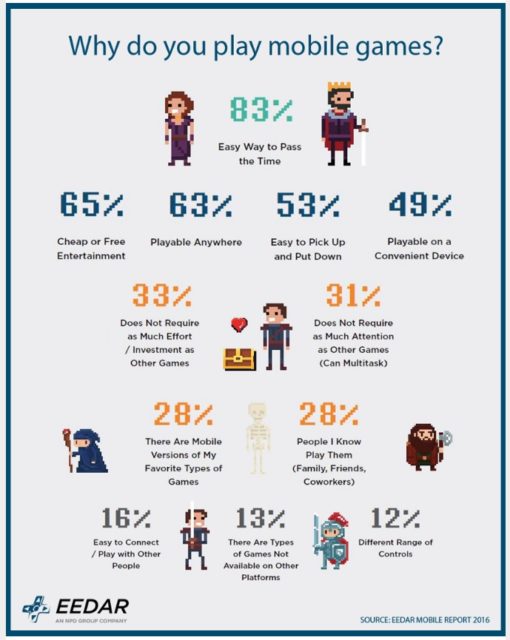
And yet someone else in the home is probably matching candies or something on their mobile phones. According to a new study by Eedar, 83 percent of participants said they play mobile games because it’s an easy way to pass the time.

mobile-games

October’s digital game market experienced 14 percent year-over-year growth, according to SuperData, with $6.7 billion in total October revenue. New major releases including Battlefield 1, Titanfall 2, Mafia 3 and Gears of War 4 helped propel Console digital revenue to $628 million, a 27 percent year-over-year increase.

Premium PC experienced the greatest growth of any segment, however, jumping 78 percent to $592 million in revenue, which SuperData attributes to the strong performance of Civilization VI, a PC-exclusive title. Mobile gaming continues to grow steadily, with revenue increasing 15 percent year-over-year to $3.1 billion.

SuperData’s Top-Selling games for October are:

PC

  1. League of Legends
  2. Crossfire
  3. World of Warcraft
  4. Dungeon Fighter Online
  5. Sid Meier’s Civilization VI
  6. Overwatch
  7. Battlefield 1
  8. DOTA 2
  9. World of Tanks
  10. Fantasy Westward Journey Online II

Console

  1. Battlefield 1
  2. FIFA 17
  3. Mafia III
  4. Call of Duty: Black Ops III
  5. Grand Theft Auto V
  6. NBA 2K17
  7. Destiny
  8. Gears of War 4
  9. FIFA 16
  10. Star Wars Battlefront

Mobile

  1. Pokémon Go
  2. Clash Royale
  3. Monster Strike
  4. Clash of Clans
  5. Mobile Strike
  6. Game of War: Fire Age
  7. Fantasy Westward Journey
  8. Candy Crush Saga
  9. Puzzles & Dragons
  10. Clash of Kings

Learn everything you need to know to invest in today’s fastest-growing media channel—Competitive Gaming and eSports on 2.16.17 in Los Angeles. Go to alistsummit.com for more info.

4 Video Game Brands Powering Up With Branded Merchandise

The video game industry is a money-making machine, but its potential lies not just in hardware or software—gaming brands are reaping the benefits (and revenue) from merchandise, as well. Let’s take a look at some successful brands who take their game franchises a big step further through branded merchandise.

Square Enix

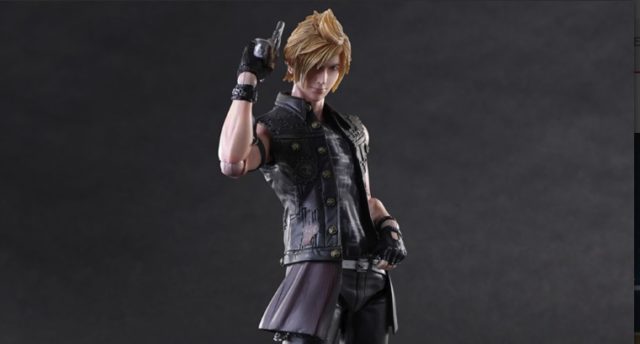
Square Enix, known for such titles as Final Fantasy and Tomb Raider reported net merchandising sales of ¥3,997 million ($35.4 million US) in 2015, an increase of 5.6 percent from the prior fiscal year. The game publisher hosts its own online store, where it offers a variety of goods from software to jewelry.

“The merchandising segment has grown into a stable business where we leverage not only our own properties, but also make proactive use of third-party content,” Square Enix stated in its 2015 Annual Report. “Our high-quality merchandise has met with a great reception from customers, and more recently our collectors’ boxes and other special fan offerings have also proven popular. We intend to continue to build up our merchandise lineup as we see it as a key element in further enriching our content offering.”

ff-figure

Capcom

Capcom, with video game franchises that include Mega ManResident Evil and Street Fighter hosts a modest offering of character-related merchandise from lanyards to T-shirts, but suffered a slight decrease in sales last year. With the upcoming launch of Resident Evil 7: Biohazard, the company would benefit greatly in a merchandising push.

According to the Financial Results for the Fiscal Year ending March 31, 2016, “The net sales from Other Businesses, mainly consisting of the publication of game guidebooks and sale of character merchandise, were ¥2,043 million ($18.1 million US), a decrease of 4.7 percent from the previous fiscal year.”

tekken-jacket

Bandai Namco

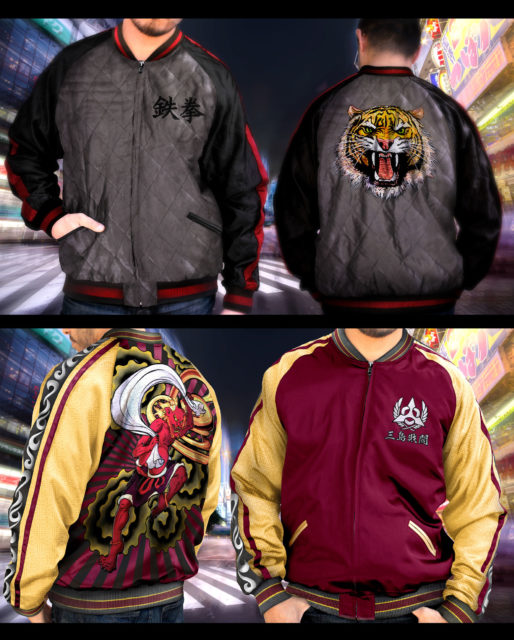
Like Capcom, Bandai Namco traditionally offers an array of the usual T-shirts and toys, but has recently begun offering high-end collectibles such as a $499 Tekken 7 designer jacket and $400 Dark Souls III collectible statue.

“Our goal on the Bandai Namco Official Store is to develop merchandise for our most passionate fans,” Abelina Villegas, eCommerce specialist at Bandai Namco told [a]listdaily, “so the creation of this kind of high fashion piece was also an opportunity for us to expand the messaging around our Tekken 7 campaign to acknowledge that Tekken is a lifestyle brand.”

Nintendo

Nintendo is a great example of how merchandising can help set a gaming brand apart from apparel to toys and most recently, a partnership with Universal Studios. The gaming giant even has its own retail store in New York. “We want to be the right intellectual property. We want to do this in a way that is a growing, sustaining type of volume—not hits and misses,” Nintendo president, Reggie Fils-Aimé told [a]listdaily. “From that standpoint, we’re looking at a wide range of categories. Wearables certainly are huge. Collectibles are a big opportunity. The relationship we have with companies like Hasbro and Mattel, bringing our intellectual property to some of their game elements like the Mario-themed Uno set of cards that we’re bringing back. There’s a lot of activity that we’re doing in the space. But the main thing is that we want this to be an upward trajectory growth business, not a cyclical business.”

Royal Caribbean Is Using Tech To Entice Millennials To Set Sail

Royal Caribbean recently launched its latest billion dollar cruise ship, Harmony of the Seas, in the US. The world’s biggest cruise ship joins sister ships Oasis of the Seas and Allure of the Seas as three of the most technologically advanced vessels on the seven seas.

Royal Caribbean’s chief marketing officer, Jim Berra, told [a]listdaily that these new ships, as well as the launch of last year’s Anthem of the Seas (which includes an Xbox One gaming lounge above the bumper car attraction) have been designed to target millennials. “We’ve shifted dollars out of more traditional advertising into all forms of digital,” he said. “We’re showcasing what we have to offer to a maturing millennial market. In particular, millennials with kids is a big area of focus.”

Berra said Royal Caribbean, like the entire cruise industry, had seen a slight downward trend in attracting new-to-cruise guests on their first vacation at sea in recent years. But Royal Caribbean managed to reverse that trend this year. “We’re attracting that maturing millennial family that has been disproportionately represented,” Berra said.

The company has been using everything from ultra-high-speed internet, to virtual reality, to video games to land these new passengers. “We do have a competitive advantage with Wi-Fi connectivity with Voom and OC3,” Berra said, referring to the company’s satellite-based ultra-high-speed internet that costs $10 per day, per device. “We’re running social media happy hours with contests and programming on board that allows our guests to log on for free for a couple of hours and share their stories. We’ll do some prizing off various hashtags. We’re able to do that because we have the speed and bandwidth to allow every guest complimentary and instant access.”

Part of Royal Caribbean’s marketing effort is “full stream ahead” and Berra said the internet at sea is comparable to hotels on land, offering streaming for Netflix as well as web browsing and social media sharing with no latency. All of Royal Caribbean’s ships have Voom high-speed internet and the four newest ships have ultra-high-speed connectivity.

“Anything we develop has to work across any device the consumer brings,” Berra said, referring to the trend in which customers don’t take a vacation from their tablets and smartphones. But for those who don’t have a device with them, Royal Caribbean has created a series of tablet stations throughout its ships to look up all the activities, shore tours and entertainment.

The company is also using its investment in satellite internet to market its newest ships. The company has hand-picked 20 crew members across the fleet in various departments of the ship to serve as social ambassadors. Harmony of the Seas’ Captain Johnny is one of those social influencers.

“People are always fascinated with the captains of our ships,” Berra said. “He’s funny and relatable. It’s a great way to show people an inside look at what it’s like to live and work on board our vessels. And it’s been so popular we’re expanding the program in 2017.”

Royal Caribbean has also tapped into the growing influencer marketplace to attract new passengers as part of its marketing effort. Berra said the company worked with over 50 social media influencers this year, including Dan Moore (@danandmoore), Anika (@literallyanika), Tyson (@tysontravel), The Vons (@thevonfamily), Marisa (@missmarzipan) and Jack Morris (@doyoutravel) across Instagram, Snapchat and YouTube.

“Last year with Anthem of the Seas we did a live Periscope program with Dan Moore and High on Life as part of our ‘Come Seek Live’ program from on board the ship and port destinations,” Berra said. “This year we did a large set of influencer programs while Harmony was in Barcelona. We also did Snapchat as she sailed across the Atlantic. Rather than one large campaign running over a week, we’ve been pushing out this content over an extended period of time while Harmony was in Europe, crossing the Atlantic and in South Florida.”

Royal Caribbean has also “aggressively” used 360-degree video content created by Dan Moore on Harmony in Europe to market the ship. “We’ve seen millions of non-paid views so far across Facebook 360 and YouTube 360,” Berra said. “We’ve just scratched the surface of what we can do. The next step is to move more into virtual reality as that tech becomes more prevalent and the user base grows. It’s a great way to experience ships and activities and also ports of call. Until you cross the gangway you have lots of questions as a first-time cruiser. The killer app for getting people excited about cruising is video, and video will become more 360 moving forward.”

Video games have also become a way of life for the majority of passengers around the globe, including the older audience that Royal Caribbean still markets to as a “mass market brand.” “Video game areas like the Anthem’s Xbox gaming area and arcades are very important,” Berra said. “They won’t be number one in marketing but it needs to be part of our offering because it’s part of people’s daily ritual. We’ve done that with our newer ships, and it doesn’t require a massive footprint so we can expand it to other ships. And where things are heading with augmented and virtual reality will be very important.”

Berra also sees eSports potential at sea, and the company has a partnership with Microsoft and Xbox. “I do expect us to push harder into gaming,” Berra said. “We have a partnership with Madison Square Garden and they’re hosting eSports events. There are a couple of different ways to reach that market, and it’s untapped. We have the connectivity and the idea of having live internet-based gaming anywhere in the world is a cool area for us to explore.”

How Movember’s Message For Men’s Health Has Grown Throughout The Globe

In his lifetime, a man spends about six months shaving. But over the last few years, for a one-month stretch in November, razors are relegated to the cupboard in favor of letting the whiskers ride.

Whether it be full-on displays of upper lip art, or a something that looks more like a pencil sketch, a bunch of bristly bros across the world have come together for one cause—raising awareness for men’s health by maintaining a mustache no matter how mountainous the task, or itch, may be.

Thirteen years after four friends in Melbourne brought the mustache back to fundraise and focus efforts on men’s health, another Movember comes to a close today.

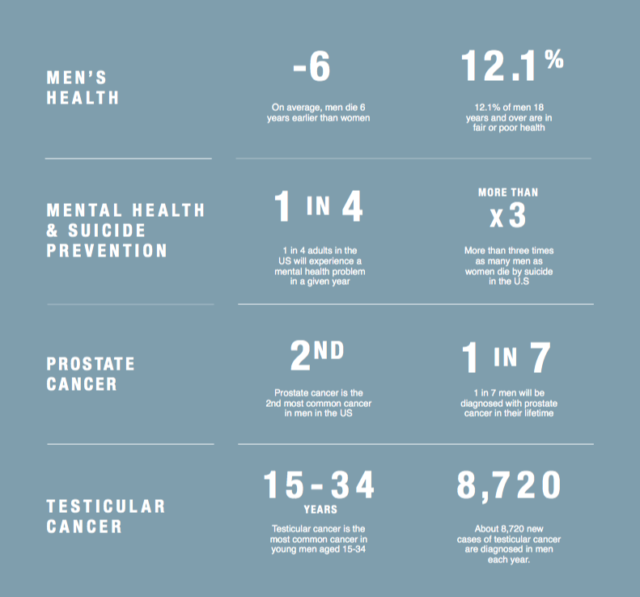
Movember. Mo problems. Mo mustaches—all thanks to the Movember Foundation, which has become a global movement and raised more than $710 million in 21 countries for 1,200 men’s health projects focusing on prostate cancer, testicular cancer, mental health and suicide prevention since 2003.

screen-shot-2016-11-30-at-11-19-56-am

“Men are dying too young, on average, six years younger than women, and we can’t afford to stay silent,” Mark Hedstrom, senior vice president of global operations at the Movember Foundation, told [a]listdaily. “When it comes to their health, too many men don’t talk, and don’t take action for their health. We want men to live happier, healthier, longer lives and work toward doing so by running awareness and fundraising activities year-round, with the annual Movember campaign in November being globally recognized for its fun and innovative approach to raising money and getting men to take action for their health.”

Mustachioed men have increasingly been sharing the significant story, and it’s a progressive work in process. By 2030, Movember aims to reduce the number of men dying prematurely by 25 percent.

“For years, it was a great way to build awareness and establish our brand,” Hedstrom says. “This year, and moving forward, our messaging is about the causes we support. Our goal, to ‘Stop Men Dying Too Young,’ along with our focus on the stories of real men and women who have been impacted by prostate cancer, testicular cancer or mental health issues, either directly or through family and friends, exemplifies how our organization is undeniably maturing and evolving.”

The foundation demonstrated a diverse approach to marketing this year by partnering with brands like Jeep, Jameson, Visa and Sofar, among others, to collectively amplify their message.

Hedstrom says the support of their partners has been invaluable, and the relationships continue to help drive Movember’s success by increasing visibility of the cause to raise critical funds through internal participation and marketing efforts, and by creating unforgettable experiences for the Movember community.

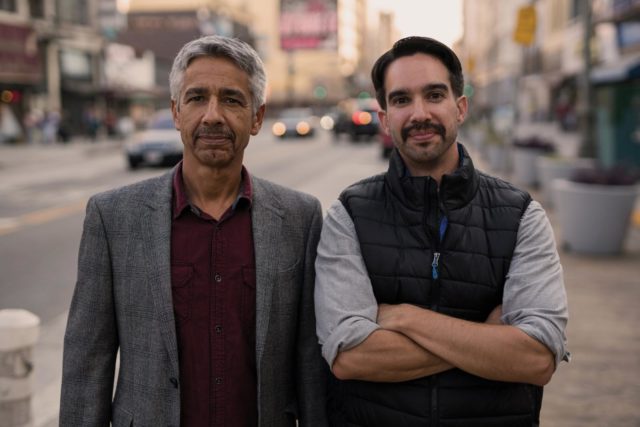
movember_david-andrew_hires

The creative and branding for this year’s Movember was focused on highlighting ‘Real Stories from Mo Bros and Mo Sistas’ with deep ties to the cause, and a consistent loyalty fundraise.

The concept was further evidenced in the content, visuals and stories throughout Movember.com and the foundation’s social media platforms. On Sunday, the Movember story moved on to Snapchat Discover as men from all over the world showed their support for the stache.

Movember has also drawn support from celebrities from all industries in year’s past. Remember the ones LeBron James and Aaron Rodgers had? And just look at the one Marcus Mariota is sporting this year. The foundation also has influencers and ambassadors like Bubba Wallace, Ian Somerhalder and Colman Domingo who use their platform and audience to start conversations that encourage people to join the movement.

Shaving brands like Harry’sGillette, Braun, Remington, Proraso, Barbosal, Neutrogena, Dollar Shave Club and The Art of Shaving have organically aligned their efforts for Movember in recent years, too.

“We work extremely hard to build and maintain strong relationships with our community members, which is done primarily through our development team who are on the ground connecting with loyal supporters throughout the US,” Hedstrom says. “We also recognize the five million in Mo Bros and Mo Sistas who reach certain fundraising thresholds with various rewards.”

The Movember Foundation is uniquely placed to address the crisis of men dying too young at a global level. The overarching goal is to help make change happen sooner, and they’re doing that by prioritizing the funding of three of the biggest health issues faced by men—prostate cancer, testicular cancer and mental health.

Hedstrom says they’re supporting ground-breaking programs all over the world and engaging with men where they are to understand what works best to ensure a long-term impact.

“We’ve been amazed to see how much it has created a deepened connection with our supporters, and inspired others to take action for their health, or the health of a loved one,” Hedstrom says. “From humble beginnings, the Movember movement has grown to be a truly global one. The Movember Foundation wouldn’t be where it is without the enthusiasm of all of those men and women around the globe.”

Follow Manouk Akopyan on Twitter @Manouk_Akopyan

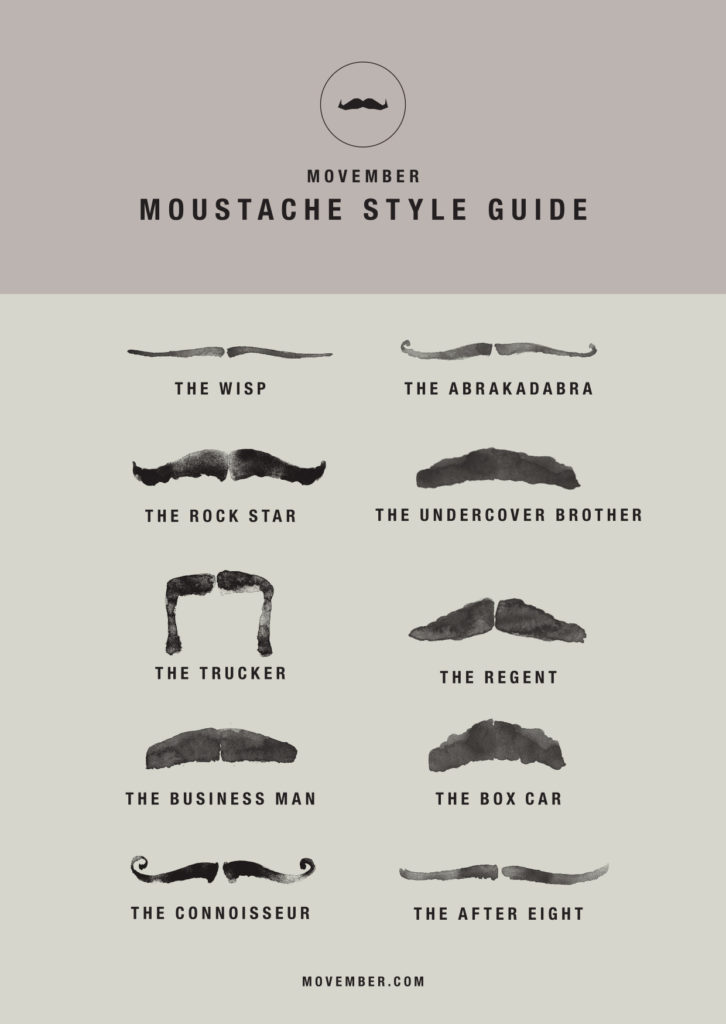
movember_styleguide

Jinx Sees Huge Opportunity In ESports Apparel

Jinx Inc. has been making gaming clothes for 17 years. The company recently launched a pair of new lines: Jinx Brand, which is a collection focused on gaming, and Jinx Pro, an original label catering to professional gamers and eSports enthusiasts.

These are the first offerings since the company hired John Nite as vice president of creative and product, who previously served as design director at the traditional sports apparel company Under Armour.

Jinx currently works with Rick Fox’ eSports team Echo Fox as well as Team Liquid, providing jerseys and clothing for the players as well as their fans. Both teams will see an expanded line of clothing in 2017.

Jinx co-founder and CEO, Sean Gailey, explains to [a]listdaily why the company is investing in eSports merchandise in this exclusive interview.

Why did you decide to launch these two lines?

Jinx was created to celebrate gaming culture and lifestyle. Video games are not just something we do, they are woven into who we are. That passion and expertise uniquely positions us to establish the Jinx Brand and Jinx Pro lines as the gold standard for core and competitive gaming apparel at an unprecedented scale.

What differentiates the two lines from other gaming and eSports clothing out there?

Both the Jinx Brand and Jinx Pro lines offer consumers a means of paying tribute to not just one particular video game license, but rather gaming culture as a whole.

How are you marketing these two lines differently to gamers and eSports fans and what type of crossover is there? What’s the messaging?

Jinx Brand is a collection of core clothing featuring soft fabrics and the relaxed attitude of gaming. We wanted to create something that is comfortable to wear while playing, yet versatile enough to be worn out and about. Jinx Pro caters specifically to professional gamers and eSports enthusiasts. Maintaining focus while playing to win requires comfort and confidence. The Jinx Pro line offers styles on par with those of mainstream sports. While there are plenty of gamers who will relate to both product lines, we felt that there was enough of a difference to separate the two.

How big is the female gaming audience across both lines? How big of a male audience is there?

This first launch offers a fairly wide product offering for both men and women, with a few more cut and sewn pieces such as joggers for men. By wave two (early 2017) we will be rolling out with even more women’s designs, at which point both lines should be an even keel.

What eSports teams and pros are featured for jerseys or other clothing?

Currently, we design team apparel for both Team Liquid and Echo Fox.

How are you working with team owners, casters and personalities for Jinx Pro?

Jinx has been around for nearly seventeen years. In that time, we’ve managed to befriend some truly amazing companies and individuals. The minute word got out that we were planning on launching our product lines, the wave of support we received was astounding.

Will teams be wearing any of your clothes in competition?

Jinx Pro is the foundation for the performance jerseys we developed for our sponsored teams, Team Liquid and Echo Fox. The only difference between our team jerseys and Jinx Pro line is the branding itself.

How important is it for your brand to be seen worn by pro gamers and other eSports personalities for authenticity?

We feel that the eSports community will happily embrace the Jinx Pro line. Gaming dominates popular culture, but is underserved by the fashion industry. It’s especially striking how underserviced professional eSports players are compared to their counterparts on ESPN (like the NBA or NFL) in terms of professional-grade performance wear. As a company full of competitive gamers, we simply designed the type of products we ourselves would like to wear.


Learn everything you need to know to invest in today’s fastest-growing media channel—Competitive Gaming and eSports on 2.16.17 in Los Angeles. Go to alistsummit.com for more info.

Why Cap’n Crunch Is Bringing Branded Content To The Web With A Fake Morning Show

Cap’n Crunch is tapping into the spirit of its cereal to cultivate equity among consumers through The Earliest Show, a brand-sponsored entertainment series and ad concept made in partnership with Funny Or Die.

The fictional six-episode series—a morning show that takes place in the middle of the night—stars perky co-hosts Ben Schwartz (Parks and Rec, House of Lies) and Lauren Lapkus (Orange Is the New Black).

Quaker, the parent company of Cap’n Crunch, created the video vehicle to connect with nocturnal male millennials who snack at non-breakfast times.

“Consumers have more control over their media consumption than ever before,” Jessica Spaulding, marketing director for Quaker, told [a]listdaily. “It made more sense for our brand to find ways to be part of their experience versus just trying to interrupt it. Through The Earliest Show, we’re creating meaningful connections with our consumers that cater to their very interests, humor and aspirations.”

Each episode of the digital shenanigans ranges roughly to a dozen minutes and features guests such as Reggie Miller, Reggie Watts, Jake Johnson, Jane Levy, Thomas Middleditch and Pedro Pascal. The hijinks are highlighted by the comedian Schwartz botching a live on-air proposal in the first episode, and the eventual unraveling of his life that ensues afterward.

The show’s skits are integrated with cooking tutorials and wacky infomercials at the halfway point of each episode.

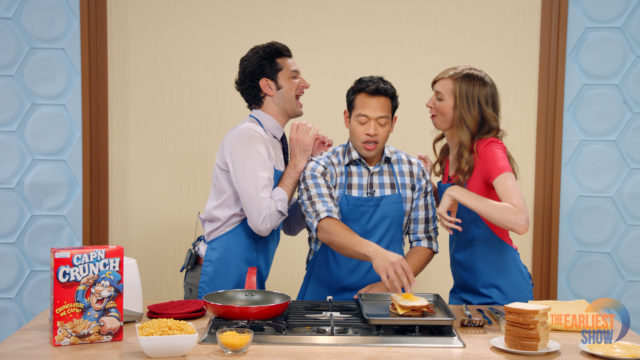
tes-teaser-cooking

“In the series you’ll see the brand is featured in infomercials that break up each episode and within the show as a segment sponsor, or featured in cooking segments. We wanted brand integration to feel natural to the humor of the show, and to do that we had to find the right balance of being featured versus not appearing at all,” said Spaulding. “We saw an opportunity to disrupt the space by speaking specifically to [millennial males] in a way that really breaks through their daily clutter and makes them think about the brand in a new way. Our work with Funny or Die demonstrates how a brand can put a platform, in this case The Earliest Show, at the center of a marketing program versus starting with a tactic such as a 30-second spot or pre roll.”

Spaulding said that co-developing and co-creating the series with Funny Or Die and their president of digital, Chris Bruss, has been instrumental to the success the comedy show has seen since it premiered in late October.

“From the beginning, it’s been such an integrated and collaborative experience for both sides and I think Chris would tell you that, too,” Spaulding said. “We worked together to land in a spot where we’ve created some awesome content for the consumer.”

Marketers from companies like Starbucks, Geico, Chipotle and Nutella are increasingly using branded content in favor of pre-roll ads to elicit emotional responses from viewers. The alternative entertainment is outperforming the traditional and sometimes archaic format.

Original branded content generates an average of 86 percent brand recall among consumers—a much higher number than the 65 percent with pre-roll advertising—according to a July study from Television News Daily.

Cereal brands in particular are experimenting in unique marketing to share and showcase their stories for next-level engagement. Earlier this summer, Kellogg’s and Post both used virtual reality to connect with cereal-loving enthusiasts and General Mills, who has its own newsroom and has become an earned media machine in recent years—dove into eSports and became the first presenting sponsor of Yahoo ESports Live, an hour-long pair of weekly live shows. Cap’n Crunch previously poured branded content over its cereal in 2013 with an animated YouTube show.

All of this marketing is to combat the stale and soggy sales statistics cereal brands have been dealing with in recent years. By the end of 2016, sales of hot and cold cereals will have declined by about 17 percent from $12.7 billion in 2009, according to research firm IBISWorld.

The Earliest Show is not your typical brand sponsorship, and it has the potential to turn some heads in advertising. Whether or not it’s savored or soured by the patrons they’re targeting remains to be seen.

Follow Manouk Akopyan on Twitter @Manouk_Akopyan


How ‘Final Fantasy XV’ Promotions Were Powered By Its Fans

This week, Ubisoft’s Watch Dogs 2 launches on PC and The Crew gets a Calling All Units expansion. Darksiders: Warmastered Edition is also now available, harnessing the power of both a Horseman of the Apocalypse and how nostalgia fuels remastered video games. But the star of the week, aside from turkey leftovers, is a not-so-little title by Square Enix that has a lot of gamers “fantasizing” about November 29.

Final Fantasy XV

If you have any Final Fantasy fans on your payroll, don’t be too surprised if they call in “sick” this week as they return to the world of Eos for about a million hours of gameplay. This wildly-imaginative (and often confusing) video game franchise has inspired full-length animated films, a concert series and has even been the face of Louis Vuitton—but despite some very clever marketing, nostalgia plays a major role in why fans return again and again.

To explore this concept, Square Enix invited game developers and fans to share how the franchise affected their lives using the hashtag, #FFLegacies. The Final Fantasy XV: New Legacy campaign culminated into a video that showcased these memories and ideas, while allowing a chosen few to preview the game for themselves and showing their reactions to the camera. “By having fans share their personal experience,” Square Enix says on the campaign website, “it serves as a reminder that much like how each Final Fantasy has a completely different story, world and characters, we all bring distinctive and new perspectives to the legacy that is Final Fantasy.”

Lucky fans in the UK got to check out the game a week early and have a bit of experiential fun when Square Enix teamed up with IGN for the Final Fantasy XV IGN Premiere event in London. The exclusive event on November 22 featured life-sized creature statues, game demos and even a potion-making station. For those who weren’t able to attend, there was a one-hour live broadcast from the activation with developer interviews and never-before-seen game content.

Microsoft was definitely on board to help promote the title, partnering with Square Enix to create a special edition FFXV-themed Xbox One that features a unique, Magitek armor design. In honor of its DC cross-over event, the CW is giving away one of these consoles along with an Xbox One code for the game through November 30. Whether or not a fan gets their hands on the special console, anyone with an Xbox can check out the Final Fantasy XV Experience, where they can view character and creature profiles, watch trailers and participate in a quiz.

Sony got in on the action too, offering a special Deluxe Edition PlayStation 4 Slim bundle that features its own custom console and controller along with a steelbook, Blu-ray of the Final Fantasy movie and a number of exclusive in-game items. Sony also offered exclusive pre-order bonuses for PS4 that include an in-game weapon, vehicle skin, DLC and a PlayStation home screen theme.

Amazon Japan participated in a publicity stunt in which randomly-selected shipments arrived in boxes that appeared to have been ripped open, exposing copies of Final Fantasy XV inside. The stunt worked, with recipients posting pictures and comments on social media. Meanwhile, in London, renowned chef Jamie Oliver created a special menu for his restaurant to commemorate the game from November 22 to the 29.

https://twitter.com/JamiesFifteen/status/799277670349545472

Speaking of food, the US is getting its first-ever Final Fantasy-themed beverage thanks to Jones Soda and Target. Those who show proof of purchase for Final Fantasy XV on either PlayStation 4 or Xbox One will receive a free bottle of Wiz’s Energizing Elixer at participating Target locations. The orange and cream soda-flavored soda can also be purchased separately in-store.

As mentioned earlier, the game series is notoriously time-consuming and so imaginative that it borders on confusing. Such was the case when Final Fantasy XV was featured on Conan O’Brien’s Clueless Gamer segment. O’Brien, along with guest Elijah Wood found themselves more dumbfounded than excited after spending more time in the game than any other on the show. “I don’t know what we achieved,” O’Brien commented. “I don’t know what we were trying to achieve. I have no sense of satisfaction.”

O’Brien later yelled, “You’re a mass murderer of people’s time!” at the developers as they laughed. “Babies will never be born because of you! Crops will not be brought in from the fields! That said, good job.”

MZ CEO Explains Mobile Game Marketing Success

At the recent Web Summit in London, MZ (formerly Machine Zone) CEO Gabe Leydon spoke on stage about the company’s massive marketing efforts that have helped it maintain a position near the top of the mobile game charts. Leydon described MZ as “probably the world’s largest direct response marketer and largest single product marketer on mobile.” He presented some astonishing facts and figures about MZ’s marketing efforts.

mz-gabe-leydon
Gabe Leydon, MZ CEO

MZ’s huge hits Game of War: Fire Age and Mobile Strike have maintained a top five position in the top-grossing charts on both Android and iOS for years. That’s quite an achievement, and an impressive marketing effort is part of the strategy. Leydon sees MZ as a tech company where marketing and games are both highly important. “Machine Zone is a real-time technology company,” Leydon said, “We deal with vast volumes of data that is moving very, very quickly. We manage everything through data manipulation. When we run our games, we monitor everything we do. When we run our marketing, we monitor everything we do. We brought a lot of financial-style workflow to the games business and to the marketing business.”

Leydon recalled how DeNA came to the US in 2011 and spent $7 million on advertising in one week, “and it scared the hell out of us,” Leydon recalled. “We saw what the future of the industry was going to look like. We knew marketing was going to be really important. We probably over-reacted to that, to be honest. We realized that we’re competing in an auction marketplace. When people are buying on Facebook or buying on Google you have to compete against somebody else who’s also making a bid for that same impression. So your intelligence when you’re going into that bidding process really matters, considering how many bidders you’re actually competing against to buy media.”

“We just focused on the highest quality networks first; we built out our Facebook and our Google capabilities and then we went from there. Now we’re integrated into 300 different networks and our marketing team is over 200 people,” Leydon said.

How does MZ maintain its position on the top-grossing lists with two games? Marketing is critical, according to Leydon. “When we look at our marketing, you have to think about edges. What is my edge over the marketplace?,” Leydon said. “We track over 400 KPIs (key performance indicators) when we’re doing our marketing. That’s a tremendous amount of data we’re looking at when we’re making decisions on where we’re going to spend next.”

“Another big part of it is diversification in your styles of marketing,” Leydon continued. “Are you doing video, playable ads, banner ads, [or] fullscreen ads? I believe we make about 20,000 creatives a week now. It’s a very intense process, and I believe on Facebook we have about 50,000 different campaigns running at any moment. It’s very, very hard to do. Diversification is the most important thing you can do as a marketer, but it’s a very difficult and daunting task for most people.”

MZ has gone beyond mobile advertising into the domain of TV advertising in a big way, using major talent like Kate Upton, Arnold Schwarzenegger and Mariah Carey, purchasing time during the Super Bowl for lavishly produced ads. “We didn’t go to television because we were excited about television,” Leydon said. “We went to television because we had pretty much maxed out the mobile digital market. What we found is that television is really bad. Most people lose money on TV because it’s not trackable, the ratings are questionable whether they’re actually correct or not, and there’s a lot of confusion in the space just in general.” From a technical point of view, Leydon feels the TV market is very immature.

“What we found is that while most of your television ads don’t do much, what they do have is a tremendous effect on your mobile digital ads,” Leydon said. “When people see Arnold Schwarzenegger on television, and they look down at their Facebook app and they see Arnold Schwarzenegger on a video ad there, they make that emotional connection from what they’ve seen on TV and it legitimizes the product in a lot of ways.

“You spend some money on television, and it dramatically increases your distribution. It’s a great place to go when you’ve essentially conquered the mobile digital market.” That said, the television market is difficult, both in creating effective ads and in measuring the results.

What’s next for MZ? Partnering with Square Enix on a Final Fantasy mobile RPG, something Leydon has very high hopes for. “We are by far the best at what we do,” Leydon said. “We are probably the largest direct-response marketer in the world, we’re probably the largest single product marketer on mobile in the world. When you combine that with something as loved as Final Fantasy, I think we’re competitive with anything that Nintendo can put out.” That’s a very tall order, but MZ certainly has the infrastructure to pull off something on that scale.

Leydon is proud of what MZ has accomplished, and he stresses that it’s not a lucky break that has brought the company this far. “We’re not a miracle business, we work extremely hard,” said Leydon. “I feel we’ve created a unique business in the market, because we don’t rely on luck. We rely on change. Your product and process should be changing constantly because the world is changing constantly.”

Leydon’s advice for other companies is straightforward: continue to innovate, surround yourself with experts, and change quickly.

American Express Small Business Saturday Strategy Consists Of Shaq, Soap And Social

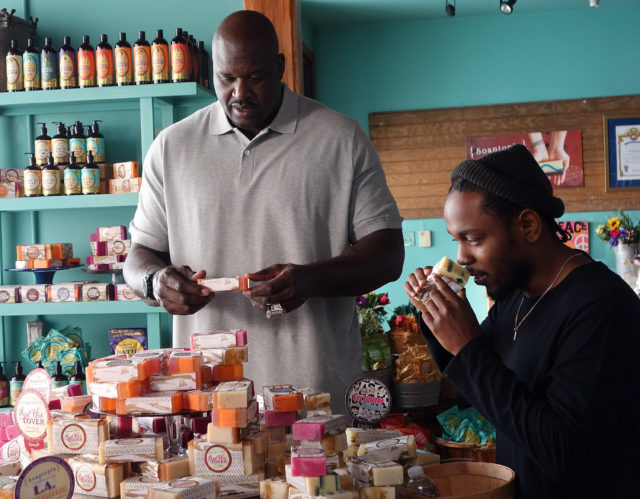
American Express is reinvesting into the company’s largest and longest running campaign in “Shop Small” by enlisting basketball icon Shaquille O’Neal and rapper Kendrick Lamar for a social video and experiential campaign in preparation for the consumer shopping holiday Small Business Saturday on Nov. 26.

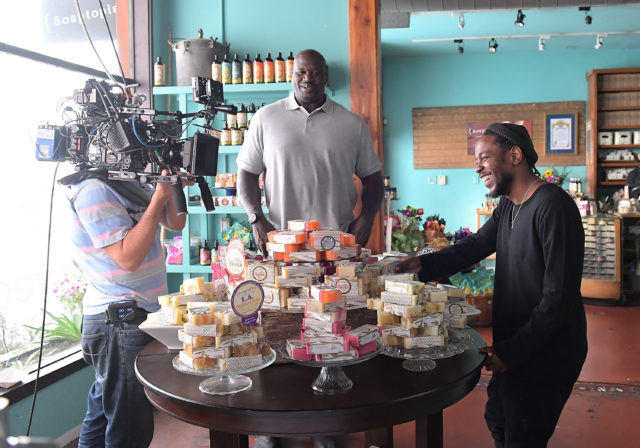
The comical online video series tipped off with Shaq and Kendrick enjoying an afternoon at a local Los Angeles soap shop sampling scents like the “Luscious Lamar Bar” and “Shea Butter Shaq.”

“As a card member since 1992, American Express has been a part of my life from when I began my NBA career to today,” O’Neal said. “I am excited to partner with such an internationally respected brand that has supported small businesses for more than 25 years. As a businessman myself, I understand how important it is for our communities to shop small and have a personal stake in supporting American Express’ 2X rewards campaign.”

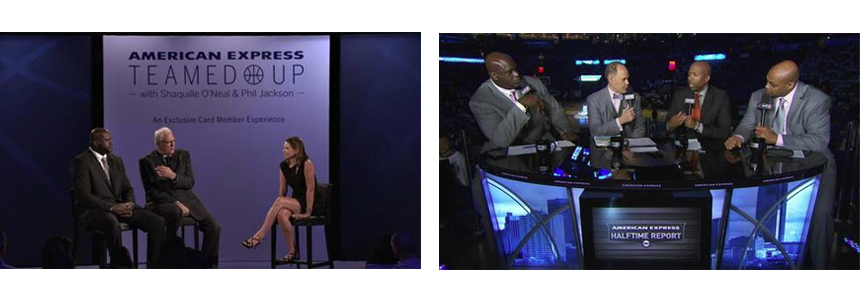
In addition to more spots still to be unveiled on the financial services corporation’s social channels, they’re also getting experiential with their marketing by creating in-venue experiences for NBA fans for the six teams—Warriors, Nets, Heat, Bulls, Lakers, Celtics—they sponsor. Whether it’s sponsoring the NBA on TNT halftime show, buying ads on Twitter for the platform’s deal with the NBA, hosting intimate events with stars like Kobe Bryant, or becoming the first brand to livestream a sporting event at a US IMAX theater, American Express continues to play some serious ball as the official card of the league.shaqThe “Shop Small” campaign ties into the greater national shopping holiday American Express created in Small Business Saturday (SBS), a consumer-marketed day designed for their card holders to counter Black Friday and Cyber Monday and enable local business instead.
According to an SBS survey released by American Express this month, 48 percent of respondents who are aware of SBS and who plan to shop once the Black Friday dust has settled said they expect to spend more on the day this year than last year—the highest amount yet recorded. Reflecting on the rising importance consumers place on supporting local businesses, two thirds of respondents said they plan to spend at least $100 on the day.

SBS is also promoted by a commercial featuring Frozen actresses Kristen Bell and Idina Menzel as they shop in a small antique store to find the perfect holiday gifts for friends and family.

Brad Minor, vice president of global brand partnerships and experiential marketing for American Express, joined [a]listdaily to dive deeper into the strategy for their “Shop Small” campaign.

Behind The Scenes: Shaquille O'Neal And Kendrick Lamar Shop Small With American Express In Los Angeles

The “Shop Small” campaign is a social video and experiential campaign that encourages people to patronize small businesses. How has the campaign been received thus far? How does “Shop Small” fit into the overall American Express corporate strategy?

Now in its seventh year, Small Business Saturday (SBS) is larger than ever, and we’re excited to support it with our largest offer ever—the Shop Small for 2X Rewards offer—which gives card members the opportunity to earn twice the rewards when they enroll an eligible American Express card and shop at qualifying small merchants through December 31. This campaign expands on our ongoing support for small businesses, while delivering valuable rewards to card members. Founded in 2010, SBS supports the independently owned businesses that help create jobs and help make local economies thrive. According to the 2015 SBS Consumer Insights Survey, more than 95 million consumers shopped at small businesses on SBS, spending approximately $16.2 billion. This year, we’re providing small businesses with even more free resources, customizable materials and educational content to help them prepare for the day, and a successful holiday shopping season.

American Express has been a partner with the NBA for quite a while. Why are NBA fans a specific audience you’re trying to reach? What are the special in-venue NBA experiences supposed to accomplish from a marketing perspective?

We know our card members—and our card members love basketball. American Express has teamed up with the NBA and its teams for more than a decade to deliver experiences that heighten our card members’ passion for the game and bring them closer to their favorite sport. For our in-venue activations, we found a fun way to bring our ‘Shop Small’ campaign and partnership with Shaq to our partner teams and cities. By supporting a local small business in each of the six cities, our goal was to continue to drive awareness of the 2X offer and encourage NBA fans and card members to enroll and shop small.

What kind of social and experiential campaigns work best with American Express cardholders?

We are always looking for ways to provide our card members with premium access to memorable events and experiences. We know where they want to be, and we strive to make their experiences even better. Our most successful programs provide unique value at each stage of the customer journey—this includes everything from early access to tickets, in-venue opportunities, exclusive fan access and post-event surprise and delight moments to keep the memory alive.  

Behind The Scenes: Shaquille O'Neal And Kendrick Lamar Shop Small With American Express In Los Angeles

What is American Express’ social media strategy going to be in this particular space moving forward? Do you plan on experimenting on other channels and platforms?

The campaign will be featured across multiple social platforms including YouTube, Facebook, Instagram, Twitter and Snapchat. We’ve also started to explore Instagram Stories as part of this campaign. The content is light-hearted and fun to watch, so we’ve seen really strong engagement across platforms. Additionally, we’ve teamed up with influencers, many of whom are small business owners themselves, to help motivate their followers to shop small. Because this is a movement that everyone is excited to support, the influencers are excited to participate in an authentic and genuine way.

You’ve long been a sponsor of Shaq, and now Kendrick Lamar. Why is it so important to work with social influencers to get the right brand message across?

American Express continues its longstanding tradition of working with individuals who embody the brand, and what it represents.

How will you be further marketing “Small Business Saturday” this year?

With Shop Small Studio and Boot Camps, we’ve added an array of new activities and resources to help make it the most successful SBS, both for small businesses, and the community.

For Shop Small Studio, we completely refreshed and expanded our online Shop Small Studio. Small business owners can print customizable marketing assets to promote their businesses and SBS events at ShopSmall.com, including flyers, posters, website badges, social media assets, Facebook cover photos and many more. SBS 101 materials include how-to guides, and tips and insights from small business owners and influencers. SBS 101 tools are designed to educate, prepare and inspire small business owners to participate in SBS through videos, articles, infographics and more. We’ve also enlisted well-known entrepreneurs to share their secrets including Tyson Wheatly, Erica Domesek, Andrew Steinthal and Chris Stang, and more.

For Boot Camps, we hosted three SBS Boot Camps throughout October in Chicago, New York and San Francisco. Each session focused on how small business owners can excite their customers and market their business on SBS to maximize their presence throughout the entire holiday shopping season. Additionally, we’ve teamed up with Uber, The Infatuation and Daybreaker to offer several events that enhance the overall card member experience and make this year’s SBS more memorable.

American Express is asking consumers to join the conversation and spread the ‘Shop Small’ message to their family, friends and online followers by using the hashtags #ShopSmall, #SmallBizSat and #DineSmall.

How will you measure success of the “Shop Small” campaign?

Card members are encouraged to ‘Shop Small’ by gaining twice the rewards, and our merchants benefit by having the extra support, so it’s really a win-win. If our merchants and card members are happy, then we’re happy!

Follow Manouk Akopyan on Twitter @Manouk_Akopyan