Let’s Celebrate: Video Game Anniversary Marketing

The original Xbox gaming console launched on November 15. It went on to make an undeniable mark on video game history by introducing a third party into a console race that was largely dominated by PlayStation and Nintendo systems. Xbox, and especially its successor, the Xbox 360 took the video game industry by storm by emphasizing online play, growing the Xbox Live service, and bringing beloved franchises such as Halo, Gears of War (which is also celebrating its 10-year anniversary) and many others.

Xbox celebrated its 15-year anniversary yesterday, with players having spent over 100 billion collective hours gaming, unlocking over 32 billion Achievements, and finding more the 4 billion friendships. Microsoft encouraged fans to post their favorite memories on social media using the hashtag #15YearsOfXbox, which has led to a huge number of well-wishers and waves of nostalgia. The Xbox team also spent the day playing both alongside and against its community across a variety of games, some of which were livestreamed so that those that couldn’t participate could still watch. All this, of course, was accompanied by giveaways featuring special content for games such as Forza Horizon 3 and Halo 5: Guardians.

This year is rather exceptional for its anniversaries. The PlayStation Store began celebrating its 10-year anniversary last week with (what else?) a huge sale, which is currently in its second round. Blizzard had three reasons to party hard the week before, given how it was the 25th anniversary of the company, its 10th BlizzCon, and the 20th anniversary of its immensely popular Diablo series. That’s a lot of celebrating, and 2016 has plenty of marketing opportunities to take advantage of nostalgia to promote new games and hardware.

For example, PlayStation went all out in celebrating its 20th anniversary by not only hosting a massive sale last year, but also by announcing the PlayStation 4 20th Anniversary Edition on December 3, 2014, marking 20 years from when the first PlayStation console launched in Japan. Only 12,300 of the gray (matching the original color of the PlayStation) PS4 were made, which included a matching controller and PlayStation Camera. Sony also made a special 20th anniversary playlist via PlayStation Music on Spotify. Meanwhile, fans in the UK could pick up a special limited-edition SteelBook patterned after the original PlayStation, containing a £20 Wallet for the PlayStation Store and a 12-month PlayStation Plus membership.

Getting back to 2016, a number of exceptional game franchises reached major milestone years. The Civilization series celebrated 25 years of rewriting history with a special collector’s edition of the recently released Civilization VI, which includes a hardcover art book and a commemorative coin set. Sonic the Hedgehog celebrated 25 years in July by throwing a big party for San Diego Comic-Con attendees and announcing Sonic Mania for next year. Bethesda and id Software announced Quake Champions at E3 earlier this year, marking two decades for one of the first game franchises that regarded first-person shooters as a kind of sport. The Dead Rising series celebrated its 10th anniversary by releasing a remastered version of its first game for current consoles and PC, paving the way for the launch of Dead Rising 4 in December. The new game features Frank West, the original protagonist of the series, giving fans all the more reason to jump into the zombie stomp.

Tomb Raider went the extra mile in celebrating 20 years of adventuring with Lara Croft with a multitude of events and releases, including a specially composed music collection, an art book, and the Rise of the Tomb Raider 20th Anniversary Edition, which supports high-end hardware such as the PlayStation Pro and PlayStation VR.

Nintendo celebrated 30 years of The Legend of Zelda by revealing a set of special Amiibo figures in addition to a deluxe, limited edition 2-disc music CD collection in Japan called The 30th Anniversary The Legend of Zelda Game Music Collection. That’s in addition to dedicating a giant E3 booth to promoting the franchise’s newest entry, The Legend of Zelda: Breath of the Wild, which launches next year for the Wii U and Nintendo Switch. This year also saw the 20th anniversary of Pokémon, which was celebrated in a myriad of ways, including a Super Bowl commercial and a special web page where fans look through the franchise’s history among other activities. However, the immense success of Pokémon GO and the newly released Pokémon Sun and Moon are reason enough to celebrate by themselves.

Resident Evil has been celebrating its 20th anniversary for the better part of the year and perhaps longer with remastered versions of previous games releasing for current-generation consoles, the launch of a new game, Umbrella Corps and releasing a T-Virus perfume in Japan. All the celebrating is building up to the launch of Resident Evil 7 in January, which will be one of the first full-length games to include PlayStation VR support from start to finish.

Gamers have a tremendous opportunity to support their favorite franchises, while brands can take this opportune time to join in the festivity with promotions and products that help celebrate decades of video game history. And it’s not too early to start planning for next year, as Final Fantasy’s 30th birthday will take place on December 18, 2017. Square Enix opened its official Final Fantasy anniversary portal website in Japan last September, which currently doesn’t have much, but building anticipation is something that the role-playing series has grown quite adept at.
How Lifestyle Brands Promote Video Games In Style

For many, video games are more of a lifestyle than a hobby, and studies have shown that passionate gamers (particularly in the realm of eSports) often share a crossover passion for other lifestyle brands.

Nike, for example, comes with its own loyal fan base of sports enthusiasts and sneaker collectors. When the company joined forces with EA to promote FIFA 17 with a new cleat, the coming together of fandoms just made sense. “This collaboration came together rather organically,” Nathan Van Hook, senior design director for Nike Football told The Mirror“Our design team spends a lot of our free time playing football—both on the pitch and via video game—we’re pretty obsessed with both. We wanted to create something memorable that brings together the physical and virtual worlds.”

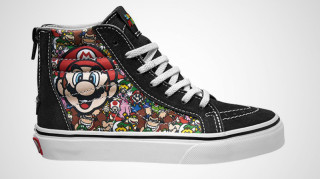
Vans is another brand that represents far more than shoes. Surfers, skateboarders and more don footwear from this iconic brand as an expression of their active lifestyle. Earlier this year, Vans powered up with Nintendo to offer officially-branded shoes featuring retro game controllers and icons like Mario, Link and Donkey Kong.

In January, Louis Vuitton made an unprecedented move by casting a fictional video game character as its spokesmodel. Lightning, a recurring character in the Final Fantasy series, appeared in a number of magazine ads and videos as the star of Louis Vuitton’s Spring-Summer 2016 “Series 4” collection. The partnership with game developer, Square Enix was a celebration of not only Lightning as a character, but of the “global, heroic woman,” as stated on the company’s website.
“This collaboration is not just a promotion of a game, and it is a great honor that the character herself received an offer from a world famous brand,” said Tetsuya Nomura, Lightning’s character designer. “As a result of this collaboration, this has infused new breath into the character.”

Bandai Namco is now offering limited edition jackets inspired by Tekken 7. Previously, merchandise for the popular fighting game was limited to t-shirts and ball caps but now includes a numbered, premium sukajan jacket that retails for $449. We’ve seen how fashionistas have been open to video game crossover, but will gamers be willing to pay premium for designer fashion? Abelina Villegas, e-commerce specialist at Bandai Namco is confident the answer is “yes.”

Designed by Carrie Sleutskaya of Project Runway fame, these jackets are highly-detailed with 440,000 stitches in its embroidery. “Our goal on the Bandai Namco Official Store is to develop merchandise for our most passionate fans,” Villegas told [a]listdaily, “so the creation of this kind of high fashion piece was also an opportunity for us to expand the messaging around our Tekken 7 campaign to acknowledge that Tekken is a lifestyle brand.”

Op-Ed: PlayStation Aims For Future While Nintendo Looks Back

Perhaps it was fated timing or an incredible coincidence that both the PlayStation 4 Pro and the NES Classic Edition launched at about the same time. No matter what the case, we have a fascinating case of two products and brand approaches that are complete opposites of each other. While Sony’s $400 PlayStation 4 Pro is betting that 4K HDR televisions will soon take off, the $60 NES Classic Edition takes advantage of over thirty years of nostalgia with 30 retro games installed onto a tiny console. Guess which one sold out within seconds of launching? Yes, it was the NES Classic, proving once again that nostalgia is a powerful force.

Certainly, this isn’t the console competition video game fans imagined, but it’s the one that’s happening. It might not be a fair comparison, given how the NES Classic has numerous market advantages when compared to the PS4 Pro, starting with the significantly lower price tag, making it the perfect impulse buy or gift. Additionally, the Nintendo is using games that were originally released in the ‘80s, including the original Mario and Zelda games in addition to classics such as Super Punch-Out! There are no expectations that the games will feature cutting-edge graphics or innovative gameplay, just the idea of reliving some of the early days of video gaming or trying to pass on some of those memories to the next generation. As a result, the NES Classic doesn’t need a lot of promotion to sell out—it just needed to exist.

Meanwhile, PlayStation has been working with developers to modify current and upcoming games to support 4K resolutions and HDR technology. So far, critics have been a little hard-pressed to find enough noticeable differences between the Pro and the base model PlayStation 4 with its early games to completely justify the cost.

Then there’s how Sony hasn’t emphasized the PlayStation VR in relation to the Pro, to the bafflement of many, considering how computational horsepower should feed well into a virtual reality experience. As it turns out, the PSVR ended up being a kind of exception. Although outlets have reported that the PlayStation Pro’s faster processor helps to create a smoother VR experience in addition to some graphical upgrades, should developers decide to update their games, the effect is fairly subtle. Furthermore, the PSVR headset can’t take advantage of the increased resolution nor does it support HDR.

Even though some fans may purchase a PS4 Pro for a smoother experience, Sony can’t necessarily rely on early PSVR adopters to drive the console’s sales either. That means the company must work twice as hard to market and grow the new console, and its success will be largely dependent on 4K TV sales. However, the relationship is reciprocal, given how the gaming console is an incentive for more people to upgrade to 4K televisions as their prices continue to drop.

Although PlayStation would probably be happy to maintain its current top-place position with a 48 million (original) PlayStation 4 installed base, the PS4 Pro represents Sony’s attempt to keep up with technology, competing with Microsoft’s Xbox One S (which released in August) and high-powered Project Scorpio, releasing next year. It’s also a test to see how successful a mid-cycle updated console can be.

As Sony works to help pave a path for the future of video game entertainment, it can be said that Nintendo is doing something similar. The NES Classic isn’t just a fun little console for fans. It’s a reminder to everyone about Nintendo’s video game roots and how it left a deep impression on video game history with franchises that are still as popular as ever. Hopefully, those warm feelings will carry over to the spring, when the Nintendo Switch is expected to launch.

From Anime To Hackable Houses: This Week’s Top Game Promotions

Sony’s PS4 Pro is now on the shelves as is the Nintendo NES Classic Edition console—setting the stage for eager gamers to pick up new titles and remember what they loved about previous ones. On that note, Ubisoft will release Assassin’s Creed: The Ezio Collection—a remastered trio of games for current-gen consoles and PC that will get fans excited for the upcoming film. When it comes to hype, Ubisoft and Nintendo have gone all out for two titles that release this week through a string of promotions ranging from music videos to TV tie-ins.

Watch Dogs 2

In 2014, Watch Dogs became the biggest first-day sale of an Ubisoft game and the biggest launch of a new IP ever in the United Kingdom at the time. So when Ubisoft set out to promote the game’s sequel, this publisher went big—like, real-life hacking big. Watch Dogs 2 is a tale of harmful government surveillance, the Internet of Things (IoT) and an underground hacking group called Dedsec. Ubisoft partnered with Major League Hacking, an organization that hosts, sponsors and advertises a series of hacking competitions around North America. Hacking teams are offered challenges inspired by Watch Dogs 2, with the winners receiving free copies of the game. At the end of the year, the fastest time out of all events will win a trip to Montreal to meet the Watch Dog 2 developers.

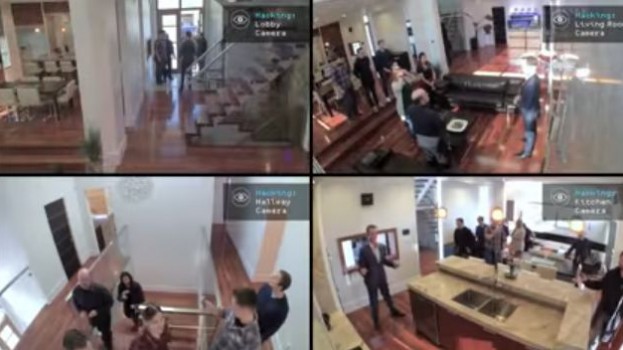
On October 13, Ubisoft invited game fans to an interactive tour of a smart home outfitted with HAUM, the in-game connected home technology used in Watch Dogs 2. The tour was captured on surveillance cameras and streamed live on Facebook and YouTube, where online fans were invited to “hack” everything in the home from the lighting to the music and even the temperature. The event attracted more than 350,000 impressions during the event, according to Lucile Bousquet, senior director of marketing and communications for Ubisoft Canada. To make the event seem more real, Ubisoft coordinated with Canadian news outlets, TSN and RDS, working with Bell Media to simulate the sites being hacked. Bousquet told Media In Canada that as a result, 50 percent of traffic to Ubisoft’s site on October 13 was from TSN and RDS.

ubisoftlivehack-623x350
Footage from the HAUM livestream, where online fans could tamper with items around the home.

Continuing the “Dedsec R3sistance” campaign, Ubisoft invited social media users to take a closer look at what they post online. The “Selfie Reveal” analyzes` a user’s photo based on details like head tilt, gender, age, background and emotional state. Apparently “Big Data” thinks I’m a 30-year old egomaniac without a mustache, which I can totally live with. Other details are a bit creepy, though, which is the point—reminding you that social media sites can often use your selfie for advertising without your permission, that the government can use facial recognition to locate you and other disturbing but true factoids to get you in the mood to join a resistance.

Just when you thought you couldn’t get more paranoid, Ubisoft partnered with Vice for a documentary series about “Big Data” and how online information can be used against us. Fans who want to “join” the fictional hacker group can sign up on the Ubisoft website to receive exclusive in-game items, apparel and custom video game consoles.

Ubisoft is showing its artistic side by producing a music video for DJ, Oliver Heldens and his latest track, “Good Life.” The partnership with Spinnin’ Records places Watch Dogs 2 front and center, with brightly-colored images inspired by “the lifestyle of in-game hacking collective, Dedsec.”

The release of Watch Dogs 2 may garner extra attention thanks to real-life hacking in current events such as Anonymous calling out mainstream media or the Podesta emails being released on WikiLeaks. Even in the fictional world, hacking is a popular theme thanks to shows like Mr. Robot. While partnering with Anonymous is most likely not on the agenda, Mr. Robot star, Rami Malek did play Watch Dogs 2 on a November 13 Twitch livestream, and viewers were able to suggest in-game challenges for Malek to attempte. Twitch Prime members received exclusive, in-game items such as XP boosts and customization options, as well.

Pokémon Sun and Moon

Nintendo is enjoying some serious brand awareness thanks to Pokémon GO and has been hard at work getting fans excited for Pokémon Sun and Pokémon Moon. Although the publisher devoted most of its E3 resources to The Legend of Zelda: Breath of the Wild, a livestream demonstration of Pokémon Sun revealed a number of big changes to gameplay in an attempt to make the title more accessible to new players. Not only do the games offer hundreds of new Pokémon to collect, but players will interact with a revamped battle system, Pokédex and even new online battle modes.

pok-mon-sun-and-moon-anime-new-trailer-teases-z-moves-features-rotom-pokedex-and-new-generation-pok-monOne of the most notable creatures to appear in the game will be Mimikyu, a lonely Pokémon that hopes to make friends by impersonating Pikachu—the famous yellow creature that serves as Nintendo’s face of the franchise. A special music video about Mimikyu was released on the Japanese Pokémon YouTube channel, garnering over two million views in a matter of weeks.
A month prior to the game’s launch, Nintendo released a special demo for the 3DS that contains stand-alone gameplay from the finished titles. Those who complete the first part of the demo can transfer a powerful Pokémon called Greninja over to the full game once it’s purchased. Pokémon Sun and Moon are linked to the time on the player’s 2DS or 3DS, and performing certain tasks within the special demo on certain days awards players with in-game items they can transfer, as well. In addition to introducing Pokémon fans to the new region of Alola, the demo also links the game’s story to Ash—the main character of the animated series and most-recognized trainer in the franchise.

Ash’s adventures in Alola will play out in a brand-new anime series debuting in Japan on November 18, sharing a launch date with the game. The games are also inspiring a manga adaptation called Pokémon Horizon that debuted in the October issue of Coro Coro Comics. Meanwhile, the Pocket Monsters Special manga series will begin its Sun/Moon arc in the January issue of CoroCoro Ichiban! magazine on November 21.

Wargaming Alliance Opens New Free-To-Play Business Opportunities

Wargaming has launched a new publishing label, Wargaming Alliance, designed to help game developers tap into its massive free-to-play audience across World of Tanks, World of Warplanes and World of Warships. The company has enlisted publisher Sega and developer Creative Assembly for its first Wargaming Alliance deal, which focuses on Total War: Arena.

Vladimir Makarychev, head of Wargaming Alliance, told [a]listdaily that the label is dedicated to providing third-party publishers and developers the tools, resources and platform to enter the highly competitive free-to-play gaming market along with access to Wargaming’s substantial subscriber base of over 100 million gamers.

“To make our players happy, we have to constantly offer new gaming experiences or new game content,” Makarychev said. “If we don’t, existing games can become a monotonous grind. With no variation, players don’t get the satisfaction they expect, and generally lose their loyalty to the company and the product. On the one hand, we are actively working on the development of our existing games and systematically bringing to market new projects. On the other, this is not enough, because 100 million people constantly demand new entertainment and new games.”

Makarychev said Wargaming Alliance is one of the solutions to this problem. This division was created to meet this player need by publishing new online projects developed by strong game studios and providing high-quality support to their audience anywhere in the world. “Our partners will learn a lot from us, and we’ll learn from our partners,” Makarychev said. “It works out in everyone’s best interests, especially the players.”

Total War: Arena builds on the strategic game design from Sega and Creative Assembly’s bestselling franchise and adds free-to-play gameplay with 10-vs.-10 player battles.

Tim Heaton, studio director at Creative Assembly, said, “For more than a decade, the Total War franchise has been the standard-bearer of strategy gaming thanks to its trademark gameplay and a focus on authenticity. The free-to-play market is an exciting new opportunity for the franchise and in the last year, we have seen great potential with Total War: Arena.”

Additionally, president and COO at Sega Europe, Jurgen Post, said Sega is constantly exploring ways in which its diverse range of IPs can be brought to a wider gaming audience.

“We have gained great, and I would even say unique, experience in publishing free-to-play online games on a global scale,” Makarychev said. “We’re happy to share this expertise with our partners, as it will help significantly increase their chances for success for any game. This includes engaging our best publishing professionals from all the regions we operate in, as well as providing all the tools needed for effective game publishing (i.e. publishing platform), giving access to a 100-million-strong global Wargaming community and allowing them to reach a diverse partnership network in each region.”

While Total War: Arena is a perfect match for Wargaming’s war-themed strategy game audience, Makarychev doesn’t want to focus on a single genre with future deals.

“The range of opportunities is staggering, and we will eagerly evaluate all of them, but our priority will be given to games close to Wargaming’s DNA,” Makarychev said. “Let’s put it this way: we are ready to operate a fantasy massively multiplayer online role-playing game, unless there’s a military first-person shooter project standing near, given the projects are similar in other crucial parameters and both are developed by great, well-experienced teams.”

Wargaming Alliance would like to work mainly with free-to-play games, but they are open to operating any other genre. Makarychev said the most important goal is that any collaboration must be beneficial to the three parties: the developer, the publisher, and—most importantly—the player.

“We are not striving to operate dozens of games simultaneously,” Makarychev said. “We have absolutely no desire to turn into an assembly line, cranking out projects one by one. That approach leads to a loss of quality—and quality loss, inevitably, [leads to] losing the loyalty of our players.”

The plan is for Wargaming Alliance to start small with the initial launch of Total War: Arena and then gradually grow its publishing label. “Total War: Arena is going to be a test case, and the game’s success will be the main indicator of our capabilities,” Makarychev said.

How B2Bs Find BFFs: 10 Marketing Stats You Shouldn’t Miss

It’s that time of year when the mind thinks of shopping and the wallet begs for mercy. This week, we take a look at how marketers are spending, consumers are researching and what’s important to everyone when it comes to the buying process.

Search Before You Shop

A new survey from inMarket examines the mobile shopping behaviors of 2,500 US smartphone owners who used their devices in stores. While it’s no surprise that 55 percent used their smartphone in the store to conduct related research, only eight percent were utilizing that retailer’s dedicated app. The results reflect a similar study by Fluent that revealed a little more than half (54 percent) of consumers researching purchases online beforehand.

Mobile Matters

Speaking of mobile, Zenith predicts that in 2017, mobile advertising will surpass advertising on desktop. In 2018, Zenith estimates that mobile advertising will reach $134 billion, more than what marketers will spend on newspaper, magazine, cinema and outdoor advertising combined.

IoT Is Important To Marketers

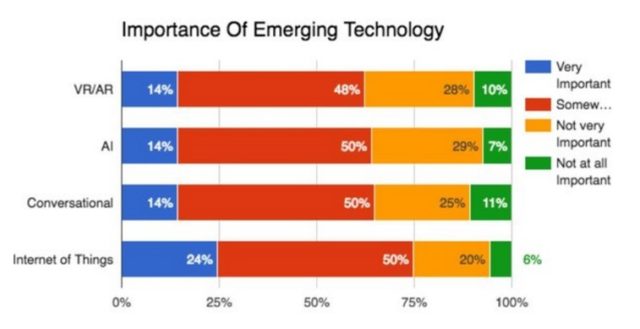
Of four emerging technologies—VR/AR, AI, Conversational and Internet of Things (IoT), 79 percent of marketers deem IoT very or somewhat important, compared to 72 percent of agency executives. The survey, conducted online by Advertiser Perceptions Inc. in October with ad executives, found that 74 percent of respondents felt IoT was at least somewhat important, while 24 percent said it was very important. Only 6 percent said it was not important.

marketers-iot
Source: Advertiser Perceptions, inc.

Spending More To Make More

Marketing budgets are on the rise, according to a survey of marketing executives by Gartner. The survey showed that marketing budgets increased slightly to 12 percent of company revenue in 2016, compared to 11 percent in 2015. Fifty-seven percent of marketing leaders surveyed expect their budgets will increase further in 2017.

Deck The Halls With Deals

Retailers are gearing up for the holiday shopping season and 25 percent plan to offer more discounts and promotions than last year. According to the 2016 BDO Retail Compass Survey of CMO, 91 percent of those surveyed expressed plans to leverage social media to promote deals and discounts. It’s not just about the sales, however, as 87 percent will aim to make more meaningful one-to-one connections with consumers this holiday season through social media. Two-thirds plan to partner with an influencer or brand ambassador to reach coveted customers via their most trusted sources.

Young, Confident Spenders

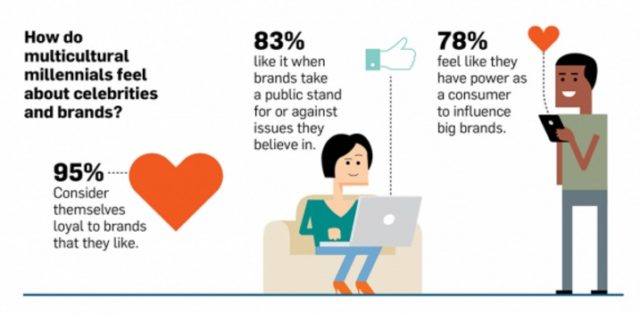
Multicultural millennials are influential, and they know it. According to a study by Buzz Marketing Group, 78 percent of  those surveyed feel that they have power as a consumer to influence big brands. If a brand agrees with those same millennials on a social issue, even better—83 percent like it when brands make a public stand for or against issues they believe in.

Source: Buzz Marketing Group

That’s A Whole Lotta TV Programming

The amount of TV inventory available to be bought and sold programmatically has risen more than 500 percent since the first quarter, according to a new report by TV advertising software company Videology. Spending on advanced advertising and programmatic TV campaigns increased by 92 percent since the first quarter, with 30-second ads remaining the most popular format at 50 percent.

Everything’s Coming Up Digital

If you feel as though your eyes are constantly glued to one screen or another, you’re right. EMarketer expects the average US adult will spend 12 hours and 5 minutes each day consuming media content in 2016. Major digital media gets about 5 hours and 42 minutes per day, according to 2016 estimates in the report—including mobile, desktop and other connected devices. Meanwhile, the use of TV, newspaper and print will decline steadily over the next two years, and radio will make a bigger shift to digital platforms, as well. While radio consumption is expected to drop 0.7 percent on traditional devices and three percent for desktop listening in 2017, music lovers will get their groove on with a 5.7 percent up-tick on mobile devices.

B2B BFFs On Social

Regalix has released a new report on the state of B2B social media marketing. According to the data, 67 percent of respondents said they allocate budget to social media ads. Despite this fact, whether or not the investment is worth it seems to be in question. While 52 percent said that social media marketing is “very important,” the remaining 48 percent said the effort was “somewhat important.” 87 percent of respondents said that hope that they hope social media marketing will increase brand awareness and a majority (58 percent) named LinkedIn and Facebook as having delivered efficiently on advertising dollars.

B2B Marketers Get With The Program

Programmatic ad spending is common practice among B2C marketers, encouraging brand awareness and impulse buys among targeted audiences. When it comes to B2B sales, however, ad spending can be a bit more tricky. According to a new study by Dun & Bradstreet, 42 percent of B2B marketers cited targeting the right audience as a top obstacle, compared to 34 percent who named measurement metrics. B2B marketers are more willing to give it a go in 2017, however—nearly 70 percent said they plan to increase their spending on programmatic, with 22 percent saying they will increase it by more than 25 percent.

Hormel’s Bacon Black Market Is A Sizzling Sight To Behold In Virtual Reality

Wake up and smell the billowing bacon, baby, because Hormel Foods is bringing the Cherrywood goods with a one of a kind immersive experience that lets you explore, salivate and then purchase one of God’s greatest creations in virtual reality.

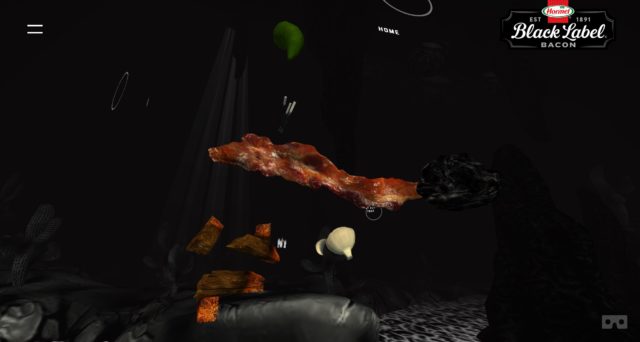
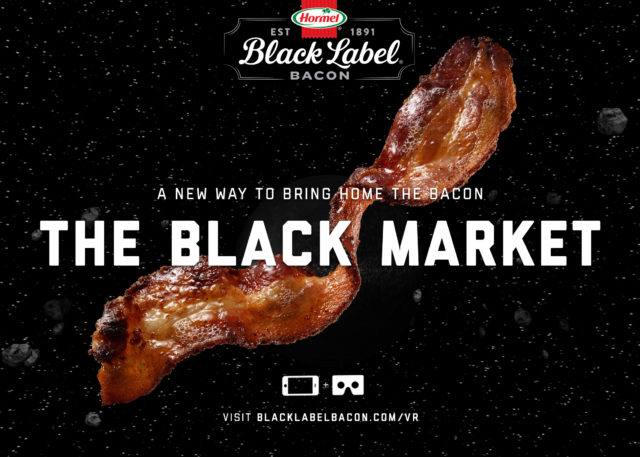
Hormel is turning up the sizzle with “The Black Market,” a multi-sensory activation that’s being billed as the first mobile VR shopping experience available to consumers via a smart phone that does not require using an application or headset.

baconcloud_jalapeno

Yes, you read that right. Bacon is so deceptively dynamic that it can even carry its weight in virtual e-commerce.

Designed to promote Hormel’s Black Label brand, bacon lovers from Bali to the Bay Area can explore “The Black Market” campaign in four different worlds. Each experience—dark woods, volcano, salty sea and the darkness of outer space—allows consumers to unlock and purchase select varieties in VR. Custom bacon-scented Google Cardboard glasses are also available, at no cost, on “The Black Market.” What a time to be alive.

With brands having more platforms than ever to wow consumers with, VR has become a growing trend.

VR elicits a 27 percent higher emotional engagement than in a 2D environment and 17 higher emotional engagement than a 360-degree video on a flat screen, according to a YuMe study released Wednesday.

Vice president of marketing, Steve Venenga, who’s been with Hormel Foods for 20 years and is responsible for managing all brand-building marketing activities, including the associated marketing budget and new product development activities, joined [a]listdaily to discuss how the bacon-infused campaign is designed to break the mold in marketing.

blb-vr-teaserimage-v1

What is the Hormel’s goal with this activation?

With ‘The Black Market,’ we wanted to push bacon forward in an innovative way, because innovation has been a key component to our growth and it’s how we keep consumers and our customers engaged and excited. VR is the natural next step in our mission to push bacon forward because it’s the new frontier of communication and e-commerce. However, we also wanted the opportunity to connect with consumers and our customers like never before while also giving them the ease and convenience of another way to purchase our products.

As a major bacon maker, why are you trying to raise the bar in premium mobile experiences? How does this tie-in to your overall social strategy?

As a brand, we always aim to deliver innovative products and experiences, including mobile experiences, to consumers and our customers, because it’s what is expected of us as a brand. Because mobile technology is constantly changing, it represents a lot of opportunity for innovation and growth and allows us to connect with our key audiences in new ways.

How does “The Black Market” experience complement “We’re always the new black” campaign? What’s the story you’re trying to tell here?

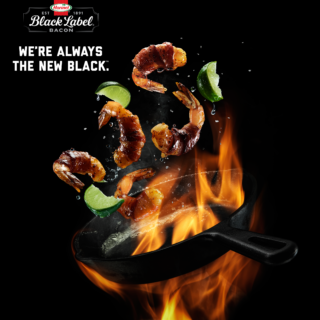
‘We’re always the new black’ is about celebrating innovation and how it’s been a key component to our success as a brand. We’ve used it to differentiate ourselves as industry leaders and keep our audiences engaged and excited for over 100 years. We are responsible for groundbreaking bacon innovations including the invention of Canadian Bacon in America, powering an epic motorcycle trip on bacon grease and launching the International Bacon Film Festival. Because ‘The Black Market’ is truly a one-of-a-kind mobile VR bacon shopping experience, it’s the perfect innovation to start a new chapter in our brand’s story.

reggiemakingmusic

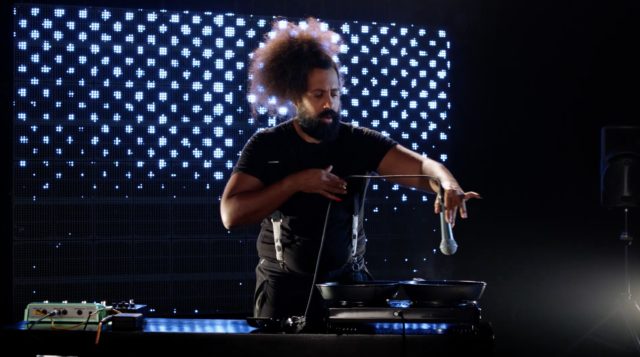
You also partnered with comedian and Reggie Watts, who’s long been at the forefront of VR for the musical creation “The Reggie Watts Bacon Experience.” How important is it to work with social influencers to get the right brand message across?

Working with social influencers is important because it adds value to brand messages and also helps messages reach a larger audience; however, influencers have to be a great fit for the brand. Reggie Watts was perfect for us because he’s an innovator, just like us, who experiments and takes risks to create pioneering innovations in technology, music and more.

What is Hormel looking to accomplish in VR e-commerce space? What kind of doors does the virtual marketplace open for food brands and retailers alike?

With ‘The Black Market,’ we wanted to use VR as an opportunity to connect with consumers and our customers like never before, while also giving them the ease and convenience of another way to purchase our products. Aside from that, because ‘The Black Market’ is so unique, it’s another way for us to keep our audiences excited and engaged. Over time, as advancements are made in virtual reality, we would not be surprised to see other brands and retailers use it as part of their strategy.

hormel_blb_atnb_wrapped_shrimp

Why is it critical for brands to implement immersive VR experiences in their current marketing campaigns? Is there something specific you learned while doing yours?

The value of VR is that it provides an opportunity for brands to engage with consumers and their customers in an engaging and exciting new way. VR is also customizable, so it allows brands to create custom experiences that are unique to them. With ‘The Black Market,’ we love that we were able to create a VR experience that reflects who we are as a brand, while also adding value for mobile consumers and customers.

Why has bacon become such a hot commodity within marketing circles?

We believe in the ‘bacon craze,’ and we strive to create it, not follow it, because bacon is who we are. First, bacon is incredibly delicious and it smells fantastic, so how could anyone pass that up? Bacon is also versatile and can exist in many different forms, flavors and textures. With bacon, the possibilities are endless. How could anyone stop loving it?

Follow Manouk Akopyan on Twitter @Manouk_Akopyan

How Oracle Is Tackling Data-Driven Marketing

Marketing is largely responsible for driving critical consumer-facing, revenue-generating systems and applications, and for a third consecutive year, those budgets will only continue to balloon.

A Gartner survey revealed Wednesday that 57 percent of executives working at companies with at least $250 million in revenue said they expect their marketing resources to increase.

With customer acquisition continuing to be a priority, marketers are placing an emphasis on using the dearth of data available to them to better make more informed decisions across their respective enterprises.

According to a June poll by Falcon.io, 64 percent of marketers indicate they use social data in their marketing activities.

The Oracle Data Cloud is taking a lead in the data deluge by fueling a competitive advantage for marketing and social to help companies drive smarter decisions in order to connect with consumers.

Cory Treffiletti, vice president of marketing and partner solutions for Oracle, joined [a]listdaily to discuss the strategy behind Oracle Data Cloud, and how data is enabling forward-thinking brands.

Cory Treffiletti, VP of marketing and partner solutions for Oracle

What is the concept and philosophy behind Oracle Data Cloud? How are you differing yourselves in the data deluge?

Oracle Data Cloud is the leader in Data as a Service (DaaS), which is really a techy way of saying we help our customers connect more deeply with their customers through the utilization of data. We provide marketers with the highest quality, highest scale third-party data as well as solutions and services around the connection of first-party data to enable better targeting, deeper personalization and effective measurement of their customer experiences. We aggregate data and feed it into any Software as a Service (SaaS) platform, both Oracle and non-Oracle stack, so your marketing programs will be more effective and accountable. An analogy I like to use is you can buy a car, but the car won’t work unless you put the right fuel into it. SaaS is the car, and DaaS is the fuel that drives the engine. For us, the biggest differentiator is our ID Graph, which connects billions of consumers across all of the devices they use—from mobile to desktop, tablets and beyond, into a unified view of the consumer. If you understand your audience more deeply, and you can identify and recognize them when you ‘see’ them across devices, you can connect and create a better, more long-lasting relationship.

How is Oracle Data Cloud building out its services to precisely target at scale?

We combine online intent signals, offline purchase data and apply layers of data science to it in order to ensure that we are providing solutions to our clients to precisely target at scale. We then organize ourselves in a go-to-market way that is centered on industry verticals, so that our team can speak the same language and understand the challenges faced by our customers. To us, it’s very important to be embedded in their category and centered around their needs rather than talking about what we do.

Can you detail your concept behind “relevant reach”? What does that exactly mean?

Relevant reach is the sweet spot between campaign scale and targeting accuracy. It’s about making sure you know and understand the audience you want to be speaking to, and can recognize them at scale. This approach helps us improve upon the flawed, but standard, practice where marketers focus on scale by building large, but ill-defined, audiences based on potentially inaccurate demographic data. This practice of broad targeting is problematic because it misses lots of potential buyers and reaches lots of uninterested households. Relevant reach increases accuracy while maintaining an effective scale for the campaigns, thus maximizing reach and impact without also reaching irrelevant households and wasting media spend.

How does Oracle leverage its suite of data services to fit within the overall company strategy?

One example of how Oracle is leveraging our suite of data services is through our recently announced next-generation cloud strategy in Adaptive Intelligent Applications. This new SaaS offering blends third-party data with real-time analytics and behavioral inputs to create Cloud Applications that automatically offer individualized recommended actions and streamline tasks of business users such as human resource and finance professionals. These offerings are based on the insights from the deep analytics contained within Oracle Data Cloud and help improve business results across organizations.

odc1913_marketingland_banner_2

How has Oracle Data Cloud been received by marketers? Why is employing such services a big boon for brands? 

We’ve been received well and we really do look at our customers as partners. We sit between the channels, the brands and the agencies, and we help all sides of the ecosystem to better utilize data for that deeper level of connection with the end-customer. We currently work with 96 of the top 100 US advertisers and the vast majority of global advertisers as well. Advertisers are quickly learning that data is a necessary element to the success of their campaigns, but data is a big environment so we help them make it small. We work side-by-side with our partners and we learn their challenges, use the same lexicon and speak the same language to enable solutions they need rather than fitting them into a box of products that we sell. The proof is in the results we prove time-and-time again. The more data-driven your strategy is, the better results and less waste in media spend you achieve.

How are you marketing Oracle Data Cloud?

We focus on helping our customer connect more deeply with their customers. We provide educational tools and enablement tools. We perform audience workshops and get very deeply involved in an almost consultative fashion up front to make sure that the data we have available and the solutions our teams can offer are tailored to your needs. We have a ‘traditional’ content strategy that drives demand, but we also offer a free service called The Data Hotline that takes in as many as 1,400 unique requests for questions around data segmentation and insights on a monthly basis and we turn around answers in less than 24 hours; this is a free service. We offer a no-cost Data Lab series that educates agency teams on the intricacies of the data landscape and we teach them about all the data providers in the category, not just the data we own and sell. We believe that in an emerging category, education will bring everyone forward, and we live by that strategy.

Earlier in September, Visa and Oracle introduced a service to help merchants understand whether their digital advertising efforts are influencing consumer purchase decisions. How will this help measure whether ad exposure led to a sales transaction?

As an example, a retailer who wants to promote a seasonal sale might select a target audience based on a mix of demographic and aggregated past purchase data. A digital ad is then delivered to that group using the Oracle ID Graph across multiple channels and devices. Visa and Oracle then work together to offer insight into whether or not a Visa credit card purchase was made online or in-store following the merchant’s digital ad views. These results help indicate the ad’s effectiveness, allowing marketers to adjust the offer, creative and/or channels accordingly.

Why is it critical for Fortune 500 companies to develop tailored marketing campaigns and products around data?

Your audience demands it. A recent study by Forrester stated that 77 percent of consumers do not appreciate inconsistent messaging across channels and devices, so they know when you are not paying attention. When you market to consumers without using data to target and measure the effectiveness of your campaigns, you are essentially shooting in the dark and wasting advertising dollars and that guarantees failure. Data-driven marketing not only allows advertisers to target their audience at the right place and time, but the data and results from measuring those campaigns inform future decisions on campaign content, creative and audiences.

How are you leveraging the use of cross-device services? How does proper execution help drive value for a brand?

The Oracle ID Graph, which is the power behind our linkage solutions such as OnRamp and Crosswise, connects billions of consumers across all of the devices they use—from mobile to desktop to tablets. This allows advertisers to create a more holistic view of their customers and more accurately reach them at the right time and place with the right message. This means you can identify a consumer, recognize where they may be in the customer journey and personalize that message to them. Most marketers can do this on a desktop, but that means you are missing the largest and fastest-growing portion of your audience on a mobile device. We remove that inefficiency.

How does data bridge the gap between advertising spend and business results? 

Advertising without data is often wasted dollars. Data is essential in delivering the right message to the right person at the right time in the right place. Without good data, you don’t reach the right people, and you can’t tell if your advertising is working. It’s like driving a car with a blindfold on.

Follow Manouk Akopyan on Twitter @Manouk_Akopyan

Whale Watching: Identifying The Six Types Of Social Game Spenders

For being a free game, some titles like Clash Royale rake in a whole lot of money—upwards of $2 million dollars per day. You would think that with a “freemium” player base, there would be two types of personalities: those who pay and those who don’t. Optimove, a company that specializes in customer retention, tracked 235 social gamers over 18 months and identified not two, but six types of players based on behavior and tendency to buy.

Pay Or Just Play?

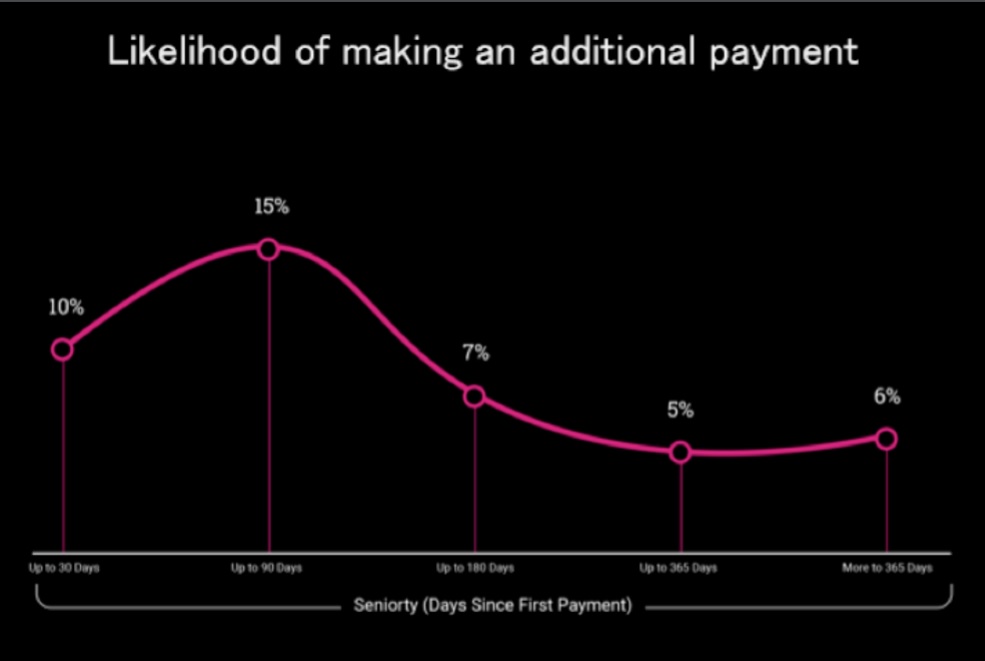
Optimove describes the first type of player as the “new, non-spender.” This user has registered in the past 14 days but hasn’t made a payment yet. While first-day payments are limited to about 24 percent of players, a full 44 percent of players won’t make their first payment for more than a week after registration. Nearly a quarter (24 percent) will wait for four weeks or longer, which is a critical period for publishers. A separate study by Nielsen revealed that mobile gamers are generally content with a new game for about three to five weeks before they start to crave new content.

When marketing for the new non-spender type, Optimove urges patience. “The strategy should be brand awareness and building, content marketing based on gameplay behavior, and only then a push for first payment,” noted Moshe Demri, Optimove’s director of strategic services in a statement accompanying the data.

social-payment

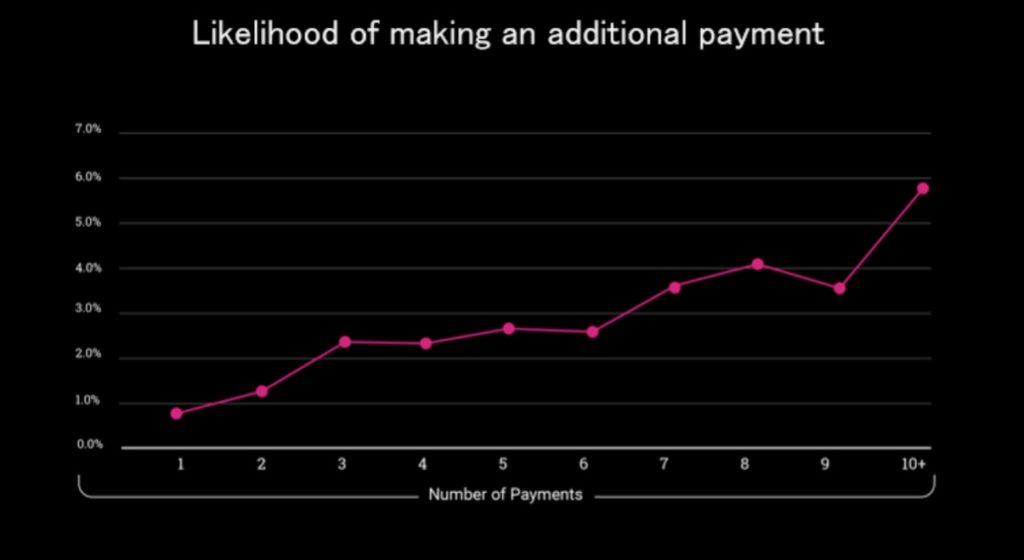
The second type of player is called a “new spender.” This user has just made his/her first purchase within 14 days of registration. The more payments a user makes, the more likely it is that they will continue to buy. While this is potentially exciting, publishers cannot assume a user will make a second purchase. In fact, Optimove estimates a less than one percent (0.8) chance of making a second payment. If they do keep buying, however, it will happen sooner rather than later. Data shows that 39 percent of players who make a second payment will do so within one day, and 64 percent will do so within one week.

Hey, Big Spender

“Active spenders” are the third type of player identified. Often called “whales,” free game publishers go all “Ahab” over the prospect of catching these elusive creatures. Active spenders have made at least two payments on two different days within the previous two weeks and typically bring in the most consistent income for a freemium business model. Looking at mobile game revenue for the world’s top titles, it’s tempting to believe that most of the players are breaking out the wallet for add-ons on a daily basis, but Optimove found quite the contrary. In fact, only 10 percent of players bring in 75 percent of a social game’s revenue, and just one percent—the biggest whales—bring in 30 percent. Much like how a casino comps its big spenders, Optimove urges publishers to make sure their active spenders know they’re VIPs through exclusive rewards.

social-payments-2

Was It Something We Said?

The fourth type of players identified by Optimove’s study are called “active non-spenders.” The good news is, they like your game and have been active recently. The troubling news is is that they haven’t made a payment in more than 21 days. “This is a problematic group for the publisher, that must be addressed,” notes Demri in the report. “Either the players in this segment will churn (become inactive) very soon or it signifies a problem in the game’s economy.” Demri goes on to suggest stronger offers with bonuses for higher payments.

“Churn spenders” are the fifth type identified in the report. These once-active players have spent money but became inactive during the past 21 days. If said player has been active for at least 90 days before churning, their brand awareness and gameplay experience make them more likely to return than someone who has played for less time and stopped. On the other hand, Optimove suggests a cross-sell to other titles to keep churn spenders entertained in other areas where they might begin spending again.

The sixth and final gamer type is the “reactivated spender.” This is the prodigal user who has returned to the game after a long absence to play and/or make a purchase again. Data shows that most of these players will churn again within two weeks of their reactivation and therefore need more attention. If this new activity includes a purchase, the reactivated spender is more likely to become invested in the title again and stay a while longer.

Why Players Spend

According to a recent study by NPD, 77 percent of buyers said that microtransactions allow them to extend their enjoyment of a particular game. While being able to earn virtual currency to buy items is preferred, 78 percent are willing to spend some amount of real money to purchase in-game items or power-ups. Meanwhile, 48 percent of those who do not purchase microtransactions felt the content was not worth the extra expense.

Inside Disney’s Virtual Reality Strategy With SVP Kevin Mayer

The Walt Disney Company hosted its third annual Accelerator Demo Day last month at its Burbank, California headquarters to announce support of startups across a variety of verticals, including eSports, holographs, robotics, toy subscription services and mobile movie ticketing.

Another burgeoning business that is the breakout industry of 2016 is virtual reality, and Disney is positioning its corporation to be a leader in the space through their newest Accelerator in Jaunt—a movie studio that provides end-to-end solutions and produces short cinematic VR pieces. Disney previously led a $66 million investment round in Jaunt last September.

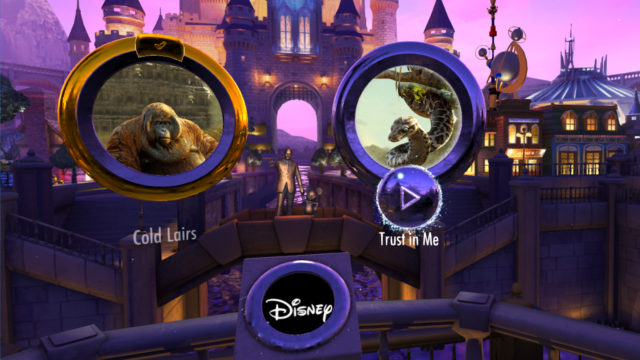
Granted, this isn’t Disney’s sole involvement in the space of cinematic storytelling. Earlier this year, Disney launched a VR app on Steam for the HTC Vive featuring content from franchises like Star Wars: The Force Awakens and Captain America: Civil War. They also partnered with Nokia to use its $60,000 Ozo camera to shoot 360-degree video for Disney films—like the April premiere of The Jungle Book—as well as marketing materials for upcoming films like Blade Runner 2049. Disney’s ABC News also has been taking journalism and storytelling to the next level with their 360-degree feature reports.

Greenlight Insights predicts that the VR industry will explode to hit $38 billion in revenues by 2026. It’s critical for entertainment conglomerates like Disney to virtually reach their convoys of consumers from every corner of the world—and they understand that.

Kevin Mayer, senior executive vice president and chief strategy officer of The Walt Disney Company who oversees corporate strategy, business development, acquisitions, enterprise IT, innovation, brand and franchise management, and global corporate alliances, joined [a]listdaily to offer further insight into Disney’s stance on VR.

What is Disney’s strategy is selecting the startups for its Accelerator program? 

We try to bring in companies that we think have a connection to some of our businesses, and how they can benefit from it. How they can access our intellectual properties, or with our business systems. But we purposefully target companies that we think have a connection with Disney.

Kevin Mayer, senior executive vice president and chief strategy officer of The Walt Disney Company

Is there one that you’re a particular fan of?

I can’t pick amongst my children. I love them all equally. (laughs)

Jaunt was one of the Accelerators. What makes them so appealing as a VR partner?  

What Jaunt does is particularly challenging because they take live-action video and stitch it together for a VR environment. They’re doing storytelling and trying to immerse people in sporting events. I think that’s going to be interesting to see how it plays out. There is a lot there. It’s really cool for someone who doesn’t have access to the sidelines to be at a sporting event. ESPN is a really interesting place for sports because sporting events are going to work well. Where [virtual reality] is going to go? What the business model is going to be? How we’re going to make money? What will audiences love? We just don’t know yet. We are really in experimentation mode.

How is Disney positioning itself in the current VR wave?

We don’t know where we are going yet with VR. We’re experimenting, to tell you the absolute truth. We don’t know the answer to that yet. It’s a new medium. It’s unclear where there will be resonance with audiences, and where there won’t be. I think it’s very easy to see how VR can be very successful to video games. Essentially, those have always been VR environments.

How do you personally see the VR industry developing in the next few years?

ss_83ad505bd94a0bd5bd25bedbe3979d89e1b7c2d7-1920x1080
Disney’s VR app on Steam for the HTC Vive.

I do think there are challenges in storytelling in an environment where you can’t control what the audience is essentially seeing. It’s going to take a breakthrough and a creative approach to directing an experience to the VR space, which is much different than a flat-screen movie where you know exactly what people are seeing. Someone will crack that code. Maybe we will crack it. I don’t know. There are certainly elements to a lot of [Disney] properties that lend themselves to that sort of experience in a really compelling way. The brands that we have, like Pixar, which is natively 3D and animated, Marvel and Star Wars, you can think of some fantastic experiences with them that will work well in the movie and storytelling space.

What kind of marketing is it going to take for the mass adoption of VR to come sooner rather than later?

It’s not a marketing issue. It’s a product issue. I really think that if you can make a great product, then you can market it effectively. Word-of-mouth these days is how a great product is really marketed. If we can have a product breakthrough, it will market itself, and we will find the right business model to make it a big success.

Follow Manouk Akopyan on Twitter @Manouk_Akopyan