Why Purchasing Machinima Is ‘Game On’ For Warner Bros.

Warner Bros., a large investor in Machinima, formally acquired it recently and will now fold the gamer-centric video service into its recently-formed Warner Bros. Digital Networks (WBDN).

“Machinima is a strong gamer, fandom content and social brand with enormous reach and high engagement with audiences that play our games and are big fans of DC films and television shows,” Craig Hunegs, president of Warner Bros. Digital Networks stated in the press release. “Machinima also produces great, high-quality content for their community, and together we can create an even more compelling experience and do some really exciting things involving our key franchises. This acquisition is another meaningful move forward as Warner Bros. develops more direct relationships with our consumers.”

Most famous for its motion pictures and animated shorts like Loony Toons, Warner Bros. has grown into a media giant, cable provider and holder of some of the world’s most popular IPs including DC Comics film adaptations (Batman, Wonderwoman), TV shows like Big Bang Theory and Mom, and video games like Batman: Arkham VR and Mortal Kombat. Prior to the purchase, Warner Bros. made several online-video programming deals with Machinima including Mortal Kombat: Legacy and the Justice League: Gods and Monsters Chronicles.

Joost van Dreunen, CEO and co-founder of analyst firm, SuperData believes that the WB name will have a significant impact on the Machinima brand and its fan base. “There are several obvious synergies between the two firms,” he told [a]listdaily. “I expect Machinima’s audience to be enthusiastic about the available library of WB content, which lines up closely with its gamer mindset.”

mortal-kombat-x

“This acquisition benefits WB’s overall audience reach, but is more so poised to have a positive effect on offering its user base a more diverse range of programming and content relevant to gamer audiences,” van Dreunen added.

This strategic move also means massive opportunities for WB-branded content through an already popular network, as well as access to Mach-1, Machinima’s eSports agency formed in May and the monetization power of Machinima’s Preferred Media Solutions platform. “Currently, there is a slew of brands and advertisers hoping to get access to a qualified consumer audience via eSports,” commented van Dreunen. “The challenge lies in providing a meaningful experience, rather than merely plastering a brand across players’ screens. Machinima’s expertise will serve WB well.” He also predicts that we’ll see much more eSports content like Mortal Kombat X: Chasing the Cup in the future. “The current appetite for content around competitive gaming, in addition to the events, is strong and puts the WB/Machinima in a strong position to take advantage of that.”

As digital video continues to grow, so does livestreaming—something that Warner Bros. and Machinima will no doubt take advantage of moving forward.

“Initially, the market consisted mostly of uploaded videos,” van Dreunen concluded. “The live connection with a person on the other end, whether amateur or professional, has proven to be a strong accelerant for the overall gaming video content market, allowing it to grow to $4.4 billion this year.”

Featured image credit: tubefilter

Why Mountain Dew Is Infiltrating Fashion And IoT With “Camo Out”


Mountain Dew continues to maintain its message of marketing innovation by constantly testing and evaluating new technologies.

Their latest conquest comes through their unique take on wearable tech with “Camo Out,” a collection that takes consumers through the past, present and future of camouflage by exploring history’s, fashion’s and technology’s relationship with the iconic pattern.

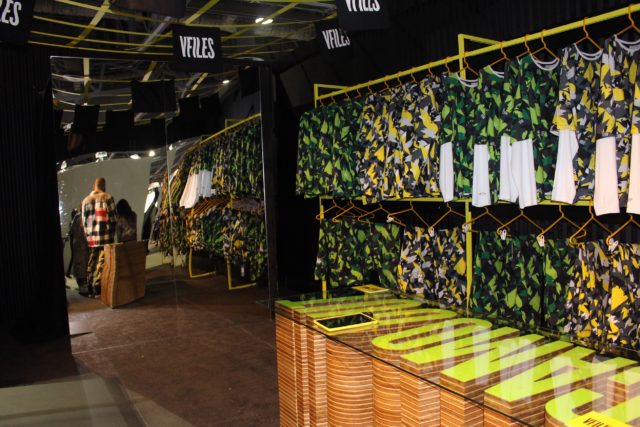
Dew partnered with youth-culture fashion brand VFILES to integrate media-based tech as part of their digital innovation program. The smart clothes collection includes a hat, Bluetooth jacket, solar-powered backpack and jackets and pants with built-in headphones. It debuted earlier this month at the pop culture trade show ComplexCon in Los Angeles.

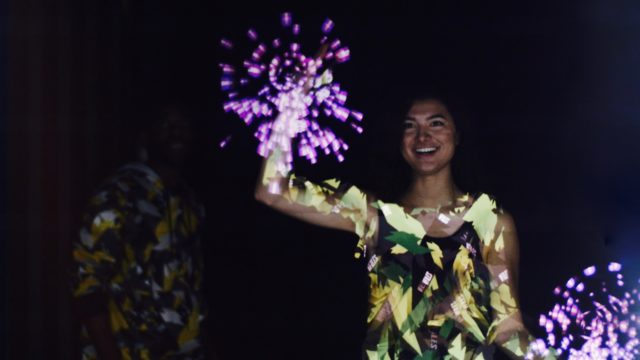
The collection was also complemented with an experiential push using augmented reality technology. Using mirrors equipped with hologram-AR technology, guests were virtually outfitted by the custom “Camo Out” patterns and immersed into a virtual music video of the future.

Trail-blazing brand marketers at PepsiCo’s marketing innovation team, Creator, a catalyst group of internal experts who identify where the future of marketing is going from consumer trends to never-before-been-done technology, took the quantum leap toward procuring the partnership.

Stinson Parks, Mountain Dew’s digital marketing manager, joined [a]listdaily to discuss how the soft drink brand is constantly evaluating and evolving in emerging trends and technologies.

augmented-reality-camo-collective

When you think of Mountain Dew, “integrating media-based tech into wearable products and connected clothing” isn’t the first thing that comes to mind. Why was it important for Mountain Dew to move toward an experiential push using wearable tech and augmented reality for the first time?

Dew extends well beyond the amazing beverage products our fans know us for and over time, has become part of the lifestyle and culture that our consumers live and breathe. The brand’s mantra, ‘Do The Dew,’ has come to life in a variety of ways over the years through our activations and experiences such as Dew Tour, and more recently in partnerships with the NBA and DR-1 Drone Racing League. When the brand is at its best, it’s constantly innovating, instigating and pushing the culture in a meaningful way for all of our fans—they expect it from us. The areas of tech and innovation are important for Dew and we are always pushing the boundaries as a digital instigator. The “Camo Out” wearable tech collection was the perfect way to enter into the fashion space, but in an area important to the brand

How do you describe the collection to someone who can’t experience it?

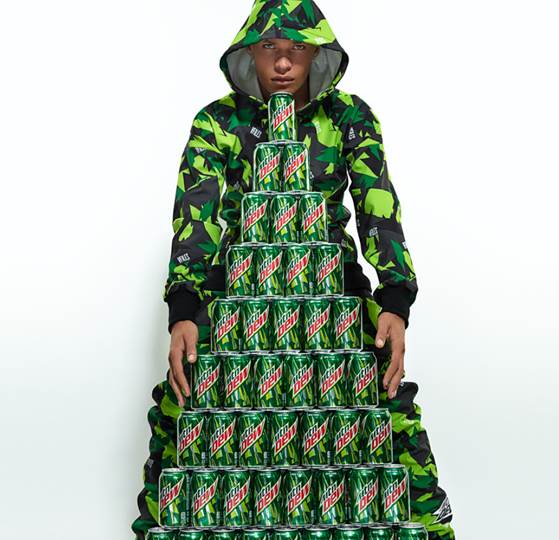
The “Camo Out” collection is how Dew does camouflage. It’s a fun, forward-thinking play on the classic print, and everything from the patterns to the materials to the wearable tech elements add a mix of flair and utility. With bright Dew greens and neon yellows, this is the camo for those who’d rather stand out then blend in. 

How did the collaboration with VFILES come about? Why is telling the past, present and future story of camouflage a good fit for Mountain Dew, and one of particular interest?

As soon as we met with the VFILES team and heard their vision—which is all about inspiring and enabling youth culture and creativity—we knew they were a perfect fit for Dew. The story of camouflage is an important one for Dew because by nature, it’s one that is universally relevant to any young guy out there in the Dew Nation. Whether you’re into hunting and fishing or you’re a fan of more urban brands like BAPE and Maharishi, from the Midwest to New York City, camo has probably played a part in your life at some point. While we have a history with the more traditional aspects of camo—like creating a camo-branded Mountain Dew can—this was our opportunity to reverse the traditional role of camo and really own that story and tell it in a meaningful way.

camo-out-at-complexcon

How was the “The Camo Collective” installation received at ComplexCon? What is the main message, and takeaway from consumers?

The activation was very well received. Those who were able to experience the Camo Collective walked away with a deeper understanding and appreciation of camouflage and camo culture. They were able to learn about its relevance in fashion and art, function and future approaches through our art gallery, AR and VFILES pop-up shop experience. If there was one takeaway, it’s that camo is forever, and the future is an exciting one.

Is there a specific social or influencer marketing strategy you plan on executing here to further promote “The Camo Collective”?

There were a variety of influencers who stopped by the Camo Collective activation, both organically, and through our own outreach before ComplexCon. Everyone from social media influencers like Tyler Blake and Vashtie to music and entertainment artists like Migos and Madeintyo came through, and many like Versace Tomagachi decided to share the experience on social with their fans, too. We also promoted the experience on Dew’s social channels and all partner channels like VFILES, Complex and Green Label. We even launched a Camo Collective website featuring a documentary all about the history and future of camo.

What kind of social and experiential campaigns work best for Mountain Dew? Do you have a particular favorite planned in coming months?

The experiential campaigns that work best for us are the ones where we get to provide original experiences to our fans that bring them right in the center of the action. Whether it’s events like Dew NBA 3X, a six-city street ball tournament that debuted this year, or our past events in music with Green Label Sound, we know our consumers want to be a part of the things we do, which is why the experiential piece is always so much fun. We have Dew Tour Breckenridge in Colorado coming up in December where we’ll debut a totally reimagined course for the snow competition. That one will be particularly exciting to check out.

What kind of a role do you want to have with Mountain Dew in art, fashion and emerging tech like IoT and AR/VR moving forward?

Dew by nature is a creative brand, an innovative brand and most importantly, a fun brand. Wherever Dew can continue to flex those muscles, be it in art, fashion and tech—or in ones we have yet to discover—there will always be an opportunity to keep showing up, pushing boundaries and having a damn good time.

Follow Manouk Akopyan on Twitter @Manouk_Akopyan

vfiles-mtn-dew-camo-out

Team Liquid Details Strength Of Monster Energy Sponsorship

On the heels of its acquisition by Axiomatic, Team Liquid has signed its first non-endemic sponsor, Monster Energy. The energy drink maker is working with the team and its players just as it does with extreme athletes around the world. Team Liquid’s director of operations, Mike Milanov, told [a]listdaily that the energy drink category is very important to Team Liquid because these companies are sponsoring events and teams around the world.

“We wanted to find a partner that worked well with our writing staff and video content creators,” Milanov said. “Monster cares about winning and supporting our players directly, and giving them tools to win. What they do with extreme games and what they do with sponsoring the most prestigious athletes worldwide is impressive. That brand is on your wish list if you’re a pro sports organization.”

Team Liquid, which is owned by Steve Arhancet and Victor Goossens, began conversations with Matt Simpson, the director of eSports and gaming at Monster back in March at the energy drink’s LA headquarters. “What’s cool about Monster is that when they came into eSports they sponsored Alliance, Envyus, Fnatic and Evil Geniuses and they’ve never let go of those teams or partnerships,” Milanov said. “Knowing that history was attractive to us. We liked how they were running their eSports division.”

Team Liquid and Monster had multiple meetings around the world at eSports events in London, Malmo and Germany. Monster is also a major sponsor of DreamHack. Milanov said these meetings allowed the brand to learn about Team Liquid’s team and infrastructure.

In addition to providing players with product, Monster has also spent some one-on-one time with players to promote across social media or provide video resources when a new player comes onto the roster. “Monster is close partners with Razer, which is another company we’ve been with for a long time—seven years next year,” said Milanov. “They also do work with HTC, which is one of our partners. Monster integrates well with our existing partners and this deal also opens up cross-promotional opportunities.”

Milanov said that since Monster attends every single eSports event, they’re always around to help out the team, even when they lose like at the recent IEM Oakland event.

“Despite the team not progressing to the arena stage, Matt Simpson still wants to take the team out to dinner and forge that relationship,” Milanov said. “Any time we have a boot camp in Holland or LA or NY or Korea, he’ll always ask how we’re preparing for the event or check to see if there are video opportunities and stories they need to tell. Monster has contractors all over the world—they send professional photographers and do a lot of written articles and cool recap and highlight videos.” Additionally, the energy drink maker has Team Liquid team profiles and social media integration on MonsterEnergy.com.

Milanov said this is the team’s first non-endemic partnership, but certainly not the last. Axiomatic has been working closely with Team Liquid to expand the brand. “They care about the brand deeply at Axiomatic,” explained Milanov. “One of the ways [of expanding the brand] is attracting non-endemic business. There’s a wishlist of things we’d love to get from the partnership. They have great relationships from Mandalay Entertainment and the Golden State Warriors, for example. Our goal is to do some of the first non-endemic partnerships with a Nike or adidas or do something with airlines or credit cards like the traditional MLB, NBA or NFL deals. We’re looking at those and we’ve been working with our investors to map out what our new level of strategic partnerships look like.”

Team Liquid has no plans to alienate its current partners. Milanov said the team is in this for the long haul, having worked with Alienware for six years and HyperX and HTC for three years. “We’re never going to drop those companies because they’ve brought us to where we are today,” Milanov said. “We’re looking to add new non-endemics.”


Learn everything you need to know to invest in today’s fastest-growing media channel—Competitive Gaming and eSports on 2.16.17 in Los Angeles. Go to alistsummit.com for more info.

Nissan Goes Rogue With ‘Star Wars’ Branded Car And VR Activation

When Disney and Lucasfilm dropped the news of their latest film Rogue One: A Star Wars Story in March 2015, Nissan found out like the rest of the world.

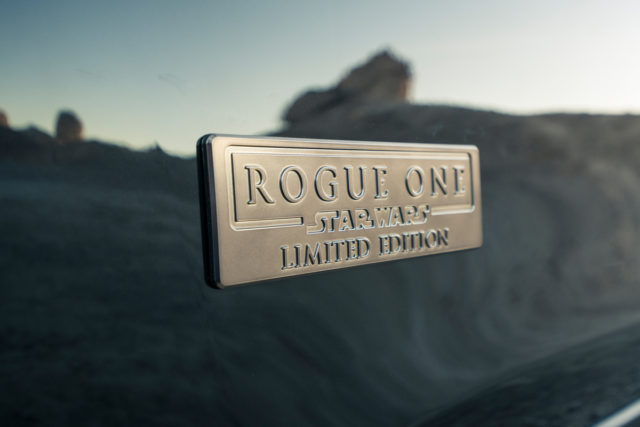
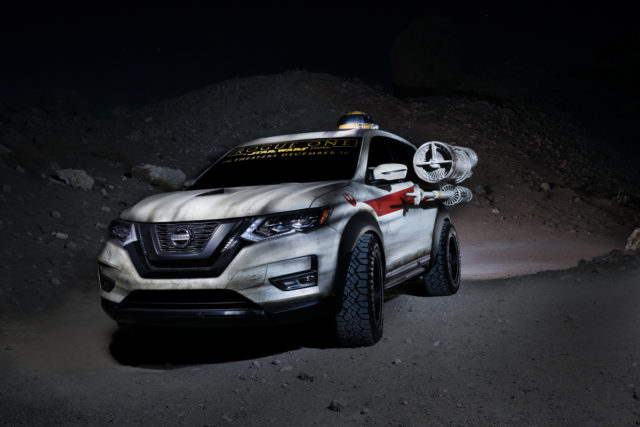
Seeing the name correlation for their Rogue line of cars and looking to capitalize on the symbolism with their fan base, the car manufacturer immediately picked up the phone and began brokering a unique partnership that reached its birth 20 months later with the dual-branded vehicle “Nissan Rogue: Rogue One Star Wars Limited Edition.”

It is the first production car to include Star Wars-branded elements.

“We’re all about innovation, excitement and engagement with fans. That was the most intriguing for us, so we found an opportunity to work with them to promote our new car, and the most anticipated movie of this year,” Jeremy Meadows, senior manager of marketing and creative strategy at Nissan, told [a]listdaily. “We looked beyond the name correlation. There is a strong correlation between the both of us with epic adventures.”

The car company added a sizable chapter to the massive marketing blitz slated for the forthcoming release of the film by making 5,400 units—white models for the Stormtroopers, black for the new Deathtroopers—for the US and Canadian markets.

Meadows added that in addition to the range of custom features and equipment, each vehicle also comes with a numbered, full-size replica collectible Deathtrooper helmet.

As for the car, some of the unmistakable branding includes “Rebel Alliance” and “Galactic Empire” logo decals, a “Star Wars” logo clear rear bumper protector and Rogue One logo badging on the front doors. Special features inside of the vehicle include logo carpeted floor mats and “Star Wars” logo illuminated kickplates. The Rogue One package will cost consumers an extra $1,990 on top of the car’s MSRP.

Jeremy Tucker, vice president of marketing communications and media, said that the Rogue model is their No. 1 best-selling model and is up 10 percent year-over-year. “We want to make this model go to the very next level,” he said. “So bringing these iconic brands together, this is our moment, and we’re going full force.”

Nissan is one of five global brands—Duracell, General Mills, Gillette and Verizon are the others—to join forces with Lucasfilm and launch an extensive global promotional campaign in support of movie.

And like any marketing campaign that has a strong story to share, Nissan also introduced a virtual and augmented reality experience to fans that highlights the Rogue SUV’s Intelligent Safety Shield technologies.

“We want to provide customers with very engaging experiences. A lot of brands, and not just car companies, do really great VR marketing, but we wanted to take it a step further and provide a really good opportunity to see our vehicle and provide something extra special for fans with Lucasfilm,” Meadows said.

Meadows mentioned that the VR experience released at the LA Auto Show last week was a first for Nissan; a long-form Star Wars version will be released next spring.

Meadows said that they want to amplify their Rogue partnership with an influencer marketing campaign.

“If you’re not familiar with Nissan, or the Nissan Rogue, we want to further spread the awareness of what we have to offer to customers. We’re working closely with our agency team and other folks at Lucasfilm to find out what is the right mix to get the message out about the vehicle and movie,” Meadows said. “The good news is that the Nissan and Lucasfilm brands already have a strong connection with fans. There’s 131 million Star Wars fans across the country. And we have a lot of fans, too. It’s a really relevant activation for both of us.”

Follow Manouk Akopyan on Twitter @Manouk_Akopyan

Ford Is Marketing Millennials With A Small SUV And Snapchat King DJ Khaled

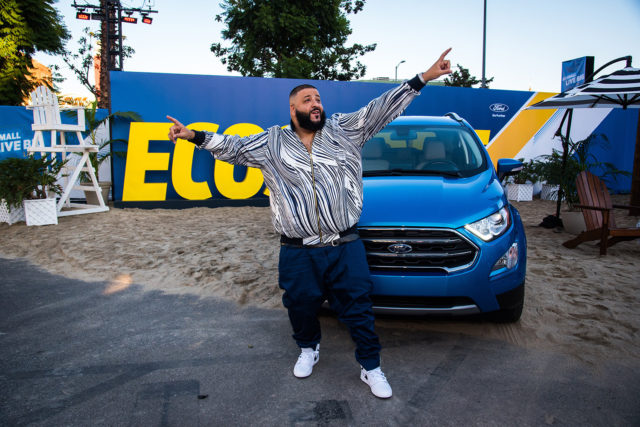
It wasn’t quite the level of broadcasting the birth of his newborn baby, but DJ Khaled had yet another one of his major key alerts this week when the hip-hop producer and Snapchat raconteur introduced the Ford EcoSport on the social platform on behalf of the brand.

The subcompact and redesigned EcoSport, an SUV sold outside of the US since 2003, will be making its stateside debut and be marketed toward millennials and downsizing empty-nesters. The vehicle reveal marked the first-ever on Snapchat for any major car manufacturer.

photo-credit-ford-1500x1000

“He’s the king of Snapchat,” Ford spokesman Michael Levine told [a]listdaily at the LA Auto Show. “We know that our younger customers love to share experiences over buying new things. The customer is looking for something that has a great value to it, and experiences that they can share with friends and family. That’s a growing lifestyle.”

Levine said that they wanted to introduce a versatile car that was more desirable to mobile, connected consumers. And what better way to connect with customers and attract a new market than enlisting the ultimate millennial whisperer who has a following of 6 million people on the breakout platform of 2016.

The tiny SUV made a major splash with the maestro to uniformly speak with its “going small and living big” message behind the car.

Ford created a special compound in the heart of Hollywood for the unveiling where other influencers like Ryan Seacrest and musicians like Echosmith and Chromeo took turns engaging the fans who had gathered for Ford’s three-day interactive experience.

The pop-up consumer event, entitled “Go Small, Live Big: LA,” was a Venice Beach-inspired installation lined with tiny homes, a minizoo featuring animals from the Los Angeles Wildlife Learning Center and local food trucks. The hipster haven was also paired with a Snapchat geo-filter.

Ford first used social media to unveil the Explorer SUV in 2010 on Facebook. For the EcoSport, they also had a live Facebook reveal with iHeartRadio.

“Whether they are watching TV or listening to radio or increasingly using digital media, we like to talk to our customers wherever they are at. We’re very pleased with the results that we see,” Levine said. “We have presence on Facebook, Twitter and Instagram, and with the all-new EcoSport, we know that our customers love to stay connected with great technology. It’s not one way, or another. It’s multiple channels to talk to all of our customers.”

Follow Manouk Akopyan on Twitter @Manouk_Akopyan

The Best-Selling Games Of October And Other Must-Read Marketing Stats

This week, retailers brace for holiday impact, marketers find a way to measure social campaign performance and millennials go crazy for the sweet taste of Overwatch.

100 Percent Organic Apps

Well, 90 percent, anyway. That’s how many apps are downloaded directly from the digital marketplace, according to a new report by TUNE. Drawing from a number of studies conducted between 2015 and June 2016, the report reveals that while most apps are downloaded directly (without first clicking through an ad), previous exposure to branding may be the cause. “Seventy percent of people have seen or heard of an app at least once prior to installing it,” TUNE reported. “For almost a third, they’ve seen or heard about it more than three times. That’s especially true for women.” For anyone using the internet ever, they’ve no doubt seen a number of digital video ads for an app or other product—ever wonder how effective they are?

Performance Review

In a recent study by Sequent Partners and Eyeview, nearly two-thirds of brand marketers said they would want to measure digital video ad performance by the cost-per-acquisition, order or sale in the coming years. Only 40 percent of respondents said they do that now. US brand marketers who worked in the automotive, CPG, retail and travel industries participated in the survey, focusing specifically on measuring the performance of digital video advertising. Nearly three-quarters (71 percent) of brand marketers named site traffic as their preferred measurement tool, while more than half of respondents said they look at their return on investment (ROI). Brand metrics, as well as store traffic are other ways they currently measure digital video advertising.

Sometimes, a brand gets found the old-fashioned way, but it’s not easy. A study by Ascend2 reveals that while 57 percent of brands see content creation as the most effective SEO tactic, it’s also the most difficult at 48 percent. Forty-nine percent find the right keywords and phrase searches do the trick, while 39 percent turn to social media integration.

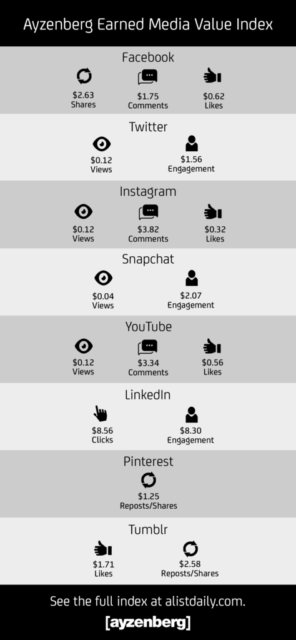
How do you measure return on investment (ROI) for social media marketing campaigns? Are clicks as valuable as “likes”? How does a comment affect your success? In an ever-changing social landscape, it can be difficult to choose which actions are the most valuable to your needs. Luckily, the Ayzenberg Earned Media Value Index (AEMVI) can help.
Reindeer And Retailers

‘Tis the season for consumers to get the best deals on holiday shopping, and retailers are bracing for impact. Sixty-four percent of small business retailers and 88 percent of middle market retailers think they will need to be more aggressive in sales and promotions in order to stand out, according to the American Express Holiday Growth Pulse. This survey of 1,502 small and middle market businesses across a variety of industries gives us a picture into what business owners hope to accomplish this year in terms of audience reach and brand awareness. American Express reports that in order to raise their company’s profile, 89 percent of small business retailers will utilize social media this holiday season—of those, the greatest number are using Facebook (81 percent).

As for attracting customers with those sweet savings, more than two-thirds of small business retailers (67 percent) say their company will be offering holiday discounts this year. We know Americans go crazy for a good deal, but what about other countries?

Ready, Set, Spend

Black Friday is largely a US tradition, but it’s starting to catch on in other countries. An average of 16.5 percent of those surveyed in eight countries indicated that they plan to shop online Black Friday, while nine percent said they will get their deals on Cyber Monday instead. The shopping frenzy tradition began in the 1960s and is slowly expanding to other countries through the digital age. This study, conducted by One Hour Translation and Google Consumer Surveys illustrates that while roughly 26 percent of US consumers plan on doing their online shopping on Black Friday, Japan isn’t impressed with just five percent planning to take part. 

Finding the best deal isn’t always easy, but Amazon Prime members are savvy shoppers. About 70 percent of Prime members said they “often” or “always” check Amazon’s prices before buying elsewhere, compared to about 56 percent of non-Prime members. The Amazon User Study 2016 by Feedviser also indicates that free shipping is more than a bonus—more than 85 percent of customers consider shipping charges to be a deal-breaker.

When it comes to finding the perfect gift, entertainment plays a big part in family holiday traditions. According to the 2016 Holiday Shopping Study conducted by Fandom, 71 percent of participates believe that sharing their favorite movies, TV shows, and video games with their family is a part of the holidays. Seventy-nine percent of participants agree that introducing their kids to their favorite fandoms via movies, TV shows, and video games was “an important rite of passage in their family” and 84 percent of parents agree that movies in particular bring the family together.

ESports Fans Like What You’re Selling

According to a study conducted by Simmons Research, 53.4 million respondents 18 and older have watched, participated in or attended an eSports tournament. These same fans are nearly two times more likely to be influenced by ads on a team or league’s website than other traditional sports fans. For millennials, supporting their favorite team comes with major purchasing power. Forty-eight percent say that their opinion of a company goes up when it sponsors a team or athlete.

Gamers, in general are early adopters of technology and big spenders on digital content, but one game in particular is attracting a very lucrative fan base. Out of all Overwatch eSports fans, 68 percent of them are in the age 18 to 34 millennial demographic, according to the 2016 Nielsen Esports Report and Nielsen Video Game Tracking. This is higher than the average for other competitive games, which is at 61 percent. This is great news for advertisers, especially since Activision Blizzard announced its Overwatch League.

PC video game sales are way up compared to last year, according to NPD’s October video game industry report. Generating $33.8 million in revenue, this is a whopping 172 percent leap from the same month last year. Console and handheld games also saw a leap, although a more modest increase at 31 percent. Hardware sales are still 20 percent lower than last year’s despite releases of the Xbox One S and PS4 Pro. Individually, however, Nintendo’s 3DS handheld another story.

“The 3DS experienced its fifth straight month of year-on-year growth,” noted NPD’s VG industry analyst, Sam Naj. “Both unit sales and consumer spending for October grew 12 percent as average pricing was flat year on year.  It is likely that continued consumer interest in the Pokémon franchise and Monster Hunter: Generations has driven this growth.”

The NPD’s top 10 best-selling games for October 2016 are:

  1. Battlefield 1
  2. Mafia III
  3. Gears of War 4*
  4. FIFA 17
  5. NBA 2K17
  6. Elder Scrolls V: Skyrim*
  7. WWE 2K17
  8. Civilization VI
  9. Titanfall 2
  10. Madden NFL 17

*Asterisks indicate that digital sales were not accounted for.
How Airbnb’s New Experiences Turn Travel Into Stories

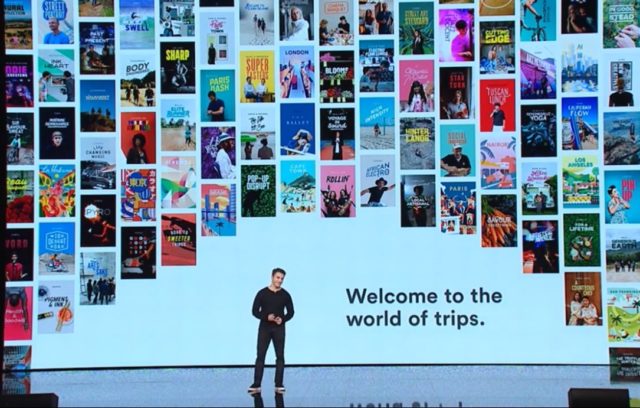
Airbnb has introduced Trips—a way for travelers to purchase experiences beyond just a place to sleep. During the Airbnb Open on Thursday, company co-founder, Brian Chesky, likened travel to Joseph Campbell’s “Hero’s Journey.” Every story has an origin, crosses a threshold and the hero is transformed by a challenge before returning to their starting point. This inspired the concept of not just a destination, but a journey that transforms the person—so Airbnb decided to provide that adventure.

Chesky unveiled a new version of the Airbnb app that includes not just homes and places but a newly-added Experiences feature. The promotional video used examples of people riding on dirt bikes, running and even learning to become a burlesque dancer.

airbnb-trips


“We’ve designed this to be both magical and easy,” Chesky said during the reveal. Experiences are divided into two groups, both designed to immerse a traveler into the local community. “Immersions” are multi-day experiences filled with activities while “single” experiences can include tours, etc. for just a few hours at a time. Users can choose an Experience based on passion, like food, dancing or photography. Half of the experiences are priced under $200, but all of them are presented like a film or old-fashioned travel poster. In fact, each experience comes with its own trailer to add the storytelling element. In addition, 10 percent of experiences are offered by non-profit organizations, who receive 100 percent of the trip proceeds.

A major focus of the Airbnb is not just having fun, but the importance of knowledge that is shared among guests. Even its Places option is sorted not by reviews, but reviewers—offering personal recommendations from the local area from where to eat to the best dancing hall. In one Experience, Nelson Mandela’s prison guard offers a tour of the prison in which he stayed and relates how Mandela changed his life. In another, a Korean woman teaches the art of intricate embroidery—a skill all but lost to machine production. Each experience includes not only interaction with his/her guest, but the opportunity to learn something new by participation. These new Experiences are available now starting in Detroit, London, Paris, Nairobi, Havana, San Francisco, Cape Town, Florence, Miami, Seoul, Tokyo and Los Angeles.

Future app features will include airfare, services and food, adding eCommerce to the mix. As the world enters an era of virtual reality, automation and artificial intelligence, however, Airbnb is making humans a priority. “Everything we do and everything we will do will be powered by people,” Chesky said. “The magic was, is and always will be in the people.”

NBCUniversal Names VP Of Worldwide Live Entertainment; Multiple Promotions At Discovery Networks

From worldwide live entertainment to managing emerging platforms such as VR, here are some of the top personnel moves in marketing over the last week.


NBCUniversal has named industry veteran, Carol Nygren as vice president of worldwide live entertainment. In this role, Nygren “will spearhead the strategy and development for cross-category world-class live events and entertainment. While managing current partnerships, she will also be responsible for creating new relationships globally, and implementing tailored strategies to ensure revenue and creative consistency based on the studio’s dynamic portfolio of intellectual properties,” according to a press release. Prior to NBCUniversal, Nygren led programming efforts at Fathom Events and served as EVP and managing director at Live Events Management Inc. before that. Nygren also worked at The Walt Disney Company, where she was SVP of Licensed Live Family Entertainment and developed the Disney On Ice brand.


Former id Software and GameStop executive, Steve Nix is stepping into virtual reality with a new startup studio called ForwardXP. The company will focus on developing virtual, augmented and mixed reality experiences. Although the company is new, this isn’t Nix’s first time working with the technology. He previously served as general manager of VR and interactive at ReelFX, and was the CEO of Yvolver (an engagement and analytics platform he co-founded) before that.


Discovery Communications has quite a few promotions and new hires. Beth Greve has joined the company as SVP of digital ad sales, and Nicole Cleary was promoted to SVP of national advertising sales. Keith Kazerman is now the group SVP of client solutions, Robert Voltaggio is group SVP of ad sales planning and operations, and Jill Steinhauser has been promoted to SVP of ad sales planning and operations. Additionally, the company has hired Rebecca Howard, a virtual reality consultant and former head of video at The New York Times, to the role of SVP of emerging platforms and partnerships.


Paramount Pictures has named several executives in its marketing division in creative advertising. Mo Rhim has been hired as SVP of international digital marketing along with Kath Skerry, who will be VP for digital marketing. Nav Kaur is now director of marketing partnerships and Vivianne Waisman is serving as VP of licensing. Additionally, Brandon Nichols has been appointed to director of digital marketing while Natalie Bowman was named director of creative advertising.


Jori Arancio has been promoted to SVP of communications at ABC Entertainment and ABC Studios. In this role, she will be responsible for all corporate communications, consumer press campaigns, awards outreach and talent relations. Arancio’s previous role was as VP of communications for Freeform, and was part of the rebranding from ABC Family to Freeform.


Mimi Turner, former marketing director for The Lad Bible, has taken the role of senior vice president of strategy at Vice. In this role, she will use her experience with younger audiences to expand Vice’s UK business across digital, social, television, marketing, data and commercial.


Former Apple CEO, John Sculley has accepted the position of chairman and chief marketing officer at the pharmacy benefit management company RxAdvance. Sculley is a founding investor in the company and has served as its vice chairman.


AMC Networks announced that Ellen Kroner will be retiring from her longtime role as executive vice president and chief communications officer. Following her departure, Georgia Juvelis and Jim Maiella will succeed her and begin their roles as senior VPs and co-heads of corporate communications in 2017.


OmniGuide Holdings, a patient safety-focused medical technology company, has appointed John Barnhill as VP of marketing and business development, where he will be responsible for global marketing efforts and business development strategy.


Professional certification provider Simplilearn recently appointed Mark Moran as its chief marketing officer. Moran will oversee the company’s marketing initiatives, communications, and go-to-market efforts as it expands its presence across US markets.


Accounting software developer FlexiInternational named Mary Brandon as the company’s new vice president of marketing. Brandon has over 25 years in the tech industry as a marketing executive, and she’ll be responsible for corporate branding and communications, product positioning, lead generation, and partner marketing for Flexi Software and Renovo Corporation.


Have a new hire tip? Let us know at editorial@alistdaily.com.

Why Twitch Became An ESports Sponsorship Sales Representative

Today, the video streaming platform, Twitch announced a new partnership with two professional eSports teams, Team SoloMid (TSM) and Cloud9 (C9). The agreement makes Twitch the teams’ official sponsor sales representative, connecting them with brands outside of the gaming world and further growing the eSports industry. Twitch will remain the exclusive streaming platform for the two teams while it builds relationships with brands looking to tap into their combined audience.

“These brands will have one-stop access to Twitch’s audience of nearly 10 million daily viewers and TSM and Cloud9’s global fan bases, ensuring unified, authentic engagement with the growing eSports audience,” read an official statement from the company.

Twitch’s vice president and commercial director for eSports, Kristen Salvatore, spoke with [a]listdaily about connecting non-endemic brands with eSports teams and how this partnership will help grow the industry.

What convinced Twitch to officially represent two eSports teams?

ESports is part of Twitch’s DNA—we’re deeply invested in the success and growth of the eSports ecosystem. Putting more money into players’ pockets is a core focus of our eSports strategy, and leveraging our sponsorship sales expertise on behalf of teams is a benefit we’re glad to provide.

What drew Twitch to Team SoloMid and Cloud9, and how did the deal come together?

TSM and Cloud9 have longstanding relationships with Twitch that span many years. They’re two of the largest, most recognizable teams in eSports with a strong Twitch presence. In addition, they have top league placings and believe in treating their players really well. Since they’ve been partners with us in the past on new initiatives, it was a natural fit for us to work together in this way.

What are the challenges for eSports teams trying to connect with non-gaming brands?

Sponsorship sales is an exciting space, but it’s also quite fluid. Ensuring the right match between a team and a sponsor—one in which both brands’ aims are being met, and consumers are delighted by the results—takes full-time focus. Twitch’s sizable, well-developed global sales team can leverage our scale, brand recognition, and experience to do the sponsorship sales heavy lifting, so TSM and C9 can focus on what they do best: winning.

We’re also able to combine team sponsorship activations with exclusive access to the large advertising inventory available on Twitch—something no other sales team can offer. This level of integration is especially appealing to non-gaming brands who may be new to eSports.

In what ways does this partnership help the eSports industry grow as a whole?

Bringing new, particularly non-gaming brands into the world of eSports is critical to the ecosystem’s success. ESports fans make up an enormous audience that’s deeply desirable to brands–and extremely difficult to reach through traditional advertising channels. Leveraging our sales expertise to ensure that non-gaming brands enter the space in a meaningful way is a decisive first step toward that necessity.

Does this partnership open the possibility for Twitch to represent more teams in the future?

Yes, absolutely. It’s always been our mission to help content creators make a sustainable living on Twitch, and that includes teams and players. We’d love to connect them with sponsors whose brands are a great match for their own.


Learn everything you need to know to invest in today’s fastest-growing media channel—Competitive Gaming and eSports on 2.16.17 in Los Angeles. Go to alistsummit.com for more info.

The Tasty Relationship Between Food and Video Game Brands

From begging our parents to buy Nintendo cereal to grabbing a slice of pizza at the arcade, food and gaming have always gone together. Over the years, the relationship between video games and food have grown into a delicious pairing that continues to target a passionate (and largely male) millennial audience.

GrubHub, for example, has partnered with Ubisoft for a Just Dance 2017 campaign asking consumers, “what’s your doorbell delivery dance?” Users are invited to use a special Just Dance code at checkout for a chance to win the game.

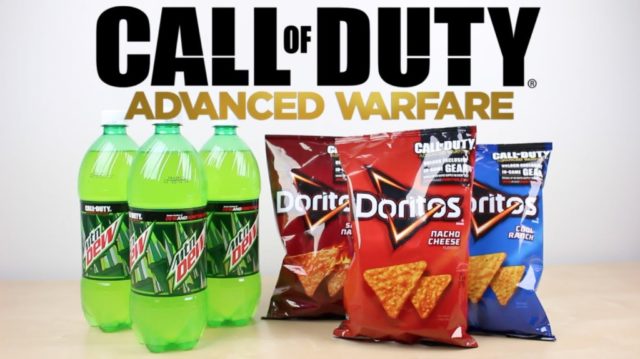
PepsiCo is definitely a heavy-hitter when it comes to marketing to gamers, especially with its Mountain Dew brand. Its GameFuel campaigns partner with major game releases like World of Warcraft, Call of Duty and Halo offering limited-time flavors and special offers. This time, the company is offering a combo with both Mountain Dew and Doritos to offer additional XP, a special PvP mode, in-game skins and a chance to win an Xbox One—all to promote Titanfall 2 in a promotion called “Fuel Your Titan.” Buffalo Wild Wings also got in on the action by offering access to the PvP “Coliseum Mode” to those dined at the restaurant at the end of October.

dorito-1024x574

While Doritos is often paired with Mountain Dew, PepsiCo’s crunchy tortilla chip brand has been featured in a few gaming promotions of its own. For example in May, a gamified campaign for Doritos Mix offered a sweepstakes to win prizes such as an Xbox One, Xbox Live memberships, copies of Call of Duty: Black Ops III, a Samsung Gear VR headset and more.

Taco Bell and PlayStation have become BFF’s when it comes to giveaways, with a relationship that spans back to the PlayStation 3. The two companies have formed a tasty alliance that includes sweepstakes, instant wins and recently, a pop-up PlayStation VR arcade.

As always, enlisting the help of an influencer can boost engagement for both food and the games they partner with—for the launch of Halo 4, Pizza Hut Delivery teamed up with YouTube personality, FlawlessCowboy and Microsoft to introduce the Halo 4 Stuffed Crust Pizza. The promotion came with its own microsite, where fans could order food and claim exclusive items like Halo avatars and win prizes. The pizza even arrived in a Master Chief-themed box. This holiday season, Pizza Hut has once again partnered with Microsoft to give away Xbox One S consoles and custom red Pizza Hut controllers.

Healthy Eating

It hasn’t always been an easy journey for food and gaming brands, however. Times are changing in the way consumers view advertising, quality of food and stereotypes of what it means to be a video game fan. Global food experts calling to regulate or ban advertising to children for products deemed unhealthy and some gamers prefer healthy choices to sugary snacks. With the rise of eSports and the need for this new kind of athlete to perform at his/her best, it will be interesting to see what kind of food partnerships arise.

“There’s no question for me that a healthy lifestyle reduces fatigue and helps concentration levels.” Pro StarCraft II player Samayan ‘BlinG’ Kay told Red Bull UK. “I definitely feel I’m more alert throughout the time I’m practicing and can stay that way for longer compared to times where I slip away from keeping active and start to binge out a bit.”

Gaming and food go together so well that brands are even creating their own specialized products. Gamer Grub produces an array of snack foods designed to be eaten out of a pouch and claim to be full of vitamins and neurotransmitters to increase performance. The brand has even partnered with eSports world champion, Jonathan “Fatal1ty” Wendel to promote.

Quest Nutrition, maker of the Quest Bar, is the first non-endemic sponsor to get on board Robert Morris University’s (RMU) eSports program. “After researching the space, meeting with pro players, and talking about their training regiment, we realized that these athletes need to treat their bodies much like traditional athletes do and we want to help them tell the story of how living a healthy lifestyle can help their performance,” Nick Robinson, chief marketing officer of Quest Nutrition, told [a]listdaily.

Meanwhile, Totino’s Pizza rolls doesn’t seem concerned about the health craze and is taking a different approach when it comes to marketing. “When we decided to go after that millennial audience, we saw thousands of people were making fun of the product on social media, being irreverent, but having fun,” Caio Correa, marketing manager for Totino’s told the Star Tribune. “We realized, they were talking to us, but we weren’t talking to them.” The result was “Live Free, Couch Hard”—a snarky, self-depreciating campaign that embraces what it is—a snack food for lounging. After some fun tweets back and forth this spring, the brand teamed up with Sega for its 25th anniversary celebration of Sonic the Hedgehog at San Diego Comic-Con. Last October, Totino’s had an on-pack partnership with Activision’s Call of Duty: Black Ops 3 and this year, the brand has an on-pack partnership with Microsoft’s Gears of War 4.

General Mills, the parent company that owns Totino’s has set its sights on eSports, partnering with Yahoo ESports to sponsor its weekly live shows. The company has been marketing Cinnamon Toast Crunch to late-night gamers for years, and has integrated Reese’s Puffs directly into Yahoo’s Twitch and Facebook Live channels.