‘ROM: Extraction’ Launches First Contact Into The VR Space

First Contact is a virtual reality game studio founded by video game industry veterans from Starbreeze, Robotoki, Blizzard, Treyarch, Infinity Ward, SCEA and Spark. They were joined in October by VRLA co-founder Jessica Ward—who oversees the company’s relationships with VR and gaming communities—and former Skybound Interactive executive producer, Matthew Candler, who now serves as First Contact’s chief revenue officer.

Its first game, ROM: Extraction, released earlier this month for HTC Vive and Oculus Rift on Steam, and a PlayStation VR (PSVR) launch is expected in the near future. Speaking with [a]listdaily, Candler describes the game as an endless arcade shooter, where players are challenged to take out as many enemies as possible in three minutes using orbs that explode when shot.

ROM is set in the near future, where we’re extracting minerals from the moon,” said Candler. “On a production level, it was one of those things where the programming team was playing around with different mechanics and found a fun one that involved throwing and shooting. Everyone who tried it thought it was really fun, so the mechanic came together in about the span of a week. We saw it, thought it was fun, and said, ‘let’s get it to marketing and have the company go through a production release process.’ Then we could iron out the kinks of launching content and publishing it on Steam, Oculus (Oculus Store) and PSVR (PlayStation Store). So, it came from this fun game mechanic and a desire to go through a product release to learn how to develop and launch, since as a team, we hadn’t done it yet.”

ROM: Extraction may seem pretty straightforward right now, but First Contact intends to update the game with additional levels, weapons and enemies. “We want people on the market to understand that we’re going to continue to support the game and integrate features into the product,” Candler explained. “We think that the publishing landscape [for VR] is still very new, and we’re trying to be smart by not making too many large commitments.”

rom-extraction-2In discussing how the First Contact team came together, Candler spoke about how he worked with three of its founders on The Walking Dead VR Experience, a fan experience featured at Walker Stalker Con, while at Skybound. It was in 2015 that Starbreeze made a pivot into the VR space, and the developers learned that they had a knack for it, so they decided to start their own studio. “They had about two years of experience in VR and decided that they wanted to work on multiple platforms, so they went out and raised some money,” said Candler. At around the same time, Candler thought, “wow, this is a great time to jump into VR” and decided to join them.

Virtual reality is still in its early phases, which makes game promotion challenging, but Candler believes that livestreaming and video content play an important role in promoting new games.

“You have a limited amount of hardware out, but more hardware is coming into the market, so that’s good,” said Candler. “There are fewer participants in VR compared to people streaming traditional PC and console games. It (livestreaming) is a fairly new part of the business and it’s a very powerful way to market a product—having a lot of videos and content created by streamers.

“The other thing is that we’re starting to see that mixed reality is starting to become the preferred way of showing video. The person who is playing the VR game actually looks like they’re in the experience.”

Although mixed reality livestreams are preferred by viewers, Candler explained that there are some technical hurdles, and First Contact is coordinating with the Unreal Engine team to overcome the challenges. “We have a very short development cycle,” said Candler, “so implementing and updating mixed reality is something that we’re getting to—it’s just taking us a little bit longer.”

In the meantime, First Contact intends to keep ROM: Extraction growing and evolving with fresh content. “We’re going to add multiplayer, more weapons, more enemies, and we’re developing two new levels,” Candler said. “We will announce those levels and when they’re going to launch in short order, in the New Year. I think with VR, being nimble is helpful, given how things are kind of in flux across the market.”

When asked about how First Contact was working with partners to raise awareness about the game, Candler said: “Steam has been great, and all the guys over there have been really exceptional and supportive. We got some time in at the Steam Dev Days with demo windows. The hardware partners have been great; both HTC and Oculus have been fantastic and Sony has been very supportive. There are some things coming up that we’re going to announce soon, and our hardware partners will help us promote the product. Our strategy is to work with those people to create a symbiotic relationship between hardware and software and help drive consumer adoption.”

Candler also noted how ROM players were already picking up a strong sense of competition in climbing the leaderboards. With Oculus working to promote The Unspoken as a VR eSport, we asked Candler about his thoughts on eSports support for ROM.

“We hear a lot about eSports,” he responded. “My personal opinion is that there are a few dominant players, and if a product organically evolves into one, that would be wonderful. It’s not something we’re targeting, but we are working with location-based entertainment places, so there’s a lot of opportunity there. If the game evolves in that direction—if that’s what the fans want—then I think we’ll be ready to support it. But it’s not something that we’re saying is a definite thing, because I don’t think there are quite enough units out there for anyone to take a definitive direction.”

When Candler was asked about what he thought was needed to help grow VR adoption, he said: “I think it needs awesome content. Our main goal for ROM, and the reason we launched it, was to get more people experiencing good VR content. We were doing a lot of demos of the product, and we wanted to get it out there to have people experience it.”

Candler also believes that, in addition to location-based demos, retail spaces will play a strong role in getting consumers to adopt VR.

“A great way to sell content is to have people go to an experience and say, ‘I want that,’” said Candler. “That’s what we’re seeing with ROM, where people will come in, play the game, and say, ‘Wow, how do I get that in my home?’”


Beyond ‘Let’s Play:’ 5 Unique Video Game Influencer Campaigns

Video games and influencers go hand-in-hand. Despite FTC crack-downs on transparency, publishers and social media stars maintain a close-knit relationship, made popular by “Let’s Play” videos and livestreams. Challenged with creating a truly authentic experience for viewers, these publishers got creative with influencer campaigns to inform and entertain millions.

Hitman: Real Life Hitman

To promote the return of Agent 47 this past March, IO Interactive teamed up with Realm Pictures—a group of indie filmmakers whose “Real Life First-Person Shooter” video went viral on YouTube and quickly exceeded 10 million views. Realm Pictures created a similar scenario in which various YouTube superstars, which include Smosh Games and the eSports champions, OpTic Gaming, guide a “real life” Agent 47 (the main character from Hitman) through a scenario similar to one found in the game. In iconic Hitman fashion, the “players” could accomplish tasks in multiple ways, and not everything went as planned during the “mission.”

“[Real Life Hitman] is one of the best campaigns I’ve ever seen our brand team put together,” Square Enix senior director of marketing, Mike Silbowitz told [a]listdaily. “With how crowded the marketplace is these days, you can’t just show gameplay. You have to find unique ways to show off your experience. One of the things I absolutely loved about this is how it detailed choice in the game, and not just scope.”

Bejeweled Stars: #ShinyPlace

Launched this May, Popcap and EA’s newest mobile version of Bejeweled needed a way to stand out from its “candy crushing” competitors. To accomplish this, the publisher teamed up with social media influencers, who then showed off their “shiny place”—the game’s catch phrase—through pictures and video. Influencers included The Bachelor‘s Sean Lowe, social media filmmaker, David Lopez, and even adorable, tongue-out kitty, Lil Bub. The most popular of these promotions, with over a million views, was from Jiffpom, a “petfluencer” on both YouTube and Instagram whose specialty is being generally fluffy and cute . . . this time, with a sponsored hashtag.

https://www.instagram.com/p/BFXtJurEXMI/?tagged=shinyplace

Doom: Day of Doom

Bethesda went all out for the launch of its gory reboot with promotions ranging from race cars to live-action commercials. Despite already being one of the most anticipated titles of the year, Doom got the influencer treatment in style thanks to a partnership with Rooster Teeth, professional athletes and some highly popular YouTubers. Rooster Teeth’s Day of Doom commenced on March 29 with a livestream of the tournament on YouTube Gaming. Going head-to-head in the 6-on-6, single-elimination tournament were NFL and MLS sports stars Rob Gronkowski, Thierry Henry, Chad “Ochocinco” Johnson, and Antonio Brown. They were teamed up with YouTubers like Rooster Teeth, SSSniperWolf, Funhaus and iJustine for the bloody battle.

Tom Clancy’s The Division: Agent Origins

Ubisoft worked with popular YouTube filmmakers, RocketJump and devinsupertramp to develop Agent Origins, a four-part live action series based on Tom Clancy’s The Division. The film was produced by Corridor Digital and detailed the background stories of four agents tasked with restoring New York City after a devastating viral outbreak. The four episodes debuted first on YouTube, then with exclusive scenes on Amazon’s Prime Instant Video service on January 19.

“YouTube is an amazing channel for the video game industry,” Ann Hamilton, brand representative at Ubisoft, told ION. “It allows us to share our video content with our consumers directly through our own channels. It has been a great tool at building communities for each of our games. We release a variety of content including gameplay walkthroughs, interviews with game development teams, game trailers, as well as partnering with major creative talents on projects like Agent Origins. Additionally, it’s a venue for fans to create their own content based around our games and share it.”

Sonic Boom: Smosh Games Scavenger Hunt

The gang at Smosh Games set out on a San Francisco scavenger hunt, inviting Twitter users to suggest locations and activities. At the end, Sega invited them on a tour of its facilities, gave a hands-on with Sonic Boom and a peek behind a forbidden door to discover a mind-blowing secret. The video garnered 1.7 million views and over 17,000 likes, raising awareness for the new game and showing off Sonic Boom gameplay through a unique, comedic situation.

How ‘Killing Floor 2’ Splatters Gore Onto The PS4

In the over-the-top horror game, Killing Floor 2, up to six players are challenged to work cooperatively and combine their firepower to fend off waves of “Zeds” (also referred to as “specimens”)—mutant monsters that are somewhat comparable to zombies. They come crawling, staggering and running out with the single-minded goal of wiping out the players.

The first game released in 2009 exclusively for the PC, and developer Tripwire Interactive maintained the game for several years with annual events and updates, supported by a large community of modders, before announcing a sequel. Killing Floor 2 spent over a year in Steam Early Access before officially launching last November. In addition to featuring spectacularly gory graphics, the sequel has a special versus mode, where teams of six battle against each other—one team as the humans, the other as the Zeds. Furthermore, the game is expanding its audience by releasing for the PlayStation 4 with support for the PlayStation 4 Pro.

Tripwire Interactive vice president, Alan Wilson, recently spoke to [a]listdaily about growing the Killing Floor brand to include a console audience and what it will take to keep the sequel running for at least seven more years.

Alan Wilson, Tripwire Interactive vice president

Did the reputation of the previous game on PC help make promotion on the PlayStation 4 easier?

It is a mixed blessing, to some extent. On the one hand, all those who already know the game and Tripwire as a studio are likely to be very positive and become evangelists for us on a new platform. Happily, we never really got much into the “PC vs. console” debate, as we were able to make clear from early on that neither platform was going to “suffer” in any way to make it easier for us to support multi-platform.

More recently, we had the PS4 Pro support that we could highlight as well, so that the PS4 was getting all the gameplay of the PC version along with controller support designed in from the get-go and 4K support. The reputation of Killing Floor 1 certainly helped, but it was still an entirely new franchise to a significant portion of the console player-base. To that end, we’re back at promoting something completely new, even though to us and the PC fans, it is a sequel to a very successful game. That really just meant we had to manage the messaging subtly and differently between the platforms.

How have players taken to the game?

For PC, it was a sequel to a highly-successful first game, but on the PS4, it is a new franchise, albeit well-known to some players. Mind you, judging by the noise we got at the first PSX in Las Vegas to the game’s announcement in the keynote presentation, I’d say there were already a good few gamers who were really happy to see the franchise come to console!

Have you found that PC and PS4 players have different expectations from the game?

In general, not hugely. There are requests like split-screen for the console, but mostly we’re finding that a game involving 6-player co-op and 6-vs.-6 player competition really migrates very easily between the platforms. In this day and age, the distinctions between the hardware are rapidly blurring, and the gaps closing, so there is less and less reason for games to be very different.

How did a lengthy Early Access period help with promoting the game?

I’d have to say it has sometimes been a mixed bag. Initially in the Early Access period, we were simply overwhelmed by the sheer volume of feedback coming in. It was well above our expectations. That told us that a lot of players were heavily engaged and vested in the game, which is a good thing. But it did leave us scrambling in the early months to handle it all, respond to it, and quickly roll out updates to the game. It took us longer than we wanted to really hit our stride with updates. The flip side, of course, is that the game has been very well honed as a result of all that feedback. So, we did have to deal with some disappointment in the first months, as we struggled to keep up the pace. However, once we’d hit that stride, it meant that we could show dramatic additions and improvements to the game, and that is always well received by players.

What is the key to keeping a game like Killing Floor 2 engaging for the long run?

We learned a lot of lessons with the first game. We were trying out all sorts of ideas over the years—providing extra content to the game for free. This meant our own content (maps, weapons, characters and the much-loved seasonal events), as well as a growing pool of community-made content. So, we added in Steam Workshop support and unlockable items and DLC packs as well. Some of that was effectively retrofitted to the first game.

With Killing Floor 2, we’ve built for that from the get-go. Systems [are there] from the start, allowing for content to be put into the Workshop much more easily, and it’s much easier to find in-game. [We’re] monetizing the best of that content through the in-game economy, so that contributions from the community can be more directly rewarded with actual money, which has led to a wonderful level of support from the community, providing players with a ton of great content. We’ll continue to supplement that by encouraging community mappers, with things like mapping contests and making the best of that material “official,” so that it is seen by everyone.

The seasonal events haven’t been forgotten, naturally, and we’ve got a few more ideas we’ll be trying out as we go. Ultimately, we provided enough new content to Killing Floor 1 to keep the game fresh—and players returning regularly—for over six years. So, we’ll be doing all that and more for hopefully for just as long with Killing Floor 2.

A large feature on the PC side is mod support. How challenging was it to bring KF2 to the PS4 without the support from that community?

The key point is that we’re not going to leave all that support behind. Clearly, yes, we are more limited in what we can do on the PS4, but the PS4 players are already seeing a bunch of content generated by PC modders in the in-game economy, as well as community-made maps included for free with the game itself. That isn’t going to stop. We’ll continue to bring as much of that content as we can across from the PC. Hopefully, console players will soon learn that we provide a lot of support to our games in the form of additional free content and special events. We have always operated that way, and we’re not planning to change that just because we’re operating on new platforms.

Has PlayStation 4 Pro support helped to further popularize the game?

The PS4 Pro certainly enabled us to get an “in” on a surge of interest. Apart from being able to show people how good the game looks by ourselves, it has also gotten us into Sony’s marketing alongside games with very much bigger marketing budgets than we can afford.

What led to partnering with GameStop for the exclusive retail release?

The practicalities of the current retail market, realistically. Shelf-space is much more limited than it was even just a few years ago, especially during the November timeframe, when so many big-budget games are launching. It becomes a serious fight for the buyers’ attention and for the store managers’ inventory slots. On this occasion, Deep Silver (who handled the retail distribution in North America) simply got to a great deal with GameStop, and we went with it. Early indications are that many GameStop stores sold out overnight and have re-ordered, so hopefully everyone will be happy with it!

What do you think it is about Killing Floor 2 that inspires such a dedicated fan base?

That’s the $64-million-dollar question. We see it as a combination. At the core, you have (as many reviewers have been saying) a wave-based horde shooter, honed to be the very best of its breed, with a combination of awesome gunplay, crazy monsters, great level design, mad levels of gore, and some dark humor sprinkled in. Perfect mayhem after a busy day at work or school. But the fans are also dedicated because of the levels of support we’ve always brought to our games, with free content, special events and unlockable content rolling for years. Players do not need any of the content that is available to buy ([premium] DLC in the first game, [and] through the economy in Killing Floor 2) but many players do choose to pay for some of it—both because it is fun and because the revenue it generates also helps pay for the ongoing stream of content that every single player gets for free.

By The Numbers: Gen Z Consumer Trends For 2016

While millennials make up 27 percent of the US population, the following generation (Gen Z) is right behind them at 25 percent and growing. This emerging demographic is made up of small children, teenagers and young adults entering the workforce, but don’t let their youth fool you—Gen Z accounts for 25 percent of all consumer spending, and within the next decade, it’ll be responsible for 40 percent, according to a report by Universum. Gen Z doesn’t remember the events of 9/11 or a time when the world wasn’t connected via the internet. Since digital makes up most of their reality, these statistics should be telling, but not surprising.

Gen Z is:

Connected

According to Deep Focus, Gen Z spends an average of 10 hours per week online. Fifty-one percent of tweens have a social media account and 70 percent regularly use their smartphones to send photos, text and emails. Eighty-four percent of respondents browse an internet-connected device while watching TV and 14 percent of the respondents admitted to having made a purchase within an app-based game.

The same study revealed that 55 percent of Gen Zs will stop and watch an ad if it is humorous. Furthermore, 45 percent will also pay attention if an ad has great music, and 33 percent will value an ad if it is inspiring. Like their story-loving parents, 67 percent of the respondents said that they are more interested in narratives and content that have realistic endings. They are also nearly twice as likely to want to see “real people,” rather than celebrities, endorse products and brands.

Wikia’s findings also reflect a generation that embraces technology in everything they do. In fact, only 43 percent of Generation Z value the time when they’re unplugged and 47 percent said they were more actively connected than a few months prior to the survey. Seventy-six percent agree that their experience with technology will help them reach their goals and 66 percent say technology makes them feel like anything is possible. The study also found that Gen Z is actively connected throughout the day, with 25 percent checking email and messages within five minutes of waking up and 73 percent connecting within the hour. 

gen-z

Social

Gen Z may be connected digitally, but this demographic also values in-person interaction more than their parents. According to a recent study by Fluent, 61 percent would rather connect with someone in real life. While you’re enjoying time together, the Gen Z across from you is most likely plugged in at the same time, however. Forty-eight percent said they logged into Facebook multiple times a day.

A report from eMarketer estimates that 17.5 million social network users between the ages of 12 and 17 will use a social network at least once per month in 2016, with that number growing to 18.2 million by 2020.

Heavily Influenced By Video

When it comes to consuming video content, Fluent’s study found that 80 percent head to YouTube, but Facebook is a close second at 79 percent. Additionally, 32 percent watched video for at least an hour a day, while 30 percent view for two hours and 21 percent view for three hours. Gen Z feels more connected to YouTube stars than traditional celebrities. Research from November 2014 by Defy Media revealed that 54 percent of teens surveyed followed YouTubers on social platforms, compared to 42 percent who followed TV and movie stars.

YouTube isn’t the only place where this generation consumes its entertainment. Seventy-one percent of Gen Z has a Netflix subscription—more than any other generation, according to a report by VisionCritical, while only 45 percent of them watch cable TV on a television.

Discerning Shoppers

In the same study, Gen Z respondents named “aesthetic” as the number one thing they look for in the products they buy. Fashionable design matters to 67 percent, as well—more than any other generation. When it comes to food products, 73 percent of Gen Z look for prices and promotions more than any other feature, followed by nutritional content at 67 percent.

This young generation is confident, tech-savvy and careful with spending. Eighty-nine percent are confident that they will be able to buy a house and bequeath their estate—more than any other generation surveyed. Following that trend, Gen Z is confident they will be able to buy whatever they want (within reason) and travel the world. Bad news for Airbnb, though, as 86 percent say they’d rather stay at a hotel compared to just 12 percent with the couch-surfing and experience service.

With youth and money comes a bit of naïveté, however—73 percent said they trust financial institutions “very much” or “somewhat.” According to a Stanford University study of 7,804 students from middle school through college, an incredible 82 percent of middle-schoolers couldn’t distinguish between an ad labeled “sponsored content” and a real news story on a website. Nearly 4 in 10 high school students believed, based on the headline, that a photo of deformed daisies on a photo-sharing site provided strong evidence of toxic conditions near the Fukushima Daiichi nuclear plant in Japan, even though no source or location was given for the photo.

Let’s hope that with age comes a bit of wisdom with all that buying power.

Miramax CEO Exits; Black Sea Games Reopens Doors

As 2016 comes to an end, here are some of the people who are looking toward fresh opportunities in the New Year.

Miramax CEO Steven Schoch announced that he is leaving the company this month. He has been at the post since being promoted from CFO in 2012. Nasser Al-Khelaifi will act as interim CEO in addition to being chairman while the film company searches for a replacement.


Happiness and wellness channel, Z Living, has named Karen Bressner as its new SVP of advertising sales. Bressner has over 25 years of experience and will lead the network’s East Coast sales group to grow new sales, marketing initiatives and partnerships.


Spike TV has named Red Fabbri as its VP of fan engagement and editorial. In this role, Fabbri will manage a multiplatform audience, grow engagement and content consumption, and oversee original content across platforms.


Game studio Crytek recently announced that it was closing a number of studios in Budapest, Sofia, Seoul and Shanghai. However, its Sofia team has risen again to become Black Sea Games. The new developer is led by Vesselin Handjiev, who was the original founder of Black Sea Studios before it was sold to Crytek in 2008 and rebranded Crytek Black Sea.


Have a new hire tip? Let us know at editorial@alistdaily.com.

Kojima Productions Hires New President; Netmarble Acquires Kabam Vancouver Studio

An ironic new president and numerous acquisitions mark this week in job moves.

Kojima Productions, founded by Metal Gear game designer, Hideo Kojima after departing Konami under difficult circumstances, announced a fun twist. The company has appointed Shinji Hirano, who was president of Konami’s North and South America operations, as its president. The company is currently developing Death Stranding, featuring actors Norman Reedus (The Walking Dead) and Mads Mikkelsen (Doctor Strange; Rogue One: A Star Wars Story).


Dovetail Games, which specializes in simulation games such as Train Simulator and Microsoft Flight Simulator, has hired two former EA executives—Lizzie Wilding and Simon Bull—to its senior management team. Wildling is taking the role of VP of publishing while Bull will oversee Dovetail’s flight franchises as flight business director.


Glu Mobile has formally acquired Quiz Up developer, Plain Vanilla, and the studio’s CEO, Nick Earl will join Glu’s board. Glu invested $7.5 million in the company earlier this year, and part of the deal was that then Glu CEO, Niccolo de Masi was to join the studio’s board of directors. Additionally, Glu was given the option to acquire Plain Vanilla after 15 months, which was obviously shortened.


Asian game company, Netmarble announced that it has acquired Kabam’s Vancouver studio, gaining it the highly successful game, Marvel Contest of Champions and Transformers: Forged to Fight, which is expected to launch next year. In a statement given to GamesIndustry.biz, Kabam said that it was exploring the option of selling the remainder of its studios, including its Los Angeles, San Francisco and Beijing locations, to Netmarble.


Atlus, which was acquired by Sega earlier this year, announced that it was expanding by opening Studio Zero. Led by Katsura Hashino, the previous director of the game, Persona 5.


Swedish mobile game publisher, MAG Interactive, has named Magnus Wiklander as the company’s chief financial officer. After working with Widespace, the mobile advertising expert, for five years, Wiklander will use his knowledge and experience to optimize the company’s internal operations and achieve the ongoing global growth.


Starbreeze, makers of the Payday games and John Wick Chronicles, has agreed to acquire 90.5 percent of Dhruva Interactive—one of the biggest game companies in India, specializing in art production. Some of Dhruva’s recent work includes art production for numerous Xbox One games, including Halo 5: Guardians, Forza Horizon 3, Quantum Break and the upcoming Sea of Thieves. Dhruva will continue to operate under its own brand and is free to work with other clients while doing the art production for Starbreeze’s projects such as Overkill’s The Walking Dead. Additionally, Starbreeze will offer Dhruva’s services to its publishing partners.


Twitter’s CTO, Adam Messinger is leaving the social media company after almost four years in the role. Additionally, the company’s VP of product, Josh McFarland, also announced that he will be leaving to join venture capital firm, Greylock Partners.


Amazon Studios revealed that it has hired former Tribeca Film Festival director, Genna Terranova for its virtual reality initiative. However, the company has not commented on what Terranova’s role will be or what its VR plans are.


Penske Media Corp promoted Deadline publisher Stacey Farish to the role of chief revenue officer and general manager of Deadline and its sister sites, TVLine and Gold Derby.


The head of Maker Studios, Courtney Holt, has stepped down to assume the role of EVP of media and strategy at Disney. Andrew Sugerman, the EVP of the division’s Content and Media area, will now oversee the studio. Maker, which was moved to Disney’s consumer products and interactive media (DCPI) division last year, was recently shifted to a different area of the division.


Have a new hire tip? Let us know at editorial@alistdaily.com.

Be Our Guest: How The Hospitality Industry Is Gearing Up For 2017

Whether you’re traveling for business, pleasure or obligation (yay for in-laws), the hospitality industry is working hard to make the trip enjoyable for anyone who leaves home. Tasked with catering to a younger, more tech-savvy consumer and travelers who can just as easily book a stranger’s house as a luxury hotel, here are how brands are gearing up for a new year of hospitality.

Virtual Vacations

Yes, there is such a thing as “virtual tourism.” The hospitality industry is finding new ways to help consumers plan their next trip with the help of virtual reality and 360-degree video. Expedia’s “Discover Your Aloha” campaign uses facial-recognition to determine what kind of Hawaiian vacation each consumer might like best, based on which images he/she smiles at.

Hilton’s “Destination Inspiration” campaign uses 360-degree video to provide virtual tours of rooms, resorts and a hotel’s surroundings before a call to action invites consumers to book a vacation. “The habit of ‘virtually experiencing’ a hotel has been part of the guest-booking experience for years now, only it was previously limited to scrolling through a property’s social feed or website,” Stuart Foster, Hilton Worldwide’s vice president of global marketing, told [a]listdaily: “Virtual reality technology is here to stay and we will continue leveraging this exciting capability to create new experiences for travelers from the moment they begin thinking about their trip to when they’re ready to book that dream vacation.”

Carnival Cruise Line has been “rocking the boat” lately with a number of new 360 experiences, hosted by Instagram influencer, Zach King. “The Vista Effect,” named for the new Carnival Vista ship, features interactive views of the cruise liner that show off attractions like dining, water park and even rides. Partnering with AT&T stores earlier this year, curious would-be vacationers were able to step aboard in an immersive, VR tour of Carnival Cruise ships and enter to win a cruise through a special sweepstakes.

Millennial Marketing

Legacy hotel and hospitality brand, Marriott is setting the standard for guest entertainment by adding virtual reality to guest rooms, hosting concerts and partnering with sports clubs like the NFL and NBA. Designed especially for a younger demographic that wants meaningful experiences over just a bed and a shower, Marriott launched Moxy Hotels in 2014. “It’s a brand that was created strictly for the millennial traveler,” Catherine Leitner, senior director of Buzz Marketing at Marriott International told [a]listdaily. “It’s led by a young, fresh, female executive who really has her finger on the pulse of what that traveler’s looking for—from hotel and room designs to public spaces—and the price point makes it reasonable and attainable.”

Royal Caribbean recently launched its latest billion dollar cruise ship, Harmony of the Seas, in the US—complete with ultra-high-speed internet for $10 per day, per device. The cruise line hosts a number of social media events on board and gives away prizes with the use of hashtags. By having internet speeds at sea that are comparable to those on land—as well as a partnership with Xbox—Royal Caribbean’s chief marketing officer, Jim Berra, told [a]listdaily that eSports could be part of the cruise line’s wave of the future.

“I do expect us to push harder into gaming,” Berra said. “We have a partnership with Madison Square Garden and they’re hosting eSports events. There are a couple of different ways to reach that market, and it’s untapped. We have the connectivity and the idea of having live internet-based gaming anywhere in the world is a cool area for us to explore.”

Samsung Takes On The Challenges Of Marketing VR

It’s hard to turn on the television these days without seeing a Samsung Gear VR commercial focusing on the reactions of people experiencing virtual reality for the first time. Marc Mathieu, chief marketing officer at Samsung, told [a]listdaily that it’s hard to convey to the audience how truly immersive Samsung Gear VR can be.

Mathieu said as ironic as it is, watching someone who watches VR seems to be as fun as watching VR itself, and it is definitely a great way of appealing to people who haven’t tried it yet. “This campaign shows a diverse cross-section of people experiencing virtual reality for the first time,” Mathieu said. “Seeing the powerful emotions elicited, from genuine fear to heartbreak to uncontrollable surprise and delight, was viscerally enjoyable without ever knowing what the VR content was.”

Hands-on trials of the Gear VR are very important for Samsung, which is why the product is available to experience at more than 15,000 retail locations across the United States. “Immersive experiences are the key component of our New Marketing Playbook,” Mathieu said. “For example, our strategic partnership with Six Flags enables millions of consumers to experience virtual reality for the first time by bringing Gear VR to real roller coasters at theme parks across North America.”

https://www.youtube.com/watch?v=bLE2zdk11Gg

Samsung is promoting its mobile VR goggles through “The Night Before” 4D experience that runs through December 31 at Herald Square in New York City, The Grove in Los Angeles and Samsung 837 in Manhattan’s Meatpacking District.

“The Night Before” is a 4D VR ride that lets consumers sit in Santa’s sleigh. Riders will don Samsung Gear VR, which transports them alongside Santa and allows them to see what he sees as he travels the world on the biggest night of the year. Throughout the ride experience, the 4D seats move with each twist and turn.

Samsung worked with W+K Portland and Here Be Dragons to create the sleigh ride VR content and McKinney provided the 4D chairs. “We always aim to create immersive, never-been-done-before experiences with our Samsung VR ecosystem as the focal point. Additionally, having more consumers experience VR is always a key objective,” Mathieu said. “With ‘The Night Before,’ we are able to blur the lines between virtual and reality in a relevant, enjoyable and festive way like never before.”

Matheiu estimates thousands of people will experience “The Night Before” in 4D throughout its three-week campaign. But the experience is also available for everyone with a Gear VR to experience through Samsung VR.

Gear VR is part of a major push by Samsung this holiday. Samsung is giving away Gear VR to customers who purchase a new Galaxy S7 or Galaxy S7 Edge. It’s part of the company’s “Unwrap the Feels” campaign. “To capture the warmth and spirit of the holiday season, ‘Unwrap the Feels’ focuses on families coming together and sharing special moments,” Mathieu said. “It’s candid and raw, showing the range of powerful emotions and reactions elicited when people immerse themselves in new VR worlds.”

Snickers Lays Out ESports Game Plan

Snickers became the official chocolate bar of ELeague beginning with season 2 this fall. The brand partnered with Turner and WME/IMG’s eSports league, which focuses on Valve’s Counter-Strike: Global Offensive (CS:GOand specializes in eSports fumble highlights to promote the “You’re not you when you’re hungry” message of the candy bar.

Allison Miazga-Bedrick, senior brand director at Snickers, told [a]listdaily that her brand has been following the growth of the sport for the past few years.

“We’re excited to now officially be part of eSports as it continues its tremendous growth and popularity,” Miazga-Bedrick said. “The brand craves getting closer to ELeague’s dedicated millennial fan base, who looks for the kind of fun that aligns to the solution that only Snickers offers when ‘You’re not you when you’re hungry.’”

Miazga-Bedrick said eSports provides Snickers with a great opportunity to engage millennials on a platform that they continue to show increased passion—as more than 80 percent of ELeague viewers are also active on social media during tournaments.

“As an official marketing partner, Snickers will be tapping into Eleague’s younger viewing audiences through a number of branding elements across television and digital,” Miazga-Bedrick said. “These include sponsorship of the ELeague pre-game show airing on TBS and ‘You’re not you when you’re hungry’ moments airing post-game every week, which captures the biggest gaffes and bloopers from that week of gameplay.”

Additional ad spots will only air between breaks in the action alongside ELeague’s “ad tracker,” a scrolling ticker highlighting stats and additional information about participating teams and players.

Miazga-Bedrick said reaching millennials continues to be a brand priority, and eSports is a platform popular among that audience that continues to grow. “The ELeague partnership aligns perfectly with the Snickers brand and the ‘You’re not you when you’re hungry campaign,” Miazga-Bedrick said.

The nature of ELeague, which dedicates the bulk of its coverage to online content, opens up direct engagement with fans across mobile devices. “Any time we can connect with our audience where they are highly engaged is a win for the brand,” Miazga-Bedrick said.

When asked if Snickers is looking at its ELeague sponsorship as a first step into the bigger eSports ecosystem, Miazga-Bedrick said, “We’re excited about our partnership with TBS and are always looking to explore how to make our presence bigger, but nothing is confirmed yet.”

Along with Snickers, ELeague’s official marketing partners include Arby’s, Buffalo Wild Wings, Credit Karma, and Domino’s.


Learn everything you need to know to invest in today’s fastest-growing media channel—Competitive Gaming and eSports on 2.16.17 in Los Angeles. Go to alistsummit.com for more info.

From Consoles To ESports: Female Gamer Trends Of 2016

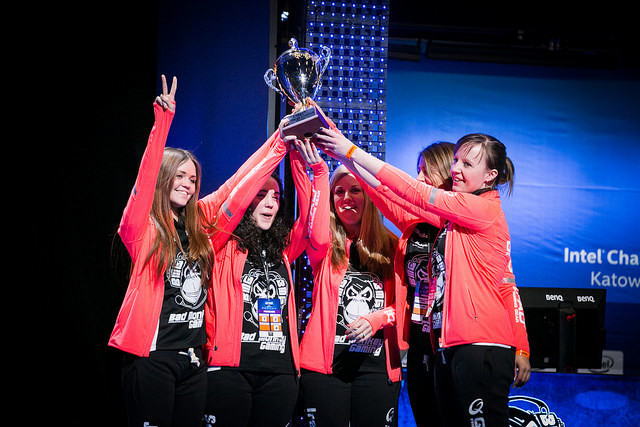
While most video game demographics focus on male millennials, female gamers are often ignored. ESA states that adult women are now the largest single demographic in the gaming community—women over the age of 18 represent 36 percent of the overall gaming population, compared adult men over 18 (35 percent). More women in the US own a video game system than men, and more are actively involved in eSports, according to recent studies. Strong, female main characters have become more prevalent among video game developers and as the world becomes more connected, so too will the female audience. Want to get to know this often-overlooked but growing demographic? We’ve compiled some telling statistics that can help.

Female Gamers Are:

Active Video Game Consumers But Most Don’t Consider Themselves “Gamers”

  • 48 percent of women play video games. (Source)
  • 9 percent of women aged 18 to 29 would describe themselves as a “gamer.” (Source)
  • 41 percent of women in the US “frequently” purchase video games. (Source)
  • 42 percent of women in the US own video game systems such as an Xbox or PlayStation, compared to 37 percent of men. (Source)
  • Over 75 percent of female gamers in the US play on mobile phones, while approximately 60 percent play on tablets. (Source)
  • For mobile games, value is the most important feature that drives satisfaction in women, while graphics are least important. (Source: Nielsen)
  • Nearly half of female gamers in the US prefer PC laptops over traditional consoles. (Source)
  • 58 percent of women prefer the Puzzle genre for mobile games, followed by Arcade (48 percent) and Casino (37 percent). (Source)
  • 46 percent of female gamers (globally) have played a Super Mario franchise in the past 3 months—21 percent of which are between the ages of 21 to 35 (Source: Newzoo)
  • 30 percent of gamers on YouTube are women. (Source: YouTube)
  • 52 percent of female gamers do not believe that playing violent video games can lead to violent behavior in real-life. (Source)

Female

Involvement In ESports

Twenty-two percent of women say they’re involved in eSports compared to 18 percent of men, according to a report by PwC. “While the difference is relatively small, it indicates an early trend that women may be just as, if not more, engaged with eSports than males,” PwC noted in the report. “For viewing versus playing, men are playing slightly more than women, and men appear to watch from a competitive lens, while women appear to watch for enjoyment and for the social aspect of the viewing experience.”

A separate study by Newzoo exploring the link between traditional sports enthusiasts and eSports found that 30 percent of women were interested in eSports but not basketball.

“As the female eSports audience continues to grow, so too will the number of female players,” Deborah Bothun, entertainment, media and communications leader at PricewaterhouseCoopers told [a]listdaily. “Overall treatment of females in the gaming community has become a noteworthy topic that is being discussed, and we have heard discussion of all-female tournaments, for example.”

Koh Kim, formerly co-head of business development at Mobcrush, saw the large female audience on mobile opens up new opportunities for female pro eSports, particularly with Vainglory and Hearthstone.

“We’re seeing a better mix of male and female players in the top ranks, and many more mixed teams,” Kim told [a]listdaily in March. “That’s a great message for the community. There are more female players and personalities, giving other females the role models they’re looking for. That really puts out the message that any hard-working, talented player will have a platform to succeed, and the support of the community.”


Learn everything you need to know to invest in today’s fastest-growing media channel—Competitive Gaming and eSports on 2.16.17 in Los Angeles. Go to alistsummit.com for more info.