Hi-Rez Studios President Explains How ESports Ties With Community Engagement

The Hi-Rez Expo (formerly the Smite World Championship), held at the Cobb Energy Performing Arts Center in Atlanta, Georgia, concluded four days of intense competition across three world tournaments yesterday. The company’s flagship game, Smite, where players choose from a variety of gods battle against each other, was divided into PC and console tournaments. Meanwhile, Paladins, which released on Early Access last year, made its debut as an eSport at the event. There were plenty of close matches and big surprises, with the excitement enhanced by the announcement of a new mobile gameSmite Rivals, based in the highly successful competitive game.

Stewart Chisam, president of Hi-Rez Studios, sat down with [a]listdaily at the event to talk about how the Expo has grown over the years, and how having close ties to the community—along with a whole lot of godly eSports—help the company to continue to grow.
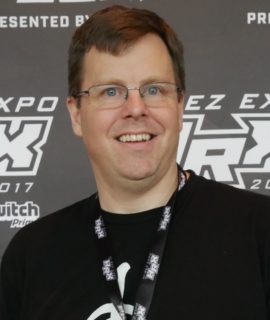
Stewart Chisam, Hi-Rez Studios president

How has the Hi-Rez Expo (formerly the Smite World Championship) grown and changed?

It’s been amazing to see it continue to grow and expand. We continue to use the Cobb Energy Performing Arts Center because we love it. Each year, we’re pressing the boundaries of how much we can take on in the facility. We add more to it each year—last year, we added the Smite console championship to the event and started the idea of a Hi-Rez Expo, using more of the expo and ballroom spaces here to introduce more new games. This year, we’ve made the full switch to a multi-game expo, but the constant has always been the amazing community. Thousands of our fans from around the world come to watch. It’s still a heavily eSports-focused event, especially this year with three world championships featuring 22 teams from 20 countries.

It’s been humbling to see how our fans have responded and how we’ve been able to grow year-over-year.

How does a location-based event like the Hi-Rez Expo help to engage with fans?

It gives us a point in the year where we can focus a lot of attention and marketing to re-engage fans with all the great things we’re doing. After the event, we tend to see a lot of people coming back to our games and checking us out again. Obviously, having a strong eSports title drives continued high engagement. There are all of those benefits, but some of the softer benefits are just as important for us. One of the reasons we hold the event in Atlanta is so our own people can come. It’s extraordinarily motivating for employees of the studio to come to events like this and talk to fans, see what they’re doing, and hear what’s on their minds. My favorite part is asking where people are from and finding out how far they’ve traveled and the circumstances they’ve come from to be here.

What would you say were some of the biggest lessons you learned from launching previous games?

I could write a novel [laughs]. I like to tell people that we’ve made every mistake possible, which I don’t think is an indictment of being bad. Some of the lessons that came from them are: keep your ear to the ground of your community; be in a position to react fast; and you have to believe in your ideas and vision, but don’t be so focused that you refuse to see your own flaws. There are a ton of lessons that come from each game and the learning curve hasn’t slowed down. I feel that every day we learn more about how to do this. I think it’s typical that, as you learn more about something, you grow more humble about what you don’t know, which is a good thing because that means there’s so much more potential for how we can take this further.

There appear to be two opposing strategies to creating competitive games: developing a variety of titles for a diverse portfolio, or putting all the company’s resources behind one game. What are the benefits of the former, and what are your thoughts on the latter?

Some of it is about how we started as a multi-game studio. Smite isn’t our first game, so we were always supporting multiple games. When Smite launched, we were a 45-person company and had around 15 people on each of our three games: Tribes: Ascend, Global Agenda and Smite. I don’t think either strategy is wrong, but in some ways, it’s part of our DNA to be a multi-game studio. We had developed processes and the infrastructure to support a multi-game foundation. The Smite team is bigger than it ever has been, but we’re passionate about making games, and we had a few other ideas for games, and people who really wanted to make them. We felt they had the potential to be great successes on the market, and that we could take it on, so I think it’s just how we evolved.

What have been some of the biggest benefits to having a game like Smite adopted as an eSport, and how do you continue to grow it?

It gives your fans and community something to focus on and gives them peers to live up to, admire and learn from. The eSports ecosystem combines with the streamer ecosystem. They (fans) watch Zapman (Steven Zapas) playing out here for Team Eager here on the stage, then he goes home to be a streamer. He interacts with the community to teach people how to play the game and encourages the next generation of competitive players. That’s a virtuous cycle for us.
hrx

Smite released for consoles last year, and Paladins is coming to consoles later this year. How do you grow games between the console and PC platforms? What about reaching eSports audiences compared to casual ones?

A lot of it carries over. For example, an event like the Hi-Rez Expo is great for us across all platforms around the world. But we’re learning more every year, and I think the eSports ecosystems and the player ecosystems between consoles and PC are a little different. We initially brought PC concepts to console, and we’re learning how to better serve the console player base each year.

Broadly speaking, all I can say is that free-to-play on console systems has been amazing for us. We think that’s an area that has been broadly underserved. The fan bases we’ve seen on consoles have been amazing and extremely responsive. The rate at which the eSports scene has been improving, across all the metrics (streaming, the level of competition, etc.) is above what Smite was in its first season on the PC. As a company that grew up as PC-only, we’re learning to love and embrace the console community.

What is your advice for getting more non-endemic sponsors involved with eSports?

I think a lot of it is happening naturally now. The biggest thing we’ve seen is that it’s an educational process. Those of us who are in the industry and see how passionate the fans are and their engagement levels don’t realize what a mystery that is to a lot people who aren’t involved in gaming. As an industry, we’re finding that as more non-endemic sponsors come to events like these and experience the fan base, they’re beginning to understand that the enthusiasm they might have had as children around football, basketball or baseball are just as strong with these fans around our games—and that this is the future. It’s happening naturally, but it’s a process. These things never happen overnight.

My general advice is to get people to events like this, sit with them, talk with them about how these fans are engaged with eSports.

What do you want people to think when imagining the Hi-Rez brand?

I think we want our brand to be a company that is extremely engaged with its community, isn’t afraid to experiment and do whacky things, and will occasionally make mistakes—but over the long haul, will always take care of its fans and do the right thing. We want to be close to the community and iterate fast, and when you’re moving fast, every once in a while we’ll try something that didn’t work as well as we had hoped. When that happens, we’ll correct it as fast as we can and we’ll keep growing and improving. That’s what we want our brand to be, and hopefully we’re on the way to get there.


Learn everything you need to know to invest in today’s fastest-growing media channel—Competitive Gaming and eSports on 2.16.17 in Los Angeles. Go to alistsummit.com for more info.
Visa Reveals ESports Strategy At CES 2017

Visa was at CES to introduce a different kind of eSport to the world. The payment company is a presenting partner for the all-electric Formula E racing and it hosted the Visa Vegas eRace on January 7 at The Venetian Hotel. All 20 Formula E drivers competed in the race, along with 10 sim racers, with $1 million in cash prizes up for grabs. Gamer, Bono Huis, won the $200,000 top prize in the competition, which Twitch broadcast live and Turner featured highlights.

It was the culmination of a global gaming “Road to Vegas Challenge” with rounds in Long Beach, California; Paris, France; Berlin, Germany; and London, England. The top 10 sim drivers, racing on rFactor software in PlaySeats with ThrustMaster wheels, were flown to Vegas for the Finals, which included the real Formula E drivers. It’s part of a bigger push by Formula E into gaming with virtual cars now available in Microsoft’s Forza Motorsport 6 and Electronic Arts’ Real Racing 3 mobile game.

It’s also the latest expansion into eSports by Visa, which partnered with eSports team SK Gaming for 2017. This marks the first entry into traditional eSports by the non-endemic brand. Visa brought SK Gaming Counter-Strike: Global Offensive players Gabriel “FalleN” Toledo, Epitacio “TACO” de Melo and lSK Gaming racer Danny “Husky” Engels to Las Vegas for a series of activities that were promoted across social media channels.

Lara Balazs, senior vice president and head of North American marketing at Visa, told [a]listdaily these endeavors into eSports and the Formula E are not short-term ventures. “Our European division of Visa has been engaged in eSports for a few years,” Balazs said. “We in North America and in other regions of our global footprint are starting to look at eSports and consider how it fits into our overall go-to-market approach.”

“Pro gaming has changed the way we see sports in recent years, opening access to people the world over and creating a surge in its popularity,” Gary Twelvetree, executive director of marketing at Visa, said. “We see huge potential for the industry and this deal sees Visa ideally placed to harness and drive that. We’re looking forward to a successful season supporting the next-gen athletes at SK Gaming to do what they do best: win.”

Balazs said pro gamers use their social and digital channels to connect with global audiences, which aligns well with the global Visa brand and how the company is connecting to that audience through its channels. “Visa equals trust and we are a trusted brand to consumers and millennials,” Balazs said. “By seeing us come to the eSports table with SK, millennials definitely look at this and think, ‘Wow, Visa is talking to me.’”

Balazs said that, just as Visa sponsors Team USA and athletes from traditional leagues like the NFL, eSports is the next step. “You have athletes that embody the brand, are digitally savvy, and they’re truly embodying entrepreneurship and taking it to the next level,” she surmises. “They’re a terrific addition to our marketing.”

Balazs added that SK Gaming is a great partner to launch into this new vertical. “We’re excited about the possibility of eSports given the interest by millennials and our target consumer,” Balazs said. “We’ll see how this SK Gaming partnership goes and then continue to see about leveraging more eSports teams and players.”

Visa was able to merge its two early entries into eSports with a marriage at CES in Las Vegas. SK Gaming was in Sin City to serve as global ambassadors of eSports and take in the virtual simulator eRacing activities at The Venetian on Saturday that Visa sponsored with Formula E.

“Formula E is completely tech-driven and we’re always looking to showcase that we’re a tech-driven brand looking to make things better, easier and safer and there are so many synergies with Formula E,” Balazs said.

Balazs explained how, as the world has gone digital with technology driving this growth, Visa is looking for partnerships that embody that. “ESports has a synergy there and offers a dynamic interactive platform for consumers to experience in a new way,” she said.

The other connection between eSports and the younger audience Visa is targeting is the actual events that are held in sold out arenas, including in Las Vegas. “Millennials care about experiences more than [material] things, and this Visa Vegas eRace truly provides an experiential way to interact with our brand so you’re not advertising to them,” said Balazs. “You’re allowing them to interact with an experience. That’s one of the things that is incredibly compelling about it.”


Learn everything you need to know to invest in today’s fastest-growing media channel—Competitive Gaming and eSports on 2.16.17 in Los Angeles. Go to alistsummit.com for more info.
How Top Video Game Events Will Engage Audiences In 2017

It’s a brand new year and for video game fans, the clock is already counting down until the next big gaming event. From E3 to BlizzCon, each expo has its own following, flavor and line-up that continues to evolve with the high-tech industry. With a whole new line-up of games and consoles to unveil, these industry showcases will be here before you know it.

EA Play

Electronic Arts broke off from the pack last year, surprising everyone by foregoing the E3 status quo in favor of its own event off campus. EA Play made its debut at the Novo Theater, where fans (press or not) could get their hands on the latest titles like Titanfall 2, FIFA 17 and Battlefield 1. A 64-player Battlefield 1 tournament drew in thousands of fans (with a little help from celebrities like Jamie Foxx and Zac Efron), and featured a number of live broadcasted interviews and gameplay videos.

This year, EA will no doubt bring a strong line-up of its pillar sports titles and everything Star Wars for fans to enjoy.

E3

As the power of influencers continues to rise, consumers often wonder if the press-focused E3 is still relevant. Although the event has certainly evolved, industry professionals say that E3 is not only relevant, but alive and well. Publishers save their biggest announcements for the summer blowout, developers gain valuable networking and exposure, and everyone who attends keeps their finger on the pulse of the industry. As for influencers, E3 is the perfect place for streaming and creating updates for their own channels. The show generated more than seven million posts on Twitter last year, as well as over 500,000 likes from E3-related posts on Instagram.

Publishers and brands took advantage of E3 2016 to inspire fans across the world from Nintendo’s real-life Hyrule booth to Doritos’ #MixArcade, so there’s no reason to believe 2017 will be any different.

PAX

Open to the public, the Penny Arcade Expo (PAX) is famous for its hands-on video game demos, publisher displays, and (of course) a whole lot of cosplay. The yearly event continues to expand across the world with PAX Dev, East, West, South and AU—bringing fans and developers together before the holiday release season and reinforcing hype for titles announced during E3. Last year’s PAX West was a sold out event that showed how the industry get-together has become more tech-savvy, diverse and rooted in nostalgia.

These events aren’t just for gaming brands, either—last year, PAX East became a hub for fun marketing ideas like Totino’s bucking couch and Uber’s Overwatch-themed vehicles. Building on the hype that surrounds PAX is a great opportunity for brands to connect, and we can’t wait to see what they do next.

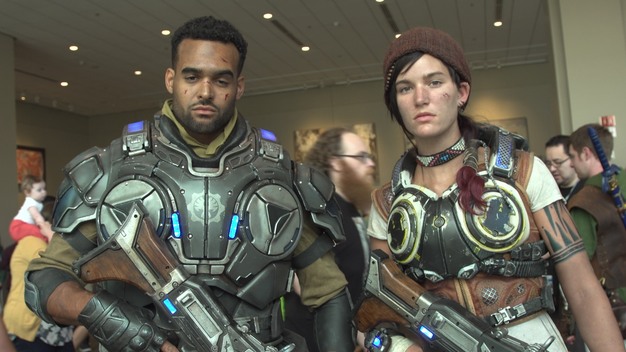
Gears of War cosplay at PAX West. (Source: IGN)

Gamescom

The largest video game event of its kind, Gamecom takes place each year in Cologne, Germany where the press and video game fans gather for the latest announcements, hands-on demos and more. This year will mark Gamecom’s ninth year, and if it’s anything like last time, the event will favor influencers over press, and VR and mobile will make a big push. Much like EA’s decision to sit out E3, other publishers decided not to hold press conferences at Gamescom last year, including Microsoft and Sony. Instead, Microsoft celebrated the 15th anniversary of Xbox with Xbox Fan Fest, a community event where anyone could get hands-on demos of games like Gears of War 4.

With the launch of PSVR and Xbox One S, this year’s Gamescom is anticipated to host more virtual and 4K playing demos than ever before.

Paris Games Week

ESports was a major focus at Paris Games Week last year, with the Electronic Sports World Cup. The global competition featured the best players across Just Dance 17CS:GO, Clash Royale and FIFA 17. As with Gamescom 2016, large publishers like Sony and Microsoft abandoned press conferences in favor of hands-on fan events with the hope of enticing influencers. Fans were surprised that Nintendo didn’t make an appearance, as the event would have been timed perfectly with the announcement of the new Switch console. That will most likely change in 2017, with the Switch hitting shelves this spring along with a number of launch titles to show off.

PlayStation Experience

In its fourth year, this annual event held in Anaheim, California caters not to the press, but to the fans. In addition to letting fans get their hands on some of these upcoming titles, last year’s PlayStation Experience hosted developer panels and eSports events as well. The Capcom Cup Finals were hosted at the show, as well as the Call of Duty World League. Following the launch of PSVR and all those game announcements from last year’s show, 2017’s PlayStation Experience will once again put fans in the center of the action.

BlizzCon

Last year’s Blizzcon attracted over 25,000 visitors from 60 countries and even more viewers across 70 broadcasts in 19 languages. This event marked three major anniversaries for Blizzard Entertainment: the company’s 25th anniversary, the 20th anniversary of Diablo and the 10th BlizzCon, which has grown more than six times since its inaugural year. Although this year probably won’t have the benefit of a new game launch to help get fans excited, the emphasis on eSports, marked by last year’s announcement of the Overwatch League, means 2017’s BlizzCon will no doubt feature big surprises to attract attendees.

GoFundMe Expands In UK; Twitter’s China Managing Director Exits

It’s a New Year and time for a fresh start for these industry professionals.

Disney has promoted Dan’l Hewitt, UK managing director of Maker Studios and former head of Vice’s ad network, to the role of VP of non-linear programming. Hewitt assumes this position now that Courtney Holt has stepped down to assume the role of EVP of media and strategy.


Sony Interactive Entertainment Europe has promoted Simon Rutter to Chief Operating Officer and Tim Stokes to Senior VP of sales commercial and operations.


Retailer, John Lewis has named Becky Brock as its new director of marketing. In her new position, Brock will take on responsibility for all aspects of the the company’s marketing strategy and leadership of the CRM, digital, brand and category marketing teams.


Crowdfunding organization, GoFundMe has named John Coventry to lead its UK communications efforts. Coventry is the company’s first hire outside the US, with more hires expected across Europe this year. GoFundMe media director Kelsea Little will also join Coventry in the UK to assist with the company’s European expansion.


As a result of company restructure in Asia, Twitter‘s managing director for China, Kathy Chen, has left the company after just eight months. Twitter’s APAC team will now directly with Chinese advertisers following the restructure. Meanwhile, Twitter UK‘s senior director of media partnerships, Lewis Wiltshire, has announced he is to leave the social media platform and return to the sports industry.


Custom dog food company, Tails.com, has appointed Steve Spall as its new chief operating officer.


Have a new hire tip? Let us know at editorial@alistdaily.com.

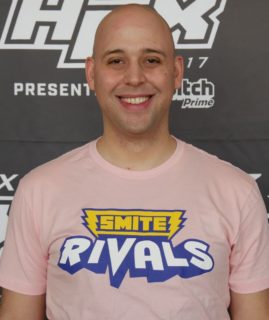
‘Smite Rivals’ Brings Godly Competition To Mobile

The Hi-Rez Expo kicked off yesterday at the Cobb Energy Performing Arts Center in Atlanta, Georgia, to a sold out venue full of excited fans. The four-day event, sponsored by Twitch Prime and Coca-Cola, is hosting two separate championship tournaments on PC and consoles for the company’s flagship title, Smite, in addition to debuting the Paladins Invitational. Yesterday’s keynote also had some exciting announcements for fans, including the reveal of Smite Rivals, a new mobile game being developed by Hi-Rez Studios based on its hit game.

Brian Grayson, project lead for Smite Rivals, describes the game as a “real-time one-on-one collectible card arena game where players battle against each other using a god a combination of spells, minions and structures.” Similar to Smite, Rivals features three lanes where players go head-to-head to battle for control by using collectible cards to spawn units, build structures and cast spells, creating a kind of tug-of-war, push and pull competition, where one side wins by overpowering a lane and destroys the opponent’s base. The game will be available for mobile devices and PC with cross-platform gameplay.

Grayson spoke to [a]listdaily from the Hi-Rez Expo about Smite Rivals, the company’s second mobile game following last year’s Jetpack Fighter, how it could grow the mobile eSports scene, and why community engagement is the key to success.

Brian Grayson project lead for Smite Rivals
Brian Grayson, project lead for Smite Rivals

Will there be any cross-promotional campaigns between Smite and Rivals?

Absolutely. We have plans for a lot of different content that, if you play Rivals, you will get inside of Smite. The way it works is, if you load up Rivals, you’ll get some kind of achievement. When you finish that achievement, you’ll get rewards in Rivals and rewards in your Smite account as long as you’ve linked them. This works on all the platforms. If you’re an Xbox player and a PC player, you’ll get them in both places. The cross-promotion content can be anything from skins to avatars. We have all kinds of things planned, but we aren’t going to do all of them unless we hit a sign-up milestone our website.

How are you engaging with fans at the Hi-Rez Expo?

We have a demo on the show floor, and it has about half the cards that we’ll have at release for players to try. There’s also a mix of gods, structures, spells and minions. You can play with your friends or against complete strangers in one-on-one competition, which is broadcast on a TV. After they’re done playing, we give them a card with a code that unlocks the Smite Rivals Loki skin for Smite on PC, Xbox and PS4.

People love it, and they’re really excited about it. They like the cute chibi art style that we’ve done with a lot of the characters. A lot have no idea what they’re doing, but they’re still able to play, complete a match, and have fun. I think they’re having a good time, and I hope they come back to discover the game’s extra depth.

What do you have to say to players that want to see a specific god featured?

I would say tweet me and tell me who you want to have in the game. We’re always listening. One of the things that I love about being part of the Hi-Rez team is that we have a lot of freedom to interact with the community, ask what they want, and put in almost everything that they want. We can engage and say that we know that there are these three or four characters that people really want, so let’s put it to a poll. The winner of the poll is who we go out and make. We don’t have to lead the vision for our fans. Our fans know what they want and they just need to tell us.

How are you going to get the word out about the game?

A lot of our initial marketing to help people find out that Rivals exists will be through cross-promotion. There’s a rotation of images in the Smite launcher that tells you about upcoming events inside of Smite or the latest merchandise we made with our partner, Hitpoint. We’ll use those same tools to tell people that Smite Rivals exists. We’ll also leverage social media and our video content to reach out to our core fan base. Separate from that is an audience that we really want to hit: people who play mobile games. Not just Hi-Rez fans, but anyone who plays mobile games. We think we’ve built something that’s fun and connects people on mobile and PC, and we want to build on that.

How will you be reaching audiences that might not be familiar with Smite? Were there any lessons learned from launching Jetpack Fighter?

We learned a few things. One was that there are some social media platforms that are stronger for mobile than they are for PC. That’s something to think about when putting together a marketing campaign and trying to reach the players that you want. Although they’re on all these social networks, the likelihood of getting them to convert and play a mobile game is different from converting them to play a PC game, and varies according to each platform. We found that there are some places that we didn’t pay much attention to on PC were very good places for mobile games, and it was almost a frictionless process of getting them to click on the App Store and install. It’s a different experience on PC. But I think there’s still going to be a lot of experimentation and learning for us because this is just our second mobile game.

Do you think the PC version will lead to adoption for the mobile experience?

I think it will. It’s funny, because at the Expo, I heard a guy ask his friend if he wanted to play the game. He said no because he didn’t play mobile games. There’s a weird stigma that’s hard to cross for some people, where they feel that mobile gaming isn’t real gaming. But it is, and as soon as you play your first mobile game, you realize it. I think on Steam, once people see Rivals there, they might not realize that it’s a mobile game. They’ll check it out, think it’s awesome, and find out that they can download it for mobile. Then when they have to go somewhere, they’ll be able to take it with them. That’s the kind of magic I think you’re going to see with Nintendo Switch, and anything that lets you take a hardcore gaming experience on the go.

Both the PC and mobile gaming spaces are very crowded. How will Hi-Rez make its games stand out?

There are two key things. The first is finding the fun quickly, and the second is working with the community. Finding the fun quickly means that we iterate at an incredible pace in our games. A game can feel totally new one or two months later. We try out a lot of different things, and once we find something that’s fun, we share it with our fans and they give us input, and then we react. We have an awesome fan base that’s growing all the time, and they know what they like. We want them to have a hand in what we’re building.

https://www.youtube.com/watch?v=73W0QbYK4eU

What are your thoughts on mobile eSports and how it could grow this year?

I think there are some great leaders there now. On mobile, the games that are becoming eSports are very different depending on the country you’re in. For example, eSports games in China are primarily RPGs (role-playing games). There are also some popular shooting games as well as MOBAs. Here in the US, you’ve got some card games that are doing very well as eSports.

So, I think two things will help push it forward. One is that even as people played PC games competitively, it didn’t become eSports overnight. So, I think mobile gamers are at the phase where they just really like playing games on their phones, while some are becoming more hardcore and want to play on a stage in front of people. That audience was smaller a year ago and it’s naturally growing. We don’t have to do anything because it will grow organically, but we can support it by creating more opportunities for people to compete. Creating small grassroots tournaments, giving people venues, and even giving tools within the game to play against their friend and cultivate that competitive atmosphere. I think that will help the most.

Ultimately, what pushes things forward is that a studio has to get behind a game to help set up a structure with great prizing. It doesn’t have to be excessive. The studio needs just to help players figure out what structure works for mobile. It could be as easy as including Smite Rivals as part of Hi-Rez Expo next year. I think if we let people know in advance and set a path for them, they’ll go down it and it’ll be awesome. I’ve already seen mobile eSports tournaments with huge viewership.

What is the key to keeping players engaged in the long-term?

One word: content. You have to always create new things for players to collect, conquer or try. Content is the most important thing, because you might think that players will take three months to get through it, and they’ll go through the whole thing in a week. When you love something and you’re passionate about it, you go through it. Everyone consumes content at a different pace, but it’s super important to make sure that the people who are who are moving very fast continue to have something new to try. Players moving at a slower pace will be comfortable investing their time because they see that there’s a long road ahead with fresh things to experience.

Game Marketing Like A Pro: 5 Tips From Top Publishers

There are many ways to approach video game marketing, whether you’re a publisher with millions of dollars to spend or an indie developer with small but loyal community. In a digital world where consumers are constantly bombarded with ads, how do brands find a way to stand out? Five experts from some of the top video game publishers in the world share valuable advice on the topic.

Find Your Edge And Diversify—MZ (Game of War: Fire AgeMobile Strike)

How does MZ maintain its position on the top-grossing lists with just two games? Marketing is critical, according to MZ CEO, Gabe Leydon. “When we look at our marketing, you have to think about edges. What is my edge over the marketplace?,” Leydon explained during the Web Summit in London. “We track over 400 KPIs (key performance indicators) when we’re doing our marketing. That’s a tremendous amount of data we’re looking at when we’re making decisions on where we’re going to spend next.”

“Another big part of it is diversification in your styles of marketing,” Leydon continued. “Are you doing video, playable ads, banner ads, [or] fullscreen ads? I believe we make about 20,000 creatives a week now. It’s a very intense process, and I believe on Facebook we have about 50,000 different campaigns running at any moment. It’s very, very hard to do. Diversification is the most important thing you can do as a marketer, but it’s a very difficult and daunting task for most people.”

mz-game-of-war


Learn From Your Mistakes As Well As Successes—Nintendo of America (Super Mario Run; Pokémon Sun and Moon)

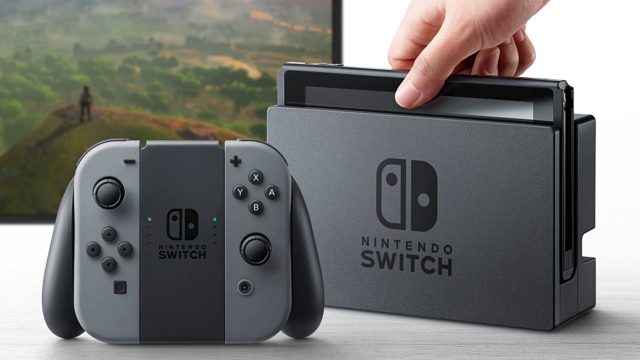
“One of the things that we have to do better when we launch the [Switch]—we have to do a better job communicating the positioning for the product,” Nintendo of America president and COO, Reggie Fils-Aimé told [a]listdaily. We have to do a better job helping people to understand its uniqueness and what that means for the game playing experience. And we have to do a better job from a software planning standpoint to have that continuous beat of great new games that are motivating more and more people to pick up the hardware and more and more people to pick up the software. Those are the critical lessons. And as I verbalize them, they’re really traditional lessons within the industry. You have to make sure people understand the concept, you have to make sure you’ve got a great library of games, and when you do that, you tend to do well.”

switch-2


Be UniqueSquare Enix (Hitman; Final Fantasy XV; Tomb Raider)

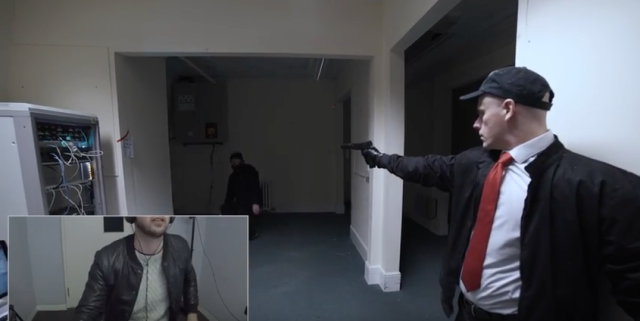
Square Enix senior director of marketing, Mike Silbowitz told [a]listdaily that when it comes to marketing a game, it’s important to stand out. “With how crowded the marketplace is these days, you can’t just show gameplay,” he said. “You have to find unique ways to show off your experience.”

Hitman


Create A CommunityUbisoft (Tom Clancy’s The Division)

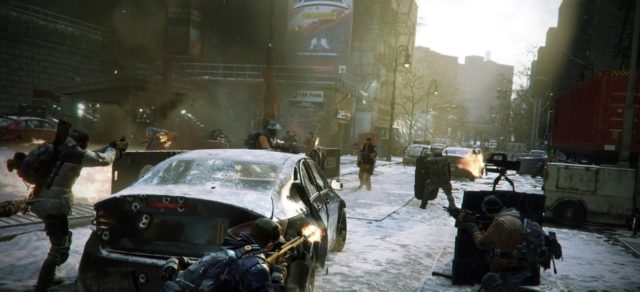
“YouTube is an amazing channel for the video game industry,” Ann Hamilton, brand representative at Ubisofttold ION. “It allows us to share our video content with our consumers directly through our own channels. It has been a great tool at building communities for each of our games. We release a variety of content including gameplay walkthroughs, interviews with game development teams, game trailers, as well as partnering with major creative talents on projects like Agent Origins. Additionally, it’s a venue for fans to create their own content based around our games and share it.”

Division


Beware Of Using VR Just For The Novelty—Insomniac Games (The Unspoken)

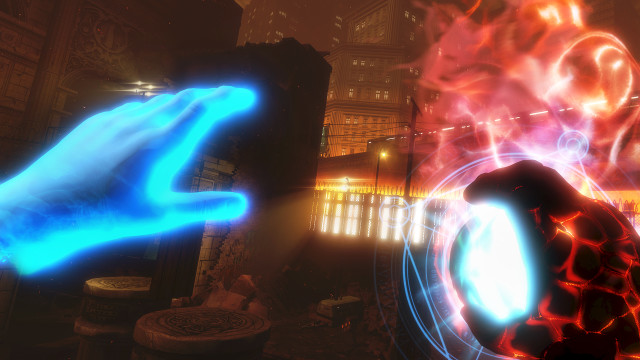
“If eSports players and fans feel like they’re getting something crammed down their collective throat for the sake of novelty, it could de-position VR as nothing more than a fad,” Insomniac Games’ chief brand officer, Ryan Schneider, told [a]listdaily. “That’s why we’re approaching this from a very grassroots level, seeking game feedback from experts and the most passionate players. Certainly though, the potential is there to grow VR adoption because you have a huge base of PC players hungry for fresh, competitive experiences. On the surface, nothing in gaming is hotter at the moment than VR/AR and eSports. Marrying the two is inevitable.”

The_Unspoken_4_FireballTrain

How ‘Plants Vs. Zombies: Garden Warfare 2’ Competes For Long-Term Engagement

One of the biggest trends to emerge in recent years is the concept of treating a game as a service. Whether it’s through regular DLC updates or eSports promotion, treating a video game as a service and catering to the players’ needs can significantly extend a game’s lifecycle well past its launch year.

One of the major proponents of treating games as a service is Electronic Arts (EA), which has emphasized player engagement as a core feature with many of its games. One such game includes Plants vs. Zombies: Garden Warfare 2, an online game that features both competitive and cooperative modes, all presented with a whimsical flair. In it, well-armed plants are in a constant battle against superpowered zombies in a struggle for control. It’s a premium game, but the developers, Popcap, provide regular free updates to keep the content fresh and engaging. Although the game released in February of last year, it received its fifth major update in December in addition to having new weekly challenges.

Marcel Kuhn, Plants vs. Zombies: Garden Warfare 2>/i> producer
Marcel Kuhn, associate producer for Plants vs. Zombies: Garden Warfare 2

The associate producer for Plants vs. Zombies: Garden Warfare 2, Marcel Kuhn, speaks to [a]listdaily about what it means to treat a competitive game as a service and how the approach impacts the engagement and lifespan of the title.

When asked what the term “games as a service” meant to him, Kuhn said, “‘Games as a service’ means having a plan when you launch your game and, even more importantly, being ready to make changes to your plan after you launch. You can fine-tune your Live Service Plan by having open betas and looking at what other games are doing, however having your community play the final game and provide you with feedback is by far the best way to adjust the plan in a meaningful way. A good example in Plants vs. Zombies: Garden Warfare 2 is how we handle gameplay tuning and improvements. We roll these into each update we launch based on what we hear from the community and what we see in our own telemetry. Only by combining these two sources of information, this becomes a service to our community.”

Kuhn also discussed how treating a game as a service is an evolution from the traditional way of launching and promoting games. “The video games industry has come a long way from planning and developing a game, putting it on a disc, placing the disc in a package and shipping it off,” said Kuhn. “In this day and age, the task of making a game is never really complete. The previous generation of consoles hinted at the potential, and on the current gen platforms, patches and server-side content updates are in full swing. That means engaging with the community to create meaningful content on a regular base, which in return, will generate long-term engagement.”

So, what is the key to long-term engagement with an audience? “Listen to what the audience says and make sure to find the right balance to give players what they want as well as what they need,” Kuhn said. “As developers, we have to keep the game balanced, honor the time players spend with the game by listening to their feedback, and on top of it all, continue to surprise them with innovations they didn’t expect.”

Keeping the game updated with fresh content also plays a key role. “Two of the key features in our Live Service Plan for PvZ: GW2 are the Community Challenges and the Mystery Portal Events that get updated weekly,” explained Kuhn. “We’ve launched these features knowing that we can release new and fresh content for our community on a regular basis. This generates a weekly rhythm, and our community knows that when they log in on specific dates, they will have something new and engaging waiting for them.”

We asked Kuhn how a game like Garden Warfare 2 competes for long-term engagement at a time when an increasing number of games are being treated as a service, thereby extending their lifecycles.

gw2-frontline-fighters

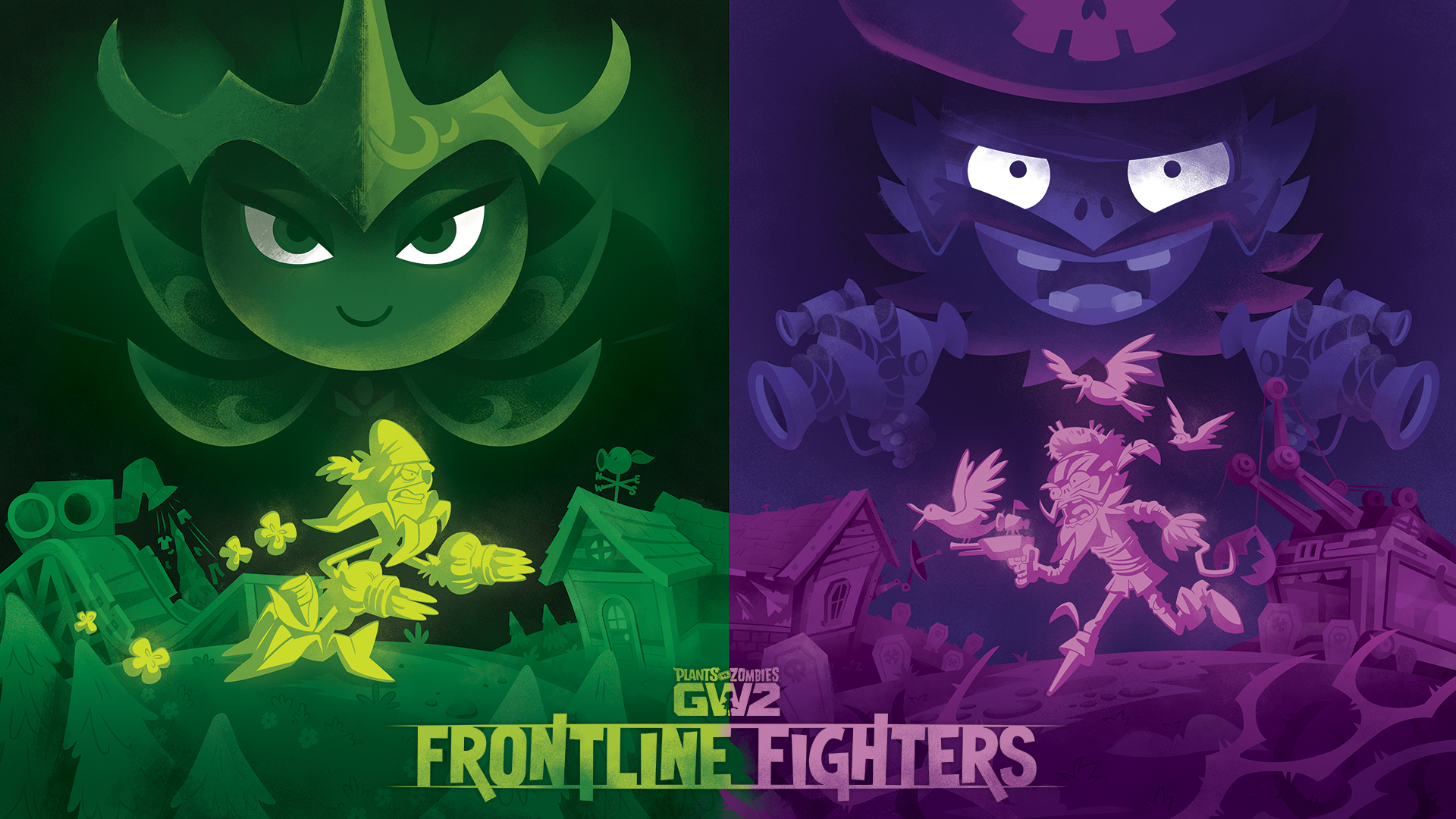
“Know your audience,” Kuhn replied. “As mentioned before, every game that launches should have a Live Service Plan in place. Knowing our audience allows us to have a solid plan, and from there on, it’s all about listening to the players and converting their feedback into in-game features. We’ve just recently launched our fifth updated, named Frontline Fighters, on December 1 in which we’ve added online split-screen. When we launched PvZ GW2, we did not plan to add this feature, but due to it being one of the most requested features by our community we’ve adjusted our Live Service Plan. By doing so, we hope the community sees that we value the time they spend in our game and reward them with some of the most requested features.”

Considering how a service can potentially go on indefinitely, we asked Kuhn how long a single game can expect to engage audiences. “With the right Live strategy, good games can extend their life cycles by several years,” Kuhn said. “It’s all down to how long the community actively engages with a title. The better the game team relationship with the community is, the longer the game will stay online.”

The Top 5 Brands Beloved By Millennials In 2016

We all know that millennials are tech-savvy, creative and know all too well how influential they are to brands. While most companies target this demographic and struggle to “make their brand bae,” not everyone succeeds . . . but these brands certainly have. From tech to food, here are the top brands chosen by millennials for 2016.

Apple

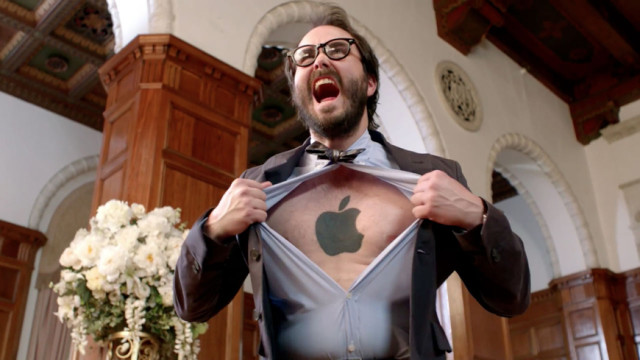
Recently named the world’s most valuable portfolio, Apple holds the coveted spot as millennials’ favorite brand, according to an annual survey of 1,500 millennials by Moosylvania. The tech giant has an almost cult-like following and wowed its supporters with the iPhone 7, new Apple Watch and a strategic partnership with Nintendo this past year. For young consumers, the brand captured imaginations by making them the focus of advertising via the “Shot on iPhone” campaign—featuring user-created videos and images across billboards, print ads and TV spots. Apple also created a World Gallery site with the content, accompanied by tips for shooting pictures and video. “Shot on iPhone” produced over 10,000 photos in 25 countries, acting as the “largest mobile photo gallery in history,” according to the company.

apple-fan2

Target

Rising the ranks of millennial favorites, Target came in number two on Moosylvania’s list compared to number ten on a separate study in 2015 by Goldman Sachs and Teen Vogue. While Moosylvania’s poll asked 1,500 millennials both male and female, the latter survey focused on the “It Girl”—1,200 millennial females who achieved a kind of celebrity status by living a socialite lifestyle. Target is reaching its young audience by being the first to utilize eCommerce ads on Snapchat. The ads, which appear on Cosmopolitan’s Discover channel, showcase Target products and encourage viewers to swipe up for more information or down to purchase the shown product.

target-snapchat-header-2-924x462

Nike

Millennials agreed to “just do it” across multiple studies and genders, including Moosylvania (coming in at number three) and Goldman Sachs (number four). Traditional sports are a major draw for young consumers, and Nike has been especially busy this past year creating special content for them. From remaking one of its most iconic commercials in virtual reality to limited-edition FIFA 17 cleats, Nike is bringing its A-game to the millennial audience.

Undefeated-NIke-IM360-NikeLab Dunk Lux-Pat The Roc-1

Sony

This tech giant has been at the forefront of social and virtual reality marketing in 2016 from its innovative, Don’t Breathe 360-degree experience to the PSVR. While promoting Ghostbusters, Sony utilized both cameras of phones (front and rear) for the first time with a sponsored Snapchat lens. Sony came in at number four in Moosylvania’s millennial brands poll and when it comes to gaming consoles, millennials prefer the PlayStation 4 according to a recent study by PayPal.

fede-alvarez-s-don-t-breathe-trailer-reveals-something-nasty-in-the-basement-974813

Coca-Cola/Coke

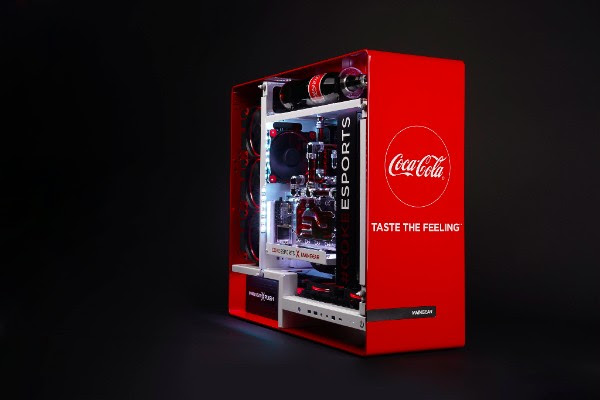
Coca-Cola has been a “refreshing” partner for video games in 2016, partnering with Riot Games for its League of Legends Championship Series since 2013 and is now looking at Overwatch as part of the company’s eSports outreach. Coca-Cola hosted viewing parties across the US and commissioned a “1ofONE” Coke ESports custom gaming PC for the 2016 League of Legends Championship and partnered with EA by offering a collectible Slurpee cup activation at 7-Eleven stores across the US, along with a FIFA 17 contest featuring over 10,000 prizes. Outside of gaming, the Diet Coke “It’s Mine” campaign featured millions of uniquely designed Diet Coke bottles—no two of the glass bottles were the same—partnering with E! host, Brad Goreski to give away $10,000 worth of fashion and a year’s supply of Diet Coke. While the “It’s Mine” campaign appealed to millennials’ love of self-expression, marketing to this health-conscious demographic has been a challenge. Despite these obstacles, Coke came in at number five on Moosylvania’s top 100 millennial brands list and continues to reach young consumers through its Millennial Voices program within the company.

Coke eSports PC

Featured image source: Adobe

2017 Industry Predictions For Gaming, VR/AR And Marketing

We may not have psychics standing by (or do we . . . ?) but current events and previous trends continually shape the future of the marketing industry. From video games to shopping without hands, global experts weigh in on what’s to come.

Gaming

SuperData estimates that by the end of 2017, the global mobile games market will be worth $44.8 billion, and $54.5 billion by 2019. Free-to-play PC games like League of Legends will reach $19.6 billion in 2017, premium PC games will fetch $5.3 billion and premium console games will garner $7.3 billion. By 2020, total software sales are estimated to reach $89.7 billion, Superdata predicts. This figure is conservative compared to estimates by analyst firm DFC Intelligence that software sales with reach $98 billion by 2020.

Superdata also predicts that eSports revenue will continue to rise over the next few years, reaching $1.1 billion in 2017 and upwards of $1.4 billion by the year 2020.

AR/VR And Mixed Reality

By 2020, over a billion people worldwide will regularly access AR and VR content, according to predictions by the research firm IDC. In an attempt to reach this growing demographic, IDC predicts that 30 percent of consumer-facing companies in the Forbes Global 2000 will experiment with AR and VR as part of their marketing efforts in 2017. A large of part of this adoption will be via digital assistants, with over 110 million consumer devices with embedded intelligent assistants installed in US households by 2019. Garner Analysts predict that by 2020, 30 percent of web browsing sessions will be conducted without a screen, relying on voice-activated assistants such as Amazon Echo. Garner further estimates that 100 million consumers will shop in AR.

The global mixed reality market is expected to reach $6.86 billion by 2024, according to a recent report by Grand View Research, Inc. “The surging acceptance in entertainment and automobile and aerospace designing arenas is expected to boost the market growth,” the company stated.

Video Marketing For Games

Marketing

Seventy percent of marketers will spend more on marketing in 2017, with 67 percent saying they will spend up to 75 percent. Just 19 percent said they will spend the same and 5 percent plan to spend less. About one-third plan to hire more SEO and content professionals, according to a study by Conductor. The data, which focuses on supporting content and search engine optimization, found that 80 percent of marketers will increase their focus on digital advertising, content marketing and SEO in 2017.

Zenith, meanwhile, predicts that in 2017, mobile advertising will surpass advertising on desktop. By 2018, Zenith estimates that mobile advertising will reach $134 billion, more than what marketers will spend on newspaper, magazine, cinema and outdoor advertising combined. Mobile revenues are expected to increase, according to Newzoo, predicting that global app revenues will grow to $80.6 billion by 2020.

By 2018, programmatic digital video advertising will reach $10.65 billion, or 74 percent of total video ad expenditures, according to predictions by eMarketer.

The analytics firm also predicts that YouTube’s net US video ad revenues will reach $2.89 billion in 2018, up from $2.16 billion in 2016. Superdata, meanwhile, predicts that gaming video content revenue will reach $5 billion in 2017, and continue to grow to $5.9 billion by 2019.

InMobi Discusses User Engagement Strategy

InMobi is one of the world’s largest entertainment ad platforms, reaching over 1.6 billion users worldwide, with half of that audience relating to video games. While the company’s goal has always been to enable users to discover more of the content they want, its approach has begun to shift more heavily toward re-engaging dormant users and retaining current ones. Its remarketing approach applies to any app-based business, whether it involves mobile games or taxi hailing.

The company’s chief product officer, Piyush Shah, recently spoke with [a]listdaily about its remarketing platform, the changing needs of mobile apps businesses, and re-engaging with users.

Piyush Shah, InMobi chief product officer

“The InMobi remarketing platform is a very new initiative from our side to solve for the problems that app-based performance marketers are facing around the issue of retention and engagement of users,” said Shah, describing the service. “Its objective is to work with advertisers and marketers across verticals, including gaming, retail and the taxi vertical, to maximize in-app engagement. The way it works is that it solves for key specific use cases and needs for our customers. We help them activate new users and reactivate dormant users, which is a very large use case nowadays. Finally, we help them retarget existing high-value users who may have deviated from the game or service so that they can come back.”

So, of the three groups (new users, dormant users, existing high-value users), which is the hardest to reach out to? “Given that they are users that have installed the apps already—technically speaking, it’s easy to reach out and target any of them,” Shah replied.

However, the challenge is in the size of the group businesses are trying to reach. “If it’s a larger base of users for a game or retail app, then it is much easier for our solution to retarget them, find them on our network, and get them going,” said Shah. “If it is a much more specific set of high-quality level players or an extremely niche set of users, then it becomes a bit complicated. So, I guess it’s easier to reactivate dormant users and focus on re-engagement rather than doing the same thing for retaining a small group of active users.”

Apps, especially mobile games, are facing a huge problem with user retention, as most users uninstall games within a week. When asked how developers are dealing with the issue, Shah said: “The whole problem of uninstall has become very acute lately, partly because of the increasing size of apps. App developers are working to ensure that uninstall rates are lower and the retention rate is much higher. The first thing that they’re doing is reaching out to users who install the app within the first few days with some kind of offer or coupon. A lot of people are utilizing the first few days to make sure that happens because 70 percent of users who uninstall will do it after the first few days. Notifications though a remarketing/retargeting platform like ours is definitely a way they would want to improve their retention rates beyond the first few days.

“For example, a taxi app service would utilize us to start showing first ride coupons during peak office hours, right after the install happens. In the case of games, a lot of them are utilizing us to reactivate dormant users by offering them free level-ups and things like that. There are a bunch of techniques, but apps are doing a lot more than driving the install.”

inmobi-realtime

Given how different mobile games are from service apps, we asked Shah if he saw a lot of overlap between the two when promoting engagement. “I think the core need to reactivate dormant users or retarget existing loyal users are the same,” he said, “but the dynamics change, of course. On the gaming side, because the percentage of payers is far lower (about five percent), that’s an extreme and precious set of users that the developers want to stick with the game. They’re willing to go to all levels to retain them.

“For services such as taxi companies, the number of paying transacting customers is much bigger. But we were surprised to see that, depending on each different vertical and the life-state of that particular company, they will resort to focusing a lot more on reactivating dormant users or focus on protecting their valuable core set of users. That varies, based on app to app.”

In discussing the challenges mobile games face when reactivating dormant users, Shah said “I think the biggest challenge is the price that they’re willing to cough up to reactivate users, given how there’s a lot of competition out there. With a small percentage of paying players, the dilemma for gaming companies is whether they want to spend a lot of money to reactivate players who aren’t necessarily payers, or if they should work harder to protect their precious five percent of paying players.”

Shah continued by saying, “Given the high competition among gaming companies, the biggest challenge is for these guys to allocate their marketing spend in the right manner across new user acquisition, versus re-engaging with dormant users, versus retargeting the set of high-value users. I don’t think that the economics are completely understood yet, and we want to be a partner for gaming companies to figure out the equation for themselves.

“It’s been a very interesting journey for us to evolve from the classical performance user acquisition marketing to now solving for the retention and retargeting problem. In doing so, it has been interesting to note that it isn’t just relevant to gaming, but applicable to any app-based business out there.”