When video games and the people who play them come in so many genres and play styles, how do you speak to them all in one campaign? Seven years after its rocky launch of the PlayStation 3, Sony needed to promote the PlayStation 4 while reaching as many consumers as possible in an emotional way. The answer came in one phrase: “Greatness Awaits”—a concept that video games, regardless of genre, make gamers feel good when they play. After four years, the campaign is still going strong by conveying a feel-good message of accomplishment and adventure through the world of video games with PlayStation.
2013: The Beginning Of Greatness
The first commercial aired during Game Three of the NBA Finals in June 2013—wowing viewers with its live-action elements and containing 35 “secrets” that fans and news outlets immediately went to work dissecting. An interactive version allowed viewers to unlock exclusive content by clicking on hot spots throughout the video, adding an immersive element to garner excitement for upcoming games.
“We think it beautifully articulates what awaits you if you come to the PlayStation platform,” Sony Computer Entertainment of America’s former brand marketing head, senior vice president Guy Longworth told[a]listdaily when the spot was first unveiled. “You can achieve your greatness, you can be an NBA star, you can be a football star, you can kill dragons, you can go on adventures—you can be a hero. You can live your dreams when you’re playing games. Gamers are so passionate, they love this stuff so much, we really wanted to make an emotional connection and help them understand that we really care about them and everything we do is laser-focused on meeting their needs.”
The campaign left a lasting impression, as the PlayStation 4 went on to sell over seven million units in just five months—the largest video game console launch in history.
2014: A Perfect Day
Sony continued its “Greatness Awaits” campaign into the coming year, this time focusing on the joy of playing online with friends. The live-action commercial and subsequent campaign went on to win Cyber Gold at Cannes Lions 2014. Variations of “Greatness” were utilized throughout Sony’s campaigns from the slogan, “Where The Greatest Play” to “First To Greatness”—challenging players to achieve in-game goals before anyone else and “Bid For Greatness,” an online auction in which players could trade trophies earned in-game for real-life collectibles.
The key to this campaign’s success was not only living your dreams through video games, but embracing a community of other gamers online. This message was hit home in another live-action commercial about the time-honored tradition of challenging friends to play.
2015: Star Wars May Be The Ultimate Nostalgia
Sony’s “Greatness Awaits” was the perfect vehicle to fuel hype for Star Wars: Battlefront, especially since The Force Awakens was about to hit theaters over that holiday season. The live-action spot reminds gamers that if they’ve ever played Star Wars as a child, Battlefront was the next best thing to jumping out the window and into an X-wing.
2016: More Adventures To Be Had
“Greatness never settles,” PlayStation said on Twitter before revealing its latest live-action commercial. “The King” tells the tale of a bored royal who has accomplished many things, but wants more. Accompanied by Scala & Kolacny Brothers’ cover of Eurythmics’ Sweet Dreams, the young King sets off an adventure through the worlds of PlayStation-exclusive titles like Horizon: Zero Dawn and God of War.
It’s not often that a brand uses the same mantra for so long, but “Greatness Awaits” continues to wow and inspire gamers by acknowledging and celebrating the adventures that only video games can provide. Fans aren’t tired of the slogan either, as “The King” has garnered over 11 million views across YouTube and Facebook to date.
Analytics firm Gallup recently reported that economic decision making is 70 percent emotional and 30 percent rational. Through interactive storytelling, players create emotional bonds with fictional characters, situations and by playing with their friends. Focusing on the feeling of playing a video game reaches audiences on a strong, emotional level—no doubt attributing to the long-term success of “Greatness Awaits.”
It’s that time of year again and football fever is in full swing. For Super Bowl LI, brands are gearing up for their debut in the grand tradition of high-cost, high-impact TV commercials.
The TV won’t be the only screen consumers turn to during the big game, however. A survey by Influence Central found that 78 percent of consumers engage on social media platforms (led by Facebook and Twitter) while watching the Super Bowl, either to comment on the commercials (38 percent), to react to the game (32 percent) or to post pictures of their own Super Bowl parties (18 percent).
84 Lumber
The Pennsylvania-based lumber company has invested in this pricey, but coveted spot to tell America that they’re in a position to hire upward of 400 hard workers.
Avocados From Mexico
Avocados From Mexico makes a tasty return for its third year at the Super Bowl with a spot during the first commercial break of the game. Avocados From Mexico will focus on a “health and wellness” message that includes statements like, “avocados have good fats and may help consumers who are looking for a healthier diet.”
https://youtu.be/VneoEvAJX0g
Bai Brands
Justin Timberlake, investor and “chief flavor officer” of the health drink brand, will appear in its second-consecutive Super Bowl ad.
Budweiser
Although the company denies any deliberate correlation between its new commercial and current events, Budweiser is telling the story of Adolphus Busch and his perilous journey to America in 1857, where he would go on to co-found Budweiser.
The company’s first-ever Busch ad takes a much lighter tone, although it remains true to the beer’s advertising roots. A flannel-wearing mountain man demonstrates the beer can’s “Buschhhhh” sound that echoes through the mountains, reminiscent of ads that go back to the 1970s. Even Spuds MacKenzie makes a comeback.
https://youtu.be/aYeXldMEpV8
Buick
The car manufacturer will return for its second Super Bowl with a 30-second ad starring Miranda Kerr and Cam Newton.
https://youtu.be/Nx2PMnSzCB4
Febreze
Proctor & Gamble brand, Febreze will make its Super Bowl debut with a 30-second spot airing in the second quarter that celebrates “America’s Halftime Bathroom Break.”
https://youtu.be/7gLjYrEDoxw
Fiji Water
This third-quarter ad will be Fiji Water’s first foray into the Super Bowl scene, although it will feature a previously-aired campaign.
Ford
At 133 years old, Ford is the second-oldest car manufacturer advertising at the Super Bowl, but its ad doesn’t focus on the latest model. Instead, the company will share a message of mobility from bicycles to ride sharing and of course, self-driving cars of the future.
https://youtu.be/HhtHflDrnAU
GoDaddy
After sitting out last year’s game, GoDaddy is back to promote its new website-building tool.
https://youtu.be/-YmnnwFQbpk
Honda
Honda returns with a bit of help from Steve Carell and some inspirational advice.
To show off the 360-degree replay technology that will be used for the Super Bowl, Intel made Tom Brady’s daily routine a bit more epic.
https://youtu.be/nTw7eten1no
It’s A 10 Haircare
The first Super Bowl ad by an independently-owned hair care brand will air in the third quarter. It’s A 10 Haircare has purchased a 30-second spot that will be directed by the Oscar-nominated Bryan Buckley.
Jack In the Box
Jack in the Box heard you liked bacon, so they made the Triple Bacon Buttery Jack—a new burger that will get its own commercial during the Super Bowl this year. To kick off its new campaign, the restaurant chain took advantage of recent email hack issues to do a bit of “hacking” of their own—exposing Jack’s secrets online, which are, not surprisingly, burger-related.
Billy Zane stars as a new, very golden Colonel in this year’s spot.
https://youtu.be/aZo4yKpROL0
Kia
It’s hard to top finding Christopher Walken in your closet with socks on his hands, but Kia is back for its eighth Super Bowl campaign. This year, they’ve enlisted the help of Melissa McCarthy, who stars as an “eco-warrior” trying to do the right thing for Mother Nature. The spot, highlighting the all-new Niro cross-over debuted February 1 through Kia’s Neobot for Facebook Messenger—the first brand to debut a Super Bowl ad in this manner.
https://youtu.be/1dQ9a5EFZeI
King’s Hawaiian
Appearing in the fourth quarter is Super Bowl newcomer, King’s Hawaiian with a message about dinner rolls and a new line of BBQ sauces.
Lexus
Returning for its third year, Lexus will show off a vibrant, dance-themed ad starring street dancer Charles “Lil Buck” Riley and narrated by Minnie Driver. The spot will air in the second quarter of the Super Bowl to promote its 2018 LC 500 performance coupe.
https://youtu.be/h_iktzXK4K0
Mercedes-Benz
The luxury car brand has aired three commercials in the past, although not in sequential years. After sitting 2016 out, Mercedes-Benz will return to the Super Bowl show off its new GT Roadster with a little help from Peter Fonda.
https://youtu.be/BvHFM8c7cPM
Mobile Strike
Arnold is back, and this time he has a score to settle.
Mr. Clean
Making its first-ever Super Bowl debut is Mr. Clean with a humorous spot that makes cleaning sexy.
https://youtu.be/GDzMxlw2Fgo
Nintendo
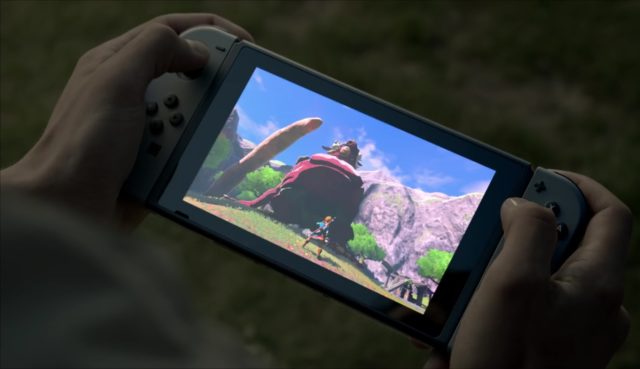
Getting its new console in front of as many eyes as it can before the March launch, Nintendo will air its first-ever Super Bowl this year, highlighting the Switch.
https://youtu.be/CdWd8fUC71g
Paramount Pictures
A TV spot will air for Ghost In The Shell—a sci-fi action film starring Scarlett Johansson and based on the popular manga and anime series.
Ravens quarterback Joe Flacco sends an important message to viewers about not being a party pooper. On a more serious note, Tostitos is introducing a bag of chips that can detect alcohol on a user’s breath. If it does, a red steering wheel icon appears with a message not to drink and drive, along with a $10 Uber discount code. Mountain Dew is introducing two new flavors—Raspberry Citrus and Mango Lime—which come paired with an AR “Kickstart ” Super Bowl experience that lets fans create their own mascots using virtual props. Fifteen-second videos featuring personalized mascots can then be shared on social media using the hashtag #KICKSTART. Pepsi-Co.’s Frito-Lay branch will sit out the big game this year, leaving a crunchy, Dorito-shaped hole in our hearts.
LifeWTR will make its first appearance during the game with a colorful spot accompanied by a song from John Legend.
https://youtu.be/dHxq6Cg_PJ4
Persil
The detergent brand returns for its second-consecutive year with another ad themed around “The Professional.”
Skittles
Back for its third year, football fans (and everyone else) have been feeling the love with Skittles’ “Romance” spot, set to air in the first quarter.
Snickers
Fun fact—the Snickers candy bar was named after the Mars family’s favorite horse. The company’s live commercial airing during Super Bowl LI also has a horse. And Adam Driver. And a dead cowboy, apparently.
https://youtu.be/OCoGY1aif5Q
Sprint
The brand promises a “real cliffhanger” for this year’s spot.
John Malkovich illustrates the struggles of waiting too long to secure a domain name in this new 30-second spot. In reality, the actor does own the site, and he hired SquareSpace to help design the web page.
https://youtu.be/YjzYaLxplbw
Tide
The New England Patriots tight end Rob Gronkowski stars in this spot about a dry cleaner who takes the liberty of “improving” customer garments. Actor Jeffrey Tambor also makes an appearance in the campaign.
https://youtu.be/PwJVbaGZggI
Tiffany & Co.
Just before Lady Gaga takes the stage at halftime, she will grace the screen for Tiffany’s first-ever Super Bowl ad entitled, “Legendary Style.” This is also the first TV ad from the company in 20 years, despite designing the Super Bowl winner’s trophy since 1967.
T-Mobile
Justin Bieber explores the history of touchdown dances in this new spot by T-Mobile.
https://youtu.be/Kg_4tX4XwI8
Top Games USA, Inc.
Mobile game developer Top Games joins the Super Bowl for the first time with an ad promoting its game Evony: The King’s Return.
https://youtu.be/nh2D2SnhOfI
TurboTax
Returning for a fourth year is the tax preparation software company with a 45-second spot featuring DJ Khaled. Focused on the product’s live video component, the “Relax It’s TurboTax” campaign aims to inject a bit of humor into the dreaded task of filing taxes.
https://youtu.be/1qBGCu4jIiQ
Wendy’s
Appearing for the first time, the restaurant chain will make a statement about its fresh, never-frozen hamburger patties.
https://youtu.be/nfrmSVZXfuE
WeatherTech
Although a preview hasn’t been released, WeatherTech will return with its fourth-consecutive Super Bowl ad.
Wix
Returning for its third Super Bowl spot is custom website builder, Wix, who aims to highlight the company’s “creative capabilities.” Last year, the brand teamed up with DreamWorks for a cross-promotion of Kung Fu Panda 3, but this time it’s all about Wix, itself. The new ad has already amassed nearly four million views on YouTube alone, a good sign for the brand leading up to the Big Game.
“For the first Super Bowl we were new and not very well known, for the second Super Bowl we chose to work with a big brand partner, and now we are really excited about telling the story ourselves,” Wix CEO, Omer Shai said in a statement.
Wonderful Pistachios
Returning after a two-year hiatus is an ad for Wonderful Pistachios narrated by pro-wrestler John Cena.
In Other News . . .
GNC’s Super Bowl ad was approved, then denied because certain products included two of the 162 substances banned by the league.
When Yellow Tail wine decided to purchase a Super Bowl ad, they found that Budweiser holds the exclusive alcohol rights. The work around? Local ad buys across 70 TV markets will ensure that a majority of viewers still get a visual taste.
Pedigree’s Puppy Bowl XIII will return to Animal Planet, but this time with a twist. During the game, Pedigree will sponsor a “Puppy Bowl Virtual Reality” experience offering viewers a chance to check out the action on the field through the eyes of Buttons, one of this year’s star puppy players.
Americans will consume 325.5 million gallons of beer, 1.33 billion pieces of chicken wings and 139 million pounds of avocados on Super Bowl Sunday.
Knowing very well that the colloquial holiday for communal gluttony will naturally lead to an unabashed blitzkrieg of bloated guests with bulging bladders looking for brief solace in bathrooms nationwide, Febreze is celebrating the biggest day of the year for football fans and brands alike by celebrating with “America’s Halftime Bathroom Break.”
Febreze, an official partner of the NFL, is joining Super Sunday as a sponsor with its first-ever ad for the big game by tapping actress Kathryn Hahn with a fully fleshed out campaign that introduces their new OdorClear technology.
The 30-second ad—which Fox is charging close to a cool $5 million for—is conveniently timed to air just prior to the stampede to the can at halftime, and just before Lady Gaga serenades the projected 110 million people who are going to tune in to watch the game. The TV spot will be complemented with a longer form online video, digital ads, in-store and a PR campaign linked with Charmin.
Procter & Gamble, one of the world’s highest-spending advertisers and parent company of Febreze, is taking a set of brand triplets to TV for Super Bowl. Tide and Mr. Clean will have presence with commercials, too.
On the digital side, however, P&G issued a call to arms to the ad industry earlier this week over an “antiquated” media buying process, demanding that it be cleaned up—or else they’ll invest elsewhere. Marc Pritchard, P&G’s chief marketing officer, slammed the “crappy media supply chain” and urged marketers to act in the face of “crappy advertising accompanied by even crappier viewing experiences” at the IAB Annual Leadership Meeting in Hollywood, Florida.
P&G, set to review all agency contracts in 2017, spent $7.2 billion on advertising last year, according to the annual financial report they released.
The Febreze brand spent a portion of that, and they are no stranger to taking risks with some funky fresh marketing. During the holidays, the odor-eliminating spray brought back its second installment of the holiday marketing hit with the “12 Stinks of Christmas” featuring “The World’s Greatest Entertainer” in beatbox pioneer Doug E. Fresh to breathe some fresh air into the homes of Santa-celebrating citizens.
Martin Hettich, vice president of P&G home care in North America and a brand franchise leader for global air care, joined [a]listdaily to detail their Super Bowl marketing strategy.
Why was it critical for Febreze to be a part of the Super Bowl conversation for the first time this year?
This year marks the launch of our toughest formula to date, the new Febreze with OdorClear technology. Febreze is now even more effective at eliminating odors from your air and soft surfaces.This is the largest product innovation since our inception, and to us, that is worth celebrating with an all-new ad campaign called ‘Odor Odes’ and our first-ever Super Bowl spot. The Super Bowl spot is based on a consumer driven insight—bathroom usage spikes at halftime. There is no better time or place to remind consumers that the new Febreze with OdorClear technology cleans away the trillions of football-fueled odors during the halftime bathroom break.
What is Febreze’s marketing strategy for its new brand marketing campaign in “Odor Odes?”
Let’s face it: sometimes the things you love the most can be super stinky. Our old basement couches, our furry friends, favorite yoga pants and our cooking experiments. They ultimately make our lives better . . . even when they stink. An ‘Odor Ode’ is a witty way to honor the things we love the most that can stink the most, including the much-anticipated halftime bathroom break. Febreze has a long, successful tradition of keeping it ‘real’ with consumers and ‘Odor Odes’ is our new marketing campaign to extend that wit and realness while sharing that the new Febreze cleans away life’s odors.
How will lifestyle blogger Katherine Schwarzenegger and NFL star Josh Norman further promote the campaign? Is it paired with a larger influencer marketing strategy?
Katherine, Josh and [Denver Broncos wide receiver] Emmanuel Sanders will serve as brand spokespersons, reminding football fans everywhere the importance of being ready for the impending halftime bathroom break, with Febreze and Charmin. As part of the PR effort, we are spreading the word that with a little party prep—including putting the new Febreze with OdorClear technology and Charmin Ultra Strong on your gameday shopping list so that you can prevent a serious and stinky party foul. When the whistle blows, the halftime bathroom break ensues—in fact, more toilets are flushed between the second and third quarter of the Super Bowl than any other time during the year!
How else are you leveraging your partnership with the NFL?
The NFL partnership will be seen in marketing collateral, in-store and through PR efforts. In addition, Josh and Emmanuel will serve as brand spokespersons for the ‘Halftime Bathroom Break’ with Febreze and Charmin on Radio Row in Houston this week.
Josh Norman and Emmanuel Sanders explain why people use toilets more on Super Bowl Sunday pic.twitter.com/87uEcs7bRM
Which social channels is Febreze most interested in engaging with your audience during the Super Bowl for your longer-form film? Are you looking to test any new emerging platforms? How do you plan to win big on social, too?
We’re always looking for new ways to engage our audiences and be a part of the conversations they are already having. The long form of the Super Bowl work helps to tell the full story of why consumers should be prepared with Febreze. Aside from our owned channels, we will also be working with Katherine, Josh and Emmanuel to engage their loyal followers on Facebook, Twitter, Snapchat and more. We also will be live posting on game day.
The price of Super Bowl ads has grown 75 percent in the last decade, reaching upward of a $5 million price tag. Why is it worth it? How can digital budgets and efforts be properly executed, and even be a centerpiece?
With over 100 million fans expected to watch the Super Bowl this year—and the anticipated spikes in halftime bathroom usage—we felt it was the perfect time and place to unveil our first-ever Super Bowl ad. For us it’s about reach and relevance—and our campaign this year has both. We don’t comment on marketing budgets but will say the proper holistic combination of traditional, digital and earned media has worked very well for our brand.
What creative and marketing trends will you be paying attention to from competing advertisers this year?
We always love seeing what other brands can come up with, especially during the Super Bowl. Everyone brings their A-game and we’re excited to be a part of it all this year. We have to say—this year seems to be the year of the cleaning brands. We’re loving the Mr. Clean spot and can’t wait to see Tide’s spot in the big game, too.
Galactic Civilizations was originally inspired by Sid Meier’s Civilization, which ends with humanity launching a ship out into space. Brad Wardell, president and CEO of Stardock Entertainment, wanted to know what happened next, so he and his company created the game to answer that question. Now on its third game, Galactic Civilizations remains as Stardock’s most popular series, even amid other stand-out games such as the visually stunning Ashes of the Singularity and the real-time economic strategy game, Offworld Trading Company.
Galactic Civilizations III (GalCiv3) launched in 2015 and is a sci-fi 4X (eXplore, eXpand, eXploit, and eXterminate) turn-based PC strategy game. In it, players are challenged to grow a civilization while exploring the depths of space and interacting with aliens. But the key feature is how players can design custom ships and share them with the community. To date, the community has made over 15,000 ships, with designs inspired by everything from Star Wars to Star Trek. Want spaceships shaped like sharks with lasers shooting from their eyes? You got it, it’s out there.
Today, Stardock announced a new Galactic Civilizations III expansion called Crusade, which will bring a host of new features to the game when it releases in the spring. The focus of the expansion is to “create a much deeper yet more approachable space strategy game,” said Galactic Civilizations III lead designer, Paul Boyer in a press release.
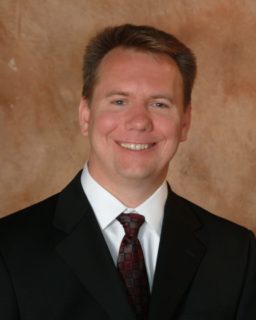
Brad Wardell sat down with [a]listdaily to talk about the upcoming expansion, what it takes for games to stand out in the digital market, and why Stardock may require more adult supervision.
Brad Wardell, Stardock Entertainment president and CEO
What does Crusade add to Galactic Civilizations III?
Crusade addresses a lot of the things our player base was looking for, even in the base game. GalCiv2 was the beneficiary of many years of expansions and upgrades. With GalCiv3, we went to a brand new 64-bit engine that supports DirectX 11 and all that, so we lost some of the features that we had built up in the series. Crusade adds an espionage system, an interactive invasion system that’s sort of a mini-game by itself, a civilization builder [and other features]. One of the strengths of the series has been the ability to design your own ships. Crusade lets you design a civilization and assign ships to different classes, meaning the colony ships will always look one way and other ships another.
With the ability to create custom ships, has there been any consideration given to creating packs that cross-promote with other IPs such as Star Wars or Star Trek?
That would be awesome. I’d love to see the biz dev team license the official rights from Lucasfilm and CBS. That way, players could legitimately play these ships and finally put to rest who is more powerful, the Federation or the Empire.
How did you initially get the word out about GalCiv3 when it launched?
Galactic CivilizationsI and II had tremendous followings already. So, when GalCiv3 was announced, it already had a big built-in audience.
Was it difficult to reach past that core audience to attract new players?
That’s a growing challenge in the market in the age of digital distribution—there are so many titles out there. In the old days, Galactic Civilizations I and II were at retail. So, if you went to the store, there were only thirty or forty games on the shelf. That made it very easy for the first two games. GalCiv2 sold three million copies in its lifetime, but it was the 4X game. Nowadays, there are so many space 4X games out there, and some have become very popular in their own right, so it can be really hard. Digital distribution is the great equalizer, which is super helpful for new games, but it makes it much harder to get the word out on your titles because there are a finite number of channels where you can do that.
Do Early Access periods for games such as GalCiv3 and Offworld Trading Company help with spreading the word out about them?
My feeling on Early Access has evolved over time, and I think gamers have changed their views on what it is. When it first came on the scene, I think most people understood that you were playing a beta. GalCiv3 benefitted because you had a lot of people helping with ideas and playtesting it, but they generally understood that it was a work in progress. Fast forward to Offworld Trading Company, Ashes of the Singularity and other recent games—Early Access can permanently affect how people see those games. What will happen is that people will play the Early Access game, form their impressions, and not revisit them. I think Early Access can now hurt a game because they will load up an Early Access game, form a negative opinion because it’s not done, and then they’ll go out and spread the word about how it’s not good.
How does launching a game expansion compare to releasing an all new game?
It’s a lot murkier. A sequel is much cleaner to do than an expansion or DLC. Originally, we were going to make Crusade as a standalone game, but there has been increasing backlash in the gaming community over the past year or two against that sort of thing. They want it all as one package. So, we decided to do that with Crusade, even though it’s a lot more engineering work.
So, it is harder to do the marketing on it than for a sequel because you have to have the base game. Once you get into that, you get into the debate of whether people thought the base game was fun or not. If they didn’t, you’ll get people who will argue that the expansion is charging to fix the things that should have been fixed for free. For some reason, that sort of thing never shows up with sequels.
How do you convince people to buy expansions, instead of having them wait for gold, bundled, or collected editions?
One of the interesting things that has happened on Steam is the integration of a feature called dynamic bundles. You can now buy these games at the press of button and get everything. For example, right now, there’s a Galactic Civilizations IIIGold, and it includes all of the DLC. If you have some of the DLC already, it generates the price dynamically to specifically address this concern. Now you can always buy the gold edition, so to speak, and get a huge discount on the new DLC. It’s a real game changer for players, because now you’re not being punished for being an early adopter.
Considering how Stardock once owned a digital store (Impulse), what would you say is the best way to engage audiences digitally?
The answer to that is rapidly changing. Back when I was younger in the retail world, you would do a media tour out to the Bay Area and couple of other places, and then go to Europe to visit some of the magazines. There were only a handful of outlets you needed to visit to get the word out. Nowadays, you have so many game sites in addition to Reddit, YouTube and Twitch. You have to distribute out to all of them. Then there’s Steam itself, which has become the primary vessel for getting people aware of your title using its increasingly sophisticated recommendation system.
How does Stardock engage with its community?
That is something that is always evolving as well. You have Stardock and then you have me, and I hang out everywhere. It’s getting tough, because we do stuff on Steam and our own forums, but there isn’t the same kind of streamlined or focused ability to communicate with people as there used to be. So, it’s an ongoing challenge.
Why do you think 4X strategy games still have such a strong appeal, with so many action and real-time games available now?
I think people like to build things. If you look at the most popular [strategy games], they’re really good at rewarding players for exploring something that’s different every time and building something in what they’ve explored. One of the things I’ve always found interesting is that the number of people who aren’t interested in the warfare aspects of these games—rather, they’re just happy to build something—is tremendous. I think it’s just very appealing.
With games that cover everything from sci-fi strategy to fantasy role-playing, how would you describe the Stardock brand?
It’s even harder than that. We also make Fences, Start10 and other applications. Really, the games are a small part of what we do. I would probably describe Stardock as a hobby that got out of hand, and we really need adult supervision. Every time we get a new marketing manager, there are always two things: 1. Brad, please get off the internet. 2. What is it that we do here?
The answer is, [in addition to games] we have a blog site, a skinning site where you can download wallpapers, and we have Multiplicity. When you go to hospitals, you’ll find our software on MRI machines. We’re even working on a comic book and we published a book this past year about the technological singularity. So, it really is a hobby that got out of hand.
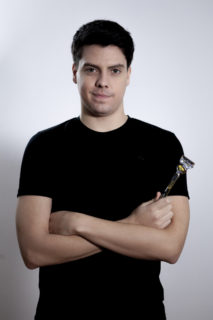
Gillette is the latest non-endemic brand to jump into eSports. The company has partnered with ESL to sponsor the League of Legends Intel Extreme Masters (IEM) World Championship in Katowice, Poland from February 24-26, 2017. In addition, Gillette has added its first eSports brand ambassador, Enrique “xPeke” Cedeño, to a roster that includes traditional athletes like Lionel Messi, Neymar Jr., Roger Federer and Clay Matthews.
Francesco Tortora, Gillette global brand director, told [a]listdaily that Gillette has been working with a lot of top athletes for 110 years.
“It used to be baseball, then it expanded to tennis and soccer and football,” Tortora said. “We have to remain relevant with our audience and loyal users. And a big portion of today’s audience watches eSports.”
Enrique “xPeke” Cedeño, pro eSports player and Gillette global brand ambassador
Cedeño told [a]listdaily that it’s a dream-come-true working with a non-endemic company like Gillette in eSports.
“I watch TV and see Federer and other athlete ambassadors of Gillette and it’s huge to now be in that league,” Cedeño said. “It means so much for eSports to have an emblematic brand that has been working with athletes for over 100 years now. Gillette thinks about eSports like traditional sports, and this is good for the entire eSports ecosystem.”
Gillette will be combining its two eSports initiatives at the upcoming IEM Katowice event. Fans will be able to customize Gillette razor handles using 3D printing technology at its RZR MKR Design Studio. Additionally, the brand will provide grooming services to all League of Legend’s competitors throughout the opening weekend and will host autograph sessions and other activities with Cedeño.
The deal with Cedeño is unique because the brand is not going to sponsor Origin, the team he owns. It will be similar to his Red Bull ambassador sponsorship. “I’ll wear Gillette merchandise and be at the booth during Katowice to meet with fans and give away a custom razor that I’ve designed,” Cedeño said.
Cedeño is a former IEM Katowice Most Valuable Player (MVP). This marks the third Katowice tournament he’ll be attending. “I’ve been to many IEMs, but Katowice has always been the biggest in terms of fan interaction,” Cedeño said. “They’re passionate fans there. Every time I go there I can be in a queue for a long time because all of the fans really want to meet me.”
In addition to the RZR MKR Design Studio experience, Gillette will give fans a look inside Cedeño’s life as a pro gamer and team owner. The “Pursuit of Precision” content series will follow him as he visits the Gillette World Shaving Headquarters in Boston to discuss the precision required to be a top eSports player and the added pressures of owning a League of Legends team during the current eSports boom.
Tortora said Gillette chose to work with ESL because it’s the biggest tournament organizer around that gives the brand events that are followed everywhere.
“It’s a live event that a lot of people go to,” Tortora said. “The RZR MKR Design Studio experience is a very simple and effective way to connect a ton of people literally and physically. We’re trying to get them to experience first-hand the connection between the precision and strategy with specific techniques behind the League of Legends game and the precision and strategy that goes into the research and development of our products.”
ESports is the first digital sport, and eSports players open up a unique opportunity for brands to connect. “The reason why all the fans love eSports and follow players like me is because they can directly interact with me,” Cedeño said. “We stream often and we chat with fans and reply to questions; we’re really close to them. Fans can relate to us. They’re able to connect with us in ways that traditional sports don’t offer.”
Tortora said this announcement is just the beginning of Gillette’s eSports activation.
“We have a lot of other content coming both on the Gillette social channel side as well as the ESL, IEM and Xpeke social side in the next few months,” Tortora said.
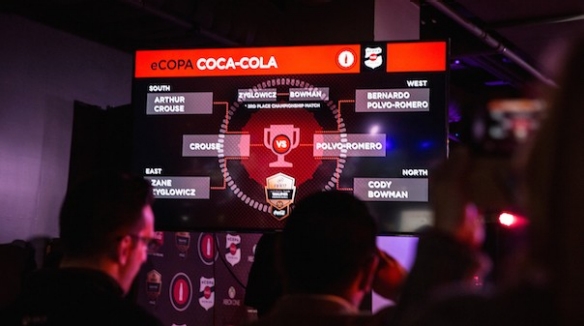
As vice president of entertainment, ventures and strategic alliances for The Coca-Cola Company, Matt Wolf has expanded beyond the scope of his original role as the company’s global head of gaming. It was in 2013 that Wolf entered into eSports, making Coke the first non-endemic brand to target the emerging competitive gaming business.
Coke has worked with Riot Games to connect League of Legends fans with the brand, and has extended its eSports sponsorship with Electronic Arts and the FIFA video game franchise. Wolf explains the soft drink maker’s eSports strategy to [a]listdaily in this exclusive interview.
Matt Wolf, Coca-Cola VP of entertainment, ventures and strategic alliances
Why did Coke decide to engage with eSports fans at a time when few non-endemics were?
It’s a natural extension of our brand to celebrate fandom in a number of different forms. In this case, getting close to gamers seemed like natural evolution of that.
How does Coke, as a company, view eSports today?
We see it as an opportunity to reach the consumer in a way that is uniquely special, in that these consumers spend a lot of time in that specific genre. It’s another opportunity to reach a specific consumer set in a way we can’t otherwise. Also, it’s great for us in our ability to innovate our marketing communications and attach our brand to an emerging form of entertainment that we think has a lot of room to grow.
How has Coke been able to apply lessons learned from traditional sports to it eSports offerings?
We had a pretty good head-start heading into eSports because of our experience with traditional sports. The two aren’t that far apart. Our brand is more focused on being in the stands with fans. It’s about fandom and togetherness. We took that experience, and the way we approach traditional sports, and applied it to our eSports programming, but with a twist. We understand the eSports space and how that community interacts. While there’s a lot of crossover, it’s a completely different form of entertainment. And the viewing audience is hyper-connected through social media, another component we take seriously and integrate as seamlessly as possible with our marketing.
What has been the key to Coke’s success in eSports?
We took a fairly organic approach in. We didn’t rush our presence and push too hard at the beginning. It was an evolution. We were on a journey with the game makers, the stars and athletes of the sport, as well as the fans. That allowed us to evolve and grow over the last four years we’ve been in this space. That approach lends to some real authenticity both in how our brand is perceived by the viewing audience and the industry—and also in the way we’re realizing our brand in the space as we continue to build our relationship with the consumer.
What role has social media played in connecting with fans?
Gaming and social media are the same thing—inextricably linked. You can’t do one without the other. ESports broadcasts through a chat platform like Twitch or VOD through YouTube—they all run off social media. Tips and tricks are all happening online. And friends play these games online together, which also constitutes social spread and communication. You can’t have one without the other. When a brand like us comes in, we have a multipronged approach with marketing communication through both the eSports sector and social.
What role has the community played with activations like the cinema viewing parties and how has that grown?
Community is at the center of who we’re trying to reach and what we’re trying to achieve. We typically communicate a lot of eSports marketing work if it’s not at an activation site like Twitter or Facebook. But at the heart of that, it’s not effective unless we’ve generated a community around it. Our Twitter was the fastest growing CPG Twitter account in the world. One of the largest in the Coke company today. We use that community to generate awareness. We listen to what they want. We learn from what they like. It’s an amazing way to get real-time marketing that we can apply to future communications work.
Cinema viewing parties—these people can watch at home for free or with friends, and some do that. But the community, when they come together and experience a live event, it’s all about coming together as groups just like they would when watching [any other] live event in person. They can share that moment together. It’s about fandom and togetherness. We just can’t make that engine run without that community. That community is typically the hardcore eSports community, [and is the] most impassioned about the sport and that game. It’s all about celebration. It’s central to that community.
Matt Wolf is a speaker at the [a]list Summit. Learn everything you need to know to invest in today’s fastest-growing media channel—Competitive Gaming and eSports on 2.16.17 in Los Angeles. Go to alistsummit.com for more info.
Nintendo has released its financial results for the nine-month period ending December 2016, with sales totaling $2.7 billion—a 27 percent decline from 2015. The company’s financial successes have been a roller coaster ride—from selling almost 102 million units of the Wii to just under 14 million units of the Wii U. While sales for the 3DS were up 10 percent, Nintendo needs a big win with its new Switch console.
Pokémon GO might have thrust Nintendo back into the spotlight, but the company doesn’t see all that profit, having only part ownership in the Pokémon Company. Regardless, the app’s popularity led to increased sales of software in the Pokémon franchise and drove Nintendo 3DS family hardware sales growth. Nintendo sold 6.45 million 3DS units worldwide during the quarter (10 percent increase on a year-on-year), while Nintendo 3DS software sales were 46.78 million units (20 percent increase on a year-on-year).
And then there’s Super Mario Run. Nintendo stated in a briefing that Super Mario Run has been downloaded 78 million times on iOS, but only around five percent of players are buying the $10 full version.
“Despite a wide release of Super Mario Run in collaboration with Apple, resulting in 78 million downloads of the free version, the game has only sold only four million copies,” observed SuperData CEO, Joost van Druenen. “This is largely the result of the high price point ($10) in the predominantly free-to-play app store on iOS.”
During Monday’s financial report, Nintendo president, Tatsumi Kimishima announced that the company plans to ramp up Switch production thanks to strong global pre-orders. Initially, Nintendo announced that two million units would be shipped worldwide during the first 30 days of the Switch’s lifespan. However, pre-orders went incredibly fast in North America and Japan, going so far as to overload and crash the official website. “You can tell customers have huge expectations based on how Switch reservations are doing,” said Kimishima. “We want to increase production as much as we can.”
Pre-orders may be a good sign, but experts still remain cautious about certain retail choices. “The news that the Nintendo Switch will launch without any bundled games or even demos is likely to have a negative effect on initial sales,” van Druenen added. “For the current console generation (PlayStation 4, Xbox One), bundling has been an important driver of consumer adoption and a key strategy in the face of weakening title sales at retail.”
The Nvidia Shield TV has gone through quite a few upgrades since it first launched almost three years ago. In addition to being an Android-based game console, it can stream PC games over a home network and supports content from a variety of services, including Netflix, Google Play, and Amazon Video, making it a cord cutter’s dream come true. In 2015, Nvidia launched a cloud-based service called GeForce Now, which can stream video games to Shield devices at their highest video quality settings. Earlier this month, it was announced that the service would be expanded to PCs and Macs, making it possible for gamers to play their favorite PC games using almost any computer from anywhere with a fast internet connection.
But it looks like the Shield TV isn’t done evolving. Earlier this month, Nvidia revealed that the Shield TV would sell as a bundled package (which includes the device, the voice-command enabled remote, and a gaming controller), and that it would also feature 4K HDR video streaming from supported services such as Netflix. Furthermore, Nvidia decided to step beyond gaming and entertainment by integrating features from its artificial intelligence (AI) projects to make the Shield TV the central hub for smart home devices such as Philips Hue lights and Nest thermostats and cameras. An update will bring Google Assistant support to Shield TV, and its capabilities can be enhanced with an upcoming voice-activated device called Nvidia Spot, which can hear commands from almost anywhere in the home.
Ali Kani, general manager of Shield at Nvidia
When asked to describe the Shield TV with its myriad of features, Ali Kani, general manager of Shield at Nvidia, said: “It’s the world’s most advanced streaming media player that provides unmatched experiences in media streaming, gaming and home AI.”
He also added that “it’s the best at delivering 4K HDR content from popular apps like Amazon Video and Netflix. Shield also delivers more gaming capabilities, streaming multiplayer games from the cloud, and 4K HDR casting from a local PC. And coming soon, it’ll be the only streaming media player with AI capabilities in the home with hands-free Google Assistant and SmartThings hub integration.”
Kani also discussed the lessons that Nvidia learned from selling and promoting previous Shield TV models. “One of the biggest takeaways was that our customers really wanted both a remote and a controller,” he said. “While the Shield controller packs the same level of control, many Shield owners felt more comfortable using the remote. With the new Shield TV, we’re bundling a remote for the same price to provide what we feel is the best all in one entertainment experience.”
We asked Kani how the company was engaging with its fans to make them aware of the new Shield TV. “Our core fans are gamers, so we’re bringing gaming to the forefront,” Kani replied. “You’ll find a completely redesigned website that improves discoverability for games so they can see the breadth of options available on Shield.”
Furthermore, Kani noted that, “we also know that our fans want the best performance, so we’re highlighting the platform’s strengths as a streaming media player. Tying this all together is the moniker that Shield is the streamer for gamers. We’re developing a marketing campaign with appropriate assets to help with education and awareness.”
When it comes to reaching past the core audience, Kani said that “it really comes back to content and platform capabilities. By shipping Shield with a remote and a game controller, and adding a lot of content to the platform (e.g. Amazon Video, Spotify, ESPN, Disney), Shield now appeals to a much broader audience. We are also excited to integrate Google Assistant onto Shield in the coming months as it further increases our product attractiveness by providing customers with the industry’s first hands-free TV viewing experience. With all these enhancements, we can now appeal to customers who just want the world’s best streaming experience.”
So, what convinced Nvidia to integrate home AI capabilities, bringing the Shield TV far past its media streaming and gaming origins? “Shield is an Android TV device,” said Kani. Couple that with Nvidia’s leadership in AI and it was a natural fit to work with Google to bring Assistant to TVs.”
He added that “the Google Assistant experience on Shield is fully integrated into our user experience. You can play TV shows or music, fast forward or pause your media simply by using your voice. Google is also optimizing the Assistant experience on TV so you can see visual cards that enhances the audio-only answer you would get on a Google Home device. Finally, Shield integrates Samsung SmartThings hub technology to let our customers control their smart home via voice to do tasks like turn off their TV or lights, change living temperature or even make some popcorn.”
But with devices such as Google Home and Amazon Echo already available, what space is the Shield TV looking to fill? “Shield is designed to enhance the experience of Google Assistant in rooms with a TV,” said Kani. “With a TV screen, customers get enhanced, visual answers from their Google Assistant as well as deep integration into all the content they would typically consume in the living room. When we get to release Nvidia Spot later this year, we will give customers the opportunity to expand access to Google Assistant throughout their home.”
Kani also clarified that the Nvidia Spot will not be required to take advantage of the Shield’s AI features. “Customers can access Google Assistant hands-free through a far-field mic on Shield’s controller. Spot is an optional speaker and mic accessory that extends intelligent ambient control throughout the entire home, enabling Shield to serve as the center of your AI home.”
Lexus is celebrating its second-biggest sales year on record in the US market by making a splash in the Super Bowl with the release of a new commercial that is fast, furious and moves as aggressive as a defense on a jailbreak blitz.
Street dancer Charles “Lil Buck” Riley, also known as “the Baryshnikov of jookin,” introduces the new 2018 LC 500 coupe and the completely redesigned Lexus LS 500 as he contorts and gyrates his flexible frame that’s as smooth as an ocean wave to singer Sia’s unmistakable vocals in “Move Your Body.” British actress Minnie Driver narrates a new chapter for the luxury car manufacturer in “Man and Machine” that complements the contemporary expression under the global tagline “Experience Amazing.”
“The Super Bowl is the one event of the year when the audience is looking forward to the ads as much as the game. With two new halo vehicles launching this year, along with a new tagline and a new voice of Lexus, a high-profile commercial in the Super Bowl was an ideal opportunity to highlight our new brand direction, represented by the first-ever flagship LC coupe and the all-new LS luxury sedan,” Brian Bolain, general manager for Lexus’ product and consumer marketing, told [a]listdaily. “‘Experience Amazing’ was specifically chosen so that everyone in the chain, from engineers, to marketers, to dealers and sales representatives would find something useful in the language that would inform their daily efforts to ensure Lexus’ rightful spot as a global tier-one luxury lifestyle brand.”
Like many other top-tier brands, Lexus is looking to join the Super Bowl conversation in what is arguably the most significant day of the year for marketers and advertisers alike. With viewership records destroyed year-in and year-out, Fox is commanding top dollar for brands to get some play time across the airwaves this year—the average cost of a 30-second ad for the Super Bowl is $5 million.
Bolian says the hefty price tag for their 30-second version of the commercial that will run in the second quarter of the game was well worth it since they also consider premium sports as well as culinary as key verticals.
“We feel that launching this commercial during such a high-profile event offered a great platform to reach our target audience of current and future customers. So, yes, it is worth it when you also evaluate how much buzz is given to the spot before, during and after it airs—coupled with the other campaign elements that support the spot. However, the cost of admission is a key reason why we don’t view this as an ‘every-year occurrence.’ Lexus truly uses the Super Bowl when there is significant brand news that makes the investment worthwhile.”
This will be the third time the Toyota-owned brand is running an ad in the Super Bowl. With such a steep price tag, marketers can’t afford to fumble their chance to reach the projected 110 million people who are going to tune-in to watch the game. That’s 72 percent of all homes in the United States.
Just as important is pairing the TV efforts with a strong second-screen digital sidecar. If you really want to get an idea of how well an ad is performing, head to Twitter, where last year’s game generated 16.9 million tweets, 4.6 million of which were users opining about the ads that aired during the game.
Lexus is pairing the TV commercial with a social extension that features Lil Buck doing popular end zone dances launching on Lexus’ Twitter, Instagram and Facebook channels. A behind-the-scenes video will reveal more of Lil Buck’s intricate choreography and offer a glimpse into how the commercial was filmed after the Super Bowl.
Bolain says the positive feedback they’ve received so far makes them already consider the spot a success.
“The social and media chatter saying that this spot is so different for Lexus means we’re making noise and really delivering on our brand promise to bring more excitement to everything we do, he says. “The Super Bowl is our opportunity to announce the LC and LS, but later in the year will be our chance to actually launch them with two unique, integrated campaigns. . . . It feels like the maximum benefit from the spot comes from the amount of conversation it causes during the windows of time both pre- and post-Super Bowl.”
The marketing for the new LC is not only limited to Sunday’s game. Lexus started showing the LC as early as last summer in a prototype form at a variety of activations around the country to the enthusiast an influencer audience. During this time they also continued to explore virtual reality. Bolain says consumers were able to see the LC up close through a VR experience that takes the idea of a configurator to an entirely new level. They shared the technology with consumers at the Pebble Beach Concours d’Elegance and had some costumers phoning their dealers on the spot.
“From a messaging perspective, you’ll find creative work being developed and written specifically to the idea of ‘Experience Amazing.’ And for the foreseeable future, you’ll hear this new tag line voiced over at the end of each Lexus spot,” Bolain says. “From a more practical perspective, Lexus’ goal is to create amazing experiences for our customers, both in-vehicle and through every touchpoint of customer engagement.”
More than 600 game industry professionals attended the third annual Ludicious: Zurich Game Festival in Zurich, Switzerland January 26-29. The festival has grown from 200 attendees in 2015 to its current size by offering a trio of game contests across student, international and Swiss competitions and an in-depth series of lectures and panels exploring game development. Those numbers don’t include the families that flock to the festival by the thousands over the weekend to play virtual reality, console, PC and mobile games.
Dominik Marosi, head of Ludicious, told [a]listdaily that the idea for this festival came from two different entities–the city of Zurich and the Swiss cultural agency–both wanting to bolster the local game development scene. Marosi’s pitch for Ludicious, a celebration of game culture through a festival and multiple game competitions, won out.
“One of the reasons Ludicious exists is to promote the companies and schools were have here in Zurich and Switzerland,” Marosi said. “The Zurich University of the Arts has had a strong program for ten years educating game design from both the programming side and from the arts side. They have very talented teams with a lot of creativity.”
Zurich is also home to Eidgenössische Technische Hochschule (ETH), which Marosi said is one of the top universities in Europe. Disney Research also has a lab in town. Marosi said there’s a second hotspot located in Geneva with additional art universities.
“We decided to combine all these forces and come together for three days to present themselves,” Marosi said. “Ludicious is also about the industry outside of Switzerland in Europe and internationally. We’d like the students and game and technology developers to find a home here in Switzerland and not have to relocate to Canada or somewhere else.”
Switzerland is home to Giant Software, makers of the international hit franchise Farming Simulator, as well as Urban Games, the developer behind Train Fever and Transport Fever. Sunnyside Games is developing mobile games, and there are startups specializing in VR and AR, such as Apelab, which is developing for Google Tango and is working together with Kenzan Studios.
“There’s a good mix of startups here, but what’s missing is a big publisher or a really big studio that is available to hire all those students that come out of the universities,” Marosi said.
Facebook-owned Oculus VR purchased ETH startup, Zurich Eye last year to enable inside out tracking for Oculus Rift. Faceshift, which created software that enables real-time tracking of faces, was acquired by Apple in 2015.
“We’ve seen a lot of success on the tech side already working, so it would be great if we could get it working on the creative side as well,” Marosi said.
Ultimately, Marosi would love to see Switzerland turn into a Finland or Sweden when it comes to a game development hub. That’s one reason so many speakers from Finland, home to Rovio Entertainment, Supercell and Housemarque, were invited to speak at Ludicious.
“Finland also had the same problem starting out because it’s a very small local market, so you have to work together for international success,” Marosi said. “And that’s what they did. We’re trying to find out so what exactly is the recipe for success, so we’re looking to them for advice. We’re still hoping for a runaway success like Angry Birds that starts opening the doors and pushing the money in and gives even more trust for investors to invest in game companies.”
All Switzerland needs is one studio to hit a home run because studios like Rovio in Finland spawned many smaller successful studios like Supercell that also grew.
“If you look at the ratio of how many awards and how many nominations are going to Swiss teams compared to the size of the country and the size of the development community, it’s very tough to compare to other countries that have much, much larger developer communities,” Marosi said. “So we’re really happy with that, but translating all those awards and nominations into commercial success is the big goal.”
Over 300 games were submitted to Ludicious this year for the competition, which includes games from studios and colleges outside of Switzerland. Given the level of quality from the 11 international finalists, it’s obvious that this event is already on the map for those making games.
Ludicious also incorporates an accelerator pitch program, which already had a success story last year. Developer EverdreamSoft found a partner in All 4 Games, the video game publishing arm of Channel 4, to release its mobile Bitcoin blockchain game Spells of Genesis.
![Febreze_Agency_Bathroom_Still[1]](https://www.alistdaily.com/wp-content/uploads/2017/02/Febreze_Agency_Bathroom_Still1-640x360.jpg)

 How does Stardock engage with its community?