How Fossil Is Pushing Fashion Forward With Hybrid Smartwatches

Fossil Group is joining forces with fashion brands to double down and deliver on a diverse product line of hybrid smartwatches this year to satisfy consumer lifestyles.

The watch brand is partnering with the likes of Emporio Armani, Armani Exchange, kate spade new york, Skagen, Misfit, Chaps, Diesel and Michael Kors to bring more than 300 diversified designs for wearable smartwatches.

With the consumer crave for connectivity ramping up, brands like Fossil are spearheading a fashion-first approach featuring wearable products like touchscreen smartwatches, hybrid smartwatches and activity trackers, all while underscoring a commitment to innovate. And partners are standing in line to play ball.

Armani Exchange entered the wearables market for the first time in January with a collection of hybrid smartwatches; Skagen is offering thinner case sizes that are appealing to a modern aesthetic; Misfit unveiled the brand’s first touchscreen smartwatch featuring heart rate, GPS and standalone music functionality.

Hannah Liu, director of wearables and corporate strategy at Fossil, joined [a]listdaily to share how the brand is keeping a close watch on their connected wristpiece strategy.
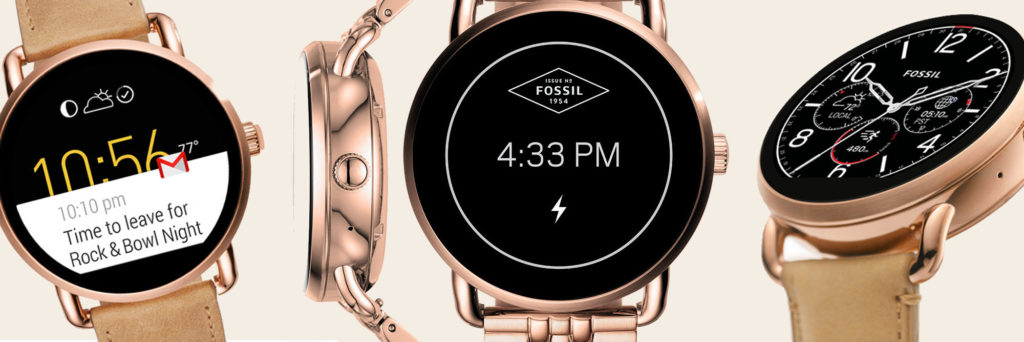
Photo of Fossil Gen 2 Q wander smartwatches alistdaily

How did Fossil delve into the world of wearable watches and IoT? What is your strategy in the space?

Last year was a very pivotal year for us, and we’re excited for all of this year’s launches, too. In 2016, we launched 142 SKUs across 40 countries in 20 languages across eight fashion brands. Now, we’re working toward 300. Honestly, last year was great in terms of finally being able to bring fashion style and design, along with wearable technology. A lot of our customers are actually finding a way to try to be more connected with their world and fashion accessories. This is one of the first times where we are saying ‘you don’t have to compromise on style.’ You actually get to have both together. What we’re really excited about is our hybrid smartwatches, which is a category that is not as well-known as touch-screen smartwatches or activity trackers, but it’s really important to have everything with key features and functionality of the traditional watch.

What are your eight partners looking for from the Fossil Group? What is the consumer pain point they are trying to solve?

With the fashion brands we’ve partnered with on a lot of our different styles and devices, they want to be seen as an innovator in the wearable space, because if you actually look at the fashion brands that are in wearables, there are not very many at all. So they are really being the first movers in engaging younger, more connected and ever increasing digital customer bases. That’s been really exciting. One of the big things we have learned, too, is how technology can cater to the brand identity and brand DNA. None of the devices look the same because each reflects the brand style and aesthetic for the customers they are trying to target.

What is the consumer appetite like for wearable fashion watches?

We’ve seen extremely strong sales when it comes to actually putting everything consumers care about wearables all in the beauty of a traditional smartwatch. That has been one of the most empowering things in terms of customers voting for our devices.

What are the marketing strategies that work best with the connected consumer?

We’ve tried a lot of the different marketing channels and activities over the last year, and we’ve learned a lot. The connected and wearable customer is all about online, social and digital marketing. They are young, and they are active. A lot of the traffic is driven there not only when researching and discovering products, but also purchasing products, too. So you can probably expect for our marketing strategies to leverage and deliver on strong digital campaigns, but still understand the branded, in-store experience, and point-of-sale. We’re also exploring options like livestreaming, especially as it becomes more of a burgeoning concept, and understanding how that catches on with Snapchat, Instagram and Facebook. Livestreaming is actually a channel we’ll soon be looking at.

As watchmakers, are you leaning on any true tech companies to integrate tech into your watches? 

Our 2015 acquisition of Misfit was a big investment for us in putting a full foot forward into wearables. Having their world-class engineering talent and full hardware-software platform and capabilities has been very important in our innovation in technology and leveraging the opportunity to do what we are great at—which is making beautiful watches. They are a cornerstone for us to understand different trends and innovations. We’re constantly evaluating how to innovate and evolve our devices not only in our products, but user experiences as well. We also have really exciting partnerships with Google Android Wear and Qualcomm to help with display smartwatches.

What are the emerging trends you see developing in the near future?

We’re noticing things getting smaller, slimmer and generally having more battery life. That’s something that we’re currently delivering on. We’re doing that from a design and form factor. We’re also seeing the integration with third-party partnerships such as connected homes and connected cars in ways that can unlock the different parts of your life of which you care to be more connected. We’re evaluating plenty of IoT and connected partnerships. Fossil Group is fully into the wearables business. We’ve proven to be a leader in building up this category, and what we’re going to be doing in the future. We’ve invested a lot in building a new category in hybrid smartwatches. The reason it’s so exciting is that it’s burgeoning and you can quickly see it gain momentum and accelerating in growth.

Follow Manouk Akopyan on Twitter @Manouk_Akopyan
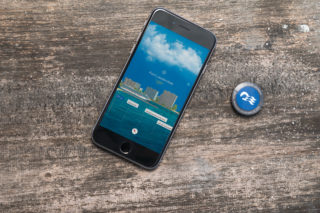
How Princess Cruises Is Wooing Consumers To Navigate New Waters

Princess Cruises kicked off the year in grand fashion by gamifying the cruise industry with a quarter-sized wearable pendant.

Dubbed the Ocean Medallion, the next-level platform technology is an engagement method and marketing ploy toward elevating the guest experience and keeping the brand in shipshape.

The innovation tactic was the latest in a series of IoT installations designed to help guests get the most out of their vacations; the moves are set on shaping new ways guests interact on ships—specifically among millennials—who have a perception of placing more value on personalization, customization and simplicity.

Carnival Corporation, the world’s largest leisure travel brand and the parent company of Princess Cruises, among nine other cruise lines, is positioning itself with a boatload of marketing strategies to leverage the growing global demand for cruising, which grew 68 percent over the decade through 2014, according to a 2015 report by trade group Cruise Lines International Association.

The cutthroat hospitality industry is always in search of new ways to cater to younger, more tech-savvy consumers and travelers—especially since less than 4 percent of North Americans cruise each year—and the Ocean Medallion from Princess Cruises, which provides personalization through capabilities like streaming analytics, contextual awareness and machine learning, proves that positioning themselves with digital natives is the way the go.

Gordon Ho, senior vice president and head of global marketing for Princess Cruises, joined [a]listdaily to share how they are raising awareness of cruising and tapping into travelers with technology.

oceanmedallion

How is Princess Cruises catering to maturing millennial travelers who have common misconceptions about cruises? What is your marketing strategy toward this demographic?

The most influential way to convert someone to try a cruise is through word-of-mouth. We work with a variety of influencers, mostly new to cruise, to tell the story authentically and to their trusted audience—such as our work with Cat Greenleaf from New York’s The Stoop for a full series in Cat’s First Cruise.

Carnival Cruise Line also has been using Instagram influencer Zach King with a number of new 360-degree experiences. What is Princess Cruises doing with influencers today? How do you gauge the success of your influencer activations?

We value influencer partnerships as a way to introduce new cruisers to the authentic cruise experience. We work with a diverse group of influencers year-round, including YouTube creators, Instagrammers and bloggers. For example, we recently wrapped a series of Instagram takeovers with notable foodies, including Recipe Girl and Let Me Eat Cake, that showcased must-try dishes both onboard, and in the destinations we sail. We measure the success of our influencer activations through lift in brand awareness and sentiment, website referrals and social engagements. And our favorite measure of success is when a guest books a Princess vacation after seeing her favorite blogger’s adventures on a cruise. And, we know it’s working as referrals and word-of-mouth continue to be the top source for driving new to cruise.

How are you marketing to combat the recent downward trend in attracting new-to-cruise guests on their first vacation at sea?     

I would disagree that there’s a downward trend; our data supports that cruising continues to be the fastest-growing vacation category globally, and new-to-cruise is a big reason for this growth. Again, I think the best way to drive first timers is through positive stories through trusted sources. For example, we know that people want to spend more time experiencing the local cultures, people and cuisines of the ports we visit—so we launched ‘More Ashore’ where we stay later in ports (at least till 9 p.m.) or overnight across many destinations so that guests can experience what the port city has to offer. And with the launch of our Ocean Medallion platform, we can provide better personalized invitations to activities and shore excursions that they will love.

Princess Cruises announced a fourth ship to debut Medallion Class Ocean Vacations

Do you believe cruising is growing faster than land-based vacations? If so, why?

Yes. A 2015 report from the United Nations World Travel Organization shows growth in the cruise market between 2004 and 2014 as percentage-wise the fastest growing segment of the global vacation industry, outpacing land-based vacations by 23 percent. In 2016, nearly 25 million people worldwide are expected to go on a cruise vacation. Why do I think it’s growing?  It’s easy—it’s a great value, and there’s variety and something for everyone. People don’t have a lot of time, but they want to see and do a lot; with cruising, they can visit many ports on one itinerary, sleeping while they get to the next port/adventure. Those traveling with family and friends can find something for everyone—someone wants to try local eats, but the family also has a picky eater—no worries. One person wants to relax and rejuvenate while another wants activities like entertainment, gambling, shopping—we have it all.

How are you bracing for the impact of virtual reality and “virtual tourism” potentially impacting business? On the flipside, how are you using the immersive technology for marketing purposes to connect with consumers?

Virtual reality is actually a great way to better sample cruising and to help debunk the myths of cruising by showing people what it’s really like onboard. That they won’t be bored, that there’s lots of open spaces and comfortable staterooms. We’re using drones, VR and 360-degree footage to showcase Princess moments of family, adventure, relaxation and more in key destinations around the world.

Looking at the current marketing technology landscape and all that is currently available, what sort of tech and services do you think marketers are lacking?

It’s not just about technology, because having the right tools and data won’t go far without the right people. The key is to have the right balance of resources so you’re always able to be continually testing, optimizing and learning.

Follow Manouk Akopyan on Twitter @Manouk_Akopyan

Unity CMO Discusses Power Behind Gaming Success

The four hallmarks of Unity 5 include increased emphasis on graphics, quality and stability, efficiency, and platform growth. The company made some major strides towards its goals of democratizing development, solving hard problems, and enabling success for developers over the past year, as shown by Unity’s CEO John Riccitiello (pictured above) at the company’s GDC presentation keynote. Riccitiello stated that 38 percent of the top 1,000 mobile games around the world were developed using Unity, up 34 percent from 2015. Unity games were downloaded 16 billion times in 2016, showing a 31 percent growth from the previous year. Lastly, Unity games were installed onto 2.6 billion unique devices, which is two billion more than 2015.

Things are looking bright for the game development technology company, especially given its partnership with Facebook to help build a computer gaming presence on the social platform. Facebook announced that it will be including a digital store in its Gameroom platform so that a targeted audience can purchase games directly. The company also further emphasized its commitment to expanding its platform support, specifically in VR, by officially including Google Daydream and Cardboard into its development suite. Additionally, the company will be helping to bring Western games into the massive, but difficult to enter, Chinese market through a partnership with Xiaomi, which was announced during the keynote.

Clive Downie, chief marketing officer at Unity Technologies, spoke to [a]listdaily at GDC to talk about some of the company’s exciting endeavors and how it continues to grow. He said that, “Unity is only as awesome as the people who use it. That is the God’s honest truth, and that is the power that Unity has.” That power shows across numerous platforms that include mobile, VR, PC and console gaming.

Clive Downie, chief marketing officer, Unity Technologies

How do you achieve your goals, particularly in the areas of graphics, stability and performance, on the notoriously fragmented Android market?

By working from top to bottom with all of the incumbents you need to in order to understand the majority of challenges. Chip manufacturers, handset manufacturers and the OS developers. You need a multidimensional partnership with all of those three to ensure that you understand the stack rank of challenges and how they impact the developer audience.

The second thing you do is invest in it. There isn’t an easy path. You have to invest in the best engineers tackling the problems, and have lots of them. We’ve invested in our engineering teams substantially over the Unity 5 cycle, in all areas. You use a combination of those two strategies. It’s not magic, it’s just hard work.

Another thing that augments those two is our Unity analytics solution. If you enable Unity analytics and hardware intelligence in your product, we’re able to see the performance of your game on the widest range of hardware. We can use that to pinpoint the challenges that exist and go after them.

Unity presented impressive growth numbers for the past year. What is the approach toward further growing that success?

One of the things that we didn’t touch today [at the keynote] was that we have a lot of 2D and mobile technology in development. When I think about how we go about growing our share, I think it’s in continuing to make great technology that makes making games on mobile easier. Also, I think there’s going to be ongoing continued adoption of Unity by the mobile developer ecosystem because they realize that there’s proof that making games on Unity and launching them on mobile leads to success. I think we’ll see continued organic growth that is accelerated by some of the new technologies we’re making for mobile.

How do you think mobile VR will grow, and is there a competitive difference between the Google Daydream platform and the Samsung Gear VR, backed by Oculus?

I believe in mobile VR, and I think it will be continue to be adopted. Like any platform, it needs great content to grow. I’ve played a lot of the Daydream products, desperately hoping for a killer app. It’s a personal opinion, but I don’t think there is one yet. However, I know that Google has invested in partnering with content creators and there’s a lot that’s in production. So, I’m hopeful that we’ll see killer apps and content come out. That, plus the addition of Daydream hardware from different vendors is going increase the accessibility. So, 2018 is going to be an interesting year for Daydream.

Samsung and Gear VR were pioneers in that area. They have a good position and foundation to work off of. I think they faltered somewhat with the Galaxy Note 7’s battery challenges, but they’ve picked themselves up well and it appears that they’ve solved them. So, I think they’ll capitalize on their Gear VR head start and will also continue to grow as good content comes in. We’re seeing a lot of people come in to develop for mobile VR across the Unity ecosystem. There’s a sign there that content is coming, and content is king. So, as content comes in, both Daydream and Gear VR are going to grow.

How did the partnership with Xiaomi come together?

We have a really good country team in China, all the way from the leadership to the marketing and ad team. They fostered relationships with the key partners in China. We talked to Xiaomi and understood their aspirations and they understood ours. It felt like there was an opportunity for us to do something exciting for developers, so we did. It’s very exciting, and we’ll see what comes from that, but I think it will only be good things for Western developers.

Many people probably still relate Facebook games to the Flash games of the past. What would you say Facebook gaming is now?

I think what Facebook gaming now is the ability for you to take your PC executable product and put it in front of Facebook’s audience in a targeted way through its Gameroom product. This isn’t the Flash game past of Unity on Facebook. These are PC executable, standalone products that Facebook will distribute into its audience through Gameroom. It’s a way for developers to take sophisticated PC products and get them in front of a very scaled audience in a targeted way.

What do you think will be the biggest things consumers and marketers have to look forward to in gaming in 2017?

I think consumers can look forward to killer apps coming to mobile VR. Every platform goes through an early moment where the pioneers come in to experiment and learn, then make the next generation of content, which is supremely polished and immersive. They can also look forward to a richness in graphics and therefore a new kind of experience that hasn’t been seen on mobile. Mobile has generally been about one-and-a-half or two cycles behind consoles in terms of visuals, but it’s catching up. That means that customers will have a new type of immersion on mobile.

The PC gaming market is blossoming because of indie game developers. The experimentation happening on PC and the new kinds of games, both with business models and mechanics, is really where innovation is happening. I think it’s going to be another great year for PC gamers.

Nintendo President Reggie Fils-Aimé Optimistic Switch Demand Will Be Met

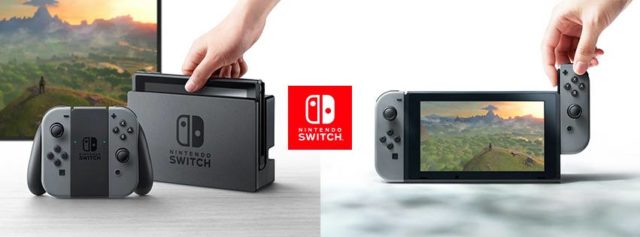
Nintendo launches its $300 Switch hybrid console/tablet on March 3 and gamers around the globe are excited about at least one launch title, The Legend of Zelda: Breath of the Wild. Nintendo finds itself in the challenging position of trying to stay relevant in the console wars at a time when PC and mobile gaming (including Nintendo games co-published by DeNA) dominate the landscape, while Sony holds an insurmountable lead with PlayStation 4.

Nintendo’s strategy of diversifying with its Nintendo 2DS/3DS business and entry into the mobile games business with titles like Pokémon GO, Super Mario Run and Fire Emblem Heroes means that the company doesn’t need to replicate the Wii’s mainstream success to continue developing hardware and publishing games.

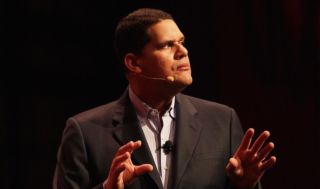
Reggie Fils-Aimé, president and CEO of Nintendo of America, joined [a]listdaily to talk about the Nintendo Switch and the evolution of the company that introduced Mario to the world in this exclusive interview.
nintendo-switch-hor

What were some of the lessons learned from Wii U and Nintendo 2DS/3DS that have been applied to Nintendo Switch?

Our goal with any console launch is to deliver an entirely new game experience for players. With a platform like Wii, the appeal was obvious. You move the controller like you would a tennis racquet, or a sword, and the payoff is instant. With Wii U, the value of a second screen in gameplay was not instantly recognized, and often problematic for developers to fully take advantage of in terms of what the system could do. However, with Nintendo Switch, the unique appeal of our ‘anywhere, anytime, anyway’ approach is readily apparent. So we think consumers will get the appeal right away, and developers will embrace how it can bring their ideas to life. The concept of ‘constant engagement’ was also built into our Nintendo Switch planning. You’ll be seeing this in a number of ways, but most importantly to gamers, it means a steady flow of big first-and-third-party franchises becoming available to play on the system in 2017. These games will launch starting on March 3 alongside the Nintendo Switch hardware and will continue through the holiday.

Many gamers are familiar with the Nintendo Wii, which crossed many generations of gamers and introduced many new and older audiences to gaming. How do you see Switch connecting with this broad audience?

The clearest early example of this at launch is the game 1-2 Switch. It contains more than two dozen activities like quick draw, sword fighting, copy dance and one called ‘Ball Count,’ which takes real advantage of the advanced HD Rumble feature of the Joy Con controller. This game is going to resonate with anyone who played Wii Sports—or for that matter, even if you didn’t. The difference, of course, is this. With Wii, you could invite your aunts and uncles and grandparents to join in the fun when they were over to your house. But with Nintendo Switch, you can take that multiplayer fun to them, wherever they are, due to the portability of the system. So the opportunities to experience a new kind of gaming fun are dramatically increased.

Nintendo is also now reaching a broader mobile audience through mobile games like Super Mario Run and Fire Emblem Heroes (and the upcoming Animal Crossing). How do you see those games introducing new consumers to these characters and potentially driving them to Switch without cannibalizing the console audience?

Screen-Shot-2016-07-14-at-12.05.48-PM
Nintendo President Reggie Fils-Aimé

Well, I don’t have to answer this hypothetically—I can simply point to what’s already happening. Last summer, something called Pokémon GO exploded into pop culture. Of course, veteran Pokémon fans were quick to begin playing. But with over a half billion downloads globally in just the first couple of months, it’s obvious that a lot of those new players didn’t know a Pikachu from a Charmander. For them, everything about Pokémon was new. We suddenly started seeing sales for legacy Pokémon titles begin to spike. And then, when Pokémon Sun and Pokémon Moon launched, they became the fastest-selling Pokémon titles ever, and the fastest-selling games of any kind in the history of Nintendo 3DS. In the last quarter of 2016, here in America, we sold more games for Nintendo 3DS than any other quarter in its five years on the market. And the impact carried over to Nintendo 3DS hardware, too. Six million more systems sold at the end of 2016 than during the same period a year before. In the US, year-on-year sales of Nintendo 3DS hardware increased for seven consecutive months. So to us, it’s clear that our strategy of using mobile titles to build interest in our dedicated platforms certainly can work. In fact, it is working.

Creatively, what has the new gaming audience on smartphones and tablets opened up for Nintendo developers as they work on Switch titles?

A typical Mario or Zelda game can literally eat up hours of your attention during a sitting. But sometimes everyday life gets in the way, and you can’t always play the games you want to play in long uninterrupted stretches. What the mobile space has proved is that there’s a huge audience for ‘bite-sized’ games that fit into a busy schedule. So in a sense, this is a liberating experience for developers, including those working on an advanced platform like Nintendo Switch. And you can see evidence of that with 1-2 Switch. It applies a bite-sized approach to local multiplayer entertainment. You can play for a very short amount of time . . . and either demand a rematch, or turn the Joy Con controllers over to someone else to take a turn.

Can you explain how Shigeru Miyamoto was involved in the development of this console and its games, and what he brings to the table?

At our global simulcast unveiling of Nintendo Switch last month, you saw many new developers introduced. They have been with Nintendo for many years, but maybe they weren’t as well known to the public as Mr. Miyamoto. They included the overall producer and director for the platform and the lead directors for individual games. So they were the key developers that Nintendo put center stage to explain the Nintendo Switch, and to showcase their game creations that bring it to life. Mr. Miyamoto holds the title of Creative Fellow for all of Nintendo. He is central to Nintendo Switch in terms of advising the developers that were featured in the global simulcast, and his decades of gaming experience is shared with all of those carrying the torch forward for Nintendo when it comes to the Nintendo Switch launch.

Some mini-games within 1-2 Switch don’t even use the screen to play. Can you explain what Switch has opened up in terms of new ways to interact, especially with family friendly multiplayer?

Our first home system ever, the Nintendo Entertainment System, came packaged with two controllers. That’s the same thing with Nintendo Switch. People having fun together is part of our DNA. But that group fun always occurred the same way—with multiple players looking at a common screen.

NES Classic Edition remains very hard to find at retail today. How challenging will it be for gamers to actually find a Switch at retail this year?

Well, the market will decide that answer in the short term. We hope it’s very popular. But the fact that Nintendo Switch arrives in March . . . rather than a typical Thanksgiving launch window . . . means that many of the first-year purchases will occur over the course of many months, rather than just several weeks. So we’re optimistic we’ll meet demand.

Nintendo Isn’t Playing Around With Its Switch Marketing

The Nintendo Switch debuts on March 3, and retailers are struggling to meet demands. This is a great sign for Nintendo’s risky new hybrid platform, but that doesn’t mean they should uncork the champagne just yet. While Nintendo ramps up production to meet demand, the company has created a steady stream of hype ever since the big Switch reveal in October.

The Nintendo Switch may be all about having fun, but the company is taking its marketing very serious. From talk shows to pop-up demos across the US, let’s take a look behind the big marketing push to launch day.

Something To Talk About

Much like its sensational Wii predecessor, the Nintendo Switch aims to change the way consumers—and developers—look at gaming. “Nintendo Switch has inherited all of Nintendo’s entertainment DNA and we have packed each and every one of these features into the system,” said Shinya Takahashi, director and managing executive officer for Nintendo’s entertainment, branding and development division. “Nintendo is constantly pursuing new forms of entertainment to bring more fun and more smiles to the world.”

Whether gamers are skeptical of the Switch or can’t wait to buy one, the very idea of Nintendo’s latest offering invites passionate conversation across the board. Handheld devices and home consoles have always been two separate categories until now, but Nintendo dares to bring them together into one unit. The initial reveal posed more questions than answers from battery life to launch day titles.

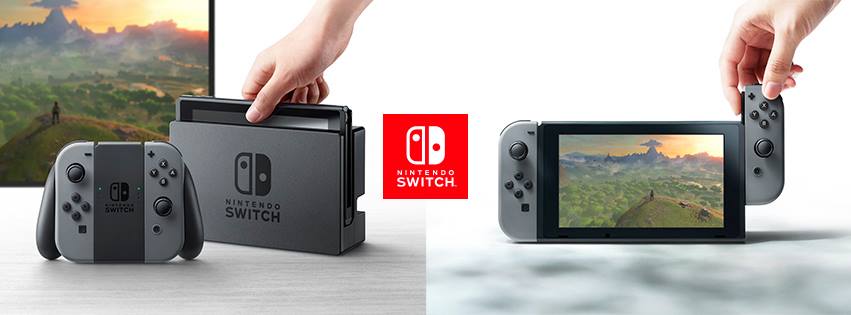
nintendo-switch-hor

Slow And Steady

When it comes to the console’s success, this Japanese gaming giant is playing the long game. Rather than attempting to cash in holiday shopping frenzies, Nintendo is instead focusing on building a solid fan base and developer community that will last.

“The Q1 launch is one of the smartest moves Nintendo could have done,” Eric Bright, senior director of merchandising at GameStop, told [a]listdaily. “Instead of pushing units out during the heaviest time of the year (in Q4), this allows them to build a base. So by holiday, we can focus on games. There will be millions of people who will be hungry for content, creating a richer development cycle for game publishers who will have an install base to support titles. This also will take some of the brunt off of Christmas and enable Switch to be better stocked at stores.”

Much like virtual reality, creating an ecosystem for the platform is pivotal to its longevity. Over 40 developers have partnered with Nintendo for the Switch including EA, Bethesda, Telltale Games, Sega and Capcom. In addition to well-known companies that gamers know and trust, Nintendo is welcoming indie developers to the fold and highlighting them through its “Nindie” line-up with a livestream on February 28.

Just because the Switch wasn’t available for Christmas didn’t mean Nintendo wanted consumers to stop talking about them. Nintendo America president Reggie Fils-Aimé brought the console to the Tonight Show With Jimmy Fallon, where millions of viewers got to watch Fallon “nerd out” live on the air.

Gaming On The Go

In a digital age where peer opinions weigh heavily on purchase decisions, Nintendo’s Switch activations have become proving grounds not only in physical form, but in spirit. The concept that gamers can take their favorite titles from the living room to . . . well, anywhere, is played out quite literally as pop-up locations appear around the country.

In addition to playable demos at PAX South as well as upcoming PAX events and SXSW, Nintendo is inviting people to try before they buy at “Switch and Play” events. The tour kicked off in January in New York and has been making its way around North America via Toronto, Washington DC, Chicago, San Francisco and Los Angeles.

The “Unexpected Places” campaign has taken the Switch to pop-up locations in the desert of California, the snowy peaks of Colorado, and on March 3, New York.

Pro wrestling star John Cena even got in on the fun, partnering with Nintendo for the invite-only California event on February 22. Cena played 1-2 Switch with invited fans and YouTube influencers, demonstrating the new Joy-Con controllers and other game modes.

“I know for fans of Nintendo, they’re going to go crazy,” Cena told Sports Illustrated. “Everyone is speculating about how good [The Legend of Zelda: Breath of the Wild] actually is—it’s going to exceed expectations and, for a dude like me, a 40-year-old [in April] who hasn’t played Zelda since the gold cartridge, I sat down and was hooked. In a matter of 30 minutes, I didn’t want to put it down.”

Ready . . . Set . . . SWITCH

Nintendo’s big marketing push has included a livestreamed Switch event in which vital details were shared, a Super Bowl LI ad, unboxing videos and even tips for set-up. The console’s pre-orders may have a much higher attach rate than the Wii U, but a lack of launch-day titles or bundles may result in a rocky start.

“The news that the Nintendo Switch will launch without any bundled games or even demos is likely to have a negative effect on initial sales,” SuperData CEO Joost van Druenen told [a]listdaily. “For the current console generation (PlayStation 4, Xbox One), bundling has been an important driver of consumer adoption and a key strategy in the face of weakening title sales at retail.”

“Every time we launch a new platform, every time we launch a critical new game, we always learn,” Reggie Fils-Aimé told [a]listdaily prior to the Switch reveal last year. “We always do our breakdown of what worked, what didn’t, and certainly we’ve done that with Wii U, and we continue to believe that the innovation of the second screen was a worthwhile concept.”

Regardless of the outcome, you have to hand it to the company for taking risks and daring to innovate in the creative space. Fils-Aimé said it best when he told us, “Nintendo has a quite appropriate reputation of doing its own thing.”

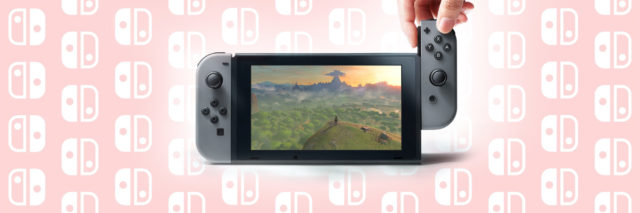
Photo of Nintendo Switch alistdaily

Best Of Movie Marketing From This Year’s Academy Award Nominees

The 89th annual Academy Awards are right around the corner—fans are excited, filmmakers and movie stars are dreaming of Oscar and advertisers are planning a big push for Sunday’s showcase.

ABC has already sold out of commercial slots for the ceremony, charging an estimated $2 million each for a 30-second spot, making it the network’s single-highest day of ad revenue all year. Between those commercials, however, all eyes will be on this year’s nominees. Thanks to year-round marketing from posters to interview tours, these films have become household names.

Beyond the tours and trailers, we’re taking a look at some of the best out-of-the-box campaigns from this year’s Academy Awards candidates.

La La Land

Evoking the spirit of 1950s musical films and images of classic Hollywood, Lionsgate has been sweeping the awards leading up to the night—reinforcing its message that with big dreams and a lot of hard work, sometimes Hollywood hopefuls really make it. The film’s saturated, dream-like colors and flashy musical numbers hark back to a time when Fred Astaire and Ginger Rogers ruled the big screen. Before the world fell in love with La La Land, marketing was based on that nostalgic look and feel, which certainly piqued audience interest. Since then, the studio has shared behind-the-scenes looks and even introduced an iOS stickers app to help spread a little LA sun to friends and family.

La La Land has been nominated for 14 Academy Awards—tied for the most all-time with Titanic and All About Eve.

Arrival

When aliens show up in a movie, it’s usually not good news, but what if they were just sitting there and willing to talk? In Arrival, Louise Banks (Amy Adams) is a linguist who must communicate with aliens in order to understand their purpose and prevent global war. Roadshow explored the concept of language barriers with a short film to illustrate how listening and communication can bring people together. One of the film’s movie posters brought two cities together, but in an accidental and unwelcome way—by accidentally adding a Shanghai tower to the Hong Kong skyline. The ensuing complaints among current political conflicts in the region resulted in a swift correction and apology by the studio.

Arrival received an impressive eight Academy Award nominations.

Hacksaw Ridge

Lionsgate teamed up with Heroes and Generals game developer Reto-Moto to promote Hacksaw Ridge, the story of a conscientious objector during WWII that showed tremendous courage in the line of battle to save lives rather than take them.

Customers in the US can order an exclusive Heroes and Generals bundle on Steam featuring a digital copy of Hacksaw Ridge, as well as the “Heroes & Generals Medic Pack,” which contains a 14-day Veteran Membership giving players several in-game perks, a Medkit for one soldier that allows players to heal themselves and friends in battle, and a 5x Medic Ribbon Booster for use in game.

Hacksaw Ridge has been nominated for six Academy Awards.

hacksaw ridge

According To YouTube Trailer Views, The “Best Picture” Goes To . . .

YouTube released the most-watched movie trailers for the nine “Best Picture” nominees, giving an indication of which films are bringing the hype.

  1. La La Land: 22.2 million views
  2. Arrival: 16.99 million views
  3. Hacksaw Ridge: 14 million views
  4. Lion: 6.9 million views
  5. Fences: 6 million views
  6. Hidden Figures: 5.9 million views
  7. Manchester By The Sea: 5.76 million views
  8. Moonlight: 4.77 million views
  9. Hell or High Water: 4 million views

Tommy Gargotta Joins Fox; BAMTech Appoints New CEO

From media networks to mobile gaming, here are the week’s biggest job moves.

Tommy Gargotta, a film marketing veteran who most recently worked as head of marketing for the Relativity EuropaCorp Distribution venture, has joined the Fox broadcast network in a senior marketing position. In this newly created position, Gargotta will oversee the on-air promotion and design departments for Fox, which will extend to print, digital and outdoor venues.


The Lakers are in full brand and franchise rebuild mode, and it has named the legendary Hall of Famer, Earvin “Magic” Johnson as president of basketball operations. He replaces, Jim Buss, who will no longer serve as executive VP of basketball operations and is tasked with overhauling the team’s front office.


AwesomenessTV’s co-founder and CEO, Brian Robbins, announced in a memo issued this week that he will be resigning. The memo also stated that Brett Bouttier, who is currently serving as the company’s president, will be taking over the role.


Brad Grey, who has overseen Paramount Pictures for over a decade, announced earlier this week that he was leaving the company. His departure comes amid shake-ups at its parent company, Viacom, which officially made Bob Bakish as its CEO last December. A search for Grey’s replacement is currently underway.


Keith Cox has been named as president of development and production at the Paramount Network, a relaunched version of Viacom’s Spike TV. Cox will be responsible for programming at the rebranding network and its sister channel, TV Land. Meanwhile, Sharon Levy, executive vice president of original series for Spike TV, is departing Viacom. Levy was responsible for developing popular shows that include Lip Sync Battle, Ink Master and Bar Rescue.


The Weather Company has hired Mark Risis as its new VP of partnerships. In this role, Risis will focus on building new tech and data partnerships across the media and ad tech spaces.


Lauren Burack was promoted to the role of SVP of brand and consumer marketing at IFC. Burack will oversee IFC’s consumer-facing marketing campaigns, brand communication, events, promotions and partnerships.


Lara Cohen, head of entertainment and lifestyle partnerships at Twitter, said that she will be leaving the company. Cohen joined Twitter in 2013 and was responsible for working with talent across TV, film, fashion lifestyle and digital domains—creating content that fans could connect with.


The streaming video venture, BAMTech (owned by MLB Advanced Media, Disney, and the NHL), has hired Michael Paull as its new CEO. Paull was most recently Amazon’s VP of digital video and begins his role at BAMTech in March.


Kristina Schake—who is best known for helping former first lady, Michelle Obama, build her brand—is joining Instagram as head of communications. At the same time, the current head, David Swain announced that he is leaving Facebook after almost a decade at the company.


WWE has appointed Sal Siino as its senior vice president of global content distribution and business development. According to a press release, Siino “will be a key member of WWE’s leadership team, responsible for the management of WWE’s worldwide content distribution business across all platforms. Siino will also manage business development initiatives and partnerships, and provide related support to WWE’s business units. “


Cirque Du Soleil named Danny Boockvar as its president of the NFL Experience Times Square, which is expected to launched in November. The attraction will use interactive displays on training regimens, game plans and physical challenges to bring football to life and allow guests to compare themselves with pro players.


IO Interactive, creator of the Hitman series, announced the promotion of Hakan Abrak to studio head. Abrak has been with the company for over a decade, and he replaces Hannes Seifert, who left IO Interactive and its parent company, Square Enix, to pursue a project that is closer to his home in Austria.


Square Enix announced the opening of Studio Istolia, based in Tokyo, to “builds on Square Enix’s vision to create new intellectual properties alongside existing Square Enix studios,” according to a press release. The studio is headed by Hideo Baba, who is famous for Bandai Namco’s Tales franchise.


Coffee Stain Studios, the company most famous for the comedic game, Goat Simulator revealed that it will be getting into the business of indie game publishing. The move comes as a reaction to years of dealing with publishers who were either unable or unwilling to meet the needs of indie developers. The first game to release under the Coffee Stain label will be an ‘80s-style retro shooter called Huntdown, developed by the Swedish studio, Easy Trigger.


Netmarble announced that it completed its acquisition of Kabam, which made Marvel Contest of Champions and is currently developing Transformers: Forged to Fight. Netmarble will operate Kabam as a wholly-owned subsidiary. “The acquisition is a perfect fit,” said Seungwon Lee, chief global officer of Netmarble Games in a statement. “Kabam has a proven track record of developing games based on iconic entertainment brands, powered by state-of-the-art technology and managed by an incredibly talented team. It’s a winning combination, and together we’ll continue Netmarble’s expansion across Western markets.”

In the wake of the Netmarble acquisition, Kabam has spun-off its remaining two studios—comprised of former teams in Los Angeles and San Francisco—into a new company called Aftershock. The new company will be run by much of Kabam’s leadership team, including Kevin Chou as its CEO, Steve Klei as CFO, Kent Wakeford as COO and Aaron Loeb as president of studios and live services.

Fast Cars, Fake Social Accounts And Other Must-Read Marketing Stats

This week, we take a look at what makes a consumer loyal, why more people are switching to messenger apps and in case you didn’t notice . . . Ferrari is still pretty cool.

Messaging On Mobile

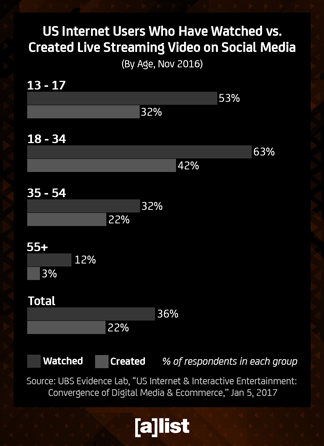
It’s hard to imagine a time when cell phones weren’t a part of our daily lives. If losing sight of your phone sends you into a panic, you’re not alone. Eighty-nine percent of consumers reported living “within an arm’s reach of their smartphones at all times,” according to a study by AOL. Video is a major draw for consumers, especially on the go—although 70 percent reported watching video on desktop, mobile is only slightly behind at 67 percent, and 57 percent reported watching videos on their mobile phone daily. When it comes to video length, shorter seems to be better, as 59 percent of consumers reported watching video that runs 1 minute or less every day, but only 31 percent of consumers reported watching video that was 20 minutes or more every day.

us-internet-users-who-have-watched-vs-created-livestreaming-video-social-media-alist-daily

Messaging apps that offer multiple features like video are attracting more time and attention from consumers, according to new data from Gartner. This is the start of a “post-apps” era, the analyst firm says, based on changes in consumer interactions that are leaning toward privacy and multi-purpose. Messaging apps will become more popular than social media apps within the next two years, the firm predicts. Usage of standalone maps apps shrunk by three percent, year-over-year, according to the data, and social media app usage reduced by two percent. Messaging app usage, however, grew three percent over the same period.

Virtual reality is taking off through the mobile platform, and ABI Research predicts mobile VR devices will see a 42 percent CAGR through 2021. Stand-alone devices will see much more growth, the firm predicts, at 405 percent by 2021.

Left Is Right

If you want consumers to remember your brand, appeal to the left side of the brain, according to a new study conducted by Neuro-Insight, a neuroscience-based market research firm. Testing editorial articles from publisher partners including Time Inc., Condé Nast, Forbes and The Atlantic, the company found that high-quality editorial content was found to have a 19 percent greater impact on memory than social news feeds, which appeals to the right (emotional) side of the brain.

A new report called, “Turbo Charging Your Skippable Pre-Roll Campaign” found that consumers are paying attention to video ads, even if they are skipped. Of the 65 percent of viewers that skipped their pre-roll ads in the study, 10 percent could still recall the brand. Thirty-five percent watched the videos, but only 45 percent were able to recall the brand.

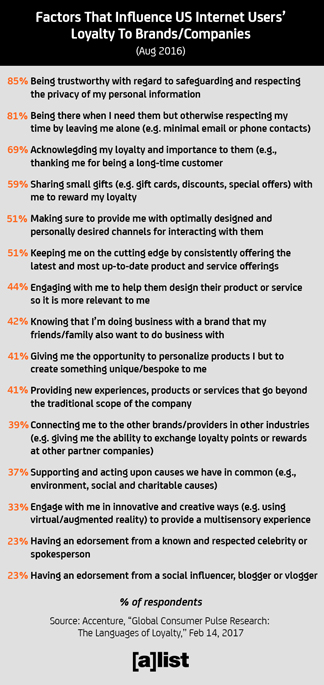
What makes a customer loyal? While discounts are nice, being trustworthy is far more important, according to a survey by Accenture Strategy. Eighty-five percent—more than four in five US internet users surveyed—said that trustworthiness in regard to privacy is an important component of what makes them loyal customers—more so than any other factor. Not harassing them certainly helps, as well, with 81 percent valuing minimal contact via phone or email.

The report “Seeing Beyond the Loyalty Illusion: It’s Time You Invest More Wisely” gauges the experiences and attitudes of 25,426 consumers around the world, including 2,532 US consumers, about their loyalty relationship with brands and organizations. The report found that 54 percent of US consumers have switched providers in the past year, and 18 percent confirm their expectations around brand loyalty have completely changed.

There’s one brand that customers are happy about, and that’s Ferrari. The luxury vehicle brand’s value increased 40 percent to $6.15 billion, according to Brand Finance. Not only is Ferrari the world’s most powerful auto brand on the annual list, it’s among the top 10 strongest brands from any industry. Its brand strength has improved by three points this year to 92.

Gone Phishing

Meanwhile, there’s something you shouldn’t trust, and that’s fake social media profiles. According to social media security company, ZeroFOX, the number of fake social media profiles created for fraudulent purposes increased 1,100 percent from 2014 to 2016. LOSERS! SAD!

Agencies To The Rescue

Brands are relying more on agencies for help with data management, according to a new report by Forrester. Studies showed that brands plan to invest more, with 57 percent saying they base every major marketing decision on consumer insight. Over half say they rely on their agencies to use a data management platform on their behalf. In addition, 45 percent or more brands plan to increase spending with agencies in the next two years in areas such as technology integration and content marketing.

Marketers are becoming more confident in the technology their company utilizes, however. According to eMarketer, 24 percent of US marketers “strongly agree” that their company invests in the right amount of marketing technology, compared to only nine percent in 2015.

Still Got It: Why ‘GTA V’ Dominates The Charts After Three Years

It was the sixth highest-grossing video game last year and yet it’s not a new game at all. Grand Theft Auto V, the open world, gangster’s paradise from Rockstar Games and Take-Two Interactive continues to outperform all developer expectations and has shipped over 75 million copies since its initial launch in September 2013. Grand Theft Auto V has consistently been in the top 10 for game revenue each month, often at number one.

Hype for GTA V began soon after the release of its predecessor, GTA IV. Rockstar took a slightly different approach to its already popular formula by creating three protagonists instead of one, each specializing in different skills like driving, shooting or flying. Players have the option of completing missions to further the protagonists’ journey or simply explore the massive world filled with challenges of its own. While this is no different than previous games, the three characters offer more variety for play styles and strategy. By the time GTA V hit shelves in September of 2013, fans were so excited that the game broke industry sales records and became the fastest-selling entertainment product in history—earning $800 million in its first day and US $1 billion in its first three days.

The secret to GTA V‘s longevity is the seemingly infinite outcomes for play sessions. Gamers aren’t limited to playing alone, since they can join up with friends on Grand Theft Auto Online, a standalone multiplayer mode launched soon after that of the main game. In it, players can recruit crews of up to five people to explore the world together, engage in various activities and perform in-game heists. Grand Theft Auto Online is continually expanding through free updates that keep content fresh, such as new missions or holiday-themed items. Sure, a lot of games get updates—but this one receives as many as any other popular MMO today. Extensions like Import/Export released this past December open up even more possibilities for gamers to explore, collect and interact with one another. While GTA Online is technically a standalone game, it ties into the same environments of GTA V, keeping the main title in the minds of players on their adventures.

“[GTA Online] has been a really extraordinary story,” Take-Two Interactive CEO, Strauss Zelnick told [a]listdaily in a June 2016 interview. “The title is nearly three-years-old and the fourth quarter of the last fiscal year were respectively the best quarter and the best fiscal year ever for Grand Theft Auto Online in virtual currency sales. And those sales are obviously attracting engagement, and engagement is tracking delight, and that’s what we’re here to do. Grand Theft Auto V has sold over 65 million units. It remains the highest-rated title on Xbox One and PS4 and it has become clear that—for an age-appropriate audience—when you get new hardware, you need to have Grand Theft Auto. And when you have Grand Theft Auto, generally speaking, you connect to the internet. And when you connect to the internet, generally speaking, you try Grand Theft Auto Online. We’ve remained excited and gratified by it.”

Another aspect of the game’s ability to stay relevant is its re-release for PlayStation 4 and Xbox One in 2014. In addition to upgraded graphics and new licensed songs added to the game, players could switch between third- and first-person view. Game Informers Andrew Reiner considered the addition of first-person “another significant breakthrough for the series” in his review. To reward existing players on Xbox 360 and PlayStation 3, Rockstar offered a number of rewards for those to upgraded to the new platform. Events, story lines and challenges were offered exclusively to those to transferred their save files to the upgraded platform. In addition to all their current progress, players were able to retain all special rewards earned from special editions. It’s not often a gamer will buy a title twice, but in this case, a lot of people made an exception.

Much like Minecraft—another hit that ages extremely well—Grand Theft Auto V has become not just a game, but a destination for friends and spectators alike. There is a massive following of streaming and modding communities that cater to both players and viewers, keeping the entertainment alive with countless outcome possibilities. Rockstar has tapped directly into this avid following by inviting popular YouTube stars to play Grand Theft Auto Online together from the developer’s official channel. The game is available on multiple platforms and its open world appeals to a wide demographic from teenagers to adults, making it accessible to more players across the world. As the game and its audience continue to evolve, GTA V evolves with it—and it will remain at the top of the charts.

Inside Qualcomm’s Approach To Connected Devices And IoT

Qualcomm’s flagship processor shunned smart phones for the first time last month when they partnered with Osterhout Design Group (ODG) to introduce their first line of augmented reality smart glasses in the R-8. Powered by the new Snapdragon 835 processor, it will open up a variety of gaming, entertainment and work functionality in AR and IoT.

On Tuesday, they furthered their footprint in the mobile chip race and padded their Qualcomm Network IoT Connectivity Platform by debuting a swathe of products designed to ease standard fragmentation. The processors also support Google’s Android Things IoT operating system.

Qualcomm’s goals in IoT is rather simple—to be a Swiss Army chip for all deployments, and to speed up current mobile networks ahead of 5G.

After all, by 2020, there will be over 26 billion connected devices in the ether for what is being billed as a $151 billion market; one third of executives admit that their companies actively deployed IoT in 2016, per Deloitte.

Jim Merrick, Qualcomm’s ‎marketing director for IOT, joined [a]listdaily for a video interview to explain why the Internet of Things is a great opportunity for the company to reach consumers.

ar.vr_sized

How do you see IoT advancing and developing throughout this year?

IoT is such a broad spectrum of products. It’s often times thought of being anything that’s not a smart phone. It runs from something as simple as a water meter in your front yard that wakes up once a month, to connected cameras to smart watched that have its own cellular connection. Collectively, it’s really hard to even get your arms around it right now. Every one of these subsets in IoT is growing tremendously. 

How do you think IoT personalization will evolve?

A good example is wearables. Wearables started out will limited capabilities. First and foremost, it’s about fashion—the ultimate form of personalization. The watch that I wear says something about me, and my taste, and my character. Its functionality? Sure. But the style? You see that right away from 10 feet. Fashion brands like Michael Kors, Nixon, Fossil and Swarovski are bringing a lot of credibility into the [wearables] space. It’s all about making products for very different audiences.

What are the appropriate entry points for brands that are not in the business of IoT?

You have big brands and marketers like Mountain Dew using IoT to communicate their story, and that’s one way to get into it. You also have Happy Meal activations using augmented reality. They are very great. They are very engaging, and help people relate to the brand. If you want to become part of the IoT ecosystem, then there are many different entry points—most of them come with some expertise and a niche opportunity. IoT is coming from all kinds of different directions. Qualcomm, just to give you one example, is working with home appliance manufacturers for washing machines to make it more cost-effective with a touchscreen than with individual buttons and have it communicate over wi-fi to order its own detergent when it knows you’ve done a certain number of loads. It’s less expensive for the manufacturer, and it’s beneficial to the consumer because you are coming from an area of expertise.

Is the consumer education that needs to take place the biggest challenge the industry is currently facing?

From the consumer IoT standpoint, it’s learning how to identify products that are IoT devices. Is your thermostat or garage opener an IoT device? But then there are the industrial IoT devices in lighting and HVAC systems, or a smart car talking to a smart parking meter as you enter an area looking for a place to park. It’s a lot, honestly, for the consumer, and the industry, to get their heads around. As an IoT guy, I’m pretty excited about that, particularly as Qualcomm diversifies and moves away from the leadership we have been able to establish in smart phones and into automotive, drones, robotics, cameras, health care, wearables, and a tremendous amount of areas. It’s a great opportunity for us to reach consumers.

How is Qualcomm addressing this consumer pain point through marketing?

A lot of it does come down to 5G, which is about really advancing the speed and technology of the 4G connectivity—it’s also embracing other connectivity channels like wi-fi and Bluetooth to bring them into all one standard connectivity model that works for all of the different devices, so that consumers don’t have to think about which is which. It’s all about bringing it together under one seamless solution.

Follow Manouk Akopyan on Twitter @Manouk_Akopyan

https://www.youtube.com/playlist?list=PLADNcabi-P9arFxYRIQ4ppJ-GwxuVOwJa