Polaroid’s President Provides Picture Into Company’s Paradigm Shift

The digital revolution over the last thirty years has forced a pool of brands to revive their business strategies in order to survive. Some brands have strayed, sunk and eventually been swallowed. Others have withstood the waves to stay close to the perimeter by proving a knack for staying nimble.

For rebooted iconic heritage marques like Polaroid, they’ve leveraged their near-century long company cachet, albeit originally an analog one, to piggyback onto the currents of new tech to reinvent their approach to products and marketing. It wasn’t smooth sailing, though. From 2001-to-2009, the privately-held American company filed for bankruptcy twice and went through six CEOs in a four-year span. They’ve since solidified the shaky structure and emerged to be social-savvy by bridging the gap between digital and instant.

With the likes of Ansel Adams and Andy Warhol nowhere to be found in the smartphone and selfie era—artistic expression is now inspired by thumb-stopping influencers and a convoy of social creators bringing branded content for the new generation.

At the start of the year, Polaroid continued its comeback campaign and made more moves as an easy-to-use consumer electronics lifestyle company across categories including instant digital cameras and printers, 3D printers and pens, virtual reality, 4K TVs, home security cameras and mobile phones. The suite of products bank on the brand’s notorious nostalgia while reintroducing them as a curator of innovation who pushes boundaries. The combination of products is a ploy to attract the young Instagram-and-Snapchat-using consumer who prefers simplicity, fun and immediacy.

Platforms like Polaroid Swing, an app that captures one-second snapshots as “living photographs”—think Harry Potter movies—and one that champions photographers, is helping position the brand to broaden their portfolio of products, too.

New product introductions with social use cases are proving to help, and premium point-and-shoot cameras and instant print cameras in the digital imaging market are on the rise, per an October study by the NPD Group, which stated that sales of instant print cameras grew 166 percent, as more than 3.5 million units were sold. Fujifilm is leading the market in instant print camera sales, followed by Polaroid.

Scott W. Hardy, president and CEO of Polaroid since 2009, has largely been responsible for supplying the vision for the brand’s swift turnaround and saved it from toiling to oblivion. Hardy joined [a]listdaily to shed light on the camera company’s preservation and revival.
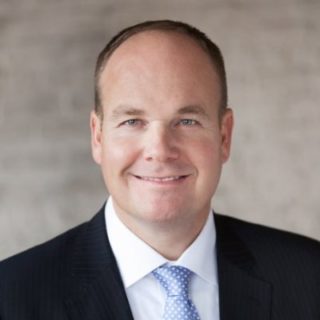
Scott W. Hardy, president and CEO of Polaroid

Polaroid has been in business for 80 years. How are you reintroducing the brand to millennials and Gen Z? What is the brand story you want to share?

Over the past few years, the instant photography market has seen a significant amount of growth in the millennial and Gen Z demographic. We like to refer to these demographics as digital natives—people who grew up with digital devices like smartphones and tablets. What Polaroid is doing with our current instant product line is bridging the gap between digital and instant, giving consumers the best of both worlds. For example, our Polaroid Snap instant print camera line allows consumers to capture a digital image and an instant photo. And our Polaroid Zip instant photo printer offers consumers a way to print physical photos of their smartphone pictures. We also offer the Polaroid Swing App which allows Gen Y artists to create moving photos with one easy tap. Today, having both digital files and instant prints is important for this demographic when it comes to social media. We consider Polaroid pictures as the original social network. Polaroid instant photos are really the first instance in history where people were able to capture an image and instantly share it with friends and family, like we do on social media today.

What is Polaroid’s strategy for constantly remaining nimble and revamping for the digital age? How are you leveraging and banking on your globally recognized brand profile to form strategic partnerships?

We view ourselves of curators of innovation and operate in a very fast and flexible partnership model where we can adapt to changing technology trends. Polaroid has a very strong following on social media. This, and the fact that we are one of the most recognized global brands has helped us secure a number of strategic digital partnerships around the world. Additionally, we have a broad demographic appeal that has allowed us to form partnerships with a wide variety of brands. For example, in 2016 we partnered with brands such as Janie and Jack and Etsy in the US, Nescafé and Topshop in Europe and Easy Taxi in Mexico.

Polaroid is increasingly marketing the company’s classic instant camera for the social media era. How is The Pop primed to prep Polaroid for consumer acquisition, all while preserving the classic experience?

The Polaroid Pop is the latest camera in our instant digital line. As I mentioned before, this line was designed to give consumers the best of both worlds. Up until now, all of these products have given users the ability to print two-by-three-inch full color photos with the option of printing with or without the Polaroid Classic Border Logo using something called Zink zero ink technology. We received feedback from consumers looking for the classic Polaroid three-by-four-inch photo with the Polaroid Classic Border Logo. So, for our 80th anniversary, it made sense to launch a camera that satisfies that demand. The Polaroid Pop gives consumers the ability to print photos in the classic Polaroid format using Zink technology. Additionally, the Polaroid Pop is a full digital camera, offering consumers the ability to save 20 megapixel still images and 1080p video to a microSD card, and using the Polaroid print app and Wi-Fi connectivity, print images saved on their smartphone.

Collage of allnew products Polaroid offers including the 3d Pen, Snap Camera, Camera Drone, Smartwatch and Pop Instant Camera

How do you market to people who mostly have never had a genuine Polaroid film experience?

Even if people haven’t had a first-hand experience with instant film photography, with Polaroid being so globally recognized, we’re finding that many consumers are still familiar with brand and what we represent. Instant photography is seeing a resurgence today, and iconic elements like the Polaroid Classic Border Logo allow young consumers who did not grow up with analog film photography to make that connection with the brand, even with our new instant digital products that feature Zink zero ink printing technology, instead of film.

What is the brand looking to accomplish by diving into the drone camera space, as well as 4K TVs with built-in Google Chromecast?

In recent years as we’ve changed our business model from a vertical manufacturing company to a licensing model, we’ve expanded from just a photography brand to a much more diversified consumer electronics brand. As a recognized and trusted global brand, we’ve been able to grow into other consumer product categories, not only thinking about different ways people can capture content, but also new ways people can consume their content. For example, smartphones have become the primary camera for most consumers. We’ve embraced this trend, which has lead us to expand into new categories such as smartphones and mobile photography apps. Most recently, we’ve expanded into emerging technologies that help people capture their world in new ways—like drones—or provide a new way to enjoy content—like TVs with Chromecast built in. It’s our plan to continue to expand our product offering to include the latest technologies that stay true to our brand DNA.

What is the best mix of marketing messaging for incorporating Polaroid “nostalgia” and your intent on being “innovative” and “forward-thinking?”

Throughout our 80-year history, the Polaroid brand has always been about innovation and forward thinking. Bringing innovative and accessible products to market was one of the goals of Edwin Land, the founder of Polaroid, and this is still an element that is engrained in our brand DNA today. Today we see ourselves as curators of innovation. We are currently working with best-in-class partners to bring products to market. There are other characteristics of the core brand DNA that have been part of the Polaroid legacy for 80 years that we ensure are represent in all our current products. They include sharing, easy-to-use, instant and fun. Additionally, with Polaroid being one of the world’s most recognized brands, iconic Polaroid design elements—such as the Polaroid Pixel, Polaroid Color Spectrum and the Polaroid Classic Border Logo that I mentioned before—help create nostalgic connections with consumers, and are incorporated into many of our current products.

Polaroid has shared the sentiment that influencer marketing has worked wonders for the brand profile. What insights can you share about the impact that collaborating with creators has had on brand equity?

Polaroid has always been synonymous with creative expression. Throughout the brand’s history, we have provided people, from high-profile artists to everyday consumers, with innovative tools that enable creative expression. That tradition is alive and well today, as people from all walks of life are using our products to create, share and express themselves across a broad spectrum of channels and platforms. It’s always exciting to put our products in the hands of creative individuals and see what develops. Doing so with influencers has resulted in some really amazing content, and helped to elevate the profile of the brand and our products.

Which social channels are you most interested in engaging with your audience? Are you looking to test any new emerging platforms?

We have a very active fan base on Facebook and Instagram. Facebook allows us to interact with our fans through promotions, sweepstakes and general community engagement. The photography focus of Instagram makes it a natural fit for Polaroid, and for our fans. There’s a strong Polaroid and instant photography community on the platform. We’ve been able to connect with this community through specific campaigns focused on gathering and sharing user-generated content and engaging with brand evangelists.

How is pairing branded content with social creators helping Polaroid drive sales? How do you further plan on adding and building on top of your influencer marketing strategy this year?

I don’t know that we can necessarily quantify the impact that social creators have had on sales, specifically. I know that putting our products in the hands of creative individuals and letting them show other people what’s possible is inspirational and, ultimately, highly beneficial to the brand overall.

Follow Manouk Akopyan on Twitter @Manouk_Akopyan
Breaking: New Study Reveals That Customers Buy Things

A shocking revelation swept the marketing world today as a new study revealed a consumer demographic more lucrative than millennials, Gen X, Gen Y and baby boomers combined. Companies with goods to sell are now setting their sights on a group the study refers to as “customers.”

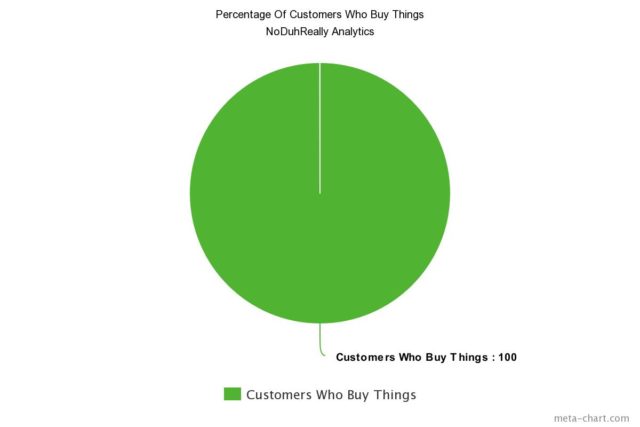
The study released today by NoDuhReally Analytics found that a whopping 100 percent of customers buy things. While what these customers buy varies greatly from person to person, marketers are stunned by the revelation and are adjusting their budgets accordingly.

“Here I was focusing on millennials not knowing that some of them are actually customers,” commented a stunned April Fulles, CMO for an American retailer. “This changes everything.”

chart

Much like consumers, NoDuhReally found that customers consist of a person or persons who a) need or want something, b) have money or credit to buy something and c) buy something. From food to housing, video games to cars, these customers, it turns out, are everywhere. Even children have been observed making such purchases as toys, candy or games.

“I can’t believe this,” said Brand A. Wareness a marketing executive who agreed to an exclusive interview with [a]listdaily. He pointed to a woman across the street paying for coffee. “There’s another one!” He let out an audible gasp and began to weep softly as our waitress brought him his credit card receipt. “I’m one, too! What does it mean?!”

While marketers are scrambling for any available data on this lucrative demographic, the study offers a bit of advice in the meantime.

“Focus your marketing campaigns on those who need or want to buy things,” the report explained. “You may not realize it, but customers are everywhere. Our research confirms that in order to eat, live somewhere and obtain transportation, this group spends money and oftentimes does so just for fun.”

Luckey Departs From Facebook; Paramount Pictures Names New CEO

A shake up in the VR world and Paramount’s new CEO mark some of the week’s biggest job moves.

Palmer Luckey announced that he will be leaving Oculus VR, three years after it was acquired by Facebook. The Oculus Rift headset creator did not provide a reason for his departure, but the announcement comes after a long period of seclusion following a Daily Beast story that revealed that he contributed money to a far-right political group called Nimble America during the 2016 US Presidential Elections, sparking controversy. Until then, he had been the face of the company, speaking at events and gracing the cover of Time Magazine. Luckey issued an apology for his actions in a Facebook post six months and has not appeared publicly since, except to testify at in court in a lawsuit between Oculus VR and game publisher, Zenimax. Today is Luckey’s last day with the company he co-founded.

Stephanie Llamas, head of VR/AR strategy at SuperData Research, suggested that Luckey’s departure could be beneficial for Oculus’ long-term success, stating:

“This is a long time coming. Oculus is failing compared to its competitors and Luckey’s reputation certainly hasn’t helped. With his donation scandal (he donated to an anti-Clinton site) and his part in the Zenimax lawsuit (he was cited as breaking NDA), Facebook has pushed him further and further into the background. There are plenty of VR professionals who can both offer unique skill sets to Oculus and stay out of the press, so his role has become increasingly redundant.”


Relatedly, Facebook has hired Michael Hillman, a senior ex-Apple employee, to head Oculus VR’s hardware design. Hillman has 15 years of experience with design and engineering at Apple, and he will use that expertise to help bring VR hardware to the mainstream.


Viacom has officially named Jim Gianopulos as CEO and chairman of Paramount Pictures. The movie industry veteran brings over three decades of global entertainment experience to the company and his role begins on April 3.


BitTorrent named Rogelio Choy as its new CEO as the technology company prepares to spin off its BitTorrent Live service into a separate company. BitTorrent founder, Bram Cohen, is expected to step away from the company’s daily operations to focus on a new crypto-currency project while Choy replaces Dipak Joshi, who has been serving as interim CEO.


NBC has promoted three unscripted television executives in its alternative programming division. Jenny Groom is taking over as head of the department. At the same time, Lesley Cerwin has been made senior vice president or current programming while Shelby Shaftel has been promoted to vice president of programming and development.


Angela Courtin is stepping down as EVP and CMO at Fox Broadcasting after having been with the company for a year-and-a-half. No replacement has been named yet.


Comcast has hired former global head of live video at Amazon, Euan McLeod as the head of its internet video engineering team. He will be responsible for leading Comcast VIPER (Video IP Engineering and Research), the engineering team that designs, develops and deploys software for internet-based video across TV, mobile and connected devices.


MGM announced that it has hired Sam Toles, the former head of Vimeo’s entertainment group, to the newly created role of VP of digital and new platforms. The hiring comes at a time when the studio is increasing its focus on new forms of content for internet-video platforms.


Google Ventures brought on Craig Kornblau, the former chief at Universal Studios home entertainment, as its first media and entertainment advisor.


Global entertainment company, Topgolf has brought former Starbucks COO, Troy Alstead to its board of directors.


Video game peripheral maker Mad Catz announced today that it is ceasing operations and filing for chapter 7 bankruptcy. The company said in a statement that it was in the process of initiating “an orderly liquidation of the assets of the company.”


Digital games seller, Green Man Gaming has appointed Sam Bennett as EVP of customer experience and communications.


Job Vacancies

VP, Business Development – Twentieth Century Fox; Los Angeles, CA

Digital Marketing Solution Experience Manager – Adobe; San Francisco, CA

Senior Manager, Insights – POPSUGAR; San Francisco, CA

Manager, InsightsPOPSUGAR; New York, NY

Product Marketing Manager, Dynamics AXMicrosoft; Bellevue, WA

Content Strategy Manager, Programming and Acquisition (Sports) – Verizon; New York, NY

Global Senior Brand ManagerKimberly-Clark; Atlanta, GA

Product Marketing Manager Director, Microsoft AzureMicrosoft; Redmond, WA

Senior Marketing Manager – Cushman & Wakefield;  Chicago, IL

Executive Producer, Content MarketingBabbel; New York, NY


Have a new hire tip? Let us know at editorial@alistdaily.com.

Comcast Xfinity Remains Perfect Fit For ESports Integration

In June of last year, Comcast announced that it was partnering with ESL and Evil Geniuses to promote its Xfinity high-speed internet products in the eSports space. It’s been almost one year, and Comcast remains one of the largest companies to be involved with eSports, and a branded presence at major events such as the Intel Extreme Masters (IEM) and most recently, the Halo World Championship. At its peak, the Halo tournament broke digital records, with 135,000 concurrent viewers across Twitch, Twitter, Facebook, and Beam. In total, over 13 million unique viewers tuned in last weekend on digital platforms (higher than last year) and 10.3 million of them watched the competition via Twitter, marking the first time a Halo eSports event was streamed on the platform.

Matt Lederer, executive director of sports marketing at Comcast, talks with [a]listdaily about integrating the Xfinity brand into the eSports space and how the giant internet company plans to grow its presence.

Matt Lederer, Comcast
Matt Lederer, executive director of sports marketing, Comcast

What initially convinced Comcast Xfinity to invest in eSports?

It was one of the easiest conversations that we have had with executives about wanting to invest and partner in this space, which—candidly—I didn’t expect because maybe some of our executives didn’t feel like they were in the eSports demo. But I think the reason why it was an easy conversation and why it has been so positive for us this past year is the enthusiasm, passion and engagement of this segment.

The segment is really what the key thing is here and why we made this decision. Regardless of what eSports data you look at and regardless of what source, what’s consistent is that it’s—for the most part—young, diverse and predominantly male (although it’s growing in the female space). This is not the easiest segment for any group, advertiser or marketer to reach. When we started thinking about how this segment is important, and that our product—specifically the internet product—is core to the enjoyment and participation of eSports, it became a very easy decision.

How was the Xfinity brand integrated into the eSports scene?

We strategically went with a two partnership approach. We have a partnership with ESL that provides a lot of high-powered, high-visibility branding throughout streamed events. That includes branding on the shoutcaster desk and units inside the livestream. Additionally, ESL provides us with space inside certain events such as the Halo Championships and IEM.

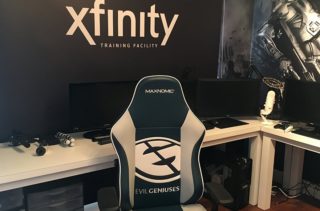
Area two is our partnership with Evil Geniuses. Obviously, all the jersey branding is great, but what really is key is that they have two main houses where their teams play from—one in the Bay area, the other in Chicago. Those are now the Xfinity training facilities. The entire area where they play and compete on a daily basis is branded Xfinity. They have our Xfinity internet game product running to their houses, and they’re competing, playing and winning on our product. They have Xfinity X1 video in the house. When they’re streaming content, they’re doing it with the Xfinity branding in their backdrop. When they’re relaxing or doing interviews, they’re doing it with Xfinity branding. So, it has come to life in a really big way.

We went with a two partnership approach because we felt that ESL was a league level partnership and gave us branding across multiple games, players and events. Partnering with a team allowed us to tap into the excitement and passion that fans have directed toward a specific team or game. This approach has given us a nice, broad branding coverage, while also letting us tap into the passion of Evil Geniuses, Dota 2 or Halo fans as they watch the team play.

What attracted Xfinity to Evil Geniuses, specifically?

For one, they’ve been tremendously successful. We do like to partner with successful franchises, entities and champions. The other thing is their two primary locations are inside important Xfinity markets (the Bay Area and Chicago). We’re able to activate the partnership nationally across streamed events, but it has also allowed us to tap into things globally. For example, the Halo EG team in Chicago was cross-pollinated with our NASCAR partnership. We brought the EG team out to Chicagoland Speedway last September, made appearances at Xfinity Zone, and played Halo against fans there. They also competed against NASCAR drivers in NASCAR video games. That local aspect allowed us to do that.

Out in the Bay Area, we’ve had numerous cases where we’ve had local press go to the Evil Geniuses’ house—with that full branding—and do interviews. They ask these guys, “Why Xfinity?” Taking a look at the house and allowing the players to locally talk about why they chose Xfinity and why Xfinity Internet is in their house, helping them to compete and win on a daily basis. We were able to tap into those local opportunities. Of course, since they’re local and in our market, they both have big service coming in directly from us into their houses.

How did the eSports community take to the Xfinity integration?

We’ve been very happy with the response we got, and I credit the team of people here who worked on the eSports partnership. We’ve been really cognizant of how we brand and message, making sure that we’re not coming in there like we do in a normal sort of marketing and advertising basis. We’re in there, respecting the space, and celebrating eSports with them. When you do those things, and talk in that authentic manner, you’re going to see the positive response. We’ve seen the consideration lift from eSports fans toward our brand, we’ve seen strong social rankings in eSports, and Cynopsis nominated us for the best eSports activation award. So, we’ve been very happy with the reception we’ve gotten from the community, teams and the industry.

What was the biggest lesson you learned about engaging with the eSports community?

Halo_Gaming RoomI’m going to bore you by saying the same word: authenticity. It’s about making sure you respect the fact that you need to talk to this group differently and you need to respect them. You have to absolutely make sure you’re not going in there saying, “I can’t believe people watch video games, but hey, I’m here.” No, this is a passionate group of people. Whether they play or watch the games, we’re celebrating it with them. We want them to know that we’re fans as well.

Authenticity is key, and an example of what we did to play into that was that, through ESL, we had the ability to be at events (PAX, IEM and the Halo World Championships) and set up a booth to interact with fans. Normally, we’d hire local brand ambassadors to stand there and talk about the product. What we learned was that we have a lot of gamers that work here at Comcast. They went crazy when we made the eSports partnerships announcement internally. They reached out, asking how they could help. What we did was, instead of bringing out local brand ambassadors to hand things out, we flew employees out—people who aren’t normally at a booth like this. They could have been technicians, or in media or content deals. Whatever they may have been, they were gamers and they knew our product and why it is core to eSports. So, we brought them out and had them at the booths. Not only did they hand out pamphlets, but when they talked to the gamers, they were able to do it in an authentic manner because they were one of them. That’s been very positive.

How will Xfinity grow its eSports integration moving forward?

We’re never going to allow us to get stale. What’s great about ESL and EG is that they’re always with us and talking to us about new opportunities, and willing to be flexible by allowing us to grow in this space. I think you’ll see us continue to find new opportunities to be there and relevant. Our internet product will remain our core message because it’s so endemic to the sport, but how do we start to bring in some of the other products? How do we start to make our video products relevant to the eSports fan? Who do we work with to get some content up on X1? What company experience can we create there to credibly, authentically and relevantly talk about my video product to this space? There’s work on us to do that, but I believe we’re bullish on this category. We believe growth is coming and we are in it for the foreseeable future.

What advice do you have for non-endemic brands that are interested in entering the eSports space?

You have to respect the consumer and be willing to be flexible in how you market and message to this group. If you do those things, you’ll be embraced. If you’re embraced by this young, diverse and passionate segment, you’re going to have some good things happen to you. But you’ve got to be respectful and not just think that what works in other spaces is going to work here. That’s good advice for both endemic and non-endemic brands.

Fitbit’s Marketing Strategy Has Shifted To Social And Community

There’s no escaping it—we’re all living connected in a wearable world. With consumers largely viewing their wearable devices as an extension of their smartphones, brands are increasingly looking to leverage their line of products to suffice the sometimes insatiable appetite for all things “smart.”

With sustained success for the wearables industry relying heavily on continued user engagement and true value for the products they’re purchasing—almost always at a steep price—stepping away from the early adopters and into mass consumer adoption remains a piece to the puzzle that has not been discovered yet.

Around-the-clock attention to personal health and fitness by way of fitness trackers were once all the rage, but they’ve lost some steam in recent years due to the proliferation of the smartwatch. However, rivals are regularly emerging in both spaces, with Fitbit soon joining the swath of smarthwatch sellers, too.

Fitbit, whose 2016 Q4 revenue were down 19 percent year-over-year, are trying to scale their globally connected health and fitness business by restructuring their accessories strategy and forcing its way amongst a gaggle of gadgets by banking on the social elements and community around an active lifestyle.

The wearables market has evolved from the first wave of fitness trackers from the last decade, and Fitbit is remaining nimble by enhancing their social experience with the redesigned Fitstar Personal Trainer app to connect users and deliver tailored guidance that can help drive behavioral changes. They’ve also procured data-inspired partnerships to integrate the brand with such brands as VirZOOM, Habit and Peloton. The updates should bode well for their active user community that has grown 37 percent.

On Monday, they introduced a new product on the market in the Alta HR, billed as the world’s slimmest fitness wristband with continuous heart rate tracking.

“When looking at the technology adoption curve and utilizing the US market as a proxy, we have successfully captured a large portion of the innovator and early adopter segments in tracker market,” Fitbit CEO James Park said in an earnings call last month. “We believe the early and late majority segments of the tracker market represents an additional significant target opportunity of between 40 million to 80 million new tracker customers.”

[a]listdaily recently caught up with Fitbit and Youmi Bang, senior product merchandising and marketing manager for the company, to learn more about how they are catering to the ever-evolving wearables consumer—and industry.

Fitbit-Alta-HR_Special-Edition_Gunmeta Youmi Bang Marketing Interview alistdaily

How is the consumer appetite for wearables changing? What are the shifts Fitbit has been monitoring?

As you know, Fitbit is a leader in the connected health and wellness space. Our updates earlier this year were about providing the guidance, inspiration and motivation for our consumers to really reach their goals, and lead a happier and healthier life. In the grand scheme, a lot of our consumers are wanting a little bit more guidance and inspiration. What we’ve really done is bring in community, which is really all about connecting our user group with their friends—all while Fitbit motivates them and cheers them on. There’s a social feature that gives the ability to share what you’re doing in terms of exercise, and allowing you to look at articles and share that information.

How does the social and community element open up new marketing opportunities for Fitbit? 

There’s a little bit of a gamification element. We actually see in our data that those who are more socially connected with their friends are actually more likely to have higher activity rates. We actually see more engagement with their friends or groups on an average of 700 more steps. We think that our Feed updates will be huge for our users in that they’ll really be able to connect, feel better about themselves, while being motivated to move more, which is our mission here at Fitbit.

How is Fitbit using consumer feedback to keep the brand nimble?

We’ve heard from our users, and we really want to provide a guidance and personalized experience—which is why we launched Personal Goal Setting in the Fitbit app. The update provides a step-by-step guided process based on insights from data and health and fitness objectives.

How are you leveraging the data that you collect as marketing collateral?

We understand through data what kind of activities and exercises you’re doing. For instance, if you ran 10 miles, we may feed you exercises and personal training suggestions that you could do through our Fitstar Personal Trainer app. With the app, we can offer tailored content through achievable goals that users might want to try the next day.

What kind of messaging works best for Fitbit users? 

We try to reach consumers efficiently through all of the different traditional channels, like TV advertising, digital and social media. Through our update for the Fitbit community, for our existing user base, we activated Groups, which lets you discover and join over 20 fitness, nutrition, wellness and weight loss communities of like-minded people to help support and inspire you on your journey.

How do you see the wearables space developing in the near future?

We’re really concentrating on providing this next level of guidance, and that’s what our software announcements are all about. We’re really excited about our Personal Trainer feature, our community on FitStar. We think that it’s a huge differentiator for Fitbit because we have the entire platform—we have really great hardware, we have really great software, and we now are putting more insight, which is what the consumer wants. We also see in data that having this great platform really retains our community and wanting to buy more products from us and continuing with the Fitbit brand. We see our brand strongpoint when people choose to return to us.

Follow Manouk Akopyan on Twitter @Manouk_Akopyan

Zeptolab Unleashes ‘CATS’ To Battle On Mobile

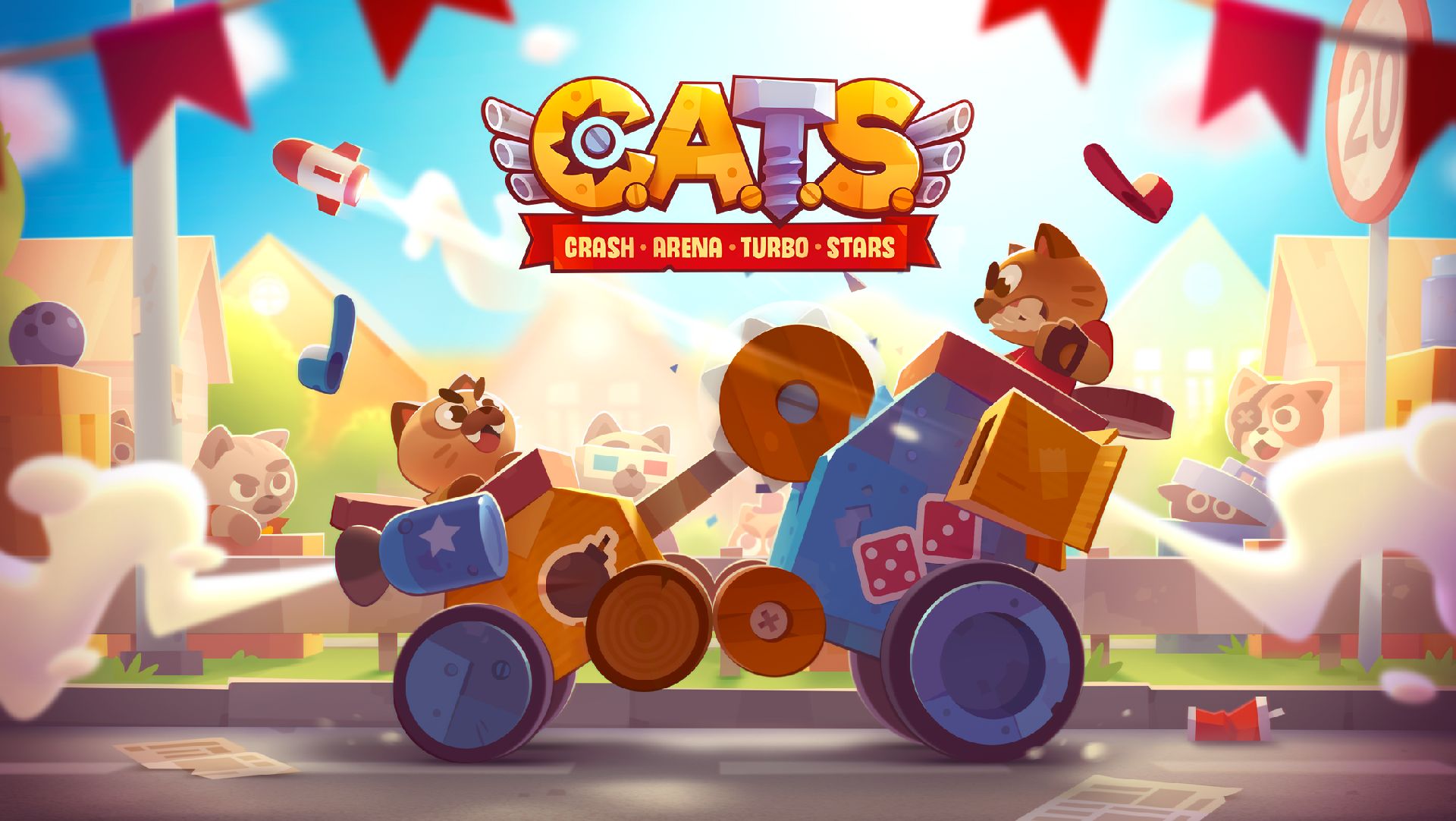
Zeptolab, creator of the wildly successful Cut the Rope games, announced today that it is introducing players to the world of CATS (Crash Arena Turbo Stars). Similar to the puzzle game that launched the company, the gameplay for CATS is deceptively simple—except instead of solving a puzzle to drop candy into an adorable monster’s (Om Nom) mouth, players are tasked with building battle machines driven by cute kitties with attitude.

Although Zeptolab released Pudding Monsters in 2012 and King of Thieves in 2015, the Cut the Rope franchise remains the company’s biggest hit. In CATS, players assemble and upgrade their machines using parts that include wheels, drills, shovels and missile launchers. Once constructed, they pit their machines against creations made by other players. The two vehicles attack each other automatically until only one is left standing. Most battles are done in under ten seconds, making it very easy to participate in a string of championship matches for leaderboard rankings. Players then win additional parts to further improve their machines.

Misha Lyalin, CEO and chairman of Zeptolab, sat down with [a]listdaily to talk about the new game, which is expected to launch for iOS and Android in April. We discuss the new free-to-play mobile releasing amid the ongoing success of Cut the Rope while amazingly avoiding making cat fight jokes.

Misha Lyalin, CEO and chairman, Zeptolab

What is the new game, CATS about?

CATS is a game where you assemble your own fighting machine and battle other people, impersonated as mean street cats. Essentially, the game is about building a machine that will fight other machines. The machines fight automatically, and there are championship rankings for you to progress using different machines and parts.

What lessons did you learn from the Cut the Rope franchise that will help you promote CATS?

Currently, the mobile games market is very mature and it’s very difficult for new players to come in with new games unless they have huge marketing budgets. Cut the Rope established Zeptolab as a gaming brand and we continue—as a company—to show our fans that every time we release something, it’s going to be interesting and exciting. The success of Cut the Rope told us that branding is very important in this business. Therefore, we’ve grown the Zeptolab brand so that you’ll want to play every game we release.

As a result, I think we enjoy a very high viral effect for our games. So, we spend less in terms of marketing to attract the same amount of users that other people (without the brand credit) have to. The importance of branding in games was the biggest lesson for us. We think of every new game as a franchise that will continue forward.

How do you let people know when a new Zeptolab game is releasing?

We’re making sure the industry and the proper news outlets knows about the game. We also have a huge number of people who play our games every month. So, there will be a cross-promotional mechanism, of course. Plus, we will try to get influential gamers to tell their friends. If a game has huge viral potential, then it’s important to get information about new Zeptolab games to the most interested players who will tell other about it.

Will the game include any social features?

You can play against people on Facebook, and we’ll also have things like clans coming. We’ll add more features after the game releases, just as we do with our other games. For example, Cut the Rope is almost six-years-old, and we continue to make new features and levels for it. The same went for King of Thieves, and the same will go for CATS. There will be an update every month with something new and exciting.

Will you be able to brag and show off your machines?

That’s a very big thing. We’re integrating a lot of interesting features right now that will allow you to brag. It’s interesting to show those fights, so naturally, we will make a way to share them with the world. Not just pictures, but I think videos of fights will be very interesting for people to see. We’ve already seen people uploading footage to YouTube with the soft launch.

Are there plans to support larger tournaments?

Yes, eSports is something that we’ve certainly been thinking about. Once we launch the game, we’ll understand the community’s appetite and provide the proper features for bigger competitions. We think the game has a lot of potential for this type of interaction.

Cut the Rope has Om Nom as its mascot. Will CATS have a similar mascot?

Yes, CATS has . . . cats. For example, there’s Uncle Tony. He’s a wise-guy that guides you through the process of fighting other cats. We’re already doing stickers and things with him, so I think he will be the mascot for the game.

Will you be taking advantage of any merchandising opportunities at launch?

We’re waiting for the game to catch on first. Merchandising is something that is in addition to the main gaming business. So, we don’t have any merchandising plans at this point.

What is the monetization model you’ll be using with CATS?

There will be both in-app purchases and advertising. In some cases, you will have a choice to either wait [for parts], pay or watch advertising—just like what we did with King of Thieves.

How do you plan to engage players for the long-term, especially after they’ve reached the top of the leaderboards?

There’s always somebody coming behind to defeat you, so you can’t rest on your victories forever. There will be others who will come and displace you. There isn’t a place where you can say, “I’m number one forever.” You can only be number one for a certain period of time, so you’ll always have to be on your feet, changing up your car with upgrades.

Once you fight other cars, you’ll modify yours to withstand them and fight them better. The more you play, the more you learn. The more you learn, the more things become available to you. There’s endless interest. You can earn different stickers and badges for being the top or longtime player.

Cats_splash

How will updating CATS compare to Cut the Rope?

With CATS, we’re looking to update every month. Cut the Rope is different because it’s a puzzle game that has an end, so you build up content so that people can play it more. Updating CATS won’t just be about new body parts, machines and weapons. There will also be new game modes like tournaments and other things we have up our sleeves. I think any big game with multiplayer needs to be updated constantly. King of Thieves gets updated about every two months.

How would you describe the Zeptolab game brand?

Zeptolab is about fun, quality and innovation. We try to find new and interesting game ideas from a mix of different ideas. Then we grind them through a mechanism—we call it the innovation process—to make sure the players will enjoy it. Then, when we finally release the game, we make sure that the quality is top-notch. Every time you get a game from Zeptolab, you should expect innovation, fun and quality. That’s what we strive for and we think that once we do that, the world becomes a bit better. People smile more.

Is it difficult to live up to the success of Cut the Rope?

It’s always tough in any business, especially in gaming, to follow-up a mega-hit with other hits. We don’t think of the new games we do as the next Cut the Rope. But we do think of them as huge games that will be popular with millions of people. Cut the Rope has touched a billion people and King of Thieves has 50 million downloads. We’ll see where CATS is going to go. But I think that the game will be big enough. Not as big as Cut the Rope, because that game was a revelation—swiping your finger across the screen to cut a rope for candy was a “wow” moment when it came to interacting with hardware. We’re obvious past that point. So, in order to innovate and offer something fresh and exciting, we come up with interesting and new gameplay along with different scenarios for the games.

We think that, regardless of how big this game is going to be, I think it’s going to carry the Zeptolab brand forward as a fun, quality and innovative game.

Epic Games Forges Path As Global Game Developer

Epic Games has evolved into a much different game studio since Chinese tech giant Tencent invested $330 million for 48 percent of the independent studio back in July 2012. The company sold its bestselling Gears of War franchise to Microsoft, withstood the departure of many of its key creatives, and opened up its Unreal Engine 4 to the world for free, with a royalty structure for those selling games.

Last year, Donald Mustard, co-founder of Epic-owned Chair Entertainment, was promoted to chief creative officer of Epic Games. He’s overseeing a slate of games that includes Battle Breakers, Unreal Tournament, Fortnite, Robo Recall, Paragon and SpyJinx. Mustard talks to [a]listdaily about how Epic’s approach toward game development has changed and how that has impacted its brand.

How did your background with console and mobile development help with Epic’s evolution into games as a service?

I’ve been very fortunate that I’ve had the opportunity to develop traditional retail products and I’ve had the opportunity to work on less-traditional digital products. I’ve had lots of experience with mobile as it was really becoming a thing. In 2017, the types of games that people really seem to enjoy are the ones that are good combinations of the learnings of all of those different kinds of games. You look at the successes of Destiny or For Honor, a lot of these games are really learning lessons from all of these different markets, and bringing them into these collective experiences. That’s what you’ll see across our entire product lineup—whether that’s SpyJinx, Battle Breakers or Paragon. You start to see the blending of these different engagement systems, whether it’s at the highest end of console and PC or the bleeding edge of mobile, and everything in between.

A lot more people watch people play games instead of playing themselves. How is that influencing what you guys are doing?

It’s having a huge influence on what we’re doing. Just look at the rise of eSports or streaming. One of the next trends we’re going to see is games that play themselves, and that that will be a big thing. There will be a strong desire for people to just flip a button and allow the game to play itself, and then they just engage more on the meta-mechanics of it.

So, that’s something that’s influencing us a lot, too. This is something that’s huge in the more Eastern markets right now, and coming soon to the West. Fortnite is a game that we’ve been working on for awhile, and we’ll have lots of cool stuff to announce later this year. But we’re exploring how we can innovate in the streaming space, and how we can make it not just fun to watch someone streaming a game, but to actually make that meaningful in the gameplay itself.

Does Gears of War still influence Epic’s approach when developing games that might be picked up as an eSport?

It doesn’t seem like it’s wise to set out and be like, “we’re making an eSport.” It’s more like, “Let’s build games that we think are really fun; stuff that we’re very passionate about; stuff that we want to play.” If the community builds around that, that’s exactly what we want. If that community desires a more competitive aspect to it, we will work with them to provide that. That’s the only way we can do that, and that’s what we want at the end of the day. Our main goal is to delight our players every step of the way.

We want to be actively building our games with our communities, which is why we’ve moved away from putting a game in a box and moving on to the next thing. We get our software to the point that we think is viable, fun and engaging, and then we get it in front of our community and to refine and iterate the game with them. At the end of the day, it’s their game, and we’re just developing it.

For a long time, Epic Games was synonymous with Gears of War, Unreal Tournament and Infinity Blade. Outside of Gears, where does that leave Epic’s original properties, such as Shadow Complex?

Infinity Blade has been such a hugely successful title for us. It still regularly appears in the top charts and is still going strong and doing great. We have lots of ideas of stuff that we could continue to do with Infinity Blade, but nothing to speak of at this time. Last year, we released Shadow Complex Remastered on every viable platform. Again, we have many ideas where we could extend that franchise as well.

How do you approach making games for a global audience, especially post-Tencent investment?

It’s been incredible, being able to access the resources and the data of Tencent alone, let alone having a worldwide studio. But we are definitely trying to consider a global audience in our approach to games. We want to make games that are accessible to all the gamers that want to play them. It’s wonderful to be able to consider, and to be able to have access to, feedback from different cultural viewpoints.

It’s awesome to be able to have our team in Korea look at the games we’re making and give us feedback on what we’re doing. Our teams in Japan give us feedback, and so do our partners at Tencent. Tencent allows us to analyze data and really talk through—with great specificity—the things that we could be doing in our games to make them engage well with players in China. We have our teams in Germany and in England to really help give us that perspective, but also to establish communities in those countries that we can respond to. So it’s very much part of our thinking.

Are there things you can learn from eSports’ massive global community?

Beyond the language barrier—beyond any cultural barriers—there is this love of digital interactive entertainment. ESports, particularly, has really shined a light on how much we all share this love of specific games. It’s crazy how much our world has shrunk in our lifetimes and how rapidly it’s shrinking even more every day.

In several of the games I play, I’m in clans or groups where I have made real relationships and friendships with people in many different countries. Sometimes they don’t even speak the same language, but we speak the language of the game we’re playing, and we work together, and we play regularly.

Inside Pandora’s Personalized, One-To-One Music Marketing Strategy

The acceleration of technology and mobile has brought the sexy back in audio, and Pandora is in the process of proliferating their platform—and betting its future on an on-demand paid subscription model.

Pandora launched their premium personalized radio service earlier this month, and the $9.99 option stands out with customized playlists for its universe of music. Launched March 15, it’s still gradually being rolled out to the public.

Pandora_Stats4

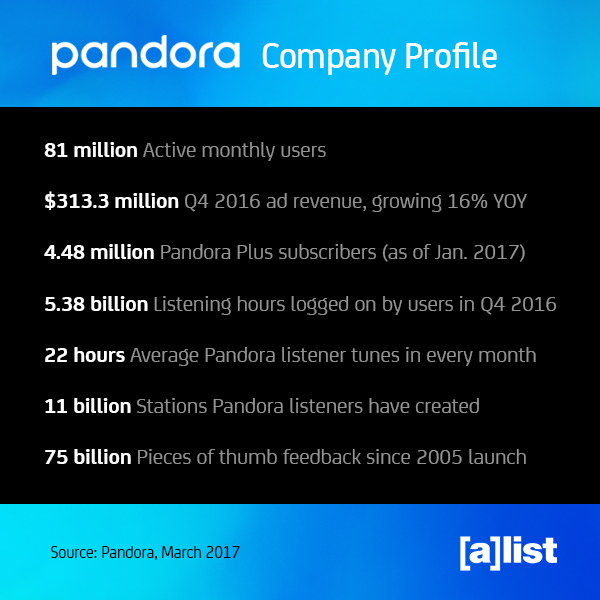
The popular online-radio provider’s shift to a paid model positions the company to compete with the likes of Spotify and Apple Music, two rivals who’ve already solidified their seat in the mobile music space and long dominated the paid market. Pandora is trying to separate itself from the triumvirate by banking on its already-existing 81 million user base and 10 years of brand equity by serving customized playlists to each individual user. In contrast, Spotify and Apple Music serve songs on a “learn as you go” basis.

Pandora is poking for profits on the avenues of audio—arguably the most native of all digital ads in the vastly growing earbud era.

In February, they partnered with ad personalization firm A Million Ads to become the first publisher to bring capabilities popular in display and video ads to the audio marketplace. In January, they rolled out muted video and responsive display ads—native mobile ad formats aimed at delivering lift in time spent, brand awareness and quality clicks. The updates are bound to be beneficial to data-driven marketers who are moving toward nimbler practices with their budgets.

According to their Q4 report released last month, Pandora made progress in 2016 with $1.385 billion in total revenue, a 19 percent year-over-year increase, by driving leverage to their core business while accelerating subscriptions for their paid product. But with Spotify and Apple Music still in pole position with subscription models, Pandora’s paid platform journey has only started for its quest of 32 million subscribers by 2018.

Susan Panico, Pandora’s vice president of sales marketing, oversees brand strategy, positioning, messaging and marketing plans on the B2B side. Panico, who previously worked 18 years for PlayStation in a variety of roles, joined [a]listdaily to talk about how their music discovery platform is a place where artists find their fans and listeners find the music they love—and how brands organically get in on the action, too.

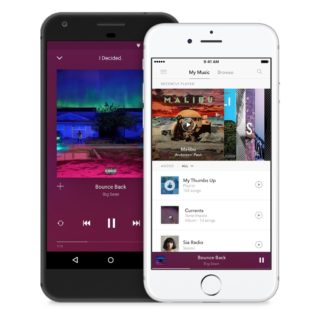
Pandora Premium
Pandora Premium

What is your brand strategy in marketing music discovery? How has it changed?

Looking over the last few years, we started primarily from word-of-mouth. In our early days, we did very little marketing. We amassed a huge audience and all of that was because of the personalized music experience that we delivered. Then we got to a certain point where we realized that we wanted to make a stronger connection off the platform with our audience, and we drove a lot of our marketing around the music discovery element of Pandora. We’re right on the cusp of launching arguably the biggest product in our history with the premium subscription service in Pandora Premium, and you’ll continue to see the messaging around personalization.

Your daily focus is mostly on marketing solutions for Pandora’s book of clients. How are they looking to connect with consumers?

Our clients range from globally recognized brands like FedEx and McDonald’s all the way down to the local mom and pop shops that we service in different markets around the country. A lot of brands are looking for ways to connect with consumers in a one-to-one and personalized way. Music is the most universal language of which you can do that. Music transcends culture and age. More brands are recognizing the emotive power of music, and the experiences that are particularly driven by music create such memories with their audience. The brands that engage with us on-site and partner for activations, the consumer recall is amazing because it’s organically woven into music experiences that people walk away with, and even amplify on social their own social channels. . . . Millennials are so tethered to their mobile devices, yet, untethered to about everything else. Experiences are such a great way to earn their hearts, minds, respect and trust. For your marketing strategy, one-too-many doesn’t work well anymore. You need to figure out how to make it one-to-one. Delivering personal experiences, whether it be digital or in real life, is important.

25e0d90
Susan Panico, Pandora’s vice president of sales marketing

How are brand partners looking to work with Pandora?

I think it varies. Some brands have music and experiential as key pillars within their corporate strategy, and even within their organization structure, and they leverage a massive music strategy as part of their brand marketing efforts. And then you have other brands, say, a financial service one, that is trying to figure out how to leverage music to reach customers while also helping to make their brands a little bit sexier.

Whether it be sponsored listening or an ad-free subscription model, Pandora has been constantly tinkering its product. What is your strategy in having ownership from rival on-demand services like Spotify and Apple Music?

Part of our vision is to unify an entire music marketplace under one roof. If you have an ad-supported, free-tier complemented with a premium on-demand service, it’s really providing choice for the way people want to listen to music. We feel that we have a huge strategic advantage in the science that our music service is built on with the Music Genome Project. Our data informs on consumer marketing, and informs on how we help marketers reach their desired audience. All of that fuels the unique experience Pandora delivers to its listeners.

How does Pandora leverage its wealth of data?

We sit on this giant treasure trove of data. When you think about the people who are using Pandora, they’re firing off over a billion signals per day that allow us to capture different information, like the kind of devices they’re using, or the time of day they’re listening music. We create insights that are really valuable to marketers. What that means from an experiential standpoint, and what makes us a unique partner—if you’re a brand who wants to figure out how to leverage a music strategy, we can use our data and talk to you about where your audience is, which artists are trending in certain markets, and help you get aligned to it at a magical intersection.

Woman Listening to Pandora Radio Mobile app

Why is your continued sponsorship of SXSW such a significant part of your yearly experiential marketing strategy?

At the heart of Pandora, we’re about personalized music, and music discovery. SXSW is a great event to connect people with new artists and new music. With our corporate mission, there is no better and natural place for us to go as a brand. We love being in Austin, the epicenter for live music. It’s something that’s made a lot of sense for us strategically. This year we showed up at The Gatsby as one Pandora over the course of Interactive, Music and Film and opened up our space for all badge holders and fans to align with the overall convergence of SXSW.

What are the results that SXSW has yielded? 

With the thousands of people that come through our space, they really look at Pandora being that connective tissue that helps bring them new and emerging artists and expose them to music that they didn’t know—and it turns out being music that they love. That’s what our personalized music discovery service is all about. There’s a balance there of not only having the live music throughout, but it’s also partnering with advertising partners to bring in experiences and activations with sponsors including Advance Auto Parts, Ashley HomeStore, Ltd, McDonald’s, MGM National Harbor, Simple Mobile and The Clorox Company into our space to ensure there are engaging experiences that people want to share on social. What’s most interesting is that we have a soundboard panel of about 50,000 listeners. What we saw particularly around millennials is that ‘experiences trump material possessions.’ You have an entire generation that would rather create memories than buy actual goods. The way we show up is exactly that—we give people wonderful music memories.

How do you see Pandora’s platform changing the way music is consumed moving forward? How will you remain nimble and carry brand momentum during this transformative time?

Right now we’re focused on this next huge step in our path toward innovation. I actually love to think about our founder and CEO Tim Westergren’s vision, who was a musician himself. He’s always talked about how amazing it would be to create this ‘musician’s middle class.’ So that when people are growing up, they can say ‘I want to be a musician’ and people can reply back, ‘that’s a great career for you’ and it’s because we’ve built this platform where artists can thrive, and we connect them with listeners who find and love their music. It brings the trifecta between the artists, fans and brands all under one simple, easy-to-use destination. And I think that’s the path that we’re on. . . . How that relates back to a marketer is twofold. One, music isn’t media. Music is the most emotive, personal environment in which you could insert your brand and make a one-to-one connection with someone through that passion point. Every marketer should really be looking at music as a platform in which to get their brand message across. The other part is because of the proliferation of mobile devices and acceleration of technology, music as is a must-have strategy. The audio ad is a must-have medium. Digital music streaming has brought the sexy back to audio.

Follow Manouk Akopyan on Twitter @Manouk_Akopyan
How Legacy Makeup Brands Are Reaching Millennials And Gen Z

Reaching younger consumers as they are initiated into the world of beauty has always been a key focus for legacy beauty brands. After all, they’ve been successfully resonating with consumers across generations for years. Millennials—and now Gen Z—are posing a challenge, however.

Reaching a hyper-social, glued-to-their-phone and fickle demographic has required near-Herculean pivots with products that cater specifically to of-the-moment trends, diversifying the pool of spokespeople brands partner with, working closely with influencers and creating unique branded digital experiences.

Our population is becoming increasingly diverse,” said Laura Brinker, VP, influencer marketing at Coty in a statement to Fortune. Coty has a particularly long history—the company was originally founded in 1904 and now owns a massive portfolio of 77 beauty brands like CoverGirl and Rimmel. “These trends are certainly something millennials have appreciated as they’ve grown up, but they’ll be even more important for Gen Z.”

For CoverGirl, this meant making waves in 2016 by bringing on James Charlesa makeup artist who built his audience entirely on social media—on board as a spokesperson. This signaled to consumers that the brand is recognizing the shifting attitudes of young people regarding gender fluidity and making a statement beauty products are not just for women. Drugstore brand competitor Maybelline then quickly followed suit, announcing a similar partnership with influencer Manny Gutierrez.

Brands are also recognizing that in the days of YouTube makeup tutorials, influencer-created makeup products and the ubiquitous “Instagram Brow,” social media is providing a wellspring of trends and inspiration for the beauty world.

“We know makeup is fun—there are thousands of tutorials about how to create the right look,” said Olay brand director Stephanie Robertson to AList. With YouTube views on beauty-related up 65 percent year-over-year, the impact of influencers is not to be underestimated.

For a beauty brand that has been around since 1963, Mary Kay has long understood the power of influencer marketing with their direct sales approach, and in reaching younger consumers, the brand has continued to leverage this.

“Our Mary Kay Independent Beauty Consultants continue to evolve with their customers with each new generation,” said Kim Sater, director of US consumer marketing for Mary Kay.

“While we do use influencers to help tell our story, we have found that many of our Beauty Consultants have large followings and are influencers in their own right. They post how-to videos and makeup looks, as well as share about our skin care products,” said Sater.

“Now, a Beauty Consultant might text or send a quick message via Snapchat to let her customers know of a promotion or a new product. Our message and product is really resonating with millennials, especially, and a big percentage of our new consultants are aged 18-24.”

“The new celebrities are the social influencers, and quite honestly some make more money than the people who get Emmy Awards,” said John Demsey, executive group president at Estée Lauder Cos. Inc to LA Times. “If you can deliver an audience and prove that someone can buy your product, you can get paid. As long as that works it will continue to blossom.”

Mobile is also a critical channel for brands to be paying attention to—55 percent of beauty buyers reach for their phones first when it comes to researching new products according to Facebook. Both Olay and Mary Kay have also focused on crafting digital experiences to meet the needs of their customers, paying particular attention to mobile.

For Olay, this materialized with the Olay Skin Advisor tool, which allows customers to create a personalized skincare regimen. The site, which has been built specifically for mobile, has been successful according to Robertson. “To date, we’ve had over one million visits and half the bounce rate of a typical beauty.com site.”

While the next generation of Mary Kay’s “Beauty Consultants” may focus less on the face-to-face interaction you usually associate with direct sales, the brand has acted to create the closest thing to it via their digital presence with an app for consultants to manage their customer bases and create personal websites.

“Our MyCustomers + app allows them to create orders, easily contact customers, track inventory and more, so they really have all the tools they need right in the palm of their hand.  They can have a personal website, which the company updates for them, so all of their customers can shop 24/7, and they have multiple shipping options which make it easy to service their customers,” said Sater.

Brands are also paying close attention to makeup trends and foresee opportunities to cater to shifting tastes and rapidly-evolving needs via products that fit into the lives of young consumers. Olay’s Robertson noted that the brand has seen a rise in convenience-based skincare, which has led them to reignite their focus on products that deliver performance products in the most convenient way. It’s clear that social media has played a role in accelerating trends and the impact has extended to product development.

“We used to deal in trends that lasted five to 10 years,” said Karen Grant, beauty industry analyst at The NPD Group. “Now, we think it’s a long trend if it lasts 24 months.”

‘Power Rangers’ Movie Gets Some Mighty Morphin’ Marketing

It’s marketing morphin’ time! Saban’s Power Rangers are back in an all-new film—complete with updated cast, story, costume designs and of course, plenty of nostalgia to go around.

Saban’s martial-arts-fighting, power-of-friendship adventures have fascinated audiences of all ages since 1993 with a hit TV show, multiple spin-offs and theatrical films—the last of which just earned a whopping $40.5 million in North American box offices. Lionsgate Entertainment teamed up with IGN to share the star-studded red carpet premiere with fans across Facebook Live in real time. Power Rangers Facebook stickers are available to keep the conversation going.

The official movie app allows fans to bring coloring book images to life and record themselves as “The Might Zordon,” a character from the movie played by Brian Cranston.

Twitch hosted a 17-hour livestream marathon of the original, Mighty Morphin Power Rangers TV show beginning on March 14—generating over two million video plays, an additional 875,000 unique viewers and 25 million minutes watched . . . all on its first day.

“We knew going into this marathon that Saban’s Power Rangers was a show deeply rooted in the formative years of many of our community,” said Annie Berrones, product marketing director at Twitch in a statement. “Their passion for the show is evident not just in terms of the turnout, but in how they have been celebrating this event with all new memes in chat.”

Heroes from across the franchise’s universe go head-to-head in a new mobile game called, Power Rangers: Legacy Wars. To promote both the game and movie, Ludi Lin, who plays the Black Ranger in the Power Rangers movie and Jason David Frank (the Green and White Ranger from the original Mighty Morphin Power Rangers) took each other on at the Unity Keynote event from GDC 2017 in San Francisco, California. As an added promotion, attendees were treated to a free ticket to see the movie.

For St. Patrick’s Day, the renowned villain, Rita Repulsa took over the official Power Rangers Twitter account to sling insults at the heroes. Lionsgate partnered with Pantone to let fans discover which color ranger they would be, based on answering a few questions online.

Whether viewers are young or old, new to the franchise or a hardcore fan, Lionsgate made sure to include a bit of colorful hype for everyone.