Twitch Co-Founder Discusses Evolution Of Streaming Platform

These days, there’s not much Twitch doesn’t do. The gaming livestreaming service that was a spinoff of Justin.tv back in June 2011 now hosts its own annual TwitchCon event, allows partnered streamers to earn money by selling PC games and in-game content, and even helps parent company Amazon decide which Hollywood pilots will get the greenlight for Amazon Prime.

That’s a far cry from the early days of 2007, when Justin.tv launched and managed to survive the recession that ended the decade. That’s when video games emerged as a new opportunity for the company in 2010. “Justin (Kan) and I had been researching gaming stuff for a year and we had talked to Blizzard and MLG, but it was too soon,” Kevin Lin, co-founder and COO of Twitch, told AListDaily.

That changed when Blizzard released beta keys of StarCraft II and people started watching YouTube videos by gamers like Sean “Day9” Plott. “We thought, ‘Why don’t people use us?’” said Lin. “So, we started talking to creators and applied their feedback to add commercial breaks, subscriptions, live transcodes and all the things needed to build a platform for gaming.”

It’s that creator-first philosophy that led to the start of the Twitch brand in 2011. Lin said the company didn’t build anything that the creators didn’t say they wanted, and that helped the social video platform to flourish, beating its six-month projections in the first two months. But coming up with the name of the channel was a bit more complicated.

“We spent months wracking our brains trying to find a five- to six-letter word with one syllable,” Lin explained. “We built a crawler to find domains that were available. Twitch muscles came up as a gaming skill that was needed, but that wasn’t in the crawler. After trying to come up with names around ‘game,’ ‘live,’ ‘broadcast’ and ‘stream,’ Twitch stuck out for us and we created a logo around it and everyone just called it Twitch internally. It took three or four months to get that name.”

According to Lin, the core of the Twitch brand as it was built over the last six years is “gamer lifestyle.”

“Twitch is the celebration of our love for games,” he said. “But games only define one piece of who we are. Over time, a lot of streamers were also artists and musicians and IRL became a thing because creators wanted to be able to talk about life philosophies and shoot the breeze. As you see people get together at TwitchCon and people meeting together for the first time or viewers and broadcaster relationships, Twitch is about sharing commonalities. It’s also seen through our team and staff, which have a strong relationship with partners, broadcasters and viewers.”

Since Amazon acquired Twitch in August 2015 for $970 million, the parent company has allowed Twitch to move more boldly into big ideas like commerce. “We wanted to do this for a long time, and game companies had been asking us to do this for a long time, but we had to make sure we had everything ready,” said Lin. “It’s an excellent new revenue stream for streamers.”

Twitch is also working with Amazon Game Studios to help develop new PC games that are being designed for streaming. “It allows us to think about how to build a game that’s not only a Twitch play style of game, but has a great ecosystem on Twitch and allows for promotion and allows different paradigms to grow,” Lin said.
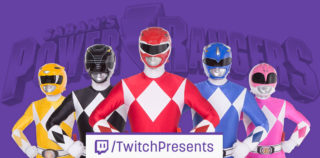
Twitch-presents-power-rangersSince Twitch gamers also listen to music, watch TV shows and read comics, Amazon also opened up a lot of different ways to bring things to the Twitch audience that they’re interested in. “With the Power Rangers marathon, we wanted to know if this content that a lot of our audience has grown up with since 1993 and is fun, campy and has a good message would resonate today,” Lin said. “And sure enough it did. Can a more mainstream-style show work? We’ll continue experimenting with that stuff.”

Experimentation is part of Twitch’s DNA. The company has livestreamed everything from poker to Julia Childs to Bob Ross in recent years. Twitch also launched its own music library, and along the way, it has helped entertainment companies like Netflix promote Stranger Things and HBO market Game of Thrones directly to its active community.

However, Twitch isn’t the only game in town, nor is it the largest community, with giants like YouTube and Facebook also focusing on games.

“The thing that differentiates us is we are our community internally as staff,” Lin said. “We engage with and many of us are creators. We lean on creators to get feedback and ideas on tools they need for promotion and to generate revenue and to connect better with fans and with each other as creators. That helps us build the right projects. We try to build for the broad creator base as much as possible. We have these communities—a word a lot of people use, but we take it very seriously.”

While other companies will build discovery based on a game or event, Lin said Twitch builds discovery around communities that are self-organized and self-identified. “We’re also building a platform to connect a global community and not siloing off regions,” Lin said. “While we’re extending to new categories, but gaming is always core for us. We’re not a broad generalist platform—we started with a smaller group of gamers, grew them to a large group, and then expanded from there.”

Lin said Twitch has opened up different paradigms of developers to integrate as they build new games, including interactive components where the audience can impact the game as well as new ways to engage with the audience socially to connect broadcasting or content creation with rewards for people watching the game.

“We’re seeing a lot of experimentation in mobile development today and we’ll see that in PC as well,” Lin said. “Twitch audience engagement opens up a whole different type of transactional ecosystem. Now, game companies are working on different types of economies that encourage the audience to interact and transact. A new paradigm will happen.”

Amazon is offering new ways for game makers to tap into these evolving trends through its free Lumberyard game engine technology. Breakaway, the four vs. four MOBA, is the first amazon game built for spectating.

“We talk to a lot of game developers about how to build a great game that’s also a great game for Twitch creators and our audience,” Lin said. “We’re doing a lot of testing and experimenting to find out how to build new economics that both players and streamers can participate in this new world of audience interaction and spectating games using Twitch as this great megaphone.”

Social Experiments And Retro Revival: This Week In Game Promotion

This week, a classic adventure returns and a beloved franchise gets immortalized by its fans.

Full Throttle Remastered

Tim Schafer’s Double Fine Productions continues its revitalization of LucasArts classic games through Full Throttle Remastered. Twenty-two years after its original release, the game features all new hand-drawn and 3D high-resolution artwork with 4K support and remastered audio and music. As with previous remastered games from the studio, players can switch back and forth between classic and remastered modes, view concept art and listen to a commentary track with the game’s original creators.

A special behind-the-scenes look was given to IGN in December to illustrate (literally) how this classic adventure came to life. Tim Schafer later joined IGN and PC Gamer to To show off the first 30 minutes of gameplay to old school fans and newcomers alike.

Dragon Quest Heroes II

Released in Japan last year, Square Enix’ hack-n-slash RPG has finally been released for PlayStation 4, Steam and Nintendo Switch worldwide. To gear up for the momentous occasion, the publisher’s social media team kept fans engaged through social media in new and creative ways.

Reddit conducted an experiment called “Place,” in which users were allowed to place one pixel of color onto a canvas every five minutes. Users had just 72 hours to create images or messages individually or as a group and the undertaking resulted in a social experiment of conflict resolution, treaties, debates and more. Among the images were memorials, flags, logos and characters from pop culture. Square Enix worked with fans to get its Dragon Quest slime mascot into the piece and was successful—a testament to the dedication of its followers.

For World Poetry Day on March 21, the Twitter account invited its followers to submit Dragon Quest-themed poetry, and they did not disappoint.

https://twitter.com/squidbuns_/status/844260092874670081

Of course, video game promotion wouldn’t be the same without trailers and livestreams, of which Square Enix provided many to highlight characters and gameplay.

How MLBAM Revived The Iconic ‘RBI Baseball’ Brand

MLB Advanced Media (MLBAM) continues to innovate with new video games, apps and digital services to connect baseball with tech-savvy fans. In 2014, the technology division of MLB decided to revive Namco’s classic RBI Baseball franchise, which originally launched in Japan on NES in 1986. Since then, the franchise has grown in size and scope, while retaining a $20 price point for consoles and $5 price for tablets and smartphones.

MLBAM shipped the new game with season, postseason, exhibition and local multiplayer modes, including season-saving and simulation capabilities. A free update will add online multiplayer to the mix.

RBI Baseball 17 features all 30 MLB teams, 30 detailed ballparks and over 1,000 MLB players with detailed attributes. Players can modify lineups with complete MLB rosters, or play classic RBI Baseball rosters, while staying current with downloadable roster updates throughout the season. There’s also the ability to track season stats by team, player and league leaders across multiple seasons.

Peter Banks, MLBAM’s director of marketing for gaming and virtual reality, joined AListDaily to explain how the league revived one of its most popular video games.

What are the challenges of bringing out a new RBI Baseball game every year?

Annualized games present great challenges and opportunities. On the one hand, we need to really look into what’s most central to the identity of our game, and what areas present might benefit from change. While bolt on “bullet features” are tempting, it’s much more challenging, and ultimately more rewarding to the user, to evolve and advance the core tenets of the game while preserving the feel that brings fans back. On the other hand, there’s a really wonderful opportunity to develop a closer connection and relationship with your core fan base, to really understand what is loved (or not) and provides an opportunity to have a really unique dialogue both overtly and through gameplay. With RBI Baseball 2017, we’re very proud to have brought development wholly in-house to our New York studios at MLBAM. Ramping the team up and getting all our skus in line for retail, digital consoles and mobile presented challenges no other league has ever had to deal with internally, and we think really positions us to further deepen the dialogue with our fans as we bring more content, more authenticity and more fun to RBI every year.

How do you expand this game’s offerings through online updates throughout the year?

One of our big focus areas is roster updates. As you’re aware, there will be trades, injuries and guys brought up from and sent down to the minor leagues throughout the season; this can really change the way a team plays. This almost forms a metagame for core baseball fans as the teams they love evolve and grow. We have an entire team here dedicated to roster updates. These developers are huge fans of the game, and keep track of all the player changes across the 30 clubs. We reflect this with monthly patches that update player teams, stats and performances, so our fans can have access to the most authentic MLB experience possible. At this point RBI has stayed away from a lot of the paid content packs and releases. As a $20 title, it’s important that RBI be accessible to all fans of the sport, and we’re sticking with that model for the time being.

How have you worked with cover athlete and Dodgers star Corey Seager to promote this year’s game in the US, and with Kevin Pillar of the Blue Jays to promote it in Canada?

Our athlete partnerships in general are one of the most enjoyable aspects of rolling out the game. While Seager and Pillar were obviously a big part of our marketing, we also have partnerships with Kyle Schwarber, Francisco Lindor, Dansby Swanson and many others. Baseball fandom is both national and regional, so we try to find players that have appeal for both individual markets and more nationwide reach. Our licensed players really give us a great individual effort to shape marketing around, while supporting the league-wide efforts to promote MLB’s amazing, and growing, roster of young stars and speaking directly to regional fandoms and more. With Seager and Pillar, we’ve worked closely with the guys and their clubs to pull off a range of fun promotion points, and will continue to do so throughout the regular season. One activation that was really entertaining was Corey revealing this year’s cover at the LA Dodgers Fanfest. We were at Dodger Stadium with thousands of their most dedicated fans and were able to collaborate with the team to get this really personal, impactful message. The game was on the jumbotron, making for a really fun day. We did something similar with Pillar as part of a broadcast package with MLB Network.

What type of retailer cross-promotions do you have going on?

We try to promote our retail partners in all our key retail touch points, so we include tags in our online presence trailers. We have to balance being both a strong digital title as well as a solid retail performer, so we’re allocating resources to both of these channels throughout the product life cycle. One specific promo we just wrapped up that was pretty cool was a custom Xbox giveaway with EB Games in Canada. We’re also partnering with the Red Box around our roster updates, to help keep the games active in their ecosystem.

How does MLB Gaming tap into the social media channels of MLB to cross-promote this franchise?

We work closely with the MLBAM social teams to deliver relevant and timely content through the official MLB social channels. Facebook and Twitter have the largest viewership base, but we’re definitely exploring more emergent platforms. These have great reach and really target our core fans. In addition, we work with the individual clubs to create content that targets fans with club specific social messaging.

What type of engagement did the Twitter Xbox One RBI Baseball 17 contest generate?

Huge! This was a pretty heroic effort to pull off. We were able to work with nearly every major club to deliver a unified, timely and well-amplified message that tied in directly with the launch of the game and the start of the regular season. We were also very happy with the prizing. We collaborated with Microsoft to produced 30 super nice, exclusive-enameled Xbox S consoles customized by Colorware. This is more than just a decal; the actual box is taken apart and transformed into a one-of-a-kind collectable featuring branding from the game, the club and the league.

How does MLB Gaming work with MLB TV and MLB.com to connect the RBI Baseball brand with baseball fans?

We have a handful of product groups and owners across MLBAM and we work closely across all of these verticals to deliver meaningful content to our fans on the appropriate platform. While these are individual business units with their own priorities, all of these products are designed and defined by our charter to give fans great access to the game in whatever way they want and that helps us find common ground to leverage these platforms for our key messages.

How does MLB Gaming work with individual teams and stadiums to market this game?

Gaming is a part of the DNA of baseball fans, so when it comes to working with clubs it has been pretty easy. The clubs understand the connection that both their club and video games have with their fans. Working with them and providing activations for both games and VR creates a win-win with our products and the individual club fan bases.

Baseball has a long season. What role do key days like Opening Day, the All-Star Game and the postseason play as marketing opportunities?

RBI has a very long tail, largely thanks to the structure of the season. We try to maintain a steady drumbeat of robust content and marketing pipeline throughout the season. This includes things like live events and activations around high points, digital content that speaks specifically to the various stages of the regular and post season and content updates that advance RBI’s gameplay.  The MLB All-Star FanFest also continues to be a powerful in-person platform for us to engage with fans, including this year where we’ll have a special never-before-seen enhanced VR experience. More to come there soon.

The classic RBI Baseball is still mentioned by MLB players as a favorite. How have you revived that brand awareness over the past few years?

This was a big part of our thinking behind reviving the franchise in 2014. RBI Baseball is synonymous with fun, accessible baseball. We’ve taken that core DNA and evolved it with more authenticity with clubs, players and parks and continue to polish the experience to deliver something unique and rewarding for our users.

What do you feel differentiates the RBI Baseball brand from competition like Sony’s MLB The Show?

They’re very different titles, serving different audiences. The focus of RBI is more the ability to jump right in and get playing. Our game is all about accessibility. The Show is a much more involved and elaborate product. We think they both serve a passionate and engaged audience.

Sony is both a partner with PlayStation 4 and a license holder with MLB The Show. How do you work with them in the baseball game space?

We really love what they do with The Show and support them in their successes. Our core licensing and product strategy is to make sure our fans have access to the types of experiences they are looking for and having multiple products helps us deliver on that goal.

‘Battlefront II’ Expands The Star Wars Universe

Electronic Arts is investing heavily in its Star Wars license with Lucasfilm and Disney. The gamemaker used Star Wars Celebration over the weekend in Orlando to officially reveal the first details of Star Wars Battlefront II. The Nov. 17, 2017 release is being created by three developers: Motive, which is focusing on the single-player storyline; DICE, which is creating the massive multiplayer battles; and Criterion, which is focusing on the space battles after delivering the PlayStation VR-exclusive Rogue One VR Mission add-on for the original title.

Bernd Diemer, creative director on the game at DICE, is new to the franchise. He told AListDaily that playing the first game as a fan brought back his favorite memories from being a Star Wars fan as a kid in Germany. “The first game allowed me to step into a picture-perfect recreation of Hoth, which still gives me goosebumps just talking about it,” Diemer said. “How do you top that?”

That’s the challenge EA faces, after selling over 14 million copies of the original game since 2015.

“We decided to make it really big,” Diemer said. “This might be the biggest and most ambitious game I’ve ever worked on.”

Battlefront II will introduce a new female commander, Iden Versio (played by actress Janina Avankar), although this time, the story will focus on the Empire.

“There are a lot of stories about the heroes of the Rebellion in the Galactic Civil War, but we wanted to focus on the Empire,” said Mark Thompson, game director at Motive Studios. “It’s a narrative we haven’t explored a lot in Star Wars. And the idea of introducing these special forces soldiers gave us a new perspective to tell a story.”

Iden leads Inferno Squad, and Thompson said these are the soldiers who can lead the rank and file stormtroopers to take out the “rebel scum.” They’re the reason these kids join the Imperial Academy and become pilots and soldiers.

It also flips the perspective of the storytelling, establishing the Empire as wanting to maintain order and peace, while the rebels are terrorists trying to disrupt the status quo.

“Iden will go down as a heroic Star Wars character as this game explores how she was raised and who she becomes,” said Steve Blank, creative executive at Lucasfilm. “It’s a different twist, but she’s that type of hero for the people of the Empire to look up to.”

The single-player story will also help fill in the official Star Wars canon following the celebration of the destruction of the Death Star 2 at the end of Return of the Jedi. Iden is on Endor fighting, and she vows to avenge the death of her emperor.

EA worked with Lucasfilm to create a new planet, Vardos, which is Iden’s home. This Imperial utopia is where citizens grow up in a peaceful environment and look to the Empire as the “good guys.”

Key Promo image of Star Wars Battlefront II

Speaking of the good guys, the single-player campaign will offer missions where players take control of popular heroes from the Rebellion, including Luke Skywalker. This game will help fill in that gap of 30 years that took place between the end of Return of the Jedi and the beginning of The Force Awakens.

This being a Battlefront game, multi-player remains a key focus. The game will span all three eras of the film universe, including The Clone Wars, and even offer DLC that ties into the upcoming Christmas release, The Last Jedi.

Diemer said multi-player also introduces different classes, which offers more choice for individual play styles. When playing as a trooper through the eras the character will change its look from planet to planet, but it will share a progression as the player unlocks abilities and finds new gadgets.

“As a trooper who is really good and has unlocked a certain set of abilities, maybe you can stand up against Darth Maul,” Diemer said. “Teamwork becomes more important when you play as a trooper, as well.”

Heroes have received an upgrade. Rather than popping in as a power-up for a seemingly invincible bout of gameplay like in the original, they now have a career. The game includes a resource-based system that allows the player to change into a hero or vehicle. In addition to Darth Maul, other heroes featured in the debut trailer include Yoda, Rey and Luke Skywalker.

“Here we wanted to give heroes more depth,” Diemer added. “They’re more physical, so they have more presence in the game. We gave them a career, so they can become better heroes and unlock new abilities. And they’re available to more players, so there are more heroes on the battlefield.”

The game introduces plenty of new vehicles from all the films, including Taun Tauns that you can ride on Hoth. And the ship-based combat is leaving the planet’s surface this time around.

“We heard from fans they wanted to go to space, so that’s where Criterion entered the picture,” Diemer said. “Criterion has nailed the sense of speed and making you feel like an awesome pilot. We also treat the ships the same as troopers and heroes. You can unlock new abilities and modifications and customize your TIE fighter for your play style. We have hero ships like Slave 1 and the Millennium Falcon and they have the same depth and personalities as the heroes. And there are a lot more vehicles from all eras in this game.”

Disney and Lucasfilm are celebrating the fortieth anniversary of the original Star Wars film this year. And now fans have a new hope in a Battlefront game that, at this early stage, has the potential to live up to the very high bar fans have set for this franchise.

Why Brands Are Flocking To Music Festivals This Season

It’s festival season, but music fans aren’t the only ones flocking to the party. As millions don their sunscreen and head over to the beer tent, brands are connecting with audiences in ways that go beyond their name printed on a banner. Sponsors spend $1.4 billion on the music industry in the United States each year alone, and that number is increasing year-over-year.

“I see brands becoming a lot more intertwined with live music,” Ari Berger, director of event management company P2-EG said in a 2017 music trends report by Eventbrite. “It’s mutually beneficial—it’s become more of a symbiotic relationship than it was before. Before, brands only wanted to align with talent that gave them a platform they couldn’t be on before, and vice versa. But now it’s almost like they need each other.”

Coachella ticket sales are up 125 percent over last year, according to StubHub, and the festival is expected to exceed all previous attendance records in 2017. American Express—a major sponsor for the event—is appealing to affluent millennials with special events for platinum card holders. The American Express Platinum House in nearby Palm Springs offered attendees SoulCycle classes, premium food and drinks and a private concert by Bebe Rexha. For everyone else attending Coachella, the American Express Experience tent allows music fans to create their own “mini music video,” as well as unlock special rewards through the official Coachella app.

Netflix, another sponsor for Coachella, is providing free Wi-Fi at the event and promoting its new series Girlboss. Considering that 55 percent of millennials pay for digital entertainment, having your name associated with the internet is a pretty smart idea.

While Coachella is a perfect example of brands getting involved, music festivals are perfect examples of how millennials prefer to spend their money—whether they’re affluent or not. Seventy-eight percent of millennials would choose to spend money on an experience or event over buying something, according to a study by Eventbrite. The study further revealed that 55 percent of millennials say they’re spending more on events and live experiences than ever before. In addition, 69 percent believe attending live events and experiences make them more connected to other people, the community and the world.

An astounding 32 million Americans attend at least one music festival per year, according to Billboard—more than the entire population of Texas. That’s a whole lot of people posting on social media and sharing memories. This makes music festivals a prime opportunity for influence marketing.

For the Bonnaroo festival last year, Red Bull partnered with Megan Batoon, a popular internet personality to post on Instagram where she showed all her followers the inside scoop of what it’s like to be at the festival. Naturally, she was also encouraging them to check out the official livestream of Bonnaroo, which was officially sponsored by Red Bull.

Capturing memories is a priority, so photo ops make great ad ops at music festivals, and beyond. According to EventTrack, 98 percent of consumers capture content during live events and 100 percent post the content on social media. Excited to share the fun with others, those documenting their experiences share them up to 15 times.

Why Experiential Marketing Is Pivotal To A Brand’s Ad Strategy

When marketing becomes an experience, great things happen. Experiential marketing creates a sense of community among fans, who share a common interest and excitement during events.

From concerts to pop-up coffee shops, art galleries and game worlds come to life, brands are using interactive events to create emotional connections with consumers. Seventy-seven percent of marketers use experiential marketing as a vital part of a brand’s advertising strategies, according to a 2016 study by EventTrack. Engaged consumers spend more, and 65 percent of brands also say that their event and experiential programs are directly related to sales.

Experiential marketing was out in force during SXSW, showcasing a variety of ways in which the ad method can be employed. TV network Bravo sent out a horde of people dressed in nude fabric to promote its upcoming show Stripped, while Hulu promoted A Handmaid’s Tale by strolling women solemnly around the event.

Los Pollos Hermanos, the restaurant from AMC’s Breaking Bad series, got its own pop-up location during SXSW and in other subsequent cities worldwide on its tour to promote the third season of Better Call Saul (the prequel to Breaking Bad). Stars from the show have made appearances for autographs, and those patient enough to wait in line are rewarded with free curly fries and branded cups.

Sixty-nine percent of millennials believe attending events makes them feel more connected to other people, according to a study by EventBrite. That feeling isn’t limited to millennials, however. For the Los Pollos Hermanos activation, as with the Gilmore Girls Luke’s Diner coffee shop this past October, fans waiting in line shared stories and many appeared in costume.

According to EventTrack, 98 percent of consumers capture content during live events and 100 percent of them share this content on social media. Excited to share the fun with others, those documenting their experiences share them up to 15 times.

“There is always value in traditional above the line media and also digital and social media, but there is no replacing the value of experience,” Lee Applbaum, chief marketing officer of Patrón Spirits, told Event.

After attending a brand activation, 98 percent of consumers feel more inclined to purchase, 74 percent have a better opinion about a brand and 70 percent become regular customers.

CCP Celebrates 20th Anniversary; CEO Plots Course For Future

CCP, creators of EVE Online—a sci-fi game that emphasizes space exploration, battles and economics—has one of the closest relationships with its fan base of any game developer. This closeness is best demonstrated with the EVE Fanfest, where hundreds of players from around the world come together in Reykjavik, Iceland to celebrate all things EVE.

This year’s 13th annual Fanfest stands out because it marks the company’s 20th anniversary and it comes at a time when its VR efforts, including EVE Valkyrie and Gunjack, are helping to pioneer VR. Valkyrie has been a key launch game for premium headsets, including the Oculus Rift, HTC Vive and PlayStation VR while Gunjack was a launch game for the Samsung Gear VR, helping to kick off mobile VR. Similarly, Gunjack 2: End of Shift is pioneering new ground by being one of the first games to be built from the ground up for Google Daydream. CCP will release its first non-EVE game while originating an all-new sport when Sparc comes out later this year.

Realizing that cutting edge technology helped bring EVE Online to success, CCP is committed to exploring the VR space to push the technology forward while growing both its brand and fan base beyond its core game. However, CCP CEO, Hilmar Veigar Pétursson explained at the event’s keynote that the hype period for VR is officially over. Now comes the task of exploring the “desert” to figure out what works best for VR entertainment. Part of the strategy is in creating a “playground” for its players. Where EVE Online is a sandbox experience, CCP is looking to complement it with focused short-form VR experiences that will create just as many cherished memories for its players.

Pétursson sat down with [a]listdaily at EVE Fanfest to talk about navigating the VR desert as the technology shapes the company’s brand, engaging with a loyal fan base, and the direction the company is headed so that it continues to grow for another 20 years.

How do you think the 13th EVE Fanfest, celebrating CCP’s 20th anniversary, compares to previous years?

I think it compares quite nicely. Every Fanfest is different, but I would say that this is probably the most relaxed one. Everyone is super chill—the team, the players and speakers are all chill. It’s very nice to see. We’re trying out a new thing: live-action role-playing. I think that’s a very interesting spice to add to the mix and I see people going very deep into that. It’s nice to innovate on something that we’ve been doing for such a long time. I also thought the EVE Online keynote was very good and it’s probably the strongest one I’ve ever seen, with a concrete plan for the year and vision for the future.

CCP has a deep connection with its community, but how important are these in-person events when there are so many ways to communicate online?

They’re very important. For all the magic of the internet, engaging through text is often not very productive. It sometimes brings out the worst in people. In person brings out the best. That was kind of the situation that created Fanfest. In early 2004, we were having various struggles with EVE, and it was impossible in so many ways. We were mostly interacting with people through forums, and sometimes it just wasn’t productive. I remember saying, “I wish we could just have them over.”

So, we had the idea of holding Fanfest that fall without knowing what it would be. We opened up a page for people to sign up, and when we saw 140 people signing up to fly to Iceland, we thought, “okay, we’d better think this through now.” Over 100 people came from Iceland, so we had close to 300 people at the first Fanfest. That’s when we got it—this has to be a thing—and we’ve been doing it ever since.

EVE Online - space battleFor a long time, CCP has been known as the EVE Online company. What would you like CCP to be known as in five or ten years?
I would like us to be seen as pioneers in the gaming industry, taking gaming beyond what they’re historically known to be. We think of what we do as more like virtual worlds than games. Certainly, games and gameplay are important pieces, but there are also deep fundamental things relating to social, communities, economies, making decisions and dealing with the consequences, reputation, and so on. There are so many aspects of sociology weaved into our creations that I hope we are identified as one of the early pioneers that brought it to millions of people.

Do you feel that the perception of CCP has been changing with its development of VR games?

Yes, I think we are more associated with the tech disruption that is VR because we have shipped many games on many platforms and most of them have been quite successful. So, I’ve definitely noticed that people associate us with that.

How important is it for CCP to be seen as a leader in the VR space?

Well, I think it’s more important that we make games that are good and people enjoy them. The goal isn’t necessarily to be seen as a leader; the goal is to make games that people love. Being identified as a leader in this space is more of an emergent property of doing that well. So, we’re more focused on making kick-ass games.

You said in the keynote that the hype period for VR is over and now we’re entering a desert. What is the key to navigating that desert?

The key for us to be really critical about what to do next and not think that our next successes are going to look like our first successes. You can see that in Sparc. It’s very different from Gunjack and Valkyrie, and they’re both different from each other. So, we want to make sure we’re making relatively diversified experiences because nothing in VR is really known regarding what’s going to work and what won’t. As we evolve the Valkyrie and Gunjack franchises, and learn from the release of Sparc, we have other projects in the works that we’re not yet ready to talk about, so we’re figuring out how they should be.

It’s also important to work with the market makers. We are a mid-sized company and the other players in the VR space—especially in the hardware space—are gigantic companies. So, it’s very important to work with them and be tuned in to their future roadmaps so we understand how they think it’s going to evolve. Then we can aim our efforts to be aligned with that. It’s important that we go for breaking even on our games. We don’t want to be losing money on VR, but we’re not seeing it as a profit center yet. Those are the components we think about in navigating the desert.

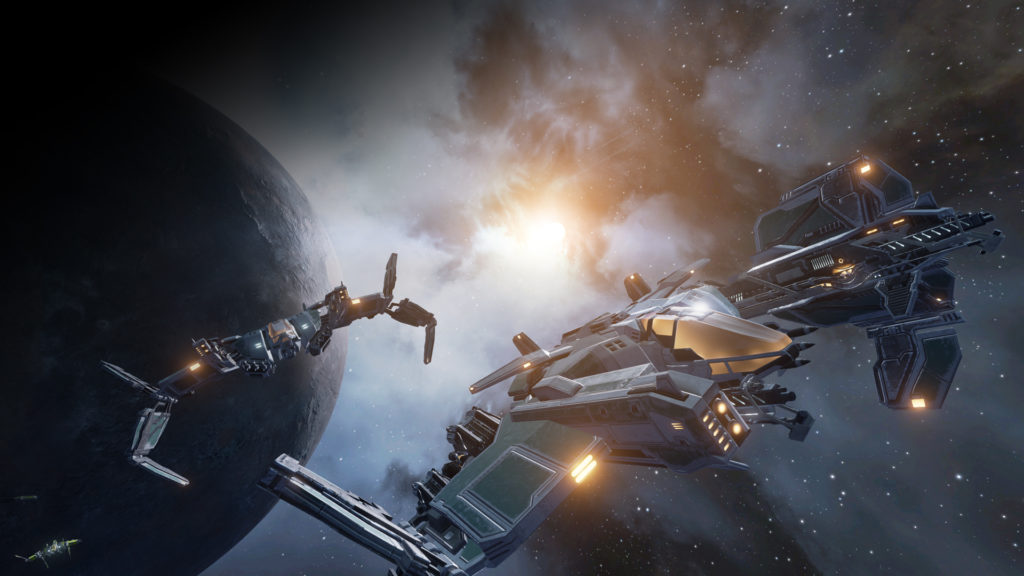
RedLeader_1920x1080Is CCP partnering for location-based VR experiences?
We’re in an exploration phase, talking to everyone that is planning location-based VR. It’s too early to talk about anything concrete, but games like Sparc have a very obvious use case for that.

Can you elaborate on the shift from creating sandbox experiences to making more of a playground for players?

EVE Online is a social economy sandbox, so for a period of time, we thought all of our games needed to be like that. If it wasn’t an EVE-style game, then it wasn’t something we thought we’d be interested in. But now we’ve opened it up to a playground metaphor. It’s perfectly fine, and even encouraged, to do shorter-form games if they help us learn something that we can bring back to the fold.

For example, Gunjack (the simplest game we’ve made) taught us a lot about mobile VR. It was important to not overcomplicate the game because we were learning something brand new. So, in the metaphor of the playground, the sandbox is still there but we’ve widened our scope in terms of what games we see ourselves making if they are teaching us about an important topic.

image39

What are some of CCP’s other goals for the future?

Obviously, one of the biggest topics for us is continued growth for EVE Online. It’s in an unprecedented place of being 14 years old but still having a bright future ahead of itself. So, it’s a big challenge to continue that journey. Another challenge is to better understand the components of EVE that really make it tick so that we can recreate parts of it in other games. Then, at some point—once we have explored VR well and its installed base is at scale—the challenge will be of how we can do something at the scope of EVE Online in VR.

What do you tell developers to keep in mind as they forge forward into unexplored areas of gaming?

What I tell developers to keep in mind is that we’re exploring, we might not always be right, and it’s okay to fail if we learn something and grow from it. If you don’t say that, you’re not really pioneering, you’re just making safe moves. I want to emphasize to developers that we are now in the phase of exploring VR and it’s very new. We’ve been doing it for four years, which isn’t a long time. So, we should look at it as a wide-open field and do different things. It’s okay to be wrong if we figure it out quickly and learn and grow from it.

Live Broadcasts Make Up 20 Percent Of Facebook Video

This week, we find out what teenagers do on their phones all day, gamers get hardcore and people fear what they don’t understand.

Rise Of The Machines

Nervous about voice-controlled AI sharing all your secrets or devices banding together to take over the world? If so, you’re not alone. A study by Pegasystems found that a quarter of respondents are worried about that very issue. In addition, 72 percent of respondents indicated some level of fear toward AI. The study, which queried 6,000 consumers in six countries, found that only slightly more than a third liked the idea of businesses employing AI to engage with them—even if it resulted in a better customer experience. A lack of understanding about AI could, at least partially, be to blame for the fear—while 72 percent of respondents claimed to understand AI, only 41 percent knew that Amazon’s Alexa and Google Home intelligent assistants utilized the technology.

A separate study by InsideSales found similar results. Asking nearly nearly 2,000 people in the US, the company found that 42 percent of consumers don’t trust AI, although nearly 55 percent say they have used it outside of work.

Consumers don’t seem to fear home automation, according to findings by Internet of Things (IoT) firm Parks Associates. According to a new report, 55 percent of US broadband households want to use their voice to control their smart home and entertainment devices.

Native And Hands-On

Early adopters of native advertising aren’t investing as much anymore, according to a three-year study from Nativo. Based on data from over 600 brands, Nativo’s study found that companies in automotive, tech B2B, entertainment, tech B2C and finance & insurance—all early adopters of native advertising in 2014—saw their aggregate share of budget decline from 57 percent in 2014 to 37 percent in 2016. Overall, native ad spend among those surveyed has increased by 600 percent from 2014 to 2016.

Marketers are getting a lot more hands-on with their advertising, and 57 percent of US digital marketing and media practitioners polled in January 2017 said they expect to be engaged in cross-channel measurement and attribution this year. This research by the Interactive Advertising Bureau (IAB) and Winterberry Group found that this time of measurement is expected to take up the most resources this year, followed by programmatic media buying and cross-channel audience identification/matching.

Preferred For . . . You Know

According to data from VR porn company, BadoinkVR, 40 percent of its video downloads this year have been for Samsung Gear VR. The next most popular headset, Google Cardboard accounted for only 23 percent. Oculus Rift and HTC Vive together accounted for 25 percent of all video downloads since the beginning of the year, the company told Variety, and PlayStation VR made up nine percent. Google’s Daydream VR headset accounted for just three percent of all downloads.

us_teen_smartphone_users324pxLive From Facebook

Live broadcasts now make up 20 percent of video on Facebook, according to a post by Fidji Simo, Facebook’s VP of product. Simo went on to say that the number of broadcasts has grown more than four times over the last year.

“We’ve focused on making the Facebook Live experience more engaging, more fun and more social,” Simo wrote in the post. “We’ve added live masks and new creative effects, built features that give publishers more control and flexibility over their broadcasts, and rolled out exciting new formats like Live 360 [and] Live Audio.”

Gamers For Life

A study of 2600 people by We Know Gamers revealed that gaming is far more than a pasttime for most. Seventy-five percent of respondents said gaming will always be a part of their lives and 35 percent claimed to have played more as they got older. The survey found that a majority of gamers believe watching and playing video games will overtake the viewing and playing of traditional sports by 2022, while 58 percent believe competitive gaming (esports) should be an official sport. Given the option, 28 percent would rather be the top player of their favorite game over being a movie star (22 percent), athlete (18 percent) or music star (15 percent)

Thanks to games like Pokémon GO, the augmented reality (AR) market is expected to grow at a CAGR of more than 151 percent to reach $8.96 billion by 2021, per estimates by Technavio.

Mo’ Mobile

Updated forecasts by eMarketer indicate that the average US adult will spend 2 hours, 25 minutes per day using mobile apps in 2017, a jump of 10.3 percent over last year. Time spent with mobile apps will reach 19.9 percent of average daily total media time this year, the company noted. “Among mobile internet users, mobile apps will account for 84.9 percent of total mobile time spent, with mobile web browsing making up the remainder. Meanwhile, time spent with a mobile browser is expected to remain stagnant at 26 minutes per day in 2017.”

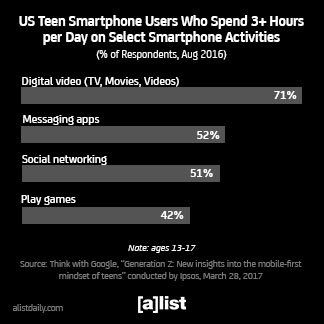
This should come as no shock, but teenagers really love their phones—especially to watch video. According to a Think with Google survey conducted by Ipsos, roughly seven in 10 teen smartphone users spend at least three hours per day watching video on their phones—more than any other activity. Over half (51 percent) of teens said they spend three or more hours a day on social networks, and another 52 percent spend the same amount of time on messaging apps.

They’re Back: The Business Of Resurrecting Older Video Games

Nostalgia is a powerful purchasing incentive, especially among gamers. There are many ways to resurrect an older game IP from the reboot (starting over) to the remaster (updating graphics), but another trend has emerged—continuing a game where the developers left off. Here are three games being resurrected soon, much to the surprise and delight of their loyal fans.

Red Dead Redemption 2

More than six years after Red Dead Redemption, Rockstar Games announced a sequel coming to consoles this year. Not only did the announcement garner positive attention from the series’ fans, but investors as well—the stock price of its distributor Take-Two Interactive rose nearly six percent following the game’s announcement.

Macquarie Securities analyst Ben Schachter projects the game will sell 12 million copies during Take-Two Interactive’s second fiscal quarter in 2017, which runs from July through September.

“In its first hour, the announcement received 54,000 likes and 61,000 retweets on Twitter, 152,000 likes and 52,000 comments on Facebook, and 65,000 likes on Instagram,” Schachter said in a note to investors. “We think this demonstrates significant pent-up demand and interest for the sequel.”

Psychonauts 2

How much would you pay to get a sequel for your favorite game? Fans paid over $3.8 million to fund Psychonauts 2, the sequel to Double Fine Production’s first release, and another $8 million was invested by Starbreeze Studios, who will aid with distribution.

Despite critical acclaim and over a dozen awards, Psychonauts was a financial flop—selling around 400,000 copies between its launch in 2005 and 2012, when Double Fine acquired the publishing rights. As of 2015, Psychonauts sold nearly 1.7 million copies, with more than 1.2 million occurring after Double Fine’s acquisition.

For years, fans had asked Double Fine founder and CEO, Tim Schafer if they would ever make a sequel. Although he wanted to, the cost of development was too high without investment from a publisher. Thanks to a successful crowd-funding campaign on Fig, resurrecting Psychonauts over a decade later has breathed new life into the franchise and involved fans in a unique way. Psychonauts 2 is scheduled for release in 2018.

Sonic Mania

There have been many Sonic the Hedgehog games over the years, but Sega is returning to its 2D roots this year with Sonic Mania—a game that some are calling “sequel they wanted 20 years ago.” The game is a sprite-based side-scrolling platformer game in the style of its original predecessors. Despite being an original game (as opposed to a remake), Sonic Mania oozes nostalgia, which has fans really excited. The game looks and plays like a long-lost sequel that has just now been released a decade later.

In a statement, Sonic Team head Takashi Iizuka described Sonic Mania as a “passion project” that “was born out of our fans’ love of the classic Sonic 2D platform games.”

Sonic Mania is launching this summer for Nintendo Switch, Xbox One and PS4.

Continuations of beloved video game franchises not only soothe the pangs of unfinished business but encourage newcomers to play/replay the original titles.

In his essay, Public Memory and Gamer Identity: Retrogaming as Nostalgia, Dr. David S. Heineman wrote, “The marketing of retro games functions to create profit for companies whose older games remain popular. This alone, though, does not account for the kinds of reactions to these games that take place in retro gaming communities. Rather, the discourses of retro gaming suggest that the most salient function of this official memory is its capacity to (re)construct the identity of retro gamers.”

Good news, gamers, you can go home again.

How Arby’s Is Engaging With Gamers

Arby’s has been connecting with gamers over the past two-and-a-half years through its social channels. In addition to targeting popular games like Overwatch and Street Fighter 5, the company went all-in with esports last year as a key sponsor for Turner and WME/IMG’s inaugural ELeague season, which focused on Counter-Strike: Global Offensive (CS:GO).

Jeff Baker, Arby’s vice president of brand content and advertising, oversees the different areas of Arby’s broadcast, social and marketing channels. He told AListDaily that the restaurant chain, which has over 3,300 locations around the country, identified gamers as having a heavy overlap with its guest base and decided to engage them through social channels like Instagram, Twitter and Facebook.

“We have targeted over 100 titles,” Baker said. “That covers a wide array of mobile, console and PC games, including the classic Zelda as well as the recently released Zelda for Switch. We’ve covered everything from 8-bit games to tabletop games. And it’s done in a fun way that has created some back-and-forth with publishers like Bandai Namco.”

Baker uses static image content and some animated content to connect directly with gamers digitally.

https://twitter.com/Arbys/status/850000148465766400


“We try to act as a fellow fan because we are,” Baker explained. “People in our office and at our agency are fans of these games and brands. We try to engage with a broad group of people. A guy in our analytics department worked on content as a fan of gaming. It’s not about using these games as a sales vehicle.”

That type of messaging, which aligns the Arby’s brand with the wide audience of gamers, also was employed for esports with ELeague.

“ELeague has been well received with fans, especially on Reddit with conversations around our brand,” Baker said. “Our strategy is to engage versus sell. We use our brand elements and create fun and lightweight stories that are about us being fans of the titles instead of us trying to sell the product. It’s been appreciated across the board with no negative commentary.”

Now Arby’s is taking its game connection in-house. Starting this month, Mountain Dew Game Fuel Citrus Cherry will be available at more than 3,000 Arby’s restaurants nationwide.

“Pepsi is our partner and they’ve established Mountain Dew as a credible brand for gamers, but Game Fuel is the focused product,” Baker said. “Game Fuel is exclusively available on tap for our restaurant, which is a great way to add a product that already has a connection with gamers.”


Arby’s is alerting consumers about Game Fuel through social, which includes nearly 3 million followers on Facebook, more than 731,000 on Twitter and over 135,000 on Instagram. Most of that is targeted specifically to gaming content with titles like The Sims 4.

“Because we’ve been engaging with gamers for a few years, we wanted to offer them something special in our restaurants,” Baker said.

Esports is just part of the overall gaming conversation for Arby’s.

“Through social, we can target all genres and platforms of games and reach the right people,” Baker said. “The reality is in a newsfeed we’re part of that conversation that gamers are having.”

Arby’s doesn’t engage in a lot of direct couponing with gamers, but it does perform media mix analysis and Baker has seen a positive response to the gaming content his team has put out.

“We know from looking at the data that people who are into gaming have a high overlap with our brand,” Baker said.

In fact, gaming is the largest of the niche interests that Arby’s targets, which also include golfing and hunting.

As for Arby’s next move in the esports space, since it is no longer sponsoring ELeague, Baker said, “Esports is still TBD on where and how it grows, but every day more and more people are getting more interested in it.”