What Keeps ‘Cities: Skylines’ Running

With Cities: Skylines, players have the tools and freedom to create the metropolis of their dreams, whether it’s one that hums like a finely tuned machine or one that puts more emphasis on aesthetics than function. What helps the game stand out from other city builders is its extensive modding community, which creates and shares game additions that range from new buildings to literally rewriting some of the rules.

Developed by the Finnish studio, Colossal Order, the simulation game remains as one of Paradox Interactive’s top-selling titles. Earlier this month, the game hit its second anniversary and the publisher announced that it had sold 3.5 million copies worldwide. They celebrated the milestone by giving all its players a special set of in-game buildings inspired by Chinese architecture.

“From the first day Cities: Skylines was released, it’s been breaking records,” said Fredrik Wester, CEO of Paradox Interactive, in a statement. “The game had our biggest launch in history at the time, selling 250,000 copies in its first 24 hours, and the community has only gotten bigger and more devoted over the last two years.”

Now the city builder is ready to grow even further with a new expansion called Mass Transit. As its title implies, the premium expansion focuses on public transportation, which Colossal Order is very familiar with, having released a mass transit simulator called Cities in Motion in the past. The developers wanted to get back to its roots with its latest expansion, and transportation is huge part both a city’s infrastructure and the city building experience.

Mariina Hallikainen, CEO at Colossal Order, sat down to speak with [a]listdaily about the upcoming expansion, releasing premium content for a game that’s famous for its mod content, and engaging with its active community.

Mariina Hallikainen, CEO at Colossal Order

What inspired the new expansion and what does it include?

Cities: Skylines – Mass Transit was very much inspired by our Cities in Motion games, which was all about mass transit. As an expansion, it’s all about creating good public transportation, as it is a big part of any city. It brings four different types of transportation: ferries, blimps, elevated monorails and cable cars.

Cities is very connected with its mod community. How do you develop a game expansion with modders in mind?

We, as developers, always have a certain vision for the game and we need to maintain a certain amount of control over that vision. We love talking with our community and taking their feedback, but we also must stay true to ourselves. It’s really a collaboration between the modders, us and the community.

For example, ferries is something that people have been asking for, and we agree that the game needs that transportation option. In that case, it’s very easy to work that in. Of course, sometimes we disagree with the community, but I think that’s a healthy conversation that needs to be had. I think that as long as we keep talking to each other we’ll be fine. [It’s about] taking the feedback and being honest with them. If we don’t like something that they suggest I say it honestly: this is not going to happen. We’re not going to do it. Then there will be a little bit of griping, and hopefully we’re able to move on to the next suggestion.

With so many free mod options available, how does the Cities audience generally take to having to buy premium expansions?

We want to make expansions that are worthwhile. I think mods enhance the game in amazing ways. The things that the modders do—they go all out. We have over 100,000 items on the Steam Workshop, so there’s a lot of variety.

For us, it’s important that we can add features that modders can’t easily do. [Also], not all of our players use mods. We always have to remember that the modding community is very active and open, but they are not the majority of players. So, it’s about finding a balance between the different audiences and trying to cater to all of them. The important thing about the paid expansion is that we know it’s not necessary for everyone. So, we want to do our best to bring in new and interesting content that will appeal to a large portion of our audience.

How do you balance between releasing free updates and premium content?

Free updates are features that we believe enhance the base game in such a way that it would be unfair for us to charge for them. We want to keep working on the game to make the experience good for existing players who have the base game, and those who want to buy more content may get the expansions. For example, the road enhancement tools were something that we wanted all the players to have, so we definitely weren’t going to put that behind a paywall.

How do you engage with players who aren’t part of the modding community?

We have an amazing subreddit. I think there are over 100,000 subscribers on the Cities: Skylines subreddit and it’s very active. There are so many people creating beautiful cities and sharing screenshots and videos. There’s a lot of feedback to be seen over there, so I try to be very active there. Then we have the Paradox forums where we have an amazing community. We feel that we need to be active through social feeds: Twitter, Facebook and so on, to make sure that we find different kinds of audiences. The modding community can be the loudest and most active, but we want to stay in touch with players who aren’t necessarily engaging with that part of the game.

Cities_Skylines_MassTransit_06

What goes into the perfect city building game?

I think the perfect city building game has the flexibility for players to make their dreams cities. It lets their players use their creativity. I think that we’re almost working on a platform for the players to express themselves with. Of course, there also needs to be functioning systems that makes sense for the player. It’s a combination of those systems, freedom and flexibility.

Cities: Skylines remains one of Paradox Interactive’s top games. What do you think attracts so many people to city building games when there are so many explosive action games around?

I think city builders in general have a very wide range of people who like to play them. There are gamers who just who want to take time off from everything blowing up and just relaxing with a city builder to create something. But I think there is also an audience that doesn’t play other kinds of games. They are just engaging with simulation games because they feel that they can express themselves and solve problems without the fast pace that other genres offer. It’s an interesting crowd, to say the least, because there are so many different types of players. To see the different things that people do with Cities: Skylines—some just want to build a beautiful city, while there are other people who want to make sure the city is functioning in a perfect way without caring about the looks of it.

What would your perfect city be like?

One that makes a lot of money [laughs]. I’m a CEO, after all. So basically, that’s all I care about.

Art Or Game? Double Fine On Marketing David O’Reilly’s ‘Everything’

A new game has just launched for the PlayStation 4, but it’s not like anything players have seen before. Everything, a game by artist David O’Reilly, is an adventure in being . . . well, anything. Every object in the game, from the sun to tiny water molecules, are self-aware and the player can freely move about and experience life from each point of view. It’s more of an experience than a game, although its infinite possibilities and self-aware objects (which play automatically with or without you) will no doubt make for some very interesting livestreams.

“You can look at something through a microscope and see it in a certain way, you can look at it with the naked eye and see it a certain way and you can look at it through a telescope and see it another way. Now which level of magnification is the correct one? Well, obviously, they’re all correct, they’re just different points of view.”

That’s a quote from late British American philosopher, Alan Watts. Everything users have the option of listening to recordings of Watts, such as this quote, as they play or watch the world unfold and change.

Everything is published under the Double Fine Presents label in partnership with David O’Reilly. His previous works include animation and design for Adult Swim, the film, Her and a number of personal projects, including a mountain simulation game. As beautiful as his work is, O’Reilly’s creations don’t fit the usual mold for video game development, gameplay or marketing—but Double Fine wouldn’t have it any other way.

“David is a true artist with a strong grasp on his unique vision,” Greg Rice, VP of business development at Double Fine Productions told [a]listdaily. “We try to let him take the lead when talking about the game because it’s fascinating to hear him speak about his work. He creates the most beautiful and moving supporting materials, like his 10-minute gameplay film that is a beautiful work of art in its own right, which was selected for the Berlin and San Francisco Film Festivals, as well as others.”

Everything was the first video game to be selected for the Berlin film festival in its entire history. O’Reilly’s creation isn’t a typical game, so Double Fine didn’t employ typical marketing efforts.

“The game has the potential to speak to a wide variety of people from gamers looking for new and unique experiences to children and non-gamers fascinated by its view of nature and the universe,” Rice explained. “We’ve tried to let that encourage us to show the game in places and ways that games aren’t usually shown. The film festivals are a good example of that, but we recently also had Everything on display at the San Francisco Museum of Modern Art, which was a really cool way to highlight the game and trigger really interesting conversation about it.”

“Everyone has different things they’re drawn to in games, and one of the things that excites us most is new ideas,” Rice said. “We’re a relatively new industry that has yet to explore so much of what games can be, so we want to encourage developers to break convention and try new things. With the amount of great games coming out these days it really helps when you’re able to stand out from the pack as something wholly fresh.”

Everything is available now for PS4 and will launch on PC and Mac on April 21.

Royal Caribbean CEO Explains How Virtual Reality Is Changing The Cruise Industry

Even though the first new class of Celebrity cruise ship in 10 years won’t set sail until next fall, media was invited to experience the Celebrity Edge at the brand new Innovation Lab at Royal Caribbean headquarters in Miami, Florida. This marks the first time that any company in the cruise industry has used virtual reality to design an entire ship. The Innovation Lab, which is home to the largest CAVE (cave automatic virtual environment) in the world, allowed Royal Caribbean to create every inch of the ship in virtual reality before a single steel rivet was hammered at the STX shipyard in France.

The room-sized CAVE allows for a dozen people to step into a 3D replica of the 2,918-passenger ship, wearing 3D glasses to be fully immersed in the environment. Wall-sized displays bring the ship’s many rooms and decks to life from floor to ceiling, allowing a navigator to virtually stroll down corridors and through verandas.

Richard D. Fain, chairman and CEO of Royal Caribbean Cruises, told [a]listdaily that while virtual reality simulation has been used before, it’s been on ad hoc occasions.

“What we’ve done with Celebrity Edge is decided that technology is such a powerful tool that we want to use it for all aspects of the vessel,” Fain said. “This is the first ship where everything has been looked at three-dimensionally, and we have been able to harness all that power. The advantage is that it democratizes the process. In a normal design process, there are only a few people like the architects, designers and a few executives that can draw lines. Most people cannot look at a blueprint or a two-dimensional drawing and have a real understanding of the spacial relationships. One of our most powerful weapons in the fight for greater innovation is our people. They are imaginative, but they’re also knowledgeable and they’re motivated to try and find new and better ways to do things.”

Celebrity Edge balconySome of the new things the Edge class ships will introduce to the industry include an infinite veranda stateroom, which uses French doors to extend the room into the balcony space. This increases the stateroom size by 23 percent and brings guests to the “edge” of the ocean view. Shifting the room design also increases the bathroom size by 20 percent.
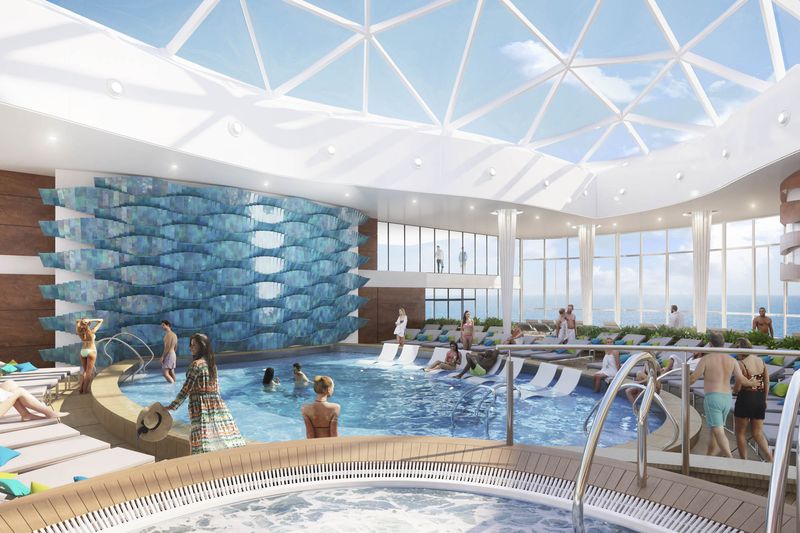


“The beauty of being able to do these things in three dimensions is you get a true sense of scale,” Fain said. “That helps us to visualize taking this from a concept and actually designing the room to exploit the extra space.”

Another innovation on the Edge is a tennis court-sized Magic Carpet cantilevered floating platform that can move up and down the side of the ship’s 15 decks providing a variety of dining experiences for guests at different times of the day. This concept underwent many iterations as designers decided to expand the number of decks this platform could traverse.

“Being able to actually see it in 3D was eye-opening,” Fain said. “It inspired us to expand this platform in new ways. And it really helped us to understand how much better we could connect ourselves with the ocean. Part of what makes the Magic Carpet work is the fact the whole side of the ship is more openly connected to the ocean.”

While VR is being used behind-the-scenes to design ships, Celebrity is also using augmented reality to allow guests to explore ships. The new Celebrity Cruise app can be used on ships to learn more about the thousands of art pieces that adorn each vessel. Celebrity also used AR technology at the press event to unlock additional photos and information in each of the mock-up suites and rooms they designed inside the Innovation Lab.

“When you scan the piece of art, it will tell you who the artist is, what their background is and what other work they’ve done,” Fain explained. “Those kinds of visualizations are very powerful.”

Celebrity Edge Pool

While the Wow band and app debuted two years ago, new features like augmented reality and upcoming additions like facial recognition allow Celebrity to improve the customer experience as technology advances.

“We’ve had the benefit of two year’s head start and the infrastructure and connectivity has grown,” Fain said. “We’ve chosen to go to a more open source platform because the pace of change is extraordinary. I believe that the pace of change that we experience today is slow compared to what we will experience tomorrow, so you need the flexibility and the speed that open source technology gives you.”

Fain said that, by the end of this year, 15-to-20-percent of Royal Caribbean’s fleet will have this new open source Wow band technology and half of the ships will use it by the end of next year.

“We have to assume that a lot of our guests are not particular tech savvy, and the purpose of this technology is to improve the vacation experience for all of our guests,” Fain said. “We want to make it so that the guest has a better experience. One of the issues that people have when they travel, in general, is that it takes them out of their comfort zone. The beauty of technology is it helps you do everything from plan your vacation at home through the app and navigate the ship and shore experience during your vacation. Technology allows us to better understand our surroundings—even before we get there.”

Celebrity Edge is slated to set sail from Fort Lauderdale’s Port Everglades starting December 16 on alternating seven-night Eastern and Western Caribbean voyages. Celebrity Beyond, the second Edge class ship, will launch in spring 2020. Two additional ships will be built with anticipated launches in 2021 and 2022.

How Roblox Is Discovering Future Game Developers And Entrepreneurs

Although Roblox has been around for over a decade, it’s probably one of the biggest success stories that you’ve never heard of, especially if you happen to be over the age of 13. That’s because the social, gaming and development platform, where players can come together using almost any device, has a very unique audience: kids who like to code.

As it turns out, this is a tremendous market that’s continuing to grow. Similar to the game Minecraft, users are encouraged to head out and express their creativity. But instead of fighting enemies and building structures, kids with an average age of about 10-12 (although they can be as young as five or six), can build entire games and experiences. Some of them may be mundane by adult standards, with a high school simulator being among some of the top ranked experiences. Other games include surviving a natural disaster, but they all have one thing in common: they’re all playable cross-platform. That means a mobile phone player can interact in the same game experience as someone using a desktop computer, a gaming console or even a VR device.

Tami Bhaumic, vice president of marketing, Roblox
Tami Bhaumik, vice president of marketing, Roblox

“Roblox has seen rapid growth over the past two years,” Tami Bhaumik, vice president of marketing at Roblox, told [a]listdaily. “We’ve had a 330 percent year-over-year growth period, 48 million active players, and over 22 million games with 1.7 million developers on the platform and we’re continuing to grow. We have about 200 people in the company and we plan on doubling our size in the course of the next year to focus on making sure that the platform is robust with features that help our developers create compelling games.”

The profitable company recently raised $92 million in venture capital funding led by Meritech Capital Partners and Index Ventures. As the platform expands its features, which includes virtual reality development for the Oculus Rift and soon the HTC Vive, the ultimate goal is to help these growing game designers become entrepreneurs someday, selling the worlds they create in Roblox on the open market. Roblox also debuted a new toy line from Jazwares earlier this year, featuring action figures inspired by user-generated content.

In discussing the company’s origins, Bhaumik said that, “Roblox was formed about 10 years ago, and the idea of it was to build a physics engine. As we developed the company, what we realized was that our users and players could create games that were more inspiring and creative than anything that we could build. So, we are a 100 percent user generated content company. You can say that Roblox is a little bit like YouTube for gaming. We don’t produce any content; we are a technology platform that enables content development for games. Every month, we have about 48 million active players, globally.”

Bhaumik continued by describing Roblox as “a virtual amusement park for kids. Kids are able to run around to different experiences and different social engagements. In the game, you’re able to chat with one another, play with friends, and create games together. So, it’s a very social platform in addition to all of the things that we do from a creation standpoint.”

Roblox_MeepCityThis amusement park isn’t just for playing around. Kids are discovering a passion for coding and they’re learning to make money from their talents. Bhaumik explained that “about two years ago, we developed a monetization strategy where we would allow kids to buy virtual currency called robux. What you can do with it is buy things such as avatar clothing and special powers within games. Our developers get to choose what kind of experience they have for monetization in their games and we do a revenue share with them.”

That might sound pretty straightforward, but these kids have the potential to make a serious income from the Roblox platform. “Some of our developers are making over $50,000 a month and they’re really discovering new careers,” said Bhaumik. “They might start on our platform when they’re ten, and we’ve seen some of these kids grow up and become legitimate game developers. Some of them we’ve hired internally and some of them have gone on to create their own unique studios and hire others on their platform. It makes us very proud to see a lot of these developers paying for their college tuition, buying cars, or buying homes and discovering new career paths.”

When asked about how the company initially got the word out and grew, Bhaumik said: “When our CEO and founder, David Baszucki, started out it was all about allowing kids to develop their own experiences. From the very beginning, it was about having kids develop games for other kids. We barely spent any money on user acquisition—it was all viral. It’s young developers making games for their friends.”

Given the company’s success over the past decade, we asked Bhaumik if there were any plans to go beyond word-of-mouth. “We like to say that we’re the best secret around because the virality of Roblox is so authentic. It’s friends sharing with other friends, and there’s nothing that’s more powerful. Our philosophy is that we don’t buy a lot of our users—we provide the toolsets to make sharing easy. We’re very lucky to have a lot of very excited video influencers who love to play Roblox and stream it on YouTube and Twitch. Providing support to them and teaching tools that allow them create better experiences and more easily share and stream content is something that we’re focused on.”

Bhaumik also stated that being cross-platform has been a tremendous asset. “You have an Android, he has an Xbox, and I have an iPhone,” she said. “We can jump into a game together and play. That’s something that’s not necessarily available out there [for others].”

So, what are the next steps for the Roblox platform? “One of the great things about Roblox is that the creativity with our players and users is unlimited, given our cross-platform capability,” said Bhaumik. “I think our goal is to continue focusing on that immersive experience and making sure the players can come together anywhere at any time. Our focus is on building and maintaining a strong foundation by improving our tools and the overall experience. We have a very large focus on continuing to improve our mobile experience and we have international aspirations for global language localization this coming year. We are global company, but I think there are a lot of things that we can do to better support our player and developer communities using language localization.”

Another point of focus is remaining relevant in the fast-changing world of game development. “We have a very strong developer relations program and department,” said Bhaumik. “Their goal is to talk to developers and get their feedback so that we can continually be on the cutting edge. We have our ears to the ground as to what’s new and what’s on the horizon. We take a lot of that feedback and bring it back to our product development and engineering groups to continually evolve the platform.”

Although Bhaumik doesn’t go into detail about the funding, she does discuss how developers stand out on the Roblox platform, which is indicative of what might be in the future for this unique community.

“As users progress through the Roblox system, going to different experiences and games, they naturally discover our studio product and maybe start to edit code, eventually creating their own unique code,” she explained. “Our founder, David Baszucki, likes to say that it’s a little bit like the American Idol for the developer community. We can find the best and the brightest because they naturally bubble up. That’s why I think our platform is so compelling. It’s because we’re not throwing millions of dollars at anything to focus on one game or platform. Game content and developers naturally bubble up based upon the playability and popularity of the gameplay. There’s a natural progression that incorporates and propels that engagement.”

Why Creators Like Jimmy Kimmel And Brands Like Banana Republic Are All In On 360-Degree Content

Over one billion people around the globe will regularly access augmented and virtual reality content by 2020.

With an immersive experience storm predictably looming, a cavalcade of brands and creators are aligning allegiances to satisfy in what’s looking to be an insatiable appetite for VR content.

Earlier this year, Jimmy Kimmel was the latest to jump on the VR train by inviting fans to his desk in a near-two-minute, 360-degree experience that gave viewers an inside look at what it’s like to be a guest on his show.

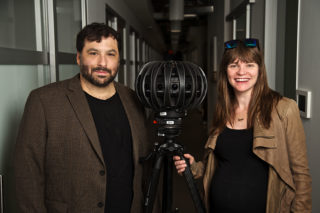
Annie Lukowski and BJ Schwartz, co-heads of Vanishing Point Media, a Los Angeles-based VR content production company that produced the 360-degree project for Kimmel and has also done the same for Banana Republic, Stan Lee’s Comikaze, Jeep, Teen Vogue and USA Network, joined [a]listdaily to share why brands are increasingly diving deep into the immersive content format.


Why was the collaboration with Jimmy Kimmel a good fit for the Vanishing Point Media company profile? How was the partnership formed? What details can you share about how it was received from post-publishing till now? 

BJ: Annie and I met at USC film school. We had a friend, and fellow student, who was a producer on Jimmy Kimmel Live, and when he found out what we were up to, he contacted us. We had a conversation with some writers and producers. At first we actually talked ourselves out of the gig. We tried to help them figure out what they wanted and how they could do it at a lower cost.
Annie: We thought they didn’t want to work in VR, but a month later they realized they wanted to do a VR production, and they again reached out to us. It was important for us to help them find the best fit, because the medium is still so new, we want everything with it to be a positive experience.
BJ: We really want to make sure that the content out there is good so that people catch onto the VR trend and get interested and excited for it. As a filmmaker, it’s most important that people engage and like your content.
Annie: It’s really rewarding when you see people interacting with your work, and in the end, that’s what we really hope to achieve as filmmakers, and we think we did achieve this with the Jimmy Kimmel Live experience.

When working with brands like Banana Republic on 360-degree content, what are you helping them accomplish? Why are they creating such videos in the first place?

Annie: Banana Republic is such a fantastic, well-respected brand, and I think it’s great that they wanted to try something new and experiment. They seemed to be curious about this new technology, so they just went for it. It’s a great way to interact with potential customers because they have to look all around, and receive a much higher level of engagement.
BJ: It was just a really fun way to introduce their summer line. There was this beautiful woman who you were accompanied by, and she would show you all of the different clothing in this beautiful city, Charleston, South Carolina. The viewer would be presented with a cool effect where she seamlessly switches dresses and scenery, allowing the viewer to intimately explore their brand.

Why is it imperative for brands to use 360-degree video and VR for their integrated marketing strategies?

Annie: Firstly, it’s fashionable.
BJ: You don’t want to ignore the hottest media out there.
Annie: People are underestimating how many people want this, and how important this interaction between the technology with the brand and the audience is.
BJ: People identify immediately after they interact with the VR ads.
Annie: When people are watching VR they aren’t paying their bills, or cooking dinner—they have a headset on, and all they are watching is your content. That’s great for filmmakers and advertisers. There are so many different ways to get the audience involved.

What have you learned along the way about creating engaging VR experiences?

Annie: As narrative filmmakers, we’re definitely very focused on what our audiences are looking for. We don’t come from a tech background, or advertising background—we think. First and foremost, what do people want to watch? How do we get them? And what do we need to do? Because if the content is not compelling, it doesn’t matter what medium you’re using. So we are able to know what the audience is looking for, how they will engage with it and what we need to do to get to that level, is easy to achieve through our knowledge from being narrative filmmakers.
BJ: I think just really stressing that you can’t replace experience. We’ve had a lot of experience learning about what affects people and what people enjoy watching just by being around people and giving them material. And so after seeing students who are new to VR, and people who are new to this material, who want to be more engaged with it, work with it, you can see that the years of experience are just so important in making the content the best it can be.

BJ Schwartz and Annie Lukowski

What needs to happen in 2017 for the industry to take the next step?

Annie: Distribution. We don’t always have that much narrative content. People watch this material because of the dripping, jaw-dropping content.
BJ: They have to know what happened. The medium will affect what it is, but we want them to be talking about the content and the ‘I don’t know what’s going to happen next but I have to find out.’

How would you describe the current consumer appetite for VR content? What kind of an experience works best for the platform?

BJ: The appetite is definitely large and growing.
Annie: And hungry. But the hardest stumbling block is definitely the distribution. The headsets, the technology, the app store.
BJ: Yeah there’s no appetite for dealing with that. Once we get through that hurdle, then it will be a much clearer answer to what people are looking for.
Annie: As for the platform, we’re big supporters of first person and third person—interactive and non-interactive work.
BJ: As a general matter, people come wanting experience, as in an adventure. But they leave being most struck by intimate moments. You take people to a place they’ve never been, or a place they’re dying to go. There is nothing more powerful in VR experience than someone making eye contact with the viewer. There are a wide range of things that work, but there are some things that are particularly amazing.

Follow Manouk Akopyan on Twitter @Manouk_Akopyan

Why The Wonderful Pistachios Brand Is Targeting Gamers

Wonderful Pistachios is clearly targeting gamers with its latest “Get Crackin’” campaign. The company has invested $55 million in marketing, which kicked off last October and included a Super Bowl LI spot that introduced Ernie the Elephant, voiced by WWE superstar, John Cena. Cena’s latest project with Wonderful Pistachios brings Ernie into the video game realm with the free-to-play Destroy Ernie’s Evidence experience on Getcrackin.com.

https://www.youtube.com/watch?v=nHc5Csu6dpA

A new game unlocks clues every two weeks, bringing to life locations from Ernie’s eight TV commercials. Gamers can enter to win prizes such as $10,000 in cash, four Coachella VIP Passes for 2018, an African safari for two, $5,000 in Stubhub credit, $5,000 in Airbnb credit and 10 Nintendo Switch consoles with launch titles. The first game challenges players to unscramble texts on Seattle Seahawks cornerback Richard Sherman’s phone, and new games will be released and playable through June 30, 2017.

Since introducing the character, Ernie’s influence has already led to Pistachios’ sales volume increasing by more than 35 percent, according to Adam Cooper, vice president of marketing at Wonderful Pistachios. Wonderful Pistachios & Almonds is part of The Wonderful Company, a privately held $4 billion company, which also has top brands that include Wonderful Halos, Fiji Water, Pom Wonderful, Justin Wine and Teleflora.

Cooper explains why the company is targeting gamers with this massive new campaign in this exclusive interview with [a]listdaily.

Can you talk about this video game activation?

To support our biggest integrated Get Crackin’ campaign, Ernie the Elephant is unveiling a series of interactive games that challenge pistachio fans to crack open the mystery from a night of mischief with the Squirrel Sisters. Destroy Ernie’s Evidence offers pistachio lovers the chance to cover up incriminating footage captured on-camera from the night before. Ernie will be featured in the game in a variety of different situations, touting the health benefits of pistachios while gamers search for hidden clues. Snacking while gaming is often full of notoriously unhealthy options but pistachios go with any occasion including gaming, whether solo or in a group, plus they’re so good for you! Throughout the game, Ernie will remind pistachio fans to Get Crackin’ for every snack occasion, whether it be on-the-go or while playing a wildly interactive gaming experience.

Why did you decide to target gamers?

We know that gamers are snacking mindlessly while playing video games and we want to be a healthy yet tasty snack option. Americans are snacking more than ever before, and it’s never been a better time to call out mindless munching of nutrient-poor, energy dense foods and start snacking smart. Pistachios are a great snacking alternative to greasy snacks like chips. In fact, Wonderful Pistachios are in-shell and may slow down consumption time while snacking. The empty shells may serve as a visual cue reminding snackers to eat mindfully during a marathon gaming session. Pistachios are a good source of protein and fiber in every 49-nut serving, so gamers can Get Crackin’ without the guilt.

What did you learn from the Angry Birds campaign about the gaming audience?

The Angry Birds campaign was an effective integrated campaign for Wonderful Pistachios, and it achieved clear success in terms of awareness, homepage traffic, Facebook fan acquisitions and most importantly, sales. Through this activation, we learned that the program successfully converted online players to fans and customers directly translating to increase in sales.

What were your goals with releasing the video game levels in a staggered fashion?

After introducing Ernie the Elephant to the public, we wanted pistachio fans to get to know him as a fun-loving character. The video game was created to engage fans and make Ernie’s story more exciting. We decided to unlock chapters of the game at different times to pulse Ernie throughout the spring and summer while offering fans the opportunity to connect with Ernie. Smaller narratives allowed for a larger story to be told while highlighting the unique prizes for consumers throughout the journey.

What does working with John Cena, who is also a big gamer and recently helped Nintendo promote Switch, bring to this campaign?

John Cena is known for many things, and now as the voice of a pistachio-loving, health-conscious, computer-generated spokes-elephant. We knew John would be the perfect partner to help drive awareness to Destroy Ernie’s Evidence and spread the word about healthy eating and how snacking on Wonderful Pistachios can fit into one’s everyday lifestyle including gamers who need energy to fuel an all-day gaming marathon.

https://www.youtube.com/watch?v=RX_85v7fkE4&t

Richard Sherman is another big gamer. How does tying into his personality and fan base cross over with your audience?

One of the most common times to snack is while watching live sports games, and people often indulge in unhealthy options. Football continues to be a huge focus for the brand and Super Bowl LI was our third time being part of the big game. Wonderful Pistachios’ partnership with Richard Sherman demonstrates our commitment to healthy eating through a series of online digital videos educating an estimated 21 million football fans about the nutritional benefits of pistachios.

As one of the smartest players in the NFL, Seattle Seahawks cornerback, Richard Sherman is able to educate fans on the benefits of pistachios compared to unhealthy, salty snacks like nachos or crackers. Just like video gamers, Richard looks for smart snacking options that will fuel him on game day and keep him focused to endure any battle that may come his way.

What demographic are you targeting with this video game activation and how does this fit within your normal target audience?

Our brand is uniquely positioned to take advantage of reaching a broad demographic of consumers who are already eating salty snacks such as potato chips. We look at the snacking habits of our target demo, and our goal is to reach “snackthusiasts,” who are intentional in their choices, their rituals and lifestyle, whether they are snacking at home or on-the-go.

With $100,000 in prizes, fans have the chance to win prizes such as a Jeep Wrangler Rubicon, Coachella Tickets or an African Safari. With such a wide variety of prizing opportunities, Destroy Ernie’s Evidence is relatable to every kind of demographic.

What are some of the positive effects pistachios have on gamers playing for long hours or late at night?

As one of the lowest calorie and highest protein nuts, Wonderful Pistachios offers gamers a healthy and delicious alternative to typical unhealthy salty snacks. With pistachios, consumers can have it all. They are able to satisfy cravings for something savory and crunchy without compromising their healthy eating goals. So, whether you’re helping Ernie solve his mystery or pulling an all-nighter with your fellow gamers, pistachios are the smart choice to keep you going.

What advantages does introducing Ernie to a Super Bowl LI audience open up for extending this campaign, which is continuing through these free-to-play games?

The Super Bowl is the second highest consumption occasion for Wonderful Pistachios, and our integrated marketing campaigns target this high consumptions time across all of our marketing platforms. The Big Game was a perfect platform for Ernie to remind consumers to snack smart and enjoy pistachios as an alternative to typical sports snacks. Whether you’re playing in the big game or destroying Ernie’s evidence, pistachios are the healthy snacking option.

Space Camp And Interactive Theater: This Week In Game Promotions

Whether you’re navigating the reaches outer space or the crowds of Austin, Texas video game marketing is having a busy week, indeed. Mario Sports Superstars launches exclusively for the Nintendo 3DS on March 23 and Super Mario Run finally becomes available for Android on the same day. In the meantime, one of Bioware’s most iconic franchises finally gets a new release.

Mass Effect: Andromeda

Bioware and EA’s space opera returns with a new adventure about humanity searching for a home. Bioware has been rather light on the marketing trail, perhaps trying to avoid the mistakes of No Man’s Sky by naming specifics about its many gameplay possibilities. Fans have been treated to a number of trailers teasing characters, story and gameplay, but most details have been kept close to the chest.

Since story is king for fans of the Mass Effect series, Bioware went to work sharing this new world without giving too much away. Leading to the release of Mass Effect: Andromeda, BioWare set up a promotional website whereby players could participate in a mock training program for the Andromeda Initiative, which included listening to recruitment pitches, reading the history of the Mass Effect universe, or watching mission briefings. Briefings included an orientation video, an introduction to several locations and dossiers on the game’s main crew members.

Bioware also teamed up with six YouTube creators from around the world to participate in an authentic astronaut training experience at the European Astronaut Centre. A sweepstakes was also held through the official Bioware Store to win a diecast replica or remote control version of Nomad ND1 vehicle, along with collector’s editions of the game and more.

The largest source of hype has originated from the players themselves as they streamed gameplay online. A Play First trial was made available through EA Access and Origin Access five days before Mass Effect: Andromeda‘s launch date, offering up to 10 hours of full gameplay to explore. Progress transfers over to the full game after purchase.

Collectors can get their hands on a limited edition Loot Crate filled with exclusive Mass Effect goodies. In a surprise cross-promotion, those playing Rock Band 4 can purchase a Normandy Bass and character outfits based on the iconic N7 armor.

SXSW And SXSW Gaming

Last week marked the 30th anniversary of SXSW in Austin, Texas—an annual get together to celebrate music, film, video games, tech and entertainment galore. Twitch and Reddit partnered together for the first time to host a livestream of the event, and there was a stage showing Reddit’s signature “Ask Me Anything” sessions, celebrity guests and more. Twitch also partnered with the SXSW Gaming Expo again as the official broadcaster of the event’s SXSW Gaming Awards and opening cosplay contest.

As with PAXSXSW Gaming offers fans the unique opportunity to meet developers, attend panels, try new games before they come out and show off their mad cosplay skills. Here are a few announcements from the show:

Guardians Of The Galaxy: A Telltale Series: Telltale hosted a one-of-a-kind premiere event in which an early version of the first episode of Guardians of the Galaxy was played at the Paramount Theater. Audience members were able to influence the story from their seats by using their mobile devices to help decide what happens on the big screen.

TellTale Guardians of the Galaxy Game Rocket Character

Sonic Forces

Sonic 2017 is now Sonic Forces, Sega revealed, along with a new trailer illustrating a bit of the fast-paced gameplay.

The event was an opportunity to honor outstanding achievement in the video game industry, and Uncharted 4: A Thief’s End dominated with five awards, including Game of the Year.

The SXSW Gaming Award-Winners are:

Excellence in SFX
Battlefield 1: Electronic Arts / EA DICE

Excellence in Musical Score
DOOM: Bethesda Softworks / id Software

Excellence in Technical Achievement
Battlefield 1: Electronic Arts / EA DICE

Excellence in Visual Achievement:
Uncharted 4: A Thief’s End: Sony Computer Entertainment / Naughty Dog

Excellence in Animation:
Uncharted 4: A Thief’s End: Sony Computer Entertainment / Naughty Dog

Excellence in Art:
Firewatch: Panic Inc. / Campo Santo

Excellence in Convergence
Batman: The Telltale Series: Telltale Games

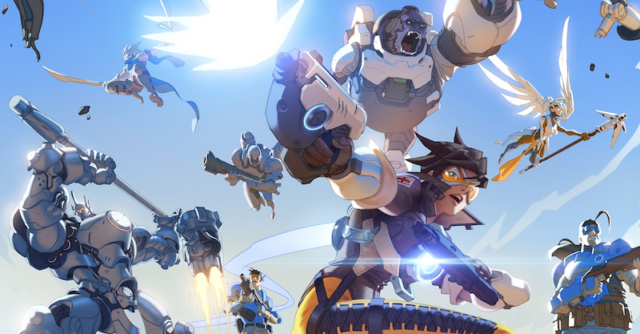
overwatch

Excellence in Multiplayer
Overwatch: Blizzard Entertainment

Most Memorable Character
Uncharted 4: A Thief’s End: Nathan Drake

Most Promising New Intellectual Property
Overwatch: Blizzard Entertainment

Most Fulfilling Community-Funded Game
Starbound: Chucklefish Games

Excellence in Gameplay
DOOM: Bethesda Softworks / id Software

Excellence in Design
Dishonored 2: Bethesda Softworks / Arkane Studios

Excellence in Narrative
Uncharted 4: A Thief’s End: Sony Computer Entertainment / Naughty Dog

Matthew Crump Cultural Innovation Award
That Dragon, Cancer: Numinous Games

Gamer’s Voice Multiplayer
Arena Gods: Supertype

Gamer’s Voice Single Player
Owlboy: D-pad Studio

Fan Creation of the Year
Brutal Doom 64: Sergeant_Mark_IV

Trending Game of the Year
Overwatch: Blizzard Entertainment

ESports Game of the Year
Overwatch: Blizzard Entertainment

Tabletop Game of the Year
Arkham Horror: The Card Game: Fantasy Flight Games

Mobile Game of the Year
Pokémon GO: Niantic

Video Game of the Year
Uncharted 4: A Thief’s End: Sony Computer Entertainment / Naughty Dog

Thomas McInerney To Run Altaba; TellTale Games CEO Passes Reigns Back To Co-Founder

Media companies saw some major personnel this week, especially when it comes to streaming video, and Yahoo’s future as Altaba becomes a little clearer.

Scott Stuber has joined Netflix to head the development, production and acquisition of high-profile feature films. This is a big hire for the streaming service, which has become more aggressive in creating original films.


After Yahoo joins Verizon later this year, its remnants will become Altaba, which will continue to oversee holdings in Yahoo Japan and Alibaba. It was revealed this week that the spin-off company will be run by Thomas McInerney, the former chief financial officer at IAC. This announcement could shed more light on Marissa Mayer’s future relationship with the company. Mayer said in January that she would step down as CEO once the acquisition was completed, and she could receive a $23 million severance package when she does, although some believe that she may remain on in some capacity.


Nissan Europe has promoted Philippe Saillard to head of sales and marketing from his previous role of vice president of sales.


USA Gymnastics CEO, Steve Penny, resigned from the organization this week amid controversy. Penny had served as both president and chief executive officer for 12 years.


The visual effects and VR company, Digital Domain, announced that Amit Chopra, the company’s executive director and chief operating officer, has been appointed to the role of CEO for North America. In this capacity, Chopra will “direct the company’s North American operations, seeking to capitalize on emerging opportunities for visual effects, virtual reality (VR) production and original immersive content,” according to a press release.


Four months after its acquisition by Warner Bros., Machinima’s CEO, Chad Gutstein announced that he is leaving the company to pursue other “entrepreneurial projects.” Warner Bros. named Russell Arons as the new general manager of Machinima, and he’ll work with Gutstein on a “multiweek transition plan.”


Warner Bros. also promoted Jay Levine to executive VP of Warner Bros. Digital Networks Group. He will be responsible for overseeing the day-to-day operations, which include ad sales, distribution, finance, business development and planning.


Vimeo is gearing up to launch a subscription-based VOD service, and it has hired Alana Mayo, a former VP of production at Paramount Pictures, as VP and head of original development. Additionally, Kesila Childers was hired as director of content development and Kelly Miller (formerly with Hulu) as the director of content acquisitions.


Sony Pictures Animation promoted Pam Marsden to head of production. Marsden has been overseeing the company’s growth recently, which has increased its output and tripled its staff size.


Bravo Media hired Noah Samton as SVP of current production company. In this role, he leads the team that oversees unscripted shows, including The Real Housewives of New Jersey, Don’t Be Tardy… and Summer House, in addition to the upcoming Relative Success with Tabatha Coffey and Stripped.


Michael Green stepped down as executive chairman of the digital content company, Studio71. However, he will remain on the company’s board. Additionally, the company announced the hire of Michael Schreiber, the former president of Tapestry Films, in the newly created position of president of scripted content.


Kevin Bruner announced in an internal email that he is stepping down as CEO of Telltale Games, maker of critically acclaimed narrative games such as The Walking Dead, Game of Thrones, Batman and more. In the email, he cited the company’s aggressive growth as the reason to pass the reigns on to someone who can take the company to the next level. That person, for now, is co-founder Dan Connors, who originally served as CEO until 2015.


Sega Europe made three senior promotions to its marketing and brand team. Anna Downing, who has been with the company for seven years, has been named marketing director for Sega Europe. Rowan Tafler is now the head of brand for Sega’s Searchlight business, which works with studios to release games on behalf of independent developers. Lastly, Peter Oliver is the head of public relations for Sega Europe. In this role, Oliver will oversee the implementation of PR campaigns and corporate communications across EMEA territories and the US for the company’s core pillars: Creative Assembly, Relic Entertainment, Sports Interactive, Sonic Team, Amplitude Studios and Sega Searchlight.


Frostkeep Studios, which was quietly formed by World of Warcraft veterans Solomon Lee, Mat Milizia and Jeremy Wood last year, officially announced itself this week. The company’s first project is a team-based survival game called Rend.


The Japanese video game and entertainment giant, Bandai Namco is buying out its partners in the Anime Consortium Japan (ACN). ACN’s primary business is in licensing and streaming Japanese animation content abroad through its Daisuki website. Bandai Namco, which currently owns a 36 percent stake, said that it will spend $18.5 million (JPY2.1 billion) make ACN a wholly-owned subsidiary.

What Makes Turtle Wax’s ESports Partnership With OpTic Gaming Shine

Turtle Wax isn’t the first company you think of when it comes to eSports, but the non-endemic brand has found a way to drive awareness through OpTic Gaming’s huge fan base. The company used last year’s entry into eSports to experiment with ways to tie OpTic Gaming’s love of cars with Turtle Wax products.

Courtney Lauer, director of marketing for Turtle Wax, told [a]listdaily that the experiment was a resounding success. “Going into this partnership last year, we had some great insights on why we thought it was going to work with OpTic Gaming’s love of cars and passion for driving, but we didn’t know what the results were going to lead to,” Lauer said. “It passed all expectations and was a huge success.”

OpTic Gaming helped Turtle Wax gain over four million impressions across all activities, and the 70-year-old company saw 25 percent organic growth across its Twitter and Instagram accounts from the eSports organization’s fans.

“From a metrics standpoint we saw a ton of success,” explained Lauer. “Being a part of our overall marketing program, we saw positive results in sales as well. It’s a good indication that their fan base is following the team and players believed in the lifestyle OpTic was putting out. It was a great success for us and it’s why we’re in year two of this partnership.” The renewed partnership is again focusing on content-driven storytelling through individual player integrations, plus the brand will join OpTic on the road with fan activations at two key gaming tournaments throughout the year.

Lauer said Turtle Wax is working with the team on a content-centric narrative that organically incorporates the brand into OpTic’s lifestyle around their passion for cars. Individual integrations with team members Ian “Crimsix” Porter and Austin “Pamaj” Pamajewon will showcase different aspects of gamer life.

Professional Call of Duty (CoD) player and avid car enthusiast, Ian “Crimsix” Porter owns a Porsche Cayman GT4. Throughout the year, fans will enjoy watching the progress as Crimsix upgrades and details his ride with the help of Turtle Wax. Lauer said Crimsix will share his passion for performance and automotive know-how via his and OpTic’s social channels.

Last year, Turtle Wax decorated the OpTic Gaming House in Chicago with custom graffiti art to serve as a backdrop for livestreaming and videos. This year, the company is bringing that type of messaging on the road.

The debut of the Turtle Wax footprint will take place at the Major League Gaming (MLG) Dallas tournament for the CoD World League Open March 17 through 19, at the Fort Worth Convention Center. There, the brand will unveil a custom co-branded car wrap on Crimsix’s Porsche at its booth. Fans will be able to pose with the car and receive an animated GIF that can be shared on social media using #TurtleWaxGaming. The brand will also distribute samples of its new 2017 line of products, providing fans the opportunity to use some of the Turtle Wax products featured in OpTic’s content.

Lauer said the car will also be present at the CoD World League Open at MLG Anaheim at the Anaheim Convention Center from June 16 through 18. “We saw a big opportunity to engage one-on-one with fans at MLG events,” Lauer said.

Another part of the partnership focuses on team director, Austin “Pamaj” Pamajewon, who will capture the lifestyle elements of pro gaming through a series of videos from the inside of his BMW. Lauer said Pamaj’s brand of humor and social nature will give viewers a special inside look at Team OpTic and their friends on the road, at the gym or hanging out at home.

“We have a new Power Out (upholstery cleaner) line for 2017, and Pamaj will tell that interior car care story in his clever way,” Lauer said.

Lauer also stated that other elements of the partnership will include social media promotions and giveaways, as well as road trip shoots that show the guys living on-the-go, capturing and sharing content at every turn.

“Throughout the summer, we’ll have different touch points with the team on the road and from their house,” Lauer said.

YouTube Explains ESports Partnership With FaceIt

YouTube took a huge step further into eSports today with a multi-year partnership with leading eSports platform FaceIt, creators of the ESports Championship Series (ECS). YouTube will become the exclusive livestreaming home to ECS, which features Valve’s Counter-Strike: Global Offensive (CS:GO). Beginning March 25, gamers can tune into ECS Promotion matches on youtube.com/faceit.

Ryan Wyatt, global head of gaming content at YouTube, told [a]listdaily that FaceIt was an obvious choice when jumping into the eSports space with its biggest investment to date.

“The explosion of growth in CS:GO is fascinating and it’s massive on YouTube today,” Wyatt said. “I like how FaceIt is set up. It’s the biggest eSports product in world, but they have an interesting setup in that we’re able to sell and monetize the content and do more in-depth product integrations and support around CS:GO. Google’s sales force is handling that, and allows FaceIt to focus on great content.”

Wyatt believes YouTube Gaming can help FaceIt attract much bigger non-endemic brands to eSports by streaming this content to its massive gaming audience. “We’re in front of partners and clients because we have a lot of different gaming content that we’re selling, but one area of interest is eSports,” Wyatt said. “We’re not just selling the ads, but we’re interested in creating deeper brand integrations.”

Wyatt added that the work that Riot Games did with Coca-Cola and American Express and what Turner has done with Buffalo Wild Wings and Arby’s has paved the way for bigger brands. ESL also brought Sprite and Gillette on board for its Intel Extreme Masters global tournament.

Wyatt said the reason Google looked at this opportunity as an exclusive multi-year deal was so that they could leverage the Google sales force around the world. “We can help massively change the economics of these deals in by bringing more money to the eSports ecosystem,” Wyatt said. “YouTube has the biggest gaming audience. It’ time to introduce more gamers to eSports. We have a lot of people on YouTube who don’t know what eSports is. We feel we’re well-positioned to expand this audience.”

This deal comes at a time when the future growth of the industry still needs some help when it comes to financial structure and production costs. “ESports leagues are expensive to run and we need to figure out a way to sell these sponsorships in a meaningful way,” Wyatt said. “It’s the perfect time to take eSports to more mainstream brands. It’ll take a village to do that.”

Wyatt believes YouTube has an advantage in the eSports market because of its focus across the entire gaming landscape.

“A lot of people in the gaming space appreciate authenticity, and having relationships with a lot of people in the industry has helped us from a personal perspective,” Wyatt said. “ESports is just a part of that space. We’re taking a holistic approach with gaming from mobile, to VR, to livestreaming and eSports. A lot of content falls in between there. We’ll move through this space in a smart way and make smart investments for teams, players and leagues and the overall community. We’ve been methodical and particular in figuring out how to invest in eSports.”

Thanks to its previous partnership with ESL and its Counter-Strike tournaments, YouTube has become the top destination for the most popular game in eSports today. “There’s such an appetite for CS:GO content; it’s massive,” Wyatt said. “It’s in the top five for us on our platform today. We now have two of the most premium CS:GO eSports platforms on the site and that resonates well with the community. ESL’s CS:GO and FaceIt are the gold standard for league CS:GO content today.”

Wyatt said these two CS:GO platforms are very complimentary and share in one another’s growth, tapping into the huge user base on the platform, which should be a win-win for both companies.

“ESL is a competitor, but there’s a working cadence and respect across the entire eSports landscape,” Wyatt said. “As an industry, we’re seeing companies working together to provide consistent programming every day because it’s in everyone’s best interest to have transparency and ensure the eSports community has engaging content.”