LA Rams Star Rodger Saffold Tackles NFL, ESports And Hollywood

Rodger Saffold is sitting in a throne-like chair, head down, eyes fixed on his phone and muttering words of encouragement under his breath to the proceedings playing out on the screen.

If you were a fly on the wall, you’d think the starting offensive lineman of the Los Angeles Rams was watching film of every false start he’s ever committed in his career. Or, in some instances seconds later, all the times he pancaked a defender into oblivion.

But on this sunny Southern California Friday morning in July, preseason is still weeks away and there are no NFL opponents in sight. The seven-year football veteran is watching the waning moments between Rise Nation, the eSports team that he owns, taking on Cloud9 in the Call of Duty World League Stage 2 Finals.

"St. Louis Rams guard Rodger Saffold during a NFL football game on Sunday, Dec. 28, 2014 in Seattle WA. The Seahawks won the game, 20-6. (Photo by Scott Rovak/St. Louis Rams)"
The Rams selected Rodger Saffold with the No. 33 overall pick of the 2010 draft. (Photo by Scott Rovak/St. Louis Rams)

The Rise Nation quartet is playing 30 minutes away at the ESL Studios in Burbank, but Saffold can’t attend because he previously committed to working out on the rooftop of a Beverly Hills hotel as part of an episode that will appear on the upcoming E! docu-series he’s starring for in Hollywood and Football.

Saffold, a Midwesterner through and through, is still getting accustomed to life in the big city. He was born in Bedford, Ohio and played college ball at Indiana for the Hoosiers where he majored in business management/finance with a minor in accounting before the St. Louis Rams selected him with the No. 33 overall pick in 2010.

He’s weeks removed from officially moving his wife, Asia, 3-year-old daughter, Aaliyah, and 1-year-old son, Price, from St. Louis to Los Angeles, where the Rams recently relocated. Although his infinity pool outside offers scenic views of the San Fernando Valley, he stiff-arms every room of the two-story Woodland Hills abode he’s staying in and heads straight to the garage, where after shuffling through boxes of unpacked clothes, a broom-closet-like space serves as his gaming compound. This is the only part of the house Asia has allowed for his 6-foot-5, 330-pound husband to play video games.

Saffold is entering the third year of a five-year contract he signed in 2014 that was worth $31.7 million, with $19.5 million guaranteed. Although his position versatility makes him a valuable commodity, three of the six seasons he’s played have been cut short due to injury.

In addition to relocating his family to Los Angeles, he spent the offseason rehabbing the shoulder injury that cut his 2015 campaign to just five games and is focusing on yet another position change—he’ll be the starting right tackle this year. He also used the spoils he’s earned to keep a promise he made to his mother when he was 9-years-old by buying her a Jaguar for her 60th birthday.

Saffold is far more than a football player. In addition to his eSports business endeavors, the 28-year-old owns Spirited 76, an indie record label. He’s also been featured in Gillette commercials, and now, the E! reality series which will show him and his Rams teammates adjusting to playing football in LA.

Although Tinseltown doesn’t typically offer glitz and glamour to video game stars, the made-for-Hollywood Saffold is an affable character who can break those barriers.

Dressed in full Rise Nation regalia, Saffold is soon pumping his fist in the air as his team wipes away Cloud9 with a 4-to-0 sweep. He shuts off the livestream, and we now have his full attention.

What kind of an impact have video games had on your life?

Growing up, everyone knew that I loved the challenge in video games. I used to play a lot of adventure games growing up. The first game that grabbed me was Super Mario—beating Bowser was huge for me. After that, it just kept going and growing on me with games like Star Fox. Call of Duty took everything to the next level. In college, I was on Modern Warfare constantly. When I was at Indiana, we went to our first bowl game [in 2007], and the gift was an Xbox 360. ‘Are you kidding me?’ I bought Call of Duty, and I was playing it like a mad man. I was better than everyone on my team, so then I started playing online. I was super passionate about Call of Duty, so I thought to myself ‘what’s next?’ People started telling me to organize an eSports team after I started streaming on Twitch, and I’m like ‘ok, that’s a no brainer—let’s get it done.’

How did you identify that eSports was the next big thing way before the big wave of the last 18 months came in? Why were you so intrigued in this being a legitimate investment avenue for you?

I just wanted to invest in something I was passionate in. Back then, it wasn’t even expensive. We were able to make the team up from scratch. I was able to use my resources from the NFL to help me get things going. My wife was making our jerseys at one point. Our amateur team got involved within the pro players system, and then out of nowhere, I’m in COD championships. Once we reached there, we’re like ‘this is big—we can really do this.’

What do you think makes a great eSports title? Are you thinking of expanding into other titles?

Call of Duty is one of the hottest games on any console—period. Now, no matter how many different games come out, it’s still destroying sales numbers. Why not get into that? As it’s continuing to grow, I want Rise Nation to be recognized as an international organization, and in order to do that, I need to expand. With the expansion, it all comes down to timing and equity. I’ve been able to handle everything myself so far. Now, it’s time to bring in possible investors to be able to help out with the workload. It’s pretty much been a one- or two-man thing with me and my friend and co-owner Kahreem Horsley, who operates the day-to-day. We’ve been working together to get things done. We have already expanded to an Overwatch team, which we believe is definitely going to be taking off. It’s getting perfect ratings; the patches have been amazing. They have in-game content and in-game sales, which is really good. Then it’s time to go after the big hitters like CS:GO and a League of Legends team. But that takes time.

How do you think you could branch out beyond the United States to perhaps to the Asian market?

For one, some of the best teams in CS:GO are not American teams. They’re European teams. To do that, you need a European office. I’m not the first person to go out and start looking for one. I know Team EnVyUs did the same thing, and now they have a European office. You have managers based on the circle that they’re in. To even get to Asia, there are people from companies that travel to Singapore and other places around the world to work in eSports. In order to get those relationships, you have to talk to them. Then through sponsors, they introduce you to other people. Now, you’re picking people’s brains who are the companies and the organizations in those areas. Then you work from there. It’s almost like you’re in business with your friends. You design these relationships. Our partners are really great and I’m really excited to work with them. GFuel EnergyScuf Gaming and Kontrol Freek—they’ve been extremely well. I love working with those guys.
giphy (20)

How has it been working with brands? What kind of feedback are you getting from them?

I think brands want to work with me because of my background, but I also have to remember to humble myself. This is not the NFL, or any type of sports-related business. The only thing that’s going to make sense is your following based off of social media, or your livestream views. Endorsers are only going to talk to you as long as you continue to push their product, and people can see their product. One thing we had to do was make sure we got our following up. Now we have 40,000 followers on Twitter, which is good. I think you have to go out there and hunt these guys down. You have to literally say ‘hey, this is what I’m doing, this is what I would like to do; I think this is a great opportunity for you, as well as myself.’ Then of course, I put myself out there, too, to use me and my following to help raise awareness of what eSports is, to try to get the NFL kind of involved, you can use me . . . you get eSports, you get the NFL and now we’re taking over. That’s the whole part of this; we’re taking over. We’re literally growing at an alarming rate—almost too hard to handle.

What have you learned on the business side through the entire process of eSports? Are you glad you made the move into it?

The business side of eSports has definitely not been the easiest thing. I’ve definitely learned a lot. I understand that this is a true business. You can’t come without being prepared; you can’t come in without having the right paperwork; you can’t come in without being a true organization. You have to have your LLC in order, you have to have your taxes in order, you need to be a business because all of these teams are small businesses. We have to handle it as such. I don’t handle any type of deal with any team, any sponsors, without talking to my lawyers, talking to my marketing guys through my agency, talking to the agencies that deal with the teams I’m looking into buying. All of these things are factors. When it comes down to profit and loss, everybody needs to know. It has to be known before you make any type of transaction. I’ve had many calls where everything looks good, but it’s not exactly where you want to be and sometimes, you have to back out of it.

Rick Fox, Shaquille O’Neal and Mark Cuban, among countless others, also have invested in eSports. Why do you think eSports is such an enticing and attractive space for sports figures?

I think that a lot of these athletes are jumping into eSports for one reason—it’s been widespread information, and it’s become an actual sport. By actual sport, I mean it’s recognized by ESPN. Because of this, you’re going to have guys that are interested. Who is telling these guys that this is something you need to jump on? The community is getting so big. I’ve [been called an] innovator for athletes getting into eSports. Next thing you know, everybody is getting involved because they see how profitable this stuff is getting. It’s not even just the competitions. It’s the money off of the game, through marketing, in-game purchases, merchandise and sticker prices for teams. It’s getting out of hand with how big it’s getting. The thing I like, with Rise Nation, I don’t have a bunch of people with their hands in it. I continue to want to be that guy. I also know that if I’m going to continue to make this organization bigger, I’m going to need partners, and that’s just going to be the next step . . . This is going to be so lucrative that not a lot of people are going to be able to control it, so I need to get everything together with my organization and get this going.

"St. Louis Rams guard Rodger Saffold and St. Louis Rams offensive tackle Rob Havenstein during the game against the Arizona Cardinals. (Photo by Scott Rovak/St. Louis Rams)"

Broncos offensive lineman Russell Okung also invested in an eSports startup. What is the conversation like when you’re talking about eSports with players from the NFL community? Are they interested in a similar business endeavor? 

It’s weird. I get a lot of people that run up to me randomly like, ‘hey, don’t you own a team?’ and I’m like, ‘yes I do own a team.’ They’re like, ‘wait a minute—they’re Rise Nation? I heard that they’re really good.’ Then they’re like, ‘how can my little brother get on the team?’ I’m just like, ‘aw, man!’ I can’t tell you enough how many people have wanted their sons on the team, or how they can get involved and I gave them the plan of how many hours go into it, how much work it is, and they’re like, ‘I don’t know if we can do all that.’

You have other passions aside from video games. You recently signed on for E!’s new reality show Hollywood & Football. You’ll also be featured on HBO’s Hard Knocks, too. Can you give us a sneak peek into what we’re going to learn about Rodger Saffold?

Through Hollywood & Football fans can learn about my businesses like Rise Nation, which a lot of people don’t know. It’s kind of funny, I’ve done interviews, tweeted, posted on Instagram and people are still like, ‘wow, I never knew that an NFL player owned Rise.’ I continue to try and branch out myself that way and spread some eSports awareness. I also have my own record label in Spirited 76. Plus, I just want you to know about me and my family. I’m pretty much a goofy guy. I like to have fun and do different things with my friends, so you’ll get to see that.

How’s the move to LA been? What will your close proximity to the entertainment capital of the world, Los Angeles, open up for you?

It’s my first time living on the west coast. Everyone knows about LA. There’s definitely a bunch of opportunities. The reality show is one of them, to branch out and show myself a little bit more, which we really didn’t get to do in St. Louis. All of the interviews and commercials, they’re all great, but I just want to make sure I don’t change and become too Hollywood, and keep my family grounded, too. It’s a give-and-take battle, and it’s a constant one.

Speaking of personal branding, you were a big hit with the Gillette campaign earlier this year. Do the bigwigs in Hollywood now have you on speed dial for the next big marketing campaign?

8CF58bDlPGbsPJs_

It’s extremely tricky. When I’m doing stuff off the field, you don’t want to do too much. You want to have that balance. You always have to remember that the check to do a commercial is good, but you’re not making anywhere near what you are as an athlete. With Gillette though, I’m already a dancing machine. I know this already in my heart of hearts. Now doing that with a bunch of pads on and cleats is a little bit tougher. I’ve also done a funny PSA on adopting animals. Now, in LA, it’s just going to keep coming in, so what are you going to do with that? 

How else do you spend your down time? Do you play Madden?

Nah, man. I don’t play any type of Madden. I will tell you why—because I live Madden. I play Madden every day of my life. Your offseason is three minutes, mine is six months. I’m not going to be playing Madden when I’m already living it 24/7. Who wants to look at football when you’ve been practicing for three hours and you’ve been in the film room for about nine hours a day. There’s just no way. No way.

Your Madden rating was an 83 last year. What are you going to have to do on the actual field this year for the Rams to make that better?

The only thing that I can do is stay healthy. This game is just hard, period. It’s rough trying to watch the game from the sideline. I’ve already gone through a couple of shoulder surgeries. Everything is good now. I have a very positive attitude and outlook on this team, and on myself. The biggest thing I need to do is stay healthy and continue to play the way I need to play. I’ve had a bunch of unknowns happen to me where I’ve had to switch positions. I’ve played all four positions in one game on the offensive line, which is completely crazy. I’m definitely confident in my ability. I have personal goals that I need to obtain. I intend on having a fantastic year and just opening holes for [running back] Todd Gurley.

The spotlight will be much brighter on you this year since you’ll have to keep the No. 1 overall pick in Jared Goff upright under center, and open holes for Todd Gurley. Do you feel any extra pressure having to protect the franchise saviors? 

It wouldn’t be the first time. When it comes down to protecting these guys, protecting the franchise, Sam Bradford was the first pick overall, I was the first pick in the second round. It’s all about protecting the quarterback. We used to have Steven Jackson in the backfield. He was just a guy that was all about grinding. Now this is just a new lineage coming up. We’ll see how it goes. I think Todd Gurley has shown himself to be a great running back. He’s going to have a lot of challenges this year. People are going to design defenses just to stop him. That’s going to put a lot of pressure on Goff. He needs to make sure that he’s able to throw the ball, do it on time, make his reads, and read blitzes. There’s a lot of work that goes into this. It’s also going to take all 11 guys to make sure everything happens. I know that when Todd is running the ball, the wide receivers are blocking as hard as they can, the offensive line is blocking as hard as they can. We’re trying to move people, we’re being physical and we’re a bunch of bullies. That’s all I can say. We’re a bunch of bullies.

What philosophies—whether it be preparing for gameday, coaching or business—translate over well from the NFL to eSports? Have you used some of the tactics you’ve learned from, say, Jeff Fisher on your own players?

Yes. I’m definitely using the same process. Mentally, you have to be sharp in order to work on the business side. For my players, they definitely have to be on their A-game. We consider our players like family. We know these guys through and through. We hang out with them, we play with them on the games. I don’t know how many people do that, but we work together so you have to have that type of relationship. For them, they also know we’re paid based on our performance, and how we play. They’ve been killing it this year. When it comes to playing football and dealing with coaches, there’s not a lot you can say to these players. Those leadership qualities that I possess from playing football help out a bunch. When I talk to my players, I mostly talk about consistency. Consistency, hard work, be driven, play with a chip on your shoulder. I’m not like, ‘get your ass in there’ or ‘don’t jump offsides!’ Like what does that mean? Nothing is going to come from that stuff. I basically just tell them that we need to be consistent and make money together. My players on Rise—Danny, Jerry, Sam, Nick—they’ve done a fantastic job complementing each other and they continue to show why we’re an elite team. I stand behind those guys 1,000 percent. I really appreciate them and Kahreem. I have to thank those guys, especially right now. They’re making me look good, they’re putting me in a great position for great opportunities. I wouldn’t be doing any of this if it weren’t for those guys.

Follow Manouk Akopyan on Twitter @Manouk_Akopyan

Peter Moore Explains Electronic Arts’ ESports Strategy

Electronic Arts was a very early entry into competitive gaming, given the natural correlation between sports games and video game competitions. The company has partnered with ESPN on television programming over the past decade with Madden Nation, Madden Challenge and Madden Championship. Additionally, the FIFA Interactive World Cup has been going strong globally for years.

With Electronic Arts now firmly committed to competitive gaming at all levels of play, the company has assigned long-time game industry vet Peter Moore as executive vice president and chief competition officer. EA kicked off some competitive tournaments around UFC 2, Need for Speed, FIFA and Madden at its EA Play event at E3—and that’s just the tip of the competitive iceberg. Moore talks with [a]listdaily about EA’s strategy in eSports in this exclusive interview.

We’ve seen CS:GO and League of Legends sell out soccer stadiums and the Staples Center. What role do you see traditional sports stadiums play for what EA is doing moving forward?

The events in the arenas are important to be aspirational. Yes, we’re going to be there, but the bottom of the pyramid that is competitive gaming is the focus. We want to make stars out of all of our players, not just the people who can be at the Staples Center, or Madison Square Garden, or the SAP Center in San Jose. They’re important to aspire to, but at EA, we’re a players’ first company and we want to make sure that anyone can compete in competitive gaming, whether it’s Madden or FIFA or Battlefield and have some fun at the level I play at.

My analogy is sports itself. I was a descent soccer player as a kid, but I was never going to play for Liverpool. But I loved what I was doing at the level that I was doing it at, and it really consumed me. That’s where we think we play an important role. Yes, those events at the Staples Center or the big stadiums are incredibly important, but we believe the real focus needs to be on the entire pyramid of competitive gaming, not just that little sliver at the very top.

How is eSports impacting the way games are being developed at EA?

Our development teams are looking through a different lens. Our goal is to still provide a tremendous premium experience where you pay your $60 for your game. They’re live service games with fresh content coming in, but we look at the future here. We recognize we’ve got to put more and more competitive gaming modes in the games that allow them to be used as competitive gaming.

It’s about getting smaller maps; it’s about looking at team play in a different way; it’s about spectator view. We need to get matchmaking right with our platform. We need to make sure there’s integrity in the games, so we’re building anti-cheating mechanisms. There’s a lot of work to be done. We’re not in denial that we’ve got to do some work here, but it’s a long-term strategy for us. We truly believe in competitive gaming at EA. Our dev teams in every studio around the world love the challenge. If the genre is compatible, appropriate and relevant to competitive gaming, you bet there’s work going on right now to build modes in there.

Traditionally, eSports has been PC-focused. What opportunities do you see for the console space?

We’ve seen some successes, like our friends at Microsoft with Halo. There’s the ability for us to look at different ways to play. The challenge right now is that these games are built one-versus-one, peer-versus-peer. We’ve got to get camera angles right. We’ve got to think about how we can build four-versus-four. You can play that in both Madden and FIFA, but there’s a lot of work to be done. Nobody wants to be the goal keeper. So from that perspective, how do we build tournaments if it’s one versus one that you compete for your country? Things like the Ryder Cup, think about Grand Slams, think about points. Those things are team-based, even though they’re individual sports. We’re looking at all different types of mechanisms and actually looking at real sports to take advantage of the experiences and the things they built there and applying them to competitive gaming.

Speaking of real sports, how aware are the traditional sports leagues when it comes to what’s going on in the eSports space?

For our partners at FIFA, NFL, NHL, NBA, UFC—every single one of them has eSports as one of their top three priorities—at least to understand it, then to be able to be able to leverage it. They recognize one thing: this is a demographic that’s coming through, that’s looking at sports in a different way, and all of our partners in the licensed sports space say, ‘We’ve got to have a position here, otherwise we’re going to be an aging demographic if we don’t get in here and do something with our games.’ They’re all very supportive, all very collaborative, and all working very hard with us to make it a reality.

What opportunities do you see with Fantasy eSports?

It’s still a little controversial with regard to the utilization of money. We know outside of the US, it’s a little easier, where gambling is ‘legal.’ I’m mixed on it because you start hearing about match fixing. It becomes like real sports, where people are taking bribes to throw games. So we look at this and we look at our friends in this space—the FanDuels and DraftKings certainly here in the US—and try to figure out where there’s a relationship there. But always remember that we’re a licensee not the licensor, so we have to work in collaboration and with the approval of our league partners, and their comfort levels of fantasy and where that comes to play.

What eSports opportunities do you see in the mobile space, given the success of Vainglory, Hearthstone and Clash Royale?

Well, look at our Madden mobile franchise, which is doing incredibly well. The Ultimate Team mechanic has huge opportunities of being the kind of competitive gaming mode, where you build your ultimate team, I build my ultimate team, and we put them in the games against each other. There’s still work to do with mobile. It’s not easy to actually show it because it’s a very much a heads-down, individual solitary-type environment and team play is a challenge. But looking at the Vainglories and the Hearthstones that are doing relatively well—not yet scaling yet—but it’s certainly on our radar. I think it’s going to be an important part of our future.

What potential do you see for eSports with Titanfall 2 and Battlefield 1?

There’s great opportunity. The priority right now at both Respawn and DICE is to ship a top quality game. The other advantage you have now is live services and updates, which allows us to bring modes down the line. We have so much opportunity to build new modes into them as part of the regular cadence of delivering content. I think you’re going to see that both of these games will have long tails. They’re not annualized games. They’re games that are going to be a very important part of a gamer’s life for many, many years to come, as we’ve seen with our Battlefield franchise—where 9 million people in Q4 were still playing. Our ability to deliver competitive gaming modes over the coming months and years is right there for us, and we intend to do that.

Logitech Talks ESports And New Mouse Geared To Pro Players

Logitech has been a key member of the eSports ecosystem since 1997. With nearly 20 years of support in the space, their latest foray expands on that commitment with a mouse with and for professional eSports players—the Logitech G Pro gaming mouse—announced this week.

“We’re excited that [eSports] are finally reaching that tipping point now because we’ve been doing it for so long. It’s finally getting the mainstream recognition and we think it deserved for a very long time,” said Logitech’s Ujesh Desai, VP and general manager of gaming. “We want to continue that partnership with the eSports teams and the eSports players.”

For Desai, whose daughters lean toward watching Twitch and YouTube instead of traditional sports on TV, this is this generation’s sport. “It’s validating for me to see that now coming into the spotlight.”

In order to develop the new Logitech G Pro gaming mouse, the brand worked side-by-side with players to create the ideal eSports mouse. Contrary to the Swiss Army knife-style mouse you would expect, players opted for a much less complicated design that focuses on accuracy, provides a spring button tensioning system, and gives players their desired agility by being lightweight.

To understand what players truly wanted and needed from a gaming mouse, Logitech benefitted from having an in-office testing ground with their eSports facility.

“Literally 10 feet from my office, we have an eSports facility that we made,” said Desai. “We want to see them using our equipment and how they work with it.”

Reuters Goes For Storytelling Gold By Shooting Rio Olympics In Virtual Reality

The all-time greats of Michael Phelps, Katie Ledecky and Simone Biles have been dominating the daily headlines from the 2016 Olympic Games, stockpiling medals as if were a Gold Rush.

Fans who want a better focus, or a bigger picture on the manifold moments from Rio constantly ranging from triumph to defeat by the minute, will be thrilled to know that Reuters is using the Summer Games to showcase the athletes that will inspire generations to come by using their gravitas in the fairly nascent storytelling medium of virtual reality.

Samsung is standing firmly in the center of the VR revolution—and even more so in Rio. Before the Opening Ceremony, the tech conglomerate collaborated with Reuters for the Focus 360 partnership to bring virtual reality and 360-degree video and photography to all of Reuters’ platforms. Reuters journalists will be using Samsung Gear 360 cameras and editing technology, which is not yet publicly available.

“Reuters’ core business is based on delivering trusted information and news to global consumers and publishers, in all available formats,” Jess April, Reuters’ head of strategic partnerships and program management, told [a]listdaily. “VR and 360 photography are unique, visual mediums to tell the world’s stories—and as a partner to so many media organizations, it’s important that we’re using, testing and distributing the latest multimedia news products.”

The Rio Games have unofficially turned into the VR Olympics, immersing viewers like never before. Samsung is also spearheading 85 hours of VR programming with NBC over the 16-day event.

Getty Images is another news organization pushing the limits of storytelling with a similar strategy to Reuters. Getty Images jumped head first into the VR pool this year to start shooting over 180,000 events with 360 cameras—photos taken by underwater robots and shots in VR have already surfaced from the Summer Games.

Across the pond, BBC has introduced BBC Sport 360, an experiential service for the UK audience, and brands like Kellogg’s have used the Olympics for marketing a 360-degree video. Even athletes from the US Cycling Team are all in on VR, using the technology to train for the games.

Jess April joined [a]listdaily to further discuss how Reuters will provide rich VR and 360 content to meet the changing needs of customers.

2016 Rio Olympics - Athletics - Final - Men's 100m Final - Olympic Stadium - Rio de Janeiro, Brazil - 14/08/2016. Usain Bolt (JAM) of Jamaica celebrates after winning the gold medal. REUTERS/Kai Pfaffenbach
Usain Bolt of Jamaica celebrates after winning the gold medal. (REUTERS/Kai Pfaffenbach)

What is the mission of Focus 360? How will you measure success?

There are two goals associated with this program—the first is to create unique, compelling and exciting content that our Reuters.com readers will enjoy and find value in watching. The second is to offer a new format of storytelling to our global publishing partners, giving them the opportunity to leverage Reuters content to enhance their own platforms and stories. In addition to watching the traffic and views on Reuters.com, we’ll be looking to see how many of our customers download or embed our VR and 360 stories to determine success.

Why was Samsung the perfect partner for this initiative? How do you plan on leveraging their suite of VR services?

This partnership came together in an organic way because our editorial team had a desire to begin capturing VR content, and they had already been using and testing the Samsung gear. Given a sense of familiarity with the equipment, we felt confident that we could scale our usage across the globe, and deliver new content for our customers and Reuters.com visitors. Samsung is also a great marketing partner given its eagerness to enable Reuters and other publishers to do things that they have never done before—but asking that we stay true to our editorial principles. Our collaboration on this project allowed us to continue to report on news the way we always have, but now with the latest 360 technology.

Getty Images recently got into the VR fold, too. How will 360-degree video and VR change journalism for storytellers across the world?

Our VR and 360 video provide our users with more information about what happened in one particular moment in time, giving a new angle to our storytelling. In addition to enjoying Reuters award-winning photography and video coverage, our readers and customers can now go in-depth with our journalists to find out more about their stories—What is happening behind the camera? How were bystanders reacting? What was the weather like that day? A 360 photo or video provides a new perspective to our unmatched global coverage.

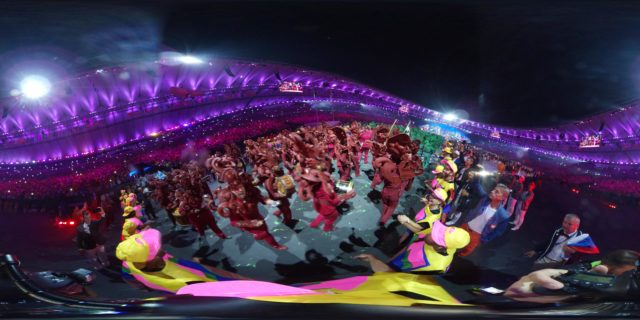
The Opening ceremony at Maracana, Rio de Janeiro, Brazil. (REUTERS/Antonio Bronic)
The Opening ceremony at Maracana Stadium in Rio de Janeiro, Brazil. (REUTERS/Antonio Bronic)

What is it going to take for immersive storytelling methods to be mainstream?

Like all new innovations, it will take public adoption of the latest and greatest technology for immersive storytelling to truly go mainstream. As people upgrade their phones, computers, tablets, watches—whatever gear they use to consume content—publishers will see increased views and more interaction with VR. This is a new medium for publishers—and as a breaking news operation, we’re experimenting with how this content can add more value to our readers and our business.

How can advertisers and marketers begin incorporating 360-degree video and VR into their brand strategy? 

By working with publishers, who are true experts in storytelling, there’s no limit to what advertisers can do to enhance their campaigns and interact with their customers. There’s an amazing opportunity to exercise the art of creativity and surprise by using VR. It’s a great time to get in on the ground floor with 360 video and advertisers and marketers should jump to get involved with this new medium of storytelling.

VR technology is still in its infancy. Do you believe your audience is ready for photography and video VR? What are the numbers indicating for previous projects?

The Reuters.com audience is extremely savvy and the adoption of interactive multimedia stories has skyrocketed. Through the launch of Reuters TV, our video news app, we’ve seen new users with an insatiable appetite for visual content consumption. As our users clamor for more content, it’s a natural progression for us to find new formats to bring them stories. VR and 360 provide us with an opportunity to increase the output of our newsgathering services in engaging and stimulating ways.

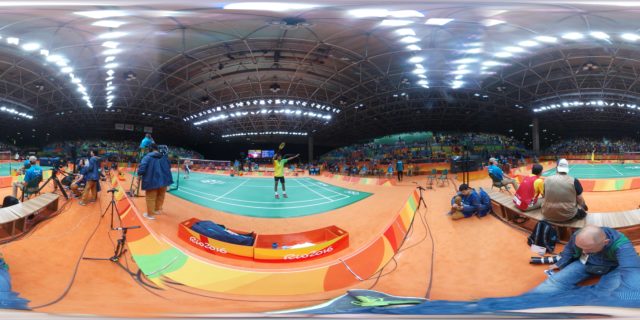
Brazil's Ygor Coelho de Oliveira waves to fans after losing the match against Ireland's Scott Evans during the Olympic Games in Rio de Janeiro, August 13, 2016. Ygor Coelho grew up just half an hour north of Rio’s bright new Olympic Park and a world away, in the Chacrinha favela. His father built a badminton gym to change young lives and few were transformed more than Ygor’s, who has been playing since he could walk. He is now the best in Brazil and a competitor on the international circuit, but on Saturday he had the rare opportunity to compete at the highest level with the home crowd behind him. REUTERS/Antonio Bronic
Brazil’s Ygor Coelho de Oliveira waves to fans during the Olympic Games. (REUTERS/Antonio Bronic)

How much weight will mobile and social carry for VR, and what is your strategy for those platforms? 

Mobile and social platforms are great for consuming any content—and VR and 360 are no different. We want to ensure our readers can view our 360 content wherever they access Reuters news—across Reuters.com, Reuters TV and Reuters apps. In addition to those Reuters properties, we will also be publishing our VR content across our social media channels. We’ve already seen some of our publisher partners adopting the VR content we’re creating for use on their own websites—but they’re also publishing directly to social media. It’s great to see how this content will be organically used as we continue to grow our product.

What is Reuters’ integrated marketing strategy to have consumers clamoring for this kind of content moving forward?

This program provides the opportunity for Reuters to dive head-first into the world of VR and 360. We can create content from all over the world, analyze what our clients and users want to see and then continue to produce what we find to be most popular, valuable and newsworthy. We want to discover what 360 content works well for our desktop, mobile and social platforms—but also, what’s useful for our news agency customers. We want to be efficient and creative about what we produce, so we can work to develop the best VR and 360 news offering out in the market.

Follow Manouk Akopyan on Twitter @Manouk_Akopyan

2016 Rio Olympics - Opening ceremony - Maracana - Rio de Janeiro, Brazil - 05/08/2016. Performers take part in the opening ceremony. REUTERS/Kai Pfaffenbach
The Rio Games have unofficially turned into the VR Olympics, immersing viewers like never before. (REUTERS/Kai Pfaffenbach)

‘Lost Castle’ Publisher Leverages Steam To Succeed In China

It’s hard to believe that Steam, perhaps the largest PC gaming platform in the world, only launched in China (with one of the biggest PC gaming audiences in the world) late last year. But since then, its users in the country skyrocketed, and it continues to grow steadily. Additionally, the platform opens a world of opportunities for Western game publishers that are looking to reach that audience.

One publisher that has benefitted greatly from Steam’s presence in China is the publisher Another Indie Studio, which launched the roguelike game Lost Castle on Steam Early Access in February. After only six months, the game (which is priced at $7.99 US) sold over 130,000 copies, which is quite a feat in a country that prefers free-to-play games with microtransactions.

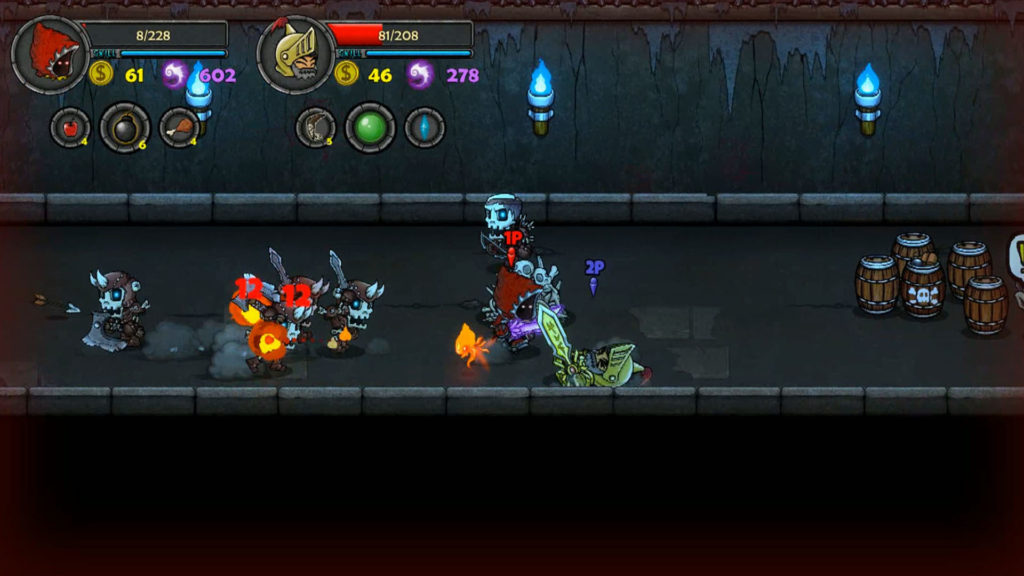
In Lost Castle, players take the role of nameless Treasure Hunters as they battle their way through the demon-infested dungeons of Castle Harwood in search of loot.

Iain Garner,Another Indie Studio's global developer relations and marketing director
Iain Garner, Another Indie Studio’s global developer relations and marketing director

Iain Garner, global developer relations and marketing director at Another Indie Studio, spoke with [a]listdaily and describes the game as a roguelike that features permadeath. Every time the player dies, it’s the end of that Treasure Hunter’s adventure.” However, “dead heroes’ souls can be sacrificed to upgrade the subsequent Treasure Hunters that the player controls. Castle Harwood will consume the souls of many heroes before players uncover its secrets.”

Even with Steam, it can be difficult for games to stand out, especially when they’re independent games that are still in Early Access. When asked about how the publisher got the word out about Lost Castle in China, Garner replied, “Lost Castle was a hit with streamers in China who both loved the game and wanted to support the local indie games industry. Most Chinese PC games are very casual and free-to-play driven, making Lost Castle stand out from the crowd, given its roguelike elements and premium pricing.

“We saw an unexpected surge in sales and interest that resulted in mainstream media coverage. Lost Castle rapidly became one of the most popular games in China, reaching 130,000 sales despite still being in Early Access on Steam.”

Garner also discussed how Lost Castle managed to sell so many copies in a market that prefers free-to-play games.

“Recently, Steam opened up their digital storefront to accepting Chinese Yen, and this had a massive impact in China,” Garner explained. “Previously, only gamers with access to foreign cards or key-resellers were able to purchase games on Steam. After Chinese currency and payment methods were allowed to be used, there has been a boom in Steam sales in China and the country has been the third highest spender on Steam for the last few months, according to SteamSpy.

“Steam is growing at an amazing rate in China, and there are numerous communities springing up around it. SteamCN.com is one site that we’ve spent a lot of time and energy interacting within to foster a community. Our employees are active members of several online gaming communities, which has enabled us to chart and follow the developing tastes of China’s gamers.”

When asked about how Chinese tastes in games compared to Western ones, Garner said that “Chinese tastes are very varied. The majority of gamers here use mobile phones, but there’s a committed contingent of hardcore gamers who enjoy playing roguelikes and are interested in Lost Castle. It’s their conversion to buying the game on Steam that has made the greatest impact.

“Chinese gamers tend to have a higher tolerance for repetition after many years of mobile gaming, and are much more accepting of gameplay bugs, understanding that they will be fixed—as Lost Castle is in Early Access. Western gamers tend to crave variety and are more easily bored. Balancing this difference in tastes has been one of the hardest challenges in developing Lost Castle.”

In addition to cultural differences, Garner said that the biggest challenge Another Indie Studio faced in promoting Lost Castle for both Chinese and Western audiences was language translation. “All promotional content needs multiple versions and multiple perspectives to accurately reach audiences around the world. This can create real problems with creating trailers and other assets from a development perspective.”

Additionally, “in China, media coverage is predominantly paid. We were very lucky at first because we were able to garner organic streamer interest, but now that our brand is more developed, we need to pay for articles most of the time. This gives us some control over what is said and when, but the end result is that gamers are much less trusting of media than Westerners.” The publisher has also been working hard in the West to gain attention on social media via advertisements, YouTube, Facebook and Twitter—with notable success using Instagram to reach fans and find new players.

12Screenshot


Given how different the Chinese PC gaming market is compared to the West, we asked Garner what was the most important thing to keep in mind when reaching out to players in China.

“The most important thing is to make an effort with Chinese gamers,” Garner replied. “The Chinese as a whole are pretty accustomed to foreign companies not making significant efforts to sell products. If you don’t speak Chinese or have knowledgeable Chinese partners, then you will always have problems dealing with the Chinese market and Chinese gamers as a result of not understanding the culture.”

How IBM Watson Is Diving Deep Into The Data Deluge

Whether it’s supermodel Karolina Kurkova wearing a smart dress at the Met Gala, or Wimbledon fans being scanned by a supercomputer at the All England Club, or teaming up with Sesame Street to advance early childhood education, IBM Watson has had no shortage of innovative activations to announce this year to leverage its cognitive business platform.

How are brands using data to understand consumers and to better communicate with them on a personal level?

Stephen Gold, the chief marketing officer for IBM Watson Group and vice president for partner programs and venture capital at IBM, joined [a]listdaily to discuss the company’s approach to their data deluge. 

ibm-watson-stephengold
Stephen Gold, chief marketing officer for IBM Watson Group and vice president for partner programs and venture capital at IBM.

Take us through the strategy a bit when forming an alliance. What are you specifically looking for to deem that it’s the right fit?

The activations are instrumental in helping us engage and educate a market on a new era of computing. With Watson, we look to reach a wide array of industries and professions on use for case-specific challenges. In the case of Macy’s, Watson is helping the retailer improve the customer shopping experience. This pilot effort stems from Macy’s desire to provide better ‘wayfinding’ assistance to their customers—a significant issue, as most of their stores have unique layouts—and a willingness to embrace new technologies as an avenue to deliver that functionality.

In a very different context, the Met Gala project was a demonstration of how Watson can be used to amplify human creativity. By applying various cognitive capabilities from Watson, like Color Theory and Tone Analyzer, IBM helped bring man and machine together to create an exceptional fashion design. We’re continually applying the dozens of Watson core cognitive services to meaningful societal and business challenges, focusing on building out applications that will help individuals, industries and organizations transform the way they operate.

In which particular sectors—from major to minor—are you looking to form strategic alliances in? What works well with Watson?

Watson’s cognitive capabilities lend themselves to situations that are data rich, but information poor. This spans everything from health to retail, financial services to the public sector and mining to telecommunications. There isn’t a single industry that won’t be transformed by this technology. Currently, tens of thousands of developers, and hundreds of clients and partners, representing over 20 industries across six continents, actively use Watson. Today you can find Watson at work in Thailand, where over 1.1 million patients at Bumrungrad Hospital can benefit from Watson for Oncology; in Singapore, where more than 5 million citizens get tax advice with an app powered by Watson; and in Australia, where and over 40,000 students get campus and administrative guidance through a Watson application, just to name a few.

ibm-watson-1

How do you see market expansion and partnerships developing for Watson in the future? What are you putting a particular emphasis on?

IBM is committed to maintaining an open platform environment to encourage use and adoption of its Watson API services by students, hobbyists, developers, independent software vendors and the community at large. This will continue to spark innovation and the next generation applications that will tackle some of life’s toughest challenges. IBM’s continued investment in research and development, approaching $6 billion annually, and head start in the area of artificial in intelligence has allowed us to bring Watson to a point where it’s easier to teach, use and connect to existing technologies, systems and data sets, as well as easier for developers to build Watson into their applications. Over the past two years, IBM has taught Watson many new languages; increased its core knowledge of key industry domains; made it available via new form factors—tablets, smartphones, robotics and smart watches like Apple Watch—and enhanced it with technology that allows it to ‘see,’ as well as understand tone and emotion. We believe that in the future, every critical decision will be informed by a cognitive system like Watson.

Over the past two years, IBM has taught Watson many new languages; increased its core knowledge of key industry domains; made it available via new form factors—tablets, smartphones, robotics and smart watches like Apple Watch—and enhanced it with technology that allows it to ‘see,’ as well as understand tone and emotion. We believe that in the future, every critical decision will be informed by a cognitive system like Watson. 

How has Watson’s data-crunching systems been received by marketers? Why is employing Watson’s A.I. tech a big boon for brands?

Marketers have long sought to better understand their customers, clients, patients, partners and citizens, and gain the ability to communicate with them on a very personalized level. Much of the data explosion that has occurred, especially in the social realm, has provided an incredible wealth of information for marketers to learn from and respond to. But to take advantage of this newfound resource, they need cognitive capabilities. This will change the way they communicate, target, promote, and respond to their audience. Watson-based solutions today exist to help marketers personalize their message by understating in real-time an individual’s personality, sentiment and tone. They can also extract concepts from blogs, articles and tweets to stay on top of the latest trends and chatter.

As part of a three-year agreement, Sesame Workshop and IBM will collaborate to develop educational platforms and products that will be designed to adapt to the learning preferences and aptitude levels of individual preschoolers.
Sesame Workshop and IBM will collaborate to develop educational platforms and products.

How are companies looking to develop tailored marketing campaigns and products? What are they looking forward to learning most?

Marketers pay a steep price for not understanding their customers’ needs and reactions to their business decisions. Watson can help marketers better understand their customers on an individual level, creating a more personalized experience that can lead to deeper engagement and stronger brand affinity. The marketing industry is awash in unstructured data, from tweets to Facebook posts to photo-sharing apps like Instagram. Locked away in that data are tremendous insights into what we as individuals are looking to do, how we expect to be treated and what we want our interactions to be like. Cognitive systems like Watson can help marketers unlock that data to for a better, more complete understanding of their audience, and the best way to connect with them.

Watson recently moved into a retail store setting by partnering with specific Macy’s locations to improve the in-store experience of locating products, facilities and service. How will you be marketing this new initiative, and measuring the success of it?

Macy’s On Call is an example of how retailers can use cognitive systems to make the shopping experience more impactful. In the case of Macy’s, this means helping consumers locate products, facilities and services. The Macy’s effort is a pilot that taps into an intelligent engagement platform built by Satisfi, one of our Watson developer partners. They’ve incorporated Watson technology to boost the functionality of their app and deliver on the specific experience Macy’s was seeking—including applying Watson’s language abilities to converse with Spanish-speaking customers in their native language. This is another example of how our developer partners are amplifying the reach of Watson in the market and helping the technology reach new consumer audiences.

The Macy’s in-store mobile companion that assists in servicing customer needs.

What is the biggest challenge in marketing the world’s first cognitive computing system? On the flip side, what are the exciting opportunities it presents?

Helping individuals understand this new era of computing where systems understand content in context, reason with a purpose, learn at scale and interact naturally with humans is the most pressing challenge. For over 60 years, what we have known about computing has been based on rules—hard-coded logic—against information that was neatly organized into rows and columns. With cognitive computing, we’re redefining the possibilities of how humans will use information of all types to enhance, scale and accelerate their own expertise. Today, we’re focused on scaling the technology across multiple domains and making it proficient in multiple languages. We continue to make Watson easier to use, teach and deploy. This is the first five years of what will likely be a 50-year history of this new form of computing, and the horizons for cognitive computing—and the ways we can market it—are endless.

Earlier this year, Kia used IBM Watson to help set their lineup of social media influencers for the Super Bowl. What’s your view of Watson’s commercial approach to the influencer marketplace?

Watson’s cognitive services enable marketers to make sense of this data, and turn it into meaningful insights that can help advance client-business objectives. For example, in the Kia project, it’s another great example of our partners in action. Developer partner Influential used Watson’s Personality Insights API to go beyond assessing quantifiable stats (like demographics and social reach) to a new layer of assessment that determined key personality insights based on data pulled from an influencer’s social media feeds. This allowed Kia to choose brand ambassadors based on how they’re perceived by their followers, and how well the influencer’s specific personality fits the personality of the brand.

How do you see influencer marketing evolving, and what kind of role will Watson be playing in it moving forward?

Technology is increasingly being used by brands to further their digital and influencer marketing efforts—and Watson, either directly from IBM or from our developer partners, is embedded in many of these initiatives . . . This is just the beginning. As adoption of Watson continues to grow, we’ll see even more creative use cases for bringing this technology, and the more personalized experience it provides, to consumers.

Follow Manouk Akopyan on Twitter @Manouk_Akopyan
How Trion Is Partnering To Bring ‘Trove’ To China

When thinking about a fantasy MMORPG (Massively Multiplayer Online Role-Playing Game), few might imagine a game like Trove. In this bright voxel-based world, players are encouraged to band together to face challenges, and (similar to Minecraft) there is a strong emphasis on building and sharing creations with other players. It’s this uniqueness that made it the perfect game to bring to China.

Trion is no stranger to bringing games overseas. In addition to developing games such as Rift and Atlas Reactor, the company currently publishes the Korean game ArcheAge in the US. But in order to do the reverse and publish a Western game in Asia, Trion is partnering with the Chinese company, 360 Games, to support and promote the game in China.

Scott Hartsman, CEO at Trion, talks to [a]listdaily about partnering to bring a relatively new MMO to Asia and how it will stand out in one of the largest PC gaming markets in the world.

What is Trove about, and what makes it the ideal game to bring to China?

Trove is one of the first products that we incubated at Trion in our grassroots pitching project—we put the call out to everybody to submit one-pagers, and we whittled them down from 30 [pitches] to 3 prototypes, and Trove is what came out on top. The idea is: what would happen if we took everything that people love about MMOs and put them into a super approachable package that was very easy to drop-in-and-out of?

The entire game is based around the idea of other players around you being a benefit. Social friction is nonexistent, and getting into playing is a very easy experience. Given how we chose to express that in voxels, it gave us the ability to do that in fully constructible and destructible dynamically generated worlds.

There are a couple of reasons why it’s perfect for China. Number one is drop-in, drop-out gameplay is very convenient, which is increasingly important. If you look back over MMO history—ten years ago, the average play session was four hours, and it was more like a hardcore hobby. The days, people want to play a game that they can get into and out of in twenty minutes, but if they want to stick with it, they can play it for hours. Trove fits that bill very well. It’s also incredibly colorful, which is something that we’ve learned is a critical part of reaching a global audience. A lot of what we do in a typical Western fantasy is very dark and gritty and tends more toward high realism and fidelity, as opposed to colors, where everything is focused on gameplay.

Those two things made 360 Games fall in love with Trove.

Is Trove being adapted to suit the Chinese audience?

In talking with 360 Games, they have some pretty hardcore gamers on their production team, which was great for us. They got the game very quickly and immediately leapt onto some reasonable suggestions to make the game work well for their users. For example, learning the game is part of the fun for a Western gamer, but that isn’t the case for their audience. They want a little more handholding.

Also, if you’re familiar with Minecraft, you should know about biomes. Our game is organized in different biomes. A biome has its own unique creatures, structures, music and visuals. We will be doing some custom biomes along with some custom assets and destinations. But the core gameplay will remain largely unchanged.

Trion has experience bringing ArcheAge from S. Korea to the US. How does bringing a Western game to the Asian market differ?

The way we think about it, it’s the inverse of the relationships that we have today. We already know how to work with partners in shipping builds, schedules, and tweaks back-and-forth and doing press in other territories—all of the things that sit around the idea of getting a game running. [The difference is that] you have to have a lot of trust in your partner about what they’re telling you about their local market. That’s one of the reasons it was so important for us to do a deep-dive on who they [360 Games] are and who the individual people are that are going to be shepherding this game over there. We have to have a lot of faith in them because it’s not like we can surf the forums and read what users are saying. We have to rely on a solid partner that’s knowledgeable, not just in terms of what people are saying about the game, but also that that feedback is being interpreted correctly—and the people working on the game can get at the meat of what we can do to make the game better.

When talking about feedback on any app or game, a lot of the time, what people say isn’t necessarily what they want. But when they have strong opinions, it does speak to some underlying need or way we could do better. We’re very reliant on partners to help communicate that across clearly.

In China, most PC gamers play in arcades and cafes. How do you promote a game in that environment?

That’s the reason there are some territories we do on our own, and there are others that are practically impervious to outsiders. It becomes much smarter for us to partner with experts. When we were evaluating potential partners, a big part of it was: what is this partner’s secret sauce when it comes to reaching out to customers? In the case of 360 Games, they’re a relatively new entrant into the PC games business, but they have a very strong PC software and mobile games business. They have some great thoughts on how to make the PC games business a big part of what they do moving forward. They already have 800 or 900 million installs of PC software, plus a relatively strong slate of PC games coming up. So, they’re able to take advantage of those networks to get the game in front of the right number of people.

dragonblossoms

How would you describe the Chinese game market?

Having just gotten back from ChinaJoy, it persistently amazes me, not just the scope of what PC gaming is out there, but how news of the size of that market from a customer point-of-view seldom makes it back here organically. It feels like there are almost two different worlds.

ChinaJoy is the second biggest games show in the world, second to Gamescom. It takes place in eleven different tradeshow halls—it’s huge. It’s a huge market and one that’s still strongly growing and extremely vibrant. The scope, scale and spectacle that goes into getting people interested in these games are unlike anything I’ve ever seen.

How did you show Trove at ChinaJoy?

360 Games did a full custom booth build-out with a big stage show and a 50-foot monitor. It was really impressive, and the attendees seemed to like it a lot. The game show that they did had a crowd out in front of it. The booth itself had custom builds that included a huge dragon and our candy-themed biome. People got a kick out of it. It stands out compared to typical fantasy tropes, which Trove is very different from, and contrast is great.

With Trove is releasing for the PlayStation 4 and Xbox One later this year, what do you think is the future of console gaming in China?

Looking at the market in general, consoles in China are going to have a bigger barrier than they do here in the West. If you talk to people on the ground in Shanghai, they’ll tell you that you could have gotten grey market consoles there for years. If they were going to turn into an explosive thing, why haven’t they yet? Then you talk to the other side, which says adoption is held up because they haven’t been 100 percent legitimized.

I think you have to look at what the general culture looks like—and the general gaming culture tends to be more around PC download free-to-play and anything that has inherent piracy protection. Culturally speaking, their PC gaming and core gaming audience grew up fairly differently than ours did. While I think that console gaming could turn into a big thing in China—and we’d be ready in an instant if and when it does—but I think it has bigger challenges than what some of the console makers expect.

How HTC Is Leveraging Viveport For Non-Gaming Virtual Reality Experiences

In a move designed to empower developers to drive long-term engagement with customers and accelerate the support of virtual reality around the world, HTC will be launching Viveport this fall, it’s new global app store dedicated solely to VR.

HTC wants to democratize access to experiences where anyone can learn anything, travel anywhere and experience anything imaginable via Viveport by featuring a fast-growing selection of apps and experiences across education, design, art, social, video, music, sports, health, fashion, travel, news, shopping, creativity tools and more. Viveport will amp up the non-gaming VR content pipeline and complement the SteamVR platform, which is predominantly geared toward gaming-related apps.

The Viveport store—slated to be available in Vive headsets, web browsers and as a PC and mobile app—will feature pay-to-download, in-app-purchases, subscriptions and other revenue-generating opportunities.

Rikard Steiber, formerly Google’s global marketing director of mobile and social advertising, is now plying his trade as a senior vice president of virtual reality for HTC managing the global Viveport VR app store business, and mentoring Vive X companies. He joined [a]listdaily to explain why VR will be the next big computing platform.

AAEAAQAAAAAAAAXhAAAAJGMxZDM5MDZjLWU1MzctNGI3NS05NmY4LWQ0YjY0OTAwZDg0ZA
Rikard Steiber

Why was it so important for HTC to focus on building business in verticals outside of gaming?

We believe VR will change the world for consumers and business alike. We want to make VR available for everyone. I think the initial content has been focusing on games and entertainment, so it’s become widely available. What we want to do now is help all the other developers and creators to reach out globally with their content and build a business. But at the same time, we’ve seen users creatively teaching via video to businesses and brands. We also want to figure out how can we engage with VR. This gives them a good platform to find that content and then find the new uses, which also makes VR more accessible and relevant to everyone.

What are the interesting opportunities VR has for business applications?

What’s interesting is that when people put on an HTC Vive headset, they get this religious experience. It doesn’t matter if they’re a teacher or an artist or a doctor or an engineer. Suddenly they say, ‘ok, I can teach how to do medical procedures in VR, and it’s less risky,’ or ‘I can make complex engineering together with my colleagues,’ or ‘I can teach my kids in a much more immersive way.’ I don’t think that we have understood all the applications yet, but I can see when we talk to people that their eyes light up and they can see all these new applications for pretty much any industry project. What we learned is that any new computing platform that’s coming, whether its PC, web or mobile, it all starts with communication and entertainment gaming services. But it wasn’t games that made PC, web and mobile big. I think now with VR, it’s starting with the early adopters, but essentially it’s going to be these new categories around experiences of education, or creativity, software, social media, video and also brands of commerce. That’s what it’s going to be when it hits mainstream.

What is your favorite non-gaming VR application that you’d like to see more content being produced for?

I have two girls, ages 6 and 10, so our job as parents is very much to keep them excited and motivated about school—they can now explore. If you can immerse yourself, if you can walk with the dinosaurs in Jurassic Park and then have your teacher tell you about the T-Rex or the stegosaurus, that’s going to be a more immersive and memorable experience that they’ll never forget in their life. If we can get them excited about geography, or mathematics, or all these other topics and actually remember it better, that’s very powerful.

ViveportPoster3

How would you assess the current VR scene across the globe?

I think it’s interesting—creativity comes from everywhere. I think the US is a very strong market in a way. I think there are very strong markets in Japan and China. There’s a lot of creativity across all markets. What we want to do with HTC Vive is help users find all this great content out there because it’s kind of hard to find them directly.

What are some challenges HTC Vive will have to overcome to be a leader in this industry?

We’re focusing on helping the developers, creators and brands to reach out with their VR experiences and build a business. At the same time, we focus on a lot of user experience. We try to ensure the best experience, like where rooms can move around and interact with objects, and also make that experience available to everyone. That’s sort of both sides of it, having great content and having the technology to make something available to everyone.

What is the most organic way for brands to use VR?

If you think about brands today, they’re all doing content and content marketing. I think it’s a great opportunity for brands to be innovative and to embrace this technology because many big corporations were probably skeptical at the beginning of computers, or even the web, or even mobile. Now of course, they’re living their lives on their applications or services and training in computers. I think for an enterprise, it’s not just engaging with consumers, but collaborative working in the company—it’s going to be training. There’s going to be so many functions of the corporation that’s going to be able to take advantage of VR technology. There are three things really important for brands. First of all, if you want to have a brand experience, this is the most immersive experience you can have. Second is education—VR makes it much more memorable because you’re going to interact with it. Your recall from VR is going to be much higher than looking at a print or banner ad, or whatever you’re doing today. Third, if you actually touch an object on a shelf, you’re much more likely to pay for it. If you just imagine touching a product, you’re much more likely to make a purchase. Brands can build relationships in VR between products and consumers in a new way and actually drive business forward.

Follow Manouk Akopyan on Twitter @Manouk_Akopyan
Why Sponsored Content Can Tell Stories And Establish Trust With Consumers

As the FTC cracks down on labeling sponsored content, the time has never been more right to make sure those posts are the most effective they can be. Sponsored content is an opportunity for brands to establish themselves as an authority on news and entertainment websites, creating brand trust and entertaining consumers in a way that enhances, rather than detracts from, existing content.

A recent study by IAB asked 5,000 consumers to view a number of websites with sponsored content in a desktop format. Nearly nine out of ten (86 percent) of respondents feel that free content is made possible by sponsors. Although consumers understand and accept the need for sponsored content, that doesn’t mean they have to like it, as 60 percent said that they were more open to content that tells a story rather than reads like an infomercial.

The biggest takeaway—establish trust. Sponsored content that informs or entertains rather than sells is most effective when featured on a reputable site that is relevant to the brand and the target audience.

Relevant, Authoritative, Trustworthy

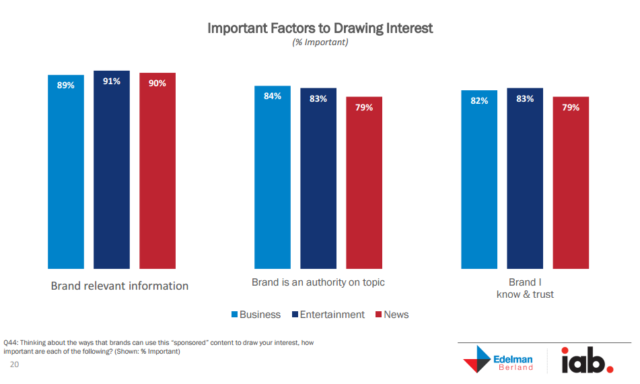
The most important element to successful content marketing, according to study participants, is the ability to trust the information offered. This is especially true for entertainment news sites, where 85 percent of respondents said that paid content was obvious (“Enjoying the drama between Selena Gomez and Justin Bieber? Here, try our hand cream!”). 91 percent said that relevance was the most important feature for entertainment sites when viewing sponsored content, followed by brand recognition and trust, both 83 percent.

  • For general newsfeeds, 90 percent said that relevant information was most effective for drawing interest, while 79 percent relied on brand recognition and trustworthiness of said brand. When it comes to business content feeds, however, respondents agreed that relevance, authority on the subject and trustworthiness were all important, at 89, 84 and 82 percent respectively.

IAB study 1 sponsored content

Paid content that is relevant, authoritative and trustworthy enhances a website rather than detracts. After viewing a number of websites with sponsored content, respondents across the board had a more favorable opinion of the website. Likewise, viewers were more likely to trust sponsored content that appears on reputable websites. Although a majority of those who participated in the study say that they prefer ads from a brand they know and trust, new brands will just have to be that much more relevant and informative.

HP’s Backpack Brings Untethered Virtual Reality Experience

One of the problems plaguing room-scale virtual reality is that people need to be tethered to big, bulky headsets and desktop computers with wires dangling at their feet during their experiences.

But don’t trip, because HP is untangling this problem by introducing the HP Omen X VR backpack, a purpose-built backpack that is taking a sizable step in offering optimal VR experiences.

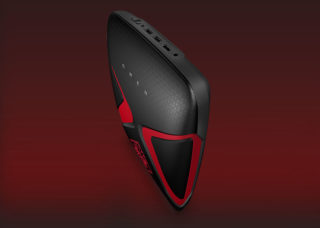
The compact backpack, currently a prototype, weighs less than 10 pounds and carries two batteries that has enough juice for a full hour of VR immersion; a wireless display, mouse and keyboard are part of the package, too. The best part? It doubles as a portable and powerful compact PC for all your needs. The full-powered gaming desktop will give owners of the HTC Vive and Oculus Rift a full untethered experience.

Rick Champagne, worldwide segment manager for media and entertainment for HP Z workstations and VR Displays, joined [a]listdaily to discuss the innovative platform.

hewlett-packard-3

How is HP positioning itself in the VR space?

There are two sides to VR—content creation and consumption. HP has been in the film industry for over 75 years. HP’s John Frederick, Bob Myers, Karl Rasche and Tom Lianza have even been honored with a Scientific and Engineering Academy Award for our HP DreamColor Display technology. We’ve been in the industry a very long time, and HP Z workstations are a platform of choice for people in the film and games industry. Now those workstations are being used for VR content creation. Then we have our consumer and gaming group focused on the consumption of VR with the Omen X Backpack and HP Phoenix desktop computer. We’re looking at VR from a holistic point of view, not just the consumer side of it.

What is the idea behind the Omen X Backpack? How did it come about?

Really, the problem with VR right now is the tether. You’re attached at the head with a cable and if you’ve seen people doing VR experiences, particularly if you come to a trade show, we have handlers that will hold the cable and make sure you’re not tripping on it. That’s not feasible in your living room, or in any room-scale VR volume. We want to get rid of the cable completely so you can just be immersed. Of course, we had to do something that was purpose-built and super-high performance.

What does a product like this do for VR? How does it get people to want to experience the technology even more?

We’re still feeling out the market and getting a better understanding. You can imagine that there’s so many commercial applications like this where you want an untethered experience, like a VR entertainment center. Anything like movie theaters, theme parks, concerts, sporting events, or any kind of place where you would have a commercial setting . . . you can’t handle everybody. This is just going to allow people to roam around freely in a VR experience. We’re still learning. We’re going to get the form factor smaller; we’re going to get higher performance, and longer battery life. VR is changing, so we’re going to keep pace with the industry. We’re going to continue to focus on things like heat management and customization so people can go in and change things up as the industry grows. Since we announced the backpack, it’s created a lot of conversations and we’re excited by what the future holds.

What are some of the marketing opportunities that this opens up that were somewhat non-existent before?

This is not a cosmetic model; it’s real working hardware and we showed it at Siggraph just last week. This is definitely an eye catcher; it’s a conversation starter, and it has a real function; it solves a real problem, so we’re really excited about that.

How are you reaching consumers with experiential marketing?

At VRLA earlier this month, we worked with BlackBoxTV, FullDomePro and an experiential artist, Android Jones, showing some of the work that he’s done specifically with creating immersive experiences. His HTC Vive experience called MicroDoseVR is like Tilt Brush, but it’s a particle-based system that anyone can use to create unimaginable art.

How do you see VR developing? How will the industry keep growing?

Cost is one of the things—it has to come down to make VR accessible for more people. It’s expensive today to get a system that’s high enough to power VR. We have consumer solutions designed with the consumption of VR in mind. We of course have our HP Z Workstations for the creation piece of it, and so as cost comes down, it will become more accessible. You’ll see consoles like PlayStation VR coming out, too. All of those things are converging right now, so we have to be ready. The industry has to be ready, and the content has to be ready for this major shift that’s about to happen.

Do you think consumers are ready for VR?

The content creators are already working on the problem. They’re creating very rich environments that allow consumers to connect with the content in ways that were never possible before. The GPU manufacturers are innovating at a pace that is unprecedented, and there’s an intense battle being fought there too. A lot of amazing technology is being created in our industry. Everything from advanced rendering to light fields, and just dealing with heavy amounts of data in a 360-degree environment. Everything is coming together. Next year is going to be the year of VR. It’s going to be a new world.

Follow Manouk Akopyan on Twitter @Manouk_Akopyan