Super Bowl Provides Marketers A Field To Run Mobile Game Strategy

Instead of relying on high-priced, in-game TV ads, more marketers are turning to the second screen this year to tap into digital-native audiences with hopes of piquing new fan interest. Brands like Mercedes-Benz, Rovio Entertainment, Ally Financial and Pizza Hut are giving TV a stiff arm for the Super Bowl, looking to level up sophistication of digital engagement by implementing mobile game marketing campaigns.

With over 106 million viewers annually since 2010, the Super Bowl still remains the most-watched TV event each year and one of the last mass-media vehicles for marketers to introduce a new product, or lift a long-standing marque.

Mobile devices, however, should not be ignored. Forty-seven percent of fans who tune in will use the second screen while watching the game, and 68 percent will use a device to view social media, according to an Adtaxi report.

As brands turn to mobile games more often to engage consumers, marketers are now viewing the Super Bowl as a media-buy Lombardi Trophy that demonstrates a large-scale user acquisition undertaking.

A Game That Sets Up Next Year’s Super Bowl Strategy

Mercedes-Benz, a Super Bowl TV advertiser in four previous contests, is trying to play a big game on the small screen this year with “Last Fan Standing,” a mobile competition that tests the patience and stamina of fans during the game. The last person with a finger planted on the vehicle of the virtual Mercedes-AMG C43 Coupe will win the real car, which is valued at over for $55,000.

“We looked at the mobile-gaming landscape and realized that this wasn’t going to be the year to attempt to make a commercial or viral video,” Mark Aikman, general manager of marketing services at Mercedes-Benz US, told AListDaily. “Since we don’t have a TV spot this year, we wanted to have a more contemporary, disruptive and brand-building activation that would be buzzworthy during the game.”

The backdrop of the mobile game takes place at the newly built Mercedes-Benz Stadium, home for the Atlanta Falcons and the site for next year’s Super Bowl. Aikman said the experience, which channels “hands on a hardbody” promotions auto dealers have used in the past, serves as an appetizer for a larger Mercedes Super Bowl marketing strategy in 2019.

“In some ways, this mobile game is a long lead,” said Aikman, adding that it forces a level of consumer engagement and attention that is specifically on the product. “It’s safe to say we’ll have large-scale activations next year.”

Aikman said that since digital and social are still a growing part of the automaker’s marketing mix, they wanted to use the social co-viewing phenomena to deliver a compelling prize. In addition to building brand awareness, winning new consumer consideration and simple information capture for future marketing use, the goal of the game is to get people gathered at parties to ask, “what are you doing on your phone?” and get the conversation started about Mercedes.

Due to the sheer number of car companies that advertise on super Sunday, the entire category experiences a bump in purchase consideration following the game, said Aikman, so shunning TV does not have as much marketing impact as one would think.
Down, Set, Hut!

Brands will have their own game to play this year as well on Sunday, courtesy of Twitter, which is upping the stakes for marketers with “#BrandBowl52,” a competition that will award advertisers that drive the most engagement on the platform around the Super Bowl.

The friendly brand battle further proves that owning the conversation on social and digital channels is just as critical as shelling $5 million for a 30-second TV spot on the NBC-televised game. The network is expecting to cash-in on close to $500 million in Super Bowl-related ad spend this year.

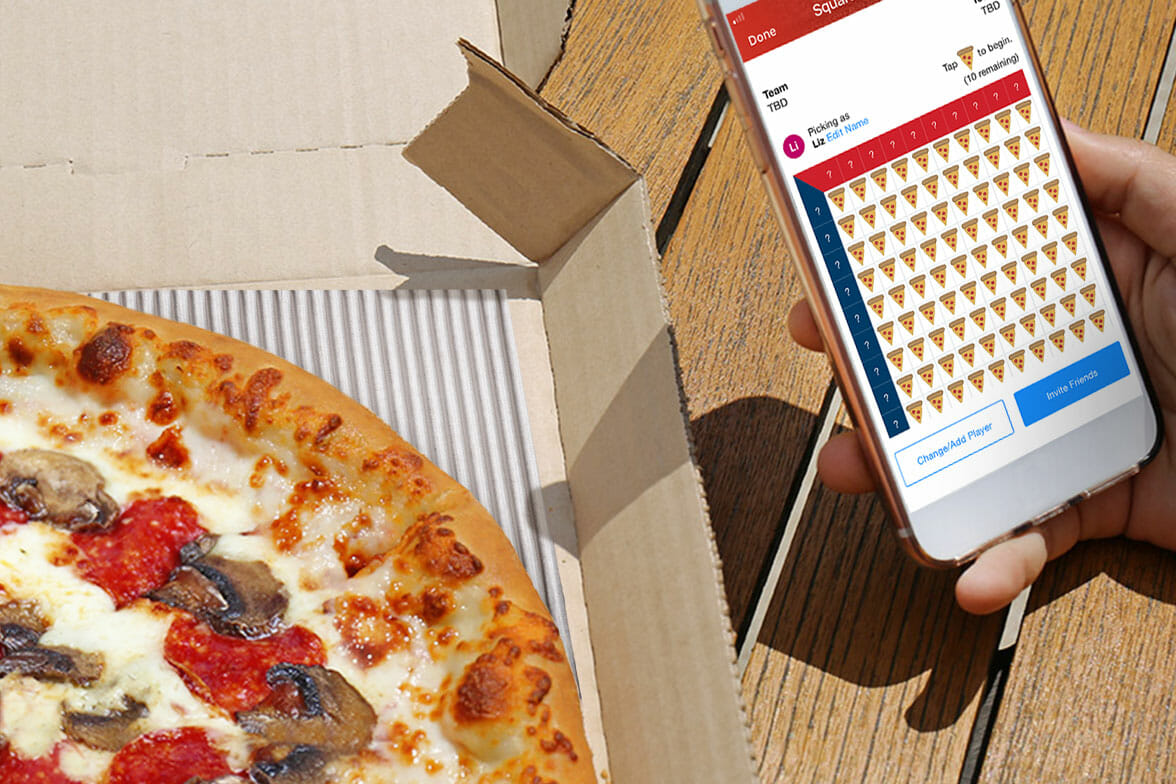
Another brand looking to capture consumers on gameday through a mobile game is Pizza Hut, which is operating on a multi-pronged Super Bowl strategy highlighted by Squares, an experience through Yahoo! aimed at driving new sign-ups to its loyalty program.

Zipporah Allen, CMO for Pizza Hut, said a mobile game makes more sense for the brand because time spent on mobile devices during cultural events like the Super Bowl continues to rise.

“Pizza Hut has a legacy of bringing more entertainment to the pizza category, and mobile gaming fits with that,” she said. “Our focus is being where the consumers are. We think it’s an effective way to drive brand preference on mobile, through sharable and engaging content.”

Allen said the brand recognizes that if it creates fun experiences for customers, the business will follow. The piemaker is also partnering with former players for a pregame, livestream ad and an in-game promotion that will potentially award pizza for an entire year to prizewinners.

“We’re always looking to maximize marketing efforts, and the right digital activations can be an effective way to increase reach, and engagement,” she said. “We view the mobile game Squares as a way to add even more enjoyment to gameday while reaching consumers at a point when they are one click away from purchase.”
NFL And Traditional Games Publisher Go For Win-Win Partnership

For Rovio Entertainment, owners of the Angry Birds IP, the Finnish company’s bread and butter is video games, but because of the similarities in highly engaged audiences, live sports also serves as an interesting domain within linear TV.

Looking to expand to a more mature audience profile, the publisher partnered with the NFL to gamify the Super Bowl and used a cultural event of mass scale to reach new audiences in the US, the developer’s primary market. In turn, the NFL will potentially reach younger audiences who play mobile games as it tries to pump some younger blood into its viewership make-up in its current quest to boost slumping ratings.

“Traditional media buying has been quite inaccessible—or at least hard to justify—for mobile game publishers, as the vast majority of market growth has been built on digital performance marketing,” said Ville Heijari, CMO of Rovio Entertainment. “We see experiential marketing integrations like this as a way to build measurable, profitable and of course repeatable activations around major regional and global events.”

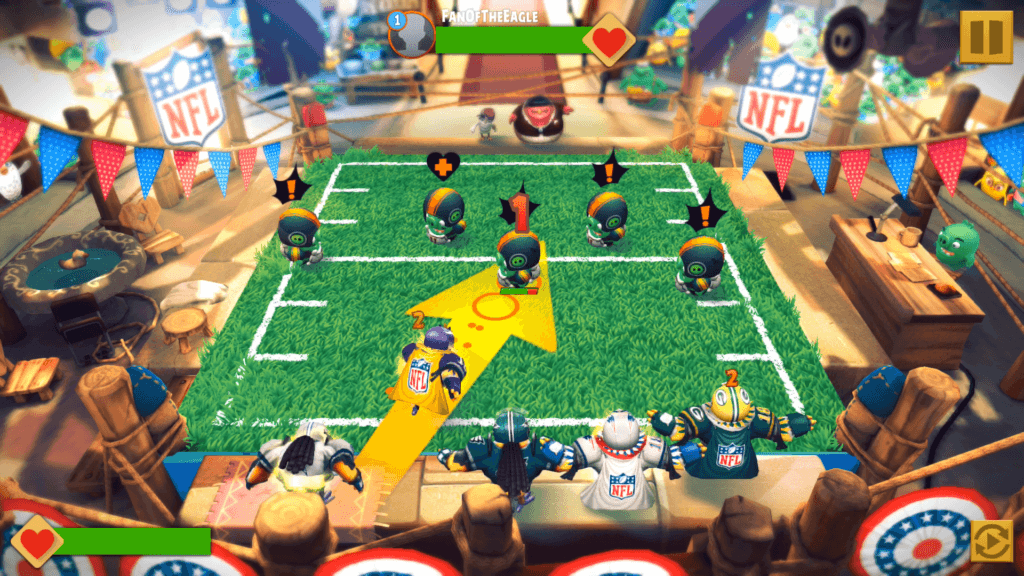
Fans who play Angry Birds 2 and Angry Birds Evolution can now launch their flock with the choice of any of the 32 NFL teams in new Super Bowl-themed game levels as well as in-game competitions. Collectibles can be acquired through gameplay activity, or in-app purchases (IAP), so the activation is monetized with IAP and in-game advertising.

“Some of the fastest-growing and the most-engaged audiences at the moment are found in mobile gaming,” said Heijari, adding that mobile games are now leaning toward running efficient live operations around recurring in-game events.

Successfully operating modern, free-to-play mobile games is all about running in-game events, said Heijari, and the ability to provide a fresh set of challenges and engaging content with each event.

Topical in-game events on the small screen allows for Rovio to become a part of the spectacle as it happens.Heijari said engaged audiences have become increasingly fragmented in many pockets of entertainment across different games, platforms and streaming media, which makes a company like Rovio a unique partner for the NFL to create large-scale collaborations in the mobile games segment for contextually relevant events.

A Counter Message Through Augmented Reality

Consumer spending power for the Super Bowl is substantial. Americans are slated to splurge an estimated total of $15.3 billion for the game this year, an 8.5 percent increase from 2017, according to the National Retail Federation.

With plenty of advertising aligned at taking a sack from the consumer pocketbook, Ally Financial is countering all of the cash spend by tapping into its brand ethos and flipping the playbook with “The Ally Big Save,” an augmented reality game that encourages people to “collect” money during commercial breaks through the visualization of a virtual dollar drop.

“Today there are more choices for marketers to reach their target audience than ever before,” said Andrea Brimmer, CMO for online-only bank Ally Financial. “Acceptance and usage of AR is becoming more pervasive, so this seemed like a great time to use the technology in a way that disrupts what you normally see in big-game marketing.”

The mobile game is designed to define the Ally brand’s marketing toward money mindfulness and marks the beginning of a strategy that will take the brand through 2018 and beyond, Brimmer said. It includes large-scale disruptor campaigns, as well as their traditional, digital and contextual social marketing.

Brimmer said that through previous promotions and programs, she’s identified that experience marketing like mobile games work and reach new groups of consumers that don’t necessarily consume media in the traditional ways.

“There are moments where TV is the lead, and there are moments where TV and digital seem like they are right on the same playing field,” said Aikman. “It all comes down to if the message you’re trying to deliver is right for a national audience, and if the timing is right for you.

“We certainly hope that our mobile game marketing will help win consumers who have not considered the brand before.”
Consumers Spent Over $108B On Interactive Entertainment In 2017

Interactive entertainment generated $108.4 billion in 2017, exceeding previous forecasts by SuperData Research. The analyst firm has released its annual Digital Games and Interactive Media report that reveals 2017 revenue alongside forecasts for video games, augmented/virtual/mixed reality, esports and game video content (GVC).

Free Is The New Premium

According to SuperData’s report, 2.5 billion—roughly one in three people on the planet—play free-to-play (FTP) games across PC and mobile platforms. In fact, FTP games generated $82 billion in 2017, accounting for 89 percent of revenue across mobile and PC markets.

The FTP market is expected to exceed $75 billion in 2018, with a majority of revenue arising out of Asian markets. Across mobile, FTP PC and social platforms, consumers spend far more money on mobile. Last year, gamers spent $36 billion, $9.1 billion and $5.9 billion on FTP mobile games across Asia, North America and Europe, respectively.

Mobile Mania

Overall, consumers spent $14 billion more on mobile games in 2017 than in 2016. This momentum was aided largely by games published in Asia, which contributed to a 31 percent year-over-year growth for the worldwide mobile market.

In the same way that mobile game whales contribute the most money while accounting for the fewest percentage of players, SuperData observed that the top 10 mobile games control 20 percent of global revenue.

Mobile revenue is predicted to reach $55.5 billion across Asian, North American and European markets in 2018.

Competition Rules Revenue

Playerunknown’s Battlegrounds (PUBG) was the breakout hit of 2017, bringing in 12 percent of all premium PC revenue and generating $712 million in just eight months. This, in turn, helped generate interest in the battle royale genre—paving the way for games like Fortnite and Knives Out.

Highly-competitive games topped the charts for premium PC in 2017 with PUBG, Overwatch, Counter-Strike: Global Offensive (CS:GO) and Destiny 2 holding the top four spots. Big-name shooters also helped boost console revenue by 15 percent last year, with competitive titles rounding out the top 10.

If you don’t develop big-name shooters, however, there’s no need to despair. SuperData observed that 25 of the top 30 most downloaded games on Nintendo Switch came from indie developers.

Gaming Is A Spectator Sport

Esports generated $756 million in revenue and is on track to become a billion-dollar business in 2018, according to the report. A majority of this income—70 percent—comes from sponsorship and ads. Why? Because esports attracts consumer eyeballs and by extension, wallets. SuperData stated that esports attracts 258 million unique viewers.

Gaming is the second most popular video topic on YouTube, second only to music. However, 2017 proved to be a difficult year Google’s video platform as it struggled with brand safety and monetization. As a result, YouTube’s game video content (GVC) revenue dropped 50 percent year-over-year.

Twitch, meanwhile, accounted for 54 percent of the $3.2 billion GVC market. Despite having half the audience of YouTube, 51 percent of GVC revenue on Twitch came from users supporting their favorite streamers.

Changing Realities

Consumers spent $3.4 billion last year on augmented, mixed and virtual reality.

VR headset discounts and popular content drove revenue up 37 percent for extended reality (XR), which includes AR, VR and mixed reality. Oculus, in particular, benefited from price cuts, allowing the headset to outsell HTC Vive in 2017.

PlayStation VR shipped 1.7 million headsets last year thanks to franchises like Resident Evil and Skyrim attracting consumers. An overall lack of non-gaming content limited XR revenue for the year, SuperData noted.

The future looks bright for interactive entertainment, especially with AR expanding to new audiences. This year, consumers are predicted to spend $7.7 billion on XR, driven by the launch of Apple’s ARKit SDK and non-gaming applications.

5 Major Shifts Marketers Can Expect In 2018

When Forrester predicted a year of reckoning for marketers in 2018, it said CMOs needed to pursue adtech trends and data in order to survive.

With new parameters for digital ad transparency put in place, the looming General Data Privacy Regulation, heightened emphasis on programmatic spending and martech and adtech continuing to converge, executives must track both the trends and the rules of their regulatory forces.

Heightening Transparency With ads.txt

For one, ads.txt adoption, a new means of eliminating the black market for digital ad inventory, is set to “explode” this year, said Tim Mahlman, president of advertising and publisher strategy for Oath, Yahoo’s parent company.

“It’s still relatively low right now, but advertisers are increasingly demanding more tools for transparency,” Mahlman told AListDaily. “They want an accurate representation of media impressions and who’s selling them—and they want to safeguard against counterfeit inventory through arbitrage and spoofing. Ads.txt helps.”

The Interactive Advertising Bureau announced plans for ads.txt in May to elevate transparency and prevent the sale of counterfeit and unauthorized impressions in programmatic. Over 90,000 websites have already jumped on board to use ads.txt, up from 3,500 in September, per Pixalate.

Mahlman said ads.txt is a more secure way for publishers to openly identify the platforms authorized to sell their inventory while helping limit bad actors. As more publishers adopt ads.txt and post it to their domains, advertisers can avoid counterfeit inventory and have more confidence in what they’re purchasing.

Mark Gorman, CEO of software company Matrix Solutions, said ads.txt is an important development for publishers and an opportunity to recapture some revenue and profit lost to the likes of Google and Facebook.

“Brands and agencies love buying digital because they believe they are getting direct impressions to the audience they want,” said Gorman. “Numbers give comfort, whether those numbers are really true or reliable. Now brands and agencies are beginning to realize that maybe what they thought they were buying wasn’t so hot.”

According to an Adform study released last week, ads.txt is reaching “universal pickup” as 82 percent of top US publishers, and 70 percent globally, on the Adform adtech platform employ ads.txt.

With transparency and reliability set to improve, Gorman wondered if the cost of digital ad placement will rise as well.

“One could argue that the current price includes slippage for fraud,” said Gorman. “We know today that buyers pretty much buy Google and Facebook. They do this because ‘big’ means better and safer in their minds. As ads.txt brings more reliability across the field, will that ‘bigger is better’ mentality go away when buyers realize smaller, more targeted publishers may offer more dedicated eyeballs?”

GDPR: A Data Subject’s Right To Be Forgotten

GDPR is a game changer for the online advertising industry, according to Tiffany Morris, general counsel and vice president of global privacy for Lotame, a data management platform. Though it’s not the death knell that many are fearing.

According to Forrester, 80 percent of GDPR-affected firms will not comply in time to meet the May 25 guidelines and will risk paying up to €20 million or 4 percent—whichever is greater—of global revenue for the year.

“In the ad industry, reception to this new regulation has generally been negative. Brands and agencies rely on consumer data to develop personal—and ultimately successful—advertising experiences,” Morris said in a statement to AListDaily. “The concern is that increased regulation of consumer data will increase the costs associated with interest-based advertising and potentially decrease the pool of consumer data available to marketers.”

“Progressive processing systems are crucial for GDPR, as one of the key challenges we’re seeing arise is the data subjects’ right to be forgotten,” added Marissa Aydlett, senior vice president of marketing for software company Braze. “In other words, when a user decides that they don’t want a brand or company to use their data, then those brands have to delete or ‘forget’ all of that user’s data.”

Gorman believes that a handful of small-to-medium-sized companies will be put out of business by EU regulators in an attempt to make examples of those entities, but the behemoths operating with billions will barely feel the impact of fines.

Facebook, one part of the ad duopoly, published its privacy principles today—all seven of them—ahead of the GDPR. The launch of the Privacy Center gives community managers and everyday users the ability govern all of their privacy controls.

“We’re designing this based on feedback from people, policymakers and privacy experts around the world,” said Erin Egan, Facebook’s chief privacy officer. “We recognize that people use Facebook to connect, but not everyone wants to share everything with everyone—including with us. It’s important that you have choices when it comes to how your data is used.”

Aydlett said that the challenge manifests itself with this question: how do marketers recognize, or “remember,” that a user wants to be forgotten when we’ve already deleted all of their data to comply with their request?

“Marketers need data tech that is architected around a more progressive modern-stream processing system that can create an interactive feedback loop to immediate action on data for personalization, orchestration, experimentation and security regulation,” she said.

Aydlett added that this progressive processing system will be especially important as the GDPR takes effect. She said that data foundation is critical as it relates to outdated historical data, and marketers should rely on adtech that serves as a partner to enable them to quickly and easily respond to data subject requests—such as the right to be forgotten, data portability and data accuracy.

Although the new guidelines could cause early problems for advertisers, Morris said that GDPR also brings key long-term advertising benefits by raising the bar for opt-in data collection.

“While this may reduce the scale of data collected, it will dramatically raise the quality,” she said. “This means better ad experiences for consumers and stronger ROI. More marketers will realize this as we get closer to the launch date.”

Streamlining With Adtech And Martech

With all of the regulatory forces and moving parts, another theme for marketers this year will be to make order out of the proverbial chaos when it comes to reviewing new methods of advertising.

“When it comes to managing priorities, regulation is not an option. Marketers need to take a pulse on what their business needs are, and what regulation exists or could be approaching. Planning is critical,” said Aydlett. “It’s the only way to be strategic and nimble. Specific to evaluating trends and fads in the adtech world, my advice for marketers is to take a pulse on their business needs and innovation priorities. Don’t chase shiny objects because you see others doing so.”

By blending adtech and martech, Gorman said marketers can better see a more streamlined ecosystem that is designed to cohesively work together, as opposed to a mashed-up ecosystem of forced compatibility across systems.

“It can help make more informed, strategic decisions,” he said. “A collection of legacy systems can cause a ton of confusion based on inconsistent data, and it can make transparency into what types of campaigns are moving the needle nearly impossible to measure.

“We’re going to see adtech able to identify how certain ad spots become more valuable over time, allowing marketers to adapt in real-time. The convergence of martech and adtech will help distribute key messages across platforms and require a data standard to capture accuracy.”

Mobile Native And Video Ads Shifting The Status Quo

By sitting at the helm of Oath’s advertising ecosystem, Mahlman said he’s also seeing an overall industry focus and trend shift toward mobile native and video ads this year, and that marketers will introduce new ad formats that improve consumer experiences and boost engagement as a result.

But since the average US consumer spends a total of five hours a day on mobile devices, Mahlman also wondered why mobile-advertising innovation and content experiences haven’t followed usage trends.

“We know that traditional display ads just don’t play in a mobile environment, and ad blocking is a good indication of how consumers feel about the content,” he said. “Mobile is the most important screen for global audiences, which should make it the most coveted real estate for brands and a place for innovation. The mobile ad format space is also ready for a real shake-up.”

Video will also change the measurement status quo, Mahlman said, with marketers migrating to a performance curve providing clearer intelligence on what works and what doesn’t. This will fuel more credible insight into ROI and elevate transparency across the board.

“It’s chipping away at traditional, flawed measurement systems,” said Mahlman on how the emergence of video is changing the way marketers measure success. “The industry is realizing that it doesn’t make sense to pay attention only to views. The shift away from the strict CPM-focused model—even if that shift has been slow—is a good sign for all parties and will engender more accountability from the ground up.

“Agencies, vendors and publishers are finally beginning to embrace more advanced measurement techniques to provide advertisers more context around performance,” he added. “Expect for that trend to continue.”

Programmatic Rising Substantially

One platform Mahlman doesn’t see subsiding anytime soon is programmatic, which he dubbed the “backbone of digital advertising.”

Forecasting a dramatic increase for automated ad buying, eMarketer predicts that 84 percent of all digital advertising will be programmatic. Despite ad fraud and brand safety concerns—nearly half of marketers don’t know where their ads are shown online—programmatic spend still reigns supreme, as marketers cannot afford a mass-scale pull-out of their decade-long investment in digital.

Mahlman said that while some advertisers are concerned over transparency challenges in the programmatic ecosystem and recent issues have weakened trust, executives are also mindful of the unique value programmatic advertising provides with smarter, data-driven transactions at scale.

“Programmatic marketplaces and DSPs are evolving to bring together the benefits of automation with increased quality controls such as blacklists and whitelists, as well as transparency with well-lit auctions and improved attribution,” he said.

Aydlett said that as the role of the CMO expands to face both regulatory forces as well as traditional trends, the customer experience will be dependent on the C-suite’s ability to utilize the right advertising and marketing solutions to meet consumer demands.

“The customer doesn’t mind if they are experiencing a message from product, marketing, digital or email team—they only expect a cohesive, conversation-like experience with brands that is consistent—not siloed,” said Aydlett. “Given today’s mobile-first world and tomorrow’s ambient computing environments, there is a fundamental paradigm shift happening as messaging experiences blend together.”

Nutella Marketing Stunt At Intermarché Drives French Shoppers Hazelnuts

A steep discount on the ultra-popular hazelnut-chocolate spread at a French supermarket chain has highlighted that even for Nutella, marketing still follows the law of supply and demand. After Intermarché discounted its supply of Nutella by 70 percent nationwide, supermarket employees witnessed the sort of chaos normally reserved for dipping sauces.

Nutella manufacturer Ferrero was not responsible for the radical discount, which drew crowds as large as 200 before the stores opened.

“The company Ferrero wishes to recall that this promotion was decided unilaterally by the brand Intermarché,” a company spokesperson said in a statement, adding that Ferrero “deplores this operation and its consequences that create confusion and disappointment in the minds of consumers.”

After some customers came to blows, police were called to several stores to maintain order.

“They were like animals. A woman had her hair pulled, an elderly lady took a box on her head, another had a bloody hand. It was horrible,” one Intermarché customer told French newspaper Le Progres.

One Intermarché manager theorized that consumers weren’t likely to benefit from the promotion to begin with. “I stored them at the registers to prevent dealers vampiring the promo,” Jean-Marie Daragon, a store director in Montbrison, told Le Parisien“We hunt for the promophages, resellers who are sometimes grocers. Each time, these people hang pots in the store to benefit at the expense of other customers.”

“It’s more of a nuisance than anything else,” said an Intermarché employee to Le Progres. “There is no margin and besides it was not our usual clientele.”

It seems doubtful that either Intermarché or Nutella will benefit much from either the promotion or the press coverage, if the theories of Nutella scalpers are true.

The discount is set to continue through Saturday.

https://twitter.com/kennyLebon/status/956481551621066753

IAB Urges Marketers To Ask Publishers Questions On Influencer Marketing

The Interactive Advertising Bureau (IAB) has released a guide for marketers building influencer marketing strategies through publishers. Among the infographics and case studies runs a common theme: ask a lot of questions and don’t assume.

Inside Influence: Why Publishers are Increasingly Turning to Influencer Marketing—and What That Means for Marketers” addresses the specific needs of marketers as they relate to the benefits and challenges of influencer partnerships made through publishers.

IAB lists five ways that marketers benefit from publisher influencer marketing programs: objectivity, creative strategy, editorial credibility, personalization and distribution. Objectivity here refers to the fact that publishers do not usually have a hidden agenda in terms of influencer selection. “This allows them to deliver on a brand’s KPIs in a meaningful way through strong, authentic casting,” says IAB.

Over the past few years, marketers have seen the rise of publisher content studios that develop a range of branded content for marketers. In its guide, IAB notes that even with built-in audiences and distribution methods, publishers seek ways to get even more traction.

One IAB case study explores a partnership between clothing brand Lane Bryant and publisher Refinery29. Lane Bryant sells plus-size clothing for women, so it partnered with Refinery29 to create social content with body positive messaging. Refinery29 hired influencer Danielle Brooks to serve as both a spokesperson and creative director of the initiative, which resulted in over 295 million social impressions.

Marketers stand to benefit from the use of publisher influencer marketing campaigns, but every situation will be different. That being the case, IAB strongly urges marketers to ask publishers questions upfront.

Examples of questions to ask publishers include, but are not limited to:

  • How does the publisher identify the influencer(s)–what is the criteria?
  • Will we be able to review/approve the influencers in advance?
  • How can we be sure that the influencer activities align with the brand strategy or other requirements?
  • How much control will the brand have on the creative?

Clear communication between marketer and publishing partners will help protect brand safety, prevent fragmentation and measure ROI based on pre-determined goals.

“There are still important questions that should be asked before approving an influencer program and publishers should be prepared to answer these questions,” said IAB in the guide. “At the end of the day, it’s all about getting your message to your audience in more authentic ways and influencers can be a good way to achieve your goals to make your publisher content studio partnership efforts even stronger.”

P&G To Cut Marketing Spend Even Further While Increasing Transparency

Spending $7.2 billion on advertising in 2016, Procter & Gamble consistently tops lists of the largest marketing budgets in America. P&G marketers intend to change that, cutting its ad spending by hundreds of millions of dollars in the coming year.

The company has already reduced its ad spending by $750 million in the past year and plans to excise another $400 million in the near future.

“It’s clearer and clearer to us that there are additional ways to eliminate waste,” said Jon Moeller, P&G’s chief financial officer, in an earnings call with investors.

Part of the “waste” Moeller identified came from the number of advertising agencies the brand works with, which the company cut from 6,000 to 2,500 last year. Over the course of 2018, Moeller expects that number to shrink to 1,250.

“We need the contribution of creative talent and are prepared to pay for that,” Moeller stated. “We don’t need some of the other components of the cost. We will move to more ‘fixed and flow’ arrangements with more open sourcing of creative talent and production capability, driving greater local relevance, speed and quality at lower costs.”

This move continues the company’s efforts to move away from traditional digital advertising, which P&G’s chief brand officer Marc Pritchard described as “complicated, nontransparent, inefficient and fraudulent.”

Ironically, it was P&G’s supply chain becoming less nontransparent that led to its further digital budget cuts, as Moeller credited more forthcoming media vendors with pointing out just how much of their messaging was misplaced, invisible or served to bots.

“There is more opportunity to eliminate waste by reducing excess frequency within and across channels, eliminating non-viewable ads and stopping ads served to bots or adjacent to inappropriate content,” Moeller said. “Through these efforts, we’ve been able to eliminate waste and cut losses, while simultaneously increasing reach the number of consumers we’re actually connecting with by about 10 percent.”

HBO Promoting ‘Harry Potter’ Stream With Team-Building Games

HBO is using experiential marketing to promote all eight Harry Potter films streaming on its network with the “Hogwarts House Challenges” in Boston, Denver and Atlanta throughout the second half of January.

HBO commissioned Wink Back to create an interactive challenge for fans. The company specializes in team-building games and is also behind The Go Game. The intention behind these team-building exercises is to inspire a stronger workforce through play and common goals. By engaging Harry Potter fans with a similar formula, HBO is effectively training an “external marketing team” that will share their experiences—and details about how the films are streaming—to other fans.

Those who attend the Hogwarts House Challenges, for example, will take part in an original Harry Potter-themed game that includes a mix of trivia, puzzles and video challenges. Prizes will also be awarded for best costume and best team photo. Teams will receive extra points each time they share photos of the event on social media, using the hashtag #HarryPotterHBO.

Original movie props will also be on-site for viewing, including:

  • Tom Riddle’s diary with Basilisk fang
  • Lucius Malfoy’s “Caught” poster
  • Horace Slughorn’s hourglass
  • Bellatrix Lestrange’s dagger
  • “Magical Drafts and Potions” textbook

A limited number of tickets are available through HBO’s Facebook page. Atlanta, Boston and Denver were chosen for their “particularly devoted fan base” and proximity to area colleges, according to the network.

Supporting its team-building campaign, the HBO website has devoted a section to the Harry Potter film franchise, complete with hand-written pages that outline charms, spells and the care of magical creatures; Happy Potter composer Ramin Djawadi will lead a concert series and begin touring later this year; and a 10,000-square-foot interactive museum debuted in Barcelona, with future locations to be announced at a later date.

HBO has previously used experiential marketing to promote its other programming—especially Game of Thrones. For the show’s seventh season, Deliveroo UK opened a Game of Thrones-inspired pop-up bakery called “You Know Nothing, Jon Dough.” Actor Ben Hawkey, who plays Hot Pie on the show, served real-life versions of his character’s “direwolf bread.”

Brands Shift Super Bowl Approach To Reach Cord-Cutters

To score the proverbial touchdown on Super Bowl Sunday, marketers are shifting their focus off of TV to win in conversations happening in the digital space.

The asking price for Super Bowl commercials has grown 75 percent in the last decade, reaching figures north of $5 million from networks. For brands that are not advertising on TV with hopes of reaching the over 100-million plus viewers slated to tune into the game, they can still have a relevant part of the conversation and win consumer sentiment with mobile, social and web strategies that have the potential to stick.

“Your phone is not your second screen—it’s your second self,” said Courtney McKlveen, head of US field sales for Oath, Yahoo’s parent company. “The Super Bowl is not just a game, it’s actually an entire day for marketers to reach consumers, and the second-screen experience that day is critically important for those who are watching the game.”

“You have to analyze the battlefield before building a second-screen strategy,” added Ivonne Kinser, head of digital marketing for Avocados From Mexico, which has had TV ads on the Super Bowl for four years. “We’ve realized that the Super Bowl is just a huge digital conversation. We don’t have the budgets that other advertisers do, so we have to really rely on creativity, influencers, technology and marketing to amplify our message.”

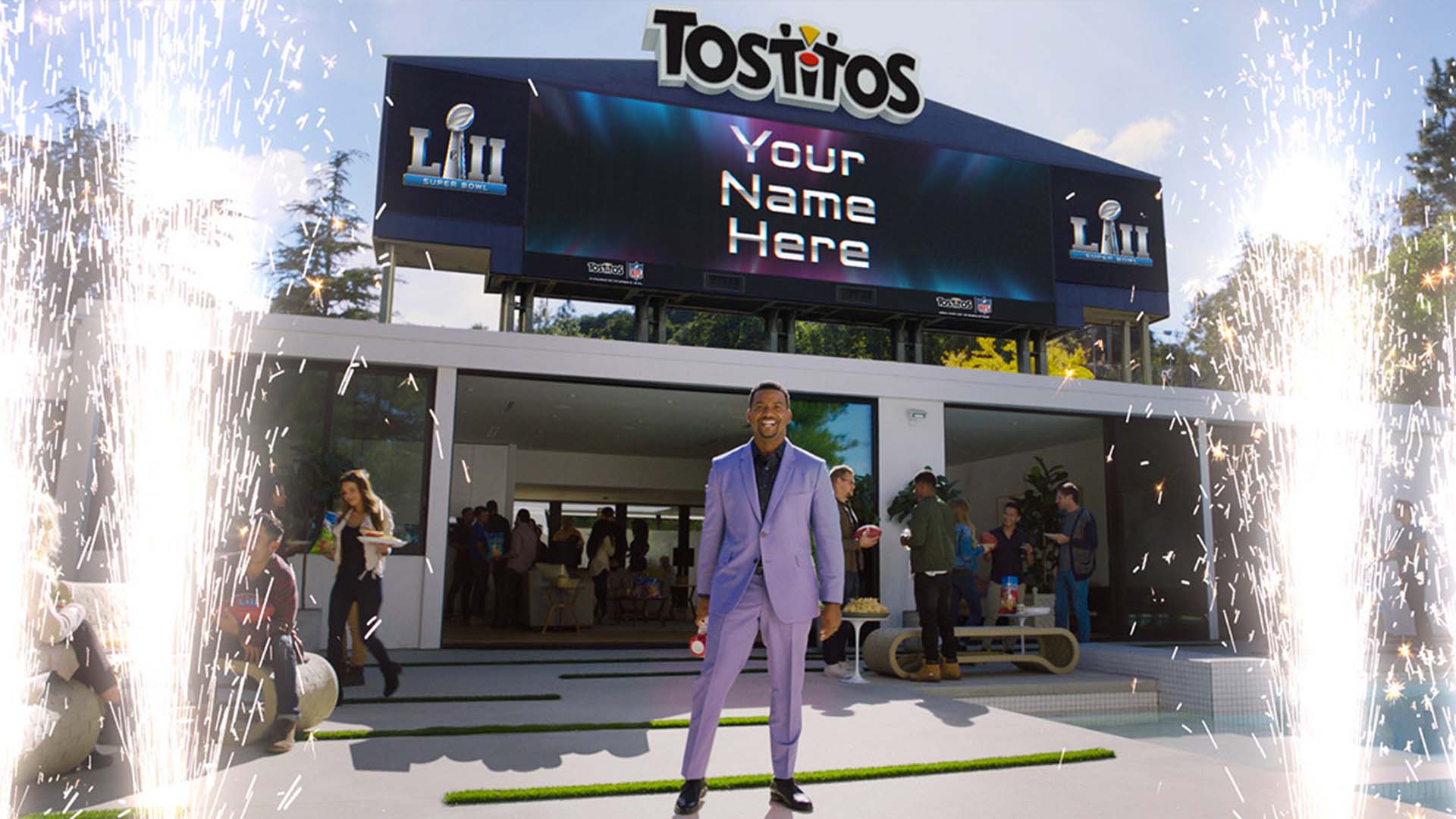
Some brands with bigger budgets are skipping the TV screen altogether. Tostitos is shifting toward a pure digital strategy with an online platform that creates individualized ads for consumers. “Super Bowl Ads for All” stars The Fresh Prince of Bel-Air actor Alfonso Ribeiro and taps into super Sunday party culture, providing personalized invitations for anyone hosting soirees.

Screen Capture from Tostitos Game Day Personalized Invitation

“TV consumption has radically shifted over the past few years with viewers incorporating second-screen and sometimes even third-screen devices into the experience,” said Pat O’Toole, senior director of marketing for Frito-Lay North America. “It’s just as important to engage with our core audiences on those devices, especially when you’re looking to reach younger millennials—one of our primary targets for Tostitos.”

O’Toole said that since the Super Bowl is one of the biggest communal days of the year, they wanted to advance the dialogue and own the conversation as a brand before the grand game on the gridiron. It also made sense to take a pure digital approach because that’s where consumers are creating their invites on their quest to spending over a total of $14 billion for the sports holiday.

The marketing campaign is being paired with a Cantina-style experience in Minneapolis, the site of this year’s Super Bowl, where consumers can meet Ribeiro and use the space to create invites and interact with a slew of other brand activations from the likes of Doritos, Sleep Number, Bridgestone, Verizon, Target, US Bank and Polaris, just to name a few.

PepsiCo is also activating a three-episode digital content series with former NFL players that pits them in the kitchen, with the winning star having their dish featured at the Buffalo Wild Wings Menu at the Mall of America in Minnesota. The social-driven show was made in partnership with Vox Creative, Vox Media’s Eater and SB Nation.

“The Super Bowl continues to be a great platform to entertain consumers and deliver brand and product messages to a massive audience,” said Dean Evans, Hyundai’s chief marketing officer. “We welcome the creative challenge and the opportunity to test and hone our Super Bowl formula, which has found success the past several years. Being an NFL sponsor gives us the ability to truly integrate our program across TV, digital, social and on the ground in Minnesota.”

Despite TV’s widespread reach—especially for NFL games that still dominate the ratings cycle even with a dip in viewership—developing a second-screen strategy across several devices is essential for growing an audience. According to eMarketer, 185.8 million adults in the US will regularly use the internet on a second-screen device while watching TV this year, an increase of 4.5 percent from last year’s figure.

For Avocados From Mexico, Kinser will be operating on four pillars during their “GuacWorld” digital campaign: SEO, display media, developing social media experiences within platforms that will appeal to any demographic and a paid search campaign that is relevant not only to the Super Bowl, but for all brand-related terms, like recipes.

Her two goals for Super Bowl Sunday are to own the digital conversation on social media and amplify the 30-second TV spot by corralling millions of views for the ad. The brand will also produce a 60-second spot for digital with the same story.

“We’re an underdog, and people love underdog stories,” Kinser said, noting that a produce marque from a brandless industry joining the advertising fray creates intrigue and attracts conversation. “So we set the bar really high for ourselves.”

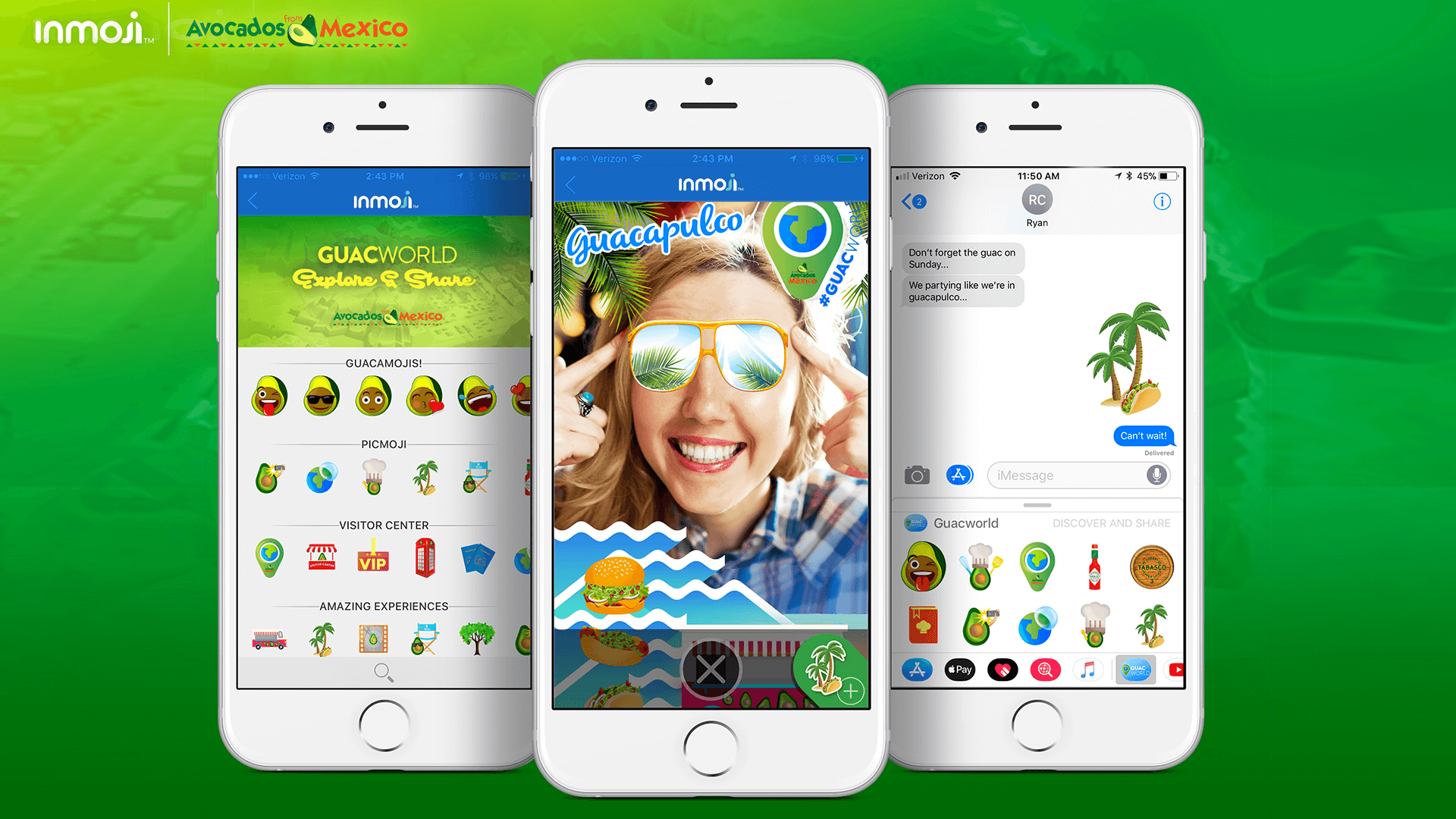
Avocados From Mexico also formed a partnership with Silicon Valley-start-up and emoji-focused company Inmoji to develop trackable branded icons. Visitors will be able to use Inmoji’s patent-pending tech with the interactive “Picmoji” feature, Kinser said, combining the selfie and the emoji for the first time and sharing it with their friends as a clickable icon.

“Emoji is the communication of the future,” said Kinser. “With the way it’s evolving, we wanted to take the trend of shareable and interactive emoji and use it in a fun way that increases our marketing. Tech innovation is critical to stay at the forefront of respective industries.”

Avocados From Mexico is also reactivating an evergreen Snapchat strategy for GuacWorld in certain universities around the country with a customized Super Bowl message. A national Snap filter would require a “significant investment” that was outside of their budget, Kinser said.

Super Bowl marketing dollars appear to be paying dividends. A joint study from Stanford and Humboldt University found that Big Game advertisers saw sustained post-game sales boosts and value that persists well after the confetti has fallen. A separate study from Standard Media Index says that ad sales revenues for the NFL are still up and growing year-over-year.

McKlveen said that building a mobile and multi-screen strategy that enhances experiences around the entire day—and not only the game—will help marketers “breakthrough” with their strategies, which is largely the reason why Pizza Hut is partnering with Oath and Yahoo for the second year in a row with Squares Pick’em, the classic game that’s evolving with a digital twist.

Zipporah Allen, vice president of marketing for Pizza Hut, called last year’s version of the game a “successful campaign,” with 70 percent of people playing a combined nine million minutes of the game specifically on a mobile device.

This year, the piemaker is pairing the game with video, native, display and mobile ads across Oath brands, as well as email and social marketing, to drive sign-ups for the experience. Pizza Hut is also pairing its marketing with a promotion that aims to drive new sign-ups to its loyalty program that launched last year. If the record for the fastest Super Bowl touchdown ever (14 seconds) is broken, all members who join prior to kickoff receive free pizza.

“Sports is a tried-and-true method for marketers to deliver fan experiences,” said McKlveen. “For marketers who are thinking about experiences for the entire day, the second-screen is no longer an afterthought. You have to show up as yourself and deliver consumers value and entertainment.”

Sneaker Brands Use Tech And Entrepreneurs To Cultivate Enthusiasts

For the average sneaker enthusiast, purchasing a coveted pair of kicks can be as monumental a task as stitching the shoes from scratch.

Marketers are making this process easier—and taking advantage of a $55 billion global industry—by using mobile augmented reality apps, influencer-inspired lines and other emerging tech to reach consumers who thrive on sneaker culture.

Take Nike. The brand is using its new SNKRS app to digitize the way the Phil Knight-founded company vends shoes with GPS and AR to complement the hype behind its releases.

“The Nike SNKRS app is an important part of our digital strategy,” Jenna Golden, Nike’s director of North American communications, told AListDaily. “It’s something that we’ve invested in over the last year. Since the start of 2017, we’ve really built out those digital experiences.”

Nike has developed its digital shock-drop approach with geo-located experiences in Berlin, Chicago, New York and Los Angeles through SNKRS Stash, an app feature that allows users to unlock access to hidden “stash spots” in their hometowns.

Since the experiences it’s cultivating require physical interaction with buyers, the move further positions the brand to combat bots and auto-buying tools that make purchasing limited-edition shoes seemingly impossible.

During ComplexCon, Nike also reached consumers who were not able to make it to the show in LA by opening up its camera experience and allowing fans to purchase one of the five shoes that were dropped at the show. A similar gamified strategy was used by incorporating AR for the drop of the Nike SB Dunk High Pro “Momofuku.” Consumers who scanned an image of David Chang’s Fuku East Village menu were given the opportunity to purchase the shoe.

Nike is a pioneer on the mobile AR front. SNKRS AR is looking to scale and fend off competitors like Adidas, which has grasped a sizable market share of late in both the United States and Europe.

In September, the striped brand surged past the Nike-owned Jordan Brand as the second most popular shoe brand in the US after Nike.

Since mobile is involved with nearly every moment of the purchase journey, consumers with a brand’s app on their phone are more likely to buy from that manufacturer, said Matt Powell, senior industry advisor for NPD Group.

Although mobile apps are a critical part of the marketing gameplan, Powell does not envision AR to have much of a role in the future, saying that it’s “more like a parlor trick—cool once, and after that, not so much.”

“Gamification is growing in popularity with brands, but again, these will have little impact on the commercial business,” said Powell, adding that he thinks there also is fatigue in the market over limited releases.

“I don’t see sneakerheads as very important to brands,” he said. “When [Nike] Tanjun is a top-selling shoe, it illustrates the limits of the sneakerhead community.”

Allison Giorgio, Puma’s vice president of marketing, countered that the sneaker culture is at an all-time high, and that it’s a great time to be a brand in the space.

“The sneaker aficionado space right now is interesting and exciting,” said Giorgio, who has used celebrities like Rihanna as creative directors to revive its brand. “We’re trying to figure out how do we move at the speed of culture that signals trends, innovate faster and release products quicker. Our mission is to be the fastest sport’s brand in the world, and we take that to heart from a development and marketing side.”

Although exclusive sneaker lines have primarily been reserved for star athletes and Hollywood literati, that model is now somewhat also shifting to influencers who sport an entrepreneurial zeal instead of a stellar jump shot.

Patrick Buchanan, global marketing director at K-Swiss, sitting next to the Gary Vee line of shoes. (Photo by Gina Canavan / AListDaily)

K-Swiss is rebranding its popular ‘90s brand with an eye toward targeting an audience of hustlers and young entrepreneurs with the campaign “Generation K” and their first signature sneaker shoe line for businessman Gary Vaynerchuk.

But is there consumer demand for such shoes?

“It seems there is another one every 10 seconds,” said Powell. “The people who are vying to buy them are for the most part ‘flippers’ rather than collectors. I think brands will try to leverage brand loyalty but because the pairs are limited, it will have little impact outside of the echo chamber.”

Patrick Buchanan, global marketing director at K-Swiss, told AListDaily that they’re tapping into the millennial mindshare and Vaynerchuk’s built-in fan base to release shoes in stores, online and through drops on Vaynerchuk’s personal social channels.

“Entrepreneurs are the new heroes, and we fully support that,” Buchanan said. “The sneaker culture is a huge imprint on popular culture.”

The brand is heralding the entrepreneurial push of “Generation K” by partnering with @f–kjerry’s Elliot Tebele, streetwear designer Anwar Carrots, social media and marketing strategist Karen Civil and Coco & Breezy founders Corianna and Brianna Dotson.

K-Swiss aims to inspire the “flippers,” who are the primary source behind the $1 billion sneaker resale industry.

Buchanan has been with K-Swiss for a little over a year and joined the brand to execute the new vision. The brand signed a deal last year with Vaynerchuk in Q2, and by Q4, the GaryVee 001 and GaryVee 002 had already hit store shelves. Their speed in production was also an imprint of the changing times.

“It takes almost two years to make a shoe. The conversations we are having internally is ‘how can we do things quicker,’” said Buchanan. “The biggest thing in marketing that is shifting for us is just trying to be faster and more responsive.”

“The biggest thing in marketing that is shifting for us is just trying to be faster and more responsive.” —Patrick Buchanan, global marketing director at K-Swiss

In the past, the brand would have culled marketing materials for the product campaigns as early as a year ahead. Now in order to be more relevant to consumers, Buchanan and his team are preparing marketing materials much closer to launch dates.

“That’s just one example of how we’re trying to work much faster and efficient,” said Buchanan. “When you work for big companies, it’s sometimes hard to turn the ship. You have to be willing to change if it doesn’t make sense.”

Buchanan said the beauty of being a shoe marketer today is that you have to keep your finger on the pulse and embrace industry shifts with new marketing strategies, which is why he’s also shaking up his content marketing mix with the podcast series “CEOs Wear Sneakers.”

“Trends are changing every day, as well as the way people are being touched,” he said. “We’re seeing a shift from retail to online. For me, it’s always trying to be open and listen to what’s happening. I have to be a responsive marketer and move as the trends and times do.”

Marketers Focus On Social VR For Needed Platform Reinvention

After more than two years on the open market, VR is not the shiny new object in the modern-day marketer’s toolset anymore. Executives in the marketing industry find creating inherently more social VR experiences will be critical in successfully deploying future immersive content and having them resonate with the audiences they’re trying to reach.

“Marketers need to have a real desire for consumers to interact with their brand or IP in VR,” said Zeda Stone, head of business development for RYOT. “We will probably get to the point where consumer interaction in social becomes a priority and [will] dictate whether or not VR will succeed in the end.”

“We will probably get to the point where consumer interaction in social becomes a priority and [will] dictate whether or not VR will succeed in the end.” —Zeda Stone, head of business development for RYOT.

Although VR experiences seem to debut every day, YouGov says VR adoption will drastically slow in the future because penetration has plateaued, and there haven’t been industry-wide efforts to alleviate constraints such as isolation and lagging tech.

When done well, VR can evoke emotions for curious consumers to recall messaging marketers are trying to convey. Whether playing video games, reconfiguring furniture in living rooms, training and learning or immersing in a brand-specific experience, marketers who build VR experiences will need to attach KPIs that solve scalable issues that satisfy specific marketing needs, Stone said. That way, when reports return, looking at the numbers won’t feel like their activation was akin to a tree falling in the middle of the forest.

Stone, who plies his trade at a media company primarily focused on 360-degree, traditional documentary filmmaking rather than true VR, said that for social VR marketing to shine, there need to be additional storytelling layers added on top of it as well. He also warned that access to social interaction alone doesn’t make it the right choice for the marketer—but if chosen, expectations must be scaled back, because from a metrics standpoint it won’t be comparable to traditional platforms.

VR platforms are beginning to embrace social play, social learning and second-screen experiences, said Jenna Seiden, head of content acquisition and partnerships for HTC Vive.

“Creators need to specifically build content for social interaction because that enables marketing teams to find demographics,” said Seiden. “Whether it’s a game or retail experience, it starts from the DNA of the product.”

Seiden warned that if the content’s purpose is to be sharable, it should not be repurposed from other platforms.

“You have to build it natively from the beginning and think about all of the different ways that people are interacting in headsets and give them the incentive to engage in the content,” she said. “Every app made for VR should have a multi-player or social element to it. People love to share.”

But even after establishing social VR, there are still obstacles for marketers, says Guy Bendov, founder and CEO of Sidekick VR—a publisher of games for VR platforms.

“Challenges in delivering for all kinds of headsets, platforms, browsers and mobile devices will still remain in 2018,” said Bendov. “I have not seen a lot of shared experiences, but I want to see how marketers are going to bring those experiences to the forefront. The overall user experience will help marketers and brands better tell their stories.”

For consumers to enjoy social elements in VR, they don’t need to be isolated in headsets, Seiden said, noting that people can also affect outcomes for others using VR through mobile devices and 2D screens.

“For non-endemics, it’s about raising brand recall and awareness,” she said, adding that non-native brands are seeing value in VR by reinvesting in the space. “It has to fit for the brand’s goals. We’re all learning, and whether it’s a brand, developer or filmmaker, we give constructive marketing parameters. Social VR does not mean you immediately monetize.”

Chris Hewish, EVP of games and interactive for Skydance Media, said the market is still relatively small from a concurrent user standpoint, and content creators and marketers have to embrace VR’s social interaction mechanics.

“All of the ingredients are there for social VR,” said Hewish. “We just have to make sure we mix it right. Performance is king. From our perspective, VR is still going strong, but dividing audiences into platforms reduces the growth. Because it’s a relatively new medium and small market, we can’t lose focus of what we’re building.”

Hewish, who oversees Triple-A content development and partnerships for the home and location-based users, sees a few ways to help alleviate the growing pains and friction of marketing a new technology: lowering price-points, offering easier-to-use hardware and high-quality, and creating platform-agnostic content VR experiences.

“I don’t think the evolution of VR strictly relies on social,” said Hewish. “Although the social side is fun and is important, the best way to market VR right now is to try it early and often and by word-of-mouth.”

Rather than approaching from a pure profit and loss standpoint, Hewish said giving away premium VR experiences for free will help marketing penetration as well. Testing, failing and learning to make it right will help future iteration.

In its quest to become more social, VR needs to ultimately break the boundaries of the technologies that came before it, Stone said. One way to do so is to shun controllers and clickers and create interaction through gesture and eye-gazing, which will become a critical part of consumers using their intuitions to create their own stories.

“It’s an open landscape to get creative,” Stone said.