Mark Cuban, Dallas Mavericks Banking On Esports To Reach New Fans

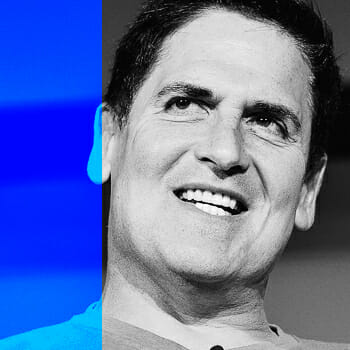
Mark Cuban, owner of the Dallas Mavericks

Entrepreneur, investor and Shark Tank TV show personality Mark Cuban is gearing up his NBA team, the Dallas Mavericks, for marketing to the millennial and Gen Z audiences that esports attracts.

The team has partnered with the Kingston Technology’s HyperX gaming division, which is sponsoring its NBA 2K esports team by being the official headset brand. The two companies kicked off their new partnership by celebrating Star Wars Night together on Dec. 2 at the American Airlines Center in Dallas while promoting the gaming brand’s headsets.

“Great products are great products,” Cuban told AListDaily. “I used them in a tournament and now my son and I use them at home. As Mavs fans are exposed to the brand and see our gamers and players use them, it will without question translate to sales.”

Next year, the NBA and Take Two Interactive will launch the NBA 2K League, which will allow amateur gamers to compete virtually as part of each participating NBA team’s esports roster. Basketball video game NBA 2K18 will be the centerpiece, with open tryouts for that new league scheduled for spring 2018.

“Make it fun; make it engaging,” Cuban said. “We can have a lot of fun with the HyperX brand both on court and with our 2K players, so fans can see our influencers using the headphones. We will be creating videos using our 2K players and Mavs.”

Cuban sees the NBA 2K League as an opportunity to attract a new millennial and Gen Z audiences to the real sport of basketball in addition to the NBA and Mavericks brands.

“How kids are introduced to sports is changing,” Cuban explained. “In the past, families gathered in front of the TV to watch their teams. That led to affinity for the home team or a team someone in your family loved. These days, if the family gathers, the kids have a device in their hand and their heads down.”

Cuban said the Mavs are pushing pricing lower and lower for tickets to make it family affordable. Such a move is easier make, as the Mavericks are in the midst of rebuilding the roster.

“Getting kids and families to a game are the best way to make them love the Mavs,” Cuban said. “Next on the list is getting them to play 2K. Kids who play know every player on the roster grow attachments to the players. Listen to kids talk 2K and they talk about who they play as. That’s why it’s important.”

While a growing number of traditional sports owners and ownership groups, including NBA teams like the Sixers, Heat, Kings, Cavaliers, Warriors and Rockets, are getting involved with popular esports games such as Overwatch, CS:GO and League of Legends, Cuban has strategically steered clear of these opportunities. He is still watching to see how the Overwatch League and the franchising of League of Legends in North America plays out next year.

“I chose not to get involved in those leagues,” Cuban said. “They are more global, but still trying to find their way and define their structure here in the US. With 2K, if we can figure out how to make matches exciting to watch in person and streamed, and build personalities that players and fans follow closely, we have a shot to be the dominant esport in the US.”

Having invested in companies such as esports betting start-up Unikrn, esports data company Sportradar and virtual reality accessory maker Virtuix, Cuban is strategically betting on the growth of competitive gaming. Last year, Cuban and company also mashed up the Mavericks fan experience with Minecraft, letting fans experience a scale model of the American Airlines Center

“Building the pipes, picks and shovels—products like HyperX, Unikrn, Sportradar, Virtuix and others—has [a] huge upside regardless of which esport is dominant,” Cuban said. “If the 2K league can become big enough with large enough prizes, the rewards will make competitions around the world more compelling, which will drive new fans.”

Cuban added that HyperX brings an abundance of experience to the gaming community, which will help the company serve as a valuable partner both on and off the court during esports tournaments and events.
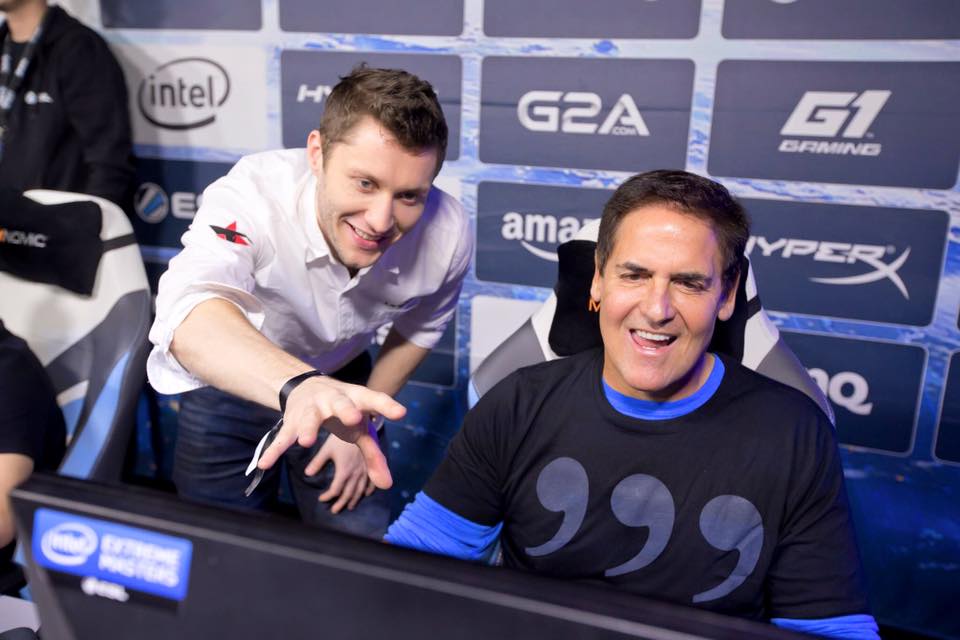


Dustin Illingworth, HyperX influencer marketing manager, told AlistDaily that the partnership with the Mavericks gives the technology company “highly visible branding opportunities,” including a 30-second commercial at every home game, as well as table and stanchion signage, six activation nights on the concourse, and six giveaway nights wherein every person seated in a lucky row gets a Cloud Alpha.

“We have to speak to a different kind of gamer with NBA 2K League,” Illingworth said. “The language and expectations of a casual gamer couldn’t be more different than the hardcore League or CS:GO player. We have to find ways to create compelling messaging for the casual player, and continue to be evangelists for incredible sound and comfort even if the play sessions are shorter and less intense.”

The NBA 2K League will focus on establishing new esports stars by using the game’s MyPlayer feature, which opens up an aspirational element for the competitive league by allowing gamers to try out for clubs and then establish their own esports personalities alongside their teammates.

“It creates a really compelling narrative angle for us in that we’ll be able to speak to the casual gamer, while also celebrating the world of esports that we live and breathe every day at HyperX,” Illingworth said. “It’s the best of both worlds, and ideally we’ll be able to craft messaging, content and activations that appeal to both groups.”

‘Doom VFR’ Honors Franchise History Of Trendsetting

Like its very first incarnation in 1993, Doom VFR is exploring new gameplay controls that may define future standards in the medium. After a successful launch of the Doom reboot last year, fans are able to step into the bloody shooter for the first time in virtual reality, but with a new adventure built from the ground up.

Doom VFR has users battling their way through a demon-infested space station—a concept near and dear to the heart of the 24-year-old franchise. One thing hasn’t changed in the franchise, and that’s its brutality. This game’s title is a piece of marketing on its own. Hint: the “F” doesn’t stand for “fudge-ing.”

SuperData Research predicts digital sales of Doom VFR to reach 500,000 by the end of the year. Over 100,000 digital copies alone were pre-orders. While the game may not have a huge impact on VR adoption this year, it helps “legimitize VR for those who aren’t sure if it’s a viable medium,” SuperData VP of research and strategy Stephanie Llamas told AListDaily.

It’s a big year for the infamous demon-slaying franchise, with a release of last year’s Doom on the Nintendo Switch and Doom VFR for PlayStation VR (PSVR) and HTC Vive. It seems rather fitting that Doom takes its place in the VR future of video games, considering the fact that it shaped so much of what the industry is today.

Dawn of Doom

Doom developer id Software may not have invented the first-person shooter, but Wolfenstein gave birth to a genre that took—and continues to take—the world by storm. When Doom was released in 1993, it improved on Wolfenstein‘s use of graphics and level design. The use of realistic 3D graphics was so new that many referred to it as VR.

“Back then, VR was trying to happen,” Doom designer John Romero wrote on Twitter. “[Wolfenstein 3D] was also called virtual reality when it came out.”

Id Software’s run-and-gun demon shooter became an obsession for computer users everywhere. As other developers tried to capture the same enthusiasm from consumers, “Doom clones” became what we now recognize as first-person shooters—the same way that Playerunkown’s Battlegrounds has inspired a surge of battle royale titles.

Doom was groundbreaking in helping define the first-person shooter (FPS) genre, as well as opening the door to more aesthetic freedom in games,” said Llamas. “Not only does its legacy persist in the camera perspectives, movements and mechanics of today’s FPS games, it made it OK for players and developers alike to enjoy gore and violence in video games. Its influence remains so far-reaching that last year, after being on the market less than seven months, it earned over $130M in digital revenue across console and PC.”

In Doom VFR, 13 classic levels can be unlocked—with the new gameplay controls—for old time’s sake.

Summoning Doom VFR

“When you make a game like Doom, you spend so much time playing it, and I know a lot of fans have spent a lot of time playing it,” Doom game director Marty Stratton explained at Bethesda’s 2017 E3 event, BE3. “To be able to step into the world is the most exciting part VR.”

In Doom, constant movement is the key to survival—but dashing about in VR may result in spraying more player vomit than demon blood. The solution comes baked into the premise of Doom VFR—as Doctor Peters, a recently deceased scientist, players are able to transfer their consciousness into an artificial brain matrix. Players can now strategically teleport wherever they need to go.

Unlike the unnamed protagonist of the franchise—lovingly referred to by fans as “Doom Marine,” “Doom Slayer” or “Doomguy”—in Doom VFR, Doctor Peters can hack computers, pick locks and transfer his consciousness to the body of a cybernetic soldier.

Players can still run and gun, but also take advantage of the interactive elements that VR has to offer. Teleportation allows swift movement without inducing motion sickness.

“We’re really architecting the gameplay to take advantage of VR,” said chief technology officer Robert Duffy at BE3. “It’s every bit as fast. It’s just a different type of movement.”

Bethesda, which also publishes Skyrim VR and Fallout 4 VR, has slowly built the hype for its virtual roster of franchise favorites beginning with E3. In addition to Doom VFR‘s announcement, fans were treated to a Doom-themed section of Bethesdaland—a theme park set up outside the LA Convention Center.

At QuakeCon in August, fans could don a headset and try Doom VFR for themselves. Since then, PlayStation Underground and Bethesda have hosted livestreams to show viewers the game while offering giveaways and behind the scenes information.

Marketing for Doom VFR has been rather light compared to its 2016 predecessor, as most campaigns have focused on Doom‘s release for Nintendo Switch. PlayStation, however, is betting on the game’s success so much that it has unveiled a new PSVR bundle and “Feel Them All” spot that includes the game.

Executives Tell Us Which Holiday Marketing Trends To Watch

From our most recent holiday marketing poll, we’ve found that for executive marketers, holiday season is all about capitalizing on gift-giving consumers. Here’s what else they had to say:


We saw an increase from 37 to 51 billion-dollar days last holiday season over a 60-day period in the US. One trend is that mobile is not going away. We’ve historically seen individual days eclipse traffic on mobile over desktop. We’ll see that happen on a regular basis, day-over-day, week-over-week, where desktop traffic will be less than all of mobile traffic—and not just on Black Friday and Cyber Monday. Optimizing the mobile space is going to be extremely important. If you don’t have a good mobile strategy, you’re going to have a really hard holiday season.

Another trend we’re seeing in advertising is an increase in visits coming from paid search versus natural. While social is a minority of the traffic, it’s actually the lowest-referred traffic. Over the last two years, there’s been a 100-percent increase in that traffic. It’s growing faster than any other channel. Social is something to keep an eye on. There’s an interesting play going on between paid, natural and display. Display advertising, along with paid search, is seeing a bit of an uptick, and we see some very good performance in the fourth quarter around leveraging retargeting programs. Retargeting and the ability to retarget during the holidays will be very important.

Michael Klein, director of industry strategy for retail, travel and consumer packaged goods at Adobe


As a marketer, the holidays are always a very busy and cluttered time to be focused on. From my perspective, anytime I’ve done anything focused on the holiday season, I rely on being able to go back to the communication that I already started with consumers earlier on in the year. People are obviously much more in the purchasing headspace around the holidays.

It’s always a time for showcasing key product stories, and tell stories around new products coming out—but in a way that remains consistent with the communication and messaging that consumers have become accustomed to seeing. Consistency and ongoing communication are really important, especially if you don’t have the ability to outspend some of the heavy hitters in that  time.

Sarah Bishop, vice president of marketing for Asics


I’m looking forward to seeing the influence of social impact and social good at the end of the year for holiday marketing. I want to see more cause marketing integrated into the mix.

Nathan Tan, associate director of brand partnerships and experiences for Cadillac


We’re predicting a 4-to-5 percent lift in sales for most retailers this holiday season. I think the market is doing quite well. From an overall economic perspective, consumers have money to spend. As the middle class starts to move in different directions, we’re seeing what we call the ‘great bifurcation.’ US retail consumers are sitting right in the middle class—right where most retail brands are. But if you start thinking about where the growth is happening, it’s happening in the lower end. Look at retailers that are serving lower-end and high-end customers. We’re seeing that shift start to happen, and I think that’s going to continue to happen this holiday season.

Retailers will continue to build marketing strategies to attract consumers both to a higher and lower end. Bargain shoppers and the middle class are going to continue to feel the squeeze this holiday season. From a marketing perspective, I think social commerce is going continue to play a big role. Social commerce hasn’t experienced much of a take-off in the past, but it should see a little bit of a lift this year. The regular forms we’re seeing with media is being more integrated with retail. It’s going to see a lot more of a pick-up this holiday season.

Lokesh Ohri, principal at Deloitte emphasizing in omnichannel retail, digital and supply chain strategy


There’s such a focus on Black Friday and Cyber Monday, but now that has really expanded. The digital indexes and data that we were looking at previously around those parameters have expanded and become a larger phenomenon. Also, there are a lot of companies that do ‘purchase online, pick up in store.’ It has a big influence at the end of the season, especially for e-commerce sales. Brands sometimes have issues with delivering on that, so there can’t be a misstep over the holiday season.

Drew Burns, principal product marketing manager at Adobe


As a marketer for a premium brand, I actually hate Black Friday and the shopping holiday week after it. It’s slowly melting into one long season. We have a feeling that the hype and wait being created for these magic days for aggressive discounting will start easing off. In the next five years, there will be a generational shift with younger consumers and their buying habits.

Stefanie Reichert, Sennheiser’s director of American trade marketing


You’ll be seeing a big paid push from the premium segments, and we’ll be there touting that message, too. For premium and luxury car manufactures, Q4 is by far the best-selling season, and the year-end holiday marketing and messaging reflects that.

Katie Inderelst, head of Alfa Romeo marketing and communications


Since 1999, we’ve resonated with consumers with our ‘December to Remember’ campaign. The name, the bows, the jingle—it’s all been iconic. We started our marketing the earliest we’ve ever have before this year on Nov. 2—we normally had started mid-November. We finally decided to try it and started at a low-level. We’re going with a big paid push.

But holiday marketing will not begin before Halloween. November and December are huge sales months, so you have to be a part of the conversation. There’s a slight twist on how we represent ourselves during the holidays that I hope feels more appropriate for the season. When the US was coming out of the recession, we changed our messaging, and since, a Lexus vehicle is no longer given as a gift, but it’s celebrated as a family purchase.

Brian Bolain, corporate manager for Lexus product marketing and marketing communications


[Snap is looking at] all of the ways that a user can express themselves, and ways that marketers can join in that ability. Is it AR? Is it filters? Is it content? With all of those things combined, I think this holiday you’re going to see more brands take more chances with their creative and content to have more fun.

Marni Schapiro, director of sales at Snap

Floyd Mayweather Brings Name, Marketing Muscle To Mobile Game ‘Wild Poker’

Daniel Kashmir, Playtrex CEO

Floyd “Money” Mayweather has made nearly $1 billion in career earnings as a pugilist and is fresh off of a decisive beatdown last summer of UFC star Conor McGregor that netted upward of nine figures. But the recently retired 40-year-old boxer is not simply resting on his laurels.

Mayweather is now taking his fame to expand to other business opportunities, specifically as a mobile game personality in the social casino game Wild Poker, the debut mobile title from developer Playtrex.

Mayweather, who has over 40 million followers across Facebook, Instagram and Twitter alone, will use his social platforms to promote the game—in between sessions of flaunting his lavish lifestyle. Additionally, Mayweather is featured in the game’s promotional videos and has lent his likeness as a playable character in the game.

“For most brands, a single post to Floyd’s Instagram channel or Twitter profile is worth a lot of money because it provides such tremendous exposure, so that is one of the main ways we plan to spread awareness [of the game],” Playtrex CEO Daniel Kashmir told AListDaily.

Kashmir said that Playtrex will continue to leverage Mayweather’s personality and popularity in future marketing campaigns as the company expands past promotion with traditional advertising and marketing channels.

The ex-boxer may have a vested interest in seeing the Hero Digital Entertainment published mobile game succeed. Mayweather will make around six figures and will receive additional cash on the back end based on how well the game does, according to a TMZ report.

Mayweather has a reputation for not being quick to put his name behind any brand. He previously told Fortune during his boxing heyday that his $1 million asking price to simply begin playing ball with brands was deemed too high for most marketers.

The amount of exposure Mayweather brings to the table may be worth the asking price for Kashmir and company, who said Mayweather is involved because he loved Wild Poker after seeing it for the first time.

“Floyd loves gaming [and gambling] in general and he especially loves poker,” said Kashmir. “But there are hundreds if not thousands of poker games for mobile devices, so he wasn’t going to put his name on just any poker game.”

Kashmir said Mayweather was drawn to Wild Poker specifically because it wasn’t a straightforward poker game. In it, Mayweather plays Texas Hold’em alongside animal characters like chimpanzees, giraffes, sharks and dogs and uses special abilities like doubling his winnings—emphasizing Mayweather’s “money” mantra for an additional layer of strategy.

It’s this kind of quirkiness, combined with celebrity endorsements, that helps games like Wild Poker gain awareness in the crowded mobile-gaming market. Playtrex is aiming to make a name for itself by evolving the social casino game scene using varied gameplay.

“The key to standing out in today’s crowded mobile market is to be truly unique and deliver an outstanding product,” said Kashmir. “I know that sounds obvious, but it’s true. To be a hit today, a game has to offer something that no other game offers, and that’s exactly what we’re doing with Wild Poker.”

HP Brand Sees Promise In Franchise Model For Esports

Josh Kocurek, global marketing manager for gaming and esports at HP

Next year will see an unprecedented shift in the business of esports, as both Riot Games and Activision Blizzard will shift to a franchise model inspired by traditional sports.

Riot has awarded ten North American teams a franchise, establishing a solid structure to build around. Meanwhile, Blizzard is taking things a step further by introducing a dozen city-based franchises for the inaugural Overwatch League, which commences Jan. 10, 2018.

Both of these moves, which could be a harbinger of more shifts in the esports ecosystem, open up new opportunities for brands such as HP. Omen by HP is the official PC and display brand for the new Overwatch League, the result of a multi-year sponsorship deal, and the company most recently worked with Blizzard on the recent Overwatch World Cup.

Josh Kocurek, global marketing manager for gaming and esports at HP, feels the franchising of esports is the best thing that could happen.

“From a sponsorship standpoint, one of the biggest pain points in esports has been the long-term stability of the teams and players involved,” Kocurek told AListDaily. “With relegations and not having a solid infrastructure inside these leagues, you never knew who was going to be around tomorrow, and it was difficult to place bets and form strong relationships with everyone involved.”

Now that Riot and Activision Blizzard have put a stake in the ground, Kocurek sees this infrastructure focusing on player longevity.

League and Overwatch will both get better and bigger as time goes on,” Kocurek said. “It’s a safe, comfortable place for big brands to come in and commit to esports with a long-term vision, instead of only planning things year-to-year.”

Kocurek spearheaded HP’s esports game plan for over a year, and he’s seen the marketing initiatives pay off with establishing the Omen brand.

“Since I decided to make this big shift and lean on esports for our approach, we’ve seen growth of awareness of Omen and what we’re here to do with the gaming audience,” Kocurek said. “That’s reflected all the way down to sales and the growth of our market share in key countries.”

HP recently launched its OMEN X gaming laptop, which has been integrated into the Blizzard marketing campaigns. Kocurek said OMEN by HP marketing is targeting gaming enthusiasts, esports athletes and competitive gamers, which ties in nicely with the Overwatch League.

Kocurek believes Blizzard’s decision to utilize Disney/Pixar style graphics makes the game more inviting to both gamers and spectators. To date, over the game has over 35 million players. The Teen rating also allows for more global marketing push, as Blizzard recently flooded the airwaves with commercials promoting a free gameplay weekend.

Having worked with Blizzard on the Overwatch World Cup, HP confirmed that Blizzard has a vast international audience. Therefore, all marketing initiatives for the brand need to activate on a global scale.

“When we do deals and partnerships like those on the size and scale of Overwatch League, it’s crucial for that partnership to work around the world,” Kocurek said.

Blizzard has structured its Overwatch League to have teams in cities across the US, as well as in Shanghai and Seoul. But the international appeal for brands goes beyond those cities. Having a dozen teams spread across the US and Asia also opens up a regional layer for brands to market products directly to local audiences—something that’s a staple in traditional sports.

“When it comes time for us at Omen to do any marketing activity, whether an event or some type of creative at a retail space, knowing there’s going to be local representation from the Overwatch League there allows us to tweak things to that audience,” Kocurek explained. “I’d love to see in the future that if you go to a Best Buy in Dallas there’s an end cap for Omen by HP products feature Dallas Fuel team colors, logo and players. In San Francisco it’d be the Shock and we could even do this in Shanghai and Seoul.”

Kocurek believes regional relevance is crucial for any brand marketing any product today. The goal at HP is to make the creative and messaging be as relevant to the audience as possible, but it’s difficult to do that at scale.

“The city-based league will win because over time as these teams develop that local fan base, the same type of camaraderie that you see today with college and pro sports local teams will occur,” Kocurek said.

While each team will be representing their city in 2018, they won’t begin playing in their home arenas until season 2 at the earliest. But having all of the teams based at Blizzard’s Burbank Studios does offer some advantages for sponsors who need access to players for video, social and other content.

“It gives us direct access to all of the teams and players,” Kocurek said. “We want to establish relationships and a rapport with them so they understand what our objectives are as a brand. The Overwatch League shares a lot of our broader vision of what we stand for in the gaming space, which is to celebrate the competitive fire that’s inside all of us—whether you’re a pro gamer or a casual player. As we look to develop more player profile-centric pieces, it’s important for players to understand what we’re out to do to make the best possible narrative.”

HyperX Plans To Appeal To Gamers By Becoming A Lifestyle Brand

Daniel Kelley, HyperX director of marketing

HyperX specializes in PC gaming hardware and has been active with esports almost from its beginnings by sponsoring players, organizations and tournaments. As a result, gaming and esports enthusiasts have developed an affinity for the brand and its products, but it’s still primarily known in the competitive PC gaming scene.

The tech brand is further expanding from esports and into the world of traditional sports through an NBA partnership with the Dallas Mavericks, becoming the official headset provider for the professional basketball team. The announcement, which follows a similar partnership formed with the Philadelphia 76ers in October, demonstrates how the tech company is further evolving its marque past hardcore gamers into more of a lifestyle brand.

Daniel Kelley, director of marketing for HyperX, told AListDaily that his company’s goal is to become known more broadly as a “gaming-lifestyle” brand that attracts both hardcore and casual players. The key to achieving this is through continued authenticity and remaining confident in product performance and quality, all while conveying that sense to audiences through esports tournaments and NBA partnerships.

“We built a marketing program aimed at positively engaging and supporting the gaming community with a large focus on the competitive gaming scene,” said Kelley. “We now are aggressively expanding our brand to be more approachable and trusted by the casual gamer who likely primarily plays on PlayStation, Xbox or other consoles.”

Kelley said that this approach is an extension of the company’s “we’re all gamers” tagline, which it uses to drive its marketing strategy.

HyperX looks to utilize the known personalities and organizations it sponsors to get more instant recognition by working with esports teams such as Echo Fox, owned by former Lakers star Rick Fox, and NBA veteran Jonas Jerebko’s Team Renegades.

Kelley and company have also procured partnerships with professional basketball players Gordon Hayward and De’Aaron Fox as brand ambassadors. These efforts, which mainly involve its Cloud gaming headsets, help to get the HyperX brand and products in front of more casual gamers who are also fans of the NBA.

But HyperX isn’t just looking to win over casual gamers—it’s looking to the parents of young gamers to adopt it as a lifestyle brand, too.

“Getting brand awareness with the mom or dad is also quite helpful when they’re looking to outfit their son or daughter with some gaming gear,” said Kelley. “HyperX is a gaming brand, and we feel that anyone that plays games, watches games or is the parent of an avid gamer are part of our community. If we can stay true to what gamers want and need, this will resonate beyond esports and into traditional sports fans, who also appreciate the dedication and quality of other brands in the space.”

The relationship between esports and traditional sports continues to grow closer with a wave of NBANFL and MLB franchises—among others—getting involved with competitive gaming. HyperX will continue to look toward traditional sports to assist with its brand evolution.

“NBA franchises and owners are buying esports teams and preparing to fill arenas and stadiums with esports tournaments and events,” said Kelley. “The NBA, in particular, has been very progressive as it relates to embracing esports and there is a lot of overlap between hardcore gamers and NBA fans.”

Fans Of Premium Games Approve Of Monetization Despite ‘Battlefront’ Backlash

Video game monetization is most widely associated with the free-to-play (F2P) business model, but in recent years it has become commonplace for premium, or paid titles.

Based on public outcry over loot boxes in Star Wars: Battlefront II, one might assume that players would do away with premium game monetization altogether. But studies—and revenue—reveal that quite the opposite is true.

Players Are Down With DLC

Downloadable content (DLC) such as expansions and add-ons have been a part of gaming for over a decade, and additional content will make up over 50 percent of digital consoles’ total revenue for 2017, according to SuperData Research. In fact, some publishers earn far more from DLC than the base games themselves. FIFA 17, for example, has earned more than $497 million in DLC, compared to $182.3 million in base game sales as of October.

“This trend is interesting because it’s a demonstration of a ‘games as a service’ monetization strategy,” Elena Fedina, senior analyst at SuperData told AListDaily. “Free-to-play games have always followed it, but now big publishers like Activision and Take-Two also see the benefit in it—gamers are willing to spend $60 at launch and then double or triple that on additional content, so each spender’s value is at least $60 and the maximum they can spend is virtually unlimited.”

A study by LendEdu found that 56.6 percent of video gamers think paid downloadable content is “beneficial to the industry and adds a lot of value to a video game.”

Balance And Legality

One method of game monetization is the “loot box,” which are randomized in-game crates that can be purchased with real money, but the usefulness of their contents are not guaranteed.

“[Loot boxes] add randomness to the process, so it feels more rewarding when the player gets the item they wanted,” said Fedina. “Overwatch has been especially successful with that, but Destiny 2 and Call of Duty WWII also have loot boxes in their stores, because this mechanic proves very successful in generating revenue.”

EA’s Star Wars: Battlefront II woes stem not from the very idea of monetization, but a perceived lack of value to the player. In addition to a base price of $60, players had the option to earn credits (over tens of hours of gameplay) or purchase “loot boxes” for a chance of unlocking characters like Darth Vader or Luke Skywalker.

To put it into perspective, these characters offer a significant advantage over the default Storm Trooper and Rebel characters in multiplayer matches, and thus would have rewarded those who paid real money over those who didn’t. In response to criticism, EA removed all in-game purchases just hours before Battlefront II launched. The controversy cost EA what might have otherwise been a much more successful launch. As it stands, Battlefront II sales are 60 percent lower than its predecessor, and EA stock plummeted $3 billion on Tuesday.

In many games, items up for grabs are cosmetic only—changing the look of a character or in-game items such as a car or a horse, but not offering an advantage for those that pay real money. Due to the randomness of loot boxes, parents and governing bodies have raised concerns over similarities to gambling.

Keeping It Cosmetic

Rocket League developer Psyonix has seen tremendous success through its game monetization strategy but attributes that success to one important factor—balance.

“We believe that add-ons should be complementary to the main game and not required to get the most out of the experience,” Jeremy Dunham, vice president of publishing at Psyonix told AListDaily. “We also believe that add-ons should not harm other player experiences and it’s that philosophy that has allowed us to keep a very simple and straightforward rule for all paid Rocket League content—it’s cosmetic only!”

In Rocket League, players compete in a soccer game that replaces people with vehicles. Optional add-ons allow the players to customize their vehicles from decals to colors and even branded options like the DeLoreon from Back to the Future.

“Cosmetic-only paid content means that we don’t have to make balance compromises at all, and it’s remained that way since our launch in 2015. If you’re buying an add-on for Rocket League, you’re either getting Garage customization content that has no special abilities or powers, or a new vehicle based on a standardized set of Rocket League hitboxes (the area on a vehicle that hits the ball). We have also been known to sell a soundtrack or two each year, but that’s it.”

DLC: Neat, Or Necessary?

Psyonix isn’t offering paid content out of greed, but necessity.

“With Rocket League, we’re a $20 game with millions of monthly players who put in hours and hours of game time, so we need the extra income from add-on content to pay for servers and to grow the team to better support the game as a whole,” explained Dunham. Game sales on their own would make that very difficult.”

Since the dawn of the arcade, players have been pouring their hard-earned cash into machines upfront and then countless quarters more in an attempt to beat the game or high score. All players earned for their money was another chance at glory.

Once consoles made their way into consumer households, one-time purchases became the norm—consumers bought a game cartridge and if they wanted more, they had to wait for a sequel. It wasn’t until within the last decade or so that premium titles began selling additional content. These add-ons or DLC ranged from new maps to cosmetic items and are still popular today.

Whether it’s adding new maps for Call of Duty or driving the Batmobile in Rocket League, video game consumers are used to—and willing—to pay more as long as the DLC enhances the experience. Game monetization doesn’t have to be a frustrating experience for the players.

“My advice is to understand what add-on content makes the most sense for your audience and go from there,” said Dunham. “You have to get to know your community before you can ask them for more money but sometimes you also need to know when you shouldn’t ask for more money. It’s not as helpful to your bank account, sure, but understanding that your game may not support a long-tail financial model can be just as important to your reputation as a studio and business.”

Female Execs Review State Of Gender Diversity In Video Game Industry

Women account for almost half of the global gaming community and they’re becoming increasingly involved in all its aspects, from development to esports. To accurately reflect this dynamic, it’s important for video game companies to diversify—particularly among their leadership roles.

To get deeper insight about the state of the video game industry, AListDaily spoke to Kongregate CEO Emily Greer, Digital Extremes VP of publishing Meridith Braun, Blue Planet Software (the sole agent for the Tetris brand) CEO Maya Rogers and Maureen Fan, who worked at Zynga for six years before becoming the co-founder and CEO of Baobab Studios, which creates animated virtual reality films. They recount their experiences as executives in the games industry and share their thoughts on how it can be improved.

Recognizing The Problem

When it comes to gender diversity at the top levels, Greer would score the industry pretty low, stating, “It’s at a point where if I’m in a group of 20 other leaders in the games industry and there are two other women, it feels like a lot. Very often it’s just me and maybe one or two other people.”

Maya Rogers, president and CEO of Blue Planet Software, the sole agent for the Tetris brand

She isn’t alone in observing that gaming has some diversity issues. Although all four women agree that the industry has come a long way in the past decade or so, both Fan and Rogers said that there is plenty of room for improvement.

“To this day, I don’t think we see nearly enough women in key leadership roles,” said Rogers. “It’s a shame, because the women I have interacted with in more senior roles are absolute rock stars—creative, innovative and strategic. They’re great mentors for all their employees, not just women.”

“There needs to be more progress when it comes to gender diversity in both leadership roles and in non-leadership roles,” Fan added. “It is good business sense. Don’t we think women could have an edge designing for female audiences? All the research also shows that having female in leadership roles at companies increases profits too.”

Fan also said that research has shown that women are just as ambitious as men are to rise to the C staff level, but many “drop out”—not because they don’t want to reach the top, but because they see the system stacked against them.

All agree that the challenges that women face are not unique to the games industry, and issues such as pay inequality and difficulties rising to senior roles can be found in all sectors. However, Braun, who has been in the games industry since 1999, is the most optimistic of the group, stating that the opportunities to advance are present, but more women need to be made aware of them.

“I feel that the people who have the most qualifications, who pursue these opportunities and put in the effort and dedication to learning the jobs are the ones who should be in those jobs, no matter what gender they are,” said Braun.

While Rogers is glad that there are now twice the number of women in the industry than when she entered it in 2003, Fan observed that people tend to hire people that they’re comfortable with, which oftentimes means people like them. Therefore, for women to get to the top, women need to be at the top, either by starting their own companies or getting male advocates in existing ones as there are at Zynga.

CEOs Aren’t Exempt From Harassment

Emily Greer, co-founder and CEO of Kongregate

Greer is an example of someone who co-founded her own company alongside her brother Jim Greer, who had already been involved with the gaming industry. But even though she admits that, having always been the boss of her own company, she hasn’t had to face some of the struggles that other women have, that doesn’t mean there haven’t been challenges.

Although Greer says she has always felt welcomed in the games industry and describes her overall experience as a positive one, she has felt doubts from investors who may not have believed that she knew enough about games to be a CEO. Furthermore, she has been harassed by the gaming community, which she wrote about in a blog post three years ago.

Greer discovered that even though she and her brother both received about the same number of messages from community, she received 4X the number of sexually explicit messages than her sibling (who barely received any), some stating that the two were having an incestuous relationship.

“I’ve never experienced sexual harassment at conferences until I joined the game industry,” said Greer.

It’s important to note that the Gamergate controversy also arose 2014, where a loosely organized movement formed a harassment campaign against women in the games industry.

“Running these numbers through a statistical significance test confirms what should be obvious to anyone following Gamergate,” Greer wrote at the time, “with a 99.9 percent confidence level it is harder to be a woman than a man in the game industry, independent of what you say or do.”

The industry largely stood together against what Gamergate represented, but it left a mark and has led more companies to focus more on online harassment.

“Awareness is the best way to start to ferret out those bad aspects of the industry,” said Braun. “I find it absolutely horrific that women today get treated so poorly in some cases just because they want to play video games. That makes no sense.”

Improving The Industry

Rogers and Fan both said that women are not rising to leadership roles at a fast enough pace, but all four agree that opportunities will arise as the industry continues to grow. Much has to do with educating both men and women.

“Educating men is the greatest opportunity,” Fan explained. “If the men are in charge and they hold the keys to the system, informing them of our inherent biases can help them change the system.”

Fan also said that as a female CEO in the entertainment industry, gender diversity within her company is a very important topic for her. She said that Baobab is constantly looking to improve its gender diversity by examining its hiring practices and engaging in public forums about the importance of gender diversity.

Maureen Fan, co-founder and CEO of Baobab Studios

“Women may feel pressured to act more like men—to be seen as more leader-like,” Fan continued. “Yet, the best form of leadership is authentic leadership. Why should you have to be someone you’re not to be accepted by others? I feel men should meet women half way. Instead of asking women to change, men can value the differences in women.”

Greer, Rogers and Braun stated that there was no grand plan behind the diversification of their companies. Instead, they largely happened naturally. According to Greer, Kongregate ended up with a 35-40 percent female representation, which she said is on the higher end of the industry average, as a happenstance of having both a man and a woman as its leaders fostering a welcoming culture.

But Greer also stated that some mindfulness has to go into hiring, citing an example where the company brought two women to a predominantly male engineering team so that there wouldn’t be a lone female member.

“Think about it from the start,” said Greer. “It can be really hard to be one woman on a 20-person team in ways that are unconscious for everybody. When you start a new company, don’t have it be something that you think about after three years when you’re already at 90 percent male level. That can be hard to get back from.”

Additionally, Fan encourages women to research how they are being perceived so that they can gain awareness and make changes accordingly.

“In my experience, the men in my team always asked me for promotions and raises. The women didn’t because they expected to get it when it was fair,” said Fan. “You’re disadvantaging yourself by not asking because everyone else is.”

Meridith Braun, VP of publishing at Digital Extremes

Kongregate has also brought in people from outside the industry. Individuals who began as volunteer moderators within the Kongregate player community were hired to do community and customer service management, giving them career opportunities that they might not have otherwise considered, and some were later promoted to other roles.

Rogers, whose admittedly small team at Blue Planet is mostly female, said that the gaming industry needs to bring in women at all levels, from development to executives, to address the female gaming audience.

“Ensure development teams have women in all key areas of game design,” said Rogers. “Plus, encourage females in executive roles to drive strategies for capturing this growing market. This isn’t a new concept. Other industries, such as automotive, electronics and appliances, have been doing it successfully for years.”

Both Fan and Braun believe the key to achieving that is through better education for girls at a young age.

“The opportunities are there, and just like any other industry, [gaming] has to work on awareness of those opportunities so that girls know about them at an earlier age and how to pursue them,” said Braun. “There is no role you can’t rise to if you have the dedication to learning everything you can and put in the effort to build the skills to achieve them.”

“Partner with women and under-served communities through development schools, schools and internship programs. Increase the funding resources for indie creators, along with stronger executive mentorship programs,” said Fan. “The more diverse a company is, the greater the chance new ideas and unorthodox approaches make it into the project. Games that bring something unique are the most popular and heavily promoted.”

William Shatner Reflects On His Career As Brand Spokesman

William Shatner has honed the sense of what sells over several decades while plying his trade across a cavalcade of acting, writing and directing credits, most notably as captain James T. Kirk in the Star Trek franchise.

For those not old enough to recall Shatner’s stint on the USS Enterprise, the octogenarian reentered the cultural conversation at the turn of the millennium on shows such as The Practice and Boston Legal, and more prominently with years-long promos as the celebrity pitchman for Priceline as the online travel site’s “negotiator.”

The brand ambassadorship, which entailed Shatner agreeing to do the spots in exchange for stock in the company from 1997 to 2012, turned out to be a prosperous one for the Canadian actor, who reportedly made a considerable profit from the options he secured as soon as Priceline stock started to skyrocket.

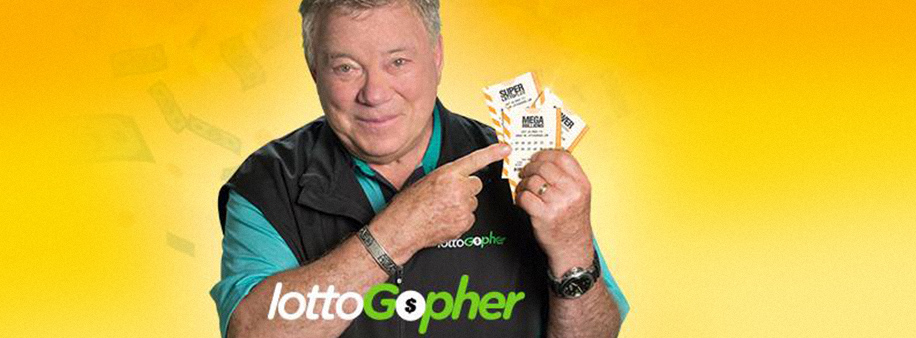
At 86-years-old, Shatner is still going strong with a sharp eye toward the future, trying to find a seat at the table of brand innovation and disruption. Earlier this year, he saddled in as a spokesperson with start-up LottoGopher, an online messenger service that allows consumers to order and manage state lottery tickets online.

In an interview with AListDaily, Shatner said he was intrigued by the brand because he deemed it as a social-first company of the future that is looking to disrupt the $70 billion US lottery market.

“LottoGopher is in the same position [as Priceline was] because it really works,” Shatner said in a conversation from his office in Los Angeles. “Although LottoGopher is not going to save your life, it’s part of the principal for the future. ‘What is happening next year? In five years? In 10 years? What will my children and grandchildren be interested in? How will they live?’”

Shatner is also using his science stardom as a “man of the future” to position himself in verticals like solar power (Solar Alliance Energy), electric bikes (Pedego) and other kinds of alternative ideas because such advancements “cannot be denied for the survival of mankind,” he says.

James Morel, president and CEO of LottoGopher, said Shatner’s profile and status landed the actor as the first spokesperson on his personal wish list.

“He brings certain credibility to us on the public market side because he’s known as a good stock picker,” Morel told AListDaily. “I’m not saying Mr. Shatner drove Priceline’s stock prices, but you do associate him with the brand as the Priceline negotiator. He’s legendary in marketing and public stock stories.”

To stress such importance as a marketer and pitchman, Shatner said it all starts with messaging that conveys the disruptive qualities of a product that actually works. It’s largely the reason why Priceline survived the dot-com bubble, he said, because “there is a way of selling something good.”

“There is a revolution going on in marketing,” Shatner said. “I am not so callow as to think I’m telling consumers anything that they don’t know already. But where is that revolution? . . . It takes a mistake to understand ‘that was a mistake.’ We’ll learn from those mistakes. You’ve got to keep your eyes open as to what’s happening. You’ve got to be adept at innovation—and if you fail at one of the innovations, don’t worry about it because the next one will be successful.”

Shatner says the spokesperson-consumer relationship has fundamentally changed throughout his career—most recently due to the rise of social media platforms. Millennials are seemingly the core consumer the brands he’s working with are targeting, but even he admitted that he doesn’t realize why he resonates so well with the group.

“It’s just me talking,” Shatner said. “Whatever it is, I’m willing to reach out in advance to look at new things positively. I think people may sense that and follow me.

“There is no question social media is what’s happening. All other types of marketing are fading. Everything is different. People over the age of 25 are walking around thinking ‘how do I get a movie? How do I sign up for this, or that? Everything is new and yet, it’s simplified and getting more user-friendly . . . I like to participate in new things. I’d rather explore what is happening.”

Even though he’s nearing 90, it sounds like Shatner has no plans to slow down on his quest to discovery. He’s still touring the one-man Broadway show, “Shatner’s World: We Just Live In It,” and earlier this year lengthened his dossier as a scribe with the book “Spirit of the Horse: A Celebration in Fact and Fable.”

Shatner said he doesn’t know if there’s ever a right time to jump on board with a brand, but LottoGopher fit into his personal business plan. His one-year deal with the start-up includes company assets that extend in perpetuity.

In the meantime, he’ll keep talking up LottoGopher’s social-first, digital qualities as “something that should take the country by storm. It’s an idea that should be popular the same way Uber and Netflix became popular overnight. Everyone knows it’s a gamble, but it’s a very popular activity to buy a lottery ticket with hopes of instantaneous riches. These are disruptive industries taking what was there before and changing it.

“We’re rounding the corner—or we’re there now. It’s hard to tell,” Shatner said in a prophetic tone. “But those who aren’t advancing with the sciences will be left behind.”

To Embrace Diversity, Brands Are Leading By Example

Diversity has been a hot-button topic this year in the worlds of marketing, entertainment and beyond. As public views on gender roles evolve and countries increasingly become melting pots of culture, brands know they can’t rely on the traditional conventions of advertising anymore. Here are some of the ways marketers embraced diversity this year.

Banding Together For Change

During the 2017 Cannes Lions festival, a digital billboard created by Mother London read, “Stop talking about equality and make it happen.” Since marketing affects public perception of products, groups and ideas, the marketing industry is stepping forward to be a leader for change.

Founded by UN Women, a global organization that fights for gender equality, the Unstereotype Alliance was unveiled at Cannes Lions and includes some of the world’s top brands. Global marketing leaders including Facebook, Google, AT&T, Unilever, Mars, Mattel and Twitter each pledged to use non-biased portrayals of women and men in their advertising.

“We believe cross-sector collaboration will lead to sustained transformation,” Keith Weed, chief marketing and communications officer at Unilever said in a statement. “This is no longer just a social imperative but a business one—progressive ads have been found to be 25 percent more effective and deliver better branded impact.”

Leading By Example

Smirnoff has been a long-time supporter of diversity when it comes to love. This year, the vodka brand created limited-edition bottles of Smirnoff No. 21 vodka that feature photographs of real LGBTQ couples. Each #LoveWins bottle, like each couple, is one of a kind. For every bottle purchased, Smirnoff will donate $1 to the Human Rights Campaign. The company plans to repeat the campaign next year, as well.

“Our goal is to create more welcoming environments for the LGBTQ+ community across the US,” Smirnoff says on the campaign’s microsite. “Thanks for your support and friendship. When we stick together, Love Wins.”

Beauty brand Glossier created a body-positive campaign to promote its new “Body Hero” products. Its combined digital efforts garnered an impressive $33,000 of Earned Media Value in just one week.

The campaign features five models from different walks of life and different body types, all posing in the nude. Body Hero is modeled by plus-sized model Paloma Elsesser, a pregnant Swin Cash (retired basketball player and Olympic Gold medalist), Trialspark clinical research coordinator and influencer Mekdes Mersha, LPA clothing brand creative director Lara Pia Arrobio and Tyler Haney, founder of sportswear brand Outdoor Voices.

Learning Together

When a brand promotes gender equality, 48 percent of both men and women surveyed say they feel more loyal toward it, according to an August study by Facebook IQ. Fifty-one percent of women said they would prefer to shop from such a brand, compared to 45 percent of men. Facebook’s survey found that 75 percent of women believe the most important thing brands can do to promote gender equality is to stop portraying women as sex symbols.

“Marketing doesn’t just reflect culture—it shapes it,” says Facebook alongside its study findings. “Contribute to social good and capture consumers’ attention by busting stereotypes and promoting positive, empowering depictions of people of all genders.”

Facebook currently offers more than 70 gender options, as well the ability for users to add their own. For the purposes of this study, Facebook divided answers between men and women only and did not specify whether each gender was the one respondents were born with.

The Gina Davis Institute on Gender in Media regularly analyzes Hollywood films and advertisements to accurately determine how much diversity there really is. Rather than simply “talk about equality,” as Mother London said, The Gina Davis Institute digs deeper to understand both current representation strengths and weaknesses so brands can react to facts rather than emotion alone.

For example, a recent study found that of more than 2,000 Cannes Lions films from 2006 to 2016, women only accounted for about one-third of characters on screen. Additionally, male characters speak about seven times more than their female counterparts.

While the figures may seem discouraging, a wide range of companies and educators are turning to this information to invite change.

“There’s infinite possibility,” said Madeline Di Nonno, CEO of the Geena Davis Institute. “We’re excited because it allows us to reveal a level of unconscious bias that isn’t possible with the human eye, and it’s able to go much deeper.”