It’s Goliath versus an army filled with many Davids this holiday season. Amazon has long been a threat on its own to conventional retailers, but leading up to Black Friday the company set its sights on companies like Walmart and Kroger to actively poach their customers, even at loss to itself.
Starting Early, Forcing Hands
Amazon kicked off its Black Friday efforts early this year, launching its “Countdown to Black Friday” deals on Nov. 1, a full two weeks earlier than it did with its “Road To Black Friday” sale in 2016. In addition to snatching up potential customers earlier, it forced many other retailers to respond. Within the next week, Black Friday ads “leaked” from the likes of Target (Nov. 6), Kmart (Nov. 7) and Best Buy (Nov. 8), just to name a few.
However, beyond just putting its competitors on the back foot to begin with, Amazon’s Black Friday countdown included deals and sales that were impossible for physical retailers to match in lightning deals. By posting limited-time offers on small batches of items, Amazon encouraged frequent check-ins and impulse purchases, both of which escaped the grasp of brick-and-mortar stores.
Subsidized Discounts
As powerful as Amazon is, it has no direct control over the prices set by third-party sellers, meaning that competitors can still undercut the e-retailer on items it does not produce itself. However, beginning Nov. 6, Amazon started subsidizing discounts on third-party items, paying sellers the difference out of pocket.
The notice on Amazon’s seller forums is terse, and though it offers third-party merchants the option to opt out if they choose, the company does not need to provide them with advance notice before offering discounts to consumers.
So far the discounts have been minor, yet significant. The Wall Street Journal reported that discounts topped out at 9 percent, meaning that they won’t draw in especially deal-hungry consumers, but can squeeze past physical retailers who don’t offer price-matching guarantees for products bought from third-party sellers online.
Prime . . . The Greatest Gift Of All
The main product that Amazon is trying to push for Black Friday is also the one it’s not discounting. After acquiring Whole Foods in August, the e-retailer slashed prices across several categories, aligning the upper-crust marketplace more closely with Amazon’s own tactics. This shift came further into focus on Nov. 20, when the company announced Prime-exclusive deals at Whole Foods on Thanksgiving-traditional foods.
As of April of this year, Amazon Prime has more than 80 million subscribers, and founder Jeff Bezos himself has stated that his goal is to make it “irresponsible not to be a member” back in 2016. Stories have already surfaced suggesting subscribing to Prime for Black Friday alone.
While physical retailers are stuck selling price-sensitive, one-off purchases in TVs, toys and appliances, Amazon is pushing consumers to join Prime, leading to nearly doubled yearly spending per conversion.
Intel is one of the oldest brands to sponsor competitive gaming, having worked with ESL in its early days 15 years ago. Intel Extreme Masters (IEM) is in its 12th season, and Intel worked with ESL and competitive gaming before that global tournament even launched. Now the brand, which bridges the endemic and non-endemic worlds of marketing, is taking esports to the Olympics.
Although competitive gaming isn’t an official Olympic sport yet, esports will share center stage in PyeongChang, Korea ahead of the February 2018 Winter Games. Intel is extending its Intel Extreme Masters brand, produced in partnership with ESL, to the Olympics.
IEM PyeongChang will feature two competitions with Blizzard Entertainment’s sci-fi strategy title StarCraft II and Ubisoft’s winter sports game Steep: Road to the Olympics. Competitions are open to gamers from around the globe, which is a departure from typical IEM events that feature professional teams and gamers, but ties into the nature of the Olympic Games.
“We’re starting this Olympic partnership in Korea and we’re picking a game that resonates with the Korean audience,” John Bonini, vice president and general manager of esports and gaming at Intel, told AListDaily. “StarCraft is celebrating its 20th anniversary, which provides a nice storyline for the event.”
Bonini said the goal with bringing esports to the Olympic Games is to celebrate the competition across video gaming while introducing new audiences to competitive gaming.
“New audiences have probably heard a little bit about esports, but this format allows kids and parents and grandparents to learn about how the final 16 StarCraft II players made it through North America, Europe and China. There’s also the element of national pride with this tournament.”
Bonini said the fact that most people play games now also helps connect with a broader audience, as do the human stories behind the competition—a staple of traditional Olympic sports coverage.
“Having IEM and ESL involved brings more credibility to this event,” Bonini explained. “If you’re in the gaming community you know the IEM and ESL brands. We’re bringing high production quality to this competition. For those who aren’t currently gamers or esports fans, having Intel involved at the Olympics opens up an opportunity to entice a more mainstream audience.”
Bonini admits that this first event in Korea is part of a big esports experiment.
“The IOC (International Olympic Committee) trusts us in advising what makes the most sense with esports,” Bonini said. “We have to see which works best and what connects with fans and take those learnings to the Tokyo Games.”
Intel is still finalizing details on how these esports competitions will be distributed to the world, although both traditional broadcasters (NBC has the Olympics exclusive) and digital platforms like Twitch are involved in those conversations.
Beyond the Intel Extreme Masters demonstration, Intel will set up Steep gaming kiosks throughout the Olympic Village for attendees and athletes to play.
IEM PyeongChang is an extension of Intel’s recently signed long-term worldwide The Olympic Partner (TOP) sponsorship with the International Olympic Committee, which focuses on Intel employing new technology to steer the future of the Olympics.
“Esports will be on the earlier side of the three-week marketing window, but that momentum will carry through the Winter Games when we feature 5G and our Core i7 technology,” Bonini said. “We’ll have VR technology experiences for fans to view the action in 360.”
In a way, Intel and ESL has turned the IEM Finals, which occur in Katowice, Poland every spring, into an esports Olympics in its own right.
“There were 170,000 people at IEM Katowice this year, and millions more watching it online. It has become its own phenomenon,” Bonini said. “It’s about pushing the envelope and trying new things, which is something we’re seeing a lot of in esports with Riot Games’ League of Legends and Activision Blizzard’s Overwatch League, which we’re a sponsor of as well.”
The peripherals and esports ecosystem is flooded with brands, globally recognized teams and upstarts looking for ways in which to forge relationships.
As the video games consumer continues to evolve, so must the peripheral marketing for industry titans that peddle headsets-and-accessories products in order to reach highly engaged audiences with seemingly endless amounts of money to spare. Innovating and adapting products to changing needs is one thing, reaching the target consumer is another.
How are gaming hardware brands highlighting their company’s calling card with esports and tapping into the spirit of marketing competition to gain an audience share?
AListDaily separately interviewed executives from HyperX, Turtle Beach and Bloody Gaming to learn how their marketing is evolving.
How are you fighting for market share against the competition that’s also marketing through esports?
Daniel Kelley, HyperX’s director of corporate marketing: There is no one formula for successful marketing here, but we begin and end any of our endeavors by thinking how we can get fans closer and more engaged with the scene, while ensuring our products and brand get exposure along the way. We’ve been in the middle of the esports scene for 10-plus years, so we have a good handle on how to approach our marketing investments, particularly against our direct endemic competitors.
As the scene grows and more money comes in from the larger non-endemic brands, it does force us to think more creatively and be even more opportunistic on the best ways to get HyperX in front of the passionate gaming audience. This is the fun and beauty of esports in that it’s ever-changing and growing quickly with new game titles, tournaments, teams and personalities to align with.
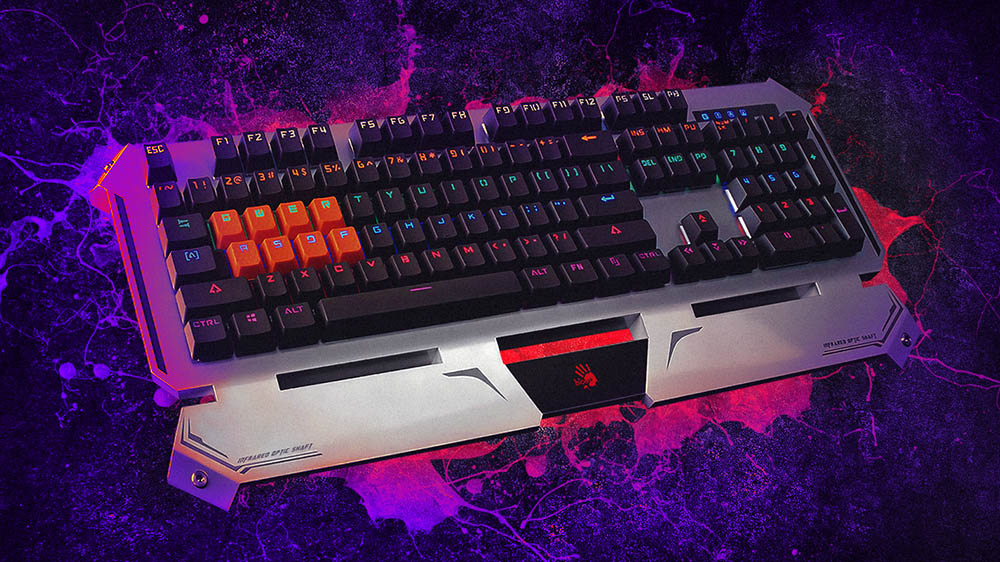
Bill Hsu, sales and marketing director for Bloody Gaming: We stand out against the competitor in the market by developing from ground-up our own innovative technology that provides the gamer with a tool to dominate with a competitive edge. We put a lot of thoughts into developing the latest technology. One of those is our Light Strike technology that will bring mechanical keyboards out in to the digital age. With this technology it will combine competitive edge and reliability.
When the game is on the line, pro gamers need pinpoint precision and speed to keep up with the grueling competition. Mechanical keyboards have been all the rave, but it is a technology that was primarily from the 1980’s. We began to understand that the tactile feedback or lightness of various switch designs is what gamers truly wanted. So, we developed an optical switch that eliminates all the fundamental problems of mechanical keyboards and opted to create a zero-lag digital switch that can still fulfill the satisfying tactile or linear feel gamers have come to love and expect.
Mac Marshall, senior director of brand, PR and communications for Turtle Beach: In terms of broad market share we’re always looking for ways to maintain and improve our leadership position, which has been over 40 percent of the overall console gaming headset space for the past several years running now.
As far back as 2012 and 2013 we realized there hadn’t been a truly innovative and ground-breaking headset created for today’s generation of esports athletes and hardcore gamers, so we set out to rectify that and came up with the concept for the Elite Pro, which launched in June 2016.
Once the Elite Pro was in development we knew just creating the headset alone wasn’t enough, so we began showing early versions of it behind closed doors to esports teams and players which inevitably led us to join forces with OpTic Gaming, as well as a variety of other higher profile and up-and-coming esports teams and organizations.
In doing this, we moved away from being just sponsors with banners on the wall at events and instead went the route of putting our wares on the heads of some of the best gamers in the world. If the pros feel the Elite Pro is worthy enough for them to use when they compete, then it becomes aspirational for other gamers to want to use the same gear they see their heroes playing in. Since launching the Elite Pro, we’ve received countless requests for potential partnership opportunities, which means we’re on the right path.
Nick Bourne, director of esports, partnerships and product for Turtle Beach: It comes down to making smart choices, and forming real-lasting connections with the right teams and personalities. We’ve chosen to strategically align ourselves with key partners across the esports and gaming world. Esports is the pinnacle of competitive gaming, but the challenge comes in relating that to a gamer’s journey, wherever they are and however serious they consider themselves.
Collaborating naturally with the right partners, including the players and content directors at OpTic Gaming, the CS:GO powerhouse Astralis or professional FIFA players of VFL Wolfsburg allows us to tell meaningful stories and not just dip in and out when a team wins a tournament. We work collaboratively with our partners and try to maximize scope by combining their efforts inside and outside of esports. An example of this is how we recently brought Dr. DisRespect to the OpTic Scuf House to create The Summoning video and other content around his visit.
What is the key ingredient in order to resonate with your marketing? How are you differentiating your brand with this strategy?
Kelley: We brand a history of growing with the gaming community over a long period of time including activities at tournaments, events and sponsorships that include over 450 professional players in 2017. We also spend a lot of time listening to our customers before we develop a new product. We include their opinions and wants in our design cycle, supporting what the community wants.
Finding ways to deliver our message to the dozens of micro-communities within gaming culture is a key to our success. Creating a one size-fits-all message for gamers is bound to feel inauthentic. We recruit ambassadors, influencers, players and teams from a range of game types and communities so that there is HyperX brand representation wherever gamers hang out, stream and interact with one another.
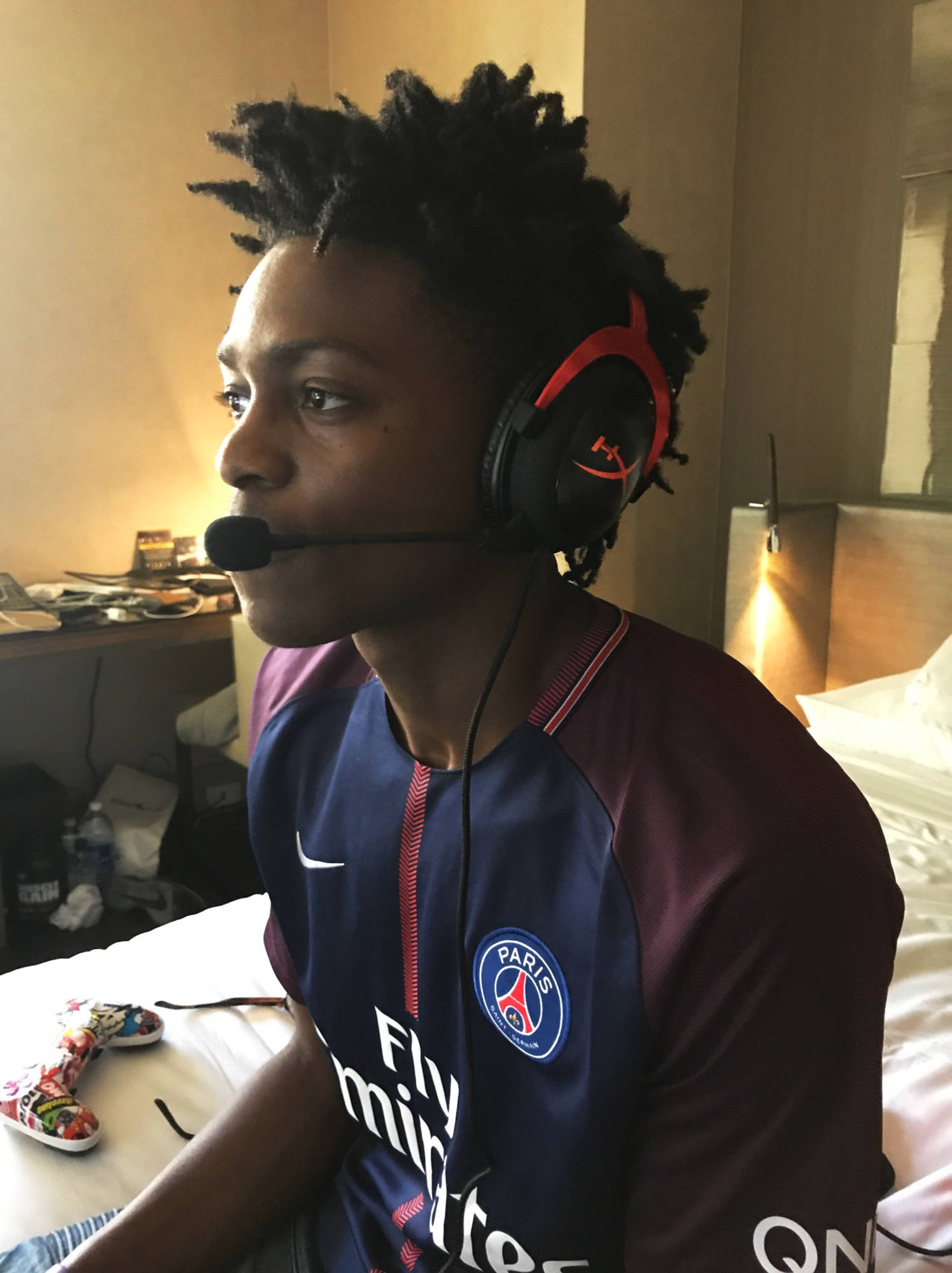
HyperX signed NBA star and avid gamer De’Aaron Fox as a headset brand ambassador this year.
Hsu: Thirty years of experience has led us to the forefront of gaming technology. Gaming is in our blood and we live to innovate in this market. Each year we continue to develop new technology to benefit the competitive gamers, we listen very carefully to the community and see what they lack and what is it that they would like to improve their gaming experience.
We value our fans and supporter’s ideas and thoughts, so we always try to listen and develop something to provide them an edge for gaming . . . Unlike most of our competitors, we take a much more proactive approach in fully understanding what we can do to push the boundaries of gaming peripherals by talking to those who are in the heat of battle at all times. Many of our own key staff members have competed on those very same stages and can tweak our technology to the various changes in styles and strategies that dominate the leagues today.
Marshall: The key ingredient here plays off what I said earlier. For us, this is about being a partner, not just a sponsor. We strive to be more than just a revenue stream. We pay attention to the teams and players and their needs. We go above and beyond to try and do cool stuff for them.
Bourne: Completely agree. The key for us is the connection and the relationship we’ve fostered with our partners and how that makes better products and experiences. For instance, we developed an OpTic Limited Edition of our Elite Pro headset, and every detail of that product was collaborative with the OpTic team members and players, with the final product being both an homage to OpTic and a true expression of what OpTic is to their fans—and to us.
We followed that up by debuting that headset at an OpTic Turtle Beach Ping Pong tournament, of all things, and what that did was allow the OpTic players to express their personalities through a different kind of competition. And of that whole activation, the moment that stands out for me is the presentation we did for OpTic H3CZ where we packaged his new Elite Pro OpTic Limited Edition headset with an original Turtle Beach X1—the first gaming headset he ever owned, and something it took a long time for us to find in our archives. His reaction, and those moments of connection through gaming are something everyone can relate to.
How is your esports marketing continuously evolving? What are the successes and failures that you can share?
Kelley: In 10 years, from signing our first esports team, to now with over 35 organizations covering over 90 teams, it has been a healthy and exciting experience with our fans and gaming community. Growth in the last couple years includes more activities with NBA players like Gordan Hayward and De’Aaron Fox, including our recent sponsorship as the official gaming headset of the Philadelphia 76ers and Team Dignitas have brought us closer to traditional sports too. As more and more of the traditional stick-and-ball sports execute on strategies to embrace esports, there are so many fun and unique opportunities for HyperX and others that are paying attention.
Marshall: To me, the marketing success rests in the product, and through the product the teams, and through the teams their fans and through the fans to a wider audience of gamers. Truth be told, the Elite Pro came out of left field as I don’t think anybody was expecting us to be the force behind what’s arguably the best competitive gaming headset money can buy. If the Elite Pro sucked, then we’d be in a much different boat compared to the one we’re in today.
Just taking the steps to get to where we are now was a massive evolution of our prior marketing strategy tactics, and we continue leaning into this mentality as we move ahead. We’ve already started waterfalling some of the Elite Pro’s unique features down into other Turtle Beach gaming headsets . . . As for failures, I just wish we would’ve gotten started on the Elite Pro line a few years earlier than we did as it would be nice to have the Elite Pro get more time in the saddle since its debut. It’s been a very fast-paced wild ride getting here, but a fun one at that.
Bourne: That’s exactly it. We’re looking at esports the same way Mercedes looks at F1 racing, or Nike looks at the NBA and NFL, as the crucible of innovation for gaming audio, be that at the tournaments or in supporting a non-stop eight-day-long “Race to Prestige” stream.
We’re constantly working on innovations that make gaming better . . . We want to bring the best experiences to every gamer, and the next generation of Elite Pro are the most exciting products I’ve worked on. We’re taking every iteration back to the pros we work with. Every innovation has been battle, tournament and stream tested.
We’re hiding in plain sight testing new innovations every day with our partners, and far more things fall out as make it into the products. It’s a constant process of refinement, and failure is a necessary part of development. Our marketing follows the product, and follows the gamer.
Innovation means leading and taking difficult steps. We’ve learned lessons from our time sponsoring tournament series like MLG, gamer events like Dreamhack and our teams. Our success is built on a platform of consistent content, engagement through conversation and telling stories people want to participate in.
Hsu: The gaming market is seeing explosive growth globally due to the rise of esports. From blue-chip corporate sponsorships, big prize pools and massive fan followings. We continuously strive to make a difference in the esport community by supporting the teams, shows, events and influencers. Bloody shared a strong message of our ability to listen to our customers and understand opportunities to bridge the gap to newcomers.
Our most recent collaboration with Immortals led us to sponsor an esports event at the LA County Fair. While it’s the largest fair in the west coast of the US, it never held any esports-related activities. So we decided to support efforts into pushing mainstream awareness of esports and hosted the Immortals for a live tournament, meet-and-greet and help introduce Los Angeles to their Overwatch League team.
What we saw through this event was the power of esports competitors showcasing their talents to groups who have no idea what they are, but have since become more intrigued. Bloody believes that to grow the culture, we must first infuse them with the experience. The result has been phenomenal, and we believe these small micro-moments for those unaware with esports will lead them to becoming fervent fans. And who doesn’t want that?
Even though the Asus Republic of Gamers (ROG) brand has been around for 11 years and has cultivated a strong following online, there are still many who aren’t fully aware of it yet. Although Asus manufactures everything from PCs to smartphones and projectors, with ROG being its high-end gaming brand that emphasizes hardware performance and customization, there are some who still primarily regard the company as a computer motherboard maker.
That’s why Asus has shifted its method of communication over the past year to rely more heavily on esports, livestreaming and social to engage with both current fans and new audiences. Now ROG is ready to reap the potential rewards from its year of marketing and engagement across several different sectors, just in time for the holiday season.
“It’s the method, not the message,” Randall Grilli, director of media relations for Asus America, told AListDaily, explaining how the brand has been reaching out to both new and current audiences.
This holiday season’s ROG highlighted products includes the ROG Strix SCAR Edition high-end gaming notebook, the ROG GR8 II mini-desktop computer that supports virtual reality and a premium slim-style ROG Zephyrus gaming notebook. Grilli said they’re marketing the products to appeal to a wide range of gamers, from beginners to hardcore players, and their differing budgets.
To grow its audience, Grilli said that ROG has increasingly turned to livestreaming, given that gamers were among the first to take to the medium. ROG has been working heavily with streaming partners on Twitch to educate viewers about ROG products and the gaming and hardware industry in general.
Additionally, ROG is an endemic sponsor for prominent teams such as Echo Fox, NRG and Ninjas in Pajamas, in addition to hosting events such as the ROG Masters.
The brand has been stepping up its gaming presence this year with a greater emphasis on collegiate esports. In September, ROG announced a partnership with Tespa, a collegiate gaming network, as the official hardware sponsor for its events. Together, they hosted the “Entrance Exams” campaign, where college gaming clubs that joined the network and put their gaming knowledge to the test could win ROG products.
“We communicate with the teams that we sponsor and combine their fan bases with ours to get the word out [about our products],” said Grilli.
Although he admitted that esports still has a niche audience, having more celebrities from traditional sports and their organizations getting involved with pro gaming over the past year is almost bound to grow its mainstream appeal.
Asus Republic of Gamers was also one of the main sponsors of the H1Z1: Fight for the Crown tournament series, which was broadcast on CW in May, furthering its mainstream audience exposure. Grilli is confident that more video gaming events will make their way to broadcast TV, and as more people watch professional players compete, they’ll make the connection between their skills and the hardware that they’re using.
Another way the brand has engaged with its community, which is fitting for the holiday season, is through a philanthropic partnership with the Make-A-Wish Foundation, where it teamed with other companies to build a Guardians of the Galaxy-themed gaming PC valued at over $18,000. The high-end gaming rig, which was customized to look like Star-Lord’s iconic on-ship cassette deck system with Baby Groot in the background, was promoted at events such as PAX West before being raffled off in October.
The brand is also connecting with its fan base through its ROG Arena platform, which brings all its online and social media channels together along with a list of all the events it’s involved with. These events range from major esports tournaments and conventions like BlizzCon and PAX West, to local tournaments hosted at Microsoft Stores.
Grilli said that smaller-scale events provide additional touchpoints to attract new audiences as people sign up to compete online or in-person at stores. As more people become interested in gaming, Asus wants to be there to meet them with its technology.
That technology includes VR, which Grilli identified as one of this year’s biggest gaming trends. That likely explains why the company is emphasizing the technology with its GR8 II mini-desktop despite the growing interest in augmented reality—underscored by how Asus launched an AR/VR smartphone earlier this year and is currently partnered with Microsoft to make a mixed reality headset.
“We’ve always prided ourselves on innovation, so this was a logical path for us to go down,” said Grilli when discussing mixed reality.
Though Grilli doesn’t think AR is growing as quickly as VR has in the gaming space, the company is still interested in targeting early adopters of the technology.
Ultimately, Grilli said that ROG has established itself as a “gamers-first” brand, with the company’s offices filled with enthusiastic gamers who have their ears kept close to its community.
New research on search trends by Adthena has offered some insight into what consumers are looking for—and what they’re not. Higher discounts mean higher interest, according to Adthena’s findings, with ads containing the keyword “70 percent off” driving 500 percent more impressions on desktop than ads containing “50 percent off.”
Going by the number of ad impressions, consumers searched most for “gift,” “iPad” and “TV” on desktop, and “gift”, “phone” and “appliance” on mobile. Noticeably absent among high-performing user search terms was the keyword “free delivery,” indicating that consumers are not taking shipping fees too much into consideration.
Though average consumers spending is set to remain constant this Black Friday, new research by Prosper Insights and Analytics indicates that almost half of millennials plan to spend more this year than they have in previous ones.
“As Gen Z and millennials get older, their purchasing power increases, and the rise in disposable income is sure to be seen by retailers,” said NRF president and CEO Matthew Shay. “This group of consumers has spent time carefully researching gifts for friends, family and themselves, and are ready to begin knocking out their shopping lists.”
Overall, just 24 percent of consumers plan on spending more than previously, and 54 percent claimed that their spending will remain unchanged.
Though the specter of Black Friday still stands before Cyber Monday, businesses may want to consider shifting their email marketing tactics. A study by Yes Lifecycle Marketing indicates that despite slightly lower open rates, Cyber Monday–related email messages drove 53 percent higher conversions than Black Friday emails.
“Our data shows that conventional thinking around email marketing practices is not always on the mark,” said Michael Fisher, president of Yes Lifecycle Marketing. “Marketers and retailers must assess their goals for engagement and conversions, and deploy campaigns with the right timing, content and context in mind.”
Small Business Saturday, the day after Black Friday, likewise offers potential for marketers. According to a survey by the National Federation of Independent Businesses, 61 percent of US consumers are aware of the holiday and 82 percent of that group plan on seeking out independent businesses on that day.
Additionally, the survey found that 90 percent of consumers claimed it was important to support independently owned restaurants and bars, and 80 percent of consumers predicted doing at least some of their holiday shopping at small retailers.
Chief marketing officers have overwhelmingly reevaluated their digital strategies this year due to brand safety worries, new research by Teads suggests. Of the CMOs surveyed, three-out-of-four reported worrying more about brand safety and ad fraud (78 percent and 77 percent, respectively).
More than just biting their nails, CMOs are acting. In the last 12 months, 48 percent CMOs reported reviewing relationships with suppliers and 55 percent reported reviewing relationships with agencies. Additionally, 93 percent of CMOs claimed they have overhauled their digital strategies.
Looking to the future, 98 percent of CMOs predicted that they will only choose agencies and suppliers that can prove brand safety and transparency, and 30 percent have already cut spending on channels that can’t make those guarantees.
Facebook usage has suffered a sharp decline this year, according to research by Verto Analytics. Last year, users spent an average of 33 hours per month on Facebook, but that number has dropped to just 18 hours in 2017, a 54 percent reduction. Average session duration has remained constant at around six minutes and 20 seconds, meaning that users are checking Facebook significantly less frequently than they have before.
Programmatic trading will account for 67 percent of all digital display advertising by 2019, according to predictions by Zenith Media. Additionally, the total value of programmatic advertising will grow by 21 percent per year, rising to $84.9 billion in 2018.
“The most advanced display markets will be 90 percent programmatic by 2019. It won’t be many years after that until the global display market is fully programmatic,” said Jonathan Barnard, Zenith’s head of forecasting and director of global intelligence. “The question then is how rapidly programmatic techniques will spread to other media. We will be keeping a close eye on developments in the US as a guide to likely developments in the rest of the world.”
New research by Tapjoy has further solidified the supremacy of rewarded ads for driving engagement. Advertisers can take advantage of a spike in interest in the format, as 80 percent of mobile gamers reported expecting to spend more time playing games,and 57 percent claimed that they will be more likely to engage with rewarded ads during the holiday season.
“This study validates why the mobile gaming audience presents such a great opportunity for performance and brand advertisers alike–particularly during the holidays,” said Shannon Jessup, chief revenue officer of Tapjoy. “Mobile gamers are already a uniquely engaged audience, but holiday downtime means that they spend even more time in-app, are more curious to try new games, and are more likely to engage with in-app advertising, making it the perfect time for advertisers to drive value for their campaigns.”
Connected-technology adoption is expected to undergo significant growth, research by Parks Associates predicts. According to its findings, broadband-connected US households will purchase as many as 55 million smart home devices in 2020.
“Collectively US adoption of smart home products is nearing the threshold of the early majority, thanks to marketing efforts of large players, popularity of voice-based products, lower product costs and a focus on the consumer experience in the purchase process,” said Elizabeth Parks, senior vice president at Parks Associates. “And consumers are beginning to recognize the value propositions of platforms such as smart video doorbells and smart thermostats, which is boosting their adoption both for household use and as gifts.”
Crimson Hexagon released a comprehensive study on US consumer trends in 2016, revealing a broad set of insights about the American mindset on topics from health to technology to transportation.
The conversation about AI, VR and AR soared, increasing sevenfold in the last two years, while conversation about privacy has nearly tripled over the same period. While close to 60 percent of consumers are now dissatisfied with ride-sharing services on social media, the rapidly increasing talk about self-driving cars are dominated almost entirely by anger and fear.
On social media, Whole Foods dominated conversations, making up 52 percent of all national grocer discussions, beating out both its closest competitors Kroger and Sprouts Farmers Market by 42 points. Americans also have a significant preference for dining in, with three times as many using joyful language than about eating out, takeout or delivery.
(Editor’s Note: This post will be updated daily until Wednesday, November 22.)
Google shut down the remaining non-Universal App Campaign (UAC) made campaigns Wednesday, bringing all app creators under one unified system for its network of services.
UACs streamline the promotion of mobile apps across Google’s platforms, including Search, Google Play, YouTube and the Google Display Network with one toolset instead of having to create separate campaigns for each. UACs can also be optimized to target specific goals such as growth. All developers need to do is add text, creative and their bid while Google’s machine learning service handles all the rest.
Signs within the industry indicate that UACs have made life much easier for app developers, but those devs could still use some guidance for helping their UACs stand out. To address this, the search giant also announced its UAC Premier Partners for mobile advertising on Wednesday to help brands optimize campaigns and navigate the UAC-only landscape.
“One of the best features of UAC is that marketers can optimize their ads for any business outcome they want,” Peli Beeri, CEO of martech company Bidalgo, a UAC Premier Partner, told AListDaily. “We advise making sure business objectives are clearly defined and that they run universal app campaigns designed to meet those objectives.”
The Premier Partner badge is the highest honor a partner can earn, and Beeri said the designation means that a company meets Google’s requirements for performance and expertise. The company offers automated solutions such as a software as a service (SaaS) platform to grow and market apps in-house with artificially intelligent media buying services across channels that include Google, Facebook, Apple Search, Instagram and others.
“Partners certified in mobile advertising can help advertisers connect with potential customers on mobile devices through text, image, video and HTML5 ads,” said Beeri. “Our platform analyzes elements of ad creative such as the images, colors, copy and more, and then it breaks down the winning elements so that marketers can design the most effective creative possible. It’s connected to different measurement partners and other ad networks, allowing advertisers to view and optimize their full funnel performance.”
Beeri said that using automated solutions enhances Google’s built-in UAC tools, which use machine learning to help marketers efficiently target users based on specific business goals. His tips for living in a UAC-only world include optimizing creative, finding the ideal bid-to-budget ratio and providing Google with better signals for smarter audience targeting. Goals can be broad like driving a high volume of installs, or they can be specific to converting installs into in-app spenders—or UACs can be used to help generate longer retention.
Bidalgo recently wrote that “around half of all app downloads across its networks are being driven by UAC.” To illustrate the effectiveness of UACs, the company did a case study on its campaign with Pixelberry Studios, makers of Choices: Stories You Play, which resulted in a 250 percent increase on return on ad spend (ROAS).
Although Beeri said that app discovery occurs primarily in digital stores such as Apple’s App Store and Google Play, it’s still crucial for marketers to cover other channels because “the landscape is becoming increasingly fragmented.”
Consumers can learn about apps through any number of channels, and marketers may be missing out major opportunities by ignoring one. For example, Beeri recommends utilizing social channels outside of Google to supplement UACs to identify the right send-to-revenue ratio that drives the highest ROAS. Each platform caters to different audiences, such as millennials on Snapchat, and Beeri says that overall performance is increased with multiple platforms.
But ultimately, standing out in the crowded mobile space comes down to being unique.
“It might sound obvious, but the number one thing an app marketer can do to stand out in today’s crowded marketplace is to offer something that no one else offers,” said Beeri. “From an advertising perspective, it’s important that campaign creative conveys the features and benefits that make the app so special. That’s not always easy to do in a static image or 30-second trailer, but the goal for all ad creative should be to highlight the one or two elements that make your app different from its competitors.”
The daily dose of headlines generating from the world of Amazon underscores one notion—its grip on the retail industry and brands alike continues to tighten. The Jeff Bezos-led powerhouse is forcing executives to rethink strategies for delivering experiences and unique value propositions to consumers in order to remain prosperous in Amazon-dominated times, a quartet of industry experts told AListDaily in separate interviews.
Lokesh Ohri, a principal at Deloitte emphasizing in omnichannel retail, digital and supply chain strategy, says that if you’re a commodity brand, then you need to reevaluate your plan and build a strategy around a product, category or offering that Amazon cannot meet.
“Amazon is basically trying to become the one-stop-shop for everyone and remove brand value,” said Ohri. “They’re trying to disintegrate into different areas by saying ‘the brand is separate from the product.’ Relevance is a very big aspect of that.”
Building brand loyalty among consumers is one way marketers can make sure they have more than a mere puncher’s chance. Brand marketing strategy shifts include everything from experiential retail pop-up shops to introducing artificial intelligence, virtual reality, augmented reality and Internet of Things in order to enhance the shopping journey and further harvest customer loyalty. Ohri called this the “omnireality” and sees it as part of growing trend to further fend off Amazon.
“How you really connect with consumers, both as brands and retailers, in an omnireality world is the next question that marketers need to start answering,” Ohri said. “Start thinking, preparing and integrating for that world a little bit more, not just waiting to see who’s going to do it next.”
Michael Klein, director of industry strategy for retail, travel and consumer packaged goods at Adobe, echoed much of the same sentiment.
“I don’t think we want to see a whole bunch of copycats,” he said. “We certainly want brands to think more about the value they drive to their customers, rather than trying to think about ‘how do I compete with Amazon?’”
Klein said that although Amazon will always have a relevant piece of the overall pie, building experiences that resonate with consumers will help build brand equity that can otherwise be lost.
“I think it’s really about being true to the brand promise of having integrity with the brand that marketers put forth,” Klein said. “At the end of the day, with all things being equal—price, location—experience is going to be the differentiator. Drive a different experience that solves a problem.
In their quest to take on Nike, Reebok and Adidas, Under Armour has also felt a reverberation, reporting its first year-on-year fall in revenue last month. When asked of the e-commerce effect Amazon is forcing on its brand, Sid Jatia, vice president of omnichannel digital at Under Armour, said the company is focusing on content and experiences ranging from exclusive drops to shoes and studio collections.
“We’re excited about what Amazon is doing in the retail innovation space, as they’re a strategic partner of ours. However, our team in the direct channel is focused on creating a more elevated experience, perhaps the best the brand can offer across touchpoints,” said Jatia.
Under Armour’s customers come back to UA’s channels because it offers content that portrays the brand in a way that is relatable, Jatia said.
“We have an extensive product line and unique storytelling capabilities that differentiate us from retail channels like Amazon,” Jatia said. “At the end of the day, it’s about personalized experiences, extensive product choices, deeper content and elevated conversation being the reward for shopping in the direct UA channel.”
Although Amazon seemingly has an endless disposal of data to craft and build its own experiences, retailers can still remain competitive by building ecosystems, Ohri added.
“Because Amazon still has a captive market, integrate with social media platforms and use the data you have to make sure that you’re targeting the right customer bases for your products,” Ohri said. “If you think about social platforms, you have a much larger reach than just Amazon.”
Peter Wharton, IBM’s worldwide product marketing lead for commerce and optimization, spends his time defining go-to-market for omnichannel experiences and competing with Amazon from a platform and cloud perspective.
He said that if brands want to shift the competitive balance a little back into their favor, they need to avoid using Amazon’s services altogether.
“There’s an opportunity for retailers to look at how they can take advantage of what happens in the marketplace, as well as what happens on their websites,” said Wharton. “Retailers compete with Amazon, but they [might] also use the Amazon cloud to manage their commerce environments. If you’re using the Amazon Web Services platform, you need to desperately get off of it because all you’re doing is funding the competitor.”
“Amazon has even more information now about customers because brands are going through the Amazon platform,” added Klein, meaning that if you’re a marketer hell-bent on battling Amazon to build brand loyalty and drive experiences, your best bet might be to avoid building voice command functions for Amazon Alexa and Echo.
“Brands will need to clearly define their value proposition and engage their customers in a way that they know will stay relevant,” Ohri said. “As a retailer, you cannot try to become Amazon, but there’s absolutely a space for retailers, too—they need to start crafting it slightly differently. It’s a different game that Amazon’s playing.”
Justice League unites DC superheroes Batman, Wonder Woman, The Flash, Aquaman, Cyborg and—if rumors prove true—Superman to save the planet as a team. As with all superhero movies, marketing efforts for the film highlight fight scenes and special effects, while placing extra emphasis on the idea of teamwork.
Riding high on the success of Wonder Woman, Warner Bros. spared no expense to close out its year of superhero movies in style, and brands jumped at the opportunity to get involved. Touting slogans like, “You Can’t Save the World Alone” and “All In,” Justice League marketing efforts present brand partners as valued members of the team.
Mercedes-Benz is not only featured in Justice League but in a behind-the-scenes featurette that explains how the legacy brand fits into a make-believe world of superheroes.
“In order for [audiences] to relate to this movie, we need to have things that we’re all familiar with, and who’s not familiar with Mercedes?” Actress Gal Gadot, who plays Diana Prince/Wonder Woman says in the promotional video. “I think it was a good choice.”
https://youtu.be/OVCjhR7ltJM
Gillette joined Warner Bros.’ team of sponsor super friends to create limited edition gift packs—each inspired by a different member of the Justice League. A commercial was produced that depicts the “Gillette Advanced Grooming Lab,” where researchers are hard at work creating shave solutions for each of the six Justice League members. The campaign’s slogan, “The Best A Superhero Can Get” is a play on the brand’s trademark “The Best A Man Can Get,” and the company released a set of razor handles sporting each hero’s logo.
A free mobile experience called Justice League VR: Join the League Gillette Edition was also introduced to help get fans excited and immerse themselves in the world. Available for iOS and Android, smartphone users can assume the roles of each superhero and use their abilities to accomplish missions ranging from defusing a bomb as The Flash to battling a sea creature as Aquaman.
https://youtu.be/_AZCHtwCLPs
Of course, there would be no Justice League without the comic books that begat them. DC Comics and Warner Bros. joined forces with AT&T to provide first looks at the upcoming film and experiential marketing throughout the country.
During a limited engagement in October, fans could visit the AT&T store in New York City’s Times Square to meet comic book writer Geoff Johns and artist Jim Lee, who were signing copies of Justice League Volume 1: Origin.
The experience included displays of props and costumes, including the Batmobile and Bruce Wayne’s Mercedes-Benz AMG Vision Gran Turismo. VR experiences were also available for hands-on demonstrations. The costumes, props and VR experience will continue to be featured at select AT&T stores across the US through January.
DC also partnered with General Mills to produce specially-marked boxes of breakfast cereals. Each box depicts cereal mascots dressed as a superhero and includes one of four original comic books featuring Justice League characters. When collected, all five boxes become a Justice League mural.
Fans were invited to “unite their league” through Facebook, with exclusive Justice League stickers and masks. The cast of the film even tried them out.
Once reserved only for the elite and the lucky, it has become common practice to livestream movie premieres over social media. Justice League is no exception. Over 55,500 fans tuned in live on Twitter to watch the big event unfold with interviews with movie stars on the red carpet.
Warner Bros.’ Justice League has already brought in $8.5 million outside the US and is expected to bring in $110 million in US theaters this weekend.
Wonder tells the story of Auggie, a young boy whose unique face and personality inspires kindness in his new school. Rather than promote the film alone, Lionsgate took a wider marketing approach to promote Wonder‘s message to #ChooseKind.
Auggie’s disorder—Treacher Collins Syndrome—affects by around one in 50,000 real children and adults worldwide. The book on which the film is based has been embraced as a teaching tool by the Children’s Craniofacial Association (CCA) and schools since its publication in 2012.
Auggie may be a fictional character, but just about everyone can identify with being the new kid in school, being the odd one out or being picked on. As kids returned to school earlier this fall, it became an ideal time to promote kindness in the classroom.
Lionsgate, CCA, GapKids and Walden Media created an educational initiative called “The Wonder Certified Classroom” that focuses on bringing acts of kindness, acceptance and inclusion for third-to-sixth grade students. The initiative includes projects, discussions and challenges for the classroom to engage in as a group.
“While serving as a cornerstone of our marketing campaign for the film, we are hopeful that the Certified Kind Classroom program brings Wonder‘s central themes of acceptance and inclusion to real life in meaningful and tangible ways,” Kerry Phelan, Lionsgate executive vice president of global franchise management and strategic partnerships, said in a statement.
GapKids joined the movement through a series of short films for back-to-school. The final short in the series, which focuses on kindness, features actor Jacob Tremblay (Room), who plays Auggie in Wonder. The brand participated in Lionsgate’s #ChooseKind campaign to coincide with World Kindness Day on November 13 and Wonder‘s release November 18.
Students could participate in a T-shirt contest, creating designs that represent what kindness means to them. The eight winning designs will be sold in select GapKids stores, with profits donated to myFace and CCA.
If there’s any place that could use a little less hate right now, it’s the internet. “Choose Kindness” is a new Chrome extension that detects and covers abusive content with banners that display positive messages. The extension’s three settings—kind, kinder and kindest—use machine learning to finding offensive content and shield the user’s eyes with messages like “kindness is contagious.” Users can mouse over banners to decide if they want to reveal the hidden messages or not.
For even more positivity, the official Wonder Facebook page has launched a chatbot that will deliver inspiring messages each day.
Roma Boots, a brand that donates footwear to children in need, created a limited edition children’s rain boot designed to symbolize kindness and hope, inspired by the film. For every pair of Wonder boots sold, the company will donate a new pair to an impoverished child.
The big question is whether all this positivity makes consumers more receptive to brand messaging. Maybe so. When Ace Metrix released its list of breakthrough video ads for the third quarter, it found that those in the top one percent feature compassion, kindness and ingenuity. That being said, it never hurts to make your customers smile.
Wonder is expected to bring in at least $16 million during its opening weekend domestically, and its feel-good messaging should play well over the holiday season.
With the dawn of the Internet came endless information . . . and endlessly annoying ads. This begat ad blockers that changed digital marketing strategies forever. First appearing in the 1990s, ad-blocking software solves one problem—pop-ups and invasive marketing—while creating another for brands seeking consumer attention on the internet.
Annoying, malicious and disruptive ads are the largest factors for installing an ad blocker, according to a recent survey by Hubspot. As the saying goes, “one rotten apple spoils the whole barrel,” and now consumers see the very idea of ads like an offering from the Wicked Witch.
Emarketer predicts that by 2018, 30 percent of all American internet users will block ads. According to Kantar Millward Brown, 51 percent of Gen Z consumers already do.
Creative Solutions
Despite consumers’ lingering distaste for ads in general, many brands continue to market with great success online. In fact—according to the Chartered Institute of Marketing—76 percent of marketers think ad blocking will be positive for the industry because it encourages greater creativity.
One example of how marketers think outside the pop-up is through branded content. Content that is separate from a display, video or pop-up ad is just that—content—and thus cannot be blocked by software. More importantly, documentaries, podcasts, web series and more trade the hard sell for informative or inspiring entertainment that aligns with a particular brand message.
Eighty-eight percent of consumers say that personally relevant branded content positively influences how they feel about the brand, according to a 2016 joint study by OneSpot and Marketing Insider Group. More than two-thirds of consumers say that branded content is at its best when it educates or informs them.
IBM partnered with The New York Times to promote the film Hidden Figures through an augmented reality app. Outthink Hidden is an AR experience that overlays virtual statues of the film’s real-life NASA scientists in select city locations.
“The overall program itself was to increase diversity in STEM,” Ann Rubin, IBM’s vice president of branded content and global creative told AListDaily. “It’s part of the core of our company’s culture and values. We want to continue to encourage how important inclusion and diversity is to a company’s success.”
Dove encourages women to recognize their own beauty with its “Real Beauty” campaign—a series of short videos that explore the strength of a woman’s inner beauty without mentioning any products. The first film, “You’re More Beautiful Than You Think,” has been viewed over 168 million times since it debuted in 2013.
https://youtu.be/poIrZELfEME
Sponsored content and influencer marketing are two other ways in which brands reach a targeted audience on their own terms. These partnerships help creators build their brand, and while fans are already tuned in, marketers enjoy a shared audience. According to a study by Bloglovin, 41 percent of marketers said they have seen more success in influencer campaigns than in more traditional advertising efforts.
Battling The Ad Blocker Blues
Internet Advertising Bureau (IAB) is strongly against ad blockers and blames their rising adoption on the current marketing-media ecosystem.
“We are mistreating our most valuable asset—our consumers,” wrote IAB. “We can talk all we want about the ad-centered ‘value exchange’ between consumers and media. But until we commit to the cause of ever-improving user experiences, advertisers and media will be at risk.”
Bad ads aren’t the only ones to blame, says IAB. The firm alleges that ad blocking is an extortionist scheme that seeks to divert advertising spend from publishers to technology companies. Major ad blocking companies charge publishers to be whitelisted, for example.
Google—the world’s largest source for advertising—is issuing a Chrome browser update in January with an ad blocker built right in. As a founding member of the Coalition for Better Ads, Google is tackling what research deems to be the most annoying types of advertising on the internet.
For publisher websites that fail to meet Google’s new standards, the company is testing a “Funding Choices” feature that gives visitors the choice to either enable ads or block them all for a fee. Proceeds from this transaction would be split between Google and the publisher.
“We believe these changes will ensure all content creators, big and small, can continue to have a sustainable way to fund their work with online advertising,” said Sridhar Ramaswamy, Google vice president of ads and commerce with the announcement.
Bottom line? If you can’t beat the ad blockers, engage consumers in an authentic way—unless you’re Google, in which case you can become your own ad blocker and cut out the middleman.
 Bonini admits that this first event in Korea is part of a big esports experiment.