Data Marketing Strategy For 2018: Prepare For A Flood

Artificial intelligence and chatbot tools generate data. A lot of data. Coping with the massive flood of data from these tools is challenging, but offers insights that are otherwise hard to obtain.

The digital economy of 2018 is fueled by data, and the challenge of turning raw data into facts, trends, and projections. This shift is a boon to external vendors who offer dashboards with multi-channel capabilities that slice and dice all sorts of data so marketing, sales and social media teams can make use of them. However, it’s a bit more challenging for those teams.

These teams, whether they work at businesses, government agencies, or non-profits, are all building their own analytic arsenals from in-house data they accumulate through chatbots, social media, website interactions, and other sources. These huge collections of data can be used for acquiring new customers, planning organization strategy, and much more.

Erick Harlow of Forensic IT, a data analytics firm, recommends a three-part plan to making sense of user data from disparate sources.

“No matter how many devices or marketing vehicles are involved, we always ask three questions,” Harlow says. “1. What do we know? Such as, sales are down. 2. What do we need to know? Have people stopped buying this product all together, or just our product? 3. How do we analyze and fix the problem? It is important to know which data will help in answering the question and which can be discarded.”

Data Warehouses, Data Lakes And Data Reservoirs

This is where terminology kicks in. Depending on what kind of data an organization is saving, they are building up either data warehouses, data lakes or data reservoirs. Knowing how your organization is accumulating data is a crucial part of building in-house strategy.

Data warehouses are huge, organized stores of information from multiple sources which are used for long-term analytics using historic data.

Data lakes are a bit different. While data warehouses are largely organized and collated into a common format, data lakes consist of huge stores of unorganized data accumulated by an organization. They’re a bit harder to work with for business intelligence and analytics purposes.

Then there are data reservoirs, which are the backbone of large-scale machine learning and big data projects. Popularized by research firm Gartner, data reservoirs are architectures to make sense of large stores of structured and unstructured data.

Customer visits to websites, Alexa skills, mobile apps, chatbots, and downloadable software all generate a ton of data—but this data is often formatted in very different, hard-to-combine ways. It’s crucial to have an organizational strategy for making sense of those different data formats.

AI, Bots & The Data Crush

In the late 2010s, brands are as likely to interact with customers through Alexa skills, chatbots, and mobile apps as they are on the phone or in person. Chatbots and apps generate lots of data, but making sense of that data can sometimes be difficult.

Audrey Wu of Convrg, a Los Angeles-based chatbot design firm, says that it’s crucial for companies to understand how chatbots work and what kind of data they generate. For instance, chatbots generate different data for organizations depending on whether they operate via SMS text message based, Facebook Messenger, or Kik Messenger.

“Think about how to make a flow to keep users engaged,” Wu suggests. Interactions users have with chatbots generate logs which can also be mixed with additional data. For instance, Facebook Messenger bot interactions were formerly linked to users’ Facebook IDs. Kik’s platform, meanwhile, tends to attract a young demographic which is already familiar with chatbot etiquette.

Convrg uses an analytics dashboard called Dashbot to gain insight from their chatbots; there are also other dashboards on the market such as Google’s Chatbase.

Alexa skills also generate huge amounts of data for brands to utilize. Although Alexa analytics are still in their infancy, Amazon has been rolling out new features for skill/app developers to better understand how users interact with their Echo or Tap speaker. Brands can gain insights through Alexa’s API into metrics—like how often their skills are used, how many people use them, and how successful users’ interactions with the skills are.

Big Data, Bigger Data, Biggest Data

There’s no shortage of analytics platforms, business intelligence solutions, and data visualization tools for every conceivable need. The digital analytics industry includes everything from mass-market players like Google Analytics and Tableau to niche tools, and of course, there’s no one-size-fits-all solution.

Figuring out the best pathway for making sense of data from chatbots, apps, and smart home skills ultimately depends on your organization’s needs. It also means keeping careful track of platforms—in tech terms, both Facebook Messenger and Amazon Alexa are in their infancy as customer interaction platforms.

A successful data strategy depends on understanding how your customers are interacting with you, your organization’s goals, and what your budget and timeframe is for finding insights. But the good news is that chatbots and AIs are more than just an easy way to reach out for customers—they’re a valuable analytics tool as well.

5 Standout Experiential Marketing Campaigns From 2017

This year, countless brands from Planters to Prime threw their hats into the experiential marketing ring, incorporating digital and social media innovation to real-world events. Despite the expanding number of examples, marketers still found niches to deliver memorable moments to content-saturated consumers.

As KFC’s hidden tiny pop-up shop in Portland proves earlier this week, these activations still have plenty of space to shine, innovate and delight.

Louis XIII Cognac and Pharrell Williams: “100 Years”

To highlight Louis XIII Cognac’s century-long decanting process, the importance of protecting the environment and the traditions of the brand, the luxury alcohol distillery partnered with Pharrell Williams to produce an exclusive single, which they recorded on a clay disk and locked away in a water-soluble safe with a bottle of cognac and a time-lock set to open in 2117.

If water levels rise too much, both the safe and song will be destroyed, though presumably, the cognac will be fine.

If there are boxes to be checked with marketing campaigns, Louis XIII’s partnership with Pharrell Williams checks just about all of them. Celebrity endorsement? Check. Cause-marketing message? Check. Cutting-edge technology, an exclusive party and ties to a fundamental brand value? Check, check and check.

https://www.youtube.com/watch?v=UIqCFKweCWc

Refinery29: 29Rooms

Style publication Refinery29’s 29Rooms activation—an annual even described as a “funhouse of style, culture and technology“—has become a mainstay example of experiential marketing. Other brands have begun to piggyback off of the event’s popularity with sponsored exhibits.

The Instagram-friendly exhibition has become so popular that it’s inspired other, completely unaffiliated pop-up experiences, such as Happy Place in Los Angeles.

Misereor: The Social Swipe

Credit cards have long made material purchases simpler, but less so for charitable donations. German charity Misereor sought to make helping the needy as easy as swiping a credit card.

Set up in airports, digital posters displayed scenes of strife, urging travelers to slice a loaf of bread or cut rope bonds (and also donate two euros) with just a swipe of a credit card.

Visually representing the effect of even a small donation empowered the donors and gave the experience the sort of feel-good ending that most calls for charity simply can’t.

Better Call Saul: Los Pollos Hermanos

To promote the third season of its Breaking Bad prequel Better Call Saul, AMC put its stars to work on a multi-city tour, drawing in not just fans of Bob Odenkirk, but fried chicken as well.

To fans of the shows, Los Pollos Hermanos is as much of a character as Walter White or Saul Goodman are, and the intentionally generic-looking fast food restaurant pop-ups drew in methamphetamine enthusiasts in droves in several cities, including Austin for SXSW, Los Angeles and New York City.

Unfortunately, the location didn’t sell any fried chicken, but fans got the chance to score autographs, branded soda cups, curly fries and the chance to share stories of a snack at a fictional fast-food restaurant.

Shows like Saved by the Bell (The Max) and films such as Coming To America (McDowell’s) also tapped into fan nostalgia throughout the year and debuted similar-styled restaurant pop-ups.

The Last Jedi: Lightsaber Battles

The lightsaber is easily one of Star Wars’ most iconic images, inspiring people of all ages to try their best to whack each other with light-up plastic sticks. Generally, it leads to well-meaning, if less than graceful attempts to replicate the battles they see on screen, though some fans pull out all the stops.

To market The Last Jedi in the UK, Disney flipped the script on conventional experiential-campaign wisdom. Rather than attempt to make the fantastical elements of the film more accessible, stunt fighters Shania West and Anton Simpson-Tidy showed off the potential when professionals get the chance to make it exciting.

“From day one of our shoot here in the UK, the feeling of excitement and love for Star Wars has been palpable, and if you grew up loving Star Wars, you grew up loving lightsabers,” said The Last Jedi director Rian Johnson.

In addition to putting on a display for bystanders, Instagram influencer Matt Scutt took long-exposure photos of the duel to further emphasize the illumination of the lightsabers.

Executives Share Marketing Lessons Learned In 2017

The calendar’s turn to December marks a quintessential time for many marketers to reflect back on the year that was, while keeping sight of the strategies they’ve already set for the forthcoming year. Since ‘tis the season of giving, AListDaily asked executives to give their insight into what they found to be the most important lessons, learnings and realizations each had in marketing over the course of 2017.

Related 

—The Most Influential Brands For Marketers In 2017
—Marketing Executives Tell Us How They’re Championing Diversity
—Executives Tell Us Which Holiday Marketing Trends To Watch


“That’s a very big question—I’ve learned a lot at Asics. This is the first time I’ve worked in this industry, so I’ve learned a lot about industry marketing. I’ve learned how much consumer behavior and consumption patterns are changing and dictating how nimble we need to be with marketing. Gone are the days of us talking at consumers—we need to adjust and modernize as we go. A lot of what I’m learning is how we test and learn in the digital space and try to make that strong connection back to sales, either from an in-store or e-commerce perspective.

“Secondly, [we’re learning] how we’re defining sponsorships and partnerships, making sure that we’re looking outside of what the traditional model looks like for most footwear and apparel companies, and focusing more on planning from a consumer perspective and where their passion points lie.”
Sarah Bishop, vice president of marketing for Asics


“I’m not sure I had any great revelation in 2017. Rather, it reinforced my belief that—particularly with innovative technology—you cannot fall in love with the shiny new object. You must keep focused on the end goal rather than the technology itself and to the extent that it can help you realize that goal, it can be a powerful vehicle for delivering accelerated results.

“It’s vital that marketers share the goals and objectives of any significant investment in technology up front and across the enterprise so that there is support and alignment, or at least minimally an understanding of ‘why.’ Otherwise, marketers run the risk that business partners—for example sales—will see technology investments merely as play toys for marketers yearning to go to Cannes and collect trophies that might not add a drop of value to the shareholders.”
Lee Applbaum, Patrón’s global chief marketing officer


“The promise of digital was not really fulfilled with all of the ad fraud in programmatic, and putting content against things that shouldn’t be there from a brand standpoint. [Brand safety concerns], efficiency and efficacy of digital marketing were major themes for marketers.”
Nathan Tan, associate director of brand partnerships and experiences for Cadillac


“In my industry, it’s more obvious to me than ever that consumers are ready for a change. Traditional retail is declining; e-commerce is booming. Female-led businesses are at the forefront. Natural brands are overtaking conventional. People want to support businesses that match their values and shopping habits, and we’re seeing that born out in a dramatically evolving competitive landscape.”
Michael Cammarataco-founder & CEO of Schmidt’s Naturals


“Consumers want to be entertained. I think more brands are understanding that the new consumer is looking for experiences—not just products—and taking products and making them experiences then communicating that experience is where you win in the new market.”
Joe Alexander, CEO and founder of Nest Bedding


“The power of product positioning. We’ve [been trying to] pioneer the modern stroopwafel category in the United States. So, making sure we position our brand and product in a way that is easily approachable, easily understood and connects with American culture is crucial to really establish a fast-growing company.”
Rip Pruisken, co-founder of Rip Van Wafels


“Consumers today are willing to buy whatever and whenever, and you need to grab them by meeting them where they are.”
Stefanie Reichert, Sennheiser’s director of American trade marketing


“For me, it was looking at social media and figuring out best strategies for platforms other than Facebook, Twitter, Instagram and Snapchat. We all understand that social is important, and it’s there. But what about Spotify? I saw that some brands still haven’t figured out how use Spotify to market their brand. I think that there’s something there to reach millennials specifically—especially for our brand—which starting next year our Giulia and Stelvio will have Apple Car Play and Android Auto. I’m definitely keeping my eye on to see how we can use the platform to our advantage.”
Katie Inderelst, head of Alfa Romeo marketing and communications

Thinking Big, KFC Opens Miniature Restaurant In Portland

KFC is the latest brand to jump on the tiny food craze by opening a miniature restaurant over the weekend. The pop-up location in Portland was open for one day only and offered tiny, edible versions of KFC $5 fill-up boxes free of charge.

Patrons who attended the grand opening of the “World’s Tiniest KFC” had to lay on their bellies to place an order through the restaurant’s front doors. The barely-bite-sized creations included two pieces of fried chicken, mashed potatoes, a biscuit, cookie and Dr. Pepper. Orders were presented by full-sized hands through a curtain in the back of the miniature restaurant.

Those in attendance claimed that the food tasted just like regular-sized portions.

Providing ironically tiny “fill-up” boxes closes out a full year of bizarre marketing for the brand. The quick-service restaurant has built a reputation for unusual marketing efforts—from shooting a sandwich into space to Colonel Sanders romance novels and “internet escape pod” Faraday cages.

This isn’t the first pop-up event for the brand in Portland. “The World’s Tiniest KFC” follows an inflatable KFC erected in the city last year, manned by carolers and a man dressed as Colonel Sanders. Guests were provided with inflatable fried chicken and coupons for free, edible food at a real KFC location.

Tiny food became a phenomenon in 2014 when a YouTube channel called Miniature Space began posting videos of real food being prepared in tiny portions. The videos started a craze in their native Japan, and soon after other countries fell in love with miniature food.

Over 3.8 million people tuned in to watch TasteMade cook tiny food over Facebook Live, and this video of strawberry shortcake has garnered over 10 million views to date. The concept of miniature food presents a familiar aspect of everyday life but in a completely new way.

Crafting tiny versions of familiar recipes is challenging, as well. Recipes are modified to account for a smaller size—substituting quail eggs, for example—and since ovens are heated by a tea light candle, temperatures cannot be adjusted.

Whether KFC will offer tiny food in future activations remains to be seen, but one thing is for sure—the brand isn’t afraid to try something different. Not taking itself too seriously has helped earn the trust of young consumers and at the very least, get noticed. After all, it’s hard to ignore Colonel Sanders wrestling a giant chicken.

“We’ve learned that we need to extend our brand positioning beyond traditional advertising to really break through and make a dent in pop culture,” George Felix, KFC’S director of advertising, told AListDaily. “Our tongue-in-cheek humor and over-the-top selling is something that has been working well for us since many millennials distrust advertising to begin with. Instead of running away from that, we run right toward it. We believe that our ability to poke fun at the conventions of typical advertising has given us credibility with millennials. We know the new brand positioning and advertising have put KFC back on the map.”

Marketing Executives Tell Us How They’re Championing Diversity

The sociopolitical climate in 2017 called for brands and marketers to take a stance and increase efforts championing diversity. But there is still plenty of work to be done, and it continues to take shape daily, especially within the companies that are crafting the messaging to begin with.

AListDaily polled a group of executives to get a better understanding of how each is championing diversity within their own companies and marketing teams.


“Personally, I take diversity very seriously, if for no other reason than it means we’ll be a more effective marketing team, delivering inspired work to an even more diverse group of consumers we ultimately serve.

“Specifically, within the marketing enterprise, I’m very fortunate that we don’t need a specific diversity remit. Instead, we have an immensely talented group of men and women who represent a patchwork of different ethnicities, religions, sexual orientations, belief systems, political views and tequila preferences that I believe make us so successful in our ability to serve such a broad range of consumers for our 70 percent market share.”
Lee Applbaum, Patrón’s global chief marketing officer


“I’m not a conventional entrepreneur—I’ve struggled with dyslexia my whole life and started my first business at 13. My entire career is built on working outside the system and thinking differently than the next guy. Maintaining diversity of both perspective and experience within my company is therefore critically important to me, and I actively seek out people with a broad spectrum of backgrounds when hiring and building my network.”
Michael Cammarataco-founder & CEO of Schmidt’s Naturals


“We currently have gender equality in pay scales. I think that makes a difference. We’re very diverse when you look at our marketing organization, when you look at racial, gender and sexual orientation perspectives. Having diverse people working on a brand almost naturally is going to create more diverse output. We’re really well-positioned.

“One trend you’re going to see in the automotive industry is a focus on women. We’ve been talking about women in the industry as untapped potential for so long, but I think finally brands are at a point where they’re investing, reaching and speaking to women in a more substantive way—and not just the pink-washing of obviously targeted [campaigns] to women.”
Nathan Tan, associate director of brand partnerships and experiences for Cadillac

“I’m all about women empowerment and at Alfa Romeo we have a strong female marketing team. Whenever you’re hiring an employee, diversity is important but you also have to make sure they’re right for the job. As far as our marketing approach and strategy, it is important that we tailor our marketing efforts on how to reach a specific audience or ethnicity group”
Katie Inderelst, head of Alfa Romeo marketing and communications


“Puma is a global brand, and that automatically means we have an amazing and diverse group of talented people who work for the brand, create products and develop marketing messages. At the end of the day, the brand is always looking for the most talented people in the market—it doesn’t matter where they’re from [or] what their background is. We’re an entrepreneurial brand that enjoys finding people of different expertise. As an organization, we’re not only looking to champion the opportunities to reach people who can offer something unique, but also support and develop their careers.”
Allison Giorgio, Puma’s vice president of marketing


“I feel that we’re working very hard on the diversity front. Twenty-six percent of our business is multicultural. We have three agencies—the first is general market, the second is Hispanic, Black and LGBT and the third that does Chinese, Korean and Indian. We’re working very hard to be diverse and inclusive in our outreach, recognizing what’s important and the cultural significance and norms that we have to be touching on. We’re trying our best to meet those expectations.”
Brian Bolain, corporate manager for Lexus product marketing and marketing communications


“The way we champion diversity is embodied in one of our values—people and not robots—which stands for treating others like you’d want to be treated yourself and developing meaningful and lasting relationships inclusive of all backgrounds and cultures. This has manifested itself in attracting a team from a diverse set of cultures and ethnicities without any sort of intimidation.”
Rip Pruisken, co-founder of Rip Van Wafels


“We’re committed to fostering an environment where all the dimensions of diversity are valued. One example that I’m very proud of is our #OneStride campaign which builds on our long history of being an ally within the LGBTQ community.”
Anna Bell, senior marketing director at E&J Gallo Winery

With Team SoloMid Partnership, Gillette Moves Deeper Into Esports

Procter and Gamble brand Gillette is partnering with popular global esports organization Team SoloMid (TSM) as part of the Riot Games’ new 2018 North American League of Legends Championship Series (LCS). With this move, TSM joins the New England Patriots and Barcelona FC as part of the shaving and grooming brand’s international sports teams.

While this is Gillette’s first North American sponsorship for LCS, the company is also sponsoring Edward Gaming, one of China’s top League of Legends teams.

Greg Via, head of global sports and entertainment marketing for Gillette and Procter and Gamble, told AListDaily that while the brand has been exploring the esports arena for over three years now, it has been involved in sports gaming before.

“We’ve had some good partnerships with EA Sports around the Madden franchise and some of the others, and we had to take notice of the community and the number of fans that were flocking to esports,” he said. “We wanted to understand the fandom, understand the community and understand why it was so popular. We did some research. We participated in some events to test and to get a feel if we needed to be in it.”

Gillette first started working with esports as a sponsor for the Intel Extreme Masters (IEM) World Championships in Katowice, Poland in February. The company had a razor activation that allowed pro gamers, casters and fans to create custom 3D printed esports razors at a large booth inside the exhibit hall next to the arena.

“We weren’t sure how it was going to be accepted, but fans liked the customization,” Via said. “We did learn a lot about the consumer there. What we saw is that a lot of booths had interactions with fans.”

Gillette decided to engage with fans through pro gamer Enrique “xPeke” Cendeno, who played against the fans, signed autographs and took selfies with them. The company then made Cendeno an esports ambassador for the brand, which is part of the company’s marketing messaging that illustrates the similarities between esports pros and traditional pro athletes.

With that, the razor brand is treating its pro gaming roster the same as the other professional athletes it works with.

“I don’t treat our guys at TSM any different than I treat Thomas Muller, Antoine Griezmann or even Neymar Jr.,” Via said. “They all have their particular talents, they all have their skills and they’re all athletes. We treat everybody the same.”


While Gillette is currently focusing on LCS, which has moved to a franchise model replicating traditional sports for 2018, it’s not the only esports game in town.

“We’re obviously involved with TSM and with League of Legends, but the Overwatch League is something I’m watching closely as well because we are sponsors of the New England Patriots,” Via said. “They play in Gillette Stadium and they’re owned by the Kraft Group, who also has an Overwatch team. So, we are educating ourselves in Overwatch, trying to see if that’s something we need to be in.”
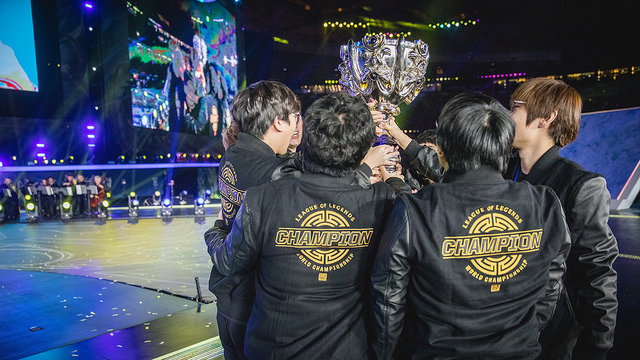
Although Gillette is showing interest Overwatch, it won’t be exploring other shooter game esports, which Via said is dictated by being part of Procter and Gamble.

“Some of the most popular games are shooters,.” he explained, “but just as a philosophy of Procter and Gamble we cannot enter the genre, so there are games out there [like] Counter-Strike, Call of Duty and others that we cannot do as a brand. That’s why League of Legends fits well.”

“Even with Overwatch, which we’re not involved with, we have to look at that even though it’s a shooter. But it’s cartoony, and characters regenerate, so nobody’s really dying. But being part of a larger corporation, it’s hard to get the greenlight to explore some of those things sometimes.”

When it comes to the broader goals for the brand in esports, Via wants to continue finding the best messaging to sell razors without overburdening fans with marketing.

“We’ve been involved in mainstream sports for over 100 years, and no one ever asked me, ‘Why are you sponsoring FC Barcelona? Why do I see your signage at the NFL? Why are you part of Major League Baseball? Why are you part of the Olympics?’” Via explained. “No one ever asks me those questions because we’ve been a part of sports for such a long time. People are almost expecting to see us because we are such a mainstream sponsor. That’s something we’re going to have to figure out a little bit more within esports to truly belong and continue to interact with the community in a positive manner.”

‘Yu-Gi-Oh!’ Anime Explains Strategy In Collectible Card Game Market

With the digital collectible card game (CCG) industry estimated to reach $1.4 billion in revenue this year alone, the digital games component of Yu-Gi-Oh! has a lot of room to grow—especially given the fandom for the two-decade-old franchise.

For now, Konami seems committed to letting the IP’s physical card game lead the way for now. But few anime franchises have such a close relationship between their media content and games as Yu-Gi-Oh!. The animated show, which will hit its 20th anniversary in the spring, involves characters who compete against each other to become king of a magical card game called “Duel Monsters.” That naturally translates into both a physical trading card game and a digital one on mobile devices called Yu-Gi-Oh! Duel Links.

Robert Boyajian, marketing specialist for Konami Digital Entertainment, told AListDaily that the anime drives the physical card game. “People remember the classic stories and the rivalries between the characters.”

Both he and Yu-Gi-Oh! Duel Links senior producer Kenichi Kataoka said connections to the show provide both the physical and mobile games a special advantage. Yu-Gi-Oh! fans who tune in to the latest episodes of the current anime series, Yu-Gi-Oh! VRAINS, get to preview new cards shortly before they come out for the physical game. At the same time, they get to live out their fantasies of becoming one of the show’s characters and striving to be masters of the game.

Yu-Gi-Oh! VRAINS, the fifth series to be spun off from the core franchise, marks the first show to broadcast episodes in Japan and the US at the same time, synchronizing it internationally with the launch of its physical products.

“Trading card games have a social dynamic compared to digital games,” said Boyajian, describing the continued appeal of the physical card game when digital games are fast on the rise. “You have to sit across from people and interact with them, and because of that, there’s a big community when it comes to trading card games. I think that communal aspect is what drives tabletop gaming in the digital age.”

The physical card game remains comparatively more advanced than the free-to-play Duel Links, which launched for Apple iOS devices in 2016, Android in 2017 and released for the PC via Steam in November. Both Boyajian and Kataoka describe Duel Links as a more simplified version of the physical card game, and it only has about 2,000 of the 8,000 physical cards with no special exclusives, covering both the original show and its first spin-off from 10 years ago. This being the case, Duel Links does not share the same connections with the show that the physical game does.

However, Kataoka explained that the digital game makes up for it with accessibility, which is its biggest strength, especially given how players have easier access to it through their mobile devices. Konami is treating the digital CCG as a means of introducing new audiences to the franchise while engaging current ones, as it can prepare players for the physical cards game. But at the same time, he said that audiences tend to be attracted to digital games for the opposite reasons Boyajian believes fans are drawn to the physical versions.

“I think one of the major factors is that a lot of people want to play card games, but they don’t necessarily have the time or money to go to a shop, find an opponent and meet up with them,” Kataoka said to AListDaily through a translator. “Digital card games allow them to play them on-the-go. That sort of accessibility, combined with the basic philosophy of card games—collecting cards—are the biggest draw.”

Kataoka added that a digital game offers people a chance to compete against players from around the world, who return as new cards are added. He also said that longtime fans of the show may appreciate how Duel Link is fully voiced, giving them the feel of playing with their favorite characters.

“We want to keep creating an experience where fans of the show can enjoy playing the game through character interaction,” said Kataoka. “Characters such as Yugi and Kaiba have become sort of cultural icons, and I’m sure lots of people love them.”

Although the physical Yu-Gi-Oh! card game remains mainly anime-driven, with engagements through its website and social media, major events are a strong priority for the franchise.

In October, Konami brought both Duel Links and the physical game to the New York Comic Con, where it hosted tournaments and had experts on-hand to teach attendees how to play. At the same time, world championship competitors engaged with fans by answering questions while showcasing new Yu-Gi-Oh! products. Additionally, Konami brought a “token booth” to these events, where attendees could have stylized photos of themselves placed onto official cards that can be played.

These events, coupled with an evolving franchise, keeps fans enthusiastic for the 20-year-old series. To date, Yu-Gi-Oh! has spawned a multitude of anime and manga comic book spin-offs, several video games and three movies.

“[Fans] get excited any time there’s a new product or when we release a new anime,” said Boyajian. “It’s something that they look forward to. The game constantly changes, so even though it’s pretty old, every series introduces something new to spice things up.”

Boyajian also makes a case for the physical game, stating that cards feel more collectible as a physical property, which is why its community continues to drive that market.

“Collecting digital items is great, and many people are excited by it, but being able to hold the physical cards and play them feels very different,” he explained. “It feels more decisive, and I think it’s a feel that people like.”

Riot Games’ Esports Business Model Borrows From Traditional Sports

Riot Games has shepherded competitive gaming from hotel ballrooms to sold out sports stadiums like the Staples Center and the Bird’s Nest, establishing the League of Legends Championships Series (LCS) as one of the top esports leagues in the world today. Now Riot Games, which is owned by Tencent, is changing things up for 2018 by instituting a more traditional sports franchise model.

Chris Hopper, senior esports manager at Riot Games, told AListDaily that the game company is setting up the North American LCS in a structure that it believes will last for decades.

“This longevity gets us excited about the new opportunities for non-endemic sponsors and brands—introducing a format and structure that enables sponsors and brands to invest in long-term relationships with both the LCS and its teams,” Hopper explained. “We believe that esports is something that will be relevant for generations to come, and these changes will make sure the LCS is a league worth investing in.”

The North American LCS teams brings NBA teams such as the Houston Rockets (whose team is as Clutch City Gaming), the Cleveland Cavaliers (whose team is 100 Thieves) and Golden State Warriors owner Joe Lacob (whose team is the Golden Guardians) into the fold with venerable esports brand OpTic Gaming—which recently received investment from Texas Rangers co-owner Neil Leibman—and existing teams Cloud9, Counter Logic Gaming, Echo Fox, Team SoloMid, Team Liquid and FlyQuest.

Riot received over 100 applications for these team slots, which have a $13 million entry fee, with $8 million due up front. All of the teams will share in revenue from the league.

“By creating a revenue share that involves all teams, we can ensure a bottom line of stability upon which all teams can rely, and ensure an according degree of quality to team operations,” Hopper said. “It also aligns all teams to helping to grow the league and enjoying mutual success instead of needing to compete with each other for every sponsor dollar. Eliminating incentives that create a race-to-the-bottom among team owners is a significant benefit of this system.”

Riot Games has worked with non-endemic brands like Coca-Cola, American Express, T-Mobile, HBO and BMW to connect with its massive fan base. Previous LCS Finals have attracted over 30 million online viewers. Numbers for the 2017 event haven’t been released yet.

“Esports is truly a global operation; the largest leagues are broadcasted in multiple languages and fandom transcends national borders,” Hopper said. “While team and league-level sponsors certainly gain exposure to those markets, we imagine that most will be focused on growing their presence against the North American fan base. That said, there are a few brands that truly benefit from a global audience, and we believe that the top leagues present a great opportunity for brands who want to capitalize on our passionate fans.”

The franchise model also opens the door for more sustainability from a brand and sponsor perspective for each team. Hopper believes that by removing the threat of relegation, teams are now far more able to invest for the long-term, and that extended focus from teams should enable a similar long view from sponsors.

“As teams look to sign players to longer contracts, build content around homegrown stars, and invest in platforms upon which to promote their brand, sponsors should then find new opportunities to work with the teams on compelling brand integrations,” Hopper said. “As these brands look to develop deeper relationships with teams and players, their economic investment should increase, and teams and players will be the primary beneficiaries.”

The other opportunity with LCS in 2018 and beyond is the continued partnership between Riot Games and Disney-owned BAMTech, which also handles streaming for MLB, WWE and HBO. While Hopper said this direction to go this franchise route was one that Riot’s esport leaders have sought to achieve since the first days of the LCS, the $300 million exclusivity deal with BAMTech certainly impacted the timing.

“We’re seeing great traction from our partnership with BAMTech, and we expect to see continued sponsorship growth among both non-endemics and endemics going into the 2018 season,” Hopper said. “Part of our decision-making process was around the economic viability of esports in the region, and the BAMTech deal helped to lay the foundation for the future of league sustainability.”

There will also be a minor league for sponsors to work with Riot around. The Academy League is going to replace the Challenger Series, as each LCS team will be required to field an Academy team instead of independent teams fighting for promotion. The Challenger Series itself was originally conceived by Riot and Coca-Cola.

Riot isn’t the only game company emulating traditional sports. Activision Blizzard launches its Overwatch League early next year, and the NBA also has its own esports league, in partnership with Take-Two Interactive, which debuts in spring. As more traditional sports owners invest in this space, esports will continue to open up new opportunities for companies looking to reach the elusive millennial and Gen Z audiences.

Utomik, Jump Share Strategy To Becoming ‘Netflix Of Video Games’

As the digital games market grows on platforms like Steam, discovery becomes a major issue for both game developers and gamers trying to decide where to spend their money. But despite the fact that platforms have been around for years, the idea of having a Netflix-style subscription service for video games is still relatively new.

“Right now is the wild west of game subscription services, as there’s a huge land-grab available for whoever figures out the formula first and claims the Netflix-and-Spotify-sized hole in gaming,” Anthony Palma, CEO and founder of the video game subscription service Jump, told AlistDaily. “The company that will win out will be a cost-effective multiplatform service that delivers a perfect gaming experience.”

Publisher Electronic Arts launched its EA Access subscription service for consoles in 2014, which was expanded with the PC-oriented EA Origin in 2016. Since the initial launch three years ago, a number of different game services ranging from Sony’s PlayStation Now, GameFly, Xbox Games Pass and other upstarts like Jump and Utomik have emerged.

Subscriptions psychologically eliminate the purchase anxiety consumers feel every time they decide to buy a new game, movie or album, Palma said, as billing just happens on a monthly basis.

“The paradigm shift from purchasing to subscription access is inevitable in gaming,” said Palma. “It’s already happened in virtually every other consumer market, including music, video, data and even grocery delivery.”

Doki Tops, CEO and founder of the Utomik service, agrees with that sentiment, stating that the games industry is following in the wake of media subscription services such as Netflix and Spotify.

“You no longer have to spend time on figuring out what to buy and where to get the best deal,” Tops told AListDaily. “Also, there is no boundary to discover and try games you would otherwise never look at. Something that buying individual games can prevent you from if you’re on a limited budget.”

https://youtu.be/7jAhndUEEhE

Utomik launched in 2014 after developing technology that lets players start games after partially downloading them. Comparatively, Jump is a new service that launched earlier this year. Both want to be the “Netflix of video games” by offering subscribers “all you can eat” access to a variety of titles, with the main difference being that Jump specializes in independent games while Utomik is also partnered with major publishers like Ubisoft, Warner Bros. and Take-Two Interactive.

This distinction leads to specific approaches to their businesses, with the most significant being that Utomik is partnered with developers and distributors such as Plug In Digital to have games added to the subscription service either on the same day they launch for sale or shortly after. Its initial day-one release is the independently developed adventure game Yono and the Celestial Elephants.

“We feel that day-one releases create a freshness and a premium feeling to a subscription platform, and it’s the first step we believe subscription gaming needs to take to become huge,” said Tops.

In contrast, Palma said that Jump advises developers to wait until games reach the end of their sales cycle so that they can profit from purchases first. However, new audiences may discover these games on Jump through the platform’s recommendation system, which is designed to connect players with games they might be interested in.

According to Palma, Jump targets users “who don’t necessarily need every game on day one,” but are interested in trying new games over time. The service plans to eventually develop its own original games to help draw in a broader audience.

Although both CEOs have different approaches when it comes to growing their respective platforms, both agree the content is the main factor.

“Content is king if you’re any type of media platform, be it digital sales or subscriptions,” said Palma, who added that content strategy needs to be coupled with long-term multiplatform on-demand access.

https://www.youtube.com/watch?v=mviC3TAGXTM

Tops said that the key to growing Utomik was to realize that there was no one master key. “You need to do a lot right,” he explained. “I would say, have a solid technology base to work on, then get good content on board and consequently finding the audience to the content that you get on board.”

According to Tops, subscription platforms have to learn that they’re never going to get all the games that they want. However, services should get feedback from their users and, most of all, remain persistent.

“Getting some of the bigger partners on board has taken us over two years of talking with them about the most random things, like tap dancing,” said Tops.

Utomik relies on a number of different social channels to promote itself, with Facebook being its main driver, but Tops hinted that bigger distribution and promotional partnerships will be announced in the coming months. Jump is also using a variety of platforms, particularly YouTube and Twitch, along with developer support and traditional ads to get the word out about its services.

“Online media is also paying more attention to subscription gaming than ever before,” said Tops. “Next to that we’re soft launching our yet-to-be-announced streamer-affiliate program to have people that enjoy Utomik get the word out for us. It always works better to have someone else recommend you than you recommending yourself.”

After three years of operation, Tops describes Utomik’s audience as broader and more varied than he expected when the service first started. The only common denominator that Tops found was that subscribers enjoy a wide variety of games, from longtime classics to niche titles. He also said that gender is not a factor and subscribers generally range from 20-to-50-years-old.

Greater acceptance will come as these services continue to grow. Tops said it’s already much easier to convince publishers and developers to join a subscription platform than it was when Utomik first started.

“We [recently] signed 61 new games in one month,” said Tops. “That used to take us a whole year in the beginning, and the games would be of a lower quality. As with most markets, the initial adoption is hard, and at some point, it becomes a slide. [These are] exciting times, and we are proud to be pioneers of this new age of gaming.”

It Takes More Than Rotten Tomatoes To Kill A Movie, Says Analyst

Movie ratings on Rotten Tomatoes are often featured on trailers and blamed for box office failures. While it’s true that peer reviews increasingly drive consumer behavior, a look at box office data reveals that reviews are only one of many factors that contribute to a film’s success.

Aggregate scores on Rotten Tomatoes determine whether the film is “fresh” or “rotten.” Anything over 60 percent is considered “fresh,” anything under 60 is “rotten” and 75 percent or above gets the coveted “Certified Fresh” seal of approval you see in movie trailers.

Rotten Tomatoes, along with other aggregate movie rating sites, compile review scores so that consumers can get an overview of its reception on one site. A recent study by National Research Group found that 36 percent of US moviegoers check Rotten Tomatoes before seeing a film and seven out of ten would be less likely to see a film if the score was less than 25 percent.

Over the past year, many have speculated whether “The Rotten Tomatoes Effect” is a myth or movie killer, especially when a low score on the site corresponds with low box office revenue.

“There are a lot of factors that go into [the success of a film], not just reviews,” Karie Bible, box office analyst and film historian at Exhibitor Relations, told AListDaily. “For example, the IT movie. That got 85 percent on Rotten Tomatoes—that’s really good, but Warner Bros. did a fantastic, very long lead marketing campaign on that film.

IT has made $327.3 million dollars to date. The film did well, but not just because it had good reviews—it was a great concept [and it] had been 20 years since the TV series,” said Bible. “It wasn’t something we’d seen a bazillion times before and there’s probably a whole generation that doesn’t know about the TV series necessarily. It has a great marketing campaign. There are so many reasons it was a hit other than good reviews, although they certainly helped.”

Massive marketing pushes have always played a role in getting audiences into the theater, but a lack of marketing can have the opposite effect. Geostorm, the big-budget disaster film starring Gerard Butler, received very little promotion prior to its release in October—rather unusual for a Warner Bros. film. Screenings of Geostorm also did not allow press, which aroused suspicion that the studio didn’t have much faith in its success. The film currently sits at 13 percent on Rotten Tomatoes and $207.6 million worldwide.

Timing is another factor to consider when releasing a film, which—if we’re being honest—was an unfortunate challenge for Geostorm, which came out amid real-life natural disasters. Whether the film was worth seeing in the first place is up to audience’s opinion, but even the best disaster film would suffer under such circumstances.

Competing films is another consideration. Star Wars: The Last Jedi opens this weekend, but unlike The Force Awakens, it will compete with other family-friendly movies like Jumanji, Justice League, Coco and Wonder. That’s not to say fans won’t come out in droves to see the long-awaited sequel, but competition will certainly play a role in ticket sales.

“People want really hard and fast rules, and it doesn’t work that way,” said Bible. “Screenwriter William Goldman once said that ‘no one really knows anything in Hollywood.’ In a lot of ways that’s true because what is a rule one day isn’t necessarily going to be a rule tomorrow. Sometimes a movie will get glowing reviews and it will have a good opening, and sometimes it can have all the great reviews in the world and that doesn’t mean it’s going to make money.”

For example, Lady Bird was the best-reviewed title on Rotten Tomatoes that, until recently, maintained a 100 percent score from 196 reviews. Despite critical praise, Greta Gerwig’s solo directorial debut has fetched a modest $22 million at the box office to date.

In contrast, The Mummy reboot earned $31.6 million during its opening weekend in the US, despite a score of 16 percent on Rotten Tomatoes. The film has earned over $409 million worldwide, most of which originates from audiences overseas. However, The Mummy’s overall performance has Universal rethinking its Dark Universe franchise plans.

We now live in a connected society where peer reviews greatly influence consumer behavior. Rotten Tomatoes may not hold all the cards to a film’s success, but when the company withheld its score for Justice League until the day of its release, some worried that the move could spark a new trend that holds film criticism hostage.

Former film critic and Doctor Strange co-writer C. Robert Cargill is concerned that if moviegoers buy tickets to a bad movie because they couldn’t see reviews ahead of time, smaller filmmakers will suffer the consequences.

“Fortunes are being made and lost at the hands of these united, aggregated critics,” Cargill wrote on IndieWire. “What happens when your [scrappy little] film gets annihilated by a juggernaut of a stinker that would have been otherwise crushed because of its poor reviews—reviews that were brushed under the rug of the site that has become the Siskel & Ebert of its day?”

The problem with blaming bad reviews for a film’s performance is that related data is held close to the chest by both Hollywood and aggregate movie rating sites. While a studio is proud to announce when its blockbuster is “Certified Fresh,” the same studio or its directors will blame Rotten Tomatoes if that same film loses money. However, the general public will never understand the true impact either way because studios will never reveal how much money they lost or other factors that went into a film’s success.

Unfortunately, the solution isn’t as simple as “don’t make a bad movie,” because as an art form, a film’s entertainment value is entirely subjective.

“Good reviews don’t necessarily make or break a movie—they can, and they can’t,” Bible concluded. “It depends on the marketing, the timing and so many other factors.”