Chobani Expands Wellness Theme To Fit Cause Marketing Vibe

Chobani’s “One For All” campaign, launched with an experiential marketing installation on Monday, is designed to inspire a generous spirit.

“It’s meant to feel very magical in terms of what planting a seed can do—small acts leading to big fireworks in a metaphorical sense,” Leland Maschmeyer, Chobani’s chief creative officer told AListDaily.

Located in New York’s Grand Central Terminal, the one-day experience is an interactive version of a Chobani spot called “The Giving Tree.” Participants arrive to find a stylized tree leading up to a colorful projected canopy. At the base of three are round activators designed to simulate the covering of a seed with dirt. Interacting results in an LED light show moving up the “trunk” of the tree where the canopy “explodes” with animations of fruit and leaves in the same animation style as the commercial.

For every virtual seed planted, Chobani will donate a case of its Greek yogurt to the No Kid Hungry charity organization. Multiple seeds yield different results, encouraging participants to try them all. A national media campaign launched alongside the activation on Monday. Visitors are also gifted with coupons for free product.

The message of “One For All” represents two ideas—small acts leading to bigger things and 10 years of company growth.

In a country divided by politics and social issues, it has become more common for brands to take a stand or advertise their goodwill efforts. Chobani, which has always focused on wellness and nutrition, now finds itself among a sea of well-wishers but isn’t worried about standing out.

“With our brand relaunch, we’ve understood that the context of our mission is the idea of wellness,” said Maschmeyer. “This campaign isn’t meant to be something different for us, it’s meant to be a doubling down on what we believe to be incredibly important.”

The Chobani Foundation, for example, volunteers time and food to communities and organizations such as the Red Cross, food banks and the Special Olympics.

“I think at the end of the day what really distinguishes companies who want to stand for bigger social ideas is what they do, not so much what they say,” Maschmeyer explained. “What you say is a great way to begin, but what you do is ultimately going to be the thing that separates the talkers from doers and the thing that’s actually going to create the impact that these companies envision.”

A teaser campaign was launched a week prior to the activation that included digital display ads, video, social media and a sign-up portal on Chobani’s website. The company poured $40,000 into media buy that consisted of paid or organic social, TV, display ads, video ads, radio and more.

On average, 22 people sign up for Chobani’s email list each day. Once the teaser campaign launched, 50,000 signed up within a week. Video ads yielded a completion rate of around 70 percent across both organic and paid. Maschmeyer attributes this success to the art style of the spots, advanced audience targeting and brand recognition.

Through March 4, consumers can visit Chobani’s website to download a coupon, redeemable at retail, for a free yogurt. An Alexa skill allows consumers to redeem the coupon through Amazon Fresh and Prime Now.

Chobani has set a benchmark of 10 million cups given away between consumers and No Kid Hungry. Maschmeyer said the company has already experienced a 50 percent conversion rate on display ads and within two hours of the campaign’s launch, averaged 1,000 coupons printed per hour.

“The main thing we needed this campaign to do was to create social content for people to promote the One For All campaign online,” said Maschmeyer. “Everything we did was geared toward that so we made sure that there are lots of different ‘Instagram-able’ moments.”

In addition to a light display, the activation features a mirror with the hashtag #Chobani and silhouette billboards throughout.

“We’re not telling people to do stuff, but we’re making it really compelling for them to take photos and post them,” Maschmeyer added.

https://www.instagram.com/p/BfGZADZFVJa/?tagged=chobani

“This is the most integrated and ambitious campaign Chobani’s ever done,” said Maschmeyer. “It really is ambitious in the sense of being able to get all of these national retailers working together to bring this campaign to the doorsteps and the email inboxes of everyone in America.”

In November, Chobani redesigned its logo and packaging to mark the 10th anniversary of distributing its Greek Yogurt. The brand currently holds 20 percent of the US yogurt market, according to Nielsen. While the Grand Central activation will be the only one of its kind for Chobani’s One For All campaign, future campaigns are expected to include experiential marketing this year.

Image credit: Diane Bondareff/AP Images for Chobani

A Quick Primer For Marketers Ready To Study Machine Learning

The rise of machine learning-derived technologies means new opportunities and projects for marketers—and a massive job gap on the horizon. Now is a good time to start training for employers needing talent that can marry AI and data science with analytical chops.

First, Some Background

It’s important to note that data science and machine learning are not the same things. Data science is a massive field dealing with the intersection of data sets, computer programming, and analytics; machine learning is a subset of data science that deals with teaching computers and other machines how to learn.

Vince Lynch, the CEO of AI firm Iv.ai, recommends that marketers think about how machine learning benefits their organization before coming up with a learning strategy. “One of things that’s important is to look at the overall construct of the problem that you are facing and then think about all the data that comes into play to solve that problem,” Lynch says. For instance, if a machine learning project is based around understanding how customers interact with an ecommerce website, organizations should think about which data would be applied to the project and how it would be handled.

Companies working on artificial intelligence and machine learning projects don’t have enough talent to go around, which means workers with AI backgrounds are paid very well—between $300,000 to $500,000 if stock options are taken into account, according to the New York Times’ Cade Metz.

These high salaries have just as much to do with competition for qualified artificial intelligence experts as they do with the difficulty of the work.

A 2017 IBM report gives a good idea of the sheer numbers involved. By 2020, report authors Steven Miller and Debbie Hughes project 364,000 new jobs total created for data and analytics talent, with approximately 62,000 of those consisting of data scientists. That’s a lot of jobs.

Prepping Marketers To Learn AI

For marketers, machine learning may be trickier to learn than other data science concentrations. Potential students without a background in computer programming and mathematics will want to keep up by learning the basics of algebra, algorithms, the programming language Python, statistics and calculus. through Khan Academy or another site helps greatly with the necessary building blocks.

Lynch recommends that once marketers understand the basics, they start experimenting with different machine learning projects. “Start building things and deploying them,” he says. “Take some of the approaches that you learned about and start testing. Get data into shape, run it through models, look at the output and see how it performs.”

MOOCS, Online Courses And Self Starters

Learning the basics of machine learning doesn’t have to cost anything.

The rise of Massive Online-Only Courses—a.k.a. MOOCs—has led to a profusion of free, high-quality and in-depth online classes offering machine learning primers.

Coursera offers hundreds of machine learning and data science courses, including offerings from the University of Washington and Johns Hopkins University. One of their best-known MOOCs is the 11-week Machine Learning course, developed by Stanford University and taught by Andrew Ng, Coursera’s co-founder and the former head of Baidu AI Group/Google Brain. Coursera offers this as either a free course or a $79 version, which includes a verified certificate enrollees can share with their employers and place on their resume. Over two million students have enrolled in this particular MOOC so far.

A wide range of online machine primer courses are available free or under $100 from Udemy, Lynda, and Skillshare. Udacity, another MOOC service, offers a $1000 “Machine Learning Nanodegree” that lasts six months, with approximately ten hours of study time weekly.

Class Central, an online learning aggregator, also offers an extensive list of online machine learning courses for those seeking exactly the right fit.

There’s one big caveat about these services, however. Everyone learns differently and free online courses are not a one-size fits all solution.

MOOCs and self-paced online learning services offer two major advantages: They’re free (or low cost) and allow students to learn on their own schedule. However, students need a considerable amount of initiative, time to study, and diligence in order to succeed.

In comparison to in-person learning, there is very little hand-holding in MOOCs and responsibility for completing assignments and understanding in-class material is completely on the student.

There’s also the background knowledge students need to succeed in these courses. For marketers who are used to working with a specific marketing tech skill stack, learning the basics of machine learning will be challenging and, at times, disorienting.

Extension Learning And On-The-Job Education

While MOOC certificates look good on resumes and help open the door to interviews, many learners prefer more formal certification or certification that ties in more closely with their employers’ goals. At marketing firms, this includes everything from AI-driven data analysis to streamlining marketing costs and making sense of real-time data.

Many of the large tech incumbents, such as Facebook and Google, offer their employees free courses and resources. For instance, Facebook recently launched an internal Facebook AI Academy—a combination of in-classroom courses and on-the-job immersion designed to quickly bring engineers up to spec on various artificial intelligence-related technologies. Amazon takes this one step further and also offers machine learning and deep learning certifications for anyone working inside the AWS ecosystem.

When choosing a machine learning program, students should be prepared to shop around—check up on the bonafides of instructors, make sure their learning style aligns with what they’re looking for, confirm that the syllabus aligns with their career growth expectations, and make sure that students have used their degree or certificate for career growth afterwards.

Entertainment Leans On Celebrities To Grow VR Awareness

While Walmart’s investment in a virtual reality startup may show more diverse industries driving virtual reality adoption, entertainment remains one of VR’s most prominent supporters—especially given how the industry marked the first seven-figure purchase of a VR series at the Sundance Film Festival in January.

While that was a major milestone, spreading awareness about VR still requires a large variety of content—preferably backed by celebrity participation. These include everything from having famous actors play “Virtual Reality Pictionary” on The Tonight Show Starring Jimmy Fallon to Elton John announcing his retirement from touring using a VR retrospective of his music career.

Sports, which has its own celebrities, is a major driver for the NextVR platform. The company recently partnered with the WWE to broadcast highlights from 2018 events in virtual reality.

Danny Keens, VP of Content at NextVR, pointed to ex-NFL player Reggie Bush as a prime example of a VR influencer. He said that the former pro football player, who also happens to be an avid video game player, was a natural fit for presenting the NFL in VR as a co-commentator who discusses highlights from select games.

“The VR space is new and exciting, and like most new ventures people want to get in early to be part of the movement,” Keens said. “A key factor with talent and celebs in the VR space is having a passion for technology.”

“The opportunity to transport fans from anywhere in the world to see their favorite sports team or band live is transformational,” Keens added. “We’re able to have fans feel as if they are at the live venue experiencing the event through our technology.”

But sports events aren’t the only ways to grow an audience for VR. Baobab Studios, an animation studio co-founded by former Dreamworks Animation director and writer Eric Darnell, specializes in creating animated VR shorts such as Invasion!, which won a Daytime Emmy last year. The company has attracted a long list of celebrities interested in helping to pioneer the medium, starting with Ethan Hawke, who is featured as a narrator for Invasion! More recently, the studio brought on musician John Legend as a voice and producer for its VR series Rainbow Crow.

Baobab CEO Maureen Fan explained that VR allows audiences to emotionally connect with characters in ways they couldn’t before, and that’s attracting celebrities to become involved.

“Celebrities are creatives, and of course they want to create experiences that connect with audiences more deeply,” said Fan.

Although the NextVR platform includes standalone programming such as short VR films, it puts special emphasis on live event broadcasts, which Keens said helps drive fans to adopt VR. Content includes concerts, sports, esports and other events as The Game Awards. Specifically, Keen said the NFL and NBC’s World of Dance are examples of strong VR programming, with the latter being a weekly series that complements the television show featuring Jennifer Lopez, Ne-Yo, Derek Hough and Jenna Dewan Tatum as judges.

But even though sports and other live events are major drivers, catering to all different tastes, Fan added that statistics show that VR narratives make up about half the time people spend in virtual reality headsets, indicating exceptional interest in original stories.

“VR is like the mobile phone or a TV,” Fan explained. “It’s a platform to deliver content.”

Underscoring the point is how Invasion! is currently being adapted into a full-length 2D movie experience in partnership with Roth Kirschenbaum Films, a movie studio founded by Hollywood veterans Joe Roth and Jeffrey Kirschenbaum. Additionally, Fan said that other forms of virtual reality such as social VR, location-based experiences (LBE) and immersive theater are all gaining traction.

“I’d imagine that sports would work especially well for social VR,” she said. “In order for an LBE experience to draw audiences, it better be ‘wow’ enough to get you off your couch. Right now, that means integrating the physical world with the virtual world in the LBE spaces.”

Ultimately, what works best to attract audiences is still being worked out.

“VR is still a young medium and networks, brands and VR companies are experimenting with programming,” Keens said.

Winter Olympics Make Sponsors Bring Their Marketing A-Game

The Olympics serve as one of the most visible global marketing stages for brands that have budgets to splurge, and the 2018 Winter Olympics in PyeongChang, South Korea is an 18-day sports showcase giving sponsors a platform to introduce and emphasize particular verticals from their brand’s portfolio.

The spirit of the games also aligns with 360-degree brand marketing missions that support athletes and competition with human progress.

“The Olympics are a special moment in time where the world comes together to celebrate human achievement,” Alex Changhead of sports marketing for Samsung Electronics America, told AListDaily. “It provides both a global and local platform for our brand to engage with consumers, which is immensely valuable. Our primary goal is to drive brand engagement, whether that be through digital content featuring Olympians or experiential activations showcasing our technology.”

In addition to Samsung, the other 10 official sponsors in the Olympics Partner Program this year include Coca-Cola, Alibaba Group, Intel, Bridgestone, P&G, Panasonic, Visa, Toyota, Omega and The Dow Chemical Company.

Making The Marketing Leap To A Global Stage

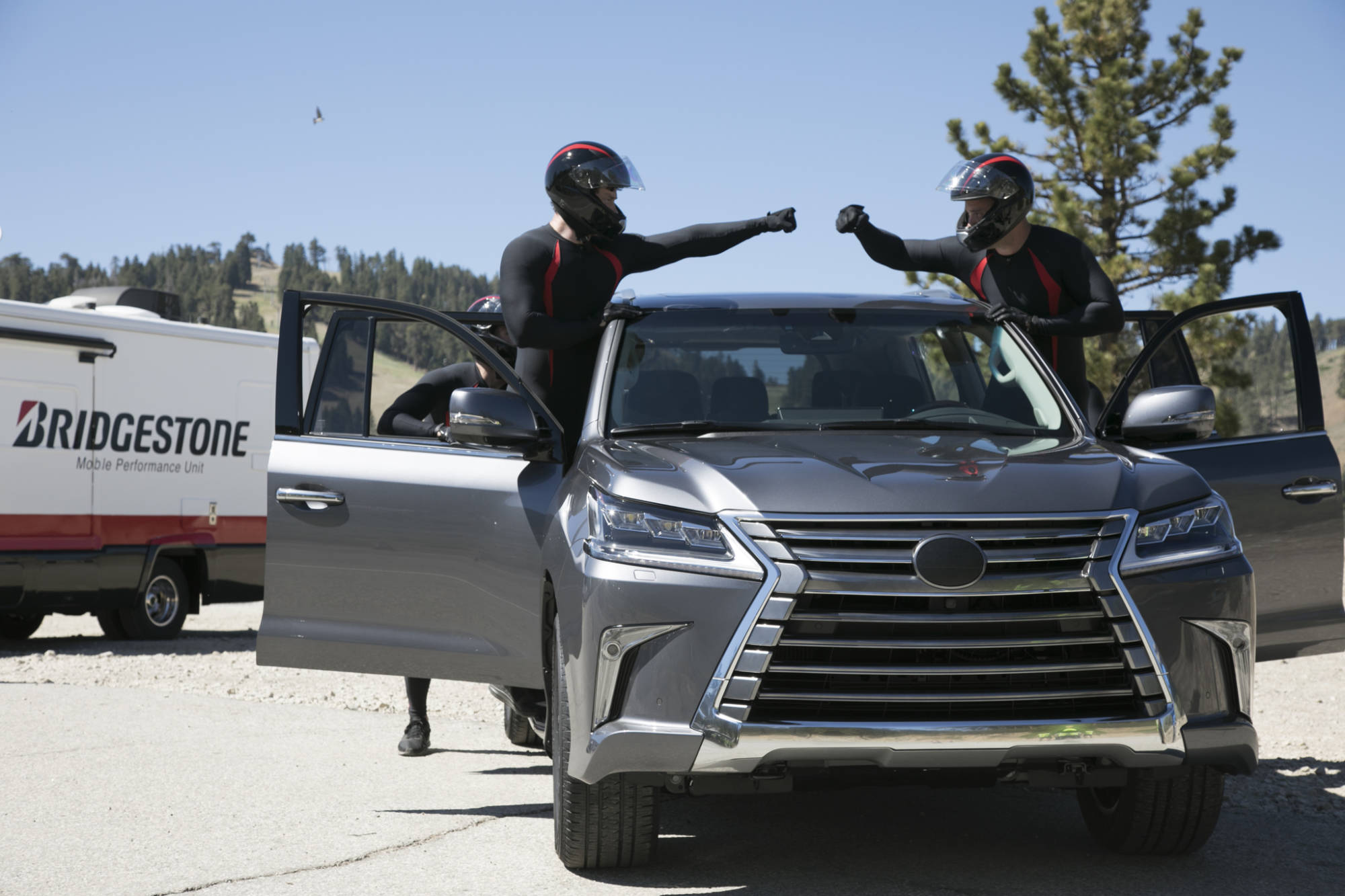
For a brand like Bridgestone, the tire marque has partnerships across many sports, including the NFL centering on the idea of “Clutch Performance.” But for the PyeongChang Games, the brand is activating what it’s labeling as the first truly global marketing platform in company history.

“We believe in the power of sports to unite, excite and inspire people across all borders—and there’s no better example or bigger platform for that than the Olympic Games,” said Philip Dobbs, CMO for Bridgestone Americas. “Our worldwide partnership is a strategic global investment designed to push our business forward, showcase our commitment to being an outstanding corporate citizen and tell our brand story.”
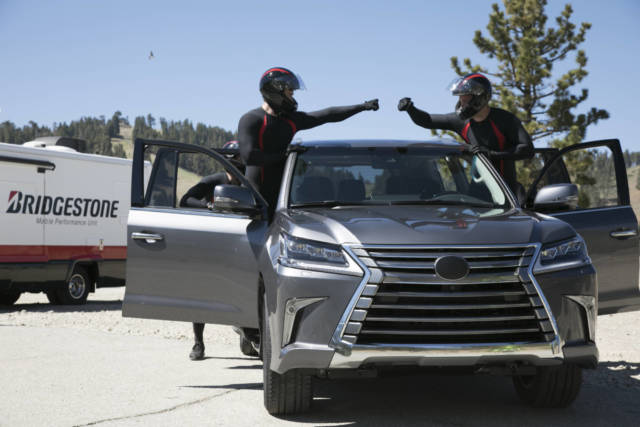
Dobbs said the Olympics provide the brand “incredible” marketing value because Bridgestone has goals during the games to grow business in both new and existing markets.

“We know brand awareness and reputation are determining factors in brand preference and choice for consumers, and the Olympics offer a powerful platform for quality engagements with consumers,” Dobbs said.

Bridgestone began its marketing journey in the summer by announcing Team Bridgestone USA and by striking a union with US Figure Skating for its first federation partnership. By November, the brand had already launched the marketing campaign across television, social media, in-store touchpoints and the digital brand experience “Bridgestone Performance Institute” featuring Olympic and Paralympic athletes Amy Purdy, Ashley Wagner, Elana Meyers Taylor, Erin Jackson, Evan Strong and Nathan Chen.

The marketing was also recently complemented with an Olympic-themed retail promotion, honoring the parents who drive the dreams of young athletes as well as with an onsite activation program in South Korea that hits on a series of marketing, athlete and education initiatives.

“The partnership provides opportunities to engage directly with fans around their passion points—to educate them not only about our innovative products and technologies but also about what we stand for as a company,” said Dobbs.

In addition to accumulating marketing cache, attaining shared value and a competitive advantage to perhaps be leveraged across their targeted regions, Dobbs said Bridgestone is likewise committed to leaving a positive legacy in each Olympic host city and wants to use their Olympic partnership to engage its 140,000 employees around the world.

“We learned a lot at Rio 2016, our first-ever Olympic Games,” said Dobbs. “Now our company can leverage the Olympic rings in more than 200 countries worldwide.”

Stick To Sports—Not Social Issues

Albeit mostly reserved for athletes, the Olympics also serve as a podium for those that choose to comment on social issues. When sponsors were asked if they will be taking any specific stances related to the current social climate in the world, especially in the US with the #MeToo movement, diversity and other social issues—marketers offered a mixed bag of responses.

Ricardo Fort, VP of global sports partnerships for Coca-Cola, said the company will not be using the games for any messaging other than amplifying the marketing around the “pleasure of drinking Coca-Cola.”

Coca-Cola instead used the Super Bowl stage this year to talk about diversity with a 60-second ad featuring people of different races, nationalities and geographic regions. The message was clear—that Coke is “for everyone,” as one person in a wheelchair took part in a daredevil-like athletic contest.

“The Olympic Games have become an important part of how we talk about our brand,” Fort said. “The Olympics are recognized for being very inclusive, it’s something that our company and brand stand for. Each company needs to consider their brand values and stance on certain issues.”

“The Olympic Games have become an important part of how we talk about our brand. The Olympics are recognized for being very inclusive, it’s something that our company and brand stand for. Each company needs to consider their brand values and stance on certain issues.”—Ricardo Fort, VP of global sports partnerships for Coca-Cola

Samsung is using their brand marketing position, “Do What You Can’t,” to “support anyone who faces barriers and has the courage to overcome them,” Chang said. Samsung is sponsoring Team USA members Chloe Kim (snowboarding), a first-generation Korean-American whose parents immigrated to the US to realize their American dream, and Gus Kenworthy (freestyle skiing), who is competing in his first Olympics since coming out.

Dobbs said Bridgestone will be operating under the message of “Chase Your Dream,” which aims to empower people everywhere to overcome adversity and persevere in pursuit of their goals.

“The spirit of the Olympic movement is all about bringing people together in celebration of sport—and the Olympics present a unique opportunity to support sport as an agent of positive social change,” Dobbs said. “We respect and recognize that there are an array of important topics generating conversation today, and very much look forward to honoring the sense of peace and unity that the world comes together to celebrate every Olympiad.”

Stephanie Joukoff, Intel’s director of Olympics marketing, said that the brand won’t take a stance on any issues outside of sports because “our platform is about delivering amazing experiences through Intel technology, and helping fans experience the games like never before.”

Intel, a long-term technology partner through the 2024 Olympics, is instead looking to offer a glimpse of the future for the games through “Experience the Moment,” which is highlighted by 30 live and on-demand virtual reality experiences. The brand is also looking to flex its marketing muscles in esports, drones and 5G, while further engaging B2B prospects and customers.

“Our primary goal is to accelerate the adoption of leading technologies through this amazing global platform and ultimately, drive growth to our business,” said Joukoff.

Intel’s partnership is rooted in the idea that technology can transform the Olympics experience for fans and athletes alike. Joukoff said this is a unique opportunity that extends beyond a traditional sponsorship and allows Intel to integrate it’s tech into the games.

“Success for us is bringing new, amazing experiences enabled by Intel technology to the games, which will drive growth for Intel,” Joukoff said. “This is our first Olympics sponsorship, so we will be using this opportunity to test and learn for the next few games.”

A Message For The Non-Sponsors

Once the Olympics get underway and competition reaches its crescendo, brands and social media managers alike may get patriotic and be tempted to offer congratulatory salutations to athletes, perhaps even joining in on an official hashtag or two in celebratory revelry.

However, unless your brand has a thing for lawsuits, marketers from small, medium and large companies should think twice before wishing to provide social media commentary. In fact, they should stay away from anything that suggests authorization, sponsorship or an official connection to the Olympics altogether, according to Fara Sunderji, a partner at international law firm Dorsey & Whitney who advises brands in the development marketing of campaigns.

Similar to how the NFL protects its trademark for the Super Bowl that forces brands to generically refer to it as the “Big Game,” the International Olympics Committee (IOC) and the United States Olympic Committee (USOC) are enforcing “Rule 40” in order to protect the value it brings to the official sponsors that sign steep checks. This includes prohibiting unofficial sponsors from using the Olympic rings, the official logo, the official mascot or hashtags incorporating trademarked terms in connection with commercial promotions.

“Excluding the official sponsors and the brands that got Rule 40 waivers, the best guidance is to be careful,” said Sunderji. “You can’t directly or indirectly associate your brand with the Olympics. At the same time, you can take advantage of it. It just requires creativity, like stars-and-stripes imagery conjuring the ‘home’ team or imagery of selective sports that are popular. It depends on the excitement, and where your brand fits in.”

“Excluding the official sponsors and the brands that got Rule 40 waivers, the best guidance is to be careful. You can’t directly or indirectly associate your brand with the Olympics. At the same time, you can take advantage of it. It just requires creativity”—Fara Sunderji, a partner at international law firm Dorsey & Whitney

Sunderji said unauthorized brands cannot use #TeamUSA, #Olympics #GoForTheGold #PYEONGCHANG 2018 or any other USOC branded hashtags. Both committees have pages of guidelines and rules to sift through that outline the policy, she said, which trickles all the way down to athletes, who cannot share videos on their personal social channels showing the “field of play.”

One brand that has already carried the creative torch and carefully stepped around policies is Planet Fitness. The gym franchise operates a location near Olympia, Washington, and it released a social media video that promotes the business and depicts real “Olympians” from the state capital.

A brand like Ralph Lauren, which secured a deal with the USOC to introduce a wearable heat concept integrating fashion and apparel innovation, is not dealt the same hand as other unofficial sponsors. The same goes for The North Face, which has a deal in place as an official competition uniform partner for the US Ski, Freeski and Snowboard teams under the marketing mantra “Never Stop Exploring.”

“Social media posts are a form of advertising,” said Sunderji. “If you have a branded social account, more likely than not [the posts] are considered advertising. What you can say and do on that account is much different than what individuals can from their personal accounts, so be creative, and careful.”

The Lines Between B2C, B2B Sponsors Begin To Blur 

One of the trends that Fort and his cohorts at Coca-Cola, an Olympics sponsor since 1928, are particularly monitoring this year is the shift between Olympics partners who are promoting to consumers, and the ones of which are B2B sponsors.

Sponsors like the Alibaba Group, Intel, Bridgestone, Panasonic, Samsung and The Dow Chemical Company all operate in B2B capacities.

“Sponsorships and marketing is our bread and butter—we do it every day. But I’m interested to see how this particular Olympics will play out from a consumer-first, marketing communications standpoint,” said Fort. “Coca-Cola is a meaningful part of people’s lives, and because of that, they feel more attracted to the brand. We can drive the growth of our business and sports partnerships because of this.”

From the IOC, FIFA, European soccer clubs and other international leagues, Fort, who led the task of defining Coca-Cola’s Olympics marketing strategy, negotiated contracts and made sure rights were delivered, said there has been an overall industry-wide shift in sports from B2C sponsors to B2B.

“The profile is changing, and it could affect the engagement of people in many countries,” said Fort. “It will particularly be interesting and critical for us to see how that changes the way regular people consume the Olympics and other global events.”
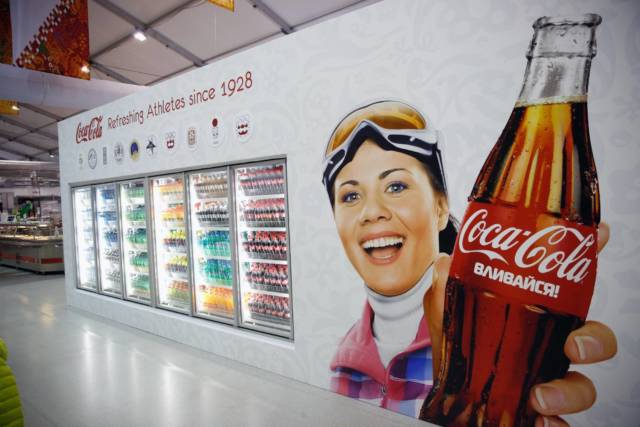
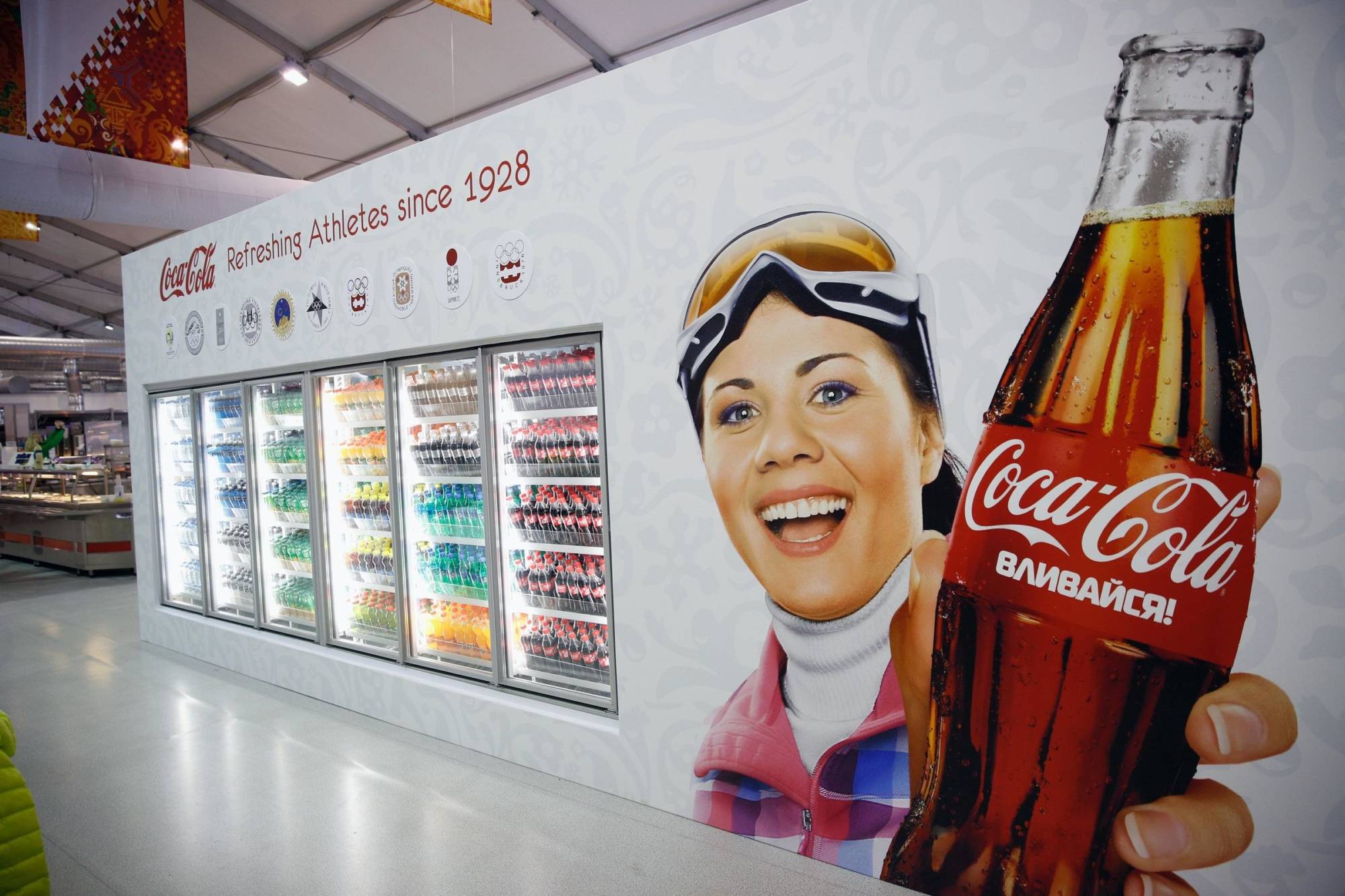
In the meantime, Coca-Cola will focus on the strategy at hand with more than 200 executives from marketing, sales and respective agencies that are tasked with handling the execution at scale. The total beverages company has had a specific Olympics-based team in South Korea dedicated to the marketing development of their sponsorship for the last three years.

Fort said the months leading up to an event like the Olympics are just as important as the marketing executions during it. Coca-Cola relies on its analytics partners to measure the impact of their marketing spend based by countries, which include how many customers are promoting its brands, referencing an internal tracker for their brand image, the conversations that are being created in social media, and all the way across to sales volumes.

“We see a lot of impact in our business in a larger window in the months leading up to the event, and of course during it too,” he said. “Consumers pay more attention to our marketing, they like the brand more and they drink more of our products.”

One brand in particular that will likely not strike any chords with consumers, yet, is still making a strong push at the Olympics as a sponsor is The Dow Chemical Company. The Michigan-based B2B multinational chemical corporation is using the Olympics as a platform to demonstrate its materials, scientific acumen and sustainable solutions.

Although the company is not sponsoring Olympics athletes, it’s the official technical partner of the USA Luge team, using science to help the team redesign their competition sleds. The brand’s solutions will also be found in various Olympic venues, like precision temperature management of ice rinks, waterproofing coatings, insulation and sealants in buildings and also in the paint used to mark the Olympic Lane from Seoul to PyeongChang.

“We’re seeing excellent marketing results across our areas of focus,” said Louis Vega, VP of Olympics and sports solutions for The Dow Chemical Company. “Our investment in these areas has proven to be quite successful across our business units.”

From a B2B marketing stance at the Olympics, Vega said Dow brings business revenue impact while showing its science and solutions; it’s applied across industries and geographies and reaches new audiences to grow market share.

Another B2B Olympics sponsor that has C2C and B2C sprinkled in its company DNA is the Alibaba Group. The Chinese multinational conglomerate is looking to leverage the games as the ultimate platform to drive awareness and engagement for both its core-and-emerging audiences.

To do that, the company is debuting “To the Greatness of Small,” its first advertising campaign at such a scale to share the story of its brand ethos since being founded 19 years ago. The marketing hits on the narrative of Alibaba’s brand positioning of supporting small businesses and using their tech to help “underdogs” succeed in global marketplaces.

“We see the Olympics as an unprecedented platform to build brand awareness, connect with new audiences and demonstrate the impact of our technologies and innovations—when the entire world is watching,” said Alibaba Group CMO Chris Tung. “There’s tremendous value in leveraging our relationship with the games to showcase our technology and innovation to a global audience.”

Alibaba’s company mission is to serve two billion consumers and support 10 million merchants and small businesses around the world. Tung said their Olympics partnership supports their global goals and will help accelerate plans to reach those lofty ambitions.

The IOC also turned to Alibaba to help transform the games for the digital era by using their cloud technology. Tung said the partnership allows for the brand to share their tech and demonstrate to small and medium-sized enterprises, start-ups and businesses how the Alibaba Cloud helps other businesses.

Alibaba had a similar presence earlier this year at CES in Las Vegas by sharing its ecosystem of AI, IoT and cloud-powered tech.

“We’re focused on using PyeongChang as an opportunity to listen, learn and build relationships that will ensure the success of our long-term strategic alliance with the IOC and the Olympic family,” said Tung. “While we’re expanding awareness and understanding for our brand, we also hope to inspire Olympic fans around the world to achieve their own greatness, no matter how small their dream might be.”
Companies Marketing To Kids Strategize Around GDPR Complexities

Companies have had two years to adapt to the EU’s General Data Protection Regulation (GDPR) legislation, which begins on May 25 and limits the amount of data companies across the EU can collect and retain on individuals. But compliance can be a complex issue, especially when children’s apps and services are involved. This is largely because the data-gathering technology was originally designed for an adult audience.

GDPR-K is a separate piece of legislation, designed specifically to address a young audience. In many ways, it mirrors the Children’s Online Privacy Protection Act (COPPA) in the United States, which was passed in 2000. COPPA requires expressed parental consent before any information on children under the age of 13 may be collected. But even though that legislation has been in effect for almost two decades, compliance issues and lawsuits still arise.

“Under 13 digital engagement is an entirely different paradigm to the adult space,” Dylan Collins, CEO of the “kidtech” company SuperAwesome, told AListDaily. “Whereas adult engagement and marketing is about personal data collection by default, under 13 engagements must be done on a ‘zero-data’ basis to be compliant with COPPA and GDPR-K.”

GDPR-K is almost identical to COPPA, except that the definition of “child” is increased to the age of 16 in Germany, Netherlands and France. Although other EU nations set the age to 13, pan-European companies are likely to use 16 as the standard for brand safety’s sake.

Collins notes that the new age threshold means that many app publishers that were previously geared toward “family” or “mixed” audiences will now be considered kids’ publishers—meaning that they’ll have to swap out their adult-oriented adtech services for zero-data equivalents.

Whatever the age, parents aren’t likely to give up their children’s information, so brands will have to rely on zero-data solutions. That means all activity will have to be purely contextual—no retargeting or behavioral targeting allowed when engaging with a pre- and adolescent audience. Data, even for an audience that doesn’t have set tastes or habits, must be collected anonymously for product development and building engagement.

“It’s important to distinguish anonymous usage data with personal information,” Collins explained. “Kids have become one of the fastest growing online audiences, and you can see from recent developments by Facebook, [like] Messenger Kids, the acquisition of TBH and [Google] YouTube Kids, just how significant their influence has become.”

Collins says that the under 13 audience is also a major driver for smart speaker adoption, and children’s engagement with content is becoming increasingly important for both lifestyle and tech brands. As a result, the entire kidtech sector emerged to address issues of safe digital entertainment using COPPA/GDPR-K compliant attribution, programmatic and other zero-data methods.

The kidtech market is on track to reach $1.2 billion by 2019 with digital spending reaching 28 percent of total kid-focused advertising spend, according to the PwC Kids Digital Advertising Report 2017—which was commissioned by SuperAwesome—making it one of the biggest privacy-based digital media markets in the world. The PwC report also estimates that 10-to-20 percent of kids digital ad spend will be on compliant programmatic advertising by the end of 2018.

Companies such as WildWorks—which doesn’t serve third-party advertising for its Animal Jam game, apps or websites—rely on anonymous data.

“Collecting anonymized, aggregated data from our products about play time, content popularity, etc. is important in guiding design and content,” explained Mitch Smiley, marketing director at WildWorks. “Issues addressed by COPPA/GDPR like parental consent, transparency and data security are vital in how this is accomplished, so we’ve chosen to work with a third party—the Better Business Bureau’s CARU (Children’s Advertising Review Unit) program—to verify our compliance.”

Smiley pointed out that an equivalent verification service does not yet exist for GDPR, but COPPA-compliant companies may find it relatively easy to adapt. However, they may need to expand their content marketing strategy.

“Using kids’ data to serve behavioral ads or to build remarketing lists is already prohibited,” said Smiley. “This makes relevant content-based targeting—and doing the necessary audience research to know what that content is—that much more important.”

Smiley compared children’s app marketing to traditional TV campaigns, which are targeted to a specific show rather than the audience. WildWorks focuses on content targeting by staying current with popular trends, media and apps through active community engagement.

“This is a high-touch, costly approach, and we employ a large staff of moderators and an in-house community team to pull it off,” he said. “It’s definitely not as easy or cheap as letting ad networks collect millions of data points from users.”

Child-oriented platforms such as Roblox and Fingerprint use similar practices.

“Roblox relies primarily on word-of-mouth among our community to market and promote the platform,” said Tami Bhaumik, vice president of marketing at Roblox. “To the extent that it utilizes data as a means of engaging new users, Roblox limits its collection of data to what is strictly necessary and acceptable under its strict data policies.”

Specifically, Bhaumik explained that Roblox limits the personally identifying information (PII) it collects from its players to what is necessary to run a safe and efficient platform, adhering to CARU to ensure that data isn’t disseminated inappropriately, which includes preventing underaged users from sharing personal information through in-game chat.

Nancy MacIntyre, co-Founder and CEO of the Fingerprint media platform, added that information for kids products are often for getting a full understanding of user behaviors and acting on them. But since legislation such as COPPA limits online data collection, including locations and IP addresses, analytics must be handled differently, and marketers need to be “completely transparent with parents about storing any data and getting approval to do so.”

Many COPPA-prohibited data collection features such as audience building, remarketing and behavioral targeting are innate to digital advertising platforms. Smiley suggests that, in addition to having a thorough and updated privacy policy, it’s important for companies to have a strong grasp of the technology in order to properly vet third-party partners.

“Many adtech vendors will ask advertisers to place remarketing or behavioral data-collection tags on their site as a standard practice,” said Smiley. “This obviously needs to be avoided by COPPA/GDPR compliant websites and marketers.”

Collins explained that the decline of children’s television has paved the way for kids to become the fastest growing online audience on the planet, but the internet is still a fundamentally adult environment.

“Many brands are still using adult tools and technology, especially adtech, to engage with kids, which means they’re also unintentionally capturing vast amounts of personal data on children,” said Collins.

To keep engagement context-only, Collins echoes Smiley’s observations, stating that brands will need to ensure all partners in their delivery chain are COPPA and GDPR-K compliant, in addition to making sure agencies go through relevant training and certification programs. For example, Bhaumik said that Roblox is a member of the kidSAFE Seal Program, which has been approved by the Federal Trade Commission as an authorized safe harbor under COPPA.

Ultimately, engagement is key, and Collins said that brands shouldn’t just look to technology partners for compliance and brand safety, but as an effective way to engage with a young audience.

“The most successful brands in this space focus on both reach and engagement strategy with their partners,” said Collins.

Comscore Adds OTT And Console Gaming To Available Metrics

With the added convenience of over-the-top (OTT) and subscription video on demand (SVOD) across multiple devices come new challenges for marketers to avoid fragmentation and measure ROI. ComScore’s Activation expansion, which includes console gaming and OTT viewing, highlights the growing need for audience measurement across these segments as other platforms also get involved.

In October, Nielsen launched Subscription Video On Demand (SVOD) Content Ratings to measure streaming programs in a comparable method to traditional TV. At launch, the new service only tracks Netflix but is expected to add Amazon Prime and Hulu sometime this year.

Megan Clarken, president of Watch at Nielsen, said that the syndication of SVOD measurement represents a big step forward in terms of moving closer to transparency within the SVOD marketplace. Netflix, in particular, doesn’t offer advertising on its platform and keeps any metrics other than new subscriptions close to the chest. The popular SVOD service even disputed Nielsen’s measurement of Stranger Things season two viewership but did not offer corrected figures.

A recent report by the Video Advertising Bureau indicates that in spite of the rise of cord-cutting young consumers, television still holds the lion’s share of content consumption. But OTT is growing, as indicated by the introduction of new services from Facebook Watch to Apple and Philo to PassionFlix.

NPD reports that SVOD had the highest year-over-year increase from August 2016 to August 2017, with almost half the population streaming video compared to traditional TV, attending movie theaters and other video viewing methods.

The comScore Activation product suite was first introduced in September and uses data to create ad targeting profiles based on demographics and cross-platform behaviors. Activation now includes digital, TV, gaming and OTT, including SVOD. According to comScore’s latest estimates, more than eight million homes view an average of 59 hours of OTT content each month.

Adding OTT and SVOD to comScore makes sense in terms of meeting the needs of today’s marketers, but also to prove its value to potential companies who may be interested in a buy-out following a settlement with activist investor Starboard in September.

Amazon Tops ‘Global 500’ List Of Most Valuable Brands

Diversification helped propel Amazon ahead of Apple and Google to top Brand Finance’s “Global 500” rankings for 2018, jumping from the number three spot in 2017 to become this year’s most valuable brand.

The term “brand value” is defined here as the value of the trademark and associated marketing IP within the branded business. Amazon’s brand value increased by 42 percent year over year to $150.8 billion, which allowed it to leapfrog over its competitors.

With the acquisition of Whole Foods, Amazon has expanded far beyond its roots as an online bookstore to electronics manufacturing, cloud infrastructure and now brick and mortar retail. All eyes are on the brand as it experiments with AI-powered retail through Amazon Go.

“The strength and value of the Amazon brand give its stakeholder permission to extend relentlessly into new sectors and geographies,” Brand Finance CEO David Haigh said the report. “All evidence suggests that the amazing Amazon brand is going to continue growing indefinitely and exponentially.”

Holding its number two spot for two years running, Apple rebounded to $146.3 billion in brand value, but lacks the diversification seen by Amazon. In its report, Brand Finance said that Apple has grown over-dependent on sales of its flagship iPhones, which are responsible for two-thirds of the company’s revenue. With Poor fourth quarter 2017 sales of iPhone X at only 29 million handsets, Apple may soon feel pressure from emerging brands like Huawei and will have to expand its horizons in order to become the most valuable brand again.

“Apple’s increasing focus on what are effectively luxury products may cost the brand a fair share of the global mass market, limiting the potential for brand value growth,” said the report.

Dropping from number one to number three, Google experiences relatively slow brand value growth of 10 percent over 2017 to $120.9 billion. With aggregated paid clicks rising 47 percent in the third quarter of 2017, Google online ads generated more traffic than expected, Brand Finance observed, adding that solid performance is not always enough.

“Google is a champion in internet search, cloud and mobile OS technology but, similarly to Apple, its focus on particular sectors is holding it back from unleashing the full potential of its brand,” said Brand Finance. “Google’s investments in self-driving cars and handsets still lack the scale and audacity demonstrated by Amazon’s new ventures.”

Disney is Brand Finance’s strongest brand of 2018 with a brand strength index (BSI) score of 92.3, up from 91.3 last year. Brand Finance says Disney is one of the most interesting brands to watch in the coming years in light of its recent purchase of a majority stake in 21st Century Fox, allowing it to further develop its brand for more consumers worldwide.

The Mouse House, like Amazon, is continuously expanding through acquisition and diversification. Disney has a 60 percent stake in Hulu and with the acquisition of 21st Century Fox comes Star India and Sky—granting the company even greater international exposure in the digital entertainment space.

Rounding out the top five strongest brands for 2018 are Visa, Ferrari, Neutrogena and Facebook.

Five Strategies To Bring Marketing And Engineering Teams Together

There’s a known gulf between marketing and engineering / IT teams. But despite differing work attitudes, educational backgrounds and departmental priorities, many organizations go out of their way to create strong working relationships between these groups—and their CMOs and CTOs.

Here are five approaches major companies have found effective for maximizing their tech-marketing partnerships:

Have The CMO And CTO Sit Next To Each Other

At adtech firm SteelHouse, CMO David Simon’s team works frequently with chief product officer Marwan Soghaier’s department, covering everything from the best way to design new products right down to the wording of FAQs. Simon says one way to ensure collaboration between marketing and tech honchos is to have them sit next to each other.

“[It] sounds insignificant but is incredibly significant,” he says. “We can hear what is going on in each other’s world all day.”

Tech and product need to “Stay in close cooperation with the CMO and the marketing team,” Soghaier says, “so they can both adequately and accurately communicate what has been designed to the outside world . . . and provide that visibility to internal development teams.” SteelHouse recently developed major feature releases for their products, working with their marketing department to ensure large brands using their product knew about the “value and the benefit” of the updates.

Build A Roadmap

Rahul Kashyap, CTO of cybersecurity firm Cylance, says marketing can’t exist on its own: Companies—especially companies planning to scale—need a roadmap that sets opportunities and strategies for engineering and marketing to improve the organization’s bottom line, and building that roadmap needs to be a priority.

“It’s important to know your capabilities and have a built-out process so that marketing comes out at [the] right time,” he says, “and there’s proper handoff of info on both sides for how capabilities are marketed, and to ensure marketing has the info they need for messaging. This is something to jump onto early in a company’s life.”

Shaun Walsh, Cylance’s senior vice president of marketing, believes putting engineers in front of customers is the most important thing you can do. “They hear customer problems, and have such an intimate understanding of the problems that their conclusions always startle marketing people,” he says.

Collaborate On Data

Groupon CTO Colin Bodell feels that data is a place where there’s especially strong room for collaboration between engineering and marketing, especially as much of today’s marketing is data-driven.

“That doesn’t mean being a slave to the data and doing exactly what the data says, but data in its consolidated and recorded form is almost an invitation to discussion and creativity,” he says. “I find the best relationships between CTOs and marketers is one where we can look at the data, compare the data, ask questions, and then have a meaningful discussion about the approach we want to take to engage with customers.”

This approach helps Bodell in his role. “That dialogue,” he says, “allows me as an engineering leader to put the right technology in place.”

Make Time To Talk Despite Long Distances

The CMO and CTO of influencer marketing team Experticity face a dilemma when it comes to meeting face-to-face. The company is spread out between offices in Utah, the Bay Area and Washington state. CMO Kevin Knight is based in Experticity’s Oakland offices, while CTO Greg Cox is based in their offices outside of Seattle.

Knight and Cox say that one of the keys to collaborations between their teams is to meet in person frequently. When either is visiting the other’s office, they make sure to have dinner together in order to catch up beyond the usual video chats and conference calls.

Their respective teams also make sure to leverage each other’s strengths for large-scale projects. When the company ran a series of Facebook ads linking to an immersive quiz, Experticity’s engineering team worked closely with marketing to design one that met the company’s needs.

“Kevin is our CMO but has a great product sensibility, having worked at Facebook and Pinterest,” Cox says. “People in product organization, like project managers, work closely with him to get input on the products we build so we can get his insights. We work in a very unsiloed way, with a lot of cross-pollination between marketing, engineering and product.”

Have All Teams Embrace The Same Workflow

Mozilla’s marketing, engineering and product teams worked feverishly behind the scenes to prep for the public launch of the Firefox Quantum Browser, the not-for-profit’s highest-profile product launch in years. Mozilla CMO Jascha Kaykas-Wolff explains that the marketing team’s workflow has evolved to become more like an engineering or product team.

“We have approximately 100 people in a full agile lead model, just like our engineering team,” he says. “The language and terms we use is just like an engineering team. If you’re a CMO trying to identify how to work better with [an] engineer team, don’t translate into a language you don’t understand—instead, work on an equal playing field as peers.”

Kaykas-Wolff believes the teams don’t have to use different processes. “There’s a farce that exists, and it’s the idea that you have to fight for resources in an organization,” he says. “When you work in a similar fashion, things get along.”

Forbes 30 Under 30 Honorees Reveal Their Consumer Habits

While Forbes began its 30 Under 30 list in 2011, it has only been surveying respondents on their personal consumption habits since 2016, offering valuable insight for marketers. Here’s what we’ve garnered on their purchasing power priorities.

Each year, Forbes releases its 30 Under 30 list that recognizes 600 young professionals across 20 industries for their leadership and innovation. In January, the company surveyed 521 listmakers to learn more about what shapes their world from purchase decisions to social media.

Educated Renters

Listmakers and nominees interviewed for the survey skewed female at 63 percent and between the ages of 26-29 (65 percent). These future leaders are educated, with 51 percent holding a bachelor’s degree, 26 percent a master’s degree and an impressive 12 percent having earned a Ph.D.

Nearly a quarter of respondents own their own homes, while 66 percent rent and seven percent live at home with their parents.

Financially Healthy

Twenty-eight percent of Forbes‘ interviewees earn between $100,000 and $199,999 per year and 39 percent have alternate sources of income. Nearly a quarter of their companies earn between $1 million and $9 million per year.

The survey found that 58 percent don’t have any personal debt, but nine percent owe more than $80,000. Unsurprisingly, then, 10 percent named “paying off my debt,” as their number one financial priority, compared to 32 percent who named “funding an entrepreneurial venture.”

This statistic aligns with their number one financial concern—20 percent are worried that they won’t have enough money to run their business. Student loans weren’t as much of a concern, however, with only four percent worried they won’t be able to pay them off.

When it comes to managing money, 94 percent of these young go-getters prefer to bank with apps or websites.

Always On The Go

These entrepreneurs may be young, but they’re busy—46 percent are employed full-time while 44 percent said they are building their company. Seven percent are multitaskers, employed full time while working on a side project. Forbes learned that 79 percent of respondents started their company in the last five years and 65 percent hold the title of founder or co-founder.

Stereotypes be damned, these young leaders don’t spend much time on Snapchat. Only 14 percent claimed to use Snapchat compared to Facebook (70 percent), Instagram (62 percent), LinkedIn (56 percent) and Twitter (41 percent). Looking at it another way, 30 percent of some of the most promising young professionals in the world don’t use Facebook at all, and half don’t bother networking on LinkedIn.

Similarly, five percent claimed not to make phone calls or send texts during the day—but that’s certainly not the norm. Half of the respondents said they send over 25 texts a day and make at least five phone calls.

The most popular content consumed on their phones is news at 29 percent, followed by short articles at 25 percent and music at 15 percent. Four percent invest the time to read long articles on their phone, but memes are more popular at nine percent.

Overall, 74 percent consume news updates and 71 percent read short articles. Social media is where 59 percent get their news, followed by websites at 47 percent. A majority still trust mainstream media outlets at 67 percent.

Ready To Save And Travel The World

Money is great, but these 30 Under 30 honorees define success in other ways, too. According to 60 percent of respondents, the greatest success metric for a brand is social impact, followed by brand recognition at 53 percent. These entrepreneurs don’t follow their dreams for recognition, at least most of them don’t—only 24 percent of respondents named media coverage as the greatest success metric for a brand.

The top three challenges facing the world today, according to these professionals, are global warming at 64 percent, followed by income inequality and fake news at 56 and 40 percent, respectively.

Thirty-eight percent say they travel frequently for work and leisure and 28 percent do so “a few times” a year. While three percent book private accommodations, 61 percent fly economy class and 36 percent in business class. When traveling for leisure, these respondents prefer to experience new cultures and experiences at 71 percent. Forbes learned that 91 percent plan on taking a vacation in the next six months.

Discerning Shoppers

When it comes to spending their hard-earned money, these honorees trust their peers for guidance, with 73 percent relying on reviews and 61 percent on recommendations. Price comparison isn’t as important at 40 percent, and neither is marketing at 17 percent. At eight percent, press coverage makes the lowest impact on purchasing decisions.

“[Forbes’ 30 Under 30 recipients] have different buying motivations,” Forbes CMO Tom Davis told AlistDaily. “For example, when it comes to tech—only two percent care about price, three percent care about hardware or security and four percent care about brand name. We would have assumed those three were major factors in decision-making, but it turns out, millennials really care the most about design and innovation when it comes to technology. New technology has the ability to disrupt the market, even if the name attached to them is unknown or if they’re pricey.”

The most important brand attribute by respondents is “high quality” at 86 percent, followed by value at 58 percent. Celebrity endorsements don’t impress these shoppers, with only one percent naming it as the most important brand attribute. Social responsibility, on the other hand, is deemed most important by 40 percent.

Regardless of quality, nearly half—49 percent—only buy tech when they need it, while the other half are trendsetters. A quarter of respondents say they are the first among their friends to have new tech and 22 percent buy when they first hear about the product. In the next year, 59 percent say they plan on buying tech, followed by apparel at 42 percent.

Unlike previous generations, these 30 under 30 honorees aren’t as concerned about owning property and cars. Only 25 percent said they plan on purchasing a car over the next year, and 19 percent said they plan on purchasing a home.

When asked to define the American Dream, personal happiness trumps financial stability—54 percent named a “happy, healthy family,” while 30 percent said it was to retire and live comfortably. Surprisingly based on who these respondents are, only 24 percent said that the American Dream is to own your own company.

“[For these respondents] the American Dream may not be the same dream of old,” said Davis, “but Forbes Under 30’s are focused on positive change in business and culture.”

This piece was updated to include an interview with Forbes.

12 Marketing Buzzwords That Need To Die This Year

While marketing buzzwords keep us excited about our favorite topic, we need to face up to terms that have over-stayed their welcome. We compiled this list of out-of-date offenders based on terms we’ve seen used repeatedly over the years and, in our opinion, far too often. While we certainly condone the techniques or marketing mindsets these buzzwords represent, it’s time to adapt to more accurate terminology. Which buzzwords would you add to this list?

Advertainment

This term refers to entertainment that also represents a brand message. These ads masquerade as movies, online shows and podcasts, but we can all see the logo. It’s great to entertain audiences with a brand message—we recommend it—but maybe it’s time to stop calling it “advertainment” like nobody’s the wiser.

Content Marketing

These days, it’s not uncommon to receive party planning advice from a greeting card company or a comedy show from a breakfast cereal. An informative article or video can be helpful for gaining an audience and establishing your brand as an expert, but at this point, “content marketing” is starting to lose its meaning.

Anything “-centric”

Mobile-centric, data-centric . . . focusing on a particular market or marketing platform can be the key to a successful campaign. Creating an emphasis is always a good idea, but the suffix “-centric” has got to go.

Authenticity

You shouldn’t need to call it real. While this is perhaps the most important element of any marketing campaign, this buzzword has been used so much, it causes even the most hardened marketers to cringe. Audiences can tell when brands are insincere, so authentic messages should come standard.

Big Data

When this term was first coined, it referred to massive amounts of information that were simply too much to handle without computer assistance. But these days, all data is big. It’s a good year to retire this one.

Guru

This one has been on “buzzwords to kill” lists for a long time and we’re surprised to still see it. Being an expert in your field is a great thing, but calling yourself or your brand a guru can come across as pretentious. Unless consumers are hiring Sherpas to guide them to your brand’s headquarters atop a mysterious mountain on a quest for sage wisdom, we can all do without this overused buzzword.

Thought Leader

This is meant to imply influence, but calling your brand a “thought leader” implies that you’re either the first one to think of everything you do or you have the ability to control thoughts. You don’t have to be the first, but you can strive to be the best.

Millennials (And Their Brand Casualties)

Every generation is compelled to shake off the traditions of their parents while being influenced by the changing world around them. That being the case, it should no longer be news that millennials, aka generation Y likes to do things differently, much less that they use the technology available to them. Businesses who adapt to each new generation continue to thrive and those who don’t, well . . . don’t. It’s time to stop blaming this generation for every business closure.

VR That Is Not Actually VR

Virtual reality is the total immersion of a user inside a rendered environment, allowing them to navigate and interact with objects within that world. As this lucrative technology graduates from infancy to experimental toddler, audiences have a better understanding of what constitutes VR versus other mediums. It’s more than okay to create 360-video or watch a screen through VR headsets, but it should no longer be acceptable to call something VR when it’s not.

Snackable Content

Short-form video or brief social media posts can often make a strong impact, and it’s a good idea not to bombard audiences with too much content at once. Calling a marketing strategy “snackable,” however, makes the message sound small and insignificant . . .  or made of potato chips.

Viral Marketing

Everyone wants their clever video ad to be shared millions of times, but here’s the problem—there is no such thing as viral marketing. Marketing clients ask for it by name, but calling your marketing campaign “viral” is like giving yourself your own nickname. Clients don’t know better, but marketers do. Preemptively calling a campaign viral is, at best, patting yourself on the back too early and at worst, making decisions for your audience. Crafting a marketing campaign that gets audiences talking is great —just hold off on calling it viral until you’re blown away by the results.