AR and VR marketing takes many forms as the technology continues to grow and find its place in the world. As with any new medium, fate favors the bold and that goes for marketers, too. Until everyone jumps on board the hype train with checkbooks in hand, here’s how AR and VR are marketing themselves.
Making AR And VR Easy
Last year, Pokémon GO took the world by storm using the fact that anyone with a smartphone could play. Niantic’s real-world monster-collecting game is a proof of concept that continues to inspire AR developers to this day—and vice versa.
Mobile AR was a major selling point for Apple’s Keynote this year, and brands on Snapchat are creating AR games through the app’s Lens feature. The mobile AR market is projected to grow from $1.01 billion in 2017 to $18.69 billion by 2020, according to SuperData. By 2020, games will account for 18 percent of the mobile AR market’s total revenue.
Thanks to the Pokémon GO effect, many consumers are aware of AR, and pop culture has kept VR in the public’s eye for decades. A study by YuMe revealed that 86 percent of consumers have heard of immersive technology like VR, AR and 360-degree video, while 29 percent of consumers have tried it.
Making AR And VR Affordable
Basic 360-degree “VR” video experiences can either be viewed for free or through a viewer for just a few dollars. But interacting with an entire virtual world can cost hundreds or even thousands (when you factor in the headset and the high-powered computer to run it).
Facebook is trying to find the “sweet spot” between price and power with Oculus Go, a self-contained VR unit. Microsoft released its Windows 10 Fall Creators Update, which is compatible with many PC and mixed reality headsets.
“New VR headsets like Oculus Go and Microsoft’s new mixed reality headset are significant and important technological steps forward—simplifying the experience, reducing the setup friction for customers, and of course, lowering the price to make it more accessible,” Debby Ruth, SVP of global media and entertainment at Magid told AListDaily.
For those who can’t afford or don’t want to buy VR headsets of their own, they can still give the technology a whirl thanks to VR arcades.
“The trends we’re seeing in the AR/VR spaces in terms of investment and growth are location-based opportunities,” Stephanie Llamas, vice president of research and strategy at SuperData told AListDaily. “VR Arcades are cropping up all over the world and we are seeing big investments from companies like Disney. I wouldn’t be surprised if we start hearing announcements from other big entertainment companies like Universal Studios soon. The Void is creating more experiences (The Ghostbusters Experience has been a smash hit) and IMAX and AMC are throwing in their hats, as well.”
Making AR And VR Inspirational
The idea of stepping into a new world has fascinated humanity since storytelling began around the campfire. VR has the ability to take users on a sensory journey from anywhere in the world, which makes it an attractive technology for entertainment.
AR and VR are visual mediums that have been readily adopted by the film, television, video game, fashion, beauty and music industries. Travel is another beneficial use for the technology, as consumers can step into a destination through VR or 360-degree video to find inspiration for their next trip.
Shopping can be an inspirational experience for those visualizing through AR or VR. Gartner believes that by 2020, 100 million consumers will shop in augmented reality.
Outside the public eye, AR and VR are already being used in industrial sectors for engineering, medical research and more.
A recent study found that only eight percent of marketers currently use VR as part of their marketing strategies. This could be attributed to the fact at VR marketing is a fairly new and untested idea—after all, measuring ROI can be challenging enough without a case study to reference.
“It will take time, patience, continued innovation and a strategic decision to ‘play the long game’ for companies in the VR space,” said Ruth. “The industry needs to embrace the idea that VR is unlikely to go mainstream overnight and that in addition to addressing price, form factor and complexity, they also have to present a compelling entertainment use case and content.”
Seth Ladetsky, senior vice president of sales at Turner Sports
Kellogg’s Cheez-It brand has entered esports for the first time through a new cross-media marketing program with Turner and IMG’s ELeague. Seth Ladetsky, senior vice president of sales at Turner Sports, told AListDaily that the hope is for the deal, which just kicked off, to run for “a long, long time.”
At the heart of the new marketing plan is the sponsorship of the brand new Players’ Lounge, which Ladetsky said will be part of every tournament moving forward. Upcoming game tournaments that will feature the Cheez-It Players’ Lounge include CS:GO and Injustice 2. Kellogg’s brand will receive a full array of promotion, including signage, product placement and advertising across digital and TV broadcasts.
“We’ll have pre-game and post-game shows from the lounge featuring interviews with the players,” Ladetsky said. “The Players’ Lounge offers a behind-the-scenes look at these players as they’re gearing up for competition. It’s like a second studio that we’re using for live coverage on digital and TV, but we also use it for social content to make it snackable across YouTube, Twitter, Facebook, Instagram and social media.”
The Cheez-It Players’ Lounge is one spoke in the bigger sponsorship wheel, which also includes traditional commercials and social outreach. Ladetsky describes the lounge as one cool piece of a much larger pie Kellogg’s is buying into.
“The partnership with Turner ELeague extends our presence in the world of gaming,” said Jeff Delonis, marketing director, Kellogg, in a statement.
Kellogg’s is one of 30 brands working with Turner across its ELeague tournaments, with others that include Geico and Dell. Ladetsky said to date, endemic brands have been focused on particular esports events, while non-endemics are more interested in reaching the overall esports fan base across multiple games.
“We’ve been seeing a gaining momentum with non-endemic brands taking a stronger view of the esports space,” Ladetsky said. “As we wrap up the second year of ELeague and look at Season 3, we have the umbrella of ELeague with multiple IPs and tournaments that allow brands to can get a ‘best of all worlds’ with us.”
Over the course of ELeague’s seasons, Ladetsky has seen a lot of brands become more comfortable with their understanding of this space.
“A lot of clients are now educated on esports and they’re making their moves,” Ladetsky said. “These fans appreciate sponsorship support if it’s done to augment their viewing experience. We want to bring a partner in and give value to the audience that they wouldn’t have had. With Cheez-It, they’re get behind-the-scenes access for this Players’ Lounge. It’s a great example of creating new content to get additional value and experience for both the brand and the fans.”
With the start of the NBA season, Turner has taken a different approach with esports. Turner produces Inside the NBA and NBA TV in the same complex as the ELeague Stadium in Atlanta, Georgia. Ladetsky said what’s unique about esports is that it employs a live studio audience, more akin to a stadium. The ELeague Stadium also employs a moving set that allows the shoutcaster desk to move around.
“The NBA fan and ELeague fan are both comprised of a really young demographic, but they’re different psychographics,” Ladetsky explained. “The typical NBA fan has a lot of other interests when they’re not consuming media, while esports fans spend their free time playing a lot of video games and competing with their friends.”
Also, the NBA is a very mature organization, which means brands connect with a dedicated audience across multiple generations. But that also means advertising is just par for the course. Ladetsky said the advantage with esports is that ELeague fans have more appreciation for new brands entering their sport to further legitimize their pastime.
“The NBA is a great model to emulate,” Ladetsky said. “We’re trying to bring esports to that level.”
After a rocky production and several release delays, Warner Bros.’ and Skydance Entertainment’s Geostorm is finally in US theaters. The big budget film starring Gerard Butler (Olympus Has Fallen) is set in the near future when the weather is controlled by technology. Naturally, everything goes wrong, because the film isn’t called “Geopartlycloudy.”
The star of any disaster film is, of course, the disaster—and all the tidal waves, earthquakes, tornadoes and more can be experienced in IMAX 3D. But users can bring the storm to them with a sponsored Snapchat Lens that overlays lightening, fire and freezing conditions onto photos.
The Discovery Channel website teamed up with Geostorm to create an interactive experience involving real locations. Users simply enter an address, pick a storm—tornadoes, fire, ice or lightning—and see the result. Visual effects consume the scene, reacting with objects. For example, the sound of crushed metal and breaking glass played when a tornado “touched down” on a car in the photo. Users can also watch the film’s trailer and conduct virtual weather experiments.
Despite its $120 million budget, overall marketing for Geostorm has been more of a light drizzle. Advanced screenings were not offered to critics and Warner Bros. opted instead to partner with social media creators. The campaign included partners that targeted film fans (Just Movie Things), students (Exam Problems, A Level Problems and Student Problems) and gamers (Pack Addict).
Additionally, an official mobile game was quietly released October 12 for Android and iOS devices. The free turn-based puzzle game—also called Geostorm—follows the plot of the film and challenges players to gather and transfer data about the storm to the International Space Station (ISS). Developer Sticky Studios says that the game is fully playable without prior knowledge or viewing of the film.
The biggest campaign was a taxi prank, in which a New York City taxi took passengers into an area that was hit by a freak ice storm. Warner Bros. went all out for the prank, going so far as to toss frozen prop pigeons out of the sky onto the cab, place icicles on buildings and frozen citizens on the street.
The timing of this weather disaster film is both relevant and unfortunate, but Warner Bros. has made attempts to be sensitive to viewers surviving real-life disasters. The studio pulled one-sheets from theaters that read, “Brave the Storm” and canceled an advanced screening in Houston.
“I think everybody is concerned about this affecting anybody in a negative way,” Geostorm director Dean Devlin told Rappler. “Of course this movie is not at all meant to be cynical or any kind of exploited reaction. At the time we made the film, we were still calling these kinds of storms the storms of the century, and now they’re happening that fast. So while I regret the timing of the release of the movie, I also at the same time feel that it’s never been more relevant.”
Geostorm is expected to fetch between $10 and 12 million in its first weekend.
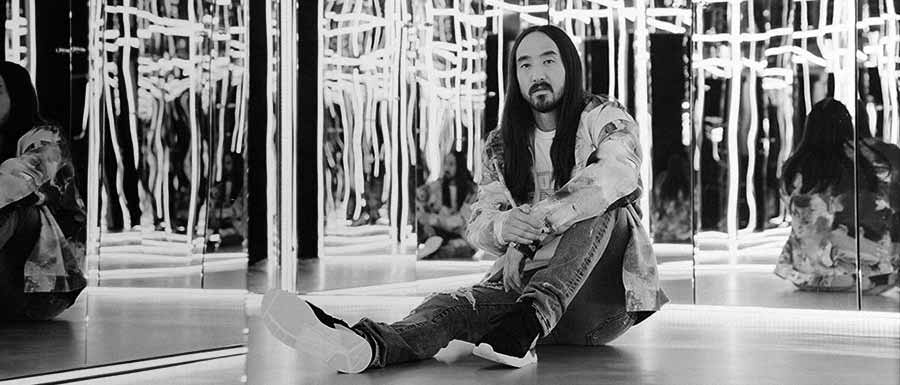
Athletic apparel brand Asics is reframing its brand narrative to become a player in the health and wellness categories by unveiling “I Move Me,” its biggest marketing shakeup in over 25 years. The pivot comes paired with the partnership of Steve Aoki by making the music producer the face and voice of its new direction for fitness-minded consumers.
The celebrity DJ will help reshape the diversity of products and people the sport performance company wants to employ by overseeing the Capsule Collection, a line of shoes, shorts, shirts, accessories and other athletic wear.
To create a daily dialogue with a new generation, Aoki will bring a contemporary look designed to reintroduce younger consumers to the iconic Japanese brand.
Aoki, who is of Japanese descent, revealed a digital spot on the Asics channel that uses his sounds, synths and spinning gravitas of the song “Kolony” to emphasize the power of movement.
“Whenever I get involved with partnerships, the first thing that I want to do is bring my creative energy to the table,” Aoki told AListDaily in an interview. “I want to do what I’m good at by putting some of that Aoki DNA to the brand. What’s so good working with Asics is that they want that too. They want to hear what I have to say. The minute after we agreed to do this, I already had 10 ideas. I told them, ‘I’m coming prepared with a lot of what I can offer.’”
Aoki is no stranger to building brands—his father founded teppan chain Benihana, and earlier this year, he launched his own fashion line Dim Mak Collection at New York Fashion Week. The electro-entrepreneur, who’ll be the first non-athlete spokesperson for Asics, said his intention is to bring vibrant colors and a fashion-forward Aoki-like energy to a company mostly known for its running shoes.
“I like to build bridges and I have that common thread between all of the lifestyle, music and fashion worlds that I love so dearly and am involved in—[I’m] bringing it all together,” said Aoki. “I first want to bring it into the community and our world, and build the culture by saying, ‘This is what we wear when we work out.’ The great part about me traveling around the world and working out wherever I go is that I am constantly influenced by all of the interesting people from different cultures that I meet. I get to combine that spirit. It’s a constant journey, and now I get to bring all of that to Asics.”
The two-time Grammy-nominated producer is also a fitness fanatic—he even has an Aoki-branded boot camp. He’s also a sneakerhead with over a 400-pair, $100,000 collection. One of the main reasons he wanted to help lead marketing efforts inspiring people to get moving was because he’d be able to have his own line of kicks, too.
“I want to create a strong and defining collection,” he said. “At the end of the day, that’s what I wear. I represent what I wear on stage. I need shoes that are athletic and have a fashion-forward aesthetic. It’s going to be something unique for both Asics and me.”
To further discuss the brand’s new identity and strategy through “I Move Me,” AListDaily also interviewed Sarah Bishop, vice president of marketing for Asics.
https://www.youtube.com/watch?v=BVPhOwfrW40
Considering the climate of sports brands and where the industry is currently headed, why was now a critical time for Asics to rebrand with a new marketing message?
This is really a pivotal moment for the Asics brand as we understand today’s marketplace, changing consumer behaviors and consumption habits. We’ve been working hard over the last year to modernize and evolve ourselves from not just being a footwear manufacturer, but to more of a well-rounded health and wellness brand. We’ve been refining who we are, and what we stand for. We’re embracing our brand heritage. We’re hoping to reintroduce the Asics brand to both our core audience, who we’ve always focused on, but also appeal to a broader new consumer through fitness. Having a marketing campaign and platform where we can celebrate products and make people aware from a design, fashion and functionality perspective is really what gets me excited.
How are you going to reintroduce the Asics brand?
I’m excited to kick off this whole idea behind ‘I Move Me’ and look forward to connecting with our consumers on a much more emotional basis. That was the tone we considered first and foremost as we were putting together this marketing plan. Asics has been around for nearly 70 years, but there are consumers who have not been exposed to the brand. We’re really trying to deliver a fresh look and a perspective that resonates with both current and future generations—one that’s a lot more in line with where we see the fitness industry trajectory. This campaign is about reaching a new generation of fitness lovers who believe in the power of movement, as well as the notion that as individuals express themselves, society becomes more rich and unified. A lot of what we’re doing to reintroduce the brand through this campaign is making sure that we are not just looking at the traditional channels that Asics has focused on in the past, but also expanding our reach, and looking at creating content that features people who previously have felt very untraditional for Asics.
What are you doing different in order to separate Asics from the competition?
We’re trying carve out a space that is ownable for us as an athletic brand, but still stay true to who we are. Asics stands for the old Latin phrase, anima sana in corpore sano—a sound mind in a sound body—and we’re so excited to show the world a reimagined interpretation of that mantra. So, while other athletic brands in our space do amazing work, we feel they focus a lot on external motivations and results—being the best, being No. 1 in the field, replicating or breaking records—and, proudly, we’re not about that as a brand. For us, rather than glorifying competition and that desire to be better than another person, we really have always empathized the importance of taking care of both the mind and body in order to be the best version of ourselves from the inside out. So that’s what we’re bringing to life and hoping it resonates with both our core and new consumer.
What’s going to be the overall marketing strategy you’re implementing?
One of the biggest focuses for me is making sure that we’re speaking to the consumer where the consumer lives, plays, works and understanding that the consumer we’re trying to go after is millennial and Gen Z. That means that we need to be playing a big role in the digital space. We launched primarily on digital and social channels, making sure that every touchpoint that we currently have for the brand with consumers was telling an integrated and consistent message. We’re focusing a lot more on digital channels to make sure that we’re leveraging the amazing content that we have in a way that speaks to consumers where they are.
Why was Steve Aoki the best fit as the face and voice for the new brand direction?
I’ve worked with athletes and influencers throughout my career, and it felt like there was never the right person at the right time than Steve to join the Asics family. He really personifies the individuality, emotion and perpetual movement that’s at the core of the campaign. He performs close to 300 shows each year—he’s always on the go. All of that, combined with the fact that he is a proud Japanese-American, which aligns nicely with our Japanese heritage, was what really made him the ideal standard-bearer for us.
Steve Aoki is an influencer with global reach. Are you tapping into other voices as well to amplify your message?
You can expect some amazing content outside of the hero video. We also have fantastic pieces that highlight three-time Olympian Lolo Jones and four-time US world champion wrestler and 2012 Olympic Gold Medalist Jordan Burroughs. They really take you inside of their space. They will tell consumers what movement means to them. You’ll see that across nine pieces of content that will roll out between the launch till the end of the year. It will get consumers immersed in the world of the people in our hero spot. We’re active on all of the main social channels and have some unique surprises and engagement opportunities with our activations that we’re looking into toward the end of the year.
What consumer trends will you be monitoring throughout this new journey?
It’s not necessarily new, but athleisure has been on the trend radar for years now. We’re really seeing that consumers are no longer just wearing athletic footwear and apparel in a point of sweat, but they’re wearing it for a variety of different reasons. That makes versatility and comfort of products really key. The way younger consumers interact with brands is ever-changing. They’re much more skeptical of being sold to, so I think that there’s more of a need for us to be able to speak to them in a way that’s authentic and aligns with passion points that they have that naturally exist, like music. Because of all those reasons, I think that our new marketing will be a great new way to be able to speak to them authentically.
You previously were a brand manager at Coca-Cola. What is one learning you will apply from your previous post onto your current position?
One of the biggest learnings from Coca-Cola is the importance of making sure that we were able to connect with consumers emotionally. One of the amazing things about the Coca-Cola Company is that they’re able to forge a strong, emotional connection with consumers that spans generations. I think that there is something very powerful in that, that I’m looking to bring that to Asics. ‘I Move Me’ is definitely an evolution of where we’ve been from a marketing perspective, yet still stays true to who we are as a brand and allows us to connect with consumers in a way that’s much more emotional than just functional.
Twelve years ago, when massively multiplayer online (MMO) games were growing to their peak popularity, Funcom was one of the big names in the industry with the success of the sci-fi game Anarchy Online. But in 2008, the 680-person company worked on the high-profile MMO game Age of Conan, which had a disappointing reception at launch.
That marked the beginning of a decline that was partially staved off by the release of games such as The Secret World in 2012, which was relaunched earlier this year as The Secret World Legends.
It turns out The Secret World wasn’t the only part of Funcom to be remade. A decade of hardship helped reshape the company. In August, the considerably leaner company decided to show that change to the world by announcing a rebranding, complete with a new logo. Instead of tying its fate to single big-budget projects, the now profitable company is working on multiple smaller scale games. The Park, a horror game that released in 2015, may have been an early indication of this change—being a short, single-player experience instead of a giant MMO.
Funcom is currently developing Conan Exiles, an open-world survival game set in the Conan lore, which is currently in Early Access with an expected launch in 2018.
Funcom CEO Rui Casais sat down with AListDaily to discuss the changes that have come to the 24-year-old company, what the rebrand means and how it is marching steadily to the future.
What convinced Funcom that it was time to rebrand itself?
The old Funcom branding and logo was established in 2005 when the company went public, and it was meant to reflect a relatively large organization focused on triple-A MMO titles like Age of Conan. It has been 12 years, and we are now a smaller and more nimble group of people—reinventing what the company is and focusing on different types of games. While we internally know this quite well, the outside world was still seeing the old Funcom. New branding doesn’t change a company, but we were essentially in a situation where the company had gone through major changes and we had redefined ourselves in every way, but we were still wearing the same old uniform. This rebranding is a small but important step in making sure our external image matches who we are internally.
How would you describe the Funcom brand now?
The new Funcom brand is close to the gamers and the people who work here. Our priorities have changed and so has the approach we’re taking to making games. We’ve gone from being a 500- to 600-person company working for five-to-seven years on a single big-bet project, to being a considerably more agile studio with 120 developers working on more than one game at a time. We want the Funcom brand to be synonymous with exciting ideas and new concepts. We’ve been called many things, but boring isn’t one of them. We’ve always had a reputation for taking creative risks and creating games with unique personality and soul.
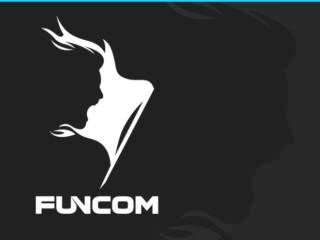
What does the new logo represent for the company?
The new logo represents both our history and our future. We’ve been through many battles and our flag isn’t pristine anymore, but we still charge into battle with energy and passion. Players can’t expect to feel indifferent towards the games we make. We’ve earned our battle scars through over 24 years of highs and lows making games. Today, we are ambitious, determined and moving forward.
Is it easier to promote numerous smaller scale games compared to large, single projects?
It’s hard to quantify how easy or hard it is to promote something. There is heavy competition in all segments these days. For smaller scale games, you have to rely more on virality factors as the marketing budgets are smaller, so I would say it’s harder to break through the noise for smaller games due to that.
How do existing games such as Secret World Legends fit into Funcom’s strategy?
We love our older games like Anarchy Online—which we still operate after 16 years—and we try to do all we can to keep them energized. Secret World Legends is an example of that, where we felt like there were many players out there that would enjoy The Secret World, so we took the time to adapt and modernize the game and relaunch it as Secret World Legends. Existing games are an important part of the company’s revenues and we will continue operating them as long as viable, hopefully for many long years to come.
PRESS RELEASE: Secret World Legends Concludes Its Epic Tokyo Storyline In Massive New Update | https://t.co/IBKqFpM4wA
What did you learn from launching The Park that you’re using to promote Conan Exiles?
The Park was our first non-MMO game in many years. It was also our first Unreal Engine 4 game and our first ‘new-generation’ console game. [Additionally], it was the first game where we actively pursued opportunities for YouTube and Twitch coverage. We leveraged that experience on both production and PR and marketing directly for Conan Exiles. The approach to promoting games in 2017 is obviously significantly different from when we did with Age of Conan ten years ago. It’s not just the fact that influencers are another avenue for promotion and visibility, but the way in which gamers discover new games have changed significantly, and if you’re not visible in those channels you’re missing out on a lot of people finding out about your game. Of course, the advent of influencers has also caused a shift in how many people consume their game experiences, and that’s particularly true for games like The Park—a one- to two-hour long-linear adventure, and millions of people ended up experiencing the story. Not because they played it themselves, but because they watched their favorite influencer play it from start to finish.
What is Funcom’s strategy when it comes to standing out in the PC and console gaming space?
We always punch a bit above our weight, and we always aim to push the boundaries. We’re in the strange middle market between indie and triple-A, where we end up competing with both types of games for attention—although in very different ways. So, we try to make sure the players understand what we’re trying to do and that we’re not that big. It’s tough, but we hope to continue to succeed through a combination of using strong IPs, pushing the boundaries on game mechanics and content, and making sure we utilize PR and marketing in the best way possible to build awareness for what we’re creating.
What do you want people to imagine when they hear about a new game from Funcom?
Ideally, I want people to be curious and to think, ‘Oh, I want to see what those guys did this time around.’ We will make different games in different settings, but we will strive for innovation within familiarity. We will strive for catching people’s attention in this busy and fast-changing space while still retaining the gameplay they are comfortable with. One of the things we often hear is that you can say what you will about Funcom games, but they always do something different. We’re excited about that, and we want our games to shake things up. We just need to get much better at making sure they are both innovative and polished, and that’s what we’re putting all our efforts into now as we wrap up the Early Access phase for Conan Exiles and prepare it for full launch.
There’s a reason Gran Turismo Sport calls itself a racing simulator instead of a video game. It’s fitting, then, that the game’s marketing would be a mix of real cars, real drivers and even offer a real motorsport license to those who qualify. Gran Turismo celebrates its 20th year anniversary with new features, new tech and a renewed focus on competition.
Manufacturer, Nation Or Pride
Gran Turismo is focusing less on collecting cars and returning to its competitive roots—giving players something bigger to race for, as evidenced by the game’s trailer released during E3 this year.
Sony and Gran Turismo developer Polyphony have emphasized the game’s esports component, with GT Sport FIA Championship preseason starting November 4. For the first time, two Gran Turismo esports tournaments will be officially sanctioned by Federation Internationale de L’Automobile (FIA)—the governing body of motorsport and road safety.
The Nations Cup will give top players the chance to represent their country of origin and the Manufacturer Fan Cup, his or her favorite auto manufacturer.
Over the years, there has been a growing crossover between esports and traditional athletes. Four graduates of Nissan’s GT Academy have gone on to become professional motorsport racers, beginning with Ricardo Sanchez.
The annual academy pits the best Gran Turismo players in the world against one another for the chance to become a real-life driver. Sanchez, along with three other GT Academy graduates-turned-pro drivers, shared their stories in video features to inspire other gamers to compete.
Last year, Polyphony announced the ability for players to earn a real FIA license that allows them to participate in real racing events. To become eligible for the license, players must complete the racing etiquette mode, achieve silver or better results in all the campaign mode events and then maintain or exceed a certain level of driver class and sportsmanship points.
For The Love Of Cars
Gran Turismo may be more competitive, but it’s still very much about the cars. Striving for realism, the title has been used as a creative outlet for auto manufacturers. Brands like BMW, Aston Martin and Mercedes have partnered with Gran Turismo to feature “vision” cars—driveable concepts that you won’t find anywhere else. One vision car from Mercedes even made it into the upcoming Justice League movie, to be driven by Bruce Wayne (Ben Affleck).
https://youtu.be/OVCjhR7ltJM
Auto manufacturers are reaching young, engaged audiences through video games. Porsche unveiled the 2018 Porsche 911 GT2 RS during Microsoft’s E3 press conference in June. The new vehicle appears in both Gran Turismo Sport and Forza Motorsport 7.
Gran Turismo Sport honors its partners with Brand Central—a new portal for purchasing cars and learning the history of each auto manufacturer. The new feature was designed to aid in discovering brands in the real world and includes “premium movies” made by each of these companies.
“Instead of the car dealership from past games, Brand Central is a place where boys discover cars for the first time,” Polyphony founder Kazunori Yamauchi told AListDaily. “When I was in my second year of junior high, I walked into a BMW dealer to pick up a catalog and my heart was racing. We want to recreate that experience of discovering cars for the first time.”
Players in Taiwan not only can discover cars but actually buy one in this $46,000 PS4 Pro bundle. The bundle includes a PlayStation 4 Pro, PSVR headset with Move controllers and PlayStation camera, a 12-month subscription to PlayStation Plus, Bravia 4K HDR television, Thrustmaster T-GT steering wheel and pedal set for the game, an APIGA AP1 racing chair set up and yes—an actual 2018 Mazda MX-5.
Available exclusively for PlayStation 4, Gran Turismo Sport was voted one of the most anticipated games of the holiday season and its demo attracted over a million players.
Jason Rubin, vice president of content at Oculus VR
When Oculus VR first formed, there was no VR content as we know it in existence. But the company managed to launch with 30 titles in March 2016 and added another 30 titles when Touch launched in December to become its fastest growing hardware sector.
The Oculus Store now has over 500 titles, with more being added each month to the end of the year and possibly beyond. Additionally, the bar for quality has been significantly raised as developers better understand what works in VR and have longer development cycles. So, this is truly turning out to be the year of content the company promised.
“We were right. Price matters and quality of content matters—investing in the content and bringing the price down,” Jason Rubin, vice president of content at Oculus VR, told AListDaily. “This is exactly what is needed to bring VR to the masses.”
With the recent announcement of Marvel Powers United and the launch of Lone Echo, with its Lone Echo multiplayer component featured as part of the Intel VR esports series, Oculus has been taking on the market in full force over the past year, despite how many have described 2017 as being in the “trough of disillusionment” for the technology.
Rubin sat down to an exclusive interview with AListDaily, discussing the different approaches to bringing games to the market, and where it could grow in the future.
Free-To-Play VR
Oculus hosted a number of free-to-play weekends over the past summer, with the most notable being how Lone Echo (and by extension, Echo Arena) could be played for free for three months following its launch. But even though there are games such as Dragon Front, which are free to download and have in-app purchases available on the Oculus Store, Rubin said that free games make up the minority of content.
“There isn’t much free-to-play going on in the store—it’s either full-priced or someone is giving it away for free because they don’t know how to price it,” said Rubin. “When it comes to free-to-play, you have a top-of-funnel question—how many people could possibly come into this title? And of those people, how many are going to pay for something, how many ads are going to be shown and all these other things that go down in that business model. Right now, none of the VR systems are in a place where there is enough top-of-funnel usage to get to a successful business model at the bottom.”
Rubin then said that the best form of pricing is whatever works best for the consumer and developer. If it doesn’t work for one of them, then it’s not a good system. He said that both free-to-play and premium pricing are great, but it’s a matter of getting the developers and consumers to a consensus about what works.
“Different products have different needs and they work in different ways,” he said. “Free-to-play precludes some types of games because nobody has successfully had you come through a door then have you pay to walk through that door. They tend to pay for time shortcuts and things like that. If you want to make a linear game, you can’t go free-to-play—it just hasn’t worked so far. At the same time, there are things about free-to-play that create games that wouldn’t work in premium.”
The VR market might not yet be ready for a free-to-play system, but Rubin believes that it could change in the long run. He said that, like the PC market, VR will support whatever system developers and consumers agree on.
Subscription Model
HTC currently offers curated games as part of its Viveport subscription, where users can select five titles to play on the Vive headset every month. However, Rubin said subscriptions are a very tricky territory when it comes to video games.
“The question is—’is interactive content good for a subscription model?’” asked Rubin. “Let’s talk about the things that have worked well as a subscription model. Music and movies have worked well. Both of those products are fixed length, you tend to do a lot of them, and you tend not to do them over and over again.”
Rubin admitted to watching Star Wars in theaters eight times, but that is an extreme rarity for the movie business. He contends that people generally don’t watch movies repeatedly, and almost never back-to-back. Likewise, people may have a favorite song, but they’re usually done listening to it after about five times.
“For that reason, those work as subscriptions,” said Rubin. “Because everything is about the same size and is digestible in the same way by the consumer, it’s easy to say to Time Warner or Disney, ‘You both make great movies. We’re just going to see which movies people want to watch and pay you based on how many times they do.’ You’re all on the same ground, and if you make better movies, you’ll make more money. That’s basically how Netflix works.”
Rubin went on to say that things get considerably more complicated with video games because they’re a completely different beast. He cited two examples: Skyrim, a role-playing game that offers hundreds of hours of gameplay, and Uncharted, a deep experience that may be completed in about 10 or 20 hours. Both types of games would cost consumers $60 under a premium system and offer players very fulfilling experiences. But with a subscription, the publisher that has the long game will want an hourly model, while the shorter game will want to be paid equally.
“If you continue to think about how games are played and how they work, you end up in a situation where it’s so uneven that it’s very hard to get developers and publishers behind the idea of bundling because they all believe that their content is the most valuable,” said Rubin. “It’s the same for the movie business, but they’re all different enough that there is no way to compare them. So, what you tend to find with gaming subscriptions are old stuff and crappy stuff. I don’t know what the value is for crappy-stuff subscriptions. Maybe we’ll get there with old stuff, but we don’t have any old stuff. We’re only 19 months old. To discount something like Chronos makes no sense because it’s still a brand-new game to a lot of people. It’s not like a PS3 title on PS4 or a Call of Duty game from previous years. Chronos is still one of the most loved games in VR.”
Rubin said it’s been very hard for the industry to price interactive entertainment as a subscription for that reason.
“It may make sense to the consumer, but when you get to the creators, they can’t wrap their heads around a structure that works,” he said.
Managing A Divided Market?
In the months following the launch of the Oculus headset, the company was said to have bifurcated its own market until the Touch controllers released later that year. Some analysts said that this gave headsets like the HTC Vive a head start, given how its users could purchase both the headset and controllers in a single bundle when it launched in April 2016.
“Whether or not that was true at the time, you’re now looking at the Oculus Touch controllers being reviewed as the best on the market with the vast majority of Rift users owning Touch,” said Rubin. “If there was a moment in time where others had a better solution, it’s now irrelevant. We have the best solution by reviews, and we also have the vast majority of people that have both peripherals. So, I think we’re in a really good space today with Touch.”
However, it looks like history might repeat itself, with some in the media and analysts suggesting that the newly announced Oculus Go and the Santa Cruz development kit may end up splitting the market even further.
“It’s been very interesting to me to watch as Oculus, which was a new company and outsider criticized for bifurcating the market when launched without Touch, and again when we launched with Touch, and how that was going to destroy the market,” said Rubin. “Here we are, not having destroyed the market, and we have a solid base to build upon.”
Rubin also noted how HTC was currently developing Knuckles, an alternate hand controller to the Wand, but no one is asking, “What’s going to happen to Wand users?”
“All the nonsense that we went through is not being equally spread around,” he said. “I believe it was wrong to do it to us, and I certainly don’t suggest it should happen to anyone else, but it’s interesting to watch the different ways people are reacting. I think research is good, and this industry is going to move forward very quickly. As you can see with what happened with Touch, it’s fine.”
Working Without The Steam Advantage
Although there are numerous VR titles found on Steam, the world’s largest platform and store for PC games, its creator Valve has a very close relationship with HTC—it helped develop the Vive. Given how Oculus had to grow its own store from scratch using a number of games that it invested in developing, Rubin spoke about whether the company was at a disadvantage.
“What I would say is that Oculus faced a lot of challenges starting as a small Kickstarter that basically borrowed money from consumers to build the product,” said Rubin. “It didn’t have an operating system—it’s not built on Microsoft Windows—and it didn’t own a phone ecosystem the way Google does. And we didn’t have a store or developer platform. None of that existed when Oculus started, or even a year and a half later when I joined the company.
“Think about how far we’ve come and how much we’ve done in that amount of time. We now have a fully functioning store that is competitive in many ways, especially in VR, with other storefronts. We have a developer ecosystem of very happy developers and two functioning platforms—more than any other company—one on mobile and the other on PC. We have done an incredible amount. So, while these were challenges, I think we’ve overcome them amazingly. Over the next year or two, people will stop asking, ‘Was Oculus at a disadvantage,’ and start saying, ‘How did they catch up so fast and get so far beyond everyone so quickly?’ We’re fully dedicated to VR as a company.”
Acknowledging diverse groups is a marketing road businesses are frequently travelling—race is very real, and promoting diversity has heightened arguably now more than ever across the brand map.
Millennials are one of the most multicultural consumer groups in the United States—42 percent of the 75 million millennials in the US today are of African-American, Asian-American and Hispanic heritage, according to Nielsen.
With such a diverse and influential demographic to target and reach, car companies are building marketing programs to connect with an age group whose spending power only keeps growing.
“Whether it’s millennials, or anyone else, there is big room in each demographic,” Russell Wager, Mazda’s vice president of marketing, toldAListDaily. “We’re core to our messaging in what we build, design and engineer in every single one of our cars.”
Honda, for one, launched “Fit for Fun” to showcase the redesigned 2018 Honda Fit. It’s replete with TV creative and social content communicated by comedians and influencers on platforms such as Snapchat, Instagram Stories, UPROXX, Pandora, Hulu and mitú. In an interview with AListDaily, Susie Rossick, Honda’s assistant vice president of marketing, said the integrated marketing promotion is the brand’s most robust multicultural, mobile and social-driven campaign to date.
“The multicultural millennial demographic is and continues to be very important to the Honda brand,” Rossick said. “For the Honda Fit campaign specifically, millennials were identified as the core target. This differs from other model campaigns that historically encompassed older audiences based on the strategic target. Because of this, our media strategy was to create content specifically aligned with the DNA of the younger audience.”
Honda saw Fit as the most equipped vehicle in its fleet to further the brand’s messaging among audiences because millennials, the largest age group just behind baby boomers, made up a significant amount of their historical sales. The subcompact car also aligns with the millennial mindset and lifestyle—70 percent of Fit buyers are new to the brand.
To find the right blend of influencers like Nick Cannon, Renny, Lejuan James and Frankie Quiñones, Rossick and her team worked with media partners to identify the specific criteria required. To reach a broader general market audience, Honda worked with digital entertainment and culture company UPROXX for five episodes on the web series Hang Time—the Fit is featured throughout the episodes. For the Latino Comedy Traffic Jam program with mitú, Honda identified recognized influencers whose work would resonate with the audience.
“We looked for individuals who had an existing positive relationship with Honda in other campaigns. Selection for the specific talent was also based on their current relevance, whether they’re launching a new season of a hit show or coming out with a new single,” Rossick said. “We used contextual targeting as a complement to our precision targeted efforts in order to reach millennials in relevant environments and engage with them with branded content that spoke to their passion points.”
To measure the earned media value from its social activity and to determine if its messaging is resonating among the target consumers, Honda is using a proprietary scoring methodology to measure and access the program’s value, Rossick said. Results for Hulu, Snapchat and Instagram Stories will be looked at both individually and as part of the campaign, which includes measures such as video completion rates and video view efficiency.
The multicultural consumer greatly contributes to the overall growth of sales across many categories—53 percent of millennials agree that the more money you have, the happier you are, according to Mintel. In an April 2016 report from Bankrate, millennials were most likely to purchase a vehicle in the 12 months that followed among all age groups that were surveyed.
“We’re challenging convention by listening to our customers and offering new ways for our customers, including millennials, to engage with and experience our brand,” Dean Evans, chief marketing officer for Hyundai Motor America, told AListDaily.
For Toyota’s new marketing campaign promoting the Camry, the company specifically designed ads with different storylines to appeal to African-American, Hispanic and Asian-American ethnicities based on what shows they watch.
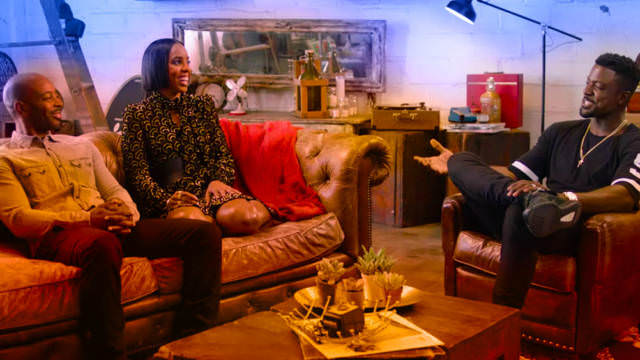
Another car company jumping into the multicultural marketing fray is Lexus, which is sponsoring Essence’s digital series I Turn My Camera On, a 10-episode show featuring photographer and actor Lance Gross. Celebrities like Michael B. Jordan, Kelly Rowland and Tim Weatherspoon interact with Gross and his famous crew in the Macro Digital Studio-produced pieces.
The Lexus-owned digital content channel L/Studio, a storytelling and marketing vehicle for the brand that’s now in its ninth year, makes long-form videos to build deeper connections through content with luxury consumers. Lexus is backing the series and L/Studio will feature exclusive behind-the-scenes content for I Turn My Camera On.
“L/Studio was created as a platform for creative passion projects rather than a branded entertainment channel. The objective of L/Studio is to gain a shift in brand perception,” Andrea Lim, digital communications manager for Lexus who oversees L/Studio, told AListDaily. “Research has shown that viewers are positively influenced by our featured content, which helps position Lexus as an innovative, brave and thoughtful brand.”
Brands have developed specialized marketing aimed at minorities for eons, but diverse millennials with unique buying habits are influencing the mainstream with a multiplying effect and radically changing the go-to-market approach for car companies.
“Having strong brand equity already among older generations, we recognize millennials as potential new customers to be introduced to the brand and hopefully become loyal customers,” said Rossick.
Turtle Rock Studios made a name for itself with cooperative first-person shooter (FPS) games such as the Left 4 Dead series, where four players survive against zombie hordes, and 2015’s Evolve, where players hunt giant player-controlled monsters on alien worlds. But recently, the studio has been working with Oculus to establish itself in the VR space, starting with Face Your Fears, which features a series of VR frights. On Wednesday, the studio took a step further with the launch of The Well for the Samsung Gear VR, which coincides with Oculus Connect 4.
The Well is a classic role-playing game (RPG) with a unique art style that makes players feel like they’re stepping into a pop-up storybook, which is a big departure from the studio’s previous games. Players can choose between four hero classes, so players may want to go through the four-to-six-hour experience multiple times.
“Coming from Left 4 Dead and Evolved, we were known for realistic first-person shooter art styles,” said Chloe Skew, producer at Turtle Rock Studios, speaking with AListDaily. “With The Well, we have a dark and twisted fantasy storybook look to it. We have turn-based combat, a lot of exploration and different hybrid creatures to encounter and fight.”
Skew was joined by Steve Goldstein, president and general manager at Turtle Rock Studios, and the studio’s co-founder Chris Ashton, who talked about how the company has taken a strong interest in the Gear VR platform. With The Well, players can use either a Gear VR hand controller or a gamepad to interact with the world, and the game automatically saves once the headset is taken off for a smooth return to it later on.
“We targeted that platform for a number of different reasons, but one of the biggest is that it’s the largest player base on VR right now,” Ashton explained. “We’ve had pretty good success with our previous title, Face Your Fears, which is one of the most popular titles on Gear VR. But that’s a horror experience—you’re not actually playing a game—you’re looking around and triggering three-minute scary experiences. Our intent as a studio was to get into VR and take it step-by-step, continuing to do bigger things rather than jumping all in and doing a huge AAA VR title.”
Skew added that one of the benefits of working with VR is that there is a lot of experimentation going on in the space, which frees the studio to branch out to new genres such as RPGs.
With The Well, Turtle Rock purposefully aimed for a shorter experience, combining the best aspects of the VR and mobile platforms. The studio wanted players to have full and satisfying experiences through one- or two-hour gameplay sessions.
“I think that with the Samsung Gear player base, there are a lot of people exploring VR, which is something that sets it apart from PlayStation VR or the HTC Vive, which both have pretty high costs,” said Skew. “We wanted to make something that was approachable, even by people who don’t identify as gamers, and give them that accessible experience that might get them interested in games.”
Chris Ashton, co-founder of Turtle Rock Studios
Turtle Rock made its reputation through cooperative games, but The Well does not have multiplayer capabilities. Instead, players can choose from eight different companions to join them on adventures, but they can only bring two at a time.
“With VR, we’re exploring different avenues,” said Ashton. “We also have the challenge of trying to do multiplayer on the Gear VR platform. We wanted to tell a story and build an interesting world that’s designed for you to jump in without having to wait on others to join. Although we love multiplayer, especially co-op, that wasn’t part of the design goal for The Well.”
Goldstein reiterated how VR gave the studio a chance to expand beyond cooperative first-person shooters. He said, “With The Well, we have an opportunity to create an amazing RPG, and our upcoming games will also be in different genres.”
Skew said that multiplayer might be a consideration when the studio is developing VR games in the future. Turtle Rock will remain focused on developing for the Gear VR, but the success of Face Your Fear led the studio to port the game to the Oculus Rift. So, the same might happen for The Well if players take to it.
Face Your Fears debuted last year at Oculus Connect 3, the same way The Well is being shown at Oculus Connect 4. Goldstein said that Oculus has been a valuable partner when promoting Face Your Fears on social media and giving it featured placement on the Oculus Store. He then compared the promotion of VR games to traditional console and PC titles.
“VR, especially Gear, is a new platform that is—in many ways—untested when it comes to marketing,” he said. “All of it is an experiment, and you can’t use the same playbook that you do with a AAA title. With AAA, you’re talking about tens of millions of dollars being spent over the course of at least a year to build brand awareness. Whereas, one of the most successful things that happened with Face Your Fears was that it grew organically due to people posting videos of them reacting to the experience on YouTube. When it came to The Well, we decided to announce it, get a trailer up and get people excited about it, then release the game a week later to see what happens.”
Goldstein also said discovery for VR games has a lot to do with store placement, likening the market to mobile app stores.
“But I also think that the nature of VR—although a lot of people think it’s isolating—is a very communal experience, especially with Gear,” said Goldstein. “You can play an experience around other people, and those people get to see your reactions. Reactions in VR are a lot more visceral than when you’re playing a [traditional] game. There’s expression and excitement going on with gasps and occasionally screams. So, people around them see that it’s very exciting and will want to try that out. We found that word-of-mouth on VR is even more powerful than what we’ve seen with traditional games.”
“The portability of Gear is very advantageous,” Ashton added. “While we love the AAA experiences of the Rift and Vive, it’s not something that I can easily take to show my sister. Gear makes it easy to share stuff with other people.”
Steve Goldstein, president and general manager at Turtle Rock Studios
Turtle Rock continues to support Face Your Fears by regularly adding new content. Every time new content comes out, that user base gets excited for the game again.
“Because it’s so early, it’s going to be challenging to keep people going long-term,” Goldstein explained. “But the best way to do that is to let them know that new experiences are available and encourage them to spread the word by talking and posting about them, showing how they engage. That type of content is fun for other people to watch.”
That being said, there is no plan to create ongoing content for The Well.
“Face Your Fears is comprised of bite-sized, lightly interactive experiences,” said Skew. “The Well was created as a four-to-six-hour game with some replayability. So, they’re very different approaches. We didn’t build The Well with a plan of ongoing content.”
Goldstein said, “The Well is much more akin to a traditional RPG. It’s a robust and exciting universe that can be revisited. Like other RPGs, if it performs well, then there might be a possibility for a sequel.”
The studio has been engaging with its fan base through social media and on forums dedicated to VR. Goldstein said that much of its community is aware that the studio is entering the VR space and they’re excited about how it’s taking on a new platform and genre.
“The exciting thing about VR and the opportunities we’re being given is that we’re not necessarily placed into one particular genre,” said Goldstein. “When it comes to the reputation we built from Left 4 Dead and Evolve, if we were to make a AAA game, publishers would expect it to be an FPS—most likely a co-op multiplayer FPS. With VR, we want to establish ourselves as a creator of premier quality entertainment for the VR space, whether it’s an RPG, single-player or multiplayer, we want to establish ourselves as a great purveyor of VR content.”
Although Goldstein didn’t refer to the Oculus Go, which was announced on Wednesday at Oculus Connect 4, he spoke about how new VR hardware would have to become more accessible.
“More accessible is going to mean untethered and portable,” said Goldstein. “So, I think that you’re going to see a mass market adoption of VR hardware when users are able to throw it on, turn it on and just have it work in the same way as a console. Actually, I argue that we can do better than consoles. Working to be as accessible as it is to own and operate a cell phone is the direction VR needs to go, and I think it will get to that point in the near future.”
The emphasis on accessibility is why Turtle Rock is focusing on Gear VR development.
“We want to be where the mass market is going to be in the VR space,” said Goldstein.
When you listen to some of will.i.am’s electro-pop hits from the past 15 years, his body of futuristic work as the founding frontman for The Black Eyed Peas sounds to be well before its time.
As it turns out, the musician and beatsmith was always about the future, even as an artist.
Since last putting out a solo album in 2013 and one with BEP in 2010, will.i.am has refocused his energy, vision and career as the founder and CEO of i.am+, a consumer brand that combines fashion and technology to create wearable products.
In between, he’s been a founding investor in Beats, plied his craft as Intel’s director of creative innovation, served as 3D Systems’ chief creative officer and more recently, served as an executive producer and judge for Apple’s Planet of the Apps.
“I try to dream up new ways to interact with things,” will.i.am told the audience at the Fashion Tech Forum in Los Angeles.
Whether it’s wearing the hat of a tech entrepreneur and investing in start-ups like Mira and Emoticast, acquiring smart home platform Wink and machine learning company Sensiya, debuting the device-agnostic virtual assistant AneedA, launching smartwatches or simply making gaudy $315 phone cases, will.i.am’s sole focus is innovating the future.
“We live in unusual and unlikely times, and more importantly, a point in time where the fabric of culture is moldable,” will.i.am said. “We live in this Play-Doh state—the way we live today is not the way it’s going to be in 2030. It could be that way if we don’t invent, innovate and dream up new things.”
will.i.am, born William James Adams, went on to talk about a variety of topics around fashion and technology, and how brand executives need to innovate their businesses—or face extinction.
Below are the highlights, as told by will.i.am himself.
“A lot of people are like, ‘Oh my gosh, what are we going to do?’ But what are they talking about? In 2006, everyone was talking about dial-up phones and old internet and no one saw iOS coming—no one saw that. They couldn’t see how their world was going to be disrupted. Not even hotels could see Airbnb—they changed lodging. Uber changed travel. Apple Music and Spotify changed how we all share music. Start thinking. The storm is a-comin’—just don’t make an umbrella.”
On what executives from the fashion industry can learn from the mobile phone revolution:
“The future of fashion is going to be a tech company unless fashion gets up to speed right now. To design stuff that people are asking for, you’re just going to be making the same stuff over and over again—and then you make a jump and you leap. A good example is with phones in 2006. You had PDAs, and that wasn’t the future. You had the phone in your house, and that didn’t really change except for it went from rotary to a dial. Then the iPhone came and changed it all. Apple was not even phone makers, but they took the breakfast, lunch and dinner and the house of all the phone makers because they created a platform that changed everyone’s concept of what a phone is. You could never see a phone the same after the iPhone. The same should happen to fashion, or else you will be Nokia and Motorola. The unlikely candidate that never makes apparel—a jacket, a bag, a hat, glasses—that will be the new norm. That is the urgency. If you don’t see that coming, then you’re an opossum. When the bright lights come, opossums just stand and get hit.”
On how the fashion industry needs to understand and cater to today’s consumer:
“I love fashion. But as an industry, it’s kind of blind to what’s actually happening in the world right now. The world of fashion does not realize how their jobs are not going to be around 10-to-20 years from now. It’s not going to be you guys because of how slow you’re moving to innovate. Car manufacturers are, because they realize that millennials don’t care about having a vehicle the way I did when I was 18. When I was 18, I dreamt, ‘Oh I can’t wait to get a car.’ It’s different now. They want an Uber account—they don’t want to have a car. It happened to the music industry. People wanted to have an awesome collection. People don’t have 2000-piece record collections anymore, they just have Spotify and Apple Music. They don’t have to have physical products. Fashion will have the same fate as the music industry and the car industry if they don’t realize the urgency to innovate.”
On the potential effect Google and Apple can have on the fashion industry:
“We wear fashion not because it’s the most comfortable. That’s going to change tomorrow—and it’s going to serve other purposes than just looking good. What company is it going to be? What industry? The tech industry? Or the fashion industry? . . . Start thinking about what the product does. Let’s start with bags. Make a bag do more than just carry shit. When it comes to extreme weather, fashion does nothing for you when it’s really, really hot. There’s not one garment you can give me, or shoes, when it’s hot as fuck. There’s nothing you can do. A girl can’t wear an even smaller G-string, or put on a smaller bra when it’s hot. I don’t care what kind of Speedos you got my homie—when it’s hot, it’s fucking hot. You provide nothing when it’s really, really hot. Nothing at all. Why? Because it’s 19-freaking-10? Because it’s 1710? Because all you do is sew this lapel to that lapel. You better start thinking of how to bring new things to people, or the ‘G’ is not gonna be for Gucci, that’s just gonna be Google. Real shit. You mean to tell me if I had the same jacket that Balenciaga made, or Apple made—what jacket am I going to have? I’m going with that Apple jacket because it’s going to do more than the Balenciaga jacket does. You know it’s true. You know when that day comes, when the giants come and give you a product—look what they did to the watch. You don’t think the jacket is coming next? The bag is not coming next? Get the fuck out of here if you think that they ain’t coming for you. [The Apple jacket is] still going to be beautiful, though. It’s still going to look awesome. It’s just not going to be made by the same crew that’s doing it now. How hard is it for Google to hire awesome shoe designers that are 15 years old today and doing awesome stuff that’s using their tech? This urgency, this weather report from me to y’all is ‘let’s get busy.’ That’s it. Let’s start innovating. It’s a different world and we need to start thinking about different people to collaborate with.”
On building successful teams:
“The biggest surprise is when you see a future, a plausible, awesome future . . . We see this version of reality that in our head is already there. The friction is stopping and starting to execute that reality slower than you actually see it. Because it’s so awesome; it creates angst, because you want it already . . . The secret sauce is to try and expand. If you have two people doing design, don’t add a third, fourth and fifth. Go over to a different discipline and bring someone in that’s a computer scientist. Get someone that understands data. You need data crunchers and data scientists. Create a different type of world, an assembly of minds. You have to be flexible in the future no matter what type of business you are in—and it starts with the people you have in your crew—your assembly.”
On accepting failure, and embracing the future:
“When I was 18, I met someone who said, ‘you should pray to your future self, and pray to your past self.’ I am here today because at one point of time in my life I prayed that I can learn from my failures. I’m in contact with my future self as much as I am in contact with my past self. Too many people are afraid to fail. You cannot be afraid to fail. Failure is school. The only way to learn is to taste the ground. The only way to learn is to fail, and you cannot be afraid of that. I saw myself a certain way coming out of the projects—on welfare. I designed myself to have success in music. Now, I’m in the tech world where we raise lots of money. And now, at 42 years old, I’m designing myself to be just as dynamic in culture but in a different way than when I’m 62. So yeah, I’m from the future because I talk to that motherfucker every day.”



 What does the new logo represent for the company?