NRG Brings In Celebrities To Grow Esports

Andy Miller, NRG Esports co-founder and chairman, Sacramento Kings co-owner

Andy Miller knows traditional sports as the minority owner of the Sacramento Kings, but he was early into esports with NRG Esports, which fields teams across Overwatch, Counter-Strike: Global Offensive, Super Smash Bros., Hearthstone, Rocket League and Vainglory.

NRG recently raised an additional $15 million in a Series B funding round from celebrities that include Jennifer Lopez, Marshawn Lynch, Michael Strahan and Marlon Byrd. Additional funding comes from Twitter’s chief operating officer and former NFL chief financial officer Anthony Noto, Kings minority owner and Sacramento Republic owner Kevin Nagle, and Fortress Investment Group chairman Pete Briger. NRG already had enlisted Shaquille O’Neal, Alex Rodriguez and Jimmy Rollins in March 2016 in its Series A round.

NRG Esports is one of the inaugural city-based teams for the Overwatch League, which debuts December 6 with a preseason competition at the new Blizzard Esports Arena in Burbank, California, ahead of the January 10 first season competition. Blizzard assigned NRG as the league’s San Francisco team, which encompasses a fan base from San Jose to Oakland to Sacramento.

Miller told AListDaily that Overwatch League is opening unique opportunities for brands and sponsors interested in connecting with the millennial and younger audience.

“We’re having a lot of conversations on the brand side, which has really been an evolution in getting non-endemics interested in esports,” Miller said. “A lot of brands are still trying to figure out how to get involved and whether they should invest in a team or a league or work with a publisher.”

Miller said that the companies he’s speaking with see the global reach of esports teams. NRG Esports is currently seeking a title sponsor for its Overwatch League team, which Miller would love to recruit from a local Bay Area brand.

Activision Blizzard is taking a page from soccer with its new Overwatch League jerseys.

“It’s more of a clean design like Premiere League soccer jerseys and not the NASCAR look with all the team sponsor patches,” Miller said. “This presents a great opportunity for a title sponsor to be extremely visible in front of millions of well-educated Gen Z and millennials globally with disposable income. It’s a neat and different approach.”

Miller’s team designed the logo for the jersey and all teams have submitted their names and logos to Activision Blizzard. The Dallas and Shanghai teams have already revealed their names and logos and other teams will soon follow suit.

NRG Esports is still scouting locations for its home arena, while preparing to move its Overwatch team to LA for the first season of competition at the converted Burbank Studios.

“It’s been a really well-thought-out plan, where we have a league and all of the teams have a chance to get our houses and coaches and players going,” Miller said. “It’s great having a uniform place for broadcasts for the first year, complete with practice rooms for every team at Burbank for pre-season and season.”

Miller has high hopes for the Bay area territory, which is home to a slew of tech giants that include Apple, Google and Oracle. He said, “We already have a great culture here and tons of players who play Overwatch. We’re really primed for season ticket holders and building out a local fan base.”

Miller has learned a lot of lessons from his involvement with the Sacramento Kings, including best practices with ticket sales, social media and how to engage with the younger audiences.

“Right now, it’s about defining what our gaming culture is,” Miller explained. “We created a pre-season calendar for our Overwatch team and have focused on how to bond and communicate as a team, how to take care of themselves physically and mentally, and how to work with our coaches.”

With the Overwatch League, Miller has watched as his organization has evolved from just “winging it” and doing things economically to building a sustainable business with a team that has the potential to become perennial winners.

On the merchandising side, Blizzard is in charge of the outside market, while each team will focus on sales within its territory.

“We’ll have to do a good job of having events in Northern California and getting people interested in what we’re doing,” Miller said.

Miller likes the fact that the rules haven’t been written yet for esports.

“My team loves San Francisco and we get to have 20 home games coming up and our own theater and arena to put our footprint on,” Miller said. “It’s not like MLB, where you know what’s going to happen. We’re going to create a different type of entertainment offering with these events.”

Having so many celebrities invested in NRG Esports also helps with the marketing message for this brand.

“The athlete investors came first because when you dig in and see these esports players are athletes with all of their dedication and training, there was an obvious parallel,” Miller explained. “Now we’re seeing Hollywood understand that here’s a giant audience behind esports and a lot of content there.”

Miller said Rodriguez, who has joined the board and become much more active with esports over the last six months, brought Lopez into the fold.

“We love having Jennifer involved because she’s interested in women in gaming and she’d love to be known as one of the first high-profile owners,” Miller said. “We’ve talked about getting a female team together. She also has over 100 million social media followers, and that’s a great way to get our Overwatch name out there.”

Strahan, Lynch, Lopez and O’Neal were all involved recently in revealing the Overwatch roster, which Miller said helps paint the team in an interesting light.

“The profile of esports has risen so much in the last six months due to the games and competition being great, but the audience was always there,” Miller said. “Having mainstream TV distribution has also helped. But most importantly, the sea change in esports has been the switch from a PGA style of competition—where the focus was on turning pro and winning at majors to generate money—to a more traditional NBA style with revenue sharing and city-based organizations. It’s a shift to establishing something permanent with enterprise value.”

Marketers Rethink Customer Experience With Zero UI

Zero UI is the next wave in how consumers interact with technology. Zero UI, or zero interface, is a term first coined in 2015 by Andy Goodman, a former designer for Fjord and refers to a system that responds to a user’s voice, gesture, glances or thoughts. In other words, the screens and buttons become obsolete.

In today’s terms, that means Siri, Google Assistant, Alexa, voice search, Xbox Kinect and neuro-interface, just to name a few. For marketers, this whole new customer journey creates challenges and opportunities to innovate within the space.

Eric Bisceglia, vice president of Go-To-Market at Voysis—a voice AI platform that enables natural language instruction and search—says that the emerging technology creates opportunities for more than just Google and Amazon.

“Just like with mobile devices in the early 2000s, voice AI is revolutionizing how we interact with technology as well as how we discover and consume content,” Bisceglia told AListDaily. “Consumers are quickly realizing that voice offers a more natural and efficient experience. As usage of voice continues to skyrocket, it’s critical that marketers develop a voice strategy now. While large enterprises like Amazon strive to dominate their respective markets, independent platforms like Voysis will enable marketers at all companies to offer brand-specific voice experiences for their customers and still maintain control of their data and user experience.”

According to eMarketer, 35.6 million Americans will use a voice-activated assistant device at least once a month in 2017—that’s a jump of 128.9 percent over last year. Comscore predicts that by the year 2020, half of all searches will be done with a user’s voice.

Just when you thought you had SEO figured out, Google says 20 percent of all its mobile searches are voice queries. Ranking high on search results means something entirely different now that answers are being read aloud, and the “first page” no longer applies. Consumers may not want to listen through a long list of options, so brands may have to pay a premium to be an AI assistant’s first answer. That being said, the FTC will also have to adapt its disclosure requirements to accommodate voice search.

AI doesn’t have to be a one-way conversation. IBM began testing AI ads last year that interacted with users in a way that coincided with the product. For example, an ad for Theraflu displayed during cold and flu season answers questions about symptoms. Campbell’s AI ad helped users create new soup recipes based on what ingredients they already had.

Since machine learning does just that—it learns and expands—the zero UI marketplace could soon be saturated with brands vying for attention. Marketers will need to find creative ways of standing out and building or reinforcing a brand’s personality, such as changing the AI assistant’s voice.

For the premiere of Star Trek: Discovery, CBS created a special skill, or built-in capability, for Amazon Echo that interacts with fans who say phrases from the show. The phrase, “Alexa, damage report,” for example, will give you the weather and news headlines. Saying “revenge is the dish best served cold,” will prompt a response in Klingon. Users can even change the Echo’s wake word to “computer,” so they can live out Star Trek fantasies at home.

Activations like this and Hearst’s experiment with Oprah can help users feel connected to a brand as if they’re having a two-way conversation.

‘Blade Runner 2049’ Marketing Embraces Its Ad-Filled Roots

Blade Runner 2049 hits theaters this weekend, continuing the saga of artificial humans called replicants and the Blade Runners who hunt them. Starring Harrison Ford and Ryan Gosling, the story takes place 30 years after the events of the first film. Naturally, marketing efforts for the star-studded sequel have been considerable, from brand partnerships to experiential marketing and even an upcoming mobile game.

Sir Ridley Scott’s 1982 Blade Runner portrays a dystopian Los Angeles that reflects his background in advertising. “One thing I’m absolutely sure of is that in 2019 [the year Blade Runner takes place], everywhere you look you’ll be assaulted by media,” Scott said in the book Future Noir: The Making of Blade Runner.

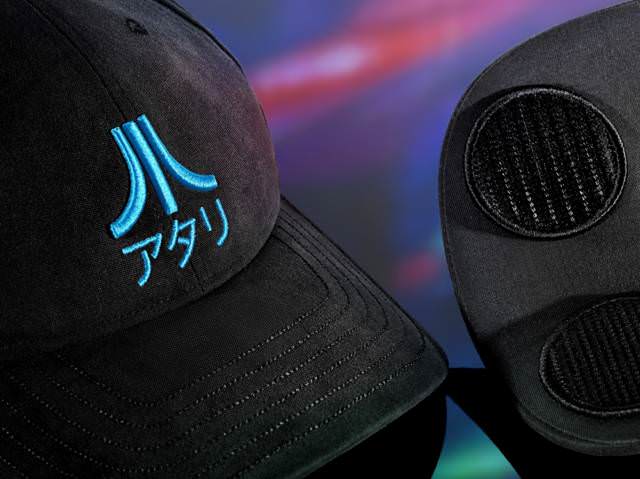
Luckily for Atari—a major source of entertainment in 1982—Scott included the brand’s iconic logo in his “media assault.” That tradition continues with Blade Runner 2049 through giant, digital billboards in the film and officially licensed Speakerhats in the real world.

Michael Arzt, COO of Atari Connect told AListDaily that with the new film, Atari is able to reach audiences that span generations, especially consumers 35 and older—thanks to memories of the Atari 2600 console and its appearance in the original Blade Runner.

“Fast forward to today’s youth, and so much of what Atari and Blade Runner represented back then is benignly taken for granted by this generation,” said Arzt. “To them, gaming and technology have always been there. Today’s teens never knew a world without internet, smartphones and other tech. This is the generation that these two brands are looking to bring into the fold.

“Whether it’s the awesome new Blade Runner 2049 film that is looking to reboot the legendary film into a franchise, Atari’s new Ataribox, reimagined games like Tempest 4000, or wearable tech like the cool new Atari Speakerhats, both brands are looking to appeal to this new generation while also maintaining a bridge to the fans that helped make them cool in the first place,” Arzt said.

Johnnie Walker—another brand featured in the original film—has returned as a marketing partner for Blade Runner 2049. The spirits brand partnered with the film’s marketing team to create an immersive experience for San Diego Comic-Con.

The activation included a VR experience called Blade Runner: Replicant Pursuit that ended with a 2/3 replica of a street in Los Angeles 2049—complete with actors, a noodle bar and of course, samples of Johnnie Walker Scotch Whisky.

Johnnie Walker released a limited-edition whisky just for the occasion called Johnnie Walker Black Label The Director’s Cut, complete with a bottle design chosen by Blade Runner 2049 director Denis Villeneuve. Four vignettes teach audiences how to use the whisky to make “cocktails of the future.” Naturally, the brand is prominently featured in the film as Decker’s drink of choice (played by Harrison Ford).

https://twitter.com/JohnnieWalkerUS/status/910973272044515328

Alcon Entertainment has been in charge of the film’s marketing. Despite so many building-sized billboards to fill, the production company was choosy about which brands to partner with.

“We’ve approached Blade Runner as an alternate timeline. So, our 2049 isn’t like what we expect 2049 to be thirty years from now,” Alcon co-founder and co-CEO Andrew Kosove, who serves as producer on Blade Runner 2049, told AListDaily. “It’s what we expect it would be like in the Blade Runner world thirty years after the original film. No brand that did not exist when the original movie came out was eligible to be part of our film. Apple is not in the Blade Runner world. It doesn’t exist. IBM could, but not Apple. Of course, one of the most iconic aspects of the first film is Atari, and we thought we had to bring Atari back into our film and that’s why we did it.”

Director Denis Villeneuve enlisted the help of fellow filmmakers to create a series of short films leading up to the events of Blade Runner 2049. Taking place in the years 2022, 2036 and 2048, each story focuses on a different character and a city-wide blackout that plays an important role in the theatrical feature.

To help immerse audiences into the dark, neon-clad streets of 2049 Los Angeles, Warner Bros. created a Snapchat World lens. The AR effect dresses users in a hoodie and plants them inside the world of 2049 Los Angeles, complete with fog and neon signs. The lens also features animated flying cars from the film called Spinners.

Blade Runner 2049 is poised to fetch upwards of $100 million in its opening weekend, half of which would come from US theaters.

Analysts Explain Microsoft’s Moves On Mixed Reality

As a tech and gaming giant, Microsoft is in a unique position to invest in emerging technology and right now, the company has its sights set firmly on augmented, virtual and mixed reality. Should Microsoft’s efforts be successful, other brands may soon find new opportunities to market within the virtual space.

Microsoft acquired social VR site AltspaceVR—a cross-platform service that allows users to connect in virtual environments for events and hangouts. One couple even hosted their wedding on the site, allowing all their virtual friends to celebrate.

According to a recent study by Greenlight, 67 percent said they’re interested in social VR. Of those who have already tried VR, that number shoots up to 78 percent. Social apps like AltspaceVR bridge the gap between isolation in a headset and sharing experiences with others.

Seventy-six percent of Greenlight’s respondents said they would use social VR apps at least once a week, and 28 percent want to spend time using social VR every day.

AltSpaceVR shut down briefly after hesitant investors backed out, but then came back on after a conversation with HoloLens inventor and Microsoft technical fellow Alex Kipman, who found overlap between his visions for mixed reality and social VR. The acquisition means AltspaceVR’s passionate community can keep their home away from home, and Microsoft takes a big step toward competing with Facebook Spaces.

https://youtu.be/esgZ8vBkV0U

“What the industry needs now are companies who have the pockets and the patience to innovate and develop compelling experiences and Microsoft fits that bill,” Debby Ruth, senior vice president of global media and entertainment at Magid, told AListDaily. “The HoloLens was a significant standalone AR technology advancement, and being able to leverage that knowledge base to integrate VR and AR experiences will advance the industry.”

“Right now in the US there are roughly 44 million people who state they find VR interesting and intriguing enough to consider a purchase in the next year—but few are acting on that interest. The hesitation is equal parts price, content and the early-stage headsets, but our research also reveals there is not yet a compelling use case. The emergence of social VR—AltspaceVR and Sansar for example—could help change that.”

Stephanie Llamas, vice president of research and strategy for SuperData Research, says the acquisition of AltspaceVR is not only good for Microsoft, but for the entire industry.

“Microsoft wants to compete with the big guns already entrenched in the industry, so who better to partner with than a company with so much fan loyalty their users literally revived the dying platform (almost) by themselves?” Llamas wrote of the AltSpaceVR acquisition on her blog. “Microsoft will continue to allow AltspaceVR to run on other devices as it has up until now. Like HTC Vive, Microsoft wants to forward this industry as a whole knowing that is the only way they themselves can succeed.

“Expect this to be the beginning of VR’s next wave of major funding—funding that could finally get us the shovel we need to dig VR out of this trough everyone has been dwelling on so much.”

The HoloLens is already changing the industrial sector, including medical and automotive manufacturing, by offering interactive visualization but has yet to take hold of the consumer market. To bridge this gap, Microsoft has revealed a new line of mixed reality laptops, headsets and motion controllers.

“We are standing at the threshold of the next revolution in computing—a revolution where computers empower us to expand our capabilities and transcend time, space and devices.” Alex Kipman wrote on the Microsoft blog following a Samsung presentation Tuesday. “A revolution where we immerse ourselves in virtual worlds of our choosing and we accomplish seemingly impossible things while making lasting memories with the people we love.”

https://youtu.be/0AWhsBNU1jU

Brands are already experimenting with ads within a virtual environment. Film studios like Lionsgate, Paramount, Warner Brothers and Legendary Pictures create branded VR experiences to compliment theatrical releases. In a study testing the effectiveness of marketing in VR, brand recall was at least eight times more effective and resulted in double the intent to share.

Lenovo Details ‘Star Wars’ AR Game Setup And Launch

Lenovo has partnered with Disney Interactive for Lucasfilm’s Star Wars augmented reality gaming.

Star Wars: Jedi Challenges launches Nov. 3 for $199 and comes with the new Lenovo Mirage AR headset, which works with any Android or iOS smartphone, along with a replica Luke Skywalker lightsaber and tracking beacon.

The system uses inside-out tracking cameras located inside the headset to pick up the light from the tracking beacon. This provides a fixed point and leverages the light from the lightsaber to understand where the player is moving so the glowing saber stays calibrated atop the physical object.

Star Wars has always been based in AR from the first movie 40 years ago with the HoloChess,” said Matt Bereda, vice president of global consumer marketing at Lenovo. “You’ve seen holograms of Princess Leia and Obi Wan Kenobi in the films, so it’s very natural to bring a lightsaber duel or to play HoloChess or a strategic combat game within this experience.”

Jedi Battles launches with three games, including the lightsaber duel that features classic villains from the franchise like Darth Vader, Kylo Ren and Darth Maul. The lightsaber features haptics, so players will feel when the sabers touch in battle.

The experience includes the HoloChess game that Obi Wan and Luke played aboard the Millennium Falcon in Episode IV, and a strategic combat game based on the Battle of Hoth and other ground-force battles from the franchise.

“You can defend your towers with different characters and mount an offensive against your foe—and you can build your characters up over time,” Bereda said.

Bereda anticipates that the app will open new levels of monetization opportunities for Lenovo. Characters and even entire games can be added over time.

“While we’re not integrating content from The Last Jedi at launch, because this is an application, we can send updates to increase the number of experiences or add new content,” said Bereda. “If there’s a bad guy who shows up in the next movie, they could make an appearance in this game. There’s an opportunity to extend this app to be even richer over time.”

The phone rests across the player’s eyebrows with the screen facing down on the ground, where it projects down and then mirrors the images out in front of the player. Spectators can see the AR action through the outside of the lens, and the player can see his or her surroundings in the room during the physical combat.

Lenovo’s new gaming platform was part of Disney’s fan-focused D23 event in July, and the company demoed the AR gameplay at German consumer electronics show Internationale Funkausstellung Berlin. The product also received a marketing push as part of Disney’s Force Friday II event in September.

“Right now we’re working through planning details for the ABC properties to leverage and integrate Jedi Battles into the Star Wars shows,” said Bereda, detailing US holiday exclusives in the works with launch partner Best Buy. “There are a number of marketing opportunities that span into traditional media and on the digital side.”

Lenovo is targeting core Star Wars fans at launch and leveraging excitement around AR and the lightsaber. The company will work with influencers and hardcore Star Wars fans to build that buzz as the campaign expands to the more casual Star Wars fan environment.

Lenovo is also planning a Best Buy nationwide push for Jedi Battles on Oct 28 and 29. Since the full app won’t be available for download until Nov. 3, a hands-on demo version will be featured.

Even as VR hardware prices come down, Bereda sees a great selling point with Jedi Battles beyond the Star Wars brand.

“The key with this is that the set-up is minimal,” Bereda said. “I’m not putting up sensors around the room like HTC, or programming a PC. I download the app, put my phone in the headset, turn on the beacon and lightsaber and play.”

https://www.youtube.com/watch?v=KDC7uAkWv_M

Hyatt Underscores Unity During Tense And Turbulent Times

Whether it’s supporting natural disaster relief efforts or speaking out against violence, racial tension and unrest across America, brands are increasingly aligning their messaging and motives behind causes activist consumers care about the most.

It’s part of the complex career for today’s marketer, who often has to painstakingly juggle decisions between paid media budgets and political stances. In the wake of this week’s mass shooting in Las Vegas, top marketing and media executives went public and wrote a letter calling for gun safety laws.

Fifty-seven percent of consumers will buy or boycott a brand solely because of its position on a social or political issue, according to a June report from Edelman.

Hyatt is highlighting its vision of promoting unity and understanding by celebrating its fiftieth anniversary with Come Together, a branded-content short film that documents the story of how the Hyatt Regency Atlanta was among the first hotels in the city to open its doors to civil rights leaders who were looking to congregate for the 11th annual Southern Christian Leadership Conference in 1967.

At a time when others weren’t as welcoming, Hyatt opened its doors and underscored that a message of understanding transcends politics. Earlier this year in an Oscars ad campaign, Hyatt celebrated cultural differences by featuring a woman wearing a hijab.

Now, the hospitality brand is commemorating “Hotel of Hope” and its history of inclusivity by collaborating with spoken word artist Tarriona “Tank” Ball and director Simon Benjamin for the film as part of the next chapter for the hotel chain’s “For a World of Understanding” campaign.

“When people come together and allow their commonalities to supersede their differences, they cloak themselves in a suit of armor, galvanized by openmindness,” Ball says in the two-and-a-half-minute spot. “We cannot walk a mile in one another’s shoes until we get close enough to put them on. And we cannot step foot in this new world of understanding until we all acknowledge.”

Sandra Cordova Micek, senior vice president of global brands at Hyatt, and Debra Goetz, senior vice president of marketing and communications at Hyatt, joined AListDaily to explain why amplifying a message of hope and inclusion is reassuring in such troubled times.

Why is it important now more than ever for brands to take a stand and promote a message of unity? 

Cordova Micek: Hyatt is a 60-year old company, and our purpose—caring for people so they can be their best—has always been our north star. It guides how we engage with guests, how we interact with colleagues and owners, developers, suppliers and vendors and how we operate our business. It’s our purpose that continues to differentiate us in the marketplace and what our 100,000 colleagues around the world deliver on every day. We believe it’s more important now than ever to show each other care and understanding.

Sandra Cordova Micek, SVP of global brands at Hyatt

Why is it critical to focus brand marketing centering around diversity and inclusion? What have been your primary learnings from that messaging? 

Cordova Micek: It was important for us to focus on those key tenets because it’s at the core of our business and everything we do. We’re committed to engaging our diverse community to make sure they feel included and understood. This ranges from the way to engage with them to the meaningful and trusted experiences we provide. The events that took place at Hyatt Regency Atlanta 50 years ago created a tradition of inclusion acceptance and understanding that the brand still celebrates today. Come Together, which is inspired by those events, encourages people to unite to truly understand one another, regardless of politics, culture, race or religion. This story is a natural expression of our ‘World of Hyatt’ platform, which is built on the simple idea that a little understanding goes a long way. The biggest learning for us is that this story still resonates with people around the world today, beyond our Hyatt family. It’s been remarkable to see how the message of understanding is just as relevant today as it was in 1967.

What is Come Together designed to accomplish from a brand marketing standpoint for Hyatt? 

Cordova Micek: The Hyatt Regency brand has a rich history of bringing people together to build community and share unique ideas and new perspectives. From its inception, Hyatt Regency has been truly innovative—from architecture and design to meetings and conventions. In fact, Hyatt Regency Atlanta—the first in the Hyatt Regency portfolio—was the first atrium-style hotel designed by the legendary John Portman . . . The film celebrates the incredible brilliant things that can happen when groups come together and shows the world Hyatt’s purpose—caring for people so they can be their best.

Debra Goetz, SVP of marketing and communications at Hyatt

What insights can you share from the “World of Hyatt” brand platform? What’s the rollout and targeting strategy looking like for the rest of the year?

Goetz: Come Together is an extension of our recently launched World of Hyatt platform, which is built on a simple belief that a little understanding goes a long way, and further underscores the amazing things that happen when groups come together. Understanding is at the root of everything we do, so the ‘World of Hyatt’ platform is naturally woven through all of our efforts. This includes the content we create and share, the partnerships we forge and the activations we execute across all of our sub-brands. Another example of putting empathy into action this year is our collaboration with non-profits Learning AFAR and No Barriers USA. Through this program, we provided 11 underserved Chicago-area high school students and one educator the opportunity to attend a life-changing 10-day trip to Costa Rica designed to help them better understand themselves and the world around them. This fall we will help them share their story, and celebrate their experience. We will continue to find ways to share incredible stories of caring for people to be their best.

How is your marketing budget shifting to constantly tweak brand strategy based on consumer habits? Are there any new marketing platforms you plan on testing?

Cordova Micek: Our marketing strategy continues to evolve with the media landscape and with how our guests consume the news. For example, our Hyatt Regency guest is a business traveler who is both ambitious and has an entrepreneurial spirit, so partnering with a leading news site like The Atlantic, which offers a mix of tech, culture and business news, makes strategic sense. This thinking goes much deeper than a marketing strategy—as a hotel brand, it’s the way we approach our business. We recognize that there are several different types of travelers out there with their own set of needs and priorities, and we’re constantly developing and refining our existing brands—which each have a unique personality—to cater to these diverse audiences. We also make sure we’re through with strategic acquisitions like Miraval for the wellness-focused traveler, and even the creation of new brands when warranted, like our newly launched brand The Unbound Collection by Hyatt, which endows guests with social currency.

Come Together debuted on The Atlantic. Why are marketers increasingly partnering to work with publishers? What do digital collaborations underscore for Hyatt? 

Cordova Micek: We chose to work with The Atlantic because we felt like it would be the ideal partner due to the type of content it features and its focus on creating understanding in the world through the stories they share. Through our partnership, we were able to provide additional insight and research into the events that inspired the film. Digital partnerships such as these allow us to tell additional layers to the stories around our brands in an authentic way. The Atlantic also included an in-depth written profile and video interview on Xernona Clayton, a civil rights leader who was in attendance at the 11th Annual Session of the Southern Christian Leadership Conference at Hyatt Regency Atlanta 50 years ago, as well as interviews with Ball. In addition to the content hub on The Atlantic’s site, there are a series of banners that are running within the site. The effort is also supported with targeted paid social media on Facebook, Instagram and Twitter.

What are some other verticals and platforms that Hyatt would like to experiment with in the future for their marketing mix? 

Cordova Micek: Whenever we launch a campaign or initiative, we always like to experiment with new platforms and mediums which can best tell our story and best reach our audience. Because Come Together had a very timely message and featured engaging, highly shareable content, a digital campaign was the perfect medium to spread the message of understanding in a space where our audience is engaging and sharing. As another example, when we launched ‘World of Hyatt’ it was important for us to foster understanding within our own community and amongst our colleagues. We literally gave our colleagues the opportunity to see the world through another’s eyes by offering eight Hyatt colleagues across the globe Spectacles by Snap. to offer them new perspectives. These stories were then woven together and shared internally and externally through social media and other channels.

What are the big shifts in marketing that are currently shaping the hospitality industry?

Cordova Micek: The ability to create rich and engaging content where both our existing and new guests are will continue to be a primary focus in the industry. For us at Hyatt, it’s all about creating content that allows us to understand our guests and each other. One way we’re connecting with people is through storytelling. These ownable and relevant moments allow us to tell our brand’s unique voices in a way that only our brands could tell. A large majority of our consumers are consuming their content online and through social, so we want to make sure that’s where we are and our message is resonating with them in an authentic way.


Google Pixel 2 Is Going After Busy Millennials

Google has officially unveiled its latest line of “AI First” products, including the Pixel 2 and Pixel 2 XL smartphones. In a saturated smartphone economy, Google is competing against not only its biggest rival, Apple, but ironically, other Android phones, as well.

Gartner reported that 86 percent of all smartphones sold in the first quarter of 2017 ran Android, compared to 13 percent that ran iOS. While that bodes well for Google—especially after acquiring part of HTC’s smartphone team in September—Google phones haven’t even made the list so far.

Pixel 2’s Helpful AI

To make its shiny, new smartphones stand out, Google is focusing on the smart and not the phone part of its name. Ahead of the big event, video ads across the web promoted its video chat app Google Duo instead. Making calls on the Pixel 2 is implied, so the brand glossed over this function during the reveal and instead appeals to the hustle and bustle lifestyle of today’s young consumer.

The Pixel 2 offers up-to-the-minute updates on a user’s schedule without unlocking the phone and Google’s continuously learning AI assistant, which is available to inform, remind and will even cast messages to a Google Home device.

https://youtu.be/zpLVsR8cSFo

Discovery Boosts Buying Power

Discovery is a growing trend for e-commerce, and Google may be tapping into this market with its Google Lens. The imaging software recognizes text, images and people, and uses machine learning to identify, elaborate or utilize the desired information. While the Made By Google event did not specifically demonstrate a link to purchases, the implications are obvious.

Pinterest and Amazon are also utilizing image recognition with AI, although the desired effect, like funneling discovery into purchases, is much more obvious in their presentation to consumers. Google, instead, frames its technology from the angle of being helpful whether a consumer hopes to buy or just to learn through the information provided.

Even the Pixel 2’s locked home screen detects music and displays the artist and title, offering an additional way in which YouTube can build (and repair) its relationship with the music industry.

https://youtu.be/7fngCEEdH-8

Millennials On The Go

The Pixel 2 is also designed for the traveler. Previously, those planning a trip might take the time to learn the local language, but Pixel Buds—Google’s answer to Apple AirPods—act as an automatic translator in 40 different languages. As brands rethink their strategies to appeal to millennials on the go, this feature could come in handy.

In addition to local weather, translation and Google Lens, the Pixel phone is marketed heavily to the photographer. While a number of examples were shown of everyday life, the most stunning photos were always captured while traveling.

Rather than say the Pixel works great for millennial travelers, Google showed it by teaming up with Instagram influencer Tim McGurr, aka 13thWitness. McGurr was tasked with shooting a trip to New Orleans. The footage shown during Google’s event was captured entirely on the new Pixel 2 without rigs, attachments or photo enhancement.

To encourage as much photo-taking as possible, Google is offering its Pixel users unlimited storage on the cloud, including 4K video.

https://youtu.be/VJaAF5T2tnI

Keeping Up With The Joneses

Google focused its marketing efforts on innovation and making things simpler, but also took cues from its competition. Augmented reality stickers, eliminating the earphone jack and biometric security are just some of the ways Google is implementing competitor features with a twist.

Apple may be doing a lot with AR, but Google still has the advantage of virtual and mixed realities. The smartphone-enabled Daydream VR headset has been updated to Daydream View with better optics, over 250 VR apps and a partnership with IMAX to watch select 3D movies for free.

The internet giant hasn’t cornered the market just yet but may stand a chance if it can keep up with manufacturing demand.

Patrón Takes A Shot At AR Marketing

Patrón was the first spirit company to explore virtual reality a few years ago with its Samsung Gear VR and Oculus Rift experience. Now the company marks another first, jumping into the augmented reality space.

The Patrón Experience takes users to a virtual world at the Hacienda Patrón in Jalisco, Mexico, the private distillery where the Patrón tequila is produced and bottled. The ARKit created app is available now on Apple devices and is in development on ARCore for Android devices.

Adrian Parker, vice president of marketing at Patrón, told AListDaily the tequila company uses new technology to allow the brand to adapt to the latest trends.

“VR was our first foray into really blending branded storytelling with cutting-edge technology,” Parker explained. “VR allowed us to change how we educate consumers about cocktails.”

Since launching its Hacienda VR Experience, Parker said it’s become a core part of the company’s marketing. The brand has over 200 VR headsets that its sales team uses in meetings with everyone from distributors to restaurant owners to bartenders. They also have over 30,000 Google Cardboards across the world that consumers can use with their phones to explore the VR experience. And in addition to the English and Spanish versions of the Google and Apple apps, it’s also available on YouTube 360.

“We’ve gotten two-plus years of shelf life out of that one VR piece,” Parker said. “We have to think more like content strategists and have a real plan of how to support this type of storytelling. We want to own the story and technology independent of the software and hardware.”

Parker said Patrón will continue to take a mobile-first approach with both VR and AR. He said that 70 percent of all VR activity happens in the mobile space, and people are spending four-to-seven minutes on average experiencing VR.

“AR has evolved from a hype fest into a real tool for business,” Parker said. “AR has been on our radar since before VR with apps like Blippar. It’s been around for a decade, but never had this scale. You always had to download an app and then the consumer had to find your brand experience in that app. Now Apple has introduced this technology to a mass user overnight.”

While the VR is all about immersion and teleporting the user to Mexico, the AR experience focuses on interacting with the Hacienda Patrón. Users can see where the tequila is made and have a bartender guide them through tastings, while hopefully learning something new about tequila.

This AR experience will evolve over time, which is one of the additional benefits of AR. Parker said as the company receives feedback from users, it will iterate the app to incorporate new bottles like the Patron Laliqe crystal bottle that debuts this month with only 299 bottles made worldwide with a $7,500 price tag or the upcoming one liter art deco Silver bottle.

“AR is more modular and it’s a lower cost investment than an immersive VR experience, which we shot on location with 100 employees and drones,” Parker said. “This is all computer-generated, so we don’t have to produce anything.”

Parker said the brand’s highest-performing content is cocktails, so there’s also the opportunity to add cocktails to the AR app for holiday entertainment.

With Swarovski recently partnering with MasterCard’s Masterpass to allow users to purchase products inside of VR, Parker is interested in exploring how to turn new technology like AR, as well as its upcoming launch of Patrón on Amazon Alexa and Google Home, into direct business opportunities.

“If you’ve spent six months on Alexa or in an AR app learning about tequila and cocktails, that’s a prime time to order it,” Parker said. “We’re thinking about how to partner with vendors who can deliver that. We’ll see a shift to add incremental value as these technologies evolve from marketing into a new way to do business.”

In 2016, more people talked about Patrón than any other spirit brand globally, according to Parker, and the brand owns 70 percent of US tequila market.

Parker said the spirit business is similar to health and beauty in that it’s recession proof and ultimately comes down to a popularity contest.

“The opportunity with new technology like AR is in educating consumers more about the tequila they already know and love,” Parker explained. “It’s about staying relevant in a way that makes sense–and reinforcing why we’re a premium brand in the wake of a litany of new tequila offerings that come out regularly.”

The AR and VR experiences take users through the hand-crafted process of how the tequila is made at the hacienda. It’s a process that hasn’t changed since the brand was originally founded 30 years ago.

“We were the first brand to bring quality ingredients and a hand-crafted process to market,” Parker said. “There was no premium tequila before Patrón. We created the premium category–and we have to continue to grow that category.”

‘Forza Motorsport 7’ Marketing Puts Its Cars Front And Center

Forza Motorsport 7 is now available exclusively for Xbox One and Windows 10, much to the delight of racing enthusiasts and car brands everywhere. To promote its latest racing game, Microsoft focused on the fast beauty of its vehicles.

Porsche even unveiled the 2018 Porsche 911 GT2 RS during Microsoft’s E3 2017 press conference to promote Forza Motorsport 7—marking the first time a vehicle had been debuted at the show. Porche is also a sponsor of the game’s esports series, the Forza Racing Championship.

Peripheral manufacturer Scuf has teamed up with Porsche and Forza developer Turn 10 Studios to design a new limited edition controller bundle. Inspired by the Porsche 911 GT2 RS, the Scuf Forza Elite controller features an exclusive silver finish, red and black racing stripes, black carbon fiber accents and real Alcantara leather handles. The limited edition bundle comes with a Scuf-branded 1/43 scale model of the 2018 Porsche 911 GT2 RS.

With its photorealistic graphics and down-to-the-stitch recreated car interiors, the Forza brand has made a name for itself among both car and video game fans. The series’ photo mode has resulted in some beautiful photos worthy of any magazine, and Forza holds regular competitions.

Motorsport lifestyle brand Hoonigan teamed up with Forza game developer Turn 10 Studios to bring digital versions of some of its most iconic vehicles into Forza games. Those who pre-ordered Forza Motorsport 7 digitally received the add-on for free in Forza Horizon 3 immediately and in Forza Motorsport 7 upon launch. The pack is also available for standalone purchase.

Cross-promotion included livestreams of the Hoonigan cars in-game, and the Forza Horizon 3 Hoonigan Car Pack was featured in episodes of Hoonigan’s Daily Transmission show.

Universal seized the opportunity to market one of its most popular franchises alongside Microsoft’s latest racing game. Ten hero cars from the Fast & the Furious film series were recreated in Forza Motorsport 7 in a special Fate of the Furious car pack. The pack is included with the Deluxe or Ultimate Editions of Forza Motorsport 7 and is also available for purchase on its own.

Two years ago, Microsoft released a spin-off game called Forza Horizon 2 Fast & Furious that served a standalone branded promotion, and the publisher’s relationship with Universal appears to be going strong.

https://youtu.be/_NvC1AQpVDs

On Monday, Xbox hosted a Forza Motorsport 7 launch party at Los Angeles’ Petersen Automotive Museum that featured competitions, pro racers, movie stars and more.

Microsoft has been showing off Mixer, its Xbox livestreaming service, with daily streams that include previews of upcoming games. For the launch party, professional drivers Tanner Foust and Josef Newgarden went head-to-head on the digital track. Foust is a former champion in both Global Rallycross and Formula Drift, and Newgarden was recently crowned IndyCar Champion. Both are fans of the game and served as consultants in the development of Forza Motorsport 7.

Newgarden set the bar high with his first lap time in the game and is challenging the Forza gaming community to do better. The Bounty Hunter Rivals event is going on now in Forza Motorsport 7 Rivals mode.

Speaking of competition, a series of video ads pitted gaming influencers against pro racers and celebrities, each discussing their strategies for winning (or lack thereof.) Participants included comedian Adam Carolla and professional driver Ken Block.

As of December 2016, the Forza game franchise has earned over $1 billion at retail, making it the best-selling racing franchise of this console generation, according to NPD. Over three million players joined the Forza Racing Championship alone.

Acer Brings Predator Gaming To ‘League Of Legends’ Esports Fans

Acer first entered into a marketing partnership with Riot Games last September to establish its Predator brand as the official monitor of the League of Legends Championship Series (LCS). The company signed a renewal of this marketing initiative this past April, which will take the company through December 31, 2018.

As part of this partnership, Acer has launched its second consecutive scavenger hunt with a grand prize that will send a winner to China to watch the League of Legends World tournament in November.

Rich Black, vice president of marketing at Acer

Rich Black, vice president of marketing at Acer, told AListDaily that the first contest reached millions of people and generated over 80,000 unique entries involving multiple puzzles. An ecosystem quickly evolved around the content through super users that created chat groups to help solve the puzzles. This year’s contest has been expanded from 21 days to a full month.

“Since the new contest kicked off, we’re seeing a similar approach with super users becoming influencers within this scavenger hunt program,” Black said. “Our research showed that this audience loves to solve puzzles and go on little virtual journeys on the internet that are intellectually challenging, and this program was designed for them.”

Acer is engaging with this fan base across Twitter, while promoting the scavenger hunt across paid and organic digital mediums.

Acer’s Predator gaming brand, which is relatively new to the gaming space when compared to Dell’s Alienware or Asus’ Republic of Gamers, received a major boost after its sponsorship of last year’s LCS.

League of Legends has allowed us to grow our brand and increase brand awareness significantly,” Black explained. “We had an analysis done of our sponsorship of Worlds last year and ours was the No. 1 brand remembered coming out of all sponsors that participated, which validated what we’re doing. We now have a significant amount of awareness in the gaming market.”

One of the things Black quickly learned about esports sponsorship, especially with League of Legends, is that the fans really appreciate this type of support.

“This audience sees what you’re doing as legitimizing what they love,” Black said. “They understand that having sponsors like Acer putting dollars into LCS—it supports the players and teams and overall community.”

Acer is also a sponsor of the Toronto Blue Jays baseball team, and Black said esports offers a refreshing approach to marketing partners.

“Riot is a fantastic partner,” Black said. “They came to us with an open book and asked how they could work with us more closely beyond the contract to help our brand succeed with their audience. They’re incredibly flexible to work with.”

Black pointed to the recent LCS event in Boston, where Riot gave Acer additional booth space for free to better maximize the brand’s reach with the traffic at the location.

“With traditional sports, you get a preset menu of what you can and cannot do, and you have to color within the lines at all times with them,” Black explained. “Esports is still a relatively new phenomenon, and they want to ensure you’re successful so that brands continue to invest and help them grow.”

And there’s no bigger League of Legends competition than the upcoming November Finals, which will pack 100,000 people into the Bird’s Nest in Beijing.

“This is the Super Bowl of esports,” Black said. “Last year the results for the Worlds had more people tuning in than watched the NBA Finals. For us, it’s about maximizing the market and our brand and making sure more people are exposed to it. The true value is to the millions of people watching with the digital transmission of the event.”

Black said sponsorships of esports teams are important, but they’re way more involved and more dependent on the teams performing well.

“By working directly with Riot, no matter what team is involved, our brand gets exposure at every event from the opening match to the finals,” Black said.

Acer is promoting its Predator brand’s performance through its esports activation. Black said the company’s thermal technology allows internal aeroblade fans and a liquid cooling system to overclock the machine and boost performance for games like League of Legends.

“All of the PC gaming brands are working with the same GPUs and CPUs, but it’s our thermal technology that differentiates us from the competition,” Black said. “We’re on the third generation of aeroblade technology and it’s important to keep evolving this technology.”