Facebook’s monthly user base among 12-to-17-year-olds will fall 3.4 percent from 2016 to 14.5 million people—the second consecutive year of expected usage declines by this group, according to updated forecasts by eMarketer. Facebook-owned Instagram, however, will see an 8.8 percent increase in users from the same age group.
“We see teens and tweens migrating to Snapchat and Instagram,” said eMarketer senior forecasting analyst Oscar Orozco. “Both platforms have found success with this demographic since they are more aligned with how they communicate—that is, using visual content.”
Social media can be a powerful tool for brands to engage their audiences—however, those same audiences feel very comfortable using the platform for complaints. According to the Sprout Social Q3 Social Index, 46 percent of consumers surveyed have used social media to “call out” brands. Of those, 55 percent did or continue to do so in order to get a response or resolution to a problem.
Forrester’s US Consumer Experience Index for 2017 explores how leading brands build—or lose—loyalty across 21 industries. Ninety-one percent of retail customers who felt valued said they plan to stay with the brand, 89 percent plan to increase their spending with the brand and 90 percent will advocate for the brand. While Forrester didn’t divulge which brand customers were referring to, the top-ranked retailer was PetSmart.
Of all the industries studies, TV service providers had the largest percentage of customers who felt annoyed. Just 17 percent plan to stay with the brand, 12 percent plan to increase their spending with the brand and 11 percent will advocate for the brand. The top-ranked TV service provider was Suddenlink Communications.
Wearable devices will generate revenue of $30.5 billion in 2017, according to forecasts by Gartner. Of that, $9.3 billion will be from 41.5 million smartwatches sold. By 2021, sales of smartwatches are estimated to total nearly 81 million units, representing 16 percent of total wearable device sales. Revenue from smartwatches is bolstered, Gartner added, by relatively stable average selling prices (ASPs) of Apple Watch.
“Smartwatches are on pace to achieve the greatest revenue potential among all wearables through 2021, reaching $17.4 billion,” Angela McIntyre, research director at Gartner, said in a statement.
E-commerce in Germany is on the rise for both smartphones and tablets, according to a survey by Mintel. As many as 93 percent of German consumers have shopped online in the last year.
Twenty-nine percent of internet users in Germany ages 16 and older had used their smartphone for shopping online in the 12 months ending in June 2017—up from 23 percent in the corresponding study in 2016. Likewise, the share of respondents who had turned to tablets for e-commerce reached 20 percent, up from just 12 percent a year earlier.
Editor’s Note: This story will be updated daily until Friday, September 1. Have a new report, study or tip? Let us know at editorial@alistdaily.com.
With wrestlers like John Cena doubling as celebrities and practically being household names, the WWE brand is hot right now, and mobile game developers have caught on.
In April, Sega announced a partnership to develop WWE Tap Mania, which released in July. The pro-wrestling-themed mobile title combines idle game mechanics similar to AdVenture Capitalist with gacha gameplay—meaning that players can collect characters and upgrade them.
At around the same time in June, Glu Mobile announced a multi-year partnership with the WWE, and its first game is expected to release in 2018. The game is being developed by the same studio that made Glu’s highly successful mobile baseball game Tap Sports Baseball, which received a major upgrade earlier this year with the addition of the official MLB license.
AListDaily united Joseph Kim, chief product officer at Sega Networks (Sega’s mobile division) and Chris Akhavan, chief revenue officer at Glu Mobile, for a tag team event discussing the incredible strength of the WWE brand in the mobile gaming space.
Why The WWE Brand Stands Out
Chris Akhavan, chief revenue officer at Glu Mobile
“When we talk about the WWE, we’re talking about sports entertainment, but we’re also talking about a roster of personalities,” said Akhavan. “So, we think that a lot of what we learned with Tap Sports Baseball is going to carry over to creating a great WWE product.”
Akhavan also stated that the Tap Sports team happens to be big WWE fans themselves, which will benefit the game greatly. “We’ve always seen a great correlation between a team being truly passionate and knowledgeable about a particular IP leading to success,” he added. “They’re really going to do the franchise justice and bring a lot of authenticity to it that you wouldn’t be able to do if you weren’t a hardcore fan.”
“I think that there is a strong emotional attachment to the WWE brand,” said Kim. “I believe that what WWE has done better than any other professional sports franchise is to weave in narrative and story. Today, we’re starting to see that happen with other professional sports, with the press conference tour of Mayweather-versus-McGregor being an example in terms of narrative and story.”
Kim believes that storytelling is one of the WWE’s greatest strengths.
“There’s something inherent within our psyche—within our DNA—that just resonates with story and narrative,” said Kim. “I think that’s what the WWE has done powerfully. When we launch a game with this brand, what we see in our metrics is that exact phenomenon, where strong fans of the WWE are engaging with our product.”
Although narrative storytelling is the key, it’s the WWE superstars that bring it all together and draw in audiences from all over the world.
“There’s also a massive character roster of both current wrestlers and past superstars—everyone from The Macho Man Randy Savage, The Rock and Stone Cold Steve Austin to current stars such as Roman Reigns and John Cena,” said Akhavan. “That provides a huge opportunity to create a lot of depth for this game. There are only a few other IPs like the WWE, which have a rich character universe to tap into.”
Kim agrees with the importance of superstars, especially since WWE Tap Mania lets you collect them. In fact, some of the characters will talk to players throughout the game, challenging them to matches.
“It’s a cast of characters that people truly identify with,” said Kim, discussing how WWE fans all have different favorites and how no one fixates on just one person. “One thing I think they (the WWE) do effectively is create this universe of characters that allow a very diverse group of people to identify with. That taps into that inner aspiration of being a hero or superstar. I think that’s what makes the IP very special.”
The WWE Is Always On
Joseph Kim, chief product officer at Sega Networks
Kim observed that another strength of the brand is that it’s not as seasonal as football or basketball. Instead, it has near continuous TV exposure.
“While football has the Super Bowl and the NBA has the Finals, the WWE has more events such as Summer Slam, Smackdown and Raw, which help promote the game because we can tie in-game events to them,” said Kim.
“The WWE is keeping the audience engaged 365 days a year, offering constant turns, new stories and new characters to continue deepening that emotional connection with their audience,” Akhavan explained. “They reach 650 million homes worldwide in 20 languages and there’s a constantly evolving storyline. A mobile game developer couldn’t ask for anything better than something that’s always on, always relevant and always evolving.”
A Fully Engaged Audience
“We actually validated the power of the WWE IP before this deal,” said Akhavan, referring to the multi-year partnership with the WWE. “A couple of years ago, we did a limited-time event with the WWE in our Racing Rivals title, and that actually produced the biggest revenue the game has ever had. In that particular event, players are able to chase after WWE wrestler-themed cars. That was an opportunity for us to see firsthand the power of the WWE IP and how passionate the audience is about WWE content.”
Additionally, Akhavan said that beyond a massive TV reach, the WWE has a huge social media following across its channels. “It’s a very digitally savvy company,” he explained. “The WWE digital network is doing very well and has millions of people subscribing to it. Between its digital channels, its TV channels and real-world events, the WWE has so many touchpoints with its audience that it can promote content through.”
Kim also has firsthand experience with the dedicated fan base through WWE Tap Mania. “There was a TV spot that ran on the WWE network, and we saw a huge spike in users,” he said. “It speaks to that fanatical WWE audience. When they learned about the game, they just jumped on it. We not only saw a massive spike in downloads, but we also saw that user acquisition became a lot easier after that promotion.”
It’s An Open Market
Both Akhavan and Kim agreed that there is a great deal of untapped potential in the WWE market from a mobile gaming perspective.
Akhavan explained how EA dominated the football and soccer spaces with Madden and FIFA, respectively.
“When you look at the WWE on mobile, there isn’t a top-grossing WWE title today,” he said. “There are a couple that are successful, but they’re not really dominating and owning the market. The opportunity that we see is that no one has quite cracked the nut of delivering a mobile game around the WWE IP that has captured fans’ engagement and attention to the level we think is possible.”
Further comparing wrestling with other sports, Akhavan said that the WWE IP has true global appeal while baseball remained very North American-centric.
Sega saw the same opportunities in the pro wrestling space, and for Kim, the WWE’s global appeal circles back to the superstars.
“There’s something about narrative and story and being able to follow along with these superstars at a more personal level,” said Kim. “I think that’s what attracts people more broadly to these kinds of brands.”
Intel has partnered with Oculus and ESL on the inaugural VR Challenger League. The companies are launching a pair of online tournaments featuring Insomniac Games’ The Unspoken and Ready At Dawn Studios’ Echo Arena across North America and Europe with more than $200,000 in cash and prizes available. The online competition will have four regional finals spread across Oculus Connect on October 11-12 in San Jose, ESL One Hamburg October 28-29, IEM Oakland November 18-19 and DreamHack Winter November 30-December 3. All of this leads to the final event at Intel Extreme Masters (IEM) at Katowice, Poland in March 2018.
Jeffrey Clark, director of business strategy for gaming and esports at Intel, told AListDaily that the company wants to give competitive VR gaming a genuine global platform to showcase the possibilities to the esports community.
Jeffrey Clark, director of business strategy for gaming and esports at Intel
“Intel has been an active participant in esports for well over a decade,” Clark said. “We launched Intel Extreme Masters in 2006, developing it into a global entity with a passionate fan-base in the tens of millions in terms of online viewership. Over the years, we’ve worked with our partner ESL to push the boundaries to expand and evolve the esports experience, so it seemed only natural that we would pioneer one of the world’s first competitive VR tournaments. IEM offers the biggest global stage for esports, and we’re actively exploring the best way to integrate competitive VR.”
Intel piloted an initial competitive experience of The Unspoken at the first IEM Season 12 stop in Sydney this past May.
“Technology is our ethos—it’s at the very heart of our brand,” Clark explained. “We’ve been investing in gaming and esports for years and the emergence of VR and competitive VR gaming introduces an exciting new dimension to the world of esports. We’ve built relationships with game studios over the years, and VR is forcing developers to modify their approach to game development. A truly immersive VR experience, one that’s photorealistic and life-like where you genuinely feel like you’ve entered into a different domain, requires things like advanced physics and spatial audio. We’ve collaborated with developers like Ready at Dawn, Insomniac Games and others to expose these capabilities by helping them take better advantage of the CPU’s compute performance.”
Clark said Intel is committed to accelerating competitive VR gaming as well as the global growth of esports.
“One of the reasons Intel is excited about VR esports is because it adds a new dimension to the spectator experience,” Clark said. “So far, only a small percentage of the global esports audience has had the opportunity to view a competitive virtual reality title in VR, but for those that have, the experience is—more often than not—transformative. Most hardcore esports enthusiasts already have the hardware necessary to experience VR, and our view is that the emergence of VR esports will help accelerate VR’s adoption. Of course, for those that don’t have the necessary hardware, our belief is that VR provides a compelling reason to upgrade to a VR-ready system with the latest Intel 7th Generation Core processor (or 8th Generation later this year).”
Each season, Intel’s goal is to make IEM even more exciting and experiential for fans.
“Continuing to give attendees access to the latest technologies in PC gaming and VR is something we’re very proud of, and Oculus has been a key partner in bringing VR to massive audiences at IEM,” Clark added. “This year, Intel is integrating the latest VR technologies throughout the events, and part of that is with Oculus, including on-site VR tournaments, new interactive demos, and viewing experiences to let fans see firsthand what VR can enable. On the competitive front, we will host one of the VR Challenger League qualifiers with Oculus and ESL at IEM Oakland, and the championship will play out at IEM Katowice. We can’t wait to bring that spectator experience to fans in ways they haven’t seen before.”
The total prize pool for the VR Challenger League is over $200,000 in cash and prizes, distributed during qualifying stages and the finals.
“Prizing is a key part of esports and is a great motivator, but we also see it as a way to recognize the players’ achievements and investments,” Clark said. “IEM offers very competitive prize pools, but our focus is also on offering a consistent lineup of quality events which fans can expect year after year, to foster growth in the esports industry, and provide a stage for innovation and competition. VR esports are no different. VR is still fairly new so VR esports adoption will take time to grow, as will prize pools. VR esports has the ability to open up competitive gaming to a whole new segment of gamers, so recognizing their efforts and commitment to establishing VR esports with proportionate prize pools as the category grows will be important.”
Clark believes competitive VR gaming represents a new frontier in esports.
“Intel’s view is that VR esports has a future, but we acknowledge that it may take time, continuous innovation and investment before VR esports attracts a similar level of attention from major professional teams that traditional esports currently enjoys,” Clark said. “Games like The Unspoken, Echo Arena and the upcoming Sprint Vector from Survios are blazing new trails and inspiring a new breed of esports content. However, we will likely need a critical mass of HMDs in the market before the competitive VR genre can take the next big leap.”
Clark added that broader HMD adoption could be the catalyst that drives an increase in player-vs-player esports content, improvements to the spectator experience, and the building of VR esports communities, leagues and infrastructure.
“All of these things happening together should bolster the credibility, the excitement and enthusiasm of VR esports. Once that happens, we would expect to see more professional teams developing competitive VR talent and establishing dedicated teams,” Clark added.
Content drives esports and titles like CS:GO, League of Legends, DOTA 2 and Overwatch, which have built loyal fan bases consisting of hundreds of millions of global gamers because the gameplay and competitive components are compelling.
“The other key component is the spectator experience, and that was a big factor in Intel wanting to work with Insomniac Games and Ready at Dawn,” Clark explained. “Each of the studios developed their respective titles with esports in mind, which really helped distinguish them as best-of-breed games in this emerging genre. We collaborated with the studios during the development stages to ensure that The Unspoken and Echo Arena could tap into the incredible performance of our Intel Core i7 processors to deliver the highest quality, most immersive games. Both of those titles feature a fantastic blend of competitiveness and immersiveness, but they’re also really fun to watch.”
Pitchfork is positioning its online music magazine and video strategy in the immersive vertical of virtual reality.
The Condé Nast-owned publication and festival purveyor is partnering with platform and studio Inception to combine music and VR for the launch of a new channel.
The new VR video plan is designed to offer stronger storytelling opportunities for artists and musicians and additional engagement avenues for fans.
Pitchfork, a trusted voice for journalism in the music industry, was born at the dawn of the digital era in 1995. The media organization launched a video vertical in 2008 producing documentaries, live performances and web series. It’s now uniting forces with Inception—a company that wants to be the Netflix for VR—to create a consistent VR content pipeline. The first piece from the partnership will be published in the coming weeks.
Adam Krefman, Pitchfork’s director of brand development, RJ Bentler, Pitchfork’s vice president of video programming and Inception CEO Benny Arbel joined AListDaily to talk about how VR will impact their industry.
What kind of content can we expect on the Pitchfork VR Music Channel?
Bentler: We’ve been approached with a number of VR opportunities over the last couple of years. But when we first started talking to Inception, what I liked about them—aside from their technical expertise—is that they’re very interested in what Pitchfork wanted to do. While we’re not putting any limits on what we may do down the road, at the moment, we’re singularly focused on creating VR music videos. Music videos have been a huge driver of the digital medium for at least a decade, and have helped shape and define the form. It’s an infinitely malleable format, and the immersive and interactive nature of VR opens up an equally infinite number of possibilities for visualizing and experiencing music.
How does this deal open up new marketing avenues for Pitchfork?
Krefman: We see VR as a natural extension of events we—or our advertising partners—are already doing. Whether that’s tapping into the Pitchfork Music Festivals in Chicago or Paris, or other events, we’re excited about bringing experiences to people with VR devices, and amplifying through Facebook 360. There’s also a subset of marketing partners who we think will be open to taking a chance by creating content with VR in mind.
What is your plan to shift Pitchfork’s strategy in the original content, branded video production and partnerships space?
Bentler: The digital video space has changed dramatically in the last couple of years. We’ve moved from a mono-platform, YouTube-centric medium into multi-platform and multi-format medium. Things move fast, and new formats and platforms are emerging all the time. While I don’t think we can be everything to everyone, or that every emerging trend or format lends itself to Pitchfork, there are a number that do. When we see these opportunities, and believe that we can innovate within the form, we act decisively. The best agencies, brands and sponsors know they’re operating in this multi-platform and multi-format world, too, and are most interested in working with partners who’re engaging with the audiences in a meaningful way. That, more than anything, is what we try to do—engage audiences—because that’s what’s most valuable to everyone, including Pitchfork.
How will you be creating and distributing the experiences?
Arbel: We’re fortunate to partner with Rachel Rossin, one of the leading VR artists in the world who is doing some really amazing work in the medium. What helped a lot was the collaboration, and being on the same page from the very start. Distribution is done through the Inception platform, which is built to make it easy for us and other creators to roll content out across all platforms quickly. The platform is also built specifically to enhance VR streaming experiences to make sure that users get the best possible playback, with none of the buffering or lag issues that VR can sometimes have.
The content will be distributed widely on all VR platforms in addition to both social and editorial support by Pitchfork, including the 360 version of the experience that will live on their channels. Why did you identify Pitchfork as a perfect partner?
Arbel: Music is a key pillar for our audience and a genre that is perfectly tuned for VR. We knew that to make an impact in the space, we needed to bring in the very best elements and that is exactly what Pitchfork represents. They’re not just a destination—they’re part of the culture of music, and one that has been able to consistently innovate. From their storytelling and creative prowess to the respect they garner from audiences and talent alike, this was a no-brainer and we feel very fortunate to have them as a partner.
How will VR and 360-degree content impact online video moving forward?
Bentler: I see a number of potential paths for VR and 360-degree video. Although the technology has been around for decades in various forms, the immersive and interactive palette and potential of VR and 360 still feels fairly embryonic. We’re excited to be in the trenches with our partners at Inception, and with some of the most creative musicians, artists, animators, programmers and directors in the world. It feels wide open, and everyone working in this space has the opportunity to change the game. That said, I think it’s the interactive side of VR that has the most infinite potential.
How is VR going to change music marketing?
Arbel: This is an entirely new way for fans to experience their favorite song, album or artist in ways that have not been possible before. One of the things that makes VR special is its ability to immerse the user in an experience unlike anything else, and that allows for deeper connections to form. Instead of just watching a concert you can be on-stage right next to your favorite musician or become an object or character in their newest music video. It allows fans to be an active participant in these experiences and from a marketing standpoint. That type of engagement can do wonders.
Krefman: So much has happened in the last year alone that reduces or eliminates the amount of time and space between an event—or, in our case, a concert or festival—and the wider world’s access to it. Think about Facebook Live or Instagram Stories—they barely existed a year ago. In terms of marketing, we see VR as another similar opportunity, but with even deeper engagement. Arguably, the most interesting opportunities will be happening in scripted and produced content, where we will be able to create entire worlds alongside the music we love.
How do you envision the music video space evolving with VR? What potential does it hold?
Bentler: Do I think that in two years every band will have a VR music video? Probably not. There’s still a bit of a barrier to entry in the space, and while there have been a number of significant creative achievements with VR music videos, it’s still fairly open. One of the cool things about our partnership with Inception is that we’re offering artists and musicians the opportunity to experiment within a medium that is (probably) completely new to them. But, I firmly believe that the music video format and its potential for almost infinite reinvention offers a really interesting format for experimentation in the space.
How would you best assess the current digital video market?
Bentler: The hard part is on the advertising and monetization side of things, but that’s the case in publishing, television . . . pretty much everywhere. At the moment, though, I do think that digital video represents the most stable and valuable forms of digital advertising—be it pre-roll, mid-roll, branded content and white label production, among others.
How is video being consumed? What needs to change?
Bentler: It’s being consumed everywhere. In my office right now, there are four screens within five feet of me but only one of them is on. I swear! In my mind, the thing that should change is the value of digital video advertising, and I think it will. There’s a death grip on legacy advertising formats. Pre-roll has been a part of the equation for some time, but obviously, there are a number of other platforms—particularly on the social side of things—that are emerging faster than ad formats can be created. But that’s the way it works. Monetization will come eventually, so we’re focusing on creating great programming to accentuate each platform and on building an audience—the fun stuff.
Why is it critical for brands to implement immersive VR experiences in their current marketing campaigns?
Krefman: You can start making content and learning about it now, or you can wait and run the risk of falling behind because it’s not going away.
Video game veteran Mike Wilson, who co-founded Devolver and Gambitious is at it again. He, along with the team of game makers and entrepreneurs, have launched a new publishing label called Good Shepherd Entertainment, which essentially rebrands the five-year-old Gambitious and continues to shepherd new indie games with full support from investment to development to marketing and PR.
On the heels of raising significant capital from its network of over 100 private accredited investors, Wilson, the chief creative officer of Good Shepherd, told AListDaily that the company has grown its team to support more indie developers as well as new game investors.
“We have a deep understanding of all of the aspects of this business that allows us to see eye-to-eye with everyone involved, and make certain that we’re always working hard to do right by both the developers and the investors,” Wilson explained. “Everyone has to win for this to be a sustainable, positive experience.”
The co-founding partners of Devolver (Harry Miller, Rick Stults and Mike Wilson), along with Serious Sam developer Croteam, remain the largest stakeholders in Good Shepherd.
“We are getting much more proactive about helping indies achieve higher production values than their experience and budgets would normally allow for, and we’re refining our investor platform as well to go out and aggressively grow that side of our business for the first time,” Wilson said.
Good Shepherd will apply lessons learned from Gambitious, which was one of the few companies to seek private investors rather than the crowdfunding approach that Fig, IndieGogo and Kickstarter employ.
“I feel like the early days of crowdfunding was a bit of an irresponsible gold rush, without proper respect for people’s money,” Wilson said. “We saw this coming, and knew that a great many of these projects would never see the light of day from a lack of structure, experience and accountability, and that’s why we invested in this company in the first place. We have to provide a consistently positive experience to all those heroes out there trusting us with their money, rather than a string of disappointments and apologies. New money coming into indie games is of paramount importance to the art form, and it needs to be taken seriously.”
Wilson believes that what makes Good Shepherd truly stand out is its executives’ track records, and the fact that the company offers its investors the same terms that the owners get and invest alongside them in each and every title.
And on the developer side, the company is taking steps to fine-tune its game projects.
“We’ve learned that while it is crucial that we stay true to our principles of keeping creative control in the hands of our developers at all times, even in marketing efforts, there are areas of production that we can get more involved in to help these indies get to where they want to go,” Wilson said. “We’ve seen the difference that our involvement in helping with writing, music and voice acting can make, and we’re getting very serious about making sure that we’ve helped in every way we can when working with up-and-coming teams who need support the most.”
Beyond funding, marketing, public relations, quality assurance and localization help, Wilson said Good Shepherd is looking to significantly raise the level of polish on small indie games to give them their best chance to stand out in a competitive marketplace.
“We’re working with a wide range of game genres and budgets, but the focus is definitely in the land of ‘indies-that-seem-bigger,’ mostly in the sub-$1 million range,” Wilson said. “We don’t take on any projects that we aren’t prepared to invest a significant amount of capital and people in. That model just isn’t going to work anymore, as the landscape continues to get more crowded and competitive.”
Good Shepherd has five games currently in progress and is looking to sign more soon. Wilson said the goal is to release six-to-eight titles next year. The first announced game is Dim Bulb Games’ Where the Water Tastes Like Wine, which is described as “bleak American folklore.”
“It will be a careful ramp-up,” Wilson said. “We’ve been patient for this long, and are excited and confident about what we can deliver with this new team in place, but we also want to keep our track record intact. There is no pressure to grow too aggressively, which is the great thing about our partnership.”
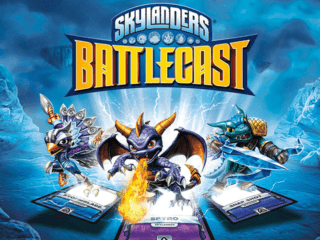
Independent mobile developer Seismic Games focuses on the worlds of original and licensed IPs like Clan Wars for Call of Duty and Skylander Battlecast, among others.
In December, the six-year old, Los Angeles-based studio expanded their creative, technical and development talent by acquiring Grue Games.
They now have over 75 employees from triple-A production and tech startup backgrounds working toward launching their own IP, location-based attractions, expanding into augmented-and-virtual reality games and titles based on major movie universes.
John Linden, president of Seismic Games, sat down with AListDaily to dish details on how his company plans on making an impact in the industry.
John Linden, president of Seismic Games
What are the games you are working on now?
We’re really excited to get the five projects in development out pretty soon. We have a big game we’ll be announcing soon. It’s a big sci-fi universe—a big brand game that we’re working on right now. That’s exciting. And that’s the other side of Seismic. Most of our products right now are tied to big brands. That’s been our background. We have Clan Wars for Call of Duty and SkylandersBattlecast on one side, then we have Star Wars Battlefronts, Mercenaries and Lord of the Rings on the other. We’ve really focused a lot around having big brands titles and bringing the right game for that brand to the right platform.
One thing that we found is that the days of pre-announcing a game seems to be not as important now, partly because there’s so much noise out there. We did that with Skylanders Battlecast, which we had announced nine months before it came out. And literally by the time that it comes out people are kind of like, “wait a second . . . didn’t that already come out?” For us we like announcing it officially 30-to-45 days before the game comes out.
Do you consider Seismic Games a mobile-first company?
We really play in three areas—mobile, VR/AR and location-based entertainment products. But mobile is our foundation, and we are mobile-first for sure. It’s the division of our company that pays all of our bills and allows us to play in other spaces, too. I think companies that [pigeon-hole] themselves are in for very risky business. We’ve taken what we know, built out some great products on the mobile side and then allowed ourselves to kind of play and figure out what’s working, and what’s not working.
What is the key to new game discovery in such a crowded market? How are you guys separating yourselves from the pack?
That’s one of the reasons we work with big brands. They already have built-in marketing resources. There are so many games that are tied to these now, but it’s great. We’re kind of taking the ones that have movie releases coming out, and ones with big consumer recognition already. That helps us. It’s one of the reasons we like doing that. We’re playing around with original IPs, and those are a whole different world. You have to be very creative on how to get the game out. But that’s one of the areas why we create that foundation with big brands. You can publish a game and at least your first couple million users just buy into it based on brand recognition alone. Frankly, it’s easier to market.
How is partnering with potential cross promotional and movie tie-ins a strategy you’re really planting at Seismic? What are the opportunities out there for you?
It’s one that we’ve done very well. I think because of our backgrounds, too, we’re getting deals coming to us. That’s kind of our foundational work, I’d say. We’ll continue to do that. It’s just something we love to do. We love playing in these beautiful universes, too. But we’ll kind of offset that in the future with a couple of original ideas as well.
Do do you believe subscription services for mobile games is a viable strategy?
We tried it with Skylanders Battlecast, which was our last game we did at Activision. It was actually one of our higher in-app purchases. It started with a lot of the JRPG games where you pay $5.99 a month and you get something every day. It’s not necessarily a true subscription, but it’s a prepaid for a period of time. So now you’re starting to see $5.99 models for 30 days, $9.99 for three months, $24.99 for an entire year. I like that model because you’re not tying a person to recurring billing. That’s not a great experience for consumers. We don’t want our consumers to be frustrated with the billing mechanics. But I love the concept of, “hey, you’re playing a lot, pay us a little bit of money and we’ll give you something every single day for 30 days.” So it’s kind of a meta subscription. Then if they want it, they can easily buy it again at the end. You do little things like general reminders saying, “hey it expires in three days.” Stuff like that. It’s subscription-light, but it’s not a true auto-billing type thing for mobile. That’s what we like to play.
How does that lead into the long-term engagement? How are you building that journey so that players can follow along?
It’s mostly through content. I think you have to be dedicated to releasing content often for core games. DLC and the like is important. We try and break up every game so that there are big content refreshes every two or three months. It really depends on the game. With weekly events, we give special items, or it’s just a way to play as a team. That’s the way we look at engagement. That’s a lot of work but that’s the driver of keeping people coming back often.
With Apple announcing AR support in June, is that going to have any impact on the direction of how you’re going to be developing games?
There’s going to be some amazing innovation in AR, but I still think it’s a little early to build entire long experiences and games that you have to hold your iPad and try to balance it. I think there’s still that factor that’s not addressed quite yet, but I think it’s going to get better and better over time. Skylanders Battlecast was an AR game. Here’s the interesting thing—we started off that game at Activision as a full AR game. You put physical cards on a table, you hold your iPad over it and you can battle them playing in AR. The problem we had, honestly, was that it’s a tough experience still. It’s hard to hold your phone or iPad stable and play an entire game. What we found is that we used AR intermittently. We used AR for transactions, like “make this character jump out of the card.” He becomes a digital part of the game. We found that worked beautifully, so we kind of called it a “real world exchange” for digital games. Having a real-world item that you could scan or use AR around to unlock something worked really well for us.
What are your thoughts on current VR and AR market? Is it a bigger or smaller deal this year? How can the games industry overcome the potential lull in VR?
That’s a great question. If you’re looking to get rich in VR as a developer, that’s not going to happen quite yet. Developers are spending time in VR now learning different mechanics. How you move in a game is different. How you pull people back in repeatedly is different. Getting through that now, as the market continues to grow, is really important for early developers to get into. From a technical perspective, Google earlier announced two new non-tethered headsets. We’ve had a great opportunity to play with those. One of our projects is for that—those are amazing experiences. Those kinds of devices will change the landscape of VR in a massive way. It’s what VR should be, when you’re not tethered to a massive PC or using your phone. It’s just this all-in-one experience. I think that’s truly going to change the perspective.
Do you think that will alleviate some marketing challenges in the industry as well?
We’ll see what happens with it. I think there’s going to be a continued push. I honestly think the movie Ready Player One will do a lot for VR, too, because the entire thing is VR. It’s a world you live in. VR is becoming more and more mainstream, the devices are becoming more available, sales continue to climb, so the pools are going to be there to continue keeping it as a main piece. I definitely believe VR is still the future. We’re just trying to figure out that timing of when are we’re actually going to make some good money from it.
Gamescom 2017 is underway in Cologne, Germany and this year’s trends have already become apparent: hardware, esports and history-based games are hot.
While E3 is all about the big announcements, Gamescom reinforces the hype with demos and additional information, strategically presented before the big holiday shopping season.
Esports Is Kind Of A Big Deal
The German Olympic Sports Confederation (DOSB) may not recognize esports as a sport, but competitive gaming is alive and well in Cologne this week. The nearly 54,000 square foot ESL Arena is hosting high profile tournaments during Gamescom featuring CS:GO, FIFA 17, League of Legends, Rainbow Six: Siege and this year’s breakout hit, Playerunknown’s Battlegrounds.
Even mobile esports will be a prominent player this year, with Tencent Games bringing its 5v5 MOBA Arena of Valor to the ESL Arena. Players can challenge professional MOBA esports players to win an iPhone 7 Plus and other prizes, before watching them battle each other in the first major Arena of Valor show match in Europe.
Clash Royale will also bring mobile esports to fans this week—32 players coming from qualifiers will fight to win the Clash Royale title and a cash prize worth €5,000 ($5,880).
Other competitions taking place during Gamescom include the Crossfire European Tournament Finals, the Project Cars World Final, the Blade & SoulEuropean Regional Championship, PlayStation Masters, the World of Warcraft European Championship Finals, the HearthstoneGlobal Games Finals, Heroes of the Storm: Showdown and more.
Esports is even part of German Chancellor Dr. Angela Merkel’s election campaign platform. In fact, Gamescom opened its doors on Tuesday with words of praise from the Chancellor, herself.
“Computer and video games are of the utmost importance as cultural assets, as a driving force for innovation and as an economic factor, which is why I was also very pleased to come to Cologne to provide this developing industry with my recommendation,” the Chancellor said, addressing over 300 invited guests and journalists.
Video game hardware sales have enjoyed a boost this year thanks to the Nintendo Switch, and publishers want to keep that momentum going into the holiday season.
Microsoft announced that the Xbox One X and its Project Scorpio Edition (the collector’s edition that uses the longtime code name) are now available for pre-order. There are currently more than 100 enhanced titles confirmed for the console when it launches November 7, including Rise of theTomb Raider, Halo 5 and The Witcher 3. With an 8-core Custom AMD CPU, 326 GB/sec memory bandwidth, 4K graphics and more, Microsoft is betting big on “the world’s most powerful console” to be a hit this fall.
However, the company didn’t forget its other Xbox family, revealing a special limited edition Minecraft Xbox One S and brand new Shadow of War bundle, both available for pre-order to be delivered October 3 and 10, respectively.
Even Xbox One is getting three new Kinect games, originally released for Xbox 360, including Disneyland Adventures, Rush: A Disney Pixar Adventure and Zoo Tycoon.
Nintendo continues the hype for its Switch console by showing off Splatoon 2, ARMS, Super Mario Odyssey and Mario+Rabbids: Kingdom Battle. The SNES Classic Edition will have an instant rewind feature, Nintendo announced, allowing players to briefly scroll back through the section of the game they just played to grab missed items, master difficult portions and more.
There is also an SNES-themed 3DS XL on the way, although it’s not clear whether North American retailers will offer the nostalgia-fueled handheld.
PlayStation is riding high with the best-selling console, but the company isn’t satisfied with marketing only to core gamers. PlayStation’s head of global marketing and sales Jim Ryan believes that appealing to a new market outside of core gaming communities will help propel the platform to 100 million units.
“We’ve now sold through 60 million PS4s, so the core gamer audience [has] bought in,” he told Inside PlayStation. “So now we’re looking for ways to appeal to a new audience, a less engaged audience, a younger audience—perhaps even an older audience. So people who may be a little bit intimidated by the DualShock 4 and all of its buttons, so the thinking was to find an interface that people are very familiar and comfortable with, and there’s nothing better than a smartphone.”
Core gamers weren’t left out of the Gamescom announcements, however, as evidenced by a GT Sport-inspired limited edition PS4 Pro console.
HP is also targeting core gamers with its Omen X laptop, designed for performance over high resolution—unless you dish out up to $3,699 for the 4K version. The high-end laptop features overclocking support, parts that are easily upgraded and custom RGB LEDs.
Historical Games Are So Hot Right Now
Video games take us to worlds beyond our imaginations, and many of the popular titles this year share something in common—being inspired by world history
Gamers everywhere are “playing their history” with top games like Battlefield 1. EA unveiled Battlefield 1 Revolution, which includes the complete game as well as its Premium Pass and the game’s four expansions: They Shall Not Pass, In the Name of the Tsar, Turning Tides, and Apocalypse.
Fans got their first look at Call of Duty: WWII‘s Headquarters Mode, a 48-player gathering space modeled after the Allies’ Normandy beach encampment a few days after D-day.
World of Tanks will get a new update for Xbox One and PlayStation calledWar Stories, a narrative-driven campaign mode that employs alternate history for 20th-century tank battles. An upgraded version will also become available for the new Xbox One X.
Spanning multiple ancient civilizations, Age of Empires IVwas officially announced, as well, and players are invited to join the closed beta.
Set in ancient Egypt, Assassin’s Creed: Origins received a new gameplay trailer at Gamescom, as well that showcases detailed environments from the land of the Pharaohs.
Uncharted: The Lost Legacy is available now on PlayStation 4, and Naughty Dog has the challenge of marketing a beloved franchise without its beloved protagonist. Starring fan favorite supporting-characters-turned-main-characters Chloe Frazer (Uncharted 2) and Nadine Ross (Uncharted 4), The Lost Legacy marketing focuses on these two femme fatales, gameplay and the detailed environments Uncharted is famous for.
Originally planned as DLC, Uncharted: The Lost Legacy is a full game that has two of the franchise’s most popular characters team up for the first time, in addition to the all-new Survival Arena in multiplayer. It’s not surprising, then, that Naughty Dog and PlayStation have focused its marketing around these two tough ladies.
PlayStation also created wallpapers and merchandise to celebrate the match-up. Fans can “add a little adventure to their conversations” with official digital stickers, featuring cartoon versions of Chloe, Nadine and other characters displaying a range of emotions. Fans were invited to share their fan art of the new characters, which were shared on social media, as well.
Stars of the game, Claudia Black (Chloe) and Laura Bailey (Nadine) played the game live on Twitch to commemorate its launch, adding additional insight into how it was made and putting a face to the voice behind these new characters.
The game’s developers wanted fans to know that they treated The Lost Legacy with as much care as they did on previous titles—illustrated through behind the scenes videos, interviews and extensive gameplay previews. On Instagram, Naughty Dog created a mosaic of previews on its profile page using a screenshot from one of The Lost Legacy‘s scenic locations. Each tile revealed something different, from trailers to details about gameplay.
“Uncharted has the sense of ‘oh shit, we’re exploring someplace no one’s ever been.’ We’ve brought that back there,” The Lost Legacy’s creative director Shaun Escayg told Eurogamer.
To further illustrate that exploration, PlayStation posted a 360-degree screenshot of the lost cities of the Hoysala Empire on Facebook, which players will get to explore in-game. In fact, Western Ghats is the largest explorable environment Naughty Dog has ever created.
As with Uncharted 4, PlayStation covered the sides of buses in London with posters and key art for The Lost Legacy, although the marketing doesn’t appear to be as extensive as Nathan Drake’s last adventure. That means no special console, no sweepstakes offering a trip around the world . . . but no shortage of livestreams hoping to show fans that The Lost Legacy isn’t a lost cause.
Fans may have a hard time imagining an Uncharted world without Nathan Drake, but Naughty Dog isn’t quite done with its many characters—which means if The Lost Legacy doesn’t do well, there may be other games in the expanding franchise that do.
“We have no immediate plans [for another Uncharted game],” Escayg told Red Bull. “But if there’s anything this game proves, [it’s] that this world is beyond Nathan Drake—there’s other cast, other characters—you’ve got quite a vast amount of cast to pull from in the future if you so wanted.”
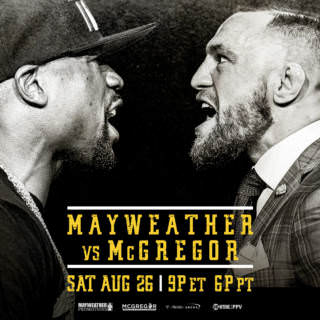
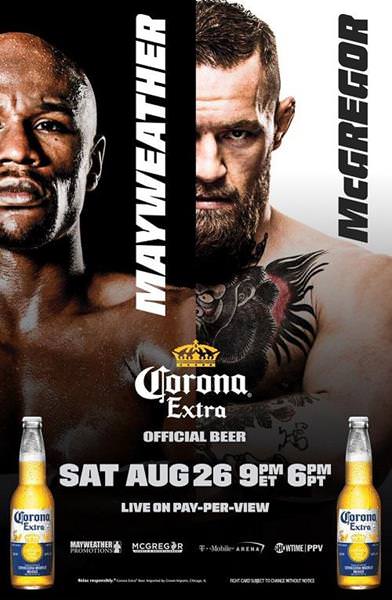
The Floyd Mayweather and Conor McGregor super fight mostly materialized from the months-long back-and-forth banter played out in front of the fans and media between both of the global icons. It can even be argued that the cross-sport fight—which is unprecedented at this magnitude and is bound to break a bounty of records—came to fruition thanks in large part to the power of social media.
The world will be watching with intrigue on Saturday when Mayweather, one of the greatest boxers ever, puts his 49-0 record and legacy on the line in the last fight of his decorated career against McGregor, a flamboyant mixed martial artist and the current face of UFC.
Prognosticators are predicting the prize fight will end in a landslide victory for Mayweather, a Hall of Fame-bound pugilist who has plied at his trade his entire life. In contrast, the Irishman (21-3) on the opposite side of the ring has never fought in a professional boxing match.
Flying fists aside, with pay-per-view (PPV) buys, ticket and merchandise sales, sponsorships and closed-circuit viewing, the sports spectacle is projected to rake in upward of a gaudy $600 million for a maximum of 36 minutes of in-ring work at the T-Mobile Arena in Las Vegas.
It’s expected to shatter all-time records set during the Mayweather-Manny Pacquiao matchup in 2015, which included total earnings of $623.5 million, 4.6 million PPV buys, gate receipts of $72 million and $60 million bet on the fight.
For a fight that’s on pace to become an unprecedented success in revenue and viewership, brands are quickly aligning their marketing motives for a potential knockout with their messaging.
“It’s kind of like winning the lottery,” Marianne Radley, senior vice president of marketing for Monster Energy, told AListDaily. “So many eyes are going to be on this fight. Conor is a lightning rod—a controversial, edgy, outspoken and hard-charging character—and that’s everything that Monster is about, too. He ties in perfectly with our brand and it’s a fortuitous time for us to be partnered with him.”
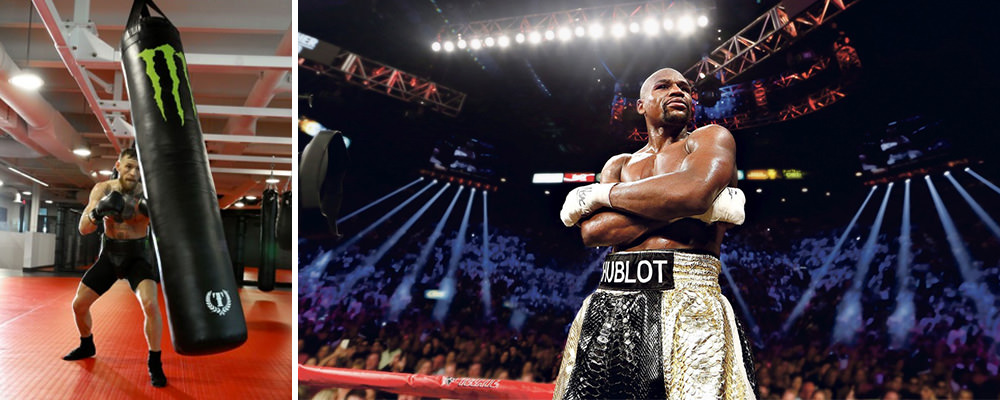
Monster leveraged its two-year relationship with McGregor by renewing its sponsorship with the star and filmed its biggest commercial to date. A five-by-five-inch logo featuring the energy drink company—they will be joining BetSafe with such branding—will also be adorned on the front of McGregor’s trunks come fight night.
Radley said they don’t normally do media buys, but saw this once-in-a-lifetime fight as an opportunity to harness its heritage and maximize its association in MMA to increase brand awareness with a 360-degree digital plan pushing content across various social channels, fight-viewing parties, retail tie-ins, point-of-sales and sticker-and-jersey giveaways.
Monster was previously an accidental beneficiary of a McGregor meltdown when the fighter hurled two cans of the energy drink (and bottles of water) at opponent Nate Diaz and his entourage during a press conference last year. McGregor and his agent Audie Attar, founder of Paradigm Sports Management and the man behind the marketing of “Mystic Mac,” cheekily used the brand to launch a limited-edition $75,000 can.
“We want to make sure that we’re expanding reach and casting a broader net to tell people who may not be aware of our branding and association with Conor, the UFC, MMA and combat sports,” Radley says. “That’s who we’re targeting pretty strategically and putting our media dollars in. . . . I couldn’t even begin to tell you [how valuable the sponsorship and media value is.] It’s priceless. It’s the fight of the century. To have part of the branding in that is just incredible.”
“I’ve got good endorsement deals. [The marketing] is certainly a good business. I’m very happy with everything that has been going on,” said McGregor, who also has Beats By Dre in his corner. “There are so many moving parts in the game. I’m just trying to roll with it . . . Everyone is excited here. We can go radio silent and this fight is still going to blow everything out of the water. This is a special historic event and everybody is excited about it.”
The collaborations are sizeable coups for McGregor because the UFC’s apparel deal with Reebok does not allow fighters to strike deals with shorts sponsors. In 2013, McGregor collected a $235 welfare check. He’s now forecasted for a $100 million payday.
“Money” Mayweather will make an estimated $350 million payday on Saturday. He seldom works with brands but has still amassed an eye-opening fortune that makes him one of the highest-earning athletes on the planet.
“We’re both real fighters,” Mayweather said. “We’re two huge names in combat sports. He’s made a mark the last few years and I’ve made a mark for 21 years. Now it’s time to go do what we do best and fight.
Mayweather’s method of promotion includes tapping into his wealth of famous friends, like Justin Beiber, Lil Wayne and Rick Ross, and having them all post on their social channels to buy his fights hours before the proceedings. There’s also the lavish lifestyle, the money and the fact that fans buy his fights to watch him lose.
Leonard Ellerbe, Mayweather’s longtime adviser and CEO of Mayweather Promotions says “you have no idea what a great marketer he is.”
This week, Mayweather is working with the likes of tequila-maker Avion (which is releasing 150 commemorative bottles) by donning the brand’s hat during the weigh-in, and Swiss watchmaker Hublot, the brand of which will be adorned on the waistline of his trunks. For his fight against Pacquiao, Mayweather walked into the ring with the Burger King king for a reported $1 million figure, so there may be some more branded tricks up his sleeve.
UFC president Dana White said the fight is tracking to be the largest commercial PPV ever.
“This is the biggest event ever in combat sports history,” White said. “It’s the most distributed PPV event in history. The list goes on and on of the records the fight will break.”
The fight will be available in over 200 countries and is expected to exceed over five million PPV buys at $100 a pop. Face value for tickets range from $500 to $10,000, but StubHub says a lukewarm secondary market has materialized.
“I think we’ve done a good job working with Showtime in that they do the things that they’re good at, [and] we do the things that we’re good at,” White said. “There’s a lot of things boxing doesn’t do. For instance, most of the time you’re dealing with a network—networks aren’t too excited to go OTT. Not a big thing that they’re into. We have the capabilities. We do it all the time and I believe we’re one of the best to do it. . . . The numbers are tracking huge. We’re gonna kill this thing. It’s looking really good.”
Showtime is using the fight to shake-up its approach with a direct-to-consumer strategy. In addition to traditional PPV options, there will also be online and streaming buying options on its site, the Showtime app, PlayStation, Xbox, Apple TV and Roku. Consumers will have access to additional content and a special free trial for the Showtime standalone streaming service and CBS All Access.
The premium cable channel has been churning out content chronicling the lives and training camps for the combatsmen with four feature episodes of its Emmy Award-winning series All Access. The network also partnered with the UFC to give fans insider access by making all of the media-only events available for fans worldwide live on YouTube and satellite.
“This is an event that transcends sports. It’s captured the world’s attention. We’re seeing unprecedented interest in a number of different ways,” said Stephen Espinoza, executive vice president and general manager of Showtime Sports. “To give specifics, our Snapchat Stories have been getting 4.5-to-5 million views.”
“This is the biggest event ever in combat sports history. It’s the most distributed PPV event in history. The list goes on and on of the records the fight will break. . . . The numbers are tracking huge. We’re gonna kill this thing. It’s looking really good.” – Dana White, president of the UFC.
The straight-to-consumer tactics were highlighted by the four open-to-the-public press conferences (Los Angeles, Toronto, New York and London) that doubled as celebratory international events attracting over 10,000 fight fans in each market. White and Espinoza said that’s when they realized they had truly something special on their hands.
The CBS-owned network also tapped into its own resources and star power with a friendly wager between Diddy and Mark Wahlberg, and unveiled an exclusive promotional video featuring The Killers in the middle of a boxing ring as the rock band performed their new single “The Man” in the middle of the desert.
Although the UFC has the proverbial second seat in the saddle throughout the entire promotion—thanks to Mayweather, Showtime has been the shotcaller—the world’s preeminent MMA organization is making the most of its marketing opportunities. For one, consumers who order through UFC get a free hat and/or a 30-day trial of UFC Fight Pass. The UFC has been running a promoted Twitter campaign showcasing the deal.
Fans can also buy more than just the hype by getting an opportunity to splurge on the fight with pop-up retail locations for two consecutive weekends in Las Vegas and Los Angeles. The shopping experience, complemented with photo booths and raffles to win tickets, airfare and hotel accommodations for the fight, feature exclusive merchandise and collaborations. And of course, an event with global appeal merits its own line of emoji.
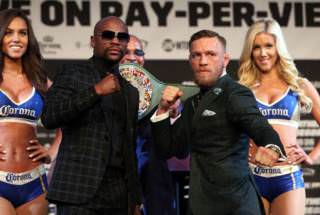
Although a primary fight sponsor has not been announced yet, once the fighters hit the ring Saturday, they’ll be greeted by Corona branding in the center of the mat, which is billed as the official beer sponsor of the fight. BodyArmor-branded towels and bottles will be prevalent in the corners of both fighters.
“We’ve got a long history in boxing. We always lead with consumers, and we know what our fans like,” John Alvarado, Corona’s vice president of brand marketing, told AListDaily. “The hype and anticipation this match is getting from avid and casual boxing fans—as well as non-boxing fans intrigued by the unique matchup—was the real attraction for us. This is an opportunity to have the Corona brand in front of over 50 million-plus US viewers. All of the potential brand impressions that the weigh-in and fight itself will garner us made this a great opportunity for Corona to be front and center and reinforce our heavy involvement in the sport.”
Corona declined to disclose how much the single-fight sponsorship cost the company, but ESPN reported earlier that the asking price for a brand’s logo at the center of the ring as well as branding on ring girls and other opportunities was $10 million—nearly double the $5.6 million price tag Tecate paid for Mayweather-Pacquiao.
To say that the event will be a major beer-drinking occasion is an understatement. So, Corona will be setting up satellite bars with branded backdrops throughout Las Vegas where fans can consume Coronas as they partake in all the excitement that will be buzzing throughout the Strip. The Corona Boxing Ring Models will help fans show off that “they were there” before heading to the T-Mobile Arena to tell millions around the world what round it is every three minutes.
The beer brand will also be pushing paid posts through its social media channels at the weigh-in and fight itself to give consumers a behind-the-scenes look. Alvarado says that their efforts from retail to advertising to consumer engagement creates a lot of additional selling opportunities for Corona’s sales team.
“Boxing is a major passion point for our consumer,” he says. “We’ve always tried to align Corona with marquee fights that boxing fans get excited about and that can continue to cement the brand in the sport with those consumers. We’ll be leveraging every aspect of the fight this week to connect Corona with consumers during this record-setting event.”
For fans who can’t afford to fork over fortunes to watch the fight in grandiose fashion in Las Vegas—or refuse to come to terms with the PPV price point to order it—they can watch the tilt in a movie theater broadcast for around $40 in nearly 500 movie theaters across the United States.
Mayweather Promotions and Fathom Events are collaborating for the tenth time since 2009 to ignite a sense of electricity in movie theater auditoriums for fans to congregate and cheer on their favorite fighter. The up-close-and-personal, big-screen theater experience for a live sporting event is definitely different from the normal trip to the movies.
“With every new fight, we learn more about our audience, their buying habits and how to target them,” Kymberli Frueh, vice president of programming at Fathom Events, told AListDaily. “Our boxing and MMA events tend to see a lot of walk-up sales at the box office rather than pre-sold tickets, but the Mayweather-versus-McGregor fight has already sold thousands of tickets ahead of the event, so we’re expecting very good results.”
Frueh said that there are a lot of eyes on Fathom Events, some for the first time, and they’re getting a chance to learn about their programming. That means stretching their marketing budgets, too. Consumers are being digitally targeted with cinema-event messaging and they’ve already activated with an in-theater media campaign (onscreen exposure as well as promotions in hundreds of cinema lobbies nationwide) that is their largest to-date. They’re also using Mayweather’s muscle, who has a personal stake in the proceedings with his promotional company, to amplify the experience offering.
Frueh echoed a sentiment that all of the involved brands can likely agree on—positioning their marketing strategy with involvement in the fight is bound to pay dividends.
“Being associated with a fight that has tremendous global awareness improves our brand recognition,” she said. “It’s trending to be the biggest ever.”
Perhaps the single greatest advantage mobile games have when compared to console and PC games is easy access to players.
There’s no better way to engage players than with well-timed push notifications letting them know that it’s time to pull out their mobile devices and progress further in their favorite games. But the question is, how do you get players back into games without being intrusive or bothersome?
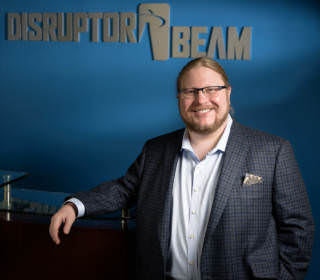
AListDaily united Emily Greer, CEO of and co-founder of Kongregate (AdVenture Capitalist; Animation Throwdown), Jon Radoff, CEO of Disruptor Beam (Star Trek Timelines; Game of Thrones: Ascent) and Joseph Kim, chief product officer at Sega Networks (Sega Forever; WWE Tap Mania), to get their thoughts about when to properly use notifications and the best ways to re-engage with mobile players.
Emily Greer, CEO And Co-Founder Of Kongregate
“I think that [it’s about] making sure that it’s something of real interest and use to the player, and not over-spamming. We tend to use a mix of push notifications and local notifications, where local notifications trigger much more often and provide useful information about what’s happening in a game that you’re actively playing. So, for Animation Throwdown, [it tells me] when a rumble or guild siege is starting and I need to jump in and help my guild—something that’s really useful for me. I always leave them on because I want to know when those particular time triggers happen.
“Lapsed players get less frequent notifications, and it’s about having a distinctive voice to the game. We try to bring a lot of the humor and charm from AdVenture Capitalist or Animation Throwdown to the push notifications so it doesn’t feel like it’s someone nagging you, but they’re saying something interesting. Then we make sure that it’s selective and brings something new and relevant, like a new part of the game, expansion or update that’s worth a push notification. It’s important to be selective and thoughtful about it, and you have to think about what the player needs and wants, or else they’re going to block you out and turn you off altogether.”
Jon Radoff, CEO Of Disruptor Beam
“We don’t actually think of ourselves as a mobile game company. First and foremost, we think of ourselves as a storytelling company. So, the engagement we drive is through having a story people want to participate in and come back to. Things like notifications can only exist to serve that, otherwise they’re an annoyance that pops up on your screen. So, if it tells you something important that you want to know, then that’s fine.
“We’re on Steam, mobile and Facebook, so our games are cross platform. We span multiple devices with the thinking that we want to be on the devices that people are using. The cross-platform stuff is an important part of our strategy. It’s about being able to have these stories structured in a way that you can consume them in little bits at a time. You don’t have to sit down in front of a game for hours. Some of our customers do engage for hours, but you can also do it for a few minutes at a time—at the time and place of your choosing. If you want to do it through Windows, you can do it that way. Or you can do it on mobile devices or Facebook. We give you multiple options for engaging. I think that one of our strengths is that we give these multiple touchpoints on the same game, but it all ultimately comes back to story. I think good media—not just games, but television, movies and theater, going back to when people were sitting around a campfire—is all based on stories.
“If you can’t engage people through stories, then it’s going to be difficult to engage them overall over a long-term basis. We’re going for a deep, human connection that we all share with stories.”
Joseph Kim, Chief Product Officer At Sega Networks
“For me, the answer basically boils down to engagement. If users are engaging with the notifications, then the game isn’t going too far. However, the tricky bit stems from the situational nature of the use and frequency of push notifications.
“From a personal perspective, I want to see every notification to collect a chest in Clash Royale or when I get a new follower in Instagram. However, [there are] some notifications I don’t want to see at all, and some games can spam like crazy for every short-term retention mechanic implemented in game.
“From a game developers’ perspective, we’ve got to be careful to avoid annoying users, thereby potentially leading to a negative impact on game KPIs and negative brand impact. Assessing user preference for these notifications essentially boils down to just measuring a player’s level of engagement with them.
“More specifically, developers should seek to understand the types of notifications being sent, the impact of varying frequency in which they are sent, the types of players who like specific notifications (even down to individual player preference if possible), as well as the overall impact on game KPIs.”