As marketers, do you ever wonder, “what’s the big deal with Snapchat?” There are a lot more people using Facebook, which continues to imitate the platform unapologetically and yet, young consumers still prefer the original. Just how popular is the disappearing message app? We’ve compiled some key Snapchat statistics every marketer should know.
Millennials Matter
They’re the largest generation, and they sure love to Snap. As digital natives, today’s young consumers are driven by the need to connect and find meaningful experiences on and off the internet. Snapchat boasts 161 million daily active users, many of which are in that lucrative millennial demographic. In fact, the company says it reaches 41 percent of all 18- to 34-year olds in the US each day.
EMarketer estimates that the number of millennials who use Snapchat every month will reach 43.9 million this year, and account for 56 percent of all US Snapchat users by 2020.
Accept No Substitutions
Regardless of the way social networks “borrow” features from one another, Snapchat comes with its own fan base of loyal users. A study by Survata found that users 13-34 still prefer Snapchat over Instagram and 64 percent think Snapchat is “cooler.” Given the option of having only one or the other, over half (51 percent) of respondents chose Snapchat and 67 percent said that the app had better features.
Digital natives pick up the app’s features with ease, but older generations may find it less user-friendly than what they’re used to. While these generations enjoy similar features now added to Facebook and Instagram, original Snapchatters stay true. A study by Defy Media found that 30 percent prefer Snapchat because their parents don’t use it.
An All-Day Affair
The casual, disappearing nature of Snapchat allows for quick, authentic posts by brands and users alike, creating a fun-loving experience that lasts all day. Seventy-eight percent of US high school and college students said they use Snapchat on a daily basis, compared to Instagram (76 percent) or Facebook (66 percent) every day. In addition, 71 percent turn to the app at least 11 times per day, according to a recent study by SCG.
Facebook kicked off its annual F8 developer conference on Tuesday, sharing the latest trends and updates that affect brands and users alike.
Say It With AR
“We’re making the camera the first augmented reality platform,” Facebook CEO Mark Zuckerberg announced in the keynote.
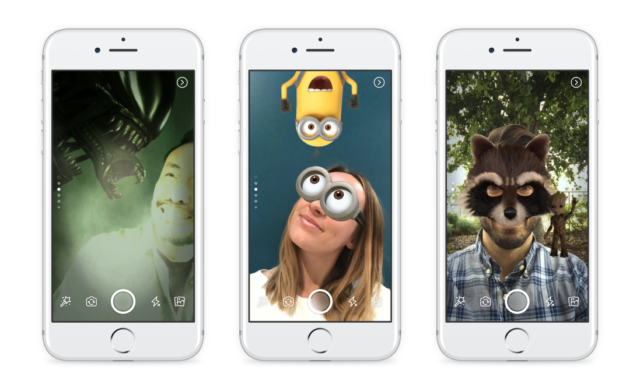
Facebook’s new Camera Effects Platform turns smartphone cameras into an open augmented reality (AR) platform, allowing artists and developers to create effects for the Facebook camera. Users will have access to thousands of effects and backgrounds from all over the world, Zuckerberg explained. The Camera Effects Platform launched Tuesday in beta. Early AR Studio beta partners include Electronic Arts’ Mass Effect: Andromeda, GIPHY, Manchester United, Nike, Real Madrid, TripIt and Warner Bros’ Justice League.
Users will immediately notice the similarities to Snapchat features, to which Zuckerberg told critics, “I guess I’m not that worried about that . . . the first chapter that made sense was to release products that people were familiar with . . . but the unique thing that we’re going to do is we’re not just going to build basic cameras, we’re going to build the first mainstream augmented reality platform.”
The open platform is an opportunity for brands to create custom frames and AR effects, but the availability for millions of users to create them could make discovery a bit more difficult. This is where influence marketing may prove ideal for showing off branded AR on Facebook.
“Since AR on mobile is a budding technology that a lot of people are excited about, and there is a high likelihood Apple will soon show AR capabilities on their newest models, Facebook is marching forward on that front,” Stephanie Llamas, vice president of SuperData, said in a statement. “This is a particularly poignant space for them as they continue to make a mark in the mobile space.”
VR Finally Gets Social
One of the major hurdles in VR adoption by consumers has been a lack of social features. While multiplayer is available on a number of games, watching someone else put on the headset isn’t quite as fun as wearing one yourself. When Facebook purchased Oculus in 2014, people wondered what the heck a social network was going to do with virtual reality . . . until now.
Last year at Facebook’s Oculus Connect, Zuckerberg demonstrated a VR conference call which has now been unveiled as Facebook Spaces—a virtual hangout for friends and co-workers to goof off or collaborate on projects. The Oculus app uses Facebook account credentials to access photos, friends and other info you might want to share or create an avatar out of. The app is currently in beta for Oculus Rift and Touch.
For brands and game developers, Facebook Spaces may someday expand to interacting with game worlds or characters, or having a virtual conversation with a customer service rep.
“Transporting to new worlds is something VR users are expressing a significant interest in—be able to do it with friends is even better. Facebook isn’t just allowing people to share social experiences, they are allowing experiences to be social,” Llamas noted.
A Great Time For Game Time
Instant Games are already a big hit for Facebook, who reported that more than 1.5 billion games have been played across Messenger and the Facebook News Feed within the last 90 days. Developers can now customize their own start-and-end screens and integrate new APIs that can help drive share and connected gameplay, Facebook announced.
Gameroom, meanwhile, is Facebook’s new PC desktop gaming platform launching with more than a thousand titles. Designed for games built in HTML5, WebGL or Flash, developers are now able to port games to the Gameroom APK that are built in a variety of engines including Unreal Engine, Cocos2d and more.
A new games tab will help make it easier for players to discover titles on Facebook. Additionally, developers will be able to leverage game bots to create engaging ways for players to connect to their games through actions they take directly within a Messenger chat.
“We are also in the early stages of rolling out the new Games Feed in Gameroom that offers players a continuously updating list of stories that are 100 percent focused on games-related content,” Facebook noted on its blog. “We want to improve discovery for game developers by helping people find out about different games they may enjoy, featuring studio-created posts, videos like producers’ chats and general games news.”
Bots Join The Conversation
Say a group of Facebook users are chatting with friends over Messenger when one of them mentions dinner. M, Facebook’s virtual assistant, may now appear in the style of Microsoft’s “Clippy”—suggesting a restaurant and allowing everyone to make an order directly from the app. Chat extensions will allow users to contextually invite bots into a group chat for other functions, including listening to music and playing games.
For brands who have or plan on developing a chatbot, a new Discover feature allows users to browse and find them easier within Messenger. Consumers can engage with a specific bot by scanning a special QR code. In addition, businesses can generate multiple QR codes for their bots and see which ones are being scanned the most.
Facebook says 1.2 billion people use Messenger every month and “tens of thousands” of developers are building chatbots on the platform. The latest updates are telling of a desire to make Messenger the only app people need. A recent study by Aspect found that 70 percent of millennials “feel good” about chatbots. In addition, 54 percent prefer all customer interactions via electronic means and 49 percent feel that texting is the most effective communication for customer service.
Forget taking that boring photo of your lunch and posting it online—now you can animate it, draw on it and cover it with stickers, too. Yes, social media updates are going well beyond the filter to become “Stories”—disappearing messages that transform everyday situations into playful forms of communication. Pioneered by Snapchat but adopted by Instagram and its parent company, Facebook, Stories tap into the fear of missing out (FOMO) while allowing both users and brands a way to be more creative with social sharing. All three networks have their own version of Stories, but let’s take a look at what sets them apart.
Snapchat
While messages sent in Snapchat are automatically deleted after viewing, Snapchat Stories have a slightly longer lifespan of 24 hours. Stories originated on the Snapchat platform and not only taps into the FOMO, but set the standard. A recent Stories update put more control into the user’s hands while offering more lucrative ad formats to brands.
Previously, Auto Advance would play all Snapchat Stories back-to-back with Snap ads in between. Now, Snapchat users can manually select which Stories they wish to view and the updates will be played in that order. If users watch more than one, ads will appear mid-roll, or at the end when viewing just one at a time. And now, in addition to the new 3D experiences with World Lenses that were announced on Tuesday, the company that recently hit IPO is reportedly launching a self-serve platform for Snap ads.
Snapchat users can enhance their Stories with drawings, emoji and augmented reality stickers.
Despite being imitated by Instagram, many young consumers still prefer the original. A study by Survata found that users ages 13-to-34 still prefer Snapchat over Instagram. Sixty-four percent of those surveyed said Snapchat is “cooler,” 67 percent said that Snapchat had better features and if they could only have one app, 51 percent named Snapchat.
February research from SCG, an advertising and public relations agency, surveyed 333 US high school and college students regarding social media usage. Seventy-eight percent of respondents said they use Snapchat on a daily basis, just slightly more than said they use Instagram (76 percent) or Facebook (66 percent) on a daily basis.
While new features are always a plus, young consumers seem to use it for the privacy. A study by Defy Media conducted for Variety found that 30 percent of respondents prefer Snapchat because their “parents don’t use it.” Millennials make up the largest share of Snapchat’s US user base—eMarketer estimates millennial monthly active users (MAUs) of the platform will total 43.9 million in 2017.
Instagram
Meanwhile, Instagram Stories alone have already reached over 200 million daily active users—exceeding all of Snapchat’s DAU (161 million). As with its Snapchat “inspiration,” Instagram Stories disappear after 24 hours and appear at the top of a user’s feed for easy viewing. Instagram’s Stories autoplay through all updates, however, just as Snapchat once did before the aforementioned update.
Stories are fun for users, but even more valuable to advertisers who gain access to Facebook’s array of measurement tools. The photo-sharing app exceeds 500 million users and shares access to Facebook’s pool of three million advertisers who have the option to extend Facebook ad campaigns to Instagram.
Instagram has just rolled out its own Story enhancements, including the ability to create stickers out of selfies, geostickers and a shortcut to access stickers for when inspiration strikes. A previous update added “see more” capabilities for verified users, as well as the ability to tag other accounts.
Brands were quick to adopt Instagram Stories and aren’t afraid to have a bit of fun with the casual platform.
“Because businesses play such a rich role within our community, we’ve seen they are the profiles that have led the way and really innovated in [the Stories] space,” Jen Ronan, Instagram’s brand development lead, toldThe Drum. “They’re telling stories of behind the scenes, of the day to day, and really building their brand in that way.”
Facebook
Facebook is rolling out Stories for Facebook, too, complete with an in-app camera, stickers and “masks” galore.
“The Instagram community has shown us that it can be fun to share things that disappear after a day,” Facebook explained on its blog last month, “so in the main Facebook app we’re also introducing Facebook Stories which lets you share multiple photos and videos as part of a visual collection atop News Feed.”
Facebook’s app may have a long way to go before it rivals even its own Instagram, but the social media giant certainly has the advantage of numbers. Sixty-eight percent of all Facebook traffic comes from a mobile device, offering easy access to the new Stories feature.
Advertisers love Facebook, too—five million active marketers, to be exact. In a survey conducted by Social Fresh, Firebrand Group and Simply Measured, over 95 percent of marketers named Facebook as the best social media platform for ROI.
Playing games on social media is nothing new, but some platforms lend themselves more naturally to the idea. Snapchat begun as, and still is, a kind of game in itself. Friends send disappearing messages back and forth complete with emoji, stickers, drawn images and captions that keep the conversation going, thus creating a more sophisticated form of texting.
This winter, for example, Snapchat users were playing a game in which females posted Stories or adorned their profiles with fruit emoji, each one with a hidden meaning as to their relationship status. A blueberry meant she was single, a pineapple meant “it’s complicated,” and so on. The only rule was not to tell boys what the fruit meant. Once the boys figured it out, they started their own secret game using animals. This type of user-generated game—much like Twitter’s hashtag games—is the type of engagement that Snapchat is known for.
Naturally, brands want to tap into that engaged audience in fun and interactive ways. Over the last year, the app has hosted a number of playable ads which proved popular with users. Under Armour’s It Comes From Below game starring Cam Newton was a big hit, with 20 percent of Snapchat users swiping up to play on the first day the ad was run. Those who did spent an average of 78 seconds playing the game and 19 percent of users who played shared the game with one or more friends, per Snapchat.
Gatorade embedded an entire, 22-level video game into the app to celebrate tennis champion, Selena Williams, proving that branded ads aren’t limited to just one format.
Snapchat has been experimenting with a number of games playable within the app, such as World Lenses—a way to add virtual elements to a user’s environment such as sparkles, colors, a virtual flashlight and clouds puking rainbows. Perhaps inspired by the success of Pokémon GO (and its many business partnerships), this update laid the groundwork for what would become playable lenses such as Santa’s Helper and a playable Kraft Macaroni and Cheese filter.
Analysts predict that the global social online games market is expected to reach $17.4 billion by 2019, growing at a CAGR of 16.1 percent. In the United States, the industry is expected to surpass $2.4 billion by 2020 EoY. Snapchat users are already playing games on the platform, and brands are finding success through playable lenses and advertisements.
It’s no secret that Facebook has invested considerable effort and revenue into imitating—and arguably improving upon—Snapchat’s famous features since it was unsuccessful in buying the photo-sharing app in 2013. Last August, Facebook added disappearing Stories on Instagram, tapping into the “fear of missing out” while appealing to young consumers—especially creators. Facebook’s Messenger service later followed suit, as did WhatsApp, another messaging app owned by the social network. Now Facebook has taken it a step further, rolling out Stories for Facebook—complete with an in-app camera, stickers and “masks” galore. If Facebook is trying to kill Snapchat, however, it won’t “give up the ghost” that easily.
Snapchat has introduced targeted ad offerings, mid-roll ads and sponsored lenses to help brands stand out on the platform, but has done its fair share of copying, as well. Shortly after Instagram announced direct video messages, Snapchat responded by enabling one-on-one texts, picture messaging and video chats.
Snap, Inc. is in a delicate position, having just made its debut on the stock market. While an endorsement by Morgan Stanley helped stock prices on Monday, Facebook’s “Story” announcement resulted in a drop down 3.7 percent to $22.95 per share on Tuesday. “We are bullish about Snap’s ability to monetize its highly engaged daily active user (DAU) base,” wrote a Morgan Stanley analyst, valuing the stock at $28. “First, we believe Snap’s millennial audience and differentiated online video ad inventory are in demand by advertisers.”
While brands and creators often prefer Facebook and Instagram for marketing efforts—largely due to helpful analytics—studies show that Snapchat’s young users still prefer the original to imitators. Adweek commissioned a study by Survata, exploring preferences between Instagram and Snapchat. They discovered that users ages 13-to-34 still prefer the original ghost. Sixty-four percent of those surveyed said Snapchat is “cooler,” 67 percent said that Snapchat had better features and if they could only have one app, 51.1 percent named Snapchat.
Facebook Stories bear a number of similarities to popular Snapchat features. (Source: Facebook)
The disappearing photo app is still popular among college students, as well—according to a survey by online student loan marketplace, LendEDU, 58 percent of college students are checking Snapchat before Instagram, LinkedIn and Facebook combined. Snapchat came in first with 58 percent followed by Instagram at 27 percent and Facebook at 13 percent.
Facebook CEO Mark Zuckerberg has made it abundantly clear—through statements and acquisitions—that the company’s mission is to create a “video first” experience across all of its channels, from virtual reality to video games, original shows and of course, Facebook Live. Adding more video options makes sense—a recent Cisco study predicts that consumer consumption of video will constitute 80 percent of all global internet traffic by 2019.
While Facebook demands 24/7 attention from its 1.57 billion daily active users worldwide, Snapchat has an advantage that Facebook doesn’t—exclusivity. A new study by Defy Media conducted for Variety found that 30 percent of respondents prefer Snapchat because their “parents don’t use it.”
The downside to becoming a giant is that sometimes the young crowds you want to impress start rooting for the underdog.
Social media users are getting a powerful tool with PostIntelligence, an artificial intelligence (AI) app that launched its desktop and Android beta (iOS will follow soon) today. The AI, which currently supports Twitter, Facebook and Pinterest, promises to help users become much better at posting engaging content and grow their followers.
Bindu Reddy, CEO at PostIntelligence
PostIntelligence CEO, Bindu Reddy, has a great deal of experience with social networks. She was the former head of product for Google’s social apps, and she launched the anonymous social platform, Candid last year. With Candid, AI was used to moderate hate speech and make sure that posts were relevant to the topics. That’s what helped spark an interest in artificial intelligence and its application toward social media.
“There are aspects to artificial intelligence that are very interesting, especially when it comes to social media,” Reddy told [a]listdaily. “What I mean by that is that—to date—digital assistants like Siri and Alexa let you perform easy tasks, but in an automated fashion. These include things like turning on the lights, which is fairly easy for humans to do. But what fascinates me, and what I’ve been working on, is seeing how AI can help humans do tasks that are difficult. What are the salient things that machines can do that humans can’t? That way, they can be complementary to humans, as opposed to replacing them.”
Reddy also worked on a social media advertising company called MyLikes, which led her to discover a major problem with social media.
“The most difficult thing about social media is that it’s very hard to grow a presence and get engagement, especially for normal users,” she said. “If you want to share things with ten friends, that’s fine, but if you want to have a social media presence and grow your followers by sharing engaging stuff, that’s far more difficult.”
Reddy then worked with social media influencers, who talked about how hard it was to maintain a strong social media presence. That’s where PostIntelligence arose from.
“We’re dubbing this the world’s first AI-based social media assistant,” said Reddy. “It helps you get engagement with great content suggestions and will help predict how your posts will do. In time, it will help you grow your following.”
According to Reddy, the AI assists users by creating “a deep learning model for every person that signs up by looking at all the things that they’ve posted before. The PostIntelligence AI then learns about the kinds of things you like to post about and understands what your audience wants. It then uses this model to make posting recommendations that are likely to have high engagement.”
Reddy continued by explaining how PostIntelligence works, saying “for a normal consumer, it helps make Twitter better by helping them to tweet better. One of the things that we realized is that tweeting is difficult for normal individuals. It takes a lot of time and energy to be up-to-date, understand what to tweet about, and then come up with something. This is a supplementary app that sits alongside Facebook or Twitter and helps you figure out what to say and how to engage people. It helps you discover yourself in some ways. It’s not supposed replace your original voice; it makes it better.”
Instead of having to scour the web and Twitter for interesting news and trending stories, PostIntelligence does all the work for you and lists recommendations based on your interests. As proof, Reddy stated that her Twitter engagement levels have already gone up significantly because of the AI. “Part of it is that adding good media makes a tweet more interesting, and the other part is that it keeps users up-to-date with what’s going on,” she said. In fact, the recommendations could become a source for the latest news for many users.
After users select a recommendation for posting, PostIntelligence can also analyze the written message, predicting the level of interest and engagement they might get from audiences based on the wording. It also helps users schedule posts for specific times to help get highest impact, and it supports multiple account management. In just a few minutes, users can set up a series of highly optimized tweets.
Additionally, the AI detects when you’re sharing media, such as animated GIFs, images, emoji and videos, then tells you what type of media does better. However, it cannot yet detect what type of image it is, meaning that PostIntelligence can’t predict whether that picture of Michelle Obama will resonate well with your audience, but Reddy assures us that it’s being worked on. What it can do well is work with links by extracting descriptions and titles from them to figure out what keywords and sources work best.
Reddy also talked about how her work with the social media influencer platform, MyLikes, impacted the development of PostIntelligence’s sponsored recommendations.
“We mostly hooked up social media celebrities—people with 10,000 or more followers—with brands and sponsorships. What we learned over time was that these sponsorship opportunities tend to be from brands like Uber or Airbnb. But when people posted sponsored stuff on Twitter or Facebook, most people reacted negatively. So, what we realized was that instead of having them talk about a brand, it’s better to give them relevant content recommendations, which is something their audiences would enjoy.”
She then went deeper into explaining. “If I were an influencer, it would be very weird for me to suddenly say, ‘go sign up for Airbnb.’ Instead, it would be very relevant if I tweeted a tech article. What we’ve done is partner with around 30 media companies, including Simplemost and Huffington Post, to create content and PostIntelligence recommends what should be shared on your newsfeed. When you share it, you can be paid for it. It’s a sponsored post, but it’s something that’s very relevant.
“This is social advertising done right. It’s not about posting on your feed to tell people to go buy this or download that. It’s about posting something that’s interesting and relevant to your audience, but at the same time, is very valuable to the company that you’re driving traffic to. Brands want to write compelling stories, which people can share and have it potentially go viral on social media, and this is a really good platform for them to amplify that branded content.”
The AI also makes suggestions based on trending topics. For example, if Apple or Airbnb are trending in the news, PostIntelligence will suggest posting about them. Reddy explained that it’s very different from Twitter Trends because it’s specific to your interests. “It’s basically saying that these are the things that you should start conversations about, which is relevant to your audience and to your account,” she said.
“We are hoping that the analytics will help you find out what your profile looks like,” Reddy continued. “This will also be useful to brands and people who manage multiple accounts. We’re starting with individuals, and we’re hoping that, in the future, brands engage in this. It’s much better than the tools that they currently use to manage multiple accounts. This is not just an ability for you to post or schedule stuff, it’s also the ability to help you get better at what you’re doing.”
Perhaps the biggest challenge for a social media AI assistant is discerning genuine interest from sarcasm, irony and humor.
“This is something that I get asked about a lot,” Reddy said. “The answer is not easy, but it’s very difficult to convey humor and sarcasm in general when you’re online. You could do it if you’re on a livestream or video, but just using words is more difficult.”
People who know you might know when you’re joking, but there are plenty of others who would not. By analyzing language and detecting things like double negatives, the AI will try to figure sophisticated human communication. “Are we at the stage where it gets that right all the time? No, we are not,” said Reddy. “Almost all the stuff that you’re seeing today, and the buzz about AI, is about baby steps. People are excited by these baby steps.”
Many experts believe that AI may someday fully understand human communication, but there are just as many skeptics who say that tone and body language will be extremely difficult for a machine to interpret. In either case, it looks like interpreting meaning and intent will still be a human job, and Reddy is content with that.
“To me, it’s about how AI can help and complement you with doing your job as opposed to having it replace you,” said Reddy. “PostIntelligence is not meant to take away your voice. We want you to continue saying what you want to say. I don’t know that, as humans, we want AI to replace us. As it is, PostIntelligence gets me the data I want and it’s still me commenting on the link or topic.”
Brands try to speak internet with young consumers in a way they understand, but sometimes that comes with disastrous or awkward results. Today, however, we highlight brands whose meme game is on point. Howbow dah?
Denny’s
While the right message can entertain or educate, using too many buzzwords like “bae” or a ton of emoji can have the opposite effect—instead of a brand that “gets them,” young consumers may see the post as a father desperately trying to impress his kids with bad jokes.
Denny’s Twitter game has been on fleek for quite some time now, and recently they tried their hand at a meme known as “zoom.” Users are directed to an area on a photo with tiny text that leads them to another area of the photo, and so on, until a joke or other message is revealed. In the case of Denny’s stack of pancakes, users are directed to three corners of the image before reading, “has this distracted you from overwhelming existential dread lol.” Well, apparently it did, because the Twitter post quickly blew up like a stack of hotcakes.
Luxury brand Gucci is appealing to affluent millennials with the help of popular social media creators, using comparison memes like “me vs. the guy she says I shouldn’t worry about” and variations of “that feeling when” (TFW).
“Visual artists now create memes as a unique form of communication, seeding their ideas across the internet,” Gucci says on its website for the campaign. “To launch the new Le Marché des Merveilles collection of watches, Gucci commissioned international artists curated by [Italian designer] Alessandro Michele to develop original imagery. The images were then given to a new class of viral creators already famous on Twitter and Instagram to turn into new memes. The result is a curated collection of captioned art designed to help viewers express themselves online.”
Memes are popular because they convey a sense of understanding about certain situations, no matter how small. From awkward moments at school and pet ownership to relationships and politics, the world says it with a meme. Nickelodeon uses images from its TV lineup to convey ideas that young viewers can relate to, such as trying to sleep, misbehaving when the parents aren’t home and studying for school.
A recent newcomer to the meme trend is a variation of “what in tarnation.” The meme gained popularity with animals wearing cowboy hats, but quickly evolved beyond that idea to anything rhyming with the phrase. Sonic the Hedgehog got in on the fun with an image of character, Fang the Sniper—a thief and treasure hunter from the franchise.
Being in law enforcement or associated with the government is never easy, but especially not in this turbulent social climate. The New South Wales Police Department in Australia have found a way to connect with citizens in a fun way—through memes. From speeding tickets to pineapple on pizza, the NSW PD is giving its citizens a healthy dose of giggles alongside cautionary warnings and news updates.
In fact, a number of government offices have stepped up their social games to lighten the mood. The TSA has created its own Instagram account to share pictures of confiscated items, as well as answer questions about what is allowed in luggage. The posts help spread awareness of TSA safety rules, as well as assure the public that yes, they take away more dangerous items than bottled water. Sharing pictures of their service dogs doesn’t hurt morale, either. Awww, doggos.
Ah, Snapchat—the home of silly filters, disappearing messages and . . . TV? Well, that’s the plan, anyway. Snap, Inc. is vying for television advertising dollars by hosting original content from educational programming to reality TV. The social platform/camera company began soliciting content from Hollywood last year and hasn’t done too shabby in terms of partners to date, as brands scramble to appeal to Snap’s millennial demographic.
The latest deal is with Vice Media for an original dating show called Hungry Hearts with Action Bronson. The eight-episode series will debut later this year, starring rapper and former chef (you guessed it), Action Bronson as he sends couples on dates he has planned, then gives play-by-play updates as to how these dates are going.
Just a few weeks ago, Snap, Inc. partnered with Discovery Communications for an unnamed exclusive project, as well as shows based on popular IPs like Shark Week and Mythbusters. Other partners include NBCUniversal, BBC Worldwide, Turner and A+E Networks. Viacom recently launched two new global Discover channels on Snapchat—MTV and Comedy Central. Viacom also struck a multi-year revenue share agreement with Snap, Inc. that allows the company to sell ads within Discover and pitch the app’s Live Story promos to brands.
“We’re the largest broadcaster to the millennial and centennial generation, and Snapchat is, on mobile, the number one broadcaster to the millennial generation,” Viacom head of sales, Jeff Lewis told Adweek. “When you put that platform and content with it, it’s great for storytelling, targeting [and] measurement.”
For many marketers, however, ROI measurement is not one of Snapchat’s strong suits. In fact, it came in almost last—second only to AOL—in terms of return on investment, according to a series of studies published by RBC Capital Markets in partnership with Ad Age. Snapchat received 3.43 out of eight points, according to the survey, which included 1,600 marketers. Ad dollars are instead being spent on competitors who have copied Snapchat features, like Instagram.
Snap, Inc. is definitely on to something by setting itself apart from competitors and making influence marketing more accessible through Snapchat Spectacles. While the platform remains an effective and informal way to reach a young demographic, the company has quite a way to go in terms of providing valuable metrics to keep marketers—and creators—happy.
I’m not what you’d call a “girly” girl, but sometimes you’ve just got to text your friend, “OMG LOOK AT THESE SHOES!” While the brands we talk about in private chat conversations may be great news for marketers, it’s only helpful if there is some way to track it. Enter ShopChat—a new chat commerce app that not only makes it easier to discover and share product ideas with friends, but finally offers those “dark” metrics that marketers have so desperately craved.
ShopChat is an app that works inside existing messaging platforms so that consumers don’t have to change their favorite methods of chatting. Think of it as a kind of Pinterest, but in a private setting like iMessage, Facebook Messenger, WhatsApp, Line or wherever you’d already be hanging out. The app simply inserts images and links from brand partners like Sephora, Guess and Foot Locker that users can browse, share and react to. (Because OMG, shoes.)
“We started as a platform around dark social—that is, an easy way for people to share products directly via chat,” Zephrin Lasker, CEO and co-founder of ShopChat told [a]listdaily. “We are planning new features that will allow people to publish those shares and likes to their social graph, but they will also have the option to keep these shares private and dark. This makes sense, as some items people want to share with their larger community and some are well, private. So basically, ShopChat is the first platform that originated around dark social and is building on that power to evolve into something broader.”
Zephrin Lasker, CEO and co-founder of ShopChat
In a report titled “The Dark Side of Mobile Sharing,” enterprise advertising platform, RadiumOne says that a whopping 84 percent of worldwide shares are dark—that is, made in private conversation. Using ShopChat allows brands to track anonymous data like which items were shared and on which messenger, without saving any text messages—tracking only the brand images, themselves. Users are able to “like” and adorn these images with a number of emoji—a feature that more than 50 percent of users take advantage of, Lasker said, adding that the app has become a form of self-expression.
The US beta has drawn over 100,000 users to date and its demographic is primarily females under the age of 24. Right now, the app features a handful of brand partners but users are able to request brands to be added. Beta users are sharing products at a current rate of 32 percent on average. I wasn’t kidding about the shoes, either—Lasker told us that the top three most-shared products to date have been shoes, makeup and hoodies.
As a serial entrepreneur with a background in research and development, Lasker saw a need to bridge the gap between private conversations and brand awareness. The company is made up of only six people, but their idea has caught the attention (and checkbooks) of angel investors who see tremendous potential for consumers and brands alike. The company’s biggest investor is online retail giant, Rakuten—so it’s pretty safe to say that a ton of products will be available for sharing in the near future.
Lasker explained that ShopChat appeals to the “mouth of the funnel” in a buyer’s journey. It’s a discovery tool more than it is a purchasing tool, he explained, although users are able to follow associated links to the product or brand page from inside their messages. In the future, the company hopes to offer direct in-app purchasing, as well as conversion tracking for brands. While consumers who know what they want go to a site like Amazon, these same users browse and share ideas the rest of the time . . . and that’s where ShopChat comes in handy.
“We will be doing co-marketing with brands,” Lasker explained. “For instance, they might launch a new product or offering and we will sneak preview it to our users (especially those we know to have an affinity for the brand). In addition, brands will also have the ability to drive people to their page/section on ShopChat which helps drive exposure for ShopChat and the brand. We also track every share and like down to the brand and product—so that’s very useful for brands.”
In a recent study, 83 percent of women agreed that they “couldn’t get nearly as much accomplished in life” without a smartphone and 80 percent seek peer opinions before making a purchase. Recent tests of Facebook chatbots revealed that 70 percent of requests could not be fulfilled without human intervention. ShopChat hopes to bypass the middle man, so the speak, by just letting friends and family do the talking. ShopChat is available now in the US App Store, with Android and additional regions being added in the near future.
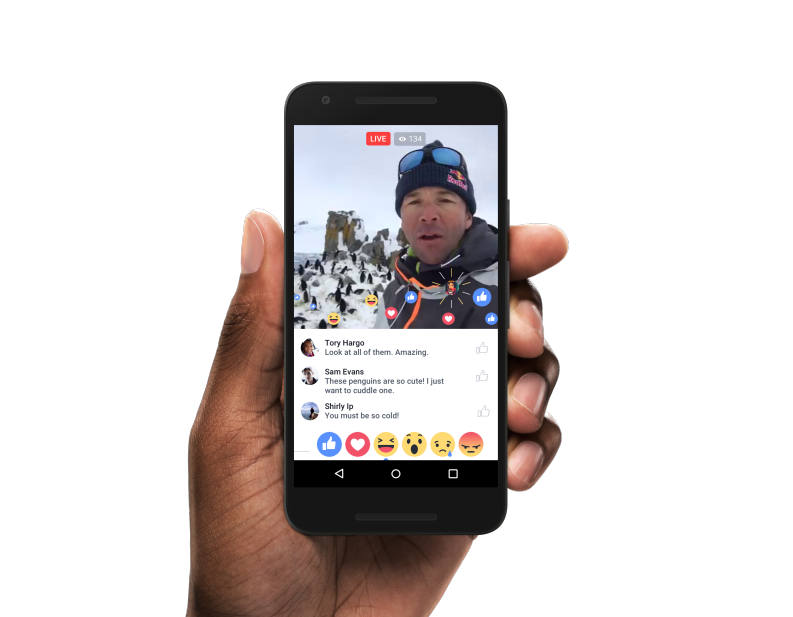
Facebook CEO, Mark Zuckerberg sees video as the next “mega trend” but just in case, the social media giant has invested millions of dollars for content to help things along. “We’re making progress putting video first across our apps and executing our 10-year technology roadmap,” Zuckerberg said in a call regarding the company’s fourth quarter 2016 earnings. So far so good, as Facebook users watch 100 million hours of video per day. For brands, utilizing the world’s top social platform is a given—but among 1.7 billion users, it’s easy to get lost.
Here are four ways brands are finding success through Facebook’s video offerings.
Traditional Video
The most obvious use of Facebook video is to upload something, but sometimes the most simple solution is the best. Facebook may be rolling out fancy new options to post video across its platform, but a video of Taylor Swift falling on a treadmill earned Apple Music 18 million views. So there’s that.
Among the top 30 brands on Facebook (based on likes), a study by social analytics firm, Quintly found that more videos were posted than photos, at 54.9 percent and 45.1 percent, respectively. “The fact of there being more video posts relates to a general trend of brands having incorporated videos into their marketing strategy as one of the most engaging forms of content, thus benefiting from users experiencing the brand in a more exciting way than via a picture or simple text,” Quintly noted in the report.
Sometimes the most effective message doesn’t come from the brand, itself but from a creator. According to July 2016 research by SheSpeaks, 32 percent of US creators who currently work with brands cite Facebook as the best platform for influence marketing, followed by Instagram at 24 percent.
Facebook Live
Since its inception a few years ago, brands have experimented with new and interesting ways to engage audiences in real time. Food brands have found particular success among hungry viewers, from how-to guides to creating food-based works of art and tours of company kitchens.
For Hershey’s Chocolate World, the company wanted to inspire chocolate lovers to visit their attraction in Pennsylvania. To commemorate the first Hershey Chocolate Tour last May, they decided to bring Facebook users along for the ride. The result of the brand’s very first Facebook Live stream was 118,000 viewers tuning in throughout the day.
“Not every social media tool is applicable for every brand, but Facebook Live truly hit our ‘sweet spot’ for engagement at Hershey’s Chocolate World. After 18 livestreams, we have generated over 240,000 viewers—and we’re just scratching the surface of the potential this tool has to offer,” said Matt George, marketing associate for Hershey’s Chocolate World Attraction on the company’s blog.
For The New York Times, Facebook Live has become an invaluable source for covering news and interacting with viewers at the same time, helping the news outlet reach 100 million views in December.
“We’re calling this live interactive journalism,” Louise Story, New York Times executive producer of live interactive journalism, told WAN-IFRA. “We’re not calling it video, because it’s inherently different from a produced video. In live interactive journalism what’s happening onscreen is affected by the audience in real-time. This is as much about the audience as it is about journalism.”
Facebook is investing in short-form, original content that will help establish the site as a source for entertainment, as evidenced by its new Facebook TV app. Launching April 5 is Facebook’s first livestream talk program—Never Settle Show—that will not only feature interactions from those watching on Facebook, but other social networks as well. “We’ll have a live, interactive video wall on the set so people will be able to see themselves actually on the show which I think is really different—really compelling,” Never Settle Show host, Mario Armstrong told [a]listdaily.
360 Video
Interactive video offers new ways to experience otherwise static, although highly interesting video. Last April, HBO released a 360-degree version of the opening credits for Game of Thrones, which became the most-viewed 360 video within the first 24 hours, according to Facebook. For the release of Deadpool, viewers on Facebook could watch their favorite “merc with a mouth” doing everything from playing pool to dancing on the bar, resulting in over 11 million views. If you ever wanted to step onto a photo shoot with Derick Zoolander, you’re in luck—over eight million viewers did just that in a 360-degree promotion for Zoolander 2.
Those with Samsung Gear VR headsets can now browse 360-degree videos on Facebook through a new app, making immersion and discovery more convenient.
Video Ads
Video ads are another way for brands to reach their audiences, but with the added help of targeting metrics. Since Facebook videos automatically play without sound, grabbing a viewer’s attention, as well as optimizing for mobile viewership will be key. As of September, around 93 percent of Facebook users accessed the site through a mobile device.
During the company’s 2015 earnings release, Facebook COO, Sheryl Sandberg shared a case study for Microsoft. For the launch of Halo 5, the team at Microsoft Xbox optimized video for Facebook and Instagram by creating content that captured the viewer’s attention in the first 3 seconds—even if that viewer watched without sound. This tactic drove over 380 million impressions and 49 million video views, and “increased purchase intent by 10 points in the US.”
Facebook is currently testing mid-roll ads for its live videos, encouraging creators to upload videos of at least a 90-second duration. The ads only appear once a viewer has watched a clip for at least 20 seconds, which may be less intrusive than a pre-roll ad. Should these tests be successful, brands will be able to engage with viewers who are more likely to pay attention.
“Mid-roll ads are a powerful opportunity for brands to insert their message in a (seemingly) seamless way, without annoying the viewer from the get-go. People will likely be more tolerant of ads because when they’re already engaged in the content. Whereas, with pre-roll, the engagement has yet to begin, which gives viewers an immediate ‘out’,” said Lindsey Buchanan, director of content strategy for ION.

 Reddy continued by explaining how PostIntelligence works, saying “for a normal consumer, it helps make Twitter better by helping them to tweet better. One of the things that we realized is that tweeting is difficult for normal individuals. It takes a lot of time and energy to be up-to-date, understand what to tweet about, and then come up with something. This is a supplementary app that sits alongside Facebook or Twitter and helps you figure out what to say and how to engage people. It helps you discover yourself in some ways. It’s not supposed replace your original voice; it makes it better.”
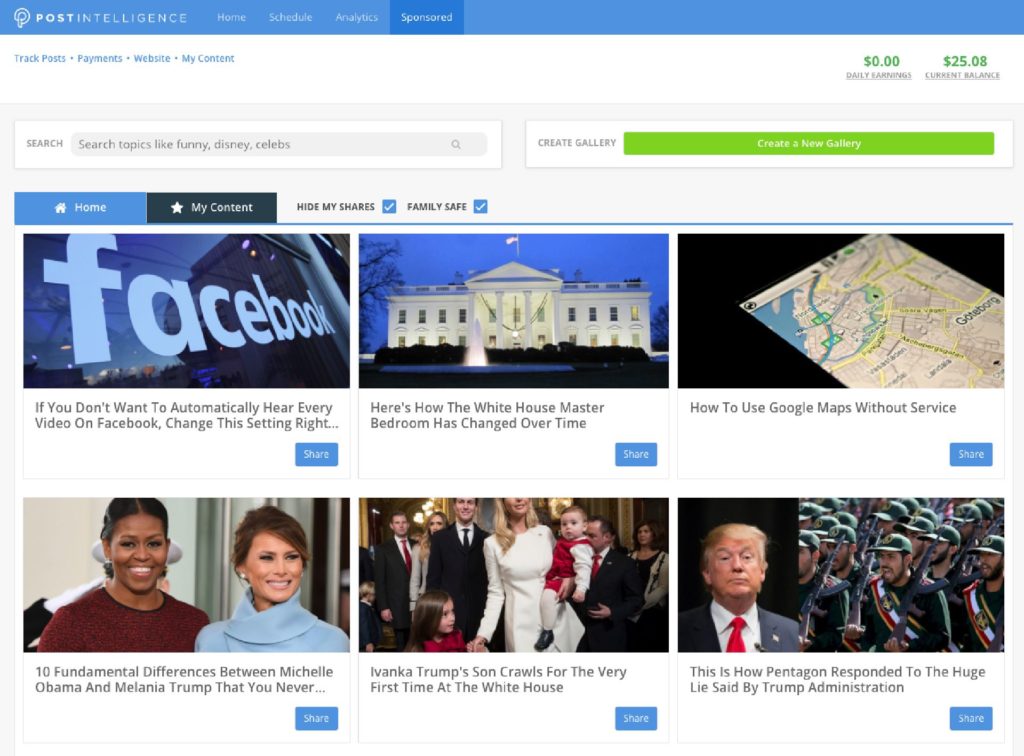 “We mostly hooked up social media celebrities—people with 10,000 or more followers—with brands and sponsorships. What we learned over time was that these sponsorship opportunities tend to be from brands like Uber or Airbnb. But when people posted sponsored stuff on Twitter or Facebook, most people reacted negatively. So, what we realized was that instead of having them talk about a brand, it’s better to give them relevant content recommendations, which is something their audiences would enjoy.”
 Perhaps the biggest challenge for a social media AI assistant is discerning genuine interest from sarcasm, irony and humor.