Ten years ago, Adam Coe was a typical Halo 2 gamer playing in his freshman college dorm room. It was the desire to improve his game that inspired him to create his first custom controller at the age of 19.
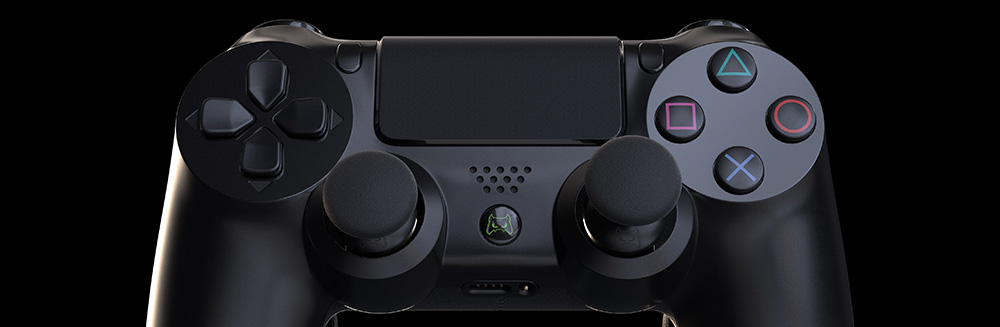
Back then, esports was still establishing itself and Coe didn’t know anything about circuitry or hardware modding, but he was able to teach himself using the internet. Afterward, he founded Evil Controllers and became a CEO. The company modifies existing Xbox and PlayStation gamepads with enhancements such as buttons and paddles on the back so that players can perform multiple actions at once, and changeable custom length thumbsticks for improved control. The goal is to provide esports players and gaming enthusiasts with better equipment for markedly greater performance.
Adam Coe, CEO and founder of Evil Controllers
The company plans on launching the Evil Shift controller later this summer, which features small multidirectional paddles on the back for multitasking. The controller is named as such because “we’re focusing on the way the [back] paddle shifts as well as shifting the brand into esports and addressing a need for improvement for esports controllers,” Coe told AListDaily.
Microsoft has already caught on with the professional gaming audience with its Elite Wireless Controller for the Xbox One, and there are rival companies that offer specialized controllers for competitive play. However, Coe believes that there is still room for improvement, and Evil Shift offers modifications to the Elite controller to make customizations easier. For example, Coe demonstrated how he could switch out the modifications on the Evil Shift and customize its functions without having to connect with an external utility program or use a special tool so that they can be quickly adjusted to suit different games and play styles.
Flexibility and customization is the cornerstone of Evil philosophy. Coe explained how the Evil Shift will avoid falling victim to design obsolescence, even as the company continues to work with esports players to improve it.
“The consumer can invest in an Evil Shift and know that when new games come out and new challenges happen, we’ll have solutions,” he said. “They’ll be able to buy [modification] packs without having to buy an entirely new controller. We’ll always be able to maintain and keep up with designs. The idea is that you’ll always be able to update your controller with the latest and greatest technology when it comes to paddle design and thumbsticks.”
Coe said Evil Controllers’ strategy for growing in the esports market included participating in events and getting Evil Shift into the hands of as many consumers as possible and getting feedback. Evil Shift will also be meeting with professional teams for sponsorship partnerships in addition to engaging with the community. The company has already built a following of over 300,000 Facebook fans over the past 10 years.
“We’ll be utilizing all of our resources to maximize the release of the [Evil Shift] controller,” said Coe.
Since the company focuses on modifying first-party controllers, it doesn’t necessarily have to compete with Microsoft’s Elite Wireless Controller. Players can expect the same build quality and circuitry that they’re accustomed to—but improved. The company plans to focus on the design aspects and how the Evil Controller adds more features to their favorite gamepads.
“We hope that getting the word out about those comparisons will be enough to make consumers realize that just because Microsoft made an esports controller doesn’t necessarily mean it’s the best or greatest,” said Coe. “There are always improvements and things will always change. We’re very excited about the Evil Shift paddles and the fact that they can be hit from any direction. We feel that it’s a major game changer when you compare it to the Elite Controller.”
The company describes the Evil Shift as having a revolutionary design, but from a marketing perspective, it will be treated as an evolution of what is available now for the Xbox One and PlayStation 4. Coe said that the company is particularly excited for the Shift controller on PlayStation because there isn’t a leader in the esports controller space for that console yet.
While professional esports players are Evil’s primary users, the controller may also appeal to a more mainstream gaming audience.
“The beauty of the Evil Shift is that it’s beneficial to esports players, but the design aspects make for a more comfortable gaming experience,” said Coe. “So, even if you’re not a hardcore gamer, you’ll still find benefit from performing multiple functions at once. As games come out with more features, players will need to press more buttons. Controllers have evolved from two-or-three buttons to 20 [in some cases]. More casual gamers can play games more easily and comfortably, giving them the ability to grow into being more hardcore gamers.”
How will Evil Controllers reach mainstream gaming audiences and raise awareness that they can improve on their stock controllers?
“By utilizing media outlets and being at tournaments,” Coe said. “We feel that the Evil Controller is superior to the ones out there. We’ve built a customer database over the past 10 years, and they love the controller and feel that it’s better. That, in turn, makes them want to tell other gamers about the controller for a better gaming experience. That’s one way we’ve been organically reaching gamers that aren’t necessarily attending esports events, or watching games on Twitch.”
BrightLocker wants to help game developers connect directly with their fans. The Austin, Texas-based startup has launched a new platform designed to extend game brands directly with gamers, building a community through exclusive content. The platform also allows developers to crowdfund projects, as well as generate revenue from things like merchandise and inside access to the game development process.
John Burns, COO of Brightlocker, told AListDaily that the person who built this platform previously created the PlayStation Network. Burns spent over 20 years in the games industry at companies like Electronic Arts, Activision and Trion.
“Brightlocker has a lot of experience in direct-to-consumer platforms,” Burns said. “The mission we embarked on 12 months ago was to enable and empower developers to connect more with their players by building a variety of technology platforms.”
Burns said Brightlocker’s platform enables developers to have a deeper and interactive experience with fans and players. The platform takes elements that already exist in the ecosystem—like Twitch—but enables fans to have a deep engagement with their favorite developers and a closer relationship with the development process.
Brightlocker is already working with developers like Descendent Studios (Descent: Underground), Edge Case Games (Fractured Space), Bitbox Studio (Life is Feudal), Dark Tonic Studios (Legends of the Brawl), Bolder Games (Red), Mechanical Boss (Solar Gun), Mirum Studio (Guards!) and No Moon Studios (Midnight) to connect with consumers. There will be hundreds of games on the platform over the course of this year, based on conversations the company has had since GDC this year.
“Developers can use Brightlocker to acquire new players, connect with and engage with long-term and new fans in making development decisions, and even crowdfund games,” Burns explained.
From the consumer perspective, Burns said Brightlocker allows fans to interact with their favorite games all in one place.
“By engaging with their favorite games, players can get a lot of exclusive content with both physical and in-game items. They can earn influence through guided choices, where a player can help make choices in the game development process, and they participate through interactivity, which will be incorporated into our own livestream technology on the platform,” Burns said.
One developer, which is fairly early on in the development process, will offer a variety of choices for gamers every three days. Another developer will have an artist livestreaming every Tuesday, while the executive producer will livestream every Friday.
“We’re agnostic when it comes to livestreaming platforms, but we believe our platform brings a richness to the experience that doesn’t exist on other platforms,” Burns explained. “Facebook and Twitch have big audiences and we won’t be competing with those platforms on day one, but we’ll have a strong audience early on and we expect it to grow exponentially.”
While everything on Brightlocker will be flexible for developers to price, including things like a one-on-one livestream with a game producer or getting a copy of the game or swag, Burns said the typical subscription will be $4.99 and $9.99 per month.
“Some elements are free, and there will be a lot of offerings from game developers that don’t require a subscription or microtransaction,” Burns said. “Some things will require a one-time payment and others will be based on a subscription.”
Brightlocker also incorporates a crowdfunding option, although this model differs from other companies.
“We looked at the space and felt it needed to evolve,” Burns said. “If someone comes to our platform, they can subscribe to a game they like or they can microtransact to the various benefits. This allows developers to crowdfund through microtransactions without requiring players to give out a large amount of money. Players can feel comfortable that they have a long-term relationship with the developer. There’s no equity funding.”
Brightlocker will support all types of game developers, from early concept to post launch, as well as all platforms including PC, console, mobile and VR.
T-Mobile was front and center at the MLB All-Star Game for the second consecutive year earlier this month in Miami, trying to hit a marketing campaign out of the park with a series of magenta-inspired events.
The world’s third-largest wireless carrier, which reported 1.3 million customer additions and record service revenues during its Q2 earnings call last week, was in South Beach giving fans unique ways to #ScoreUnlimited baseball with chances to win Home Run Derby tickets via in-market activations with Marlins star Giancarlo Stanton. Additionally, there were player-and-logo inspired haircuts, bracket challenges for a chance to win World Series tickets and on-field Magenta Lounges with behind-the-scenes access during the week. The multifaceted campaign culminated with their title sponsorship of the derby.
“When evaluating any partnership, we look at a lot of things, and a big one is fan engagement,” Andrew Sherrard, executive vice president and the chief marketing officer of T-Mobile, told AListDaily. “Anyone can share content, but is it fun and authentic—and are they engaging fans? MLB shares similar qualities when it comes to providing fans and customers with more access to the things they love, so we have a lot of fun with this partnership.”
The All-Star Game marketing, which had portions livestreamed on a screen above the company’s Times Square store, is complemented with T-Mobile commercials starring Giancarlo Stanton, Bryce Harper and Nelson Cruz. Sherrard says the strategy this year is all about creating fun content that resonates with baseball fans of all ages.
“Baseball’s fan base is as uniquely expansive as its talent, and we love working with MLB and the players to reach that audience,” Sherrard said. “The sport has had a big year, and while a lot of young stars are shining, we saw some great veteran performances during All-Star Week as well.”
This year’s derby certainly got a jolt with a scintillating performance by ball-smashing New York Yankees rookie outfielder Aaron Judge, who’s quickly become one of the game’s most marketable stars. The derby was the most-watched since the 2008 edition, and fans who tuned in saw one particular color dominate the landscape at Marlins Park.
“For those who don’t know T-Mobile, they know our magenta hue, and associate it with the brand—even if they call it pink,” Sherrard says. “It’s an incredibly unique color for a brand, and something we embrace 100 percent. With everything we do, there is a lot of magenta, so extending this is huge from a brand recognition standpoint.”
T-Mobile’s magenta has hit nine different baseball teams by way of procured partnerships—Los Angeles Angels, Seattle Mariners, San Diego Padres, Cleveland Indians, Boston Red Sox, Washington Nationals, Atlanta Braves, Minnesota Twins and Miami Marlins—and 11 big leaguers—Bryce Harper, Giancarlo Stanton, Nelson Cruz, Evan Longoria, Justin Turner, Miguel Sanó, Dexter Fowler, Brandon Philips, David Peralta, Khris Davis and Mike Napoli.
Sherrard added that T-Mobile’s MLB.tv Premium offer since the start of the season has delivered an estimated value of $45.2 million to customers with over 600,000 hours of streaming this season alone.
“All-Star Week is an experience in itself. You have fans traveling to see their favorite players, local fans and then a massive national broadcast audience, where many are also consuming content digitally and on mobile devices, and engaging on social media throughout the events. It’s about creating a totally different and enjoyable campaign to reach baseball fans wherever they are—spanning across broadcast, digital, social, in the stadium and regionally,” Sherrard said. “As the Un-carrier, we’re all about giving our customers more of what they want. So with everything we do, we look at what’s important to our audience.”
FoxNext’s mission is to take 20th Century Fox and Fox Television intellectual properties to the next level with memorable experiences. Some of its most prominent creations include the Alien Covenant VR experience In Utero, where viewers witness the birth of a neomorph from the creature’s point-of-view. Earlier this year, the group formed FoxNext Games as the company’s first in-house game development division, which acquired Aftershock Studios (the studio that was created after Kabam was acquired by Netmarble) in June.
Amir Rahimi, VP and GM for FoxNext Games LA Studio
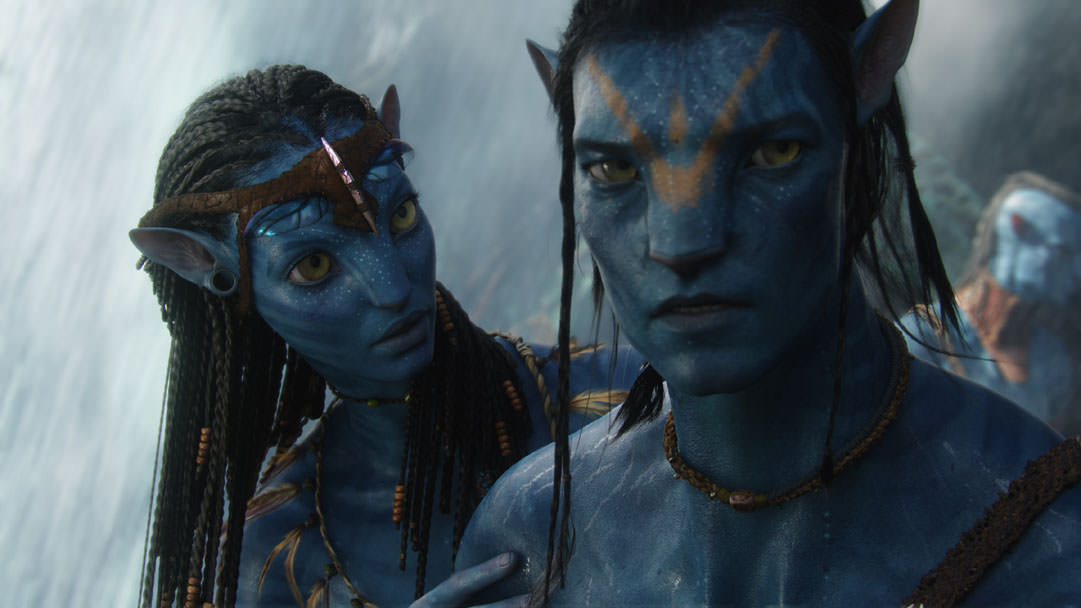
Headed by Amir Rahimi, vice president and general manager of the Los Angeles studio for FoxNext Games, the studio is currently developing a number of mobile games. Most prominently, it is working alongside Lightstorm Entertainment to create a mobile MMO based on James Cameron’s Avatar universe.
“The current focus for us is to build games that we can legitimately have over 100 million people play,” Rahimi told AListDaily. “That’s the scale, scope and opportunity with Avatar.”
Rahimi was joined by Aaron Loeb, president of studios at FoxNext Games, as the two discussed the how the close relationship with other branches of the media company could redefine how we think about entertainment in the future.
Whether you’re talking about Fox’s film, television or gaming side, “the appetite is there from all of the creators to figure out how to reach fans and audiences in ways that they are being entertained today,” said Loeb. “If fans want an experience that exists on a different screen or collaborates across multiple screens, then everyone here is excited about figuring that out.”
What led FoxNext Games to acquire Aftershock Studios?
Loeb: FoxNext is a next generation storytelling company, formed in January this year as part of Fox. Its mission is to bring the best possible storytelling to different media. It has location-based entertainment, a VR studio, and a games group. That games group, under my co-president Rick Phillips, has been primarily focused on licensed games with partners to make incredible games like The Simpsons: Tapped Out and Family Guy: Quest for Stuff. The company recently wanted to expand into first-party game development—working directly with creators to make the amazing worlds that are part of the Fox family. Aftershock was a company that was formed when Kabam was acquired by Netmarble. It comprised of a bunch of great teams that have been working together for years—industry veterans who have made some the world’s greatest video games for over a decade. Similarly, we have a team in San Francisco that has been working together for a long time, making beloved games. So, these are the kinds of people we’ve brought together—great video game creators that fit in the FoxNext vision.
Aaron Loeb, president of studios at FoxNext Games
Is FoxNext focused exclusively on mobile games?
Loeb: FoxNext as a group has a portfolio that is mostly mobile games when you look at the licensing and development, but there are also PC and console games. Aftershock is currently working exclusively on free-to-play mobile games, but never say never about other platforms.
Rahimi: One of the things that I really like about this group is that we’ve been successful on just about every platform—console, PC, web, mobile. We view mobile as a great platform because you can reach tens of hundreds of millions of people with the right type of gameplay, IP and social mechanics. It’s the best place for us to be today, but we have confidence in being able to branch out to lots of different platforms.
What are the benefits of having in-house studios compared to licensing IPs?
Rahimi: There are both creative and business advantages. If you’re a studio and you’re giving up a certain percentage of your revenue for licensing, then that makes it more difficult to do things like user acquisition. Being one team and keeping an entire chunk of money for pouring back into more effective marketing is awesome. From a creator’s perspective, there’s an enormous wealth of creative talent at Fox. So, to be within the same walls and have access to the luminaries that exist here creates amazing opportunities for collaborations. I think the next generation of entertainment is going to come from people who are not just game developers or storytellers, but people who combine the two in fascinating ways.
Loeb: This is what Amir and I and our teams are most passionate about—joining a company of game developers where we are able to partner with people who have mastered the storytelling craft across other media. They’re looking to us in the game space to figure out how we’re going to partner together as we create games that live within the worlds that they’ve created. Amir and his team are working very closely with Lightstorm on Avatar. To partner with them, learn about their world, and work that closely is an incredible gift. It cuts straight through all kinds of communications issues because we’re there together. It’s almost impossible to overstate the advantage of that direct collaboration.
After licensing IP for some very successful games, does FoxNext essentially have a head start in the mobile gaming space, as opposed to having to establish the brand from scratch?
Loeb: I believe that whether people have heard of FoxNext Games or not, they’ve certainly heard the name 20th Century Fox and Fox Television. These are known entities that have brought some of the world’s favorite entertainment for 100 years. So, it definitely has a leg up, especially if we say we’ve partnered directly with the creators their favorite show or movie. We’re partnering directly with the creators to make a game that really lives as part of that world. There are very few companies that can—or are even trying to—give you that.
With that relationship in mind, is FoxNext focused on creating games based on existing IP or are there plans to create all original games?
Rahimi: I think we’ll strike a healthy balance of both. One of the exciting things about joining Fox is working on IPs that make for very compelling video games, but our approach is not to think about it as a license or as something that will give us a leg up in any way. We look at the IPs and choose them based on what we love the most and think will most naturally translate into a compelling mobile game experience.
Loeb: Right now, we’re working on a slate of games, and one of them includes one of the biggest properties in the world. However, I think everyone at FoxNext shares a vision of how worlds and intellectual properties are going to be defined across many different screens and media simultaneously. So, having people who are great storytellers, whose preferred canvas is video games, partnering with people who prefer movie screens to figure out how to make worlds together from the get go—existing on both the movie screen and on the game—that’s where the opportunity lies.
Rahimi: We’re excited about Avatar, not just because it’s the top-grossing film of all time, but because James Cameron has created a world that is so expansive and perfect for the type of game we want to build made it a natural marriage. Moving forward, there will be opportunities to team up with people from Fox and build something from scratch. One of the most thrilling highlights of my career was working on a game called Boom Blox (2008) with Steven Spielberg where we did exactly that. He had an idea that he wanted to express, talked to us about it, and we collaborated for a year-and-a-half to bring it to life.
The next Avatar movie isn’t expected to release until 2020. Will it be difficult to keep a mobile game at the top of mind for that long, or does it make planning cross-marketing opportunities easier?
Rahimi: Honestly, the world is so rich and perfect that I don’t sit and worry about when the movie is going to come out and what sorts of cross-marketing opportunities there are. We should definitely think about that at some level, but we’re just focused on creating the most authentic and incredible experience we can. When we talk to our partners at Lightstorm, we see enormous interest in the things that they’re doing today like the Cirque Du Soleil show and the Avatar Experience at Disney World. It might not seem top of mind on a day-to-day basis, but there is a huge amount of interest out there that’s hungry for new experiences. So, whether the game launches well ahead of or right along with the movie, we know that the audience will be there when we do.
What do you hope will be the defining characteristic of the FoxNext Games brand in the crowded mobile space?
Loeb: There’s one answer that towers over all the others, which is really high quality. We will require the highest standards of ourselves to make sure our players are experiencing the worlds and stories of the games in ways that are unique, exciting and thrilling to surprise and delight. The reason we joined this company is because it has defined itself as creator first, quality first, and one that took a chance on The Simpsons. It’s a company that has made sure that whenever it releases something, it is of an uncompromising quality level. That’s where we start, and that’s the expectation that we place upon ourselves.
Moving forward, what will be the relationship between television, movies and video games?
Loeb: What we’re seeing emerge across the media landscape is that you have franchises—although we prefer to think of them as universes worthy of devotion—where something like Avatar lives as an incredible event of a movie. But when you hear James Cameron and other people from Lightstorm talk, it also lives in many other forms. We’re seeing this in all of the great creative minds now. A movie might also have an expression on television, giving it regular touchpoints through those episodes every week. Then you also have games, which is the part we’re obsessed with. With games, you can engage with the most devoted fans, who can play every single day. It becomes an intimate part of their world. Through their smartphones, they have that universe in their pockets along with other players that they can interact with and talk to every day. They all live in that world together, and ultimately, it all ends up being interconnected. You see characters that might show up first in a game and then on a TV series before possibly being in a movie. You could have storylines that cross all of these [media]. When people love a storytelling universe like Game of Thrones, Star Wars or Avatar, you can’t have too many ways to be a part of that world, and having all these different mediums is very powerful.
This week in game promotions, Pyre takes to Reddit, Nintendo puts users in its key art and Shigeru Miyamoto makes his directorial debut.
Pyre
From Supergiant Games, the creators of Bastion comes Pyre, a party-based RPG for PlayStation 4 and Steam. The game runs in native 4K with compatible displays on both Steam and PS4 Pro.
Supergiant is a small but scrappy team of just 12 people. Thanks to the success of Bastion and Transistor, the indie studio has a loyal following and pre-orders for Pyre have rocketed up Steam’s Top 10 list.
The team took to Reddit for an “Ask Me Anything” (AMA) session that allowed fans to interact directly with the game’s creators. A Pyre community was also created on the social network Discord in preparation for the game’s release.
Pyre‘s two-disc soundtrack, composed by Darren Korb will be available for purchase and streaming July 25.
In Miitopia, Nintendo’s lovable Mii avatars star in their own RPG adventure based on the players themselves. To help illustrate how fun it would be to star in their own game, users who log into their Mii accounts through the official Miitopia website can add their avatars to the key art. On the other hand, if any of the pre-made characters on the website seem more fun, players can scan a QR Code to add them to their game.
Of course, marketing for Miitopia is all about the Mii characters. Players can use QR Code patterns to import existing Mii or TomodachiLife characters or in addition to the game’s own Mii Maker application to create their own. In this way, Miitopia becomes the Mad Libs of video games—allowing users to cast anyone from their best friend to worst enemy in the story’s key roles.
The game is also compatible with 25 different amiibo figures that will unlock special content such as costumes and mini games.
In Miitopia, it’s up to players and their friends to stop the Dark Lord, who has stolen everyone’s faces. The entire first chapter is available as a free demo, along with a second demo that allows users to insert their own Mii characters into a game trailer.
#Miitopia stars you and your friends’ Miis in a comical RPG adventure. Choose from over 12 different Jobs! Check it out on #2DSXL July 28th. pic.twitter.com/NoPeIkE5Y4
— Nintendo of America (@NintendoAmerica) July 20, 2017
Hey! Pikmin
Pikmin are tiny, curious plant-like creatures that get into all sorts of trouble and adventures. Armed with their own unique abilities, these little guys don’t mind being thrown at things to help their friend, Captain Olimar on his expedition. Hey! Pikmin was created by Shigeru Miyamoto, who is most famous for creating Mario of the Super Mario Bros.
In his directorial debut, Miyamoto created three Pikmin short movies that can be purchased and viewed in the Nintendo Store. Those who purchase all three for the Nintendo 3DS will be able to view them in 3D, along with animated storyboards created by Miyamoto himself.
“I hope that you will take a peek at a day in the life of Pikmin and see what they’re up to when they have jumped out of the game,” Miyamoto wrote on the official website.
Hey! Pikmin gets its very own Pikmin amiibo that, along with the Olimar amiibo will unlock secret locations within the game. Nintendo is offering 40 Gold Points to those who buy the digital version of Hey! Pikmin on Nintendo.com or Nintendo eShop on a Nintendo 3DS family system.
This week in marketing statistics, online video views are up, US homes get “smart” and Tekken 7 kicks the competition.
Video On The Go
Mobile devices will lift online video viewing by 20 percent this year, Zenith predicts. By 2019, Zenith predicts that 72 percent of all online viewing will occur on mobile devices.
So how long should marketers edit their online videos? At least 15 minutes, according to video marketing automation platform TwentyThree. The company studied over 1.5 million videos to better inform marketing and content creation teams about preconceived video myths and found that while 80 percent of videos are under five minutes, they drive less than a third of overall video engagement. Mid-form and long-form videos, which are at least 15 minutes long, drive over half of all video engagement despite encompassing just eight percent of all video in the study.
TV Isn’t Dead
Online advertising has already overtaken TV advertising in size, according to the Price Waterhouse’s (PwC) annual Entertainment & Media Outlook report. PwC says that the online advertising market outpaced TV in 2016 by roughly $15 billion, and it will be a $116 billion market by the end of 2021.
Marketers aren’t giving up on TV just yet, according to research firm Media Dynamics. This year’s Upfronts set a new record with orders for $19.7 billion worth of prime-time commercial spots on cable and broadcast TV networks, an increase of 5.9 percent over last year.
Shopping Savvy
Fifty-seven percent of surveyed consumers across generational groups say social media influences their shopping decisions, according to a Yes Lifecycle Marketing report titles “A Marketer’s Guide to Reaching the Generations.” Of all the social media platforms, Facebook is a strong influence with 44 percent of consumers across the Gen Z, millennial, Gen X and baby boomer age brackets.
Gen Z is now the single largest audience segment at 26 percent, according to Nielsen’s new Total Audience report. Millennials and Gen-Z now comprise 48 percent of the total media audience.
Influencer marketing may be one reason social media is so . . . well, influential with consumers, but they’re not willing to believe everything they see. According to Izea’s State of the Creator Economy report, 32 percent of consumers can tell if the influencer or source of the sponsored post has actually tried or used the product based on the content itself. In addition, 28 percent of consumers judge an influencer marketing post based on its relevance to the influencer’s brand and previous product endorsements.
Regardless of their reasons for shopping, consumers are doing less of it offline, according to the US Commerce Department. Retail sales unexpectedly dropped for a second month in June, Commerce Department data showed. In addition, purchases dropped 0.2 percent despite a forecast of 0.1 percent gain.
Despite shopping more online, technology can be a strong enabler of emotional connection when leveraged appropriately, according to Forrester Research. Live-person sales and self-service kiosks both elicited a 60 percent positive interaction, Forrester found. The report examines digital experiences ranging from automated self-checkouts to onsite messengers and video chats.
Tech Love
Consumer enthusiasm for technology is driving the US consumer technology industry to an estimated 3.2 percent revenue growth in 2017, according to the Consumer Technology Association (CTA). Both emerging technology and mature categories are exceeding expectations, CTA found, earning $321 billion in retail revenues ($251 billion wholesale).
By 2021, 55 percent of all homes in North America are expected to be smart homes, according to a new forecast study by Berg Insight. The company found that in North America, more than 31 million smart home systems were in use last year. Of those systems, 26 million were individual solutions for a single function and five million were whole-home systems.
Gamers should love this one—the global heads up display (HUD) market size is expected to reach $13.5 billion by 2025, according to a new report by Grand View Research. While video game enthusiasts are used to such displays on-screen, adding HUDs to real-life objects (especially vehicles) is on the rise. Demand for HUD systems demand will reach 34.87 million units by the year 2025, Grand View Research predicts.
Gaming Galore
Video game software and hardware combined could reach $200 billion by 2021, according to Digi-Capital’s new “Games Report and Database Q3 2017.” That’s a compound annual growth rate (CAGR) of 7.9 percent for the next five years.
In the meantime, total video game spending in June (including hardware, software and accessories) increased seven percent versus a year ago to $765 million, NPD reported. Accessories like controllers and game cards were the only category to see a decline in spending last month.
Hardware spending grew 27 percent over June 2016, to $231 million in June, with the PlayStation 4 as the best-selling hardware platform. Thanks to the Nintendo Switch, hardware spending has grown 19 percent year to date to $1.4 billion.
Portable products spending for the likes of PlayStation Vita and Nintendo 3DS continue to decline, however. Year-to-date spending on portable hardware has fallen 40 percent.
NPD’s Top-Selling 10 Games For June 2017 (Across All Platforms):
Tekken 7
Injustice 2
Grand Theft Auto V
Crash Bandicoot: N. Sane Trilogy
ARMS*
The Legend of Zelda: Breath of the Wild
Mario Kart 8
Overwatch*
NBA 2K17
Horizon Zero Dawn
* does not include digital downloads other than full downloads on Steam
Video games bring entertainment to all, from grandpa playing video poker on his phone to a teenager on her Xbox. Sixty-seven percent of US households own a device that is used to play video games, according to the Entertainment Software Association (ESA). While each generation has their own way of doing things, how they play video games is not as different as you might think.
Gen Z Teenagers (Age 13-17)
Generation Z represents 14 percent of mobile gamers, according to a recent report by Tapjoy, and 27 percent of all gamers, according to the (ESA). This digital native generation has never experienced the world without video games—a fact that that teenagers take full advantage of.
Pew Research found that 81 percent of teens age 13-17 either have or have access to a game console such as PlayStation, Xbox or Wii. Of those, 91 percent of teen boys own game consoles and 70 percent of teen girls say they have or have access to a console.
A study by YouGov found that video games were on the top of the “coolness scale” for teenagers, especially boys. So, what games do teens think are “lit?”
According to YouGov, the most popular video games with Gen Z are (in no particular order):
The Legend of Zelda
Call of Duty: Black Ops
Grand Theft Auto
Pokémon
Minecraft
CS:GO
Millennials (Age 18-34)
According to Tapjoy, this segment represents 21 percent of mobile gamers and the largest segment (29 percent) of all gamers, per the ESA.
A Pew Research study found that 67 percent of respondents age 18-29 play video games, but only 22 percent of them say the term “gamer” describes them well. Men in this age group are more than three times as likely as their female counterparts to identify as gamers (33 percent versus nine percent).
Millennials play the most on mobile and tablets, according to a recent study by PayPal and SuperData, followed by PlayStation 4. The study also found that millennials prefer to play games in the action, shooter and strategy categories above all others.
Gen X (Age 35-54)
According to the ESA, the average gamer is 35 years old. This generation remembers when playing video games cost a quarter and home game consoles had wood paneling. Gen X represents 18 percent of all gamers (ESA) and 19 percent of mobile gamers, according to Tapjoy.
After mobile and tablets, consumers age 35 and over prefer to play on a PC, PayPal and SuperData found. This demographic’s favorite genres include action, puzzle and casino.
A study by Pew Research found that while playing video games is especially popular among young adults, a substantial number of older adults play video games as well. More than half (58 percent) of those ages 30-49 play video games, Pew found. Among this age group, men are twice as likely to identify as gamers than their female counterparts (15 percent versus seven percent).
Despite this feat, just four percent of Americans over the age of 50 feel that the term “gamer” describes them well, Pew Research found. Labels aside, 40 percent of those ages 50-64 and 25 percent of those 65 or older play games.
While each generation has its own way of enjoying game sessions, two things remain the same: every age group plays mostly on mobile, and video games are for everyone.
Mobile gamers are seeing old friends on new devices as legacy video game brands expand onto mobile. As the largest gaming market today, mobile offers accessibility for games that might normally require expensive or out-of-date hardware. Flexible monetization options for publishers mean they can share franchise favorites with a business model that suits their needs.
Mobile gaming brought in a staggering $41 billion in revenue last year, far outpacing the second largest segment (PC) at $34 billion and the highest earners utilize a “freemium” monetization model (i.e. free with optional purchases). For legacy franchises headed to mobile, choosing a monetization model is about finding the right mix between gameplay and ad interruption.
Sega has begun transporting its massive catalog of classic games to mobile with Sega Forever, beginning with the first Sonic The Hedgehog. While nostalgic gamers may have been willing to pay a premium for their old favorites, Sega chose a business model that utilizes optional purchases.
“The model that we’re using for the monetization is twofold,” Mike Evans, chief marketing officer of Sega‘s mobile division in the West, told AlistDaily. “First of all, all of the games are free. Now, within mobile, there are lots of free things, so they need to believe they’re really free in that sense. There’s a pre-roll in front of the game, which a user can skip [with purchase]. After that, they play the game and it’s uninterrupted except for an ad if they want to save the game.”
Level-5’s classic Layton puzzle series has just launched for the first time on iOS and Android as a premium title for $15.99. Originally available exclusively on Nintendo DS, Layton’s Mystery Journey: Katrielle and the Millionaire’s Conspiracy launched first on mobile and will be available for 3DS later this year.
For the series’ creator and Level-5 co-founder Akihiro Hino, embracing the mobile platform is a natural step forward.
“With Layton’s Mystery Journey on the smartphone, we’re getting that knowhow—the knowledge of how to move it onto the smartphone platform,” Hino told GameSpot. “We are actually looking into trying to bring past projects onto smartphone, [or] maybe even a new console, like Switch.”
Nintendo’s own exploration of mobile titles has resulted in tremendous financial success with Pokémon GO (a freemium model) and mixed success with Super Mario Run, which costs a flat $5.00 but is considered high-priced by many when comparing it to other mobile games. But one thing is for certain, bringing classic IPs to mobile inspires purchases in other areas.
“When we launched Pokémon GO with Niantic, there was a direct impact on Pokémon hardware and software sales increasing,” Doug Bowser, senior vice president of sales and marketing at Nintendo of America, told AlistDaily. “Mobile games actually bring new players into the franchises. They engaged in that content and wanted more of that experience, so their next purchase was more of the dedicated handheld and software side.”
For Square Enix, adapting classic IPs like Hitman, Lara Croft and Deus Ex for mobile devices was an exercise in both game design for a new platform and customer relations.
“Since we’re working with well-known gaming franchises, we need to make sure and communicate to our hardcore fans as well as the very casual App Store crowd,” Nicolas Bertrand-Verge, marketing content and community manager for Square Enix Montreal told AlistDaily. “Everyone has to find something they like in what we’re doing.”
Thirty-five years have passed since Blade Runner and Atari were married in a marketing move of premium product placement that was well ahead of its time when Atari was featured both on-screen and positioned on promotional billboards for the movie. The film starring Harrison Ford was envisioning the future, and in 1982, the 10-year-old arcade and video game console was the future.
Of course, a lot has changed since then for the fabled brand. The likes of Nintendo, PlayStation and Xbox blitzed into the scene and now preside over the $150 billion games software and hardware industry. Atari stagnated culturally, failed to re-pivot and faded into eventual bankruptcy.
But the iconic yet beleaguered brand has slowly bounced back from oblivion and has been playing toward a path of revitalization since the 2013 bankruptcy by turning into an interactiveentertainmentproductioncompany and licensing its brands more widely—and strategically—for a consistent revenue stream.
It turned to an old friend on Wednesday to rekindle some of the nostalgic marketing mojo when Atari announced a partnership with action figure and collectibles maker NECA to introduce wearable tech products and social audio experiences for the Ridley Scott-directed sequel Blade Runner 2049 .
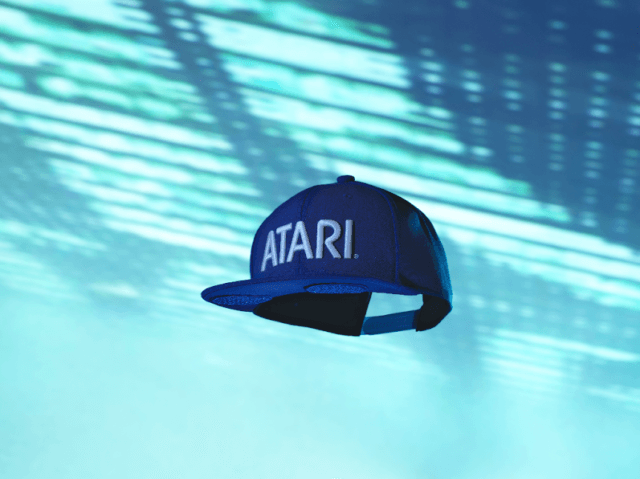
Atari describes the smart baseball hat as a social synchronous broadcast application that enables multiple Speakerhat users to experience music and other programming simultaneously, and in perfect sync. The Audiowear-powered, Bluetooth-enabled Atari Speakerhat will be complemented with a limited-edition Blade Runner 2049 version, which can be experienced at San Diego Comic-Con this week.
The partnership appears to be a no brainer while further positioning Atari into wearable and connected consumer products, because the first second of the Warner Bros. Pictures-released Blade Runner 2049 trailer, once again features Atari front-and-center as a car zips past a giant Atari logo lit up at night in a futuristic city. The brand appears once more at the 10-second marker of the film trailer, which is set to hit theaters October 6 and stars Ryan Gosling and Harrison Ford.
One notion is clear from the trailer—Atari is still alive and relevant 32 years from today. But is it thriving and doing well today? It appears that Atari is positioning themselves for a resurrection.
With hopes of cashing in on the resurgent popularity of retro games, Atari is jumping back into the video games sphere and appealing middle-aged customers with the Ataribox, a new home video game console—its first new console in 24 years.
AListDaily sat down with Frederic Chesnais, Atari’s CEO and chairman of the board, and Michael Arzt, chief operations officer of Atari Connect, to talk about how the brand plans to rise again after being relegated to the bottom of the video game rung.
How do you introduce the Atari brand today?
Chesnais: When you think about Atari, we want consumers to think about us like they would with Virgin and all of their categories—we’re more of a transmedia brand. Our goal is to create interactive entertainment. It could be software or hardware. We just want to be a producer of interactive entertainment content because this is where the DNA of the company and brand is. I returned to Atari [in 2013 after leaving in 2007] and brought the company back from bankruptcy. We’ve come a long way. I think we have to be cautious. We’re just trying to do the right thing. Of course, we make mistakes, everybody does. But we’re all very passionate about the brand and the lifestyle-transmedia feel. It’s just unbelievable.
How are you repositioning the Atari brand during this evolution?
Chesnais: I think brands do matter. The only thing that we’ve been sure of for the last 20 years is that it’s very difficult to create new brands. So when you have a brand, you stick to it. On the other hand, we have two different types of brands. We have certain games like Asteroid, Millipede and Centipede which are brands by themselves. At the same time, we have the Atari umbrella, which is much bigger than games. It’s really a brand that speaks to generations. It’s more of a lifestyle brand than a gaming brand. So, if you look at the strategy of the company, we’re doing four business verticals at the moment to take advantage of the lifestyle uniqueness: games, casino games, connected devices and television shows and multimedia productions. This is what we’re doing to take advantage of the brand and to reposition it to make it relevant—not only for the generation who grew up with Atari, but also for the young generation that didn’t.
Why is it important for Atari to position the brand in wearable tech products? What are you hoping to accomplish with the Atari Speakerhats in your quest to create next-generation social audio experiences?
Arzt: Atari has always been a company that’s about enjoying entertainment together. Social audio is a logical extension of other forms of shared media that a new generation of Atari fans are already interested in. Younger consumers are all about experiences—whether that’s online games, live events or travel—and sharing these experiences with their community. Wearables are a logical extension of this, enabling this collaborative enjoyment anywhere and anytime. Our new Speakerhats are the first of several active tech products in development that foster this “connected lifestyle.” In the case of the Speakerhats, our partners at Audiowear are working on synchronous technology that effectively evolves old “silent disco” private-listening tech to enable a shared experience. Atari has always been a pioneering brand. It’s about opening up new frontiers in which Atari delivers fun in innovative ways, rooted in the junction of tech and entertainment.
How does the Blade Runner 2049 activation help speak to a whole new generation of Atari fans as a pop-culture lifestyle brand?
Arzt: More than anything else, we look at our presence in that world and the year of 2049 as a sign that we have an enduring brand, even in a dystopian future that’s depicted in the film. There are recurring examples of Atari—very good ones, in fact—throughout entertainment in numerous films, TV shows, books, etc. That’s because it’s an iconic brand that means something beyond just video games to the many creators that grew up with the brand. Passing their love and nostalgia for the Atari brand on, they’re now becoming the arbiters of taste for the current generation. When an Atari logo, game or physical product shows up in high-profile entertainment “events” like Blade Runner 2049, The Walking Dead, Stranger Things or another, it registers not only with established fans, but also with a new and even younger audience. These fans then often seek out the Atari brand and we want to be there for them with entertainment that speaks to them while staying true to the brand’s roots. If we get it right, our new and old fans will think that Atari is still a cool brand that’s doing cool things with cool partners.
How is your consumer marketing strategy evolving at events like San Diego Comic-Con?
Arzt: San Diego Comic-Con is very much a community-driven event. So, whether it’s the biggest high-profile brand partners like Blade Runner 2049, or quieter-but-no-less-important opportunities like our comic books with Dynamite, or our board games with IDW, Atari will always be about delivering fun transmedia experiences and strong value to the fan base that already loves our brand, as well as introducing us to new fans. We’ll continue developing innovative value-add experiences that not only enhance the Atari brand and the brands we partner with, but also add to the enjoyment of our fans, regardless of medium.
What is the messaging and the marketing that you’re putting behind mobile games? How are you trying to shine in a very competitive mobile market?
Chesnais: Games are just one of our business categories. With mobile games, we’ve had a good experience. We’ve reached a very high number of downloads. We have a very good level of expertise in areas like simulation games. On our end, it’s pretty natural, but we keep investing in these types of games like Goon Squad, Lunar Battle as well as RollerCoaster Tycoon Touch. There are many different types of games that we don’t do—like shooters—but we know simulation and the other types of games we’re very comfortable with. Casino games are popular in the US and very strong in Europe. We try to select the things that we know the best. This is where you can make an impact. We have spent enough money in the marketplace to know where the players are . . . at least certain types of players—the ones we want. If you look, for instance, at Roller Coaster Tycoon Touch, which is the last 3D mobile version of our simulation games, we have over seven million downloads and more than 300,000 DAUs already and the game has very good reviews. So, I think we’re just going to capitalize on that. If you’re doing mobile, you just have to go country-by-country, because the message is different in each.
Why is it critical to be licensing your IP?
Chesnais: We’re soon going to be licensing scripted television series based on the Atari properties. They are like game shows that are shooting as we speak, and will air in Europe most likely in November. We’ve also granted licenses for three movies. If you take any of our intellectual properties—like Missile Command, for example—it could be a game, a mobile game, a console game, a PC game, a comic book, a scripted TV series and a movie. Then you have the merchandising of the property. You could have a book about the property. You could even have an attraction in a theme park that would be called “Missile Command.” We have enough IP to have our own amusement park—easily, like 20 attractions based on Atari properties. Any IP can be part of transmedia strategy. That’s what we’re trying to leverage.
You recently partnered with Tapjoy to announce a deal that enables players to earn free in-app coins by watching videos and engaging with ads from Tapjoy’s premium advertising partners. Why is this a good marketing and ad model for the games industry?
Chesnais: First, it’s an option. No one forces the user to watch the videos. The ads are targeted toward certain types of users. If they watch the ads, we’re giving them in-game rewards, and we’re getting paid by advertisers. We’re very sensitive of the players because the last thing we want to create is negative feedback. So, we’re testing with the ads. You have to be careful. You have to listen to what the players are saying. Down the road, this type of business model will become more and more important because you’ll be able to target your ads to a certain audience. As far as publishers are concerned, this is going to be a bigger revenue stream for us. It’s something you cannot ignore.
What’s the first thing that consumers should think about after hearing “Atari?”
Chesnais: That Atari is a brand that basically brought together the revolution in tech and the revolution in entertainment. That was the purpose of the Pong console. If you look at our Speakerhats, I hope consumers will remember it as something that brings a form of revolution in digital entertainment, and a way they can enjoy certain types of experiences.
The original Quake wasn’t designed for esports when it took the PC gaming world by storm in the ’90s. In fact, the term didn’t even exist yet, and id Software’s studio director Tim Willits, who has been around since the dawn of Quake, is still surprised by how it grew into a model for esports today.
Tim Willits, studio director at id Software
“I’ve worked on every Quake and I can tell you honestly we never thought that competitive gaming would be like it is today,” Willits told AListDaily. “It’s unbelievable. From the early days of Quake 1, clan play and tournaments naturally happened as people wanted to see who the best players were. Even QuakeCon wasn’t our idea. I’ve watched as Quake tournaments grew from 32 people in a hotel to filling up stadiums and with multi-million dollar prize pools. Gaming has evolved from friends seeing who’s the best player to mass market entertainment.”
Bethesda partnered with ESL to catapult Quake Champions into the esports space with the ongoing Quake World Championships in full swing across Europe and North America, featuring the new 1-vs-1 Duel and 4-vs-4 Sacrifice modes. The battle for the $1 million prize pool reaches the next stage at the Regional Finals, August 5 and 6, followed by the Finals to be held on the main stage at QuakeCon in Dallas, TX, August 24-26. Thirty-two Duelers and eight teams will compete for a share of the $1 million prize pool.
“Of the 32 Duelers, 12 will come from BYOC,” Willits explained. “You can come to QuakeCon and take part in Open Qualifier to compete for part of $1 million prize pool. One-versus-one is unique to Quake and a lot of fun to watch.”
Willits said his biggest worry with unleashing Quake Champions to pro gamers was that everyone would play as the same champion, but that hasn’t happened. Pros are using different champions and strategies.
“We’ve seen a good uptick in Twitch viewers with the championship,” Willits said. “We’re still in beta, but we’re adjusting the game and getting the network code as solid as we can. We’ve learned a lot and taken a lot of guidance from pro gamers.”
At QuakeCon last year and at IEM Katowice this year, id Software introduced 50 to 60 Counter-Strike and Overwatch pro gamers to Quake Champions to gather their feedback. That feedback led to the new Sacrifice game mode that was designed specifically for competitive play. It’s a mode that Willits said id tweaked three separate times to get it just right for the pro gaming scene. The first iterations of this 4-vs-4 team-based mode were fast and fun to play, but they lacked the central objective for spectators to follow. That’s been fine-tuned now, just in time for this massive tournament.
“We had an ESL event with Team Liquid and Team Rogue at E3 this year and the crowds were amazing,” Willits said. “A lot of these pro guys played Quake originally and a number of Overwatch teams have Quake players on them. We hired John ‘Zero Four’ Hill as our esports manager and he’s been working with these teams to get them on board. They’re excited about Quake Champions.”
While ESL is running the tournament for id Software, the game developer signed AMD on as its signature partner for QuakeCon. Other sponsors include AT&T, Twitch and Amazon.
“Our focus has always been around gaming, but we’re trying to do more this year,” Willits said.
Quake Champions is very uniquely positioned to not only take QuakeCon by storm, but also to find a place among the top esports. “Quake is the original arena-based shooter,” Willits said. “It’s very fast, movement is used as both offense and defense, and the dexterity and skill of the world’s best Quake players is amazing. It has a long legacy as the first 3D game and the first game to offer client server architecture. Most people have had their first PC experience playing a Quake game over the years.”
Willits believes the Duel mode in first-person shooters is a big hole missing in esports today—one that Quake Champions can immediately fill. “Pro gamers love it because it’s all about their skills and they stand on the stage alone as champion,” Willits said. “The fact that a lot of these guys love Quake, and a lot of the companies that run tournaments and events also love Quake, allows Duel mode to fill that spot.”
Allowing 15,000 members of the public into E3 this year gave Willits a preview of what QuakeCon and Quake Champions esports might look like. “The ESL space was next to the Bethesda booth and it looked like we had half of the show floor,” Willits said. “It was a well-trafficked area and the online traffic was good for us.”
With id Software designing Quake Championsfrom the ground up for esports and seeking pro gamers’ input during the development process, the stage has been set for something old, yet new, to rise up.
“We’re excited about the future,” Willits said. “The challenge for us now is to focus on QuakeCon, get through the beta, and get this game out in final release. Then we’ll build out that player base to accomplish what we set out to do with Quake esports.”