Diversity Proves To Be A Pressing Topic At Cannes Lions

Cannes Lions is an annual celebration of creativity for marketing mavens. Every year brands, agencies and celebrities compete not only for awards and recognition at the French Riviera-based fest, but to make a change as well. Fun and games aside, the week-long event is also a goldmine for meaningful conversations. This year’s hot-button topic particularly reverberated around diversity.

A digital billboard created by Mother London read, “Stop talking about equality and make it happen.” The billboard was prominently on display above the Grand Hotel and remained there for the entire span of the Cannes Lions festival.

‘The Fearless Girl’

In honor of International Women’s Day, State Street Global Advisors created the now iconic “The Fearless Girl” statue—dropping her in front of the famous “Charging Bull” statue into Bowling Green Park in lower Manhattan. The overnight sensation was installed under the cover of darkness and became an instant conversation piece worldwide, but not without its controversy. “The Fearless Girl” took home three Grand Prix awards on the first day at Cannes, followed by a glass lion, and more.

“The placement of ‘The Fearless Girl’ in the epicenter of the world’s financial capital helps not only promote our commitment to women in leadership today and tomorrow, but it also establishes an interesting emotional and rational aspect to responsible investing,” State Street Global Advisors’ chief marketing officer Stephen Tisdalle told AdFreak.

Diversity Demands Action

According to a survey of 500 members of the Fast Company community, 71 percent of respondents believe their organizations respect diversity of thought, but an overwhelming 85 percent said more needs to be done.

Separate research found that men appear in ads four times more than women and have seven times more speaking roles, according to J. Walter Thompson and the Geena Davis Institute on Gender in Media.

Marketing executives, public figures and people in entertainment were at Cannes Lions trying to make a change.

Keith Weed, chief marketing and communications officer at Unilever, after launching Unstereotype Alliance to eradicate outdated stereotypes in advertising: “We’ve seen true progress in our industry, but it doesn’t go far enough. Our job isn’t done until we never see an ad that diminishes or limits the role of women and men in society. We want to work with our peers across the industry to develop new ways of working, to share knowledge and approaches, so that we can scale the Unstereotype commitments. We believe cross-sector collaboration will lead to sustained transformation. This is no longer just a social imperative but a business one, progressive ads have been found to be 25 percent more effective and deliver better branded impact.”

Kathleen Hall, corporate vice president of brand, advertising and research at Microsoft: “Advertising is a reflection of culture and sometimes can be ahead of the curve and help effect change.”

Philip Thomas, CEO of Cannes Lions International Festival of Creativity: “ . . . The conversations around diversity and representation have moved toward practical and effective solutions to encourage equality in creativity.”

HP’s chief marketing offcier Antonio Lucio says the ad world needs to walk the talk when it comes to diversity, per AdWeek. “If I could point at one thing that is getting in the way of real progress in our industry, it’s the lack of diversity. We’re spending way too much time talking about it, not enough time doing what needs to be done. If you believe in innovation, if you believe in improvement, diversity becomes a business imperative much more than a values issue. . . . We believe our ability to deliver more innovation and better innovation from a product standpoint and our ability to connect with our customers around the world will improve by having teams that are diverse in their composition.”

Airbnb chief marketing officer Jonathan Mildenhall took to Twitter to raise the issue of ethnic diversity at Cannes Lions, per Campaign. “I feel this insane responsibility to use my profile to make sure that when I look around, I can see the next generation of CMOs that might look like me. The next generation of CMOs that might identify with my same sexuality. The next generation of female CMOs that might have brown skin.”

Rev. Jesse Jackson called out the tech world and Hollywood to be more diverse, per The Hollywood Reporter: “For too long, Hollywood has stereotyped people in ways that have either damaged the culture or been indifferent to change. . . . We must brand our values. Branders must heed that call, I think maybe more than politicians. They are willing to explore the other side. . . . There is a struggle for the soul of America.”

Frank Cooper, global chief marketing officer of Blackrock, citing Uber’s crisis as a lesson for the industry, per The Wall Street Journal: “You have to model behavior from the very top, especially for a startup company still significantly developing. . . . People are inherently uncomfortable with people who are not like them—with people who don’t look like them or act like them.”

Oscar-nominated actress Gabourey Sidibe (Precious), while addressing the crowd at Cannes Lions, per The Hollywood Reporter: “I am not a fad . . . “I’m [an] anomaly. I’m not supposed to be here and be part of the Hollywood conversation because of my body, because of my skin, because of my age, but I’m still here because I am also the audience. [Entertainment is] moving in an amazing way. I think if this were 2007 instead of 2017 I probably wouldn’t be here, I wouldn’t be worth listening to.”

Actor Sir Ian McKellen (The Hobbit, Vicious) teamed up with Vicious producer Gary Reich to create a series of short films by and for the LGBTQ community, with Facebook as a broadcast partner, per The Hollywood Reporter: “I’ve been impressed with gay rights all over the world [and] how much commerce wants to be involved. Hollywood, to crudely sum it up, has tended to deal with fantasy, tended to deal with escape. Branding has to be up to date otherwise. [Brands] come up with a response to the world as it really is. It’s a much different approach to anything that Hollywood would do.”

Ida Rezvani, senior partner at WPP,during a diversity pane, per The Guardian: “When it comes to broader diversity, we’ve got a long way to go.”
 

It Takes More Than Nostalgia To Make ‘Sega Forever’

This is the first of a two-part interview series with Mike Evans, chief marketing officer of Sega’s mobile division in the West.

Sega has begun transporting its massive catalog of classic games to mobile with Sega Forever, which officially launched globally on Thursday with the first Sonic The Hedgehog and other select titles. Every two weeks, a new game will be available as a single app and will hail from a console from any Sega era—from SG-100 all the way to Dreamcast.

Modern features like leaderboards and cloud saves have been added to the gameplay but otherwise the titles won’t veer from the originals. Each game is either free with ads, or a user can make a single in-app purchase of $1.99 across all games that will disable a pre-roll.

With two decades worth of games to parse through and endless online feedback available from a global fanbase, making decisions for a campaign of this size is no small task. AListDaily sat down with Mike Evans, chief marketing officer of Sega‘s mobile division in the West, and explored everything that went into Sega Forever and the resonance of an evergreen IP.

How did you choose the first five Sega Forever titles?

These titles were chosen for a very particular reason. [These are] all Genesis titles. First, Sonic the Hedgehog—a mass market title. We shipped 15 million of these on the Genesis, which is incredible. It’s Sega’s best-selling title.

The next thing is the historical context. Back in ‘89, when the Genesis shipped, the pack-in title was Altered Beast. Comix Zone is a great title, released later on in the Genesis lifecycle. Then, we wanted to put in a little bit of a core fan game, so we’ve got RPG Phantasy Star II. A funny fact about this particular game: When you think about the size of games these days, they can be huge, but not necessarily on mobile. On the console platform, when it shipped, it was a whopping 6 MB, which is quite sizable. It’s funny how things have changed.

And then the final title is Kid Chameleon. For people who haven’t played it, it’s just a great platformer, and it plays really well on mobile. After that, it’s just a combination of anniversaries and fan demand.

Mike Evans, CMO of Sega’s mobile division in the West.

Sega has over 1,000 published titles. How do you decide which games to revive?

This is a big community project for us. We’ve hired some really core guys to come and work with us from it. So, part is understanding what the community would like, and the other part is which titles make sense commercially.

We’re starting with the Genesis platform. My belief is it changed the fabric of what gaming was and started to build it towards what it is today. Many of the big IPs we launched were on that platform, so we thought it’s a great place to kind of introduce people back to that experience. Then we’ll be going both forward and back to start peppering in some of the different experiences.

We’re also looking at anniversary dates. On June 23, we have Sonic the Hedgehog’s anniversary. It would have been 26 years since he first appeared on the Genesis platform.

So he can rent a car?

That’s right. So [Sonic] did appear actually just before that. He was an air freshener in a racing game, funny enough, for one of the Sega games. And then he evolved to be a character in his own right. Also, Alex Kidd was Sega’s mascot before Sonic. It’s a combination of those factors, and as we go forward, we’re going to be listening to requests. I know many people are going to be saying, “When can I see Panzer Dragoon?” for example, which is a title for the Saturn we’re actively looking at. 

Sega Forever games are ad-supported and with the option to buy. What convinced you to use this monetization model?

The model that we’re using for the monetization is two-fold. First of all, all of the games are free. Now, within mobile, there are lots of free things, so they need to believe they’re really free in that sense. There’s a pre-roll in front of the game, which a user can skip [with purchase]. After that, they play the game and it’s uninterrupted except for an ad if they want to save the game. 

A lot of people have asked me, “Why not release these as a single [app]?” There are a couple of reasons. If you have a single app and you’re downloading a lot of content into this app, the app can get very large, very quickly, particularly when you’re talking the likes of Saturn or Dreamcast games. We’ve decided to allow the user to create their own folder, and they can choose what content goes in there. It also allows us, from a business perspective, to build a network, which is a key part of our strategy.

There is talk of new IPs down the line. Can you tell me a little about them and how they fit in with the Sega family?

As we release these apps over a period of time, we’re going to start to build up a really good understanding of audience. We start to understand the growth and strength of the IP, the demographics, the cycle graphics, and the games that they’re open to playing.

The big question that I always ask myself is: how elastic can we be with our IP? There’s an example out for the moment, a remake of Crazy Taxi called Crazy Taxi Gazillionaire. The quest here for me was to understand, if you are going to make a Crazy Taxi game, could you not drive, and can we transpose that onto a model which works very well on the App Store?

We don’t do this lightly. We have a panel of Sega fans who we work with and we spend much time play testing and trying to understand what the important includes are. What we discovered was that narrative, the original characters and the music are all very important, including the music by The Offspring. The funny thing about mobile games is that a lot of people won’t often listen to the music because they’ll have the sound turned off. But we took the decision that is was necessary as one of the core links.

If you think back to the original Crazy Taxi, you have to understand the IP. A lot was rooted in rebellion: you against the school, you against social cliques. You were driving around in this open world with almost impossible time limits.

We knew we were going to take a satirical approach. This particular story is set in San Francisco in a way that Crazy Taxi was. This time, you are running a local lovable—but kind of crazy—taxi company. The story unfolds as it’s you in charge of this crazy taxi company, and you’ve been running it for a couple of years. In comes ridesharing and it’s about the struggle, the topical but fun struggle between ridesharing and the local taxi firms. I think a lot of people should enjoy it.

Are you a gamer? What are your favorite games?

Absolutely. Going back a few years now, my father bought the Atari 2600. My mother scolded him at the time because I think he spent the month’s rent on it. But I kind of knew at that time that my life was never going to be the same again. That platform differs for a lot of people, but I think it’s where Sega Forever really folds in.

After that, I played a lot of platforms. I spent a lot of my university life playing the N64 with Mario Kart and Goldeneye was really one of the first multiplayer-style shooter titles. That was great. 

My favorite game of all time is probably Sid Meier’s Pirates!, an open world real-time strategy game. It was an incredible game. You just got lost in the fantasy of the world. Very swashbuckling in that sense, and it’s still a game which I go back to today on my mobile device.

Stay up-to-date about our next interview installment with Mike Evans by subscribing to our newsletter

Dell Engages Gamers Using Two Distinct Brands

While industry analysts and companies have reported declining PC sales in recent years, Dell has had a remarkably different story to tell. The company has enjoyed 17 consecutive quarters of year-over-year (YoY) share growth, and it shipped over 11 million PCs last year with 6.2 percent YoY shipment growth. The company is looking to continue that trend by investing heavily in gaming using its premium Alienware products and its newly launched Inspiron Gaming brand.

“We are making significant investments in the gaming business and in the Dell consumer client business,” said Frank Azor, vice president and general manager of Alienware, gaming and XPS at Dell in a press briefing. According to Azor, Alienware leads the market with its 13-inch gaming notebook, which launched over a year ago. Among other technological leaps forward, Dell was also the first to bring 8K monitors to market. Dell also takes pride in having the largest selection of VR systems, with all Alienware notebooks being VR-ready and its desktops having a path toward VR support.

The Inspiron Gaming desktop was introduced at E3, and it is the first Inspiron model that is built for gaming, designed around the new AMD Ryzen processors at a price that starts at $600. This is in stark contrast to Alienware’s one-year exclusive OEM partnership with AMD to be the first to offer an Area 51 gaming desktop that features the insanely powerful 16-Core Ryzen Threadripper processor and up to three graphics cards to handle everything from VR gaming, to 12K gaming and livestreaming at the same time—pushing the boundaries of high-end desktops.

The need for two separate gaming brands came from listening to its audience.

“We at Alienware have been listening to our customers, and one of the things they’ve been asking for have been more affordable gaming systems, and we’ve been responding to those requests with the Inspiron gaming line,” said Azor. “They’ve been asking for more VR-ready systems, and we’ve been doing that with the entirety of the Alienware portfolio, and brought it into XPS for folks that want a gaming and VR capable system but without all the flash an Alienware or Inspiron Gaming system has to offer. And they’ve been asking for Alienware peripherals, which we haven’t had for a while now, but we’re bringing them back this year.”

Alienware peripherals, which include gaming mice, keyboards and high-end monitors, will be high quality and will feature the brand’s iconic designs such as custom lighting. Dell plans to showcase these peripherals at esports events, and Alienware designed headsets are currently being planned. In the meantime, the company is focused on distinguishing the Alienware brand from Inspiron Gaming for consumers.

Bryan de Zayas, director of marketing for Dell Gaming

“Alienware is focused on driving innovation and performance, which is what it has been doing for over 20 years, and that will not change,” Bryan de Zayas, director of marketing for Dell Gaming, told AListDaily. “One example of that is our leadership from a VR perspective and making all of our products VR-ready. We’re the first to launch an entire line of notebooks—including the Alienware 13—that are VR-ready out of the box. We’re going to continue driving that innovation, and as you would expect, that comes with things that are more expensive, but we’re not going to pull back and compromise.

“So, we had a choice. Were we going to address this ever-growing market with the Alienware brand by cutting things out or were going to leverage a very well respected and established brand we have with Inspiron? That choice was very easy. We decided to develop these products from the ground up, brand them, and market them as Inspiron Gaming products. The key difference is that Inspiron products will focus on the lower price band growth segments of the gaming market.”

“The Alienware brand is something that we built 20 years ago, and there’s a certain expectation when it comes to buying and owning an Alienware product,” Azor added. “We have to invest a considerable amount of cost into delivering and meeting those expectations. Those costs go into innovation, performance, the industrial design and so on. As a result, Alienware products are at premium price points. In order for us to preserve the promise of what Alienware has delivered, we have to make those investments. If we don’t make them, then the brand will no longer meet expectations. That’s a large part of the reason why the Inspiron Gaming products are not branded Alienware. The approach for how we designed those products is for them to be very good gaming products but not necessarily premium gaming products. It was very important for us to set proper expectations with customers and that’s why we decided to brand the two products differently.

The AMD Threadripper OEM partnership does much to set Alienware up as a premium brand. When asked how the partnership came together, de Zayas said: “The exclusivity from an OEM side came together because of the platform that we have. Alienware Area 51 is a top of the line desktop in the marketplace and it has the full performance capabilities. Our customers expect that from us. In discussing with AMD, it made sense for them from an engineering and timing perspective to partner with Alienware and bring it to market.”

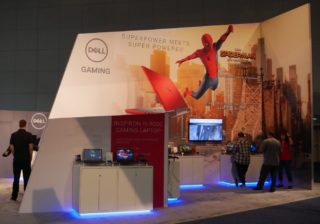
In comparison, the Inspiron Gaming brand is being promoted in partnership with Sony and is reaching a different segment of gamers with the movie Spider-Man: Homecoming, as shown in a TV commercial featuring Dell’s new Inspiron 15 7000 Gaming laptop.

“The broad popularity of the Spider-Man franchise and its relevance with gamers presented a real opportunity to launch Dell’s Inspiron Gaming line as part of the campaign and bring Dell’s expertise in high-performance gaming to more people,” said Gerri Tunnell, senior vice president, consumer and small business marketing at Dell in a statement. “Spider-Man fans care about authenticity to the brand, character and storytelling, so partnering with Jon Watts on the TV spot allowed Dell to uphold a seamless look and tone, stay true to the film and deliver to the Marvel community.”

https://www.youtube.com/watch?v=OpyTlGIW_H8

Meanwhile, Alienware remains fully committed to community engagement to promote its products.

“We have critical engagement with our customers through avenues like Twitch, Twitter, YouTube and Alienware Arena,” said Azor. “We’re engaging about 10 million customers at any given time. We’re listening to what we’re doing well, where we can improve, what are the new things they want to see from us, and where we can help drive the gaming industry.”

“We want to talk with, work with, and engage with gamers around the world in a real way,” said de Zayas. “It’s very easy for a company to come and try to sell somebody a product by trying to win on price and things like that. The way we want to win is by working with our gamers and engaging with them.”

Dell has invested in a number of key areas, with one being Alienware Arena, which was started over 10 years ago and now has over six million members. It started as an amateur tournament location, which is a precursor to many things you see today in esports.

Another area of expansion over the past year is with Alienware.tv, which is designed to engage with the community every day. Livestreams take place on Twitch, Twitter and other platforms, but Alienware wants to “go beyond that to where gamers live and breathe every day,” said de Zayas. The company has an Alienware.tv studio based in Austin, Texas, which produces content six hours a day, four times a week to engage with gamers by talking with them and answering questions in real-time. Complementing it is a mobile broadcast studio, which will be traveling across the US and working with esports partners like Team Dignitas and Team Liquid.

“For Alienware and Dell, it isn’t just about what’s going to sell products. It’s also about making sure we’re proactively engaging with gamers,” said de Zayas. “You will get solid gaming performance at more affordable price points from Inspiron Gaming, and from Alienware, you’re going to get the best technology out there.”

The Inspiron Gaming tower was shown for the first time at E3 2017 in a dual booth setup that showcased both it and the Alienware brands together. The Area 51 desktop featuring the AMD Ryzen Threadripper processor was also being showcased for attendees while Alienware.tv presenters broadcast their show from a different part of the event.

AListDaily sat down with de Zayas at the show to discuss how the brands benefit from being shown together.

“E3 is the third time that we’re at an event with this kind of setup,” said de Zayas. “We were at PAX South and PAX East with two different booths, and you’ll consistently see that from us for the remainder of this year. Why that’s important is so that people understand that both of these brands have different promises to gamers. We’re fully committed to this and we’re investing more than we ever have into gaming, including in esports—where you’ll see both brands. There is a commitment from Dell as a company in the gaming space, not just from a product side, but there’s investment in marketing, esports, and community engagement. Those things require a focus on both Alienware and Inspiron Gaming to tell a complete story.”

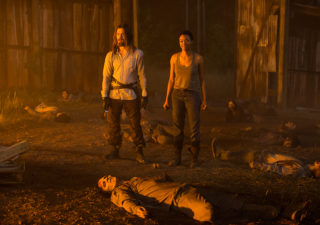
‘The Walking Dead’ Producer David Alpert Explains Why Skybound Is Serious About VR

Consumers will soon be able to zero in and immerse themselves in an army of weapons-wielding zombies, because The Walking Dead is coming to virtual reality with a slate of multiple video games scheduled to be released based on the show’s terrifying and visceral world.

Skybound Entertainment, the multiplatform entertainment company responsible for such TV hits as Outcast as well as the companion series Fear the Walking Dead, announced they’ll be partnering with Skydance Interactive, a division of David Ellison’s Skydance Media, to co-develop and produce a number of original VR video games based on the post-apocalyptic universe of The Walking Dead.

The VR game will feature an entirely new setting and cast of characters, and players will be able to experience the different world through an innovative contextual interaction system. The collaboration between the transmedia giants marks a multi-year strategy to further solidify a foothold in gaming by leveraging VR and the pop-culture phenomenon from the TV show, which is currently filming its eighth season. The Walking Dead previously went for a similar deadly combo by pairing the show with console and mobile games.

David Alpert, CEO of Skybound Entertainment and executive producer of The Walking Dead, joined AListDaily for a video interview to shed light on how they’re looking to build engaging experiences in new worlds while telling compelling stories.


On how The Walking Dead has built an emotional connection with viewers through storytelling . . . 

What we’ve learned from making The Walking Dead is that you can have a really big world—you can go deep into a genre that most people don’t think would be for them—and as long as you keep a very simple, emotional hook at the center, everyone can relate to it. So if you look at the beginning of our show, it’s a man looking for his wife and his son, and when he finds them, he learns that she’s taken up with his best friend. So that’s a very simple, emotional concept that can connect with everybody. You don’t have to like zombies to like that story. You don’t have to like father-and-son stories. But that story is instantly relatable and emotional. And once people are in on that journey and that connection, they’re willing to go along with, “okay, the world’s falling apart, and the military couldn’t stop the zombies, and now there’s a zombie outbreak, and the zombies have formed herds and are taking over entire parts of Georgia.” So people are willing to go along with that because they’ve connected emotionally with Rick’s journey to find his wife and his son. I think the same things applies to VR. A lot of things we’ve seen have really put you in completely alien worlds and completely disconnected spaces, and those are fun. And for me as a fan boy, I love experiencing them, but I think they’re still a little bit esoteric in that they’re not giving me that instant, emotional connection. What we can get from emotion allows us to go into crazy landscapes and crazy worlds. But if you don’t have that emotional connection, I think you’re dead in the water.

On the impact VR has on marketing . . .

I think that VR is a brand and marketer’s paradise. Ultimately, people have described VR at times as an empathy machine. They’ve talked about the idea that it allows you to connect with a story in much greater detail, and much more emotionally and intuitively than you can just by watching it, or reading it and playing it. If you think about that—“what does a brand want?” A brand wants you connect with them. What does a marketer want? It wants to forge and emotional connection between you and a product. So if you can actually have that immersive experience in the world around a brand, and you have that emotional connection to it, you’ll much more likely be predisposed to it. You’ll be much more likely to make those connections. So for us, if you can come with a narrative-based solution in VR, and around a brand—that to us is sort of the holy grail of marketing.

On the challenges of marketing VR . . .

When you’re talking about marketing VR, I think we still have to get VR to be a thing. And honestly, when I say “a thing,” people don’t even really know what they mean when they say “VR.” A lot of people think VR is just 360-degree video. And yes, 360 video is a type of VR, but it’s really just video. You can watch 360 video on Facebook and on your cell phone. It doesn’t necessarily need to be [with a headset]. When you talk about fully immersive video when you have agency and control, that’s an entirely different thing. But I think the fact that there isn’t yet a unified term is part of the problem. Another part of the problem is also it’s still in the early adopter stage. You have tech heads and gamers—those are the people who’re really picking it up. Look at TV—everyone has a TV. They know what a TV is about. They understand what a TV show looks like. They understand all of the different things they can get from a television. They don’t yet think that way about VR, and I still think we’re a few years away from it. But I think the promise of what VR has, and that emotional, visceral and instant connection you make when you put on the goggles is the thing I think that gets everyone so excited.

On maximizing the potential of VR . . .

One of the things that we look at is, “how do we use the medium for its full benefit?” And the thing that VR does is it gives us a sense of presence in a way that you don’t really feel in film and television. So when you watch film and TV, you’re very cognizant of the distance between you and the screen, the fact that there’s a disconnect between you and the screen. And what we see in VR is you’re able to be placed directly in the center of the storytelling. Gone, Skybound’s serialized VR thriller, is about a couple of people at a park who are watching their kids, and then all of a sudden one of the girls goes missing. One of the great things for us about that story was, since you have presence, and since everyone’s kind of watching the kids together, you have a sense of culpability when the child goes missing. You don’t just feel bad for the mom, who just lost her daughter—you feel like in some way that you were responsible. The ability to evoke those types of emotions in viewers, those are things that we work hours and hours on any sort of scripted entertainment. Any experience that can inspire awe and fear in a five-minute short is really an impressive piece of filmmaking—it’s a medium really worth getting into.

On Skybound’s upcoming movie Invincible . . .

We’re stoked about Invincible, the longest and most successful superhero comic book outside of Marvel and DC. It’s one of the biggest comic book stories that has yet to be told, and we have millions of fans that are waiting to see it. And we couldn’t be more excited. It’s created by Robert Kirkman, who created The Walking Dead, and as the CEO of Skybound, it’s what I’ve been most determined to do right in my entire career. We found the perfect home for it by partnering with Universal Pictures, as well as Seth Rogan and Evan Goldberg. They’re going to write and direct the adaptation for us. We’re incredibly excited about this because we think that the time is right—it’s a father-and-son story, but it has a little bit of that edge that Deadpool brings.

Cannes Lions: Legacy Brands Use Modern Means To Stay Relevant

Cannes Lions started as a modest, marketing-themed film festival in 1954 and oh, how the present-day, yacht-filled times have changed. Through the annual gathering, Cannes Lions and other legacy brands explore and celebrate changing views, fashions and what consumers care about the most. This year has been no different at the French Riviera-based fest.

Named “Creative Marketer Of The Year,” Burger King drew praise for the company’s fearless and modern campaigns. The quick service restaurant chain continues to push boundaries from the “Proud Whopper” supporting the LGBTQ community to the controversial ad that hijacked Google Home and Android devices by saying, “Okay, Google, what is the Whopper burger?”

For Fernando Machado, Burger King’s head of brand marketing, staying relevant is just part of keeping the right people at the helm at his burger chain’s marketing efforts.

“We’re trying to make our brand cool enough to attract the people we want to work for us,” he told Campaign. “That’s what we’re really crazy about. If we win awards, that’s perfect. It motivates everyone—our franchisees, our staff and, of course, our agencies because it makes it easier for them to hire the right people for our business.”

CNN president Jeff Zucker is confident his company is rising to the needs of today’s consumers by exploring new methods of communication—influencers. The 37-year-old news organization has partnered with YouTube star and Beme founder Casey Neistat.

“The world has changed—we can all get news 24/7 from any device, any outlet,” Zucker said at Cannes Lions, “but we want to tell different stories in different ways, and add to the news. We are not going to attract new viewers by just feeding CNN onto different platforms.

“The way that CNN would traditionally tell a story is so different from the way Casey and Beme would tell a story, both are incredibly valuable, both will find their audiences and that is what I think the new CNN is about—being a multi-platform company that reaches many different audience members on many different platforms.”

Consumers get their news—and just about everything else—on the go, and YouTube has been an incubator for new ad formats. Last year, Google’s video sharing site introduced a six-second, non-skippable ad format that will change the way brands share stories. Fox Networks Group is just one of the forward-thinking company’s already at the forefront.

“This is the first time that a broadcast television company has committed to the ad format, which YouTube introduced last year,” the companies said during Cannes Lions, explaining that the six-second format “strikes a balance between appreciable brand lift and optimal user experience” as more consumers watch premium video content through mobile.

From social advocacy to adopting new technology, legacy brands that adapt are one step further away from irrelevance in an ever-changing marketing landscape.

NBC Sports Kicks Off Esports Plan With ‘Rocket League’ Tournaments

NBC Sports Group has officially jumped into the esports arena and the broadcast giant now follows Turner into the competitive gaming space. While TBS and its ELeague has focused on Counter-Strike: Global Offensive, Overwatch, Street Fighter V and Injustice 2, NBC is targeting Psyonix’s hit game Rocket League and is opening up competitive gaming to the masses this summer with the 2v2 Rocket League Tournament, which has a $100,000 prize pool.

Mike Prindiville, senior manager of NBC Sports Ventures, told AListDaily that the company has spent the past two years studying the esports landscape.

“We’re not just jumping in here—we’ve taken the time to get to know all of the games, teams and players,” Prindiville said. “We’re being thoughtful about our approach with NBC Sports and throughout NBC Universal. There’s a real groundswell of interest in esports across Telemundo, Syfy and our other connected assets.”

This interest has been percolating as esports titles like League of Legends, CS:GO and Dota 2 have commandeered global audiences. Even sports leagues like FIFA, the NFL and the NBA have officially entered this burgeoning business.

“Ultimately, when you look at Rocket League in the last two years, it’s skyrocketed from relative obscurity to huge exposure and ratings with over 32 million players,” Prindiville said. “We look at that game as a perfect entry point for NBC Sports because of our DNA with Premier League, Formula One and IndyCar and the opportunity to work with Psyonix on 2v2.”

The international tournament will begin on the FaceIt platform with regional online qualifiers, which will be divided into competitions for all eight NBC Sports Regional Networks (RSN), as well as additional American and European open qualifying regions. The tournament’s structure will utilize NBC Sports Regional Networks, Telemundo Deportes and NBCU International to run the regional qualifiers across the US and in Europe, which will be played on the FaceIt platform beginning on July 22.

The Regional Finals will be played at NBC Sports Regional Networks studios on the weekends of August 5-6 and August 12-13, and will be livestreamed on the NBC Sports app and Telemundo En Vivo app, as well as other social media platforms. Participating NBC Sports Regional Networks will televise the final hour of coverage from each of the Regional Finals.

The Grand Finals will feature 16 total teams competing on August 26-27 for the inaugural title and the $100,000 prize pool, which will be televised live in the US on NBCSN. The Grand Finals will also be broadcast on Syfy in the UK, Germany, Australia and multiple countries across Latin America, in addition to streaming outlets like FaceIt and RocketLeague.com.

Prindiville flew to Los Angeles to take in the Rocket League Season 3 World Championship at the Wiltern Theater on June 4. “I’ve been to some of the biggest soccer stadiums in the world, and atmosphere is such a key part to experiencing traditional sport,” Prindiville said. “The excitement at the Wiltern Theater mimicked a European soccer stadium, especially with the Europe vs. USA dynamic of the competition and fans chanting ‘USA!’”

NBC will open Rocket League to everyone with this new tournament. “We want everybody remotely interested in this game to have a chance, and we want to honor that Rocky-type storyline so that even a non-pro can get involved and make their way to the Finals,” Prindiville said. “We’re big about grass roots and community.”

On that same trip to LA, Prindiville met with Riot Games and took in some League of Legends competition. However, it remains to be seen whether NBC Sports will pursue televised tournaments of the popular game. For now, its focus is on Rocket League. “As our main entry point, we wanted a game that was 1v1 or 2v2 and was really relatable,” Prindiville said. “We think there’s great crossover from traditional sports to esports with this concept of flying cars playing soccer.”

What NBC Sports brings to the table, beyond a global broadcast audience, is a pedigree for storytelling. Prindiville said publishers and event organizers that he spoke with feel like there’s an opportunity for improved or bigger storytelling in esports. “That’s part of our DNA with the Olympics, Premier League and NBC Sunday Night Football,” Prindiville said. “That’s an important contribution we think we can provide to esports on top of the live broadcast component.”

It’s that live broadcast component that is attracting new advertisers to esports, thanks to the NBC Sports brand.

“We’re a media company and we’re looking to bring in those sponsors, whether endemic or non-endemic, through linear and digital,” Prindiville said. “Linear is more of a complement for esports, since the vast majority of this tournament content is going to live on digital. While a lot of endemics are looking to get on linear, a lot of non-endemics are interested in digital first and foremost. But linear adds more content and more potential impressions for the viewer.”

NBC Sports realizes esports is a digital-first offering, and Prindiville sees esports as a way for the company to build out an improved digital business and stream across its digital platforms, as well as traditional platforms where gamers are currently. “Digital is incredibly important for us and the future of sports,” Prindiville said.

Over the two years of esports research, Prindiville and his team have paid close attention to Turner Broadcasting and ELeague. He was especially impressed with how quickly ELeague competition has evolved.

“They listened to the esports audience and reacted quickly with changes,” Prindiville said. “It’s important to engage with and be involved with the community, and we’ll take a similar approach. Right now, our focus is on season one and getting that done right.”

While CS:GO and Overwatch are popular games for esports fans, Prindiville likes Rocket League because it translates well to broadcast TV.

“We think this game can do well on linear,” Prindiville said. “We’re not talking ratings, but on TV people immediately know what’s going on, and it’s something we feel traditional sports fans will find interesting to watch.”

Intel Doubles Down On Esports Investment

Intel has been active in the esports space for more than a decade, including marketing activations before the tech giant partnered with ESL to sponsor the Intel Extreme Masters (IEM). That global esports tournament is in the midst of its 12th season and has seen both attendance and livestreaming numbers increase as esports has emerged into a global phenomenon.

Lee Machen, director of developer relations at Intel, told AListDaily that the brand used E3 to kickstart new esports activations to expand its footprint with ESL and to incorporate virtual reality into its esports offerings.

“We’ve entered into a very broad expansion of our relationship with ESL from a technology partner standpoint, and we’re going to be powering not only the events that they run with us around Intel Extreme Masters, but all the events that ESL runs like DreamHack, ESL One and any other event that they’re involved with,” Machen explained. “We’re going to be right there with them on the PC side, on the server side, and on everything in-between. We’re going to be their broad-based technology partner.”

In addition to working with ESL on the technology side and as a title sponsor partner on Intel Extreme Masters, Machen said Intel will be very involved on the consumer-facing side at ESL One and DreamHack and other big properties to connect the brand with the global esports audience. The brand is front and center with the Intel Grand Slam, a new activation that awards one million dollars to a Counter-Strike: Global Offensive (CS:GO) team that wins four of ten ESL events.

“That’s going to add some attention and some excitement among the teams that play Counter-Strike at these events that we’re working on with ESL that will be qualified for that prize pool,” Machen said.

Intel’s recent announcements show that the company is in on esports for the long haul.

“When we got started in esports, nobody knew that it was going to grow into what it’s become today, where it’s rivaling traditional sports’ viewership,” Machen said. “We thought at the time that we had to be involved because esports was born out of PC gaming and it uses everything that we can provide on the platform. The level of growth that we’ve seen to this point—where we in a couple of years, there will be over half a billion people watching esports on an annual basis—I don’t think we had any idea it was going to grow to that extent. But the investments we’re making are in an attempt to continue to grow that audience and engagement as much as possible.”

Machen says esports remains a relatively young and enthusiastic community. By getting in early, Intel has been able to put its brand front and center with this community. “That’s hugely valuable to us and our brand, and the trust that we have with that category of customers,” Machen added.

IEM Katowice saw brands such as Sprite and Gillette tap into that PC gaming audience in Poland.

“Other brands that didn’t participate directly in esports like we have—companies like Gillette and Coke—coming on board is going to continue to grow, and it’s worth their time and their advertising investments to come into esports,” Machen said. “But in turn, that money then flows to the events and to the teams and brings more players and raises the level of competition to the point where it’s going to continue this cycle of growth. More money coming in fuels better and better competition, which in turn brings more fans, which is going to bring in more advertising dollars. So, we welcome anybody who wants to come aboard the esports bandwagon.”

For next season, Riot Games is selecting ten teams to join the developer with a $10 million franchise fee and participate in the League of Legends Championship Series (LCS).

“There’s a handful of top titles in esports today that aren’t going anywhere, and I’m not surprised that the owners of those titles are starting to get a little more protective of those titles and want to run those tournaments themselves because it’s getting more competitive as far as attention and team focus,” Machen said. “We’re going to continue to grow the sport, not just as far as viewers for the titles that are at the top today, but with new games and new types of titles that are going to continue to come in.”

One of the new pushes for Intel and esports is virtual reality. After offering playable VR games for attendees to IEM events last season, this season is taking things a step further with VR competition.

“We’re working with Oculus on two Oculus Touch titles, The Unspoken and Echo Arena, and we’re putting together a competition with several events that will ladder up to the Grand Finals in Katowice, Poland next year,” Machen said.

Intel is also sponsoring Oculus and making Echo Arena free to Oculus Rift owners for a limited time, which Machen hopes will bring additional interest into the competitive VR area. VR esports will also open up new opportunities for brands.

“The more time people spend in VR, the more things that exist in the real world are going to start to get built in VR as well,” Machen said. “From an advertising standpoint that would certainly be among the first to enter VR esports because that’s what powers a lot of the revenue around sports in general. I certainly see that becoming a thing as soon as there’s a big enough audience watching in VR to make it a worthwhile investment for some of the companies we discussed earlier, like Gillette.”

Technicolor Takes On A New Business Strategy With Immersive Entertainment

Technicolor, a 100-plus-year-old company who once upon a time was a Hollywood filmmaking behemoth, is applying a nascent system of storytelling—virtual reality—as part of its newest business strategy that aims on positioning them to work in tandem with brands and creators to curate premium content experiences.

The Technicolor Experience Center, a 10,000 square foot space in Culver City, California, is a hub for VR and immersive media for Technicolor and its brands. They work with filmmakers and production companies across movies, advertising and gaming to push the boundaries of immersive storytelling.

“We’re a community for technologists and creators to come and experience content, to get educated on what VR is,” Marcie Jastrow, senior vice president of immersive media and head of the Technicolor Experience Center, told AListDaily. “The whole idea is for us to build bridges, and by creating content, you learn where the gaps and bridges need to be made. We want to educate brands and the communities of creators.”

Technicolor teams worked on eleven diverse films screening at Cannes across major festival categories last month.

Gone are Technicolor’s days of highly saturated color processing—they produced their last frame in 2015. They are still, however, very much part of the color-science capabilities and image-processing pipeline. They still touch every aspect of film and broadcast—close to 70 percent of the movies made in Hollywood—and they’re now focused on advancing the content creation side of the emerging VR business.

Last week at E3, they partnered with Nokia, a company who is leveraging VR in a multitude of ways, to announce a VR content creation partnership around the Nokia OZO+ virtual reality camera and content creation tools. The two companies will collaborate on live-action, 360-degree projects and unveil a series of masterclass sessions for 360 filmmaking.

“If you’re working in a real-time game engine, it’s very different than what content creators have been building for the last 100 years,” says Jastrow, who in the last two months has secured deals with Vicon and Positron to further push the boundaries in the VR ecosystem. “VR gives you an incredible sense of empathy because you’re immersed in the experience. So if you’re a brand trying to connect closer to your consumer, they may want to use VR to get that connection quicker. It allows people to see the entire picture, and it allows you to move and interact with whatever content they’re trying to create.”

Technicolor also partnered with HP and NVIDIA for “Mars Home Planet,” a global project that unites engineers, architects, designers and students to design an urban area for a million people on Mars and bring it to life through VR.

https://www.youtube.com/watch?v=0zytEHXsbzY

“We’re really still at the birth of this industry and it’s going to take all of the partners to get together and really help build it and grow it and make it into something much larger than it is now,” Rick Champagne said in a podcast interview for journalists. “When you get together with a cross-disciplinary group of partners, and everybody’s looking at it from a different perspective, there’s so much knowledge you can gain from that experience. . . . Technicolor is a world-class technology leader and innovator through their research and innovation group, and universally known for their award-winning commercial work through The Mill and MPC. So, they’re an amazing partner really to help push the technology to its absolute limits.”

The Mill and MPC are Technicolor-owned advertising visual effects studios for branded content, advertising and marketing with such credits as the movie-inspired Alien: Covenant VR experience, and the VR/AR companion piece for the live-action short film Wonder Buffalo.

“What we’re seeing is the push for understanding VR and immersive media, and what would that mean to build those experience and push them out to the consumers,” says Jastrow, who manages a cross-functional team of artists, producers, engineers and technologists. “So we’re trying to help large brands understand how to use VR and push it out to the consumers.”

Follow Manouk Akopyan on Twitter @Manouk_Akopyan

Google Pursues Brand Safety In A Polarizing World Of Content

Brand safety has aways been a concern for marketers, but in the wake of never-ending political and social debates, Google is fighting an uphill battle for trust. While YouTube is celebrated for its diversity in discussion and opinions, brands are demanding more control on what kind of messages their ads appear next to. Google is taking steps to reassure its advertisers across YouTube and the Google Display Network, but is that enough?

The world’s most popular video-sharing site came under fire earlier this year when it was discovered that ads were running next to extremist content. Ads were pulled, funds were diverted to other platforms like traditional TV and YouTube creators have suffered considerable drops in income.

“You’ve told us to do better when it comes to ad placement,” YouTube CEO Susan Mojcicki told the audience at Newfronts. “I want you to know that we have taken your feedback to heart. We work hard every day to earn our advertisers’ and agencies’ trust, and we apologize for letting some of you down. I’m here to say that we can and will do better.”

Taking Control

Speaking at a YouTube press breakfast at Cannes Lions on Tuesday, Matt Brittin, Google’s president of EMEA business operations, said that YouTube is “using the latest technology” to fight terrorist and extremist content.

“We’re using machine learning in the fight against this,” he said. “If someone uploads a video that we identify as unacceptable, we can fingerprint it . . . to stop them from being reposted.”

In other words, video content that YouTube’s algorithm or third-party deems “inappropriate” could be black-listed across not only YouTube, but “industry colleagues” like Facebook and Twitter.

Now comes the hard part—differentiating strong opinions from downright hate speech or terrorist sympathizers.

“In many cases,” Brittin said, “it’s a man talking to a camera about politics. [Inappropriate content] is quite hard to identify—it’s a nuanced decision in some cases.”

Determining which opinions are appropriate is much easier said than done, and opens the practice up to even more endless debate on the issues of freedom of expression. That being said, Google isn’t tackling this monumental task alone.

In April, Google unveiled plans to use comScore as a third-party measurement company to monitor where ads appear on YouTube. Marketers would receive “brand safety” reports to include a full list of specific videos next to which ads were shown, according to statements made to The Wall Street Journal.

Brittin admitted that previous ad controls were “too complicated,” and that YouTube is working with brands to ensure they know how to use them.

Guilty By Association

Now more than ever, socially conscious and digitally connected consumers want to know that their favorite brands share similar views—but taking a stand is far from risk-free.

A consumer study fielded by SSRS found that 58 percent dislike when brands get political and are more likely to avoid brands that take a position contrary to their beliefs. A separate study from the CMO Council found that 37 percent change how they think about a brand when an ad appears next to objectionable content. In addition, 10 percent said they would boycott the brand, and nine percent said they would be vocal or complain.

Regardless of its public controversies, ad spend on YouTube has remained fairly stable, according to ad-tracking firms Pathmatics and MediaRadar. In fact, MediaRadar found ads from six US brands boycotting YouTube appearing within the last month.

Google will weather this storm one way or another. Programmatic ad spend in the US will total $32.56 billion this year, according to forecasts by eMarketer. By 2018, nearly three quarters of all video ad dollars will transact programmatically.

Fake news and failed attempts at social justice advertising don’t help matters either, which makes it just one of the many reasons building marketing strategies is becoming more complicated than ever.

NCsoft Describes Strategy For Evolving As Global Game Company

With hundreds of thousands of fans in South Korea and Asia, Blade & Soul is one of NCsoft’s biggest esports games. The company is primarily known for publishing MMO games, particularly Lineage and Lineage II, and it has worked with Western developers such as ArenaNet to promote Guild Wars 2 as an esport, but Blade & Soul was developed internally and it has proven to be a very special case. The fast-paced free-to-play MMORPG, which has a story that’s heavily rooted in Wushu martial arts and Asian themes, launched in S. Korea in 2012 unexpectedly became a tremendous esports hit. The game released in the West early last year and since then, NCsoft has been releasing content updates to catch the Western version of it up with its Korean counterpart.

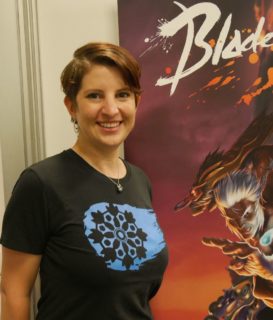
Julianne Harty, esports manager at NCsoft

“The play styles of the two regions are slightly different,” Julianne Harty, esports manager at NCsoft told AListDaily, comparing the Eastern and Western Blade & Soul players. “One of the things we identified very early on was understanding the differences between the Western and Eastern play styles. Koreans tend to play a very cautious and defensive game while North Americans are very aggressive.”

Blade & Soul marks NCsoft’s first step in growing its esports brand in the West, which is continued by the launch of Master X Master (MXM), a free-to-play MOBA game with a tag team mechanic, this week. But unlike all other internally developed NCsoft games, MXM is designed from the ground up with esports in mind and it is launching first in the West before coming to Asia.

The first North American Blade & Soul Invitational Tournament will take place on June 24 and 25, which is tied in with NCsoft’s global esports initiative. It is an online competition that will include the top 12 teams from the past season’s esports championships. Additionally, there will be Wildcard Tournaments in July in both Europe and North America. Wildcard winners will automatically make their way to the regional championships, which will be held at Gamescom in Europe and PAX West in North America. Those winners, in turn, will move on to the world championships.

Ben Conrad, senior director of communications at NCsoft, added that “one of the interesting things about the launch of Blade & Soul is that there were so many excited people for the title. There is a huge and passionate community that watched the success of the game in Asia and wanted it here in the West. It was one of the driving factors that helped it be so successful. We had over four million registered players on Blade & Soul within the first year, which is a very significant and rapid show of success for the game.”

Conrad also said that Asian Blade & Soul esports tournaments are very close and competitive, stating that “you can hear the audience suck in a breath, and that kind of intensity helped build excitement for an audience.”

Harty explained why she thought Blade and Soul caught on so quickly—so much so that it practically had a built-in audience when it released in the West. “I think it occupied a very new space in the MMO area,” said Harty. “It has a pure action combat system that differs from more Western style MMOs like World of Warcraft and Guild Wars. It eschewed a lot of the traditional combat styles so that you’re actively blocking and avoiding hits as a martial artist, dealing damage, and working in teams to understand the mechanics of the game rather than relying on roles to help you through the system. It’s a visceral combat experience that people have universally said is fantastic and it’s a flavor that our players find very appealing. Also, people know when a big play happens and when someone tags in. With all the people cheering, it’s hard to not get caught up in the excitement.”

When asked whether success in S. Korea and Asia usually helped pave the way for growth and adoption in the West, Harty said, “In my opinion, yes. It can be argued that the reason why League of Legends, StarCraft and various other titles got their foothold in the West was because Korea picked it up first. They showed the potential for the games at a competitive level and the internet and livestreaming made viewing those games more accessible, so our success in Asia lends itself to a good foothold here in the United States.”

That being said, it’s strange that MXM is following the reverse strategy by launching in the West first before moving to Asia. Sean Orlikowski, brand manager at NCsoft, told AListDaily that the reason for this shift is because two of the main game modes—5v5 competition and PVE cooperative play—are very popular in the West.

“Releasing here is strategic, and it is also to gather feedback,” said Orlikowski. “Our players have been great with giving us feedback. We’ve had players resonate positively with both the PVE side and with the 5v5 and it’s been a very even split between what modes people are playing.” Orlikowski also stated that NCsoft is very excited to have MXM be one of its first in-house games to launch in the West first.

“From a more strategic perspective, you shouldn’t be surprised to see more titles release in the West first,” Conrad added. “Not all, but it will not be as rare as it has been.”

Sean Orlikowski, brand manager at NCsoft

MXM is an action game at its core—it is built to be fun, fast and furious,” said Orlikowski, describing how the game would match up against established MOBA titles such as League of Legends and Dota 2. “The MOBA mode is just one aspect of it, and that’s a very congested genre. We’re not out to claim that we’re better than anybody—we’re just trying to be the best game that we can and offer something different. We’re doing that with multiple game modes, mini-games and PVE. One thing that I personally love is that we’ve added a social aspect to the game. We have a lobby system where people can interact with each other’s characters instead of looking at a list of people in a launcher before playing. You can sit and chat with people. We’ve had dance parties break out to someone’s favorite song on the jukebox, and conga lines have formed. People are having fun even though they’re not in any of our designed game modes. It’s a great community building aspect of the game.”

Orlikowski believes that emphasizing the game’s social aspects will go a long way toward growing its player base. “NCsoft has primarily been an MMO company. MXM is something new for us, and we’re really excited to branch out. I think that showing people that you can still have a social and fun experience, no matter what game mode you play, will be a nice tie that binds people from other games.”

We asked Orlikowski how MXM fit in with NCsoft’s catalogue of games, which have traditionally been very MMO-focused. Blade & Soul is, at its core, an MMO and even MXM has a very popular cooperative action role-playing component. “In general, I feel like MXM is a celebration of NCsoft’s 20 years, and it’s very fortuitous timing that it’s coming out on our 20th anniversary. We have a rich history of characters and games that we’ve put into MXM. There are characters from Blade & Soul, Guild Wars 2, Aion, Lineage and Lineage II. We’ve even made PVE stages that are modeled after our different games to unlock those characters. Most the characters and scenarios in MXM are brand new, but we’ve also brought this rich history into it.”

Chauncey Gammage, NCsoft’s SVP of human resources, was also on hand to comment about the company’s brand strategy moving forward.

“NCsoft sees itself as a global games company,” said Gammage. “We want to release titles on a global scale so that we can close gaps like the one we experienced with Blade & Soul when we launched it in North America. We want to have global launches, and this [MXM launch] helps us learn using mechanisms for feedback during the development process to make sure our games have the best opportunity to succeed in every market they’re going into.

“[Furthermore], NCsoft will continue to evolve as a multi-genre game company. You saw this with the opening of our mobile studio in San Mateo, California, and we’ll be excited to talk about those games when they come out. We love our rich DNA of MMORPGs, but we believe we’re growing and expanding to reach players in many different ways across many different types of games.”