Chinese media and entertainment conglomerate Tencent is looking to broaden its stateside reach and brand narrative by partnering with the Discovery Channel for a documentary covering the world’s largest mobile gaming developer’s history and culture in gaming.
Game Vision will dive deep into the role games have played in history, investigate the current state of gaming across applications and explore the opportunities tech presents for the future. The documentary will air in July on the American basic cable and satellite TV channel. It was produced in partnership with Tencent Interactive Entertainment Group.
Mars Hou, vice general manager of marketing for Tencent Interactive Entertainment
“Discovery Channel reached out and presented us a program that was a good content vehicle and promotion for traditional gaming in the US market,” Mars Hou, vice general manager of marketing for Tencent Interactive Entertainment, told AListDaily. “It’s a very important vertical for us to protect our tradition with the documentary and share our commentary on the growing gaming market. They have great experience from the storytelling side, and it will be great to take advantage of their platform. I think they’ll do a great job in presenting the Chinese gaming culture—from FPS to mobile—and sharing the Tencent brand story at the same time.”
Hou said the finished product will offer a comprehensive look at how gaming impacts the daily lives of consumers, and how it will continue to change the way they live and interact with the world and with technology, from virtual reality, to real life.
“Tencent is one of the leading companies in China, but we’re always looking at new growth areas in other markets in the US, Europe and other countries, too. We want to know [the 180.5 million] US gamers and their backgrounds, cultures and lifestyles a lot better,” Hou said. “It’s important for us know what they want. It will help identify what they’re looking for so that we can align it with our announcements and marketing for further success.”
Tencent has investments and holdings in industry megaliths as Riot Games, Supercell, Glu Mobile, Pocket Gems and CJ Games, makers of such titles like Call of Duty, World of Warcraft, League of Legends, Overwatch and Candy Crush. Already sitting comfortably at the epicenter of the global games market share and capturing more than 25 percent of China’s mobile app usage through WeChat, Tencent wants to get a better understanding of North American consumers, too.
The video game market reached a total of $109 billion in 2016, according to Newzoo’s latest report, and per usual, the Asia-Pacific region represents the largest gaming segment—earning nearly half (47 percent) of all global game revenues. North America is the second-largest region in the video game market, taking a 25 percent share of the market to earn $27 billion this year.
Tencent also dispatched their executives to E3 last week in Los Angeles to meet with other companies and carry on discussions that will shape the future of the games industry—especially in the burgeoning verticals of augmented and virtual reality.
“There are still big challenges to make VR more popular to the common gamer. It’s not very easy,” Hou said. “We must care about the user, and how to make the process easier.”
One area of growth the fourth largest internet company by revenue behind Facebook, Alphabet (Google’s parent company) and Amazon is also positioning themselves in is esports. Tencent has detailed a $14.6 billion investment over five years in which they’d create new leagues, tournaments, associations and esports-themed industrial parks in China.
“Our strategy is different from that of other companies because we are both developers and publishers of PC and mobile games and have access to big gamer communities. We give consumers a complete experience with access to all kinds of games,” said Hou. “A lot of mobile gaming companies from countries from around the world are getting into and marketing strong for the Chinese, Korean and Japanese markets. There are big-time players with esports and gaming communities in these countries. Publishers are taking advantage with paid-and-subscription services. It’s great for the development of mobile games. It’s a very important part of Tencent’s business.”
ESL continued to build on its US footprint with its partnership with the Entertainment Software Association (ESA) for the E3 Esports Zone Powered by ESL last week, a stage that featured Zenimax’s Quake Champions competition as well as Super Evil Megacorp’s Vainglory collegiate championship.
Craig Levine, CEO of ESL North America, told AListDaily that this more formal setting for esports evolved because the ESA heard from more game companies that are now developing titles with competitive features and esports in mind.
“What ESA heard from their members is that esports is a growing part of their business and they wanted to find a way to activate that at E3, the industry showcase,” Levine said. “This event allowed us to take existing games that are out there and showcase some high-level talent and competitions and blend it with that next generation up-and-coming game.”
The fact that the stage was open to the public—15,000 paying public attendees were at this year’s show—also played into this activation, which is part of a multi-year deal between ESL and ESA.
“If E3 didn’t have a public component this year, I don’t think it would have made sense to do this sort of esports activation,” Levine said. “We certainly could have looked to do something a little bit more of showcase, a little more shootout-oriented exhibition style, but having the opportunity for fans as they’re coming in and experiencing and seeing all the new games, to then also get a flavor of what the competitive horizon looks like, makes a lot of sense.”
Quake Champions was shown to CS:GO pro gamers behind closed doors at the Intel Extreme Masters Finals in Katowice, Poland earlier this year. Levine said ESL has been working closely with Zenimax and id Software for several months now.
“On a very personal level, our ESL leadership is comprised of gamers and we all grew up with Quake, so to have the opportunity to jump back in with that arena-style shooter was incredibly exciting,” Levine said. “There’s an opportunity in the esports landscape. You have great team shooters like Counter-Strike, which is a little bit slower than Quake Champions. You have MOBAs like League of Legends and Dota 2, you have RTS games like StarCraft and you have digital card games like Hearthstone. Now with Quake Champions, there’s the one-on-one gameplay and the new team mode.”
ESL has partnered with Zenimax to host the regional finals for Quake Champions in both Europe and North America to identify the top talent for both the one-on-one and four-on-four team format. They’ll also work together for the $1 million Quake World Championship at QuakeCon in Dallas.
“We’re really bullish on seeing where Quake Champions is today and the opportunity that it has to continue to grow [as an esport],” Levine added. “There’s been an incredible amount of interest from a lot of the existing esport organizations both in the US as well as in Europe. I fully expect there to be a lot of familiar team and player names in this QuakeCon competition.”
With Valve’s CS:GO continuing to dominate the first-person shooter competitive gaming landscape, Levine sees viewership overlap with Quake Champions but not cannibalization.
“What’s so unique about Counter-Strike is the established history, heritage and fandom around it with fans so deeply invested in their favorite players and teams,” Levine explained. “Quake has an opportunity to be an additive in a similar way that new games like Hearthstone or League of Legends created a new segment to appeal to. I don’t think one success is going to come at the expense of the other.”
With the esports audience expected to reach 500 million fans worldwide by 2020, and this year’s Intel Extreme Masters registering as the biggest esports event in ESL’s history with 173,000 attendees and 46 million viewers, Intel has expanded its ESL partnership.
“The Intel partnership is probably the most exciting announcement we’ve ever made as a company,” Levine said. “It really is a landmark deal for us. We’re working together with Intel as our global technology partner, so they’re going to be powering our events, our studios, our broadcasting operations, and really working together to continue to push esports overall.”
ESL and Intel are in the twelfth season of IEM, although Intel’s esports sponsorship predated that long-running global tournament.
“We’re also creating this Intel Grand Slam and the response has been absolutely incredible from the Counter-Strike community,” Levine said. “We’re taking 10 of the world’s biggest Counter-Strike tournaments from IEM, ESL One, ELS Pro League Finals and DreamHack Masters, and the first team that wins four of those competitions gets a million dollar prize bonus on top of the $200,000 to $250, 000 prize purse each of those events has. Counter-Strike has had the biggest growth, thanks to this open ecosystem. This is an opportunity to tie it together with a bigger narrative. Our ambition and hope with this is to create the equivalent of the Triple Crown [in horse racing].”
This expanded brand partnership also opens up new ways for companies to get involved in esports. Levine hopes this Intel deal serves as a blueprint for other companies to follow.
“When you see the accelerated investment and interest from different brands, seeing the success that Intel has had on the market since they entered it is a great example of great success,” Levine said. “They’re like the Nike of esports. They’re doing some incredible programs and they’re committed to the space.”
Although endemic to the tech space, Levine believes Intel’s mass market brand also paves the way for non-endemic brands. ESL has continued its partnership with Mountain Dew for a second season.
“Mountain Dew, Comcast, Totino’s and other non-endemic brands have had positive experiences and it’s our expectation to continue to work together with a lot of those great partners moving forward in different ways,” Levine said, pointing out the Gillette custom razor activation at IEM in Katowice earlier this year. “We have a great platform for brands to really get involved with esports touching everything from the big events to the broadcasts to the influencers in an authentic way. Esports is so quickly moving, so it takes a little bit longer for them to really understand and get comfortable with what that first stepping off point is. But we’re seeing continued interest and expect it to continue to grow.”
If there was ever an event for a marketer to announce a rebrand with a futuristic campaign and messaging, the Cannes Lions International Festival of Creativity has to be on the short list.
Nokia Technologies is throwing its name in the imaginative and artistic hat for showing off all things cool at the week-long, French Riviera-based fest by demonstrating the future of virtual reality advertising and e-commerce with its own digital health VR spot “Healthier Together.”
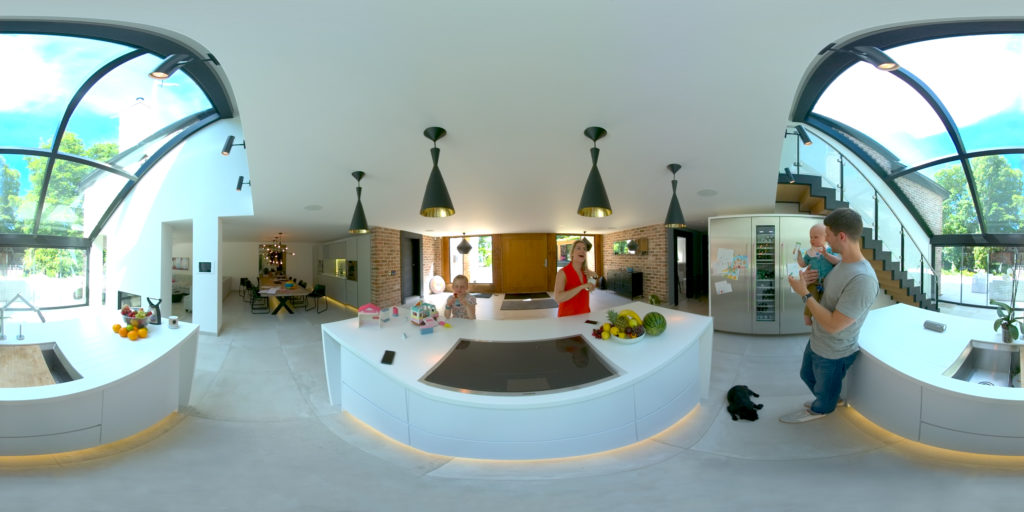
The VR campaign premiered Monday and is designed to immerse viewers into the home environment and have them experience its soon-to-be-launched portfolio of digital health products along with the family. It’s described as “an evolution of digital advertising allowing consumers to discover, interact with and make purchases within a VR experience with the first industry e-commerce component.”
Following the $190 million acquisition of health gadget maker Withings last May, “Healthier Together” is part of a new strategy for Nokia Technologies to rebrand its digital health products.
The Cannes-launched campaign was created using the Nokia’s OZO+ camera and software—a $40,000 VR rig that’s making brands and professional creators rethink storytelling. The spot includes Nokia-branded smart watches, connected scales, blood pressure monitors and other consumer-focused health devices.
Rob Le Bras-Brown, chief marketing officer at Nokia Technologies, joined AListDaily for an extensive interview to talk about how they plan on leveraging VR as a company.
Why was the Cannes Lions International Festival of Creativity the ideal place to reveal this activation?
Cannes Lions unites communities in marketing, entertainment, communications, design and tech talent from across the world. VR cuts across, and is exciting to all of those disciplines. So in that regard, it was a natural place to launch this initiative. Moreover, Cannes Lions has set aside an entire track around healthcare communications and tech. “Healthier Together” is our campaign to support the launch of the new Nokia digital health products where we’re using our own OZO VR technology to show people how easy it is to use these products in a real home, with a real family. Cannes Lions offered not only a great programmatic fit, but also a great place to highlight to some of the most creative minds in the industry how VR can enhance a brand strategy.
What are the trends and strategies that you’ll be monitoring at Cannes Lions International Festival of Creativity?
We’ll be focused on how companies are embracing and incorporating VR into their branding and marketing efforts, which is exciting and inspiring for us. We’ll also be playing close attention to new introductions and innovations in digital health. At a higher, strategic level, we’ll be looking out across the range of technologies and discussions with an eye toward trends that relate to connectivity, which is, of course, at the core of the Nokia brand and our product offerings.
Rob Le Bras-Brown, CMO at Nokia Technologies
Why is Nokia positioning the brand with new digital health products and solutions? What went into the rebrand of this specific portfolio?
The Nokia brand enjoys over 95 percent global awareness and is universally synonymous with trust, reliability and quality. So these new digital health products are a natural fit for the brand, and the overall Nokia portfolio. If you look back at Nokia’s business, we’ve been about helping people connect and we continue today to create the technology that connects the world. Whether it’s our phones, our network business, or VR, we connect the world. Our digital health portfolio is built around that same premise. Our wearables, the Healthmate App or the other products in the lineup, connect seamlessly together, providing actionable insights and helping families and friends be healthier together. The rebrand is one more step toward Nokia’s goal to help bring the human family closer together.
How is discovering and interacting with and making purchases within a VR experience the next frontier for brands?
Because it’s inevitable. Over time, messaging and commerce always converge in the channels available to marketers—look at social media as a recent example. VR will be no different. I believe we’ll see increasing initial forays into providing a purchase experience within VR in the relative near term, but there will be other experiments as well—and that excites me. Marketers are just now starting to discover and explore the potential for VR in advertising and branding. I think the most crucial piece in the immediate future is for CMOs to get curious, to get their arms around what VR can offer them. Whenever a new technology comes around, the calling for a CMO should be to ask “how can that technology support and complement their brand?” After a time, there will come the realization that sound branding principles always apply and the focus shifts to using whatever the new technology is to build on magnifying the impact of those principles. For example, we know that strong brand creative is a precursor to strong emotional connection between the brand and the consumer. Brand equity and loyalty are created through affinities that arise from shared values, common experiences and a host of other intangible and emotional connections we have with the brands that resonate with us. VR is, at its core, the ultimate connective, immersive technology. I believe that CMOs will quickly find ways to use VR to deepen the emotional connection with their consumers by creating content that enables them to not just “watch” the brand, but also “experience” it. I think you’ll see that type of content emerge next, with exploration into driving purchase following closely behind as we have a better understanding of what experiences consumers will find most engaging.
How do you envision VR advertising developing in the future?
To date, efforts to market and reinforce brand values using VR have fallen broadly into three categories. One is brand leadership through association with and use of futuristic technology. Two is promotion and exploration of specific products through hands-on interaction and virtual tours. Three is augmentation of and further immersion into an existing brand identity by creating content that allows consumers to experience the brand and its values, rather than just illustrating them. The results have yielded immersive experiences ranging from Louis Vuitton putting viewers in the middle of Fashion Week in Paris, to Red Bull strapping viewers to the wing of an acrobatic barnstormer, to Hyundai enabling service members to view the Super Bowl “with” friends and family. Over the course of the next year, I think the industry will see a dramatic expansion and experimentation in how VR is used in advertising. There will always be a place for VR to deliver a particular product to consumers in a new and different way, but the real revolution will come in how VR is used to create experiences that deepen consumer connection to brands. Moreover, as we start to build these experiences, because of the enormous analytical capabilities of VR, we will be able to gain an understanding of which elements consumers find most engaging, and which elements they wish to interact with. As we better understand these, and other factors, marketers will be able to surgically tune and personalize content that highlights brand values while allowing consumers to immerse and move through experiences that are inherently interesting to them.
Do you believe VR has a viable e-commerce component? How else can you explore this area in the future?
It absolutely does. With the launch of our “Healthier Together” VR spot, we’re showing what’s possible today, and I believe that VR will quickly provide a viable e-commerce component that brands will turn to and explore. VR allows for previously unimagined and unique ways to help consumers discover, compare and move to purchases. To date, a consumer has had to disengage to complete a transaction. Now we’re on the eve of transactions within the experience itself.
Now that the Nokia OZO has been on the market since November 2015, what are the insights and data that you can share about the camera? What are the marketing successes and challenges that you’ve experienced?
While we announced the camera in November 2015, the product actually came to market in Q1 2016. It simply amazes me how in just over 12 months, the camera, and now the software, have become a mainstay for professional content creators. In particular, OZO has become the “go to” for multi-camera livestreaming, from Coachella, to UEFA, to product launches and especially mission-critical projects like Obama’s farewell speech, or Hyundai’s Super Bowl spot. The volume, breadth and quality of recorded content that has been created with OZO is a testament to its success. OZO has been used to create myriad content ranging from music videos, short stories, education, documentaries and behind the scenes footage, including the Star Wars franchise. I love it when we’re introduced to a new VR piece that was made with OZO and we had no idea it was coming. It’s gratifying and delightful to see the market appreciate and maximize the potential of the OZO products and this is the reward that the Nokia team in the Bay Area and Finland like the most. Like all new technologies, the tipping point and velocity of adoption are challenging to predict and these elements will be what ultimately dictates the potential for VR in the next few years. It’s great to see head-mounted displays (HMD) starting to take traction in the mainstream—growth here will be critical to encouraging the continued production of content. But there is of course a chicken-and-egg tension—our industry needs to create compelling content to drive interest and engagement in the medium; this will help fuel HMD sales. This is not a challenge unique to OZO—it’s a challenge for the VR industry. Collectively, we need to accelerate populating both sides of the ecosystem to generate maintain consumer enthusiasm and momentum. For our part, at Nokia, we keep pushing the technology envelope. At NAB this April, we announced OZO Reality, our vision for virtual and mixed reality and introduced solutions that work seamlessly across the three critical elements of production—create, deliver and experience. For creators, we announced the new OZO+ camera, the next generation of our award-winning camera that advanced image quality dramatically and works alongside the new OZO Creator with depth mapping. But great content needs to get delivered to as many eyeballs as possible and for this, we announced OZO Deliver, a view-dependent, rendering technology that enables content to be streamed much more efficiently over existing networks. Finally, the content needs to be experienced as the creator intended—for which we offer OZO Player SDK, and OZO Audio. This continuum of products works perfectly together with our partners’ products along with the full production path offering capabilities that I believe brand managers and advertisers should find incredibly exciting.
Where does VR stand in Nokia’s overall marketing strategy? How are you planning for further growth in the vertical?
VR is a stand-alone business unit within Nokia Technologies and we’re investing significantly in developing industry-leading capabilities and IP—both in hardware and software—targeted to the professional community. We like to say that “there’s VR, and then there’s OZO Reality.” Our vision for OZO is extremely exciting and we’ll continue to innovate and offer advancements to the marketplace. What is critical to our success is our continued partnership with creators and producers, who give us direct, candid, insightful feedback about what they love, what they want improved and what they want next. This direct customer feedback and input helps us focus on what matters to this nascent industry. Recently, we haven’t just been marketing our VR products—we’ve been using them, too. I’m very proud of the fact that for the launch of our new digital health products, our VR agency partner Brandwidth embraced the OZO+ camera and OZO software products to create our “Healthier Together” VR ad. I believe Nokia has a responsibility to experiment and lead the way with VR.
Which Nokia product are you most excited about this year? Why? Do you see any challenges with how the market will respond to it? Are there any exclusive plans—like influencers, paid social, content marketing—on how you’ll be reaching the right audiences for the product?
I’m excited about the new Nokia digital health lineup. At launch, we’ll offer the world’s broadest range of consumer digital health products that work seamlessly with one app, Nokia Health Mate. We’ve been working on this for a year, so it’s a big deal for us to finally see our baby get to the marketplace; we’re delighted with the response of our retail partners. What really motivates me, though, is that these aren’t just gadgets—they’re beautifully designed and engineered connected devices that inspire the individual to take control of their own health, and in doing so, we have the potential to positively affect the wellbeing of society as a whole. We believe in the possibility that the human family can live healthier together, and I can tell you that gets me and the team at Nokia out of bed every day with a bounce in our step. Within our VR offerings, OZO+ is one of my favorites but I think OZO Deliver is a very powerful product and an exciting enabler for VR on existing networks. Creating wonderful VR content doesn’t benefit anyone if it can’t be efficiently delivered to the consumer. By their nature, VR files are really large. VR cameras generate a lot of data and moving that data over a network to a display screen requires a lot of bandwidth. Fortunately, Nokia knows a thing or two about connecting people, and we’re driven to create the technology that connects the world. Part of our marketing program is to partner with customers on exciting new content. There will be a paid media campaign and we will continue to offer customer testimonial content and work with influencers who are credible and accretive to our brand. We’re continually exploring new partnerships for content of all types, including entertainment, advertising, training—but also the unexpected. We just partnered with a hospital in Helsinki for the first ever neurosurgery in mixed reality. The hospital livestreamed a real operation on a brain to over 200 remote surgeons and layered in computer graphics to aid in the explanation and learning of the procedure.
How are you using social data to better connect with consumers?
Like any brand, we strive to engage with our fans and customers where they are and importantly—where they want to be. It’s our privilege to be a part of this conversation and we know that we have to earn the right to be invited in and engaged with. Therefore, we’re conscious of the need to add value to the conversation. In our digital health business, we have massive amounts of data that we’re able to anonymize, aggregate and synthesize into fascinating and compelling insights. In VR, the promise for marketers and brand owners is that they can finally find the holy grail of understanding exactly what their customer is looking at and engaging with. They could literally know what their fans are looking at, or not looking at. This can finally allow brand marketers to curate and design their content with the precision they’ve dreamt about.
How do you plan on evolving the overall Nokia narrative through marketing for the rest of this year? What kind of digital and social messaging can we expect?
You can expect to see social messaging that builds on these platforms and works through the customer journey, from discovery, right down to the last three feet and clicks. The narrative at Nokia is crisp and aligned—so our focus now is all about activating it. At Nokia, we create the technology that connects the world and in so doing, enable the human possibilities of technology in a connected world. This is the perfect complement to our mission at Nokia, where we’re focused on designing technology that brings the human family closer together. Our new Nokia health products are a perfect example of this vision coming to the market. Complementing that is our continued innovation in VR and the extensive library of content that has been created with OZO that helps the human family “feel together.”
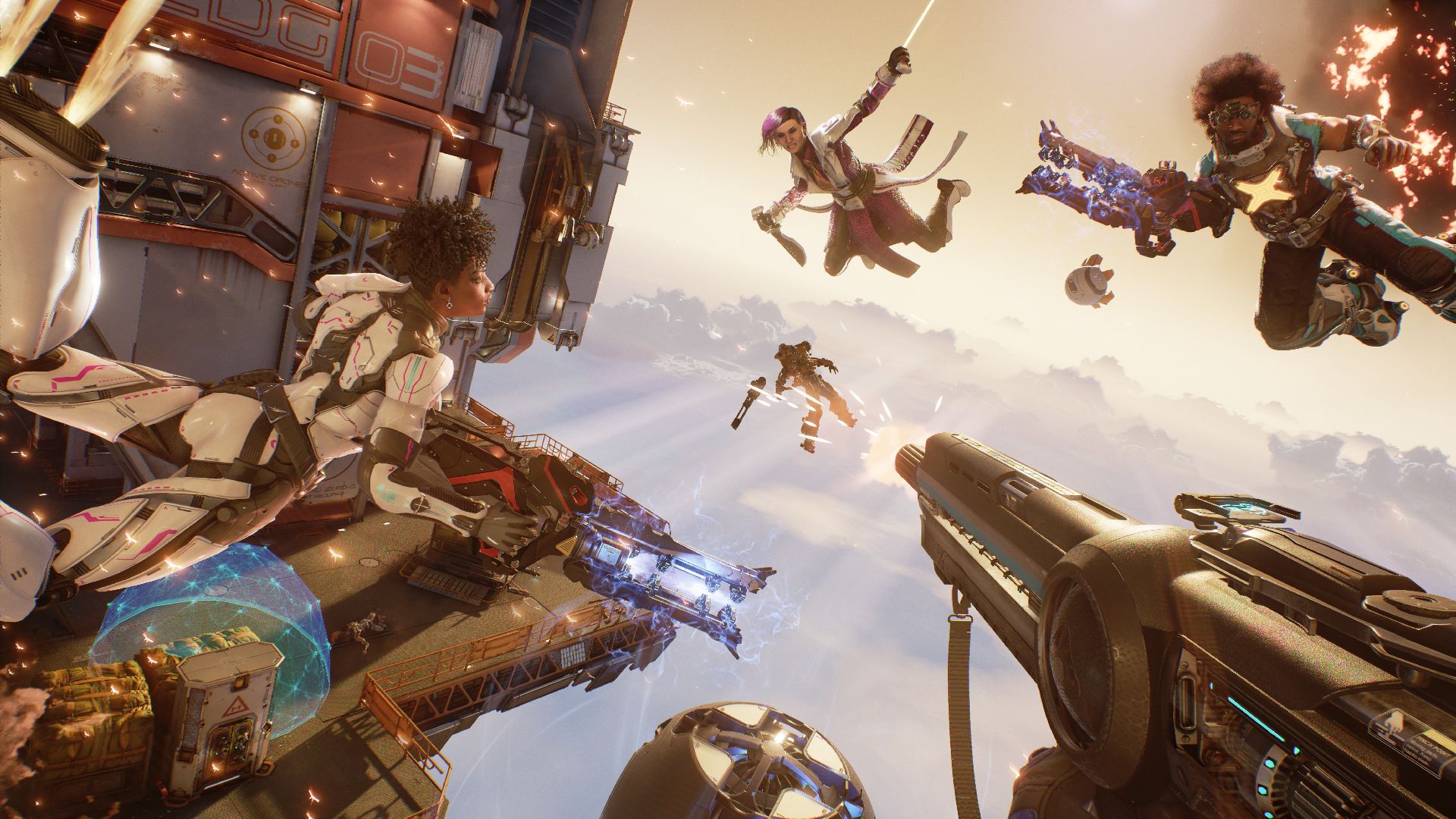
LawBreakers is the debut competitive game developed by Gears of War designer Cliff Bleszinski’s studio, Boss Key Productions. In it, players battle each other in a world where they can defy gravity while using specialized roles (classes) to unleash special abilities on one another. The game launches on August 8, but E3 2017 attendees got a chance to play an early version of it, including the newly announced PlayStation 4 release, from the show floor.
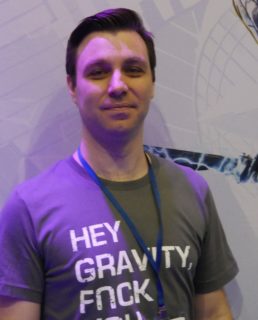
Dan Nanni, lead designer at Boss Key Productions
“We’re showing off almost the entire game,” Dan Nanni, lead designer at Boss Key Productions, told AListDaily at E3. “We’ve released eight of our nine roles, showed off three game modes, and five or six maps. Here, we’re doing Blitzball, which is a mode we did in our closed beta, but our biggest announcement is our PS4 launch. The game is live on the show floor with the PS4 for the first time and it will be in parity with the PC.”
Up until the announcement, LawBreakers was regarded as a PC-only title. We asked Nanni if awareness from the PC side carried over to the console audience. “I think in some cases, awareness is awareness, but there are console players who aren’t cross platform gamers and don’t follow PC gaming,” Nanni replied. “We expect LawBreakers to be new to a lot of people, so we have to drive awareness across the different platforms, which helps us on the PC as well.”
So, does Boss Key have to essentially start from scratch with the PS4 audience? “I don’t think of it as starting at square one because a lot of people have been asking for a console release for a while,” said Nanni. “So, it’s bringing those people into our fold and telling them that we’re supporting them with the console version of the game. But we do have to work on getting the rest of the console players who might not know anything about us to buy into the game. We’re developing the games in parity. So, it’s not a port over to the PS4—everything will come in for both at the same time. But the game will maximize what the console can do, just as it maximizes what the PC can do.” To underscore the point, LawBreakers will be enhanced for PlayStation 4 Pro support.
In addition to the PlayStation 4 release, Boss Key also announced the Deadzo Deluxe Edition, which will include character skins, weapons skins, weapon stickers and profile icons for $10 more than the base game price. Discussing the Deadzo Edition, Nanni said that it was about “giving our players a chance to invest a little more to get unique cosmetic items, but there’s no additional gameplay that comes out of it. The base game gives you everything you need.”
We then asked Nanni what was the key to getting players to pre-order games. “I think it’s just getting them to believe in the game, and that’s the reason we’ve been doing all these betas for so long,” said Nanni. “We’re gamers ourselves, and we feel that we’re making a game for both ourselves and the community. Our players have given us feedback and we’ve changed the game accordingly. We’re going to keep on iterating and making the game that they want because even though we think it has a solid foundation, we need our players to make it better. We think those players are going to be here for the long term.”
https://www.youtube.com/watch?v=dqRKSAcEnx8
That community engagement will carry over into the upcoming closed beta, which will be hosted on PC via Steam starting June 28. On June 30, it will switch over to an open beta, allowing anyone to sign up and play until July 3. Not only will this give players a chance to try the game before buying, but it gives early adopters a chance to share their opinions and shape that game even after it releases.
It’s that sense of identity and uniqueness that will help LawBreakers stand out from the crowd of shooters on both the PC and PlayStation 4 platforms.
“You just have to be your own game,” said Nanni. “At the end of the day, we made our game in our own little vacuum. When we started, we wanted it to be different from other games, but we took bits and pieces from things that we really liked to make our own experience. I think what sets us apart is the fact that we are a different style of gameplay. The verticality, the gravity, the gunplay, the different roles and game modes make for a completely unique experience. Some things might remind you a little of this or that, but in the end, it feels like its own experience.”
When LawBreakers was first announced, it was intended to be a free-to-play game, but as development continued, Boss Key decided to make it a premium title. We asked Nanni if there were any regrets over that decision.
“Not at all,” Nanni responded. “That’s not to say that you can’t make this into a free-to-play game, but thinking about free-to-play kept stalling our creative process. We would find something that we really liked, and then we’d have to pause and think how we would turn it into a free-to-play experience. How would we maximize the value of the game and still fund the studio so that we could keep on making content? It paused iteration and slowed things down, and the moment we pulled that away and said it would be a premium title, we didn’t have to worry about grinding people into oblivion or getting them to spend more money. We could focus on making the best game that we could, and the question became, ‘how much can we make by the time we launch?’ Not ‘how do we get them to spend money by the time we launch?’”
Considering how Gears of War became a much-played esport, we asked Nanni about how Boss Key was hoping to foster esports adoption for its game.
“I would love for LawBreakers to be an esport, but it depends on the community to tell us that it’s an esport,” said Nanni. “I’ve worked for companies that have fallen into the esports trap, where they put the cart before the horse. They were trying to create something that the community hasn’t asked for yet. What we want to do is create a game with a very strong foundation in competition, making sure that skill is the primary reason you come to fight and win, not because you pressed some game ending button—[you won because] your skill was better than someone else’s. That’s what we want to foster. If after some time, our players want us to support it as an esport, we’ll do it. We’re talking to the right people, but we won’t do it until the community lets us know it’s ready.”
E3 experienced some growing pains this year, offering public access to over 15,000 video game fans and filling the Los Angeles Convention Center until it was bursting at the seams. For those in attendance, the general consensus seems to be that E3 “worked,” but not without significant room for improvement.
For members of the press, getting to back-to-back appointments can already be a challenge, running from one end of LA Convention Center to the other. This year, extra attendees meant longer lines for demos and human obstacles at every turn. “Off-the-record conversations also had to be relocated due to the abundance of freestyle vloggers documenting the show floor with their mobile phones,” reported game developer, Rami Ismail.
While many booths had guests standing in line for a good hour to test out the latest games, Bethesda’s booth had a staggering five-hour wait.
On the other hand, several attendees reported having a great show and enjoyed interacting directly with the fans, especially publishers and online creators.
First day back from E3! Thinking about how busy and chaotic it was but also how lucky I am to work with the best people ever #BestBoys 😃 pic.twitter.com/bAVJeaTdOE
“We had an exceptionally productive [E3],” Mario Kroll, founder of Uberstrategist (Atari’s agency of record) told AListDaily. “[It was] probably the most successful in 20 years of attending despite no booth. Heard similarly from others.”
Twitch, the streaming giant that brought its own esports arena to nearby L.A. LIVE, told AListDaily via email that each night, its activation was “filled to capacity.”
“It definitely was a good move for us to open the doors and bring the consumers in. The response has been very positive,” Dan Hewitt, vice president of media relations and event management for ESA told AListDaily. “Every single E3 is different than the previous one. And it’s because we literally start from zero and look at every aspect of the event to ensure that we’re still hitting our marks for our attendees and our exhibitors. If you’re wondering ‘what is E3 going to look like in 2018,’ I can tell you that it’s going to be a remarkable event full of high energy and high investment.”
Good news for dads this Father’s Day—spending is expected to reach an all-time high of $15.5 billion, according to the National Retail Federation, and there’s a good chance that includes a special outing.
A survey by the NRF found that 27 percent of dads would love to receive a “gift of experience” such as a sporting event and 25 percent of shoppers said that’s exactly what they were planning. So do to get dad this year? A poll conducted by Ebates found that electronics top the most-wished for list at 18 percent, followed by power tools at 15 percent and tickets to a sporting event a close third (14 percent). A bevy of brands have celebrated men and their families, too.
Dove Men+Care is celebrating not only fathers, but other men who care about those around them such as grandfathers, uncles, teachers and coaches. The ad depicts a more modern, nurturing depiction of father figures, based on a new generation far removed from the cold, unemotional dads of our decades past.
A recent study found that just seven percent of men can relate to depictions of masculinity in media, and 80 percent of millennial dads turn to YouTube specifically for key parenting topics.
Gillette touched on the softer side of dad with it’s continued “Go Ask Dad” campaign. The company brought in young men to try a “revolutionary new technology” disguised as a virtual assistant. The young men asked questions from how to tie a tie to when you know you’re in love, to which their dads answered from another room using a voice scrambler. The concept is based on data that suggests 88 percent of guys go to their phones for answers, but only 13 percent ask their fathers.
https://youtu.be/0g2mZdqqy6g
For sports fans, Father’s Day is a time to honor the family “coach,” but this takes on a whole new meaning for Lonzo Ball—the former UCLA star and projected top-three overall pick of the NBA Draft next week—whose manager is also his controversial dad, LaVar Ball. Foot Locker teamed up with Lonzo to gently poke fun at his headline-hungry father.
https://youtu.be/iPteUZfRrKw
Courtyard, the “official hotel of the NFL,” teamed up with one family to honor their dad this Father’s Day with a personalized Hall of Fame exhibit just for him inside the brand-new Vikings voyage activation.
Buffalo Wild Wings’ new spot “Watching” gives thanks to all the fathers that showed us how to be “true sports fans.”
https://youtu.be/b7d9DaWhg3k
NFL stars Rob Gronkowski and Richard Sherman are introducing “The Jerky Tie,” made completely out of Oberto Beef Jerky. Two new spots show Gronk and Sherman creating their ties for their dads, Gordon Gronkowski and Kevin Sherman.
Discord, the popular voice and text chat app for gamers, recently celebrated its two-year anniversary and 45 million registered users. To continue its upward trajectory toward game chat domination, the company brought in Andy Swanson—a launch member of the Twitch Media Group.
Swanson, the newly appointed head of publisher relations for Discord, joined AListDaily to explain his transition from Twitch and the big plans in store for game publishers.
Andy Swanson, head of publisher relations for Discord
Discord recently celebrated a milestone of 45 million users, which Swanson attributes to non-traditional advertising methods like organic social media posts. “They don’t market in traditional ways like buying ads and user acquisition models,” he explained. “Instead, the team here is focused on listening to the needs of the players and communities and delivering on that. Things like 24/7 customer service, open communication between the dev team and the Discord community and a strong focus on making Discord easy to use have helped us to grow incredibly fast in a very short period of time. Seeing numbers like 8.9 million DAU and four million peak concurrent users tells us we are doing the right thing.”
When it comes to marketing to the gamer demographic, Swanson says it all comes down to community.
“Direct community engagement via platforms like Twitter are the best ways to engage the demographics that map to gamers and esports enthusiasts,” he said. “They reject ads and we kinda do, too. Superstar community managers are a powerful way to have a direct communication line to your customers and fans. Discord has increasingly become that for gaming publishers, hardware manufactures and others. It’s a sign of the times. Direct community engagement on platforms like Discord is the trend of the future.”
In his new role, Swanson will be educating publishers on how Discord maintains engaged gaming communities. Since the platform is ad-free, connecting with gamers is all about the games, themselves.
“Discord is all about making and maintaining great connections in great games,” explained Swanson. “Without the great games, we wouldn’t exist. We see Discord as a really valuable tool that keeps developers connected to our rabid community of 45 million players and gives them access to the communities of their fans. That is not a small thing. Being able to speak directly to players in an easy-to-use interactive environment is unparalleled in terms of player happiness and community growth. So, working with the developers is incredibly important to us. Keeping that conversation open and growing and evolving with the needs of the games and players is huge when it comes to our success.”
The app may be for gamers to speak with each other, but brands can use it, too. “It is a way to talk to the people playing your game and to understand them better,” Swanson added. “It is a way to connect directly to that player—and that social touch, that personal connection—can be way more beneficial than anything else.”
This week in marketing statistics, consumers can’t stop looking at their phones, long-form video dominates all the screens and consumers reveal what annoys them the most about brands.
Phone FOMO
Sometimes it’s hard to imagine (or remember) a time when we didn’t have smartphones practically attached to our hands. Sixty-three percent of smartphone users operate their devices at least once every 30 minutes, and 22 percent of users now check their phones every five minutes. according to new data from the Interactive Advertising Bureau.
The fear of missing out (FOMO) is a major driver for checking our phones so often, especially on social media. A study by Qualtrics and venture capital firm Accel found that 42 percent of millennials in North America, the UK and Australia hadn’t lasted five hours without checking their feeds. (Time spent sleeping was excluded from the survey.) Compared to older generations, millennials were less able to refrain from social media. Just over one quarter (26 percent) of Gen X hadn’t gone five hours without social media, while 29 percent of baby boomers said the same.
Baby boomers may not be checking social media as often because they’re reading the news instead. Sixty-seven percent of US consumers ages 65 and older read the news on a mobile device, according to new findings from the Pew Research Center. Among respondents between the ages of 50 and 60, 79 percent get their news via mobile as of March 2017.
Ads And Annoyance
The first quarter of 2017 marked the highest ever first quarter earnings for digital advertising in the US, according to the IAB, reaching $19.6 billion. Things are looking up for digital advertising, with these earnings being the second-highest quarter of all time and the seventh consecutive first quarter to have double-digit, year-over-year growth.
Be careful where your ads appear, though. According to the newly released “How Brands Annoy Fans” survey from the CMO Council, 37 percent said ads that appear next to objectionable content change how they think about the brand when making a purchase decision. In response to such offensive ad placement, 10 percent said they would boycott the brand and nine percent said they would be vocal or complain, raising issue with the brand.
Ad placement is far from the only reason consumers will reject a brand altogether. According to “What Makes People Love the Brands They Love”—a new report by Rakuten Marketing Insights, the top reason once-loyal US digital consumers would not return to purchase is multiple, poor experiences with a brand’s staff.
Sometimes ads aren’t as clear as they should be. Mediakix found that 32 of the top 50 celebrities posted some kind of sponsored content in the month of May, and 93 percent failed to meet FTC rules.
Video Goes Long; Gamers Come Together
Over half—56.5 percent—of all video plays were on mobile devices in the first quarter of 2017, according to Ooyala’s 2017 Global Video Index. This figure illustrates an upward trend from 54.3 percent in the fourth quarter of 2016. So what are people watching? Long-form video—defined as content lasting longer than 20 minutes—surpassed short-form video in the first quarter to dominate all screens. Long-form video accounted for 98 percent of time spent watching on connected TVs, 81 percent on tablets, 63 percent on computers and 55 percent on smartphones.
Video game content is dominating on YouTube. According to Ipsos, 56 percent of YouTube gamers say YouTube is where they connect with their gaming community. In addition, 66 percent of female YouTube gamers watch gaming videos on the platform when they want to hear from people they can relate to.
Internet All The Things
IDC predicts IoT spending will grow 16.7 percent year-over-year in 2017, reaching just over $800 billion. By 2021, global IoT spending is expected to reach nearly $1.4 trillion. According to the firm’s updated spending estimates, this growth will be led by enterprise investments in IoT hardware, software, services and connectivity. In terms of industries, manufacturing and transportation remain the highest spenders, reaching $183 billion and $85 billion, respectively. Utilities comes in a close third with expected spending of $66 billion.
Laboring through a trade show like E3 that is long on parties and short on sleep can be a tall task.
Nescafé tried to save the day with a daily kick of caffeine over the course of the three-day video games expo this week by setting up a pop-up coffee shop at the Los Angeles Convention Center. The experiential marketing move was designed to engage the E3 community while also showing off the Nescafé Dolce Gusto, a single serve coffee and espresso machine.
“We believe that high-quality coffee at home should be available to everybody. It should be an amazing experience, and we would like consumers to rediscover their coffee experience by discovering Nescafé Dolce Gusto,” Berta Cruz Corominas, marketing director for Nescafé Dolce Gusto, told AListDaily. “We’re a passionate team that wants to share with the world that the coffee standards are now changing, and we believe the E3 event was a great platform for us to broadcast that.”
Cruz Corominas said their strategy was simple—to tap into a total of 68,400 savvy consumers who attended E3 and have them test their cappuccinos, lattes and espressos and product’s technology and design.
“The consumer reaction is always amazing. We are opening their eyes to a new coffee reality where convenience and high quality meet,” said Cruz Corominas.
Coffee discovery is a key part of the Nestlé-owned brand’s strategy. Nescafé Dolce Gusto is dialing up their marketing with presence in places like malls where consumers can get to know their product a bit better, Cruz Corominas said. They also have a program that brings discovery experiences to offices, communities and gyms. She added that digital is key for them too to establish a close relationship with their customers.
“Our business will keep evolving. Our passionate team operates as a start-up—we’re set up to sell directly to consumers and also take direct feedback from them,” Cruz Corominas concluded. “We are very consumer-centric and we aim to join the consumer where they drink coffee. We listen to their feedback and adjust our strategy and our plans as we go along.”
Bandai Namco and developer Slightly Mad Studios are showcasing Project Cars 2 at E3 this week. The game companies have big plans for esports, when it comes to expanding the growing popularity of the racing franchise as a competitive game.
Andy Tudor, creative director of Slightly Mad Studios, told AListDaily that the studio took an “if we build it, they will come” attitude with esports on the original game.
“We knew from our work on Need for Speed Shift that people trying to beat each other’s times by autolog was extremely addictive, so much so that they might even play career mode,” Tudor said. “Players would want to jump back into the game just to beat somebody’s time. So we knew that there was a community out there that was really passionate about racing competitively at a very high level.”
The studio launched Project Cars esports quietly back in 2015, creating a season around community events with partner ESL. Tudor saw this draw a lot of fast racers, some of whom were part of esports teams in other franchises like Hearthstone and League of Legends.
In 2015 for Season 2, sponsors like Nvidia and Logitech came on board and competition was held at events like EGX and Paris Games Week. Teams formed and drivers started wearing jerseys and all of the competition was streamed for the community.
“There’s Logictech, Plantronics and Thrustmaster sponsoring other teams. So it’s a combination of hardware in the gaming space, but then also people from outside like McClaren, which has its own esports team. We’re starting to see more companies getting interested, including Red Bull and Monster Energy,” said Tudor.
Season 3 was recently announced, which will have a live Finals at Gamescom on the ESL One stage. There are also weekly online Cups with ESL and monthly finals around Europe. There’s League Officiale in Spain and the PlayStation Plus League in France.
Tudor said teams from iRacing and Forza have been invited to the season format because it’s where the champions play.
The studio has created a multiclass championship, which features pros with a dedicated prize pool at one level, and then a lower Challenger class with up-and-coming drivers racing on the same circuit at the same time. The idea is for the new talent to be showcased and potentially get picked up by the pro teams.
“The stuff that’s happening in Season 3 is directly going to affect Season 4, where we’ll introduce a competitive racing license accreditation in the game,” Tudor explained. “We now have online championships and a more structured way of creating these tournaments so that the people that win in Season 3 may get automatic qualification into Season 4.”
Season 3 features nine races before going into the Gamescom Final. Tudor said the goal is to help tell the stories of these teams and the rivalries that evolve over the course of the competition.
“Some of these teams are rivals and some players used to play for other teams before getting poached,” Tudor said. “It’s all about storytelling, so we’ve always had the mentality of having longer seasons where we can tell a story and build up the anticipation for the Final.”
As the studio began developing Project Cars 2, Tudor knew that eSports were the biggest thing that was keeping the game revving long after launch. The goal was to put all the features in there that were missing in the first game to bring this to a comparable level with big esports games like CS:GO.
“Online Championships is a brand new game mode that’s going to allow you to structure any series or championship or tournament that you want to put together,” Tudor said. “You invite the drivers in. You put them in specific cars with specific liveries. You put the schedule of the races on there. You set the rules and flags and penalties, and then all the drivers get notified when the first round is happening.”
The new game has a built-in director and broadcaster functionality for streaming. The director is responsible for choosing the camera angle and choosing the overlays on screen for the people at home who are watching, and then the broadcaster is responsible for actually streaming the thing off to Twitch or YouTube gaming or whatever. The broadcaster can also provide commentary as well.
“So just by having two friends you can, in essence, recreate the kind of broadcast-quality level that you see in big esports titles out there in your own home, and this is on PC, PlayStation 4 and Xbox One,” Tudor explained.
Project Cars 2 will also support virtual reality, which Tudor is a big fan of.
“Any live event that we do we will always have VR because we’re absolutely committed to it,” Tudor added. “Therefore it’s pretty much a given that if you see Project Cars at an esports event or live event, VR will play a big part. We have the potential to be the first big VR esport out there.”
Project Cars 2 in VR was featured at the Intel Extreme Masters (IEM) World Championship in Katowice, Poland earlier this year. The game is one of several titles Intel is showcasing as a potential esport of the future.
At a recent pre-E3 event in Los Angeles, Bandai Namco featured the VR version of Project Cars 2, including a sit-down motion simulator version that combined a VR headset with an accurate car simulation complete with pedals and a gear shifter, so there’s also that element that could be featured at esports events in the future.