In an industry where the destination is only part of a travel plan, global leaders have found a powerful friend in local tourism boards. With summer just around the corner, Americans are starting to dream of their next getaway. Thanks in part to younger, experience-driven consumers, the US travel market is estimated to reach $381 billion by the end of 2017, according to Deloitte.
Airbnb recently teamed up with the entire country of Sweden to promote travel to the region. By law, the the land is free and accessible to all, so the country laid out a welcome mat to the world using the popular online marketplace.
“This partnership is a first of its kind collaboration between a tourism board and Airbnb,” James McClure, Airbnb’s general manager for Northern Europe told The Drum. “It is designed to promote Sweden as a destination through the power of the Airbnb community. We see Visit Sweden as our long term partner and are happy to join forces in promoting Sweden as a destination.”
While Sweden’s partnership was a first for Airbnb, the practice is anything but new to traditional travel brands. Expedia, for example, has made many such partnerships including Hawaii Tourism Authority and the San Antonio Tourist Board.
“In today’s continuously evolving digital landscape, finding ways to reach and meaningfully engage with potential travelers is becoming more complex,” Wendy Olson Killion, global senior director at Expedia Media Solutions told AListDaily. “Travel is a considered a time-consuming purchase, and with the wide range of travel information and tools available online, consumers are increasingly spending more time with travel content. To help break through the complex landscape, tourism bureaus are looking for fresh and innovative digital tactics that will reach consumers and drive meaningful engagement, and often times, that includes collaborative partnerships with travel and hospitality brands.”
Hilton, too, partners with destinations to create a unique experience for consumers who visit any of its 5,000 locations worldwide.
“Relationships with tourism bureaus are symbiotic,” Bruce Gudenberg, executive director of industry relations at Hilton told AlistDaily. “By working together we can help each other provide group, business and leisure clients a great experience. We align with select destination marketing organizations at all levels from the individual property level to global sales. This allows us both to gain a deeper understanding of what guests are looking for when traveling to that location and cater to those needs.”
Hilton’s 5,000 hotels are found across the globe in 103 countries, so the company works hand-in-hand with local tourism authorities to ensure an authentic representation.
“It wouldn’t be possible for us to have the same amount of in-depth knowledge about each destination that tourism boards do,” Gudenberg added. “We deeply value these partnerships and actively work with them to leverage their deep destination expertise.”
Expedia agrees that the relationship between hospitality and tourism is a natural and fulfilling one.
“Our partnerships are mutually beneficial for both us and the tourism bureaus, and we look forward to continuing to develop these partnerships around the world,” said Olson Killian.
E3 2017 is the first in its long history to offer mass amounts of tickets to the general public. While that’s great news for consumers, what does that mean for brands and members of the press, for which E3 has catered exclusively to in the past?
Noobs Welcome
While E3 veterans know that, traditionally, there is a healthy host of photo ops on the show floor, brands really stepped it up this year for the general consumer. Video game brands prepared for the onslaught of new faces with eye-catching and selfie-worthy activations from the “Bethesdaland” amusement park to a Nyko ball pit that players could try controllers in.
“With opening up to the public this year, it’s the perfect opportunity to have something that’s so engaging and interactive,” Nyko exhibitor Surabhi Srivastava told AListDaily. “We wanted to have a slide that goes into the ball pit, but there were a lot of waivers around the design.”
Twitch and T-Mobile teamed up to bring a full-fledged esports arena to nearby L.A. LIVE, where large crowds gathered to watch pros duke it out in the latest fighting games.
“Though the number of esports events held each year around the world continues to grow, we know many fans have only seen an event while watching Twitch,” Salvatore said. “Because 15,000 consumer passes have been sold to E3, it means a lot of fans will have the chance to be part of a live esports event.”
“I think it was definitely a good move for us to open the doors and bring the public in,” Dan Hewitt, vice president of media relations and event management for the Entertainment Software Association (the organizing body of E3) told AListDaily. “The response has been very positive. If you go down to the floor, it’s very accessible. The lines are very manageable. And I think that the response we’re getting from our exhibitors is only positive. The entire world is focused on Los Angeles right now with E3 and video games. That just underscores E3’s dominance as the global event for computer and video games, whether that’s games on consoles, PC or mobile. It’s all on the floor. And there really is a great diversity not only in terms of the number of our attendees but also in terms of the exhibitors that are in the hall.”
Hope You Like Crowds
Of course, one downside to opening its doors to even more people is the shoulder-to-shoulder crowds. Getting from one side of the convention center to the other in a sea of green consumer badges proved easier said than done, especially for members of the press. While many complained over social media, others delighted in watching that excitement come over newcomers’ faces at their first E3.
Hearing grumbling on the #E32017 floor about the flood of consumers. How do you feel about it?
Overall, marketers seem thrilled to gain direct access to a flood of excited gamers.
“With fans paying their way to come in, they’re the core gamers. We’re looking at it that way from a branding and marketing perspective,” Mac Marshall, senior director of brand, PR and communications for Turtle Beach told AListDaily.
The Electronic Entertainment Expo (E3) turns 22 years old this year, and it’s celebrating with a first by giving the public access for the biggest gaming event of the year.
This year, over 68,400 attendees (15,000 of them from the general public), 293 exhibitors and over 2,000 products worked its way through the turnstiles of the Los Angeles Convention Center to see the latest and greatest in games and hardware, which started Tuesday when LA mayor Eric Garcetti kicked off the event with a ribbon-cutting ceremony.
However, not all publishers and brands are playing in the proverbial sandbox. More companies are kicking the tires on one-to-one activations around the city. Some are avoiding the E3 pomp and circumstance altogether. Others are leveraging it as part of an integrated, multi-location strategy. Their approach remains focused, yet simple—it taps into fan FOMO and gives consumers a chance to completely immerse themselves with a brand, thus creating even more loyalty and advocacy.
Industry titan Electronic Arts unofficially kicked off E3 with its own event for the second consecutive year. EA Play, which took place at the Hollywood Palladium from Saturday through Monday, invited thousands of fervent EA followers for their own fan fest.
“Last year we went out on a limb to do something a little different with a view to change the way you interact with products before they launch,” EA CEO Andrew Wilson said during a press conference. “We wanted to do something that put the games in your hands earlier and it showed us how much further we could go . . . playing, creating and sharing with the rest of the world. We built [EA Play] this way for a very simple reason—we want more of you to experience this moment.”
Attendees were able to tour the pop-up space and be the first to try their hand at EA’s newest lineup of games, including Star Wars Battlefront II, FIFA 18, Madden NFL 18, NBA Live 18, Need for Speed, The Sims 4 and Battlefield 1: In The Name of the Tsar.
For those not in Los Angeles, EA recruited over 300 video game influencers and content creators to challenge the brand and share the stories with their own communities. The opening night festivities culminated with a one-hour performance with hip-hop artists Nas and Dave East.
EA was back at their Redwood City, California headquarters before E3 officially kicked off—they were not one of the “participating companies” for the expo—but that wasn’t the case for Bethesda Softworks and game megaliths like Microsoft, Sony, Nintendo and Ubisoft, who paired their pre-E3 press announcements with prime presence on the convention floors.
Bethesda bypassed a sans-E3 strategy by complementing their carnival-like efforts with a cavernous space at E3, too. They hosted a private playground dubbed “Bethesdaland” on Sunday, minutes away from downtown LA. Their press conference, led by Pete Hines, Bethesda’s global vice president of PR and marketing, doubled as a concert featuring a performance by electro-pop duo The Chainsmokers.
Games news and marketing activations were breaking all over Tinseltown.
On Sunday, Chinese games conglomerate Tencent took over The Avalon in Hollywood to announce their content deal with Discovery Channel and the making of the forthcoming documentary Games Vision. However, the world’s largest player in today’s gaming landscape swiftly left the city before E3 even started.
“E3 is always about sharing new trends and technologies and how brands are designing new and high-quality games. It gives us a chance to work with new titles and ideas while reworking our own strategy for our communities,” Mars Hou, vice general manager of marketing for Tencent Interactive Entertainment, told AListDaily. “Although Tencent as a brand does not have presence there, our games do, and Tencent executives are there to meet with other companies to carry on discussions.”
Brands like Atari, LucidSound and Evil Controllers, among countless others, skipped the show floors altogether for more intimate gatherings at adjacent locations like the nearby JW Marriott.
Dan Hewitt, vice president of media relations and event management for the Entertainment Software Association (ESA), the organizing body of E3, said brands and exhibitors outside of the ones they host are leveraging the dates around E3 to stage their own events.
“If it wasn’t for E3 being in Los Angeles this week they wouldn’t be having those events,” Hewitt said. “We certainly welcome them to the show. But if they decide that they want to have their own events then that is certainly something that they can do. Those are additives to the overall E3 experience. It’s not up to us to make a determination about what is the right or wrong way to market because each company has their own individual goals and metrics for success.”
Games publisher Devolver Games has been avoiding the halls of E3 for years by hosting a competing indie picnic. They rent out an entire parking lot near the Convention Center and promote their games with a separate industry gathering. With the expo open to the public this year, they had grandiose plans to appeal to their wide audience by renting a bigger space and expand the production with a “mega-booth.” But they had to pull the plug and uninvite the public portion of their guest list because their permits were denied.
Devolver had secured leases on both private- and city-owned lots that were right next to each other. The city-owned lot was previously occupied by the ESA in years past, who parked 18-wheelers as a “blockade” of the renegade operation, according to Mike Wilson, co-founder of Devolver.
Wilson says that after the ESA realized that they forgot to secure the city-owned space this year, as had been common, the ESA allegedly pulled strings with city officials, and the city denied Devolver’s permits. Instead of using the extra space they had secured for the fan-facing event, now Devolver could only park cars there. Wilson says that although they’re a small company who can’t afford exhibitor space at E3, they were seen as a “threat” by the ESA.
“We don’t want to go away quietly and act like nothing ever happened,” Wilson told AListDaily. “It might completely [create problems] for us next year, but in principle, it’s important enough to tell the truth about what happened. It sucks to be bullied.”
Hewitt denied that the ESA played any part in Devolver’s permits being cancelled.
“I think there might be a one-sided grudge match going on,” Hewitt said. “I have nothing bad to say about Devolver, or anything. I can tell you specifically that the ESA put no pressure and pulled no strings. We spent zero energy or focus on that. I think that Devolver thinks that we did. Our focus and our energy is on the 290-plus exhibitors and the 68,000 attendees that we have inside the buildings of E3. We don’t have the time or the energy to go and make life difficult for Devolver. We’d love to have them in the event, and that’s their decision that they don’t want to be.”
Meanwhile, across the street from the Convention Center, Twitch and T-Mobile joined allegiances for a three-day outdoor esports arena, and the ESA and veteran games journalist Geoff Keighley produced the E3 Coliseum at LA Live, a two-day long event that connected fans with celebrities through a variety of panels.
“We wanted to provide a showcase for people in other entertainment industries like music, film and television to talk about their love of video games and the intersection between video games and their industries,” Hewitt said. “It’s another opportunity for consumers and our attendees to connect. So that was the genesis for the E3 Coliseum.”
One of the discussions that took place there was “World Builders,” a keynote with comedian Chris Hardwick that covered building worlds across entertainment mediums, with a focus on video games. Hardwick was joined by astrophysicist Neil deGrasse Tyson, who revealed details on the forthcoming release of Space Odyssey, a real-time strategy gaming experience of space exploration and colonization made in partnership with Space Media Ventures.
“The idea behind the whole Space Odyssey franchise is that it continues to expand, just like the universe, in complementary ways,” Mark Murphy, partner and creative director for Space Media Ventures told AListDaily. “Neil is very hands-on. Conceptually, we’ll come up with ideas. The experience is impactful both on the gaming side, but exceptionally relevant on the science side.”
As E3 experiments with public access this year, the show’s model continues to shape and take mold in new formats. The games dust will settle soon after the week ends, and the ESA will unpack sentiment both from the perspective of the public, and brands that participated.
“It definitely was a good move for us to open the doors and bring the consumers in. The response has been very positive,” Hewitt said. “Every single E3 is different than the previous one. And it’s because we literally start from zero and look at every aspect of the event to ensure that we’re still hitting our marks for our attendees and our exhibitors. If you’re wondering ‘what is E3 going to look like in 2018,’ I can tell you that it’s going to be a remarkable event full of high energy and high investment.”
Plantronics has partnered with Dolby Laboratories to deliver Dolby Atmos audio technology across its RIG 400LX ($100) RIG 600LX ($130) and wireless RIG 800LX ($150) headphones this September. These headsets will come bundled with codes that will let gamers activate Dolby Atmos for Headphones at no additional cost on their Xbox One, Xbox One X or Windows 10 PC.
Plantronics is debuting its new RIG headphones at E3 2017, including at the Xbox Showcase and the Xbox FanFest.
Dolby worked with Blizzard Entertainment to integrate Dolby Atmos into its Overwatch game, which has become a growing esport. Dolby is working with other developers to support Atmos across many Xbox One, Xbox One X and Windows 10 PC games that will make their debut at E3 this week.
Dolby Atmos provides gamers with advanced spatial precision by changing the way developers treat in-game sound. Instead of pushing flattened audio through 2-D stereo channels, Dolby Atmos gives gamers the full positional data of their surroundings by treating audio as individual objects that realistically move around them. With Plantronics RIG gaming headsets featuring Dolby Atmos for Headphones, gamers can hear audio cues coming from the front, back, above and below.
Spencer Hooks, director of gaming at Dolby Laboratories, told AListDaily that with Dolby Atmos for Headphones, the company is focused on delivering the creative intent of game developers in the most immersive way possible.
“In esports, that immersion is a key part of the competitive environment, and Dolby Atmos can help deliver the critical information a gamer needs to win,” Hooks said. “For example, hearing that a sniper is on the roof of a building rather than just in the building could aid in making split-second decisions.”
Plantronics Global Marketing Director Corey Rosemond told AListDaily that this technology will be marketed across esports leagues and to esports teams.
“If a game is Atmos-enabled, the developers can build maps with an added height dimension so players can hear overhead from left to right,” Rosemond said. “You can now detect and hear those footsteps overhead, which is something we’ll promote to the esports community, because that make a difference in competitive play.”
Hooks said the technology works with Dolby Atmos games and movies but also enhances 5.1 and 7.1 surround games and movies.
Rosemond said that Plantronics is targeting “competitive gamers and practical premium consumers that want to win their matches and have the highest performance.”
“Our audience ranges from the solo player competing at his home all the way to the top esports professionals playing for millions of dollars,” Rosemond said. “We’re adding the greatest amount of quality and value-add for our customers with Dolby Atmos.”
Dolby has switched to a new model for this latest audio technology, which is software-based on Windows 10 and Xbox platforms. Consumers will need to upgrade for a $14.99 activation code. But Plantronics is including that code for free with its LX series of headsets.
“E3 and will be a key driver for where we’re going this fall,” Rosemond said. “We’re doing extensive cross-marketing with Dolby around this initiative. Dolby Atmos will be positioned very well with Xbox One and Project Scorpio. It will be part of the overall messaging starting on Sunday.”
Plantronics headsets will be promoted and featured with Xbox One and possibly with Project Scorpio at E3.
“No other headset is leveraging Atmos in this way,” Rosemond said.
In partnership with Dolby and Microsoft, Plantronics is working with a number of retail partners globally to bring the Atmos messaging to retail. There, consumers will be able to test the headsets and hear the difference.
“We’ll do traditional online marketing, but we’ll work with some influencers in the marketplace to get some engagement going to see where there’s interest with users and scale up the passion we’re getting,” Rosemond said. “The influencers we’ve spoken with are excited about this as the next generation of audio in gaming. We’ll use them to get the message out to the wider audience.”
Once a user has the Atmos license on PC or Xbox, it’s theirs in perpetuity. Thanks to the competitive edge this technology provides to Plantronics headsets, Rosemond sees a much broader audience than just early adopters.
“E3 is where the rubber is going to hit the road with a lot of this messaging,” Rosemond said. “We’re going to amp up the marketing in Gamescom in Cologne for our European friends and then in the fall, we’ll circle back to Australia and New Zealand with a big planned event in September or October. Plantronics is the number one headset brand in that region.”
E3 is all about the games, and publishers really want their audiences to enjoy experiences together—whether that be as a player or spectator. Fueled by a packed convention center of gamers, a strong message of community can be seen throughout announcements and activations at the show.
“At Xbox, we’ve always believed in the power of games to unite us all,” Xbox president Phil Spencer said during the Microsoft E3 press conference. “Today, communities of gamers not only play together, they create together and watch together. A whole new genre of games is emerging, designed for both the player and the community.”
Playing Together
Gaming communities create bonds over the shared love of a particular title, and E3 gave players plenty to be excited about. Strong multiplayer titles were on display from Star Wars: Battlefront II to a new expansion for Battlefield 1. Skull and Bones, an upcoming pirate sim from Ubisoft features a “learning environment” that reacts to player actions and was designed to support teams of players working together or in competition. PlayerUnknown’s Battlegrounds will be an Xbox One exclusive later this year after selling more than two million copies in Steam Early Access.
EA had its sports franchises, FIFA 18 and Madden 18 on full display during EA Play, offering players the chance to play together before the titles hit stores later this year.
Not a gamer? Not a problem. During its live broadcast, Sony highlighted a new PlayLink collection that uses smartphones instead of controllers and is meant to be played as a group. One such game is Hidden Agenda by Until Dawn developer Supermassive Games. The title allows each player to vote with their phones on choices made by the characters in-game. Players may also receive a hidden agenda that affects their decisions and how they collaborate with others.
Creating Together
Since players first figured out how to access the code, they have been modding their favorite games to change the look, feel and environment. Today, modding is supported not only by players but the games’ developers as well.
During its press conference, Bethesda announced an upcoming marketplace called Creation Club that will offer modifications such as armor, weapons and enhancements for Fallout 4 and Skyrim.
ARK: Survival Evolved also announced its first sponsored mod called Ragnarok, which adds fantasy creatures and environments to the game. The game’s developer, Wildcard Studios, announced the sponsored mod program in February, which pays selected creators to develop featured mods.
Mods create new ways to enjoy an existing franchise, which incidentally makes it even more interesting for spectators to watch.
Watching Together
Gaming has largely become a spectator sport—game video content is on track to generate $4.6 billion in revenue this year through advertising and direct spending. Gaming communities band together to watch their favorite streamers play and comment on the latest titles or classics that never go out of style.
Microsoft placed special emphasis on its Twitch-like Mixer livestream platform at E3, offering free content for anyone who linked their Xbox accounts to Mixer by June 16.
Twitch and T-Mobile brought their very own esports arena to nearby L.A. Live, where fans could watch pros compete and vote for their favorite players over social media. Twitch also has a large presence on the E3 show floor, broadcasting live throughout the day with popular Twitch partners and even showing the exclusive world premiere of Green Day’s Revolution Radio music video.
YouTube Gaming was out in force on the E3 show floor, hosting livestreams and interviews with Geoff Keighley, Rooster Teeth, YouTube creators and video game developers throughout each day.
Of course, the biggest celebration of gaming communities at E3 is E3, itself—opening its doors to the public for the first time. Over 15,000 consumers passes were purchased for the biggest gaming event of the year, offering brands the opportunity to reach gamers on a personal level.
Sega is showcasing a pair of brand new games at E3 featuring the company’s mascot, Sonic the Hedgehog. Sonic Forces is a 3D platform game created by Sonic Team that will ship this fall across Windows 10, Nintendo Switch, PlayStation 4 and Xbox One. Sonic Mania is the first new side-scrolling game in the franchise in some time. Developed by Headcannon and Pagoda West Games, it ships across Windows 10, Nintendo Switch, PlayStation 4 and Xbox One on August 15.
Takashi Iizuka, vice president of product development for Sega of America, told AListDaily that the Sonic brand has been able to continue its momentum for a quarter century because of the support Sega gets from its fans.
“It’s really positive to hear all the comments from the fans, but from a developer’s standpoint that feedback has helped keep Sonic relevant all this time,” Iizuka said. “Our teams are constantly looking for new ways to innovate and do new things with the hardware, with the technology, and with the gameplay experience for each of these 25 years. It’s constantly being challenged and bringing something new to the Sonic gameplay, iterating on old gameplay to make it even better that has kept Sonic relevant all these years.”
Even after Sega officially exited the console video game business in Iizuka, Sonic has flourished across platforms. The advent of mobile gaming has played a big role in introducing the blue Sega mascot to new generations of fans.
“A lot of people have mobile devices worldwide, which is a much larger audience than we have with consoles,” Iizuka said. “So having a mobile game out there like Sonic Dash, which has over 200 million downloads worldwide, is really good for us because we get to show our character to people who don’t have consoles and would never have played a Sonic the Hedgehog game. They’re now able to play our game, associate with our characters, and really have a good time.”
Sega was also one of the early game companies to capitalize on merchandising, as well as television shows, to increase Sonic’s brand awareness and reach throughout the ‘80s and ‘90s and through to the current age.
Iizuka said all of the licensed and merchandising content, the TV show, comic books, and other business is now controlled through the new Sonic pillar in Los Angeles that he’s a part of.
“Being able to look at all of our content and really approve and give guidance on things helps support the brand,” Iizuka explained. “And it’s that authenticity that helps support the Sonic character.”
With a new game launching at the end of summer and a second debuting in time for Christmas, Iizuka said Sega is finding ways to have everything tie-in together, whether it’s a licensed product, whether it’s a YouTube video or some social media content.
“We’re finding ways of engaging the fans with the world that they experience in our video games and give them additional content or additional items that they can purchase to further extend the fun times that they have played our games,” Iizuka said.
Just as Kellogg’s has used retro Nintendo games to market to parents who grew up playing Super Mario Bros. games, Sega is also tapping into nostalgia with its newest Sonic games.
“We realize Sonic Mania is a very nostalgic game for a lot of people and we want to make sure we’re marketing to that crowd,” Iizuka said. “Similarly for Sonic Forces we realize that this may be not so much of a hardcore gamers’ game, but rather it appeals to a broad spectrum of all gamers on all platforms. We’re making sure we market to them so that they understand that this content is out there.”
After partnering with its one-time rival Nintendo for several Sonic exclusives, these two new games will be available across all platforms, including Windows 10.
“We realize that going multiplatform means you get to target more people across a variety of platforms, but it’s really going even beyond that,” Iizuka explained. “We have the Asian territories, the Americas and the European market that already has a lot of consoles, but because we’re including PC in our lineup we now get to reach out and go to other countries where the console market doesn’t really exist all that much. Now we can introduce Sonic the Hedgehog to this audience.”
After a pre-E3 event last month in Los Angeles, Sega’s two new Sonic games have been garnering critical accolades. The 2D game brings all the challenges of the classic Sega Genesis franchise with characters like Sonic, Tails and Knuckles complete with the same graphical style. Sonic Forces features a modern Sonic with completely three-dimensional stages and a classic Sonic for side-scrolling stages that have a modern-day 3D feel. And for the first time in the franchise, players can create their own custom hero and take on Dr. Eggman and his army of bosses and henchmen using special gadgets like a grappling hook and flamethrower.
The Electronic Entertainment Expo (E3) is the preeminent platform for game publishers and hardware hawkers to present their lineup of products to consumers for the coming year ahead.
Now in its twenty-second consecutive annual installment, video game brands are front-and-center in Los Angeles this week—for the first time ever this year directly with consumers—to showcase and market their catalog of games, merchandise and consoles.
AListDaily surveyed executives from the showroom floor to better understand their strategy and approach for the expo, and whether they still consider it a tentpole event for their respective businesses.
“Every single E3 is different than the previous one. And it’s because we literally start from zero and look at every aspect of the event to ensure that we’re still hitting our marks for our attendees and our exhibitors. Press conferences have long been a staple feature of E3. It’s a great way to kick-off the show. It’s a great way to unveil new products this year, and next. We expect 60,000 to 65,000 attendees this year. E3 is all about what’s new, exciting and experimental. We have more than 250 companies on the floor marketing to their consumers in different ways. What we do is provide them a platform that they can successfully reach their consumers, and their fans. That’s our role. I think it was definitely a good move for us to open the doors and bring the public in. The response has been very positive. If you go down to the floor, it’s very accessible. The lines are very manageable. And I think that the response we’re getting from our exhibitors is only positive. The entire world is focused on Los Angeles right now with E3 and video games. That just underscores E3’s dominance as the global event for computer and video games, whether that’s games on consoles, PC or mobile. It’s all on the floor. And there really is a great diversity not only in terms of the number of our attendees but also in terms of the exhibitors that are in the hall.”
– Dan Hewitt, vice president of media relations and event management for the Entertainment Software Association, the organizing body of E3
“It’s just fantastic to have everyone in gaming in one place. That’s what we use E3 more than anything. Dice is more social. GDC is more about meetings and seeing what’s out there. We’re a fairly new studio, so our main focus is meetings right now. We are still in a pre-launch phase, but we have five games in development right now. The second half of this year will be busy with announcements. At E3, we’re greasing the wheels, per se, and getting everyone ready for our new products. That’s our main focus right now. But we love to see what’s new with all the games. To see it all in one place is fun. We’re also trying to see what’s happening in virtual reality, where the industry is headed and who is doing innovative stuff. I love seeing have indie games are tackling problems like locomotion mechanics and teleporting. That’s my favorite part of E3, and not necessarily seeing the new big game.”
– John Linden, president of Seismic Games
“E3 is always about sharing new trends and technologies and how brands are designing new, and high-quality games. It gives us a chance to work with new titles and ideas while reworking our own strategy for our communities. Although Tencent as a brand does not have presence there, our games do, and Tencent executives are there to meet with other companies to carry on discussions—like how the future of AR and VR will look like in the next two-to-three years. There are still big challenges to make VR more popular to the common gamer. It’s not very easy. We must care about the user, and how to make the process easier.”
– Mars Hou, vice general manager of marketing for Tencent Interactive Entertainment
“For me, E3 is always about touchpoints and connecting with fans, publishers and the gaming community, and checking on what’s coming up on the horizon. We’re getting ready to be a part of some pretty cool announcements with Echo Fox. The fan and gamer in me enjoys it, too, and spending time with my son. We’ve been doing it for years.”
– Rick Fox, former NBA star and owner of esports organization Echo Fox
“We are a passionate team that wants to share with the world that now the coffee standards are changing and we believe the E3 event is a great platform for us to broadcast it and partner with a community of technology lovers. E3 participants are tech savvy and make the most of their lives everyday. In Nescafé Dolce Gusto we share these values.”
– Berta Cruz Corominas, marketing director for Nescafé Dolce Gusto
“We don’t participate inside the show mostly because we’re always focused on independent developers. E3 is not a show that is welcoming to indies. It’s cost-prohibitive on our side of the business. There is a lot of noise from big companies inside the building—and even they come back scratching their heads because of the big budgets they spent. We prefer the vibe and one-to-one approach of doing our own thing and projecting our own image in a controlled environment than yelling over everyone inside. You can put up huge signs and keep turning your music up to compete with the booth next to you, but at the end of the day games like ours have no business being next to a title like Call of Duty. But I’ll still go to check it out and give myself no more than 30 minutes and leave before I self-destruct. A lot of people seem to love it though.”
– Mike Wilson, co-founder of Devolver Digital
“It’s interesting to us to see the platform shifts and where innovation is happening: VR, AR, MR and within the PC and console space. The real pull of esports and the ability to engage large crowds in gameplay voyeurism. We are really taken with the ability to engage communities. We are looking to maximize community involvement in our game build, we look at community build and game build synonymously.”
– Mark Murphy, partner and creative director for Space Media Ventures
“The executive in me will be looking at all of the announcements from our competitors to see how they’re using gaming audio—and how they’re announcing it, like through social media activations and influencers. For us, E3 is a platform to announce new products, and show them off. It is brand driven. We didn’t change gears too much this year with the show open to the public. We dabbled with the idea of trying to sell products, but as much as that sounds neat, it’s not one of those shows where we would move enough volume to justify shipping product. I liked it not being open to the public, and it being an industry exclusive event. But the flip side of the coin, with fans paying their way to come in, they’re the core gamers. We’re looking at it that way from a branding and marketing perspective. I’m also excited that our booth is located near Nintendo. I’m playing a lot of Zelda now, so I want to see what else they’re doing with titles for the Switch beyond Mario Kart. In general, it’s just a cool year for E3 with Microsoft announcing the Scorpio, and how the Xbox Windows Sonic for headphones, which basically makes any headset that connects with Xbox a full, surround sound one.”
– Mac Marshall, senior director of brand, PR and communications for Turtle Beach
“We’re delighted to be at E3. I believe it’s the most important show on the gaming calendar. There are other gaming shows internationally, but E3 still resonates as the destination point to do business and announce new products. E3 is also important to LucidSound, and this year, we’re doubling down by appealing to the core gaming community with our official licensing agreement with Microsoft for the Xbox One and the Xbox One X platforms. E3 is the perfect event that allows us to do just that. We’ll also be looking at new technologies and innovation, which is very important to us. We’ll be monitoring how other companies are trying innovate, what kind of spaces they’re trying to move into and what others are doing in the lifestyle space.”
– Alex Verrey, director of global public relations and communications for LucidSound
A retail wreck ensued earlier this month when over a thousand stores from brands like Radio Shack and Michael Kors closed their doors for good.
The retail apocalypse seems real with no signs of stopping soon. Wall Street firm Credit Suisse expects 25 percent of US malls to shutter by 2022.
With the retail industry contributing more than $5 trillion in economic impact per year, brick-and-mortar retailers are rapidly reshuffling their business decks to keep their piece of the pie by optimizing customer experiences and creating cohesive experiences with an omnichannel strategy.
New brand strategy shifts include everything from experiential retail pop-up shops to introducing artificial intelligence, augmented reality and IoT in order to enhance the shopping journey and further harvest customer loyalty.
Under Armour (UA) is one of the brands feeling the retail reverberation. Earlier this year, the athletic apparel company reported their first quarterly loss since going public in 2006.
Why is it critical for UA to have a digital-first sensibility in retail?
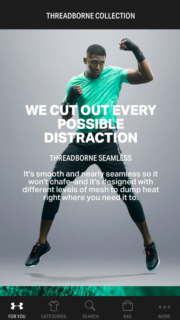
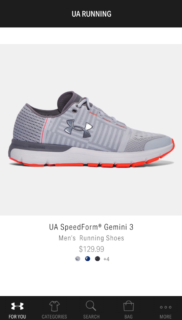
With the size of UA’s digital community, currently more than 200 million members worldwide, and a large part which is primarily interacting with us in digital, we have the responsibility to think digital-first. The UA Shop app is one example of how we’re leveraging our large community on the Connected Fitness Platform and providing an elevated personalized shopping experience. When it comes to commerce, we’re using digital as our backbone—how we understand the customer cross-channel and having a better understanding of what they want, their interests and then connecting the dots to experiences in a physical retail store and on digital commerce channels such as UA.com and our health and fitness apps. As we think about the role of the storefront evolving, we realize the opportunity to make these locations more of an experience center—making sure our customers see content that is relevant and products that are contextual to their needs, all still possible because our data backbone.
How is UA cultivating desire and engaging in a way that culminates into a transaction?
What our team strives to deliver is truly understanding customer motivations and mindsets through the information we have—a treasure trove of data. Through our Connected Fitness communities, we can think strategically about how to sell them shirts and shoes as an interaction of mutual value. An example of this would be to look at a consumer who’s using MyFitnessPal to chronicle their weight loss journey—they might not be interested at first in buying UA products or be engaged with the brand at all. We have to understand their motivations; possibly new workout clothes once they have hit a milestone, or new shoes if we know they’re running and have achieved a replenishment threshold. We don’t want to intercept at the wrong time. We use our data to make sure it’s the right time, and the appetite is there to have a commerce conversation. We have also found the best ways to communicate to these communities is through triggered rewards—reaching out to people once they’ve hit milestones or specific thresholds in their health and fitness journey. This type of communication has seen four-to-six times more responsiveness, leading to higher conversion rates.
What are some of the major industry shifts you’re focusing on to combat the e-commerce effect that companies like Amazon are forcing onto the industry?
We’re excited about what Amazon is doing in the retail innovation space, as they’re a strategic partner of ours. However, our team in the direct channel is focused on creating a more elevated experience, perhaps the best the brand can offer across touchpoints. Our customers come back to UA’s channels because of the rich content we can offer that portrays our brand in a way that is relatable—whether it’s through exclusive drops of our Stephen Curry basketball shoes, or a studio collection from our women’s line. We have an extensive product line and unique storytelling capabilities that differentiate us from retail channels like Amazon. At the end of the day it’s about personalized experiences, extensive product choices, deeper content and elevated conversation being the reward for shopping in the direct UA channel.
How is UA tackling omnichannel communication internally to ensure that content creation is consistent across all channels?
As an organization we excel at joining all of our teams together and making sure everyone is aligned around the opportunity, medium and channel to distribute the message and outcome we expect. There is a lot of collaboration cross-functionally, whether it’s product, design, creative, e-commerce or marketing, to make sure our strategies are in sync and focused on both consumer and business goals. One example is the collaboration between the UA Shop app and UA.com teams, who on a weekly basis jointly decide on merchandising, launch strategies and experiences they want to deliver to the audiences in the two channels. We believe in access for all, but at the same time, recognize that users who’ve volunteered to download the UA Shop app have raised their hand as brand fans and it’s our responsibility to make sure to provide them distinctly incremental value.
How are you using retail and social data from the UA apps to better connect with consumers?
Over the past two years, UA has heavily invested in technology that will better allow us to connect the dots between our customers and their digital behaviors. We have partnered with SAP to create a single view of the customer (SVOC) to amplify our ability to recognize, acknowledge and have tailored conversations with our customers across a variety of touchpoints. We now have the platforms to bridge retail purchases, Connected Fitness activity and other purchasing behaviors, giving us the ability to make each interaction more valuable for the customer.
How are you marketing to the elevated levels of newness and customization that are expected from today’s consumer? How do personalized products come into play?
Customization is an important strategy for us and something that consumers have now come to expect. Customizations can be about products—but equally important is experience customization. Specifically looking at digital though, UA Shop is wholly about customization. By utilizing the data we have available, we’re able to curate content and recommend products specifically based on your wants and needs. We can use this information to produce content through our athletes, campaigns and new collections based on your interests. Every consumer will have a different experience.
What are the omnichannel growth opportunities for UA in the next 12 months?
As our Connected Fitness community continues to grow, we have the opportunity to tap into this data to make stronger merchandising decisions. We will also be investing in the retail experiences, particularly in our brand houses, to ensure customers are really connected to who UA is as a company. UA Play is a perfect example of this. Customers can download the UA Play application, where they can scan bar codes across the store to learn about product details and seek artist information from the various artist graphics. We want to find ways to keep people engaged in our product in a fun way. In terms of building more foundational connections between our channels to drive improved productivity, we will keep our focus on initiatives which help drive efficiency in fulfillment and supply chain side while also keeping a focus on changing consumer landscape to provide elevated customer experiences.
Let’s face it—great marketing that moves the needle can be difficult. If you’ve ever stared at your campaign results in bewilderment, or pulled your hair trying to keep up with what young consumers want, you’re not alone. The media ecosystem has now reached “peak complexity,” according to Media2020: Refresh, a new report from media consultancy firm, MediaSense, and CMOs are shifting priorities to keep up. Here are some statistics that prove that marketing is more complicated than ever.
46 Percent Of Teens Distrust Ads; 58 Percent Are Influenced By Them
Say what, now? Teenagers are hard enough to understand, but this next figure will make matters worse. Apparently teens are split on whether or not to trust the ads they see, but admit to be influenced by them, according to new data from YouGov. While 47 percent of US internet users ages 13-to-17 found ads to be at least somewhat trustworthy, 46 percent felt the opposite way and six percent had not formed an opinion on the matter. Despite these concerns, 58 percent of American teens agree that advertising helps guide their desires and purchase decisions.
Ad Fraud Cost Marketers $7.4 Billion In 2016
A report by Forrester says that programmatic media and video are the primary causes of ad fraud spending “wastage.” If the problem is not addressed, that number may grow to $10.9 billion by 2021, the company warns. The report describes a digital advertising supply chain “riddled with problems, most directly connected to the lack of transparency in ad tech. The result is wasted time, effort, and money and lackluster ROI.”
58 Percent Of Consumers Dislike When Brands Get Political, But Millennials Love It
Damned if you do, damned if you don’t? In this turbulent political and social climate, brands may want to assure their followers that they hold certain views and are doing what they feel to be right. Unfortunately, doing so seems to anger about half of consumers no matter which way you stand.
A consumer study fielded by SSRS found that 58 percent dislike when brands get political and are more likely to avoid brands that take a position contrary to their beliefs—for example, brands perceived to be racist, anti-LGBTQ or sexist.
Multicultural millennials don’t mind at all, however. A study by Buzz Marketing Group found that 83 percent like it when brands make a public stand for or against issues they believe in.
68 Percent Of Consumers Tolerate Ads
According to a report from Kantar Media, 68 percent of connected consumers either tolerate or like advertising and 36 percent feel that advertising is changing for the better. However, the same survey found that over 40 percent had no idea that messages from brands in printed media form is advertising.
Young consumers have an especially hard time identifying ads, too. Eighty-two percent of middle-schoolers couldn’t distinguish between an ad labeled “sponsored content” and a real news story on a website, according to a Stanford University study.
Just 11 Percent Of Marketers Understand FTC Policies
The FTC has been cracking down on ad transparency, but if you’ve never been in trouble, or consider your brand to be honest, you may not have taken the time to keep up with the latest regulations.
According to a survey conducted by Lightspeed GMI and Research Now, only 11 percent of marketers reported being aware of or having an understanding FTC’s policies, while 56 percent said they were either not aware of, or not familiar with them.
Influencers—perhaps because it’s a major source of income—have educated themselves on the subject a bit more. The study found that 60 percent of US influencers said they’re aware of or understand the guidelines, and another 23 percent said they’re aware of or at least somewhat familiar with them.
The history of Astro Gaming is born out of esports.
Thaddeus Cooper, director of community at Astro Gaming
“For us, the pinnacle of design is designing for the top one percent of users—the people who are going to use the headset for eight to ten hours a day,” Thaddeus Cooper, director of community at Astro Gaming, told AListDaily while demonstrating its newest headset, the A10. “For them, it’s more like performance enhancing equipment than just wanting to game. The idea is that when you design for the pinnacle, then it’s kind of like when Nike designs shoes for long distance runners and Olympians, they learn about ergonomics, and that makes it into your daily streetwear.”
It was taking into the consideration of pro and high-end gamers that led to the development of the A50 headset by trimming away the pro features that most home users probably don’t need. That philosophy continues with the development of the $60 A10, which priced considerably lower than Astro’s other professional grade headsets that range from $150 to $300.
Cooper has been a part of the A10’s development from the beginning, and he explained how the company is very community-driven, marked by its large social media presence. Astro has over one million followers on YouTube and close to a million followers on Instagram. The company is very active on the social space, and its fans are very engaged and vocal. In fact, they’re enthusiastic enough to fill out lengthy annual surveys that revealed how roughly 80 percent of the people who follow Astro on social media don’t own any of the company’s products.
That led Astro to conclude that there was a large audience that wanted to join the “Astro family,” but couldn’t because the premium price points gated them off. Astro took that as a challenge to design something so that the larger gaming community will have access to its products. To that end, the A10 is being officially revealed today at E3 this week, where it is being shown alongside the A40 and A50 headsets. Afterward, it will be shown at other conventions, including PAX and Gamescom in addition to being featured at listening stations at stores such as Best Buy and Gamestop.
Building A More Inclusive Audience
“We felt that it was time for Astro Gaming to be more accessible to its larger audience base,” said Cooper. “My team, the marketing team, and a few others in the company decided that it was time for us to branch out and do more to have a much more inclusive audience base.”
However, developing a budget-minded pro-level headset created its own problems within the company. Cooper said that they had to ask themselves, “How do we defend our brand as a premium brand while at the same time giving people a more accessibly priced product?” The answer was to address the four issues that players want most from a gaming headset so that they won’t stick to using the cheap speakers built into their televisions. Those features are comfort, durability, audio quality and compatibility.
Cooper reiterated how Astro is famous for making headsets that people can wear for long periods of time, even with glasses, so it already had the comfort issue covered. The A10s are designed to be worn for six to eight hours by pro gamers during practice, and they’re also made to fit over VR headsets.
Durability was the second most important factor for gamers. Cooper recounted how reviews for headsets that cost under $100 usually complain about how they break within a year or two, forcing them to buy new ones. Cooper explained that Astro designed the A10 so that first-time consumers wouldn’t feel forced to buy an A40 or A50 because it broke.
“We want it to be a choice,” said Cooper. “We want you to say, ‘I bought an A10 and it lasted for two years. It’s great and I love it, but I’m ready for A50. I want wireless and I want to go to the next level in Astro Gaming.’ We wanted to do this right because we wanted to protect our brand.”
Nobody buys a more expensive version of a headset that breaks easily, and Cooper proceeded to demonstrate the A10’s durability by twisting and bending the headband around, far past the point where many budget headsets would break. He also tossed the headset across the room onto the floor to show how it wouldn’t break or lose sound quality.
Astro aimed to have a very similar audio quality experience to that of the A40s. “The reason for that is because we want young players and aspiring pros to take these to an MLG tournament, the same way they can take A40s.” The A10 can also be plugged into Astro’s Mixamps to take advantage of a variety of different features, which ties the headset’s near universal compatibility.
“People don’t want to buy a $100 headset for their Xbox, then have to buy another one for their PlayStation,” Cooper explained. “With the current ecosystem of consoles, we felt it was the perfect time to launch something like this.”
He explained how both Microsoft and PlayStation deliver high-quality audio wirelessly through their respective controllers, and Microsoft in particular launched its Sonic 3D audio platform for free on Windows 10 and will soon bring it to Xbox One. The technology produces 3D sound with headphones that support Dolby sound.
Although the A10 headset comes in three different colors to denote platform (green for Xbox, blue for PlayStation and orange for PC), those distinctions are mainly to fit retail and licensing requirements. All versions work universally using the 3.5mm audio connector, however only the Xbox One version offers an optional bundle that includes a gamepad adapter. The adapter has a set of controls that lets users can change the volume or mute the mic without having to let go of the controller or drop out of a game to adjust settings.
Every Headset Is A Starting Point
Given how the A10 delivers a high level of audio quality, we asked Cooper how Astro would convince users to take their experience to the next level with a more expensive headset like the A50. He maintained that all of Astro’s headsets are designed for a high standard of audio. He then said that changing headsets was “more about your overall experience. The build quality and comfort will be in all headsets, but the A50 will give you a [truly] wireless experience.” The A50 also doesn’t draw power from the controller, and it has a number of other features that the A10 doesn’t, such as 7.1 surround sound and software audio tuning. “There are more quality of life features with the A50,” Cooper explained.
The A10 also has a noticeably different look from Astro’s usual style. For example, it lacks the signature bars that are found on both the A40 and A50 headsets. We asked Cooper how people would recognize the A10 as being part of the Astro family of products.
“Silhouette is one of the most important things we try to design for,” Cooper replied. “We try to make an iconic look with our headsets, and we want everything you wear from Astro Gaming to be recognizable because one of the things people love about a prestige brand is being recognized. So, we feel that in designing this headset, we kept an Astro aesthetic that makes a noticeable silhouette that sets it apart from other headsets. If you look at the way design aesthetic are going right now, a lot of our competitors are trying to create Beats-style headphones with a circular look and could be worn on the street. We went for more of an iconic and tech-driven look for these headsets.”
Just don’t describe the A10 as a starter headset. “The term ‘entry level headset’ gets tossed around a lot, especially at certain price points,” said Cooper. “As a marketer, semantics means a lot to me, so I have a really hard time with the term. I think everyone has their own level that they enter the game at.
“If you come to me as a pro gamer or streamer for a headset recommendation, I’m going to steer you toward an A40 and that would be your entry level headset. If you’re looking for the best wireless experience you can get in your home, then the A50 is going to be the headset for you. If you’re a young gamer trying Astro for the first time, but don’t have $300 to spend on a headset, I’m going to steer you towards the A10. Every headset we make is an entry point into what Astro does. It just depends on what your skillset is and what you need.”
Staying With Core Philosophy
Finally, we asked Cooper if Astro would spend less time focused on the small percentage of high-performance gamers to address the broader audience moving forward.
“Not at all,” replied Cooper. “We’re always going to be focused on designing for that top one percent of users—people who will need features that those playing in their living rooms don’t. As long as we are always focused on the pinnacle use case scenario, and everything we learn can be used in new designs, I don’t think we’ll ever change the philosophy of making pro gaming hardware for enhancing esports, professional gaming, streaming, and audio design. I feel that losing that focus would send us down [the wrong] road, where companies treat their products like commodities, instead of engineering and designing them to solve problems.”
 How are you marketing to the elevated levels of newness and customization that are expected from today’s consumer? How do personalized products come into play?
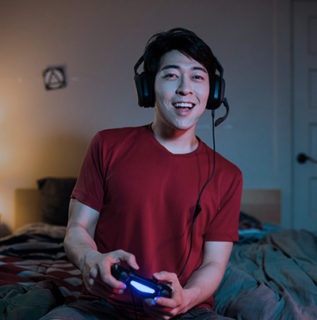 However, developing a budget-minded pro-level headset created its own problems within the company. Cooper said that they had to ask themselves, “How do we defend our brand as a premium brand while at the same time giving people a more accessibly priced product?” The answer was to address the four issues that players want most from a gaming headset so that they won’t stick to using the cheap speakers built into their televisions. Those features are comfort, durability, audio quality and compatibility.