The Forte’s Features Are Your Next Facebook Racing Game

Kia is marketing its 2014 compact sedan Kia Forte as the car “loved by those who love technology.” And to hone in on that branding angle, the car company has taken to Facebook to create social games to promote the car’s advanced technological features.

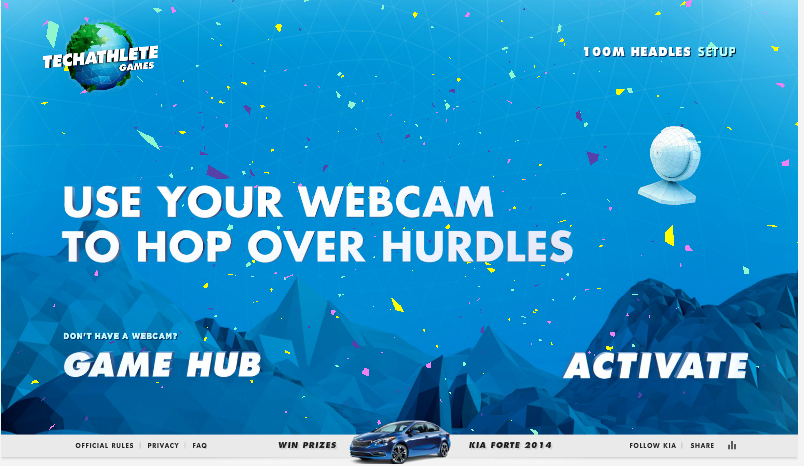
The Facebook app is called Kia Techathlete Games, and it includes a total of five different games that correspond with each innovative feature of its Forte.

The “Sla-La-La-Lom” game involves users using voice-control with their computer microphone to navigate their way down a ski slope. This game is meant to highlight the Forte’s slick voice-command navigation system.

The “Gy-Row-Scope” game involves synching a user’s smartphone to the computer to row their boat to the finish line. This game is intended to highlight the Forte’s smartphone synching abilities and digital jukebox.

Social media players can compete to get on the online leader board, share their scores with friends and enter for a chance to win some tech gadget prizes like an Xbox Kinect, Go-Pro camera, Nike+ FuelBand and Beats by Dre headphones.

The Facebook app in itself isn’t anything mind-blowing, but it does showcase a fun way to highlight the brand’s individual features in a way that social media users can really engage with and appreciate.

Source: Digiday

The Booming Economics Of YouTube Videos [Infographic]

Masters in Marketing Degrees recently published an infographic illustrating the fertile economical landscape of YouTube influencers and the marketing strong arm behind the videos. Today an entire industry is building up around viral videos; just recently, creative advertising agency Ayzenberg Group released their approach to reaching the right audience via celebrity influencers and that trend is only gaining momentum.

Not only does YouTube connect video creators to Google AdSense for advertising revenue, the social video company has also built production studios in Los Angeles, Tokyo, and London to help the medium thrive.

There are even awards shows like the Social Star Awards to honor the best the industry has to offer.

Browse the below infographic to see the latest statistics on how the web video industry has grown in the last few years.

The Economics of Going Viral

Image source: Social Times


Firm Finds Facebook Users’ Motivation To ‘Like’

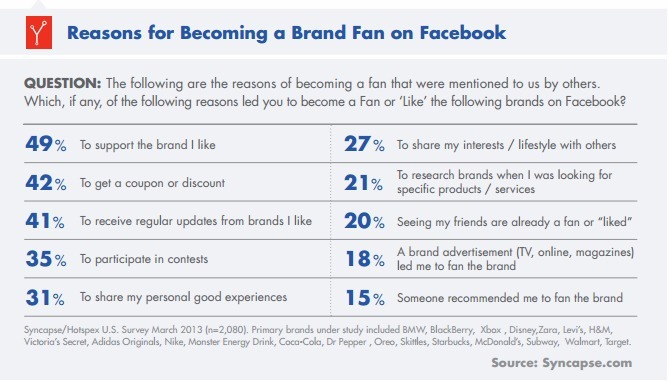
A new study from Syncapse, the company that recently valued a Facebook user at $174, found that most people who “like” a brand on Facebook do so because they actually like them, not because they were prompted by a free item or discounted code. This may sound obvious, but the takeaway for marketers may be that their ad money is better spent on branding ads on the social network rather than call-to-action or direct-response ads that may produce higher click-through rates, but not brand advocates.

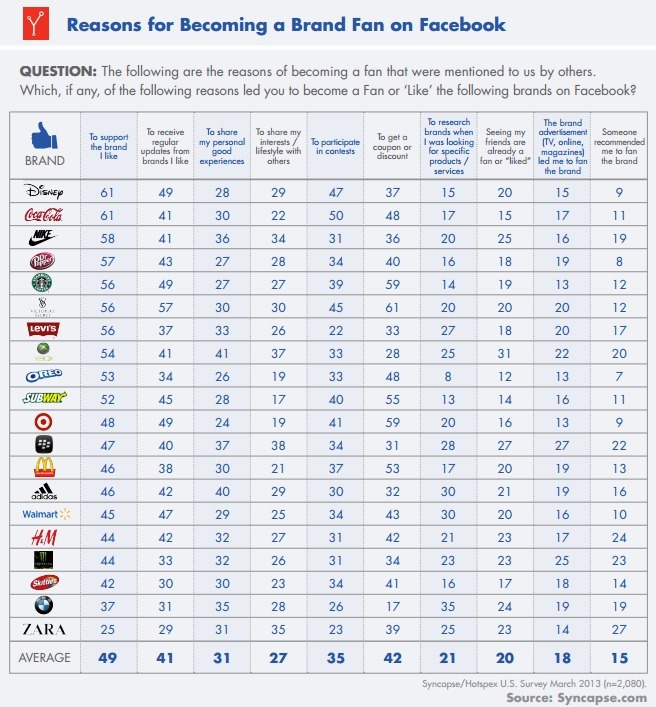
Syncapse worked with Hotspex to interview 2,080 consumers in the first quarter about their reasons for becoming Facebook fans. “To support the brand I like” was the number one reason followed by several more findings.

The survey also looked at overall sentiment for a brand and why users were motivated to press “like.”

Max Kalehoff, VP of product marketing at Syncapse strongly urges advertisers to cultivate actual fans rather than take advantage of a quick offer or giveaway, something that is easily said but often times difficult to execute.

“I wouldn’t say that it’s a flat out rule that you shouldn’t do that,” he says, referring to direct-response ads, “but you should do more emphasis on brand personality drivers because that really resonates with your core audience. Then you might want to mix it up,” Kalehoff said.

But since branding ads don’t provide an incentive to click, they have very low click-through rates providing what seems by one measure to be a low ROI. In response to that criticism, Facebook has sought to de-emphasize the CTR as an industry standard for online ad efficacy.

Source: Mashable

Turn Your Name Into A Breaking Bad Logo

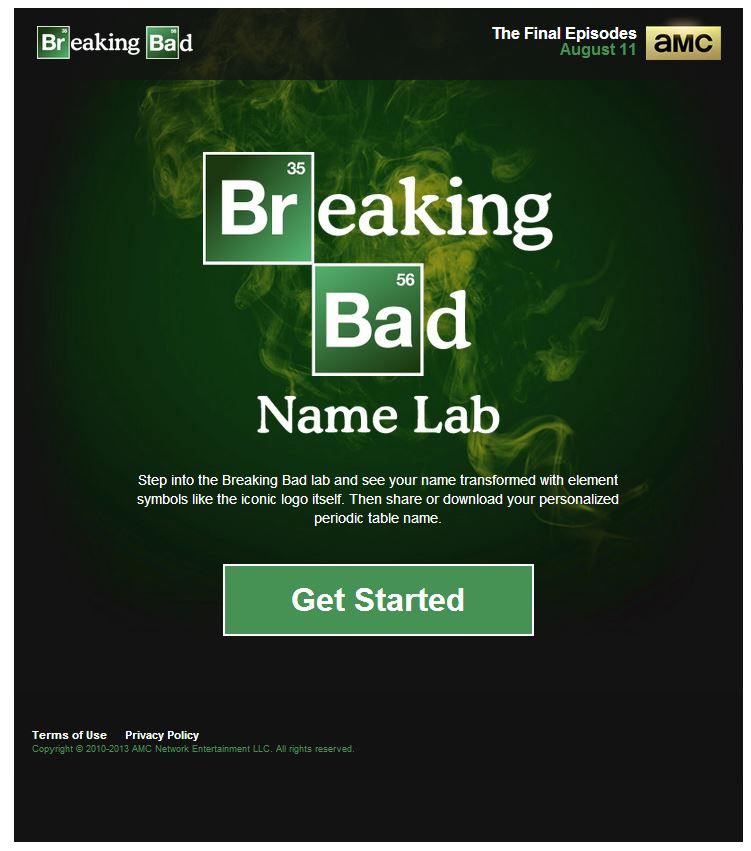
AMC’s hit TV series Breaking Bad returns for its final episodes starting Sunday, August 11. In anticipation for the return of Walter White and his partner Jesse Pinkman, AMC has created a fun interactive Facebook app that allows fans to put themselves in the action.

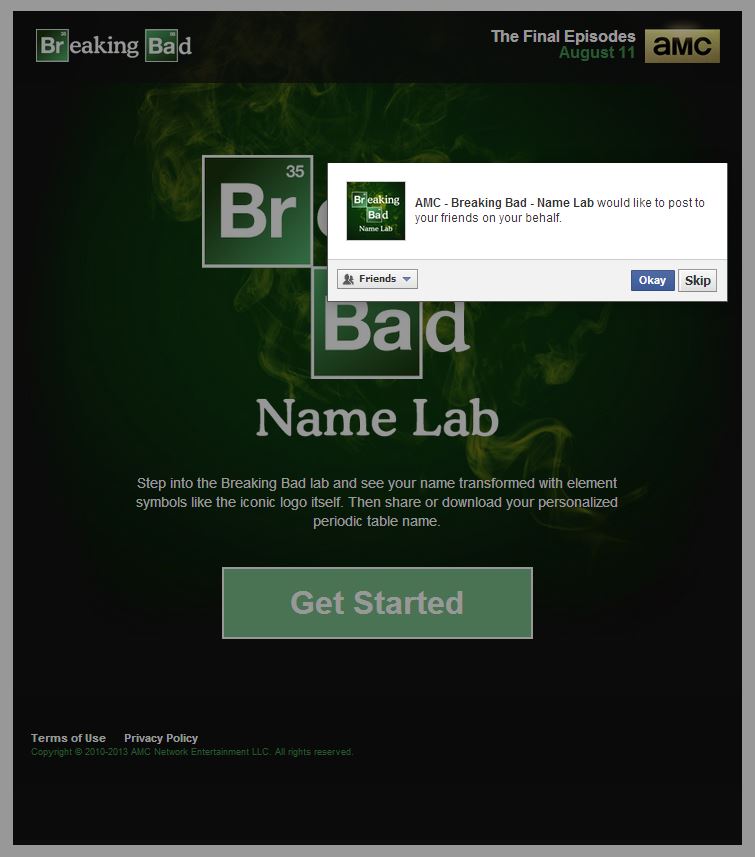
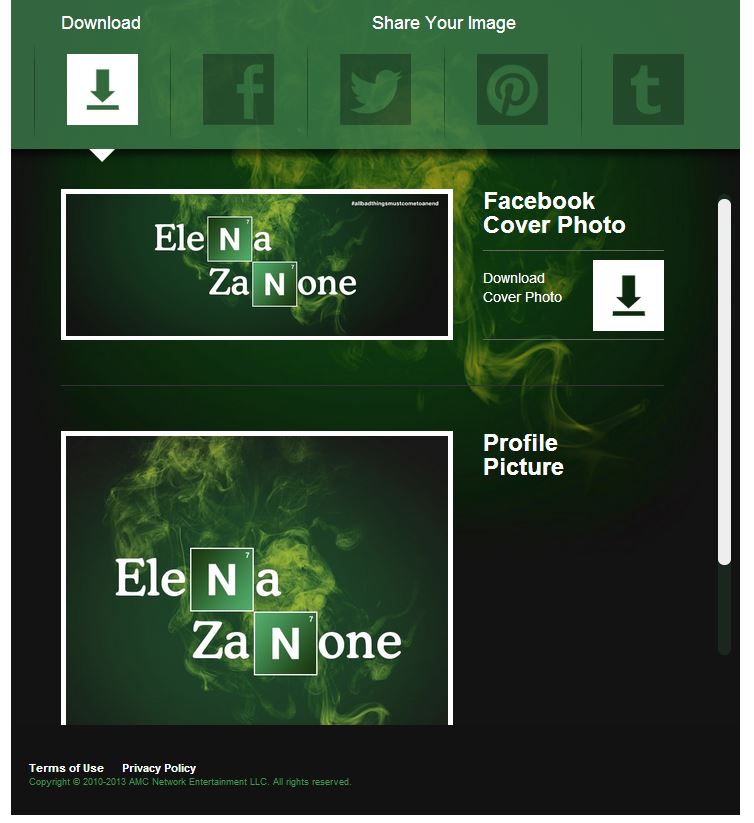
The “Breaking Bad Name Lab” lets users format their name in the style of the show’s iconic logo, which uses periodic table symbols for letters.

Users can then download their Breaking Bad style name images to upload as their Facebook cover photo, Facebook or Twitter profile picture, or they can share the image on Pinterest or Tumblr, or tweet it out with hashtag #AllBadThingsMustComeToAnEnd.

For shows with cult followings, like Breaking Bad these kinds of personalization apps that let fans make something from the show customized for themselves are always fun way to get people to engage and interact. And if creating a Breaking Bad logo isn’t your cup of tea, AMC also has an interactive fan trivia game and evidence board on their site for fans to immerse themselves in until the show’s return this August.

Source:  Digiday

What Do Your Facebook Likes Reveal About You?

Last week Forbes released a countdown revisiting social media studies spanning over the past five years. The educational reports indicate what some user Facebook behavior translates into the real-world. Some findings were as silly as a curly fries Facebook Like revealing intelligence, but many statistics were eerily accurate; the correlations between online behavior and real-world characteristics could be something advertisers could benefit from in campaigns.

“We’re on the cusp of a new way of doing social science,” said a Harvard sociology professor at the time. “Our predecessors could only dream of the kind of data we now have.”

That was more than five years ago. So how was that statement held true to today Here is a collection of some of the insights from academic researchers and social scientists who’ve lurked on the social network for professional purposes. We’ve listed the top 30 below.

1. The more Facebook friends a teenager has, the more privacy promiscuous he or she is. (2013 survey)

2. It’s scientifically proven that Facebook’s privacy settings are confusing. (2011 study via Huffington Post)

3. The chances of your “anonymous” dating site profile getting linked to your Facebook profile may be as good as your chances of getting lucky there, thanks to facial recognition. (2012 study)

4. So much for “six degrees of separation.” We’re now linked to just about anyone else by a messy 4.74 people. (2011 article)

5. Your Facebook friend list will reveal you’re gay. (2009 study)

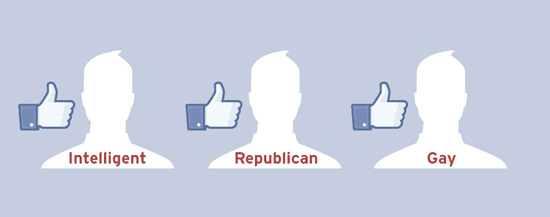
6. So will your Facebook “Likes.” They may also reveal your political leanings, your religion, and your ethnicity. It turns out we are what we like. (2013 study)

7. Eating fries isn’t terribly healthy but liking curly ones on Facebook suggests high intelligence. (same study)

8. People who like the littlest Family Guy, Stewie, are likely to be “dissatisfied with life.” (same study)

9. A site designed to get you to share stuff gets you to share stuff. We are programmable. (2013 article)

10. Stuff White People Like On Facebook: other white people. (2008 study)

11. Forget LinkedIn. Facebook can tell you if someone is worth hiring. (2012 study via article)

12. Honesty is the best policy… on social media sites while job searching. (2011 survey)

13. Those people who are venting all of their emotions on Facebook are probably as unstable as they seem. But it does help them feel better. (2012 study)

14. Big networks are great, but it’s the really good friends who got your back. Close friends are more likely to help you find a job. (2013 Facebook study)

15. If the NSA sends you a friend request, it’s a bad idea to accept. (2010 academic paper)

16. Need to chill out? Facebook-stalk yourself. Looking at heavily-curated, best versions of our digital selves makes us feel better about our lives. (2013 study)

17. …Just don’t look at other people’s vacation photos while you’re on the site. Seeing your friends in beautiful places will send you to an unhappy one. Discontent lies in comparing yourself with the heavily-curated versions of others. (2013 article)

18. Our digital selves are not as divorced from our real selves as some would have you believe. For example, we like our friends just as much online as offline… (2013 article)

19. … and people who talk about politics online like to be involved in politics offline. (2009 study)

20. College students prefer befriending people who like the same music and movies as them. But they don’t care what they read. (2012 study)

21. Classical and jazz music are the only contagious “likes” among college students, probably because we’re cultural elitists. (same study)

22. It’s hard to hide the fact that when you say you’re doing a study on a bunch of “anonymous” students from an “anonymous” college that got on Facebook early, you’re actually talking about Harvard kids. (2011 article)

23. Caring about privacy is contagious. (2008 study)

24. Using Facebook and texting while doing schoolwork hurts a college kid’s GPA… (2011 study)

25. … or maybe not. (2012 study)

26. People can talk politics online without completely losing it. (2009 study)

27. People who live in battleground states actually care what happens in their races. (2012 study)

28. Social media peer pressure works — when it comes to voting. (2012 study via Slate)

29. Social media peer pressure also works when it comes to “Likes.” (2010 study)

30. Chick-fil-A, rest assured. People who “like” brands are more likely to forgive and forget when those brands screw up. (2012 study)

Source: Forbes
The Death Of Vine May Be Greatly Exaggerated

The following is a reprint of an article for iMedia Connection by Keith Pape, VP social & emerging media at Ayzenberg Group.

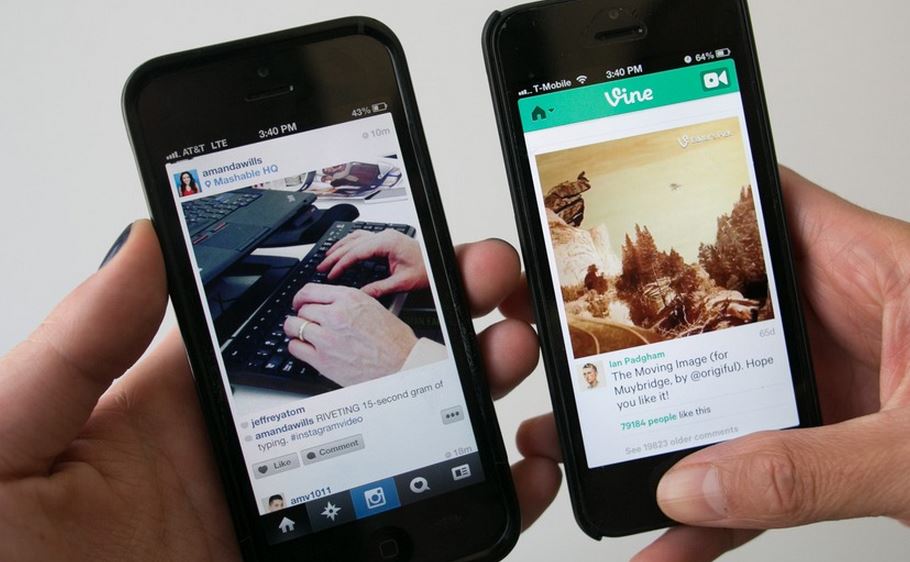
With the launch of Instagram Video yesterday, many pundits have already announced the death of Twitter’s video service, Vine. It seems that anytime Facebook jumps into a new niche, there is the threat that a smaller offering will be crushed under their weight (of ad spend to gain adoption).

The fact that Instagram video is integrated into their existing application certainly helps their cause by gaining access to an existing install base, but Foursquare has certainly shown that a mere entry into a space (such as online check-in) isn’t a guaranteed death sentence. The key to Instagram’s success and their greatest differentiation is certainly their filtering options. Filtering turns any point-and-shoot photographer into Ansel Adams with the push of a button. I’m not sure the same is true for video. There is much more to consider when creating a short-form video; and just adding on a lighting filter at the end may not make up for aggressive movement, bad composition or poor aim.

From a functionality standpoint, I do admit I love that they came out with iOS and Android the same day. The ability to use both camera views (front and rear) is a godsend, and having the option for a slightly longer form —while being able to stop anytime I want and move on to filter and share — is quite refreshing.

The key for Vine is to find its differentiation, much as Foursquare has done for check-in. How can they find a new feature or audience niche that finds Vine to be the special sauce they need Vine will need to pivot quickly on their business model to stay relevant. I don’t really see them as an underdog (as they are a division of Twitter) but as a first mover, I do root for them to make some quick changes and I’m still hopeful for an innovative and competitive future.

What do you think I’ve taken a few already and see not necessarily innovation, but certainly a more full-featured experience. What have you shot What do you think Vine’s next move could be? Leave a comment or send me a tweet and let’s keep this conversation going.

About the Author

Keith Pape leads social, mobile and emerging media opportunities, as well as strategy and creative execution at Ayzenberg Group.  He is a senior digital marketing executive with 14+ years of experience driving business growth, leading teams, launching brands and products, and achieving results through creative, results-driven and technology-enabled marketing. 

Source: iMedia

Alamo’s New Games Market To Moms, Families

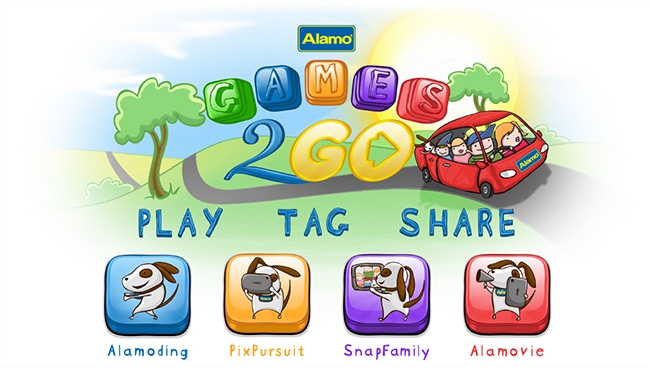
In a bid to keep families engaged on the road while advertising to those families, Alamo Rent-A-Car has released a series of mobile apps designed for family road trips. Alamo has teamed up with several ‘mom’ bloggers to create and push these apps, in addition to promoted tweets and Facebook posts from Alamo. Four of these games can be played from the AlamoGames2Go web app, Facebook, Twitter, Instagram and Vine by using the hashtag #AlamoGames2Go.

The four games are Alamoding, PixPursuit, SnapFamily, and Alamovie. Each of the apps involves using picture or video to capture family moments, which can then can be submitted for a chance to win every week or to win a $5000 grand prize. In addition to the contests being held by Alamo’s apps, the participating mom bloggers will be holding contests as well.

An increasingly growing part of social networks is mothers. Alamo is attempting to break into this market by creating these applications and games for families and marketing them to mothers. Alamo will be tracking the success of these games as the campaign goes on by noting how much attention and participation the games get.

Source: Adweek

Facebook Breach Frazzles Users, Again

After the NSA’s Prism program leaked to the public, it’s safe to say every intelligent flesh and blood social net user has been questioning just what privacy means on Facebook, Twitter and everywhere else people like to share information.  Facebook just gave their users another reason to worry.  On Friday, they revealed that the phone numbers and email addresses of 6 million users became accessible, even if they were set to private.

Facebook blamed a bug, one that wasn’t found by their own staff.  It was found by an outsider participating in Facebook’s bounty-based DIY debugging program, where users who find vulnerabilities in the social net can earn money.

Facebook described the flaw as only making the information — either email or phone — available to people already in a user’s network, and only if they downloaded their account histories.  Major news media has been making it a point to highlight how 6 million users is a drop in the bucket when you consider Facebook has more than 1 billion of them.  (The factoid smells like a Facebook PR sound bite.)  So it’s a mild breach, if there is such a thing.

Based on a Huffington Post article today, Facebook users haven’t been quick about seeing the silver lining around this one.

“Users are extraordinarily upset that Facebook did not apologize for leaking this information,” writes HuffPo.

It then goes on to a list a selection of angry posts, with most of them tying this breach of trust to the one with the NSA and Prism.  The first user tells Facebook to fix loopholes “before you go down swinging.”

Let’s be realistic, the notion of privacy on the internet is dead.  Before the U.S. was exposed — characteristically by a concerned citizen — plenty of other countries killed it for their netizens, and did it brazenly.  The more likely scenario is angry users swinging, but as far as internet privacy is concerned, still going down.

Source: Huffington Post

File Share Flavor Flav

Public Enemy has a lot of beefs but file sharing isn’t one of them.  The band is teaming up with Bit Torrent to promote their thirteenth studio album, Get Up, Stand Up.

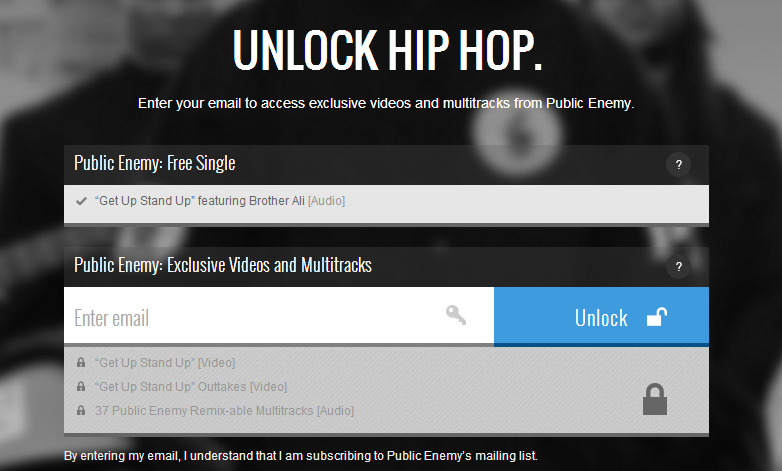
The band is offering a bundle through Bit Torrent that includes their new album’s title track as a free download.  Once users sign up and download the song, they can unlock additional content such as the music video and video outtakes from the band. They can also jump from the Bit Torrent app over to iTunes to “Support the Artist” and buy the album’s remaining tracks.

For fans, outside of getting a free single, the coolest part of the promo has to be that one of the pieces of content to unlock is a version of the song that they can remix.

Public Enemy producer Gary Rinaldo laid out the philosophy behind the promo and partnership with Bit Torrent, saying, “The ability to freely share an archive and have flexibility on how it can be used is an extremely powerful tool when it comes to making music and media available.”

Source: PSFK

Social Networking Will Soon Reach 1 In 4 People This Year

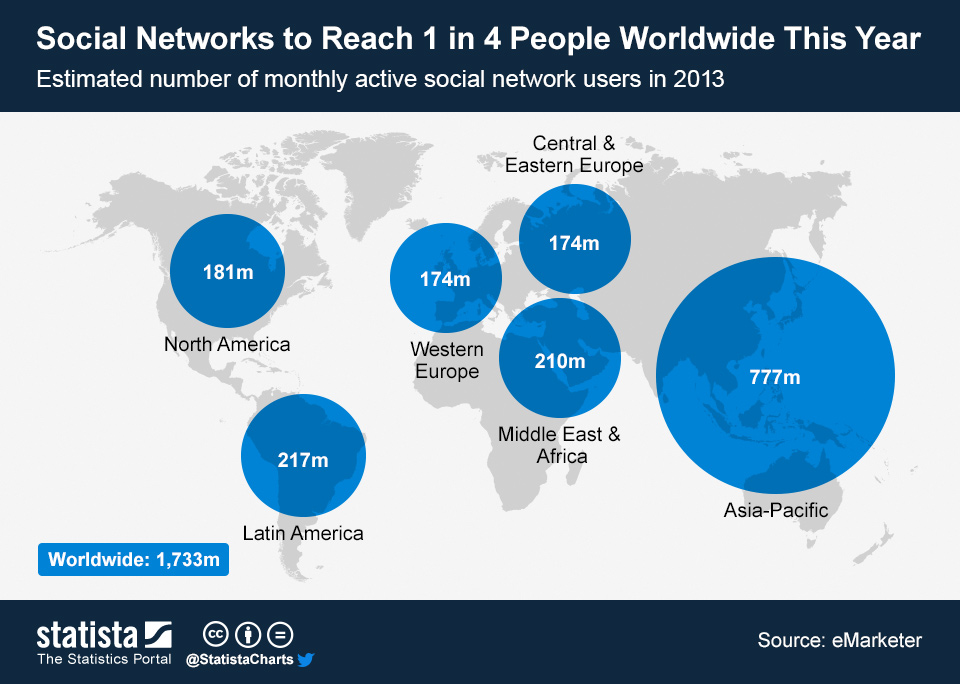
According to the recent eMarketer report, “Worldwide Social Network Users: 2013 Forecast and Comparative Estimates,” an impressive one in four people around the world will use social networks by the end of this year. This ratio means that the ranking of social users by varied region will actually mirror the regional shares of the global population by 2014.

“This was an inevitable development, as social network usage has moved from taking place primarily in advanced markets to being a common activity for people around the world,” the study notes.

Additionally, the report revealed that by 2015, more tech-savvy markets of North America, Western Europe and Central and Eastern Europe will have the highest increase in users worldwide. And according to eMarketer, beginning in 2016, Latin America will surpass Western Europe in social network usage. The study expects the fastest jump in social network users will come from India, Indonesia, Mexico, China and Brazil.

This widespread usage of social media has prompted researchers at eMarketer to increase their 2013 forecast for total users by 100 million since their August 2012 report.

“This upward adjustment is based on new data that indicates higher-than-expected totals for internet users in India, Japan, Australia, South Korea, Brazil, Mexico, Russia and the Middle East and Africa; new data showing higher estimates for UK social network users than previously forecast; and a new breakout of social network users in the Netherlands, Norway, Finland, Denmark and Sweden,” the marketers reveal.

The largest area of social media users comes from Asia-Pacific, with an audience of 777 million people and a share of over 40 percent of social network users worldwide expected by the end of this year. This is more than triple the size of Latin America’s entire social media audience, which is the second-largest worldwide.

More impressive is that by the end of this year, over 60 percent of internet users around the world will use a social network at least once per month and will rise to more than three out of four internet users by 2016.

Source: eMarketer