Nielsen Weighs In On The Year’s Top Video Game Trends

We take one final look back before celebrating the New Year. [a]listdaily speaks to Nicole Pike, director of games at Nielsen, to talk about the past year’s biggest gaming trends and how they might impact what’s to come in 2017.

Nicole Pike, director of games, Nielsen

What were some of this year’s biggest trends and developments in console gaming?

First and foremost, the biggest news of the year was the mid-generation console updates. Sony put out the PlayStation 4 Pro, Microsoft released the Xbox One S and announced Project Scorpio for 2017, and it’s the first time we’ve ever seen that happen within console lifetimes. It mimics the smartphone or Apple approach, where we don’t need to wait for a big new release, but manufacturers are starting to think about upgrades and keeping up with technology over the course of an existing system instead of letting it run its course over seven or eight years. The PS4 Pro had some very good sales over the holiday and the Xbox One S did very well, so I think it’ll be very interesting to see how Scorpio does next year. It’s a very different way of doing things on the console side.

Were you surprised by how well consumers took to these mid-generation hardware upgrades?

Yes and no. I think any time something new is happening, there’s always a little bit of skepticism around it, and I can see some consumers being frustrated by the fact that they bought a new console a couple of years ago, and may feel obsolete. There was definitely some skepticism going in, but at the same time, we all know that there’s a strong audience that bought the Xbox One and PS4 right when they released, and those are a committed group of consumers that are always buying the latest console technology. So, I think the opportunity for such a tech savvy group to upgrade was just the kind of product they were looking for. It’ll be interesting to see, in the next couple of years, how the sales of the Pro versus PS4 (original) and Scorpio versus Xbox One S compare to each other with later adopters.

What do you think was this year’s biggest console game?
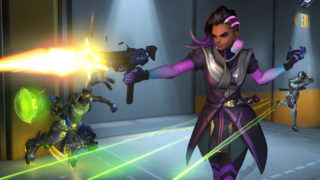
overwatch-sombraOverwatch, for a number of reasons, but mainly because it speaks to the idea that a game can be built from the ground up with eSports heavily in mind. It’s definitely a new trend that speaks to the importance of eSports within the category these days, but also the ability to bring out a new IP. Existing and annual franchises definitely dominate the console space, so with games like Overwatch and Destiny do well, we’re seeing some strong opportunities for new IPs to make place in the console industry—which is exciting, especially for consumers. Call of Duty still did well over the holidays, maybe not necessarily as strong as everyone would have thought, but Overwatch put new life into the console industry.

[The huge success of Overwatch] is probably the exception rather than the norm. Obviously, it takes a lot of money—especially for a new IP—on both the development side and marketing to compete with the stalwart franchises we have on the console space. While a company like Blizzard has the opportunity to make a big splash, I think it capitalized on the eSports trend. It just came at a really good time when there was an opportunity to expand past the five or six titles that dominate eSports today by jumping that trend while it was on the rise, which created more excitement and acceptance of it. But it also provided some innovations and changed up first-person shooters in a way that a lot of titles haven’t.

How did Nintendo do this year?

Nintendo had an interesting year in that they decided to cut things off with the Wii U and coming out quickly with Switch. Then there’s also the NES Classic Edition, which seemed to be a surprise for them. Pokémon GO isn’t console, but it made Nintendo more top-of-mind after what happened with Wii U. It’s been a transitional year for Nintendo, and they did a good job staying relevant. We’ll see how that carries over to the Switch launch.

Nintendo’s entry into the mobile market was long overdue, in the sense that they had some extremely logical IPs that were a great fit with a mobile audience. I think the fact that they finally jumped into the space was exciting for everyone and breathed some new life into mobile. A lesson we can learn is that strong IP can do well in the mobile space, and we’ll probably see more people leverage the IPs that they already have to make a big splash on mobile.

How do you think the first year of VR has gone?

I think it went about as well as expected. One of the big things about VR, if we take away devices like Google Cardboard, is the inherent cost barrier. The Xbox One S and PlayStation 4 Pro are competing for gamers’ dollars, and we’re still early in the technology cycle, so it doesn’t surprise me that these [premium VR] devices didn’t take off and sell a lot more. I think they did what was intended, which was to get VR into the hands of early adopters. Hopefully, that will build excitement and trust on the developers’ end to get more content. Ultimately, the success formula is going to be getting the costs to the point where it won’t be a barrier to a broader base of consumers in addition to getting the content piece right—making sure that there’s content beyond enhanced gaming experiences that will really knock people’s socks off.

What were some of the most significant developments in eSports this year?

ESports had a big year. First of all, there’s the attention that it got, and a big part of that was some of what we saw in the second half of the year around traditional sports getting involved in eSports. It creates more awareness, especially on the investor end. Secondly, more people (especially those outside of gaming) are seeing eSports as a legitimate trend and are either looking to jump on board. We’ve even seen the announcement of a Will Farrell movie, where he’ll be a professional gamer, and the White House hosted an eSports tournament event this year. There’s just a lot more acknowledgement that eSports is becoming a part of our culture.

I think the rise of amateur eSports is also very interesting. PlayStation came out with PlayStation Tournaments and Xbox has its own tournament platform, Xbox Live Arena, in beta testing. EA is making a big push by announcing how important the competitive aspect of things is to all of their games moving forward. That’s a big trend, and having a lot of publishers are capitalizing and monetizing on the eSports trend is going to be exciting to watch. It’s going to allow more consumers to get involved in eSports on a personal level, as opposed to just watching it.

ESports is known for being mainly PC games, and Overwatch gave hope to the idea that there’s an opportunity for new games to have a space within eSports and bring in more of the console aspect. Traditionally, especially outside the US, people think of eSports as heavily PC. But with what we’re seeing with console manufacturers, Overwatch, and a few other games—console eSports is definitely a trend to watch. I think it’s more likely to grow to rival PC than mobile.


Learn everything you need to know to invest in today’s fastest-growing media channel—Competitive Gaming and eSports on 2.16.17 in Los Angeles. Go to alistsummit.com for more info.

Resolutions, The Future Of Digital And Other Must-Read Marketing Stats

A brand new year is upon us—a time for reflection and looking forward to brighter days to come. This week, for the last marketing statistics round-up of 2016, we take a look at how marketers are investing in digital video, what consumers are hoping for this New Year, what kind of VR headsets sell the most and why no one has time for your slow-loading mobile site.

Digital, The Star Of Video Ads

Digital advertising is well on its way well to exceed the $59.6 billion spent last year, according to the Interactive Advertising Bureau’s (IAB) Internet Advertising Revenue Report. Marketers spent 20 percent more year-over-year on digital advertising in the third quarter to total $17.6 billion, bringing the total to more than $50 billion spent in 2016 so far with one quarter left. Video, in particular, will be a main focus for brands in the coming year—IAB’s Digital Video Ad Spent Study for 2016 in cooperation with PricewaterhouseCooper, found that ad buyers expected to increase spending 63 percent on digital video, 62 percent on mobile video, 41 percent on advanced TV and 30 percent for broadcast, cable and set-top TV.

Loading? Ain’t Nobody Got Time For That

Are you tired of looking something up on your phone only to have it load for what seems like forever? You’re not alone, and consumers aren’t putting up with it. New research by Google has found that 53 percent of mobile website visitors will leave if a web page doesn’t load within three seconds. Google’s report, “The Need for Mobile Speed,” found that mobile sites that loaded within five seconds performed much better than those that took 19 seconds to load. In addition, sites that loaded within five seconds boast 25 percent higher ad viewability, 70 percent longer average sessions and a 35 percent lower bounce rate.

VR Is On The Move

Tractica estimates that more than 88 percent of all consumer-grade VR head-mounted displays (HMDs) sold in 2016 were mobile headsets, and predicts that mobile HMDs will account for three-quarters of annual consumer-grade HMDs shipments in 2021. By that time, the market intelligence firm forecasts that the total market for mobile VR hardware and content will reach $10.9 billion worldwide.

“Mobile VR has a tremendous amount of momentum, but there is much work still to be done,” said principal analyst Mark Beccue in a statement. “VR is an extremely complex technology and there are many obstacles to a frictionless, optimized user experience.”

Toasting For Health And Wealth In 2017

New Year’s resolutions traditionally involve hitting the gym, and a year-end survey by Visa found that not much has changed, with 35 percent who wanted to get healthier and physically fit. However, a nearly identical amount were determined to either get their financial house in order (19.8 percent) or save more money (14.9 percent). People are feeling pretty good about their choices, too, with 84 percent feeling positive that they will achieve their goals in the coming year.

Saving money, as it turns out, starts this weekend with 53.3 percent of those surveyed saying they plan to stay home with family or friends on New Year’s Eve. Of those who will celebrate, Visa reported, more than 35 percent plan to spend less than $50, compared to just 14 percent who say they plan on spending over $100 on celebrations.

Other 2017 resolution priorities included spending time with family & friends (9.7 percent), getting a new job (9.5 percent), traveling more (7.7 percent) and starting or ending a relationship (3 percent).

How PC Gaming Grew In 2016

While mobile games, at about $36 billion, have become the leading game revenue sector globally, PC games were close behind in 2016 with about $32 billion in revenue. Unlike mobile games, casual games represent only a small part of the total (about $5.2 billion), while massively multiplayer online (MMO) games, which include roleplaying, strategy, action shooters, and multiplayer online battle arenas (MOBAs) provided the bulk of the revenue.

This year saw continued strength in PC gaming, despite an overall slowing in sales for PC hardware and the lack of PC software in retail stores. The market for PC games is mostly digital now, the bulk of which is on Steam, but many other digital distributors are gaining ground, including downloads direct from publishers. Here are some of the hottest PC gaming trends from the past year.

ESports Grow More Powerful

The impact of eSports on the PC game market was felt strongly this year, as major publishers announced new professional eSports initiatives and viewership climbed. Established PC eSports are notching record numbers, and new PC games are doing their best to become eSports. It’s becoming a great way for marketers to reach a significant audience that’s hard to reach through other media or venues.

Activision kicked things off with the acquisition of Major League Gaming, and by hiring the former CEO of ESPN to run it. So far, the effort has brought more Call of Duty eSports and a record-breaking Counter-Strike Major Tournament. Beyond that, Activision Blizzard announced the creation of the Overwatch League, a professional eSports league that builds on the success of Overwatch, during the BlizzCon keynote in November. There are already over 20 million Overwatch players, and a professional league should help to significantly grow that number.

Electronic Arts also used 2016 to launch an eSports division, headed up by veteran Peter Moore. The focus initially is on EA Sports games like Madden NFL, but certainly other EA games like Titanfall or the Battlefield series could lend themselves to eSports. Especially considering how Battlefield 1 was featured at EA Play earlier this year with a live 64-player match featuring celebrities Jamie Foxx and Zack Efron.

Smaller developers like Psyonix are finding great success in eSports with titles like Rocket League. The game has been hugely successful on both PC and consoles, and Psyonix is currently working to implement cross-platform play. Furthermore, the developers partnered with Twitch to form the Rocket League Championship Series earlier this year.

VR And 4K Gaming Arrive

While graphics cards for PCs are always advancing, the jump in 2016 was particularly impressive in both price and performance. Both Nvidia and AMD pushed forward strongly, driven by the graphics-hungry nature of two of gaming’s hottest trends: VR and 4K/UHD gaming. Although top-of-the-line graphics cards are still very pricey, both companies are working to offer more affordable solutions to help drive the growth of VR gaming.

While PC gamers haven’t made a huge switch over to gaming in virtual reality, 2016 was the year where VR really has begun to impact PC games. The rapid advance of graphics cards and monitors was just part of this trend. We’ve also seen top PC game developers begin to create VR games based on popular franchises or include special modes in their games. Bethesda, for instance, is bringing Fallout 4 to VR. Games being designed with VR in mind include CCP’s EVE: Valkyrie (based on EVE Online) and Gunjack. You can bet that every major PC game publisher is at least thinking about VR and how their games can work with it in the future.

The next leap forward in PC gaming graphics really started to take hold in 2016, with 4K/UHD monitors (3840 x 2160 pixels) are now much more affordable; you can get good quality monitors for under $400 now. Sale prices can even be under $300, and prices are going to continue to fall. Combine those with graphics cards that can drive such a display with a good frame rate, and 4K gaming is now affordable to a much wider audience.

The advent of 4K gaming is already affecting the market in interesting ways, especially since 4K TVs are also getting very affordable. Now we’re seeing 4K streaming on YouTube, though Twitch is not yet ready to offer that level of streaming. Developers are beginning to support both 4K and High Dynamic Range (HDR) color in their games, and it’s a massive upgrade in the visual quality of games.

Blizzard Intensifies

OverwatchOne of the biggest stories of the past few years has been the renewal of Blizzard. The company has an incredible 20-year history, with some of the best-selling PC franchises around, including Starcraft, Warcraft, Diablo and World of Warcraft. But given the incredible success of World of Warcraft, Blizzard went a long time without a big new game, and even longer without a new IP. Meanwhile, World of Warcraft subscribers were leaving, and the game had shrunk to nearly half of its highest point.

Then Blizzard began a series of releases that have turned the company from a sleeping giant to the engine that’s pulling Activision Blizzard into new sales highs. Hearthstone, Heroes of the Storm, Overwatch, and the World of Warcraft Legion expansion have all outperformed expectations.

Marketers of PC games have seen another great year for PC games, with old franchises continuing to do well or even get new life with new sequels, expansions, or extensions. New technologies like 4K and VR are expanding the horizons of PC gaming, while eSports and streaming are expanding the audience and marketing opportunities. The future looks even brighter for PC games.

Image credit


Learn everything you need to know to invest in today’s fastest-growing media channel—Competitive Gaming and eSports on 2.16.17 in Los Angeles. Go to alistsummit.com for more info.

Top 5 Digital Marketing Trends For 2017

In a world where you can do just about anything online, brands know that digital advertising is a must. Eighty percent of marketers will increase their focus on digital advertising in 2017, according to Conductor. As we look forward to a prosperous New Year, let’s take a look at the trends that are shaping the digital marketplace for brands.

Digital Is The New TV

According to the Digital Content NewFronts: Video Ad Spend Study by IAB, 68 percent of those polled feel that original digital video will be just as vital as original TV programming in the next three-to-five years.

A separate study by IAB revealed that ads appearing through original digital video (ODV) are most memorable with those in the 18-to-34 cord cutters/nevers group by 48 percent, followed by 18-and-over cord cutters (45 percent) and general population over 18 (38 percent).

YouTube is confident in their millennial influence, and for good reason. “We reach more 18-to-49-year-olds during primetime than the top 10 TV shows combined,” YouTube CEO Susan Wojcicki said during this year’s Digital NewFronts.

Listen Up

More brands are investing in digital audio, according to a recent study. Advertising Age and The Trade Desk, along with Advantage Business Research, surveyed 532 marketing and media professionals about the future of digital audio ads, and the potential impact of programmatic buying. In June, respondents said seven percent of their ad budgets were set aside for digital audio, but in the next 12 months, their investment in the format would likely grow to 11.6 percent.

itunes-on-iphone-podcast-headphones-24

Market That Mobile

Zenith predicts that in 2017, mobile advertising will surpass advertising on desktop. In fact, 75 percent of internet use will be accessed via a mobile device in 2017—up from 68 percent this year, according to a mobile advertising forecast released by Publicis’ Zenith unit.

Covering 60 countries worldwide, the report focuses exclusively on mobile advertising and technology trends. Spain leads the way for internet markets with 85 percent, followed by Hong Kong at 79 percent, China at 76 percent and the US at 74 percent.

Brands Go Insta

While it’s no surprise that a majority of marketers (85.8 percent) will utilize Facebook in 2017, eMarketer predicts that Instagram will finally overtake Twitter next year as a marketing platform.

By 2017, the research firm forecasts 74.2 percent of US companies with more than 100 employees will use Instagram for marketing purposes, whereas 66.2 percent will be using Twitter. To put that into perspective, eMarketer estimates that 66.1 percent of marketers currently use Twitter, compared to the 53.2 percent who use Instagram.

Beware Of Blockers

According to Juniper, ad-blocking will continue to rise in popularity among consumers, resulting in a loss in revenue by 70.2 percent in the next few years. “Adoption (of ad-blockers) is being driven by consumer concerns over mobile data usage and privacy,” noted Sam Barker, author of the research report. “They are also incentivized to adopt the technology in order to reduce page load times.”

The most important strategy is to be authentic and to understand the connected customer journey across all touch points. A new study by the Chief Marketing Officer (CMO) Council reveals this to be one of the biggest challenges for marketers in 2017.

“Savvy CMOs don’t see digital as a destination for transformation but instead see the digital experience as a constantly moving evolution for both engagements and operations,” noted Liz Miller, senior vice president of marketing for the CMO Council. “The year ahead will represent a real turning point in the customer experience as marketers plan to turn their sights toward connecting, streamlining and measuring the entire journey.”

Major Nostalgia And Super Spin-Offs: The Top 5 Mobile Games Of 2016

Mobile games accounted for more revenue than any other form of interactive entertainment in 2016, generating over $40.6 billion worldwide. While the top-grossing titles of the year were dominated by existing franchises like Monster Strike and Clash of Clans, these newcomers made their mark through remarkable launches, unexpected success and some old-fashioned marketing strategy.

Pokémon GO

It’s no secret that the world was consumed by “Pokémania” this summer, thrusting Niantic’s monster-catching game into the spotlight and changing the way publishers looked at augmented reality. Despite being free, Pokémon GO brought in a massive $788 million in microtransactions and no doubt contributed to the success of Pokémon Sun and Moon, as well as increased sales of the 2DS and 3DS just in time for the franchise’s 20th anniversary.

“Despite a stuttering rollout, server issues, and a lot of uncertainties, [Pokémon GO] managed to not just earn a lot of money but captivate audiences,” SuperData CEO, Joost van Dreunen told [a]listdaily. “Ultimately the ambition of most game designers is to offer people a new, innovative experience that changes their perspective on something, even if it is in a minute way. Pokémon GO offers this perfect mix of innovative gameplay, real world exploration, nostalgia, and, perhaps most importantly, the ability to connect with total strangers in public, which given the current sentiment in global politics is a breath of fresh air.”

Clash Royale

Launched in March, Supercell’s wildly popular spin-off title earned $197 million in its first month alone and earned an impressive $1.1 billion dollars in 2016. Recently acquired by the giant Chinese company, Tencent, Supercell utilized the power of eSports engagement to increase brand awareness during the 4th of July holiday week this summer. In the two weeks since the tournament update, Newzoo reported more than one million additional Clash Royale downloads and more than $1.5 million additional revenues when compared to the two weeks before the tournament week. Total hours spent watching the game on Twitch more than doubled during the event to 614,200. At its peak, downloads were up more than 50 percent compared to the baseline.

“Clash Royale showed the world that eSports can work on mobile in a meaningful way,” Chris Akhavan, chief revenue officer, Glu Mobile told [a]listdaily. “In addition, the title illustrated for the first time that real-time PVP (player-vs-player) can drive a #1 top-grossing hit. Prior to Clash Royale‘s launch, the mobile ecosystem was largely ignoring the viability of eSports and defaulting to asynchronous PVP as the go-to structure for social competition in mobile gaming.”

Since the beginning, Supercell has employed creative marketing techniques for its mobile games through commercials, celebrities, influencers and most recently, an animated comedy series by the writers of The Simpsons.

Mr. Robot: 1.51exfiltrati0n

This clever show tie-in may not have topped the charts for revenue or downloads but 1.51exfiltrati0n.ipa makes our list for its expert use of “less is more.” Taking place during the first season of USA Network’s Mr. Robot, you find a smart phone on the ground outside the Fun Society Arcade at Coney Island. Little do you know that the phone belongs to Darlene, a black hat hacker who is about to commit the biggest cybercrime the world has ever seen—but she needs her phone back to do it. The 99 cent “game” is completely text-based and makes the user feel as though they are communicating with a real person, during which social engineering must be used to accomplish the task at hand. To further add to its authentic feel is E-Corp’s private messaging platform, and although 1.51exfiltrati0n.ipa clearly promotes the show, it does not display ads or offer microtransactions of any kind.

Rollercoaster Tycoon Classic

Just released on December 20, Atari’s acclaimed theme park-building sim is already climbing the charts on both Android and iOS. Fueled by nostalgia and the convenience of mobile devices, Rollercoaster Tycoon Classic combines features of the first two games, plus optional expansion packs.

“As the creator of the original RollerCoaster Tycoon PC games many years ago, I have seen how much excitement and entertainment they have brought to players all over the world,” the game’s producer Chris Sawyer said in a statement. “It was my long-term ambition to bring the classic game to modern touch screen devices as its visual style and tactile nature are so well suited to smartphones and tablets.”

Super Mario Run

Mario’s first leap onto mobile is, thus far, a record-breaking success with Nintendo reporting over 40 million downloads in just four days. In addition, the game reached number one on the App Store’s free game list in 140 countries and regions (Super Mario Run is free for the first four levels, then costs $9.99 to unlock the complete game).

Available only for iOS at the moment, but expected to be released for Android sometime soon, Super Mario Run is a test for Nintendo to see how mobile games will shape the company’s future. “We anticipate that in a couple of years from now, smartphone and tablet games will account for at least half of Nintendo’s software revenues,” Peter Warman, CEO at Newzoo predicted in a statement just prior to the game’s launch. “[December 15], Nintendo takes the first step. A small step for the industry, but a giant leap for Nintendo.”


Learn everything you need to know to invest in today’s fastest-growing media channel—Competitive Gaming and eSports on 2.16.17 in Los Angeles. Go to alistsummit.com for more info.

The Biggest Mobile Gaming Trends Of The Year

The largest segment of the gaming market, mobile games, had another banner year in 2016. Overall, worldwide revenues for mobile games topped $36 billion according to analyst firm, Newzoo, which was 82 percent of the overall app market. A number of trends arose this year that are of great importance for marketers to succeed in an increasingly crowded market.

Mobile Games Growth Continues

Mobile represents the largest sector for gaming, and it’s a strong market, which is normally something that helps all related companies. However, mobile games are much more geographically diverse than other types of games, which makes the growth picture more complex. Overall, growth in mobile games has slowed in the US, and Newzoo predicts this growth will continue to slow in the coming years, leading games to become a lower overall share of the total app market revenue, dropping from 82 percent in 2016 to 72 percent in 2020.

Growth in mobile games has slowed in mature markets like Japan, Korea, and the US, while there’s continued strong growth in China and Southeast Asia. China overtook the US in total app revenues in 2015, and that share continued its expansion in 2016.

The two leading operating systems (OSs) in mobile, iOS and Android, continued to show divergence. Apple’s iOS saw decreased market share as smartphone sales slowed in mature markets, while the strongest growth in emerging markets was in low-end Android smartphones. Still, Apple has the highest market share of all mobile devices with 34.8 percent, Samsung is #2 with 23.3 percent, followed by Huawei, Xiaomi, and Lenovo. Apple devices are the most-used in North America, the Middle East and Africa, while Samsung leads in Latin America and Europe.

Game revenues continue to be strong on iOS, despite the lower market share. Android users are far more numerous but don’t seem to spend as much. Additionally, the fragmentation of the Android market continues to hamper app developers.

mobile-gaming-2

Brand Extensions Rule

Brand extensions prove to be a very compelling strategy for mobile games in 2016, as some of the top brands continued their time among top-grossing apps by extending their brands. King Digital’s mega-hit Candy Crush Saga was extended with Candy Crush Soda Saga, and now Candy Crush Jelly Saga. The brand extensions have proven to be solid performers for King Digital, and the Candy Crush line continues to provide the bulk of the company’s revenues.

Supercell used a different tactic in extending its huge Clash of Clans brand. It took the characters and setting and used it as the backdrop for an entirely different game with Clash Royale, which is a card battle game similar to Hearthstone. Interestingly, Clash Royale has been consistently ahead of Clash of Clans in revenue, with some analysts speculating that Clash Royale has cannibalized some of the Clash of Clans audience. Still, the revenues of the two games put together are massive, and they are more than Clash of Clans produced alone.

Machine Zone’s approach toward extending Game of War: Fire Age was to launch Mobile Strike, a strategy game that uses Arnold Schwarzenegger as its celebrity spokesperson. In reality, it’s essentially a reskinned version of Game of War: Fire Age, set in a modern battlefield. While that may have taken away some users from Game of War: Fire Age, the two games together are doing quite well. Another successful example of brand extension, though in this case, it shows that game mechanics and gameplay can be an important part of your game brand.

Pokémon GO Shocks Mobile Gaming

The biggest surprise of 2016 in mobile games is clear: Pokémon GO. It launched to great fanfare over the summer, garnered over 500 million downloads in two months, and over $600 million in its first 90 days. Despite a big drop in users since releasing, the game continues to perform, occupying the #1 position in October for mobile game revenues, according to SuperData.

mobile-gaming-1

Marketing Mobile Games Gets Harder

Overall, the relentless advance of user acquisition costs continues. As Michael Chang, SVP of corporate development for NCsoft said recently, he expects developers to budget “$20 to $40 million in first year user acquisition marketing.” Absent that sort of budget, marketing has to get creative in order to find the necessary audience for a mobile game, and creative, powerful marketing strategy is at least as important as a great game design.

Dreams Born, Records Broken: A 2016 Esports Retrospective

ESports is at an all-time high, showing the world that it is anything but a passing fad. In 2016, eSports shattered records for viewership, prize pools and revenue—attracting high-dollar sponsorships, high-profile acquisitions and turning gamers into superstars. With over 213.8 million viewers and earning nearly a billion dollars in revenue, 2016 was an eSports year to remember.

Records Are Made To Be Broken

Activision Blizzard’s acquisition of Major League Gaming (MLG) last December has proven to be a smart move—the publisher’s Counter-Strike: Global Offensive Major Championship (CS:GO Major) generated new viewership records during its March 30 to April 3 broadcast from Columbus, Ohio, with audiences generating 71 million video views and watching an incredible, record-breaking 45 million hours of live broadcast. CS:GO Major also set a new record of 1.6 million concurrent viewers across over-the-top (OTT), web, mobile and in-game streaming formats. The previous CS:GO Major record was 34 million hours viewed and 1.3 million concurrent viewers, which occurred at the 2015 CS:GO Major in Cologne, Germany. This year’s was the first CS:GO Major held in North America, with gamers competing for a $1 million prize pool.

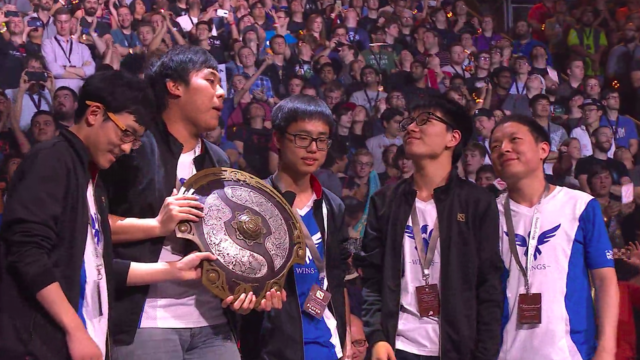
Dota 2‘s The International 2016 held in Seattle, Washington from August 3 to 13 boasted the largest prize pool to date—a whopping $20.8 million. This year’s champions, Wings Gaming, took home the lion’s share of $9,139,002.00 proving that yes, Mom, playing video games is a real job. The next-highest eSports payout this year was for League of Legends at $5.1 million, while Smite and Heroes of the Storm both hosted tournaments to the tune of $1 million each.

Wings Gaming took home over $9 million for the International 2016 Dota 2 competition. Source: Valve

Calling All Hopefuls

Also launched this past December—EA’s new Competitive Games Division focuses not just on the best of the best, but those still climbing the championship ladder. “Our vision for competitive gaming is pretty unique,” EA’s chief competition officer, Peter Moore told Venturebeat. “We want to make stars out of all our players. Competitive gaming is a pyramid. At the very top of that there are several hundred players who make a full-time living playing games like DOTA 2, League of Legends, or Counter-Strike. In our case, Madden and FIFA have full-time professional players, as well as a few Battlefield players but our real focus is going to be further down that pyramid—not just the top professionals.”

Activision Blizzard surprised fans worldwide by announcing its Overwatch League during BlizzCon—creating opportunities across the country for hopefuls to compete for spots on professional teams complete with contracts, salaries and all the dreams they can muster.

Move Over For Mobile

While consoles and PC may be the eSports platform of choice for now, mobile has been creeping up as an accessible, popular and profitable method, as well. Video game developers like Supercell (Clash Royale) and third-party companies such as Mobcrush, Skillz and Super Evil Megacorp are extending the idea of competition from young men in a large stadium to anyone, anywhere.

“Mobile will ultimately be the platform over the next five to ten years that truly enables eSports to become mass market,” Kristian Segerstrale, COO and executive director at Super Evil Megacorp, developer of Vainglory, told [a]listdaily. “It’s going to be steady growth behind the scenes. . . it gets stronger and stronger and then one day you look back at it and say, ‘Wow, I didn’t see that coming.'”

A majority of this year’s eSports revenue came from Asia, at $328.6 million, according to SuperData, as did viewership. The analyst firm further predicts that eSports revenue will continue to grow steadily over the next few years, reaching $1.4 billion by 2019, but brands should not try to capture that excitement haphazardly.

“Gaming is increasingly popular because it offers a different type of entertainment experience,” Superdata CEO, Joost van Druenen told [a]listdaily. “With its success over the last few years, a host of newcomers to the industry seek to capture some of its magic. But merely stickering a celebrity or brand on a mediocre game is naive. When companies tell me they’re ‘doing eSports’ I cringe, because it tells me they are clueless with regards to building up a fanbase and a degree of authenticity in the experience. Precisely because games are interactive and establish a dialogue between game makers and players, there is a degree of authenticity that, in my opinion, is largely missing from many of the traditional forms of entertainment. You can’t fake it as easily in games.”


Learn everything you need to know to invest in today’s fastest-growing media channel—Competitive Gaming and eSports on 2.16.17 in Los Angeles. Go to alistsummit.com for more info.

Unilever Explains Axe Hair ESports Marketing Initiative

Unilever has entered the eSports arena to market its Axe Hair products through some of the top Counter-Strike: Global Offensive (CS:GO) players in the world. The company has partnered with pro gamers Kevin “Hauntzer” Yarnell, Vincent “Biofrost” Wang, Jake “Stewie2k” Yip and Timothy “Autimatic” Ta from Team SoloMid and Cloud9 to promote grooming tips to eSports fans through social media photos and video content.

Rob Candelino, vice president of marketing and general manager of haircare at Unilever, told [a]listdaily that eSports is an international gaming phenomenon that is rapidly growing with millions of fans and a large following of young guys.

“Best of all, many of the eSports players have great hair and everyday style their fans want to emulate,” Candelino said. “These players understand the importance of looking their best whether playing in an international tournament or practicing at home in the team house. Partnering with eSports players is a great opportunity for Axe Hair to speak to fans about how easy everyday styling can be through the voice of the flourishing eSports community.”

Unilever is the latest non-endemic brand to enter into eSports to chase the global audience of dedicated gamers. Candelino said the digital campaign explores how these pros’ game day styling routine positively impacts their confidence and performance inside and outside the arena. “It’s exciting for us to be partnering with an iconic brand whose styling products make it simple and easy to style every day,” Ta told [a]listdaily. “Styling is an important part of our everyday routine, so the partnership is great for Cloud9.”

“Looking good and being confident is important to us, especially since we are role models to our fans,” Yip told [a]listdaily. “I want to inspire them to look and feel their best too and partnering with Axe helps to promote this message.”

Candelino said Axe Hair speaks to young guys (18-26) about confidence, attraction and the importance of daily styling. “The Axe guy has a variety of different interests and passions, one of which is gaming,” Candelino said. “This partnership is an important way for the brand to authentically connect with him.”

Social media and livestreaming has opened up a 24/7 window into the lives of pro gamers, which brands can tap into. “These professional gamers are constantly interacting with their fan bases online and on mobile,” Candelino said. “They livestream practice for hours each day and have direct access and communication to their fans and followers. They get questions both about gaming and about their lifestyle.”

Ta said his fans ask him about his hair all the time. “It’s important for us to look our best for them every day, whether we’re in the arena or not,” he said. “I like my hair to look natural, so the softening cream is my go-to and it takes me less than five minutes to do every day.”

Axe filmed Cloud9 and Team SoloMid on a behind-the-scenes tour of the Cloud9 Team House to show fans how they live, practice, prepare and style every day.

“ESports is a community of really passionate gamers who have a lot of heart for what they do,” Candelino said. “It is important for Axe to ensure that we are talking to our consumers in the most authentic way. These players are guys that the Axe target looks up to and respects, and they can genuinely talk about their daily styling routines and how it impacts their confidence and overall gaming performance.”


Learn everything you need to know to invest in today’s fastest-growing media channel—Competitive Gaming and eSports on 2.16.17 in Los Angeles. Go to alistsummit.com for more info.

Evil Bots, Friendly AI And Other Must-Read Marketing Stats

This week, we examine the effects of bad mobile advertising, the importance of interacting with your audience and why digital advertisers are really mad at some Russian hackers.

Quality Of Mobile Ads Matters More Than You Think

Does your brand understand what mobile consumers want and are you sure you’re targeting the right people? A recent study by Forrester revealed that 55 percent of companies surveyed ranked audience targeting as the number one area where they are putting strategic attention. When asked what their key objectives were for mobile advertising, 52 percent of respondents said “increasing brand awareness,” 47 percent said “increasing brand engagement,” and 42 percent said “driving customer loyalty.” However, the study found that only 27 percent of the ads consumers see in a typical day are creating a positive experience for their users—30 percent elicit a negative response, while 43 percent elicit no emotional response at all.

Forrester surveyed 1,000 consumers and 100 advertising professionals with companies of 10,000 employees or more. What the company found was that advertisers are wasting millions of dollars on ad spend each year due to poor consumer experiences with mobile ads. In the figure below, Forrester exposes a difference in priorities between brands and consumers when it comes to advertising effectiveness.

Source: Forrester
Source: Forrester

Are You Ready For AI? Marketers Say “Yes”

Seventy-nine percent of US senior-level marketers believe that consumers are prepared for AI, according to November 2016 research from Boxever. Just 15 percent of marketers felt that consumers weren’t ready for AI, and 6 percent weren’t sure.

Wear Today, Gone Tomorrow

While wearing your heart on one’s sleeve may never go out of style, wearable tech like Apple Watches and Fitbit aren’t quite as popular as originally forecasted. According to a new report from eMarketer, wearables were expected to grow more than 60 percent year-over-year from 2015 to 2016. However, the firm is now cutting that estimate down to just 25 percent growth this year.

“Before Apple launched its Watch, fitness trackers dominated the wearables space, and consumer surveys consistently found that tracking health and fitness was the main reason people were interested in wearables,” said eMarketer analyst Cathy Boyle. “They also reported high price-sensitivity. Without a clear use case for smart watches—which have more features than fitness trackers, but significant overlap with smartphone functionality—the more sophisticated, expensive devices have not caught on as quickly as expected.”

wearable-emarketer

In Russia, Methbot Smokes You

It siphons $3 to $5 million in video ad revenue from premium publishers every day and is the subject of a new report by digital advertising fraud security firm, White Ops. This new variation of the botnet hails from Russia and utilizes a network of 800 to 1,200 dedicated servers in the US and the Netherlands. Spoofing real publishers, the hackers sell digital ads for sites such as ESPN, Vogue and Fortune all while creating fake impressions and therefore hiking up the price of CPMs.

White Ops has partnered with The Trustworthy Accountability Group (TAG) to help disseminate information and data including the list of known IP addresses, falsified domains and URLs used by Methbot to track and stop these cyber thieves.

“As scores of additional companies join the initial group of participants approved earlier this month to TAG’s Certified Against Fraud Program, TAG will continue to build a unified defense against the criminals who steal from our industry, said TAG CEO, Mike Zaneis in a statement. “We deeply appreciate White Ops’ leadership in sharing this intelligence with the broader digital advertising community.”

HTML5 Is ALIVE

Is HTML5 better than Flash for video? Steve Jobs thought so, and the IAB Technology Laboratory says brands should transition to HTML5 by this upcoming July. Why? HTML5 offers mobile abilities Flash does not and IAB’s research indicates that it has been shown to contribute to a 29.5 percent brand lift. Converting Flash to the new format won’t be easy, but to help, IAB has released “Transitioning Video Ads from Flash to HTML5/JS,” a guide for migrating digital video advertisements to HTML5 and JavaScript.

TV Time For Brands

November upfront revenues for the 2016 to 2017 TV season are up 9 percent versus November 2015, and broadcast revenues are 5 percent higher than last year. Similarly, cable networks saw an increase of 13 percent in upfront revenues, according to Standard Media Index (SMI). Direct-response advertising from big scatter TV marketers weren’t as impressive, however, dropping 26 percent in November. Meanwhile, broadcast networks saw a 60 percent decline and cable TV dropped 23 percent.

Interaction Matters

A new study by the Chief Marketing Officer (CMO) Council reveals that one of the biggest challenges for marketers in 2017 will be understanding the connected customer journey across all touch points and how best to interact on a more personal level.

Thirty-eight percent of marketers surveyed feel that digital strategies have delivered mixed results to date, while 49 percent stated that alignment between physical and digital is selective at best.

“Savvy CMOs don’t see digital as a destination for transformation but instead see the digital experience as a constantly moving evolution for both engagements and operations,” noted Liz Miller, senior vice president of marketing for the CMO Council. “The year ahead will represent a real turning point in the customer experience as marketers plan to turn their sights toward connecting, streamlining and measuring the entire journey.”

marketing-study

Shooters And Surprises: The Top 5 Console And PC Games of 2016

Bringing in $35.8 billion and $6.6 billion respectively, PC and console gaming closed out a fairly strong year for the interactive entertainment industry. While a majority of this year’s top-grossing titles were from years past, there are a some new additions that made a lasting impact. From eSports surprises to brutal wars and adorable creatures, here are the top five console and PC video games of 2016.

Overwatch

Activision Blizzard’s fast-paced shooter took the world by storm in 2016—captivating audiences and becoming the top-grossing PC game of the year at $585.6 million. The game also revealed some surprising trends in the Chinese market, proving that players are willing to pay for games upfront—something once believed this lucrative demographic wouldn’t do. “China’s games market may be dominated by free-to-play MMO and mobile titles, but Overwatch’s success indicates the potential for premium games in the country is growing,” said SuperData Research CEO, Joost van Druenen in a report for August video game sales.

A major contributing factor to the game’s success can also be attributed to the way in which Activision Blizzard gets its fans excited for the next update or character introduction. Such was the case with Sombra, a new character that had been teased over the summer with a month-long alternate reality game that Blizzard began in the announcement video for Ana in July. Blizzard proceeded to leave a detailed trail of coded messages, encrypted images and a three-month-long countdown timer leading up to BlizzCon when Sombra, herself “hacked” Blizzard’s keynote for her big reveal.

The announcement of Overwatch League has continued fan the flame of excitement as fans dream of becoming professional eSports players. “The Overwatch League represents not only the pinnacle of Overwatch competition, but also a genuine career opportunity for the most-skilled Overwatch players,” Blizzard CEO, Mike Morhaime, said on stage at the opening ceremony. “We’re building a league that’s accessible to players and fans, sustainable and exciting for everyone involved.”

Pokémon Sun And Moon

Celebrating the franchise’s 20th anniversary, Nintendo enjoyed a record-breaking release of Sun and Moon, hot on the heels of Pokémon GO fever. In fact, Pokémon Sun and Moon debuted at numbers 3 and 4 on revenue charts for the month of November and proved to be the franchise’s most pre-ordered and fastest-selling titles in US history.

Although Nintendo focused almost exclusively on The Legend of Zelda: Breath of the Wild during this year’s E3, a livestream demo of Pokémon Sun got fans excited with its new battle interface, setting, features and of course, over 800 Pokémon to collect and train. Since then, a special demo of the game was released exclusively for the 3DS, allowing fans to explore the new Alola region and earn rewards that can be transferred over to the full game. Shortly after the game’s release, the Pokémon Company announced a new anime series called Pokémon The Series: Sun and Moon, debuting on Disney XD next year.

Battlefield 1

Launched at the end of October, EA’s bloody tale of World War I debuted at number one in console video game sales and in its first week in the UK, Battlefield 1 outsold the combined week one sales of Battlefield 4 and Hardline. Prior to launch, the game’s open beta drew in over 13.2 million total players, making it the biggest in EA’s history.

Anticipation for the title was reinforced by an E3 presentation at the first ever EA Play public event, which showed the three main pillars of exciting gameplay. Following the presentation with a livestreamed 64-player multiplayer match, featuring celebrities Jamie Foxx and Zack Efron alongside prominent YouTube and Twitch streamers must have also helped the game’s popularity.

Tom Clancy’s The Division

Ubisoft debuted its brand-new franchise in March with as much marketing fervor as we’ve come to expect from the publisher. Tom Clancy’s The Division was no exception, touting a disturbing map of how fast diseases spread, a live-action miniseries on Amazon Prime and a movie deal with Jake Gyllenhaal attached to star.

As a result of a strong marketing campaign and positive critic reviews, Tom Clancy’s The Division was the fourth top-grossing video game for consoles in 2016 bringing in $261.8 million.

Destiny: The Rise of Iron

Destiny may not have launched this year, but its expansion, The Rise of Iron helped launch Bungie’s MMO to number five on the premium console revenue charts, fetching a cool $214.1 million in 2016.

“Destiny highlights the importance of additional content releases for AAA titles,” noted SuperData CEO, Joost van Dreunen in the company’s August game industry report. Bungie released a trailer for its Destiny: Rise of Iron expansion over Snapchat in June by accident—ahead of the official announcement—but the trailer worked to get fans that much more excited.


Learn everything you need to know to invest in today’s fastest-growing media channel—Competitive Gaming and eSports on 2.16.17 in Los Angeles. Go to alistsummit.com for more info.